The Musings of Jaime David
@jaimedavid.blog@jaimedavid.blog

The writings of some random dude on the internet

1,161 posts
1 follower

Tag: reflection

  • Seven Years Later, Still That Same Moment

    Seven Years Later, Still That Same Moment

    Seven years is supposed to feel like distance. That’s what people tell you, what you tell yourself, what the world quietly expects you to accept. Time moves forward, relentlessly, stacking days into months into years until something that once felt immediate is supposed to settle into memory. But grief doesn’t follow that rule. It doesn’t respect calendars or anniversaries. It doesn’t care how many years have passed. Sometimes seven years feels like a lifetime ago, like you’ve lived entire versions of yourself since then. And sometimes it feels like nothing has moved at all, like you’re still standing in that exact moment when everything changed. Both of those realities exist at once, overlapping, impossible to separate, and somehow that contradiction becomes its own kind of truth.

    Today is April 18, 2026, and it has been seven years since my uncle died. Even writing that feels strange, like I’m describing something distant when it doesn’t feel distant at all. It feels close. Too close. There are moments where I stop and think about it, and it genuinely doesn’t feel like seven years have passed. It feels like a few months, maybe a year at most, like something recent enough that I should still be able to reach out, still be able to hear his voice, still be able to exist in a world where he’s here. And then there are other moments where the weight of those seven years hits all at once, where I realize how much time has actually gone by without him, how many things have happened, how many moments he’s missed, how much life has continued in a way that feels both natural and deeply wrong at the same time.

    What makes it even harder to process is how I found out. There was no call. No moment of someone sitting me down, no gradual realization, no buffer between normal life and the shock of loss. It was a social media post. Just words on a screen from a family member who knew him. That’s how I learned that someone who meant that much to me was gone. And at first, it didn’t even feel real. It couldn’t be real. It felt like a mistake, like some kind of misunderstanding, like maybe it was about someone else with the same name. There was that immediate instinct to reject it, to push it away, to think, “What is this? This has to be a joke.” Because the alternative was too heavy, too sudden, too final to accept in that moment.

    But it wasn’t a mistake. It wasn’t a joke. It was real. And that realization didn’t come gently. It hit hard, all at once, like the ground giving out underneath you before you even realize you’ve lost your footing. That moment sticks in a way that doesn’t fade. It replays itself, not always vividly, but always there, like a fixed point in time that everything else moves around. The way something like that enters your life matters. The way you learn about a loss becomes part of the loss itself, stitched into the memory in a way you can’t separate. And finding out like that, through a screen, alone with the information before anyone could even explain it, made it feel even more unreal and more devastating at the same time.

    And then there’s how it happened. Not just that he died, but the way it unfolded. A few days before, he bumped his head. Something that sounds small, something that on its own wouldn’t raise alarms. The kind of thing people brush off, maybe joke about, maybe forget entirely. And then a few days later, everything changed. He collapsed. He fell into a coma. And he never woke up. That sequence of events doesn’t sit right, even years later. It feels abrupt, unfair, like something that shouldn’t have been able to escalate like that. It leaves behind questions that don’t have satisfying answers, a sense that something so massive came from something that seemed so minor, and that disconnect makes it even harder to fully accept.

    It was awful. There’s no softer way to put it, no way to wrap it in language that makes it easier to hold. It was traumatic. It reshaped something fundamental in how I understand how quickly life can change, how fragile everything actually is. One moment someone is there, part of your everyday world, someone you assume will continue to be there in all the ways that matter. And then, in what feels like no time at all, they’re gone. Not gradually, not in a way that gives you time to prepare, but suddenly, in a way that leaves you trying to catch up to something that’s already happened.

    And what makes this loss even heavier is who he was to me. He wasn’t just an uncle in the distant, occasional sense of the word. He was like a dad to me. Truly. That kind of relationship doesn’t fit neatly into labels. It goes beyond titles and definitions. It’s built on presence, on the role someone plays in your life, on the way they show up for you, guide you, support you, exist as a steady figure in your world. Losing him wasn’t just losing a relative. It was losing someone who filled a space that can’t really be replaced, someone whose absence is felt in ways that extend into so many parts of life.

    That’s part of why time doesn’t “fix” it in the way people sometimes suggest it will. You don’t move on from something like that. You move with it. It becomes part of how you experience the world, part of how you think, part of how you measure time itself. Anniversaries like this one don’t just mark the passing of years. They bring everything back to the surface, not necessarily in a way that overwhelms you completely, but in a way that reminds you that the loss is still there, still real, still significant. It doesn’t disappear just because more time has passed.

    There’s also something surreal about the way memories work after this kind of loss. They don’t line up neatly in the past. They feel present, like they exist alongside your current life rather than behind it. You can think about a moment, a conversation, a feeling, and it doesn’t feel like something that happened “back then.” It feels immediate, like something you can almost step back into. And then you’re hit with the reality that you can’t. That contrast between how close it feels and how final it actually is creates a kind of emotional dissonance that’s hard to fully put into words.

    Every fucking April since 2019 has felt like it comes with its own kind of weight, like the month itself is cursed or stacked against me in ways that don’t even feel rational anymore. It’s not just one thing. It’s not just one bad memory or one hard moment that defines it. It’s the accumulation of everything that keeps happening in or around this month, year after year, like April refuses to let anything be normal. It’s gotten to the point where I don’t even approach April with neutrality anymore. There’s always this low-level expectation that something is going to go wrong, or something is going to resurface, or something is going to remind me why this stretch of time has felt so consistently heavy since 2019.

    April 2019 was already close to something foundational breaking. My uncle on my dad’s side died, and that alone changed the emotional baseline of everything that came after. That loss never really “settled” in the way people expect grief to settle. It just became part of everything else. And even now, years later, it still feels close in a way that doesn’t make sense on paper. Time has passed, but the emotional distance never matched it. That’s part of why April itself started to feel different after that point. It wasn’t just a month anymore. It was a reminder.

    Then came April 2020, and it felt like the world itself was collapsing in layers. It was only a month after my grandpa died, so I was already in that raw, disoriented state where everything feels slightly unreal. And then COVID started spreading everywhere, and the entire atmosphere of life changed overnight. Fear, uncertainty, isolation, all of it just layered on top of grief that hadn’t even had time to breathe yet. And then, on top of that, my high school history teacher died from COVID. What makes that even more surreal is that he died on the exact same day, one year after my uncle died. That kind of timing feels almost impossible when you look at it from the outside, like some kind of cruel coincidence that repeats the same emotional wound on a calendar you didn’t ask to be part of.

    That teacher wasn’t just a name on a roster either. He was someone who actually made learning feel alive in a way that stuck with me. And then suddenly he was gone too, in the middle of a global crisis that already felt like it was stripping everything familiar away. And that year, politically and socially, everything felt unstable in a different way as well. Trump’s first term response to COVID was chaotic and inconsistent, and the broader environment in the country felt like it was constantly spiraling between denial, panic, and confusion. It wasn’t just personal grief anymore. It felt like the entire structure of reality was shaky.

    April 2021 didn’t give any real relief either. It was only a few months after the Capitol riots, and the political tension in the country still felt thick in a way that was hard to ignore. Everything felt polarized, loud, and unstable. Even day-to-day life carried this underlying sense of friction, like everyone was still reacting to something unresolved. Around that same time, I also got canned from what I considered my dream job back then. That wasn’t just a professional setback. It hit in a way that made everything feel more uncertain, like stability itself was something I couldn’t rely on, even when I thought I had it.

    April 2022 brought its own different kind of heaviness. The Ukraine war had just started a couple months earlier, and the global atmosphere felt tense and uncertain in a way that was hard to fully process in the background of everyday life. But there was also something more personal underneath that I didn’t fully understand at the time. I had a friend I had fallen out with, and I didn’t know it then, but he died in 2022. I only found out much later, over two years after the fact, in May 2024. That delay adds its own kind of distortion to the memory, because it means the grief doesn’t happen where it “should” in time. It arrives late, retroactively, and rewrites what you thought you already understood about the past.

    April 2023 felt like another shift into something more chaotic in a different way. The indictment of Donald Trump made New York feel tense in a very immediate, physical sense. The city itself felt like it was on edge, like every conversation carried an undertone of political friction and uncertainty. It wasn’t just headlines anymore. It was something that felt embedded in the environment, like walking through the city itself came with a sense of instability that you could feel in the air.

    Then April 2024 came, and the Trump trial made everything feel even more intense. New York felt even more chaotic, even more charged, like there was a constant pressure in the background of daily life. That month was also still emotionally shaped by loss on a personal level, because a few months earlier, my dog of 13 years had died in the summer of 2023. That kind of loss doesn’t just disappear by the time a new calendar year rolls around. It stays embedded in routines, in spaces, in quiet moments that don’t have anything to do with politics or headlines but still carry that absence with them.

    April 2025 didn’t reset anything either. It came only a few months after my other dog, who I had for almost 10 years, got sick with cancer in late 2024, then died just a few weeks later in January 2025, right before her 10th birthday in February. That loss felt especially cruel in its timing, like there wasn’t even enough space between sickness and goodbye for it to fully register. And by the time April came around again, I was still sitting in that aftermath. On top of that, it was a few months into Trump’s second term, and after the 2024 election, everything politically felt heightened again. His campaign and return to office felt even more intense and divisive than before, and the sense of national instability didn’t really feel like it had eased at all. It felt like everything was still accelerating instead of calming down.

    Now April 2026 is here, and it somehow feels like it’s carrying all of that history with it at once. It doesn’t feel separate from the previous Aprils. It feels like an extension of them. A continuation. The political situation has escalated in ways that feel almost unreal when you say them out loud. The United States has been involved in escalating military action abroad, including direct conflict with Iran that has stretched into a prolonged war environment. There have been naval blockades, global economic instability, and rising tensions that feel like they are constantly shifting. At the same time, there has been renewed military intervention and pressure in places like Venezuela, along with ongoing rhetoric about expanding conflict or influence into other regions, including Greenland and even Cuba. It feels like the geopolitical atmosphere is constantly moving between escalation and instability, with no clear sense of de-escalation in sight.

    Reading or hearing things like that on the news doesn’t feel distant anymore. It feels immediate, like the world itself is stuck in a constant state of volatility. Oil markets shifting, military movements, diplomatic breakdowns, threats of expansion, ceasefires collapsing or being questioned almost immediately afterward. Everything feels like it’s happening all at once, without enough time for anything to stabilize before the next development hits. And it all layers on top of the personal history of these Aprils, making the present feel even heavier because it’s not just about what’s happening now. It’s about everything that has already happened before.

    That’s what makes this stretch of time feel so strange to live through. It’s not that every single April is objectively the worst thing imaginable. It’s that each one stacks on top of the last, so the emotional weight compounds instead of resets. Grief, political tension, personal loss, instability, change, all of it keeps returning in different forms, but always around the same time of year. And eventually, you start to associate the month itself with that accumulation, even when you logically know it’s just a marker on a calendar.

    It’s hard to explain to someone who hasn’t lived through that kind of repeating pattern how much it changes your relationship with time. April stops feeling like just another month. It becomes a reminder of everything that has already happened and everything that could still happen again. And even when nothing specific is going wrong in the moment, there’s still that background awareness that history has not exactly been kind to this stretch of time.

    So every April since 2019 doesn’t feel like a series of isolated events. It feels like one long continuation of everything that started back then. A chain of loss, instability, change, and global uncertainty that never fully resets before the next link is added. And at some point, you stop thinking of it as coincidence and start thinking of it as a pattern you just have to live through.

    Seven years later, that surreal feeling hasn’t gone away. If anything, it’s become part of the way I understand the loss. Time has moved forward, undeniably. Life has continued, as it always does. But there’s a part of me that is still in that moment of discovery, still processing the shock, still trying to reconcile how something so significant could happen so suddenly and so quietly from my perspective. That moment didn’t stay in the past. It stretched forward, threading itself through the years that followed.

    And maybe that’s what grief really is in situations like this. Not something that fades into nothing, but something that changes shape over time. It becomes less about the immediate shock and more about the ongoing absence. Less about the moment you found out and more about all the moments since then where you feel that absence in different ways. The big moments, the small ones, the ordinary days where something reminds you of them out of nowhere. It’s not constant in the same way, but it’s persistent. It stays.

    Seven years later, it still feels surreal. It still feels unfair. It still feels like something that shouldn’t have happened the way it did. And it still feels like I lost someone who meant more to me than words can fully capture. Time has passed, but that doesn’t erase the reality of what was lost or the impact it continues to have. It just adds layers to it, layers of memory, reflection, and the ongoing process of carrying something that never really goes away.

    And maybe that’s the closest thing to understanding it. Not trying to force it into something neat or resolved, but recognizing that it exists in that in-between space where time moves forward and stands still at the same time. Where the past feels present, and the present is shaped by something that happened years ago. Where seven years can feel like everything and nothing all at once.

    Fediverse Reactions
  • When Inspiration and Loss Collide: Writing This the Day After My 30th Birthday

    When Inspiration and Loss Collide: Writing This the Day After My 30th Birthday

    Yesterday was my birthday. March 27, 2026. I turned thirty.

    And I didn’t write about this yesterday.

    Not because it didn’t matter, and not because it didn’t hit me, but honestly because I was too sad to process it in real time. I also didn’t want to make my birthday entirely about grief again. I’ve had enough birthdays like that already. And on top of that, I needed space. Time to sit with what I heard, to let it settle, to understand why it affected me the way it did.

    So I’m writing this today instead.

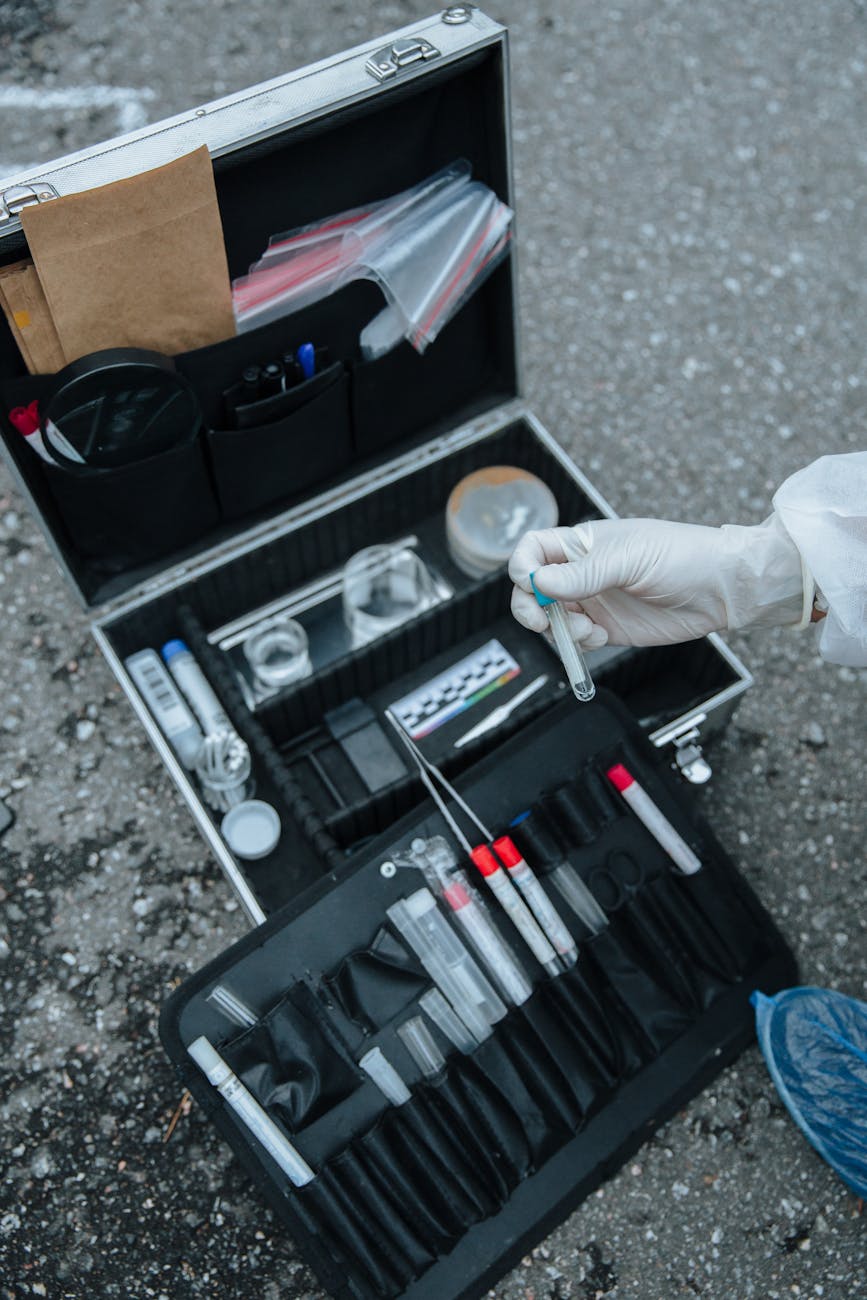
    Because yesterday, on my birthday, I found out that Henry C. Lee—one of the most well-known forensic scientists, someone whose name carries weight in the field, someone who was a genuine inspiration for me—passed away.

    And that hit me harder than I expected.

    I want to be clear about something up front. I didn’t know him personally. Not in the sense of having conversations with him, not in the sense of having a direct relationship. But I knew of him. I learned about him. His work, his presence in the forensic science world, the impact he had on education and on the field itself—it reached me.

    It influenced me.

    It played a role in why I studied forensics and biology.

    And that kind of influence matters more than we sometimes give it credit for.

    Because when you’re younger, when you’re trying to figure out what direction your life might take, you look for examples. You look for people who represent something bigger than where you currently are. People who show you that a path exists, that a certain kind of life is possible, that a certain field is worth exploring.

    For me, Henry C. Lee was one of those people.

    Not the only one. Not the sole reason. But part of that foundation.

    Part of that spark.

    And so when I heard that he died, on my birthday of all days, it created this strange emotional collision in my head.

    On one hand, it was supposed to be a day about stepping into a new decade. Reflecting on my twenties. Thinking about the future. Trying, in whatever way I could, to find some sense of hope or renewal as I turned thirty.

    And on the other hand, it became a day marked by the loss of someone who helped shape part of who I became.

    That’s a weird feeling to sit with.

    Because it’s not the same as losing someone you knew personally. The grief is different. It’s quieter, more abstract, less rooted in shared memories and more rooted in impact. But it’s still real.

    It’s the kind of sadness that makes you pause and think, “wow, that person was part of my story in a way I didn’t fully realize until now.”

    And when that loss happens on a significant day—your birthday, no less—it adds another layer to it.

    It ties the moment to you.

    Not in a literal way, not in a way that suggests the two things are connected beyond coincidence, but emotionally, it links them. It makes the day feel different. It changes how you remember it.

    From now on, March 27, 2026 won’t just be the day I turned thirty.

    It’ll also be the day I learned that someone who inspired me, someone who played a role in shaping my academic and intellectual path, was gone.

    And I think that’s part of why it felt so heavy yesterday.

    Because birthdays are already reflective. They already make you think about time, about where you’ve been, about where you’re going. And adding loss into that mix amplifies everything.

    It makes you more aware of how temporary things are.

    It makes you think about legacy.

    It makes you think about the people who influenced you, directly or indirectly, and what happens when they’re no longer here.

    And there’s also this strange, almost disorienting feeling that comes with losing someone you looked up to.

    It’s like a small piece of your internal map shifts.

    Even though, logically, nothing about your identity has changed. You’re still you. Your experiences are still yours. The influence they had on you doesn’t disappear just because they’re gone.

    But emotionally, it can feel like something moved.

    Like a reference point is no longer there in the same way.

    And that can be hard to articulate.

    It’s not grief in the traditional sense. It’s not the kind of loss that upends your daily life. But it’s also not nothing. It sits somewhere in between.

    A quiet kind of impact.

    And I think a lot of people experience this when public figures, mentors, or inspirations pass away.

    We don’t always talk about it, because it can feel like we’re not “allowed” to grieve someone we didn’t personally know. Like that grief somehow doesn’t count.

    But it does.

    Because influence is real.

    Inspiration is real.

    The people who shape our interests, our paths, our ways of thinking, they matter, even if they never knew us individually.

    And when they’re gone, it’s okay to feel something about that.

    It’s okay to acknowledge that they were part of your journey.

    It’s okay to sit with that sadness.

    I also found myself thinking about how unlikely it is, statistically, for something like this to happen.

    Out of all the days in a year, out of all the possible moments, the day someone who influenced you passes away happens to line up exactly with your birthday.

    I don’t know the exact probability of that. I’m sure it’s low. Not impossible, obviously, because it happened, but not common either.

    And maybe that rarity is part of what makes it feel so significant.

    It makes the moment stand out.

    It makes it feel almost surreal.

    Like, of all days, it had to be this one?

    And there’s no real answer to that question.

    It’s just how things lined up.

    Life doesn’t coordinate events based on emotional convenience. It doesn’t space things out in a way that makes them easier to process. Sometimes moments overlap in ways that feel almost unfair, even if they’re just random.

    And that’s what this felt like.

    A collision of two very different emotional experiences.

    A milestone birthday.

    And the loss of someone who helped shape a part of me.

    So I took yesterday to just sit with it.

    To not force myself to write.

    To not force myself to package it into something neat and reflective right away.

    Because sometimes you need that space.

    Sometimes the most honest thing you can do is just feel what you’re feeling without immediately trying to turn it into something productive.

    And today, writing this, I feel a little more grounded.

    Still sad.

    Still thinking about it.

    But also able to put it into words in a way that feels more complete.

    If anything, I think this moment reinforced something I’ve been realizing more and more as I get older.

    The people who inspire us leave a kind of imprint.

    Not just through direct interaction, but through the ideas they share, the work they do, the example they set.

    And that imprint doesn’t disappear when they’re gone.

    If anything, it becomes more noticeable.

    More defined.

    Because you start to recognize how much of what you care about, how much of what you chose to study or pursue or think about, was influenced by them.

    And in that sense, they’re still part of your story.

    Still present, just in a different way.

    So yeah.

    Yesterday was my 30th birthday.

    And it was also the day I learned that someone who helped inspire my path into forensics and biology passed away.

    That’s a strange sentence to write.

    But it’s true.

    And I think the best way I can process it is not by trying to separate those two things, but by acknowledging both.

    It was a day of reflection, of stepping into a new decade, of thinking about my own life.

    And it was also a day of recognizing the impact someone else had on that life, even from a distance.

    Both things can exist at the same time.

    And maybe that’s just part of what getting older is.

    Learning how to hold multiple emotions at once.

    Learning how to let moments be complicated.

    Learning how to move forward while still honoring the people and influences that helped get you here.

    Rest in peace to someone who helped shape a part of my journey.

    And as for me, stepping into thirty, I carry that influence with me.

    Even now.

    Especially now.

  • Thirty, Somehow: A Birthday Reflection on Survival, Loss, and the Fragile Hope of Starting Again

    Thirty, Somehow: A Birthday Reflection on Survival, Loss, and the Fragile Hope of Starting Again

    I’m thirty years old today.

    And I’m sitting here thinking, holy shit. I actually made it.

    That sentence feels heavier than it probably should. People say it casually all the time, like getting older is just something that happens automatically, like breathing. But for me, and I think for a lot of us whether we admit it or not, making it to thirty doesn’t feel automatic. It feels earned. It feels like surviving something. It feels like crawling through a decade that didn’t always want you to come out the other side, and somehow, against all odds, you did.

    I made it through my twenties.

    That alone feels like something worth sitting with for a while.

    Because my twenties were not simple. They weren’t clean. They weren’t the kind of years you wrap up neatly in a highlight reel and say, “yeah, that was fun.” They were chaotic. Messy. Painful. Confusing. There were highs, sure, but they were often followed by lows that hit harder than I ever expected. There were moments where everything felt like it was coming together, and then moments where it all collapsed just as quickly.

    There were times I felt like I knew exactly who I was becoming. And then there were times I felt like I had absolutely no idea who I was at all.

    And yet, through all of that, I’m here.

    Thirty.

    It’s strange, too, because growing up, thirty always felt like some distant, almost mythical age. Like that’s when you’re supposed to have it all figured out. That’s when life “starts to make sense.” That’s when you’re stable, secure, grounded. That’s when you become a real adult.

    And now I’m here, and I can say with full honesty, I don’t have everything figured out. Not even close.

    But I do have something else.

    Perspective.

    And maybe that matters more.

    Because if my twenties taught me anything, it’s that life is not a straight line. It’s not a checklist. It’s not something you can plan perfectly and execute without disruption. Life is unpredictable in ways that can be beautiful and devastating at the same time.

    Sometimes, it gives you moments that feel perfect.

    And sometimes, it takes them away without warning.

    I think about that a lot today. Especially today.

    Because birthdays used to feel different.

    Before 2019, my birthday felt like something lighter. Something joyful. Something I could just be present in without any weight attached to it. I didn’t think twice about it. It was just a day to celebrate, to be with people I cared about, to laugh, to exist in a moment that felt good.

    And I can still picture one of those moments so clearly.

    March 2019.

    I was at Chili’s with my friends. We were celebrating. Just eating, talking, laughing, having a genuinely good time. Nothing extraordinary on paper, but everything about it felt right. It was one of those nights where you don’t realize how much it means while you’re in it. You’re just there, living it, assuming there will be more nights like that. Assuming life will just keep unfolding in that same rhythm.

    I didn’t know it then, but that was the last time I felt truly, fully happy without anything looming over me.

    Just a few weeks later, everything changed.

    April 18, 2019.

    That date is burned into me in a way I wish it wasn’t.

    That’s the day my uncle died.

    My uncle on my dad’s side. But even saying “uncle” doesn’t fully capture it. He was more than that. He was like a second father to me. A presence that felt constant. Someone who was just… there. In the way you assume certain people will always be there.

    And then suddenly, he wasn’t.

    It didn’t feel real. It still doesn’t, sometimes.

    Even now, seven years later, there are moments where I think about it and my brain just kind of rejects it. Like, no, that didn’t actually happen. That can’t be right. He’s just… somewhere else. I’ll see him again. This isn’t permanent.

    But it is.

    And that’s the part that never fully settles.

    Because loss like that doesn’t just take a person away. It changes the way everything feels afterward. It reshapes your emotional landscape in ways that are hard to explain unless you’ve gone through it.

    Birthdays changed.

    Holidays changed.

    Moments that used to feel purely happy now carry something else with them. A kind of quiet sadness. A reminder of absence. A sense that something is missing, even when everything else is technically “fine.”

    Ever since 2019, my birthdays haven’t felt the same.

    There’s always this underlying feeling, this awareness that someone who should be here isn’t. Someone who would have been part of this day, part of this moment, part of this version of me turning thirty.

    And that absence doesn’t get easier. It just becomes more familiar.

    It becomes something you carry.

    So yeah, birthdays have been harder since then.

    Not unbearable. Not entirely negative. But different.

    Heavier.

    And I think part of me has been stuck on that, in some way, for years. Like a part of my happiness got frozen in time back in March 2019, sitting in that Chili’s with my friends, completely unaware of what was coming next.

    That was the last time everything felt uncomplicated.

    The last time joy didn’t have a shadow attached to it.

    And everything since then has been… something else.

    Not all bad. But not the same.

    And I’ve had to learn how to live with that.

    My twenties, especially the years after 2019, felt like a long stretch of trying to figure out how to exist in a world that suddenly felt more fragile. More unpredictable. More capable of taking things away without warning.

    And it wasn’t just personal stuff either.

    The world itself has felt like it’s been in constant chaos.

    Politically, socially, globally, everything has felt unstable. There’s been this constant sense of tension, like things could escalate at any moment. Like we’re always on the edge of something bigger, something worse.

    It’s been exhausting.

    And trying to navigate personal grief while also living through broader societal instability… that does something to you.

    It wears you down.

    It makes it harder to feel hopeful.

    It makes it harder to believe in the future in a straightforward way.

    There were times in my twenties where I genuinely didn’t know what the next few years would look like. Not in a normal, “life is uncertain” way, but in a deeper, more unsettling way. Like, what even is stability anymore? What does it mean to build something lasting in a world that feels like it’s constantly shifting?

    And yet, here I am.

    Thirty.

    Still standing.

    Still trying.

    Still here.

    That has to mean something.

    And I think that’s what I want to focus on today.

    Not just the loss. Not just the pain. Not just the ways things haven’t been the same.

    But the fact that I’m still here in spite of all of it.

    Because that matters.

    Survival matters.

    Getting through the hard years matters.

    Continuing to show up, even when things feel heavy, even when the world feels uncertain, even when your own emotions feel complicated and messy, that matters.

    And I’ve done that.

    I’ve made it through a decade that challenged me in ways I never expected.

    I’ve dealt with loss that reshaped how I experience happiness.

    I’ve lived through years that felt chaotic both personally and globally.

    I’ve had moments where I felt lost, uncertain, overwhelmed.

    And I still made it to thirty.

    That’s not nothing.

    That’s something real.

    And now I’m looking ahead at my thirties, and I feel… cautiously hopeful.

    Not in a naive way. Not in a “everything is going to magically be perfect now” way.

    But in a grounded way.

    A realistic way.

    A way that acknowledges everything I’ve been through, but still allows for the possibility that things can be better.

    Because I want my thirties to be different.

    I don’t expect them to be free of pain. That’s not how life works. Loss doesn’t just disappear. The world doesn’t suddenly become stable. Everything doesn’t suddenly fall into place just because you hit a new decade.

    But I do think there’s an opportunity here.

    A chance to approach life differently.

    A chance to build something more intentional.

    A chance to find moments of happiness again, even if they feel different than they used to.

    Because maybe happiness doesn’t look the same after loss.

    Maybe it’s not as light. Maybe it’s not as carefree.

    But that doesn’t mean it’s gone.

    It just means it’s changed.

    And maybe part of growing up, part of moving into your thirties, is learning how to accept that change without letting it completely take over.

    Learning how to hold both things at once.

    The sadness and the joy.

    The grief and the gratitude.

    The past and the future.

    Because they’re all part of the same life.

    And I don’t want to spend my thirties stuck in the idea that my best moments are behind me.

    I don’t want to believe that the last time I was truly happy was in March 2019 and that’s it. That’s the peak. Everything else is just an echo.

    I don’t think that’s true.

    I don’t want it to be true.

    I think there are still moments ahead that can feel just as meaningful. Maybe not identical. Maybe not in the same way. But still real. Still worth experiencing.

    I want to believe that I can sit somewhere again, with people I care about, laughing, feeling present, and not immediately thinking about what could go wrong next.

    I want to believe that kind of happiness is still possible.

    And maybe the difference now is that I’ll appreciate it more when it happens.

    Maybe I won’t take it for granted in the same way.

    Maybe I’ll recognize it in real time instead of only realizing its value after it’s gone.

    That’s something my twenties taught me the hard way.

    Pay attention to the good moments while you’re in them.

    Because you don’t always get a warning before things change.

    And speaking of time, it’s kind of surreal to think about what comes next.

    Thirty.

    Thirty-seven more years until retirement age, assuming that even stays the same. Which, honestly, who knows. The way things are going, they might move the goalposts again. Wouldn’t be surprising.

    But still.

    Thirty-seven years.

    That’s a long time.

    And at the same time, it doesn’t feel that long.

    Because the last ten years went by in what feels like a blur.

    A very intense, very chaotic blur.

    And then there’s this other number that’s been sitting in my mind.

    Nineteen years.

    In nineteen years, I’ll be the age my uncle would have been if he were still here.

    That’s a strange thought.

    A heavy one.

    It’s like there’s this invisible timeline running alongside my own, this “what could have been” version of things that I can’t help but think about.

    And I don’t know exactly how to process that.

    I don’t think there’s a clean way to.

    But maybe I don’t need to have all the answers right now.

    Maybe it’s enough to just acknowledge it.

    To recognize the weight of it without letting it define everything.

    Because today is still my birthday.

    I’m still here.

    I still have time ahead of me.

    And I want to use that time in a way that feels meaningful.

    Not perfect. Not flawless. But intentional.

    I want my thirties to be a decade where I try, genuinely try, to build something better for myself.

    Emotionally.

    Mentally.

    Maybe even physically.

    I want to find ways to reconnect with happiness, even if it looks different than it used to.

    I want to be more present.

    More aware.

    More appreciative of the moments that are good while they’re happening.

    And I want to carry the memory of my uncle in a way that honors him, without letting the grief completely overshadow everything else.

    That’s a balance I’m still figuring out.

    But I think that’s okay.

    Because if there’s one thing I’ve learned, it’s that life isn’t about having everything figured out.

    It’s about continuing to move forward anyway.

    Continuing to learn.

    Continuing to adapt.

    Continuing to find meaning where you can.

    And right now, the meaning I’m finding is simple.

    I made it to thirty.

    After everything, I’m still here.

    And that’s worth something.

    Maybe even everything.

    So yeah.

    Happy birthday to me.

    Let’s see what the thirties have in store.

    I’m ready to find out.

  • February Freewrites: Black History in the Veins of Our Time

    February Freewrites: Black History in the Veins of Our Time

    Black History Month is not just about looking back—it is about acknowledging the ways in which history shapes us today. The stories of Black resilience, struggle, and triumph echo through every part of society, and it’s important to reflect on how these narratives continue to influence the present. In this freewriting post, I want to explore how Black History is more than a month—it’s a living, breathing force that pulses through the veins of our time.

    The legacy of Black history is both painful and powerful. It is woven into the fabric of every struggle for justice, every fight for equality, and every celebration of freedom. As we reflect on the history of Black Americans, we must also think about how it shapes our current reality. How do we honor that history in our daily lives? How do we make space for the stories that are often silenced or erased?

    In this post, I dive into these questions and more, allowing the emotions and thoughts to flow freely. Black History is not a chapter closed—it is an ongoing narrative that shapes and defines our world today.

    Fediverse Reactions
  • 7 and 13: Unlucky, Lucky, and Everything In Between

    7 and 13: Unlucky, Lucky, and Everything In Between

    Numbers are strange little markers in our lives. Most people see them as simple counters, dates, ages, or statistics. But for me, two numbers have taken on lives of their own: 7 and 13. Most would consider 7 lucky. A number that appears on dice, on slots, in myths and stories, bringing with it a sense of magic, of chance in one’s favor. And 13? The classic “unlucky” number, feared by hotels, shunned by superstitious traditions, a number that seems to drag bad fortune in its wake. Yet, for me, the story is not so simple. 7 and 13 are not just numbers—they are markers of pain, growth, and the strange alchemy of life’s lessons. As 2026 unfolds, these numbers resonate with me more than ever, because it has now been 7 years since 2019 and 13 years since 2013.

    Let’s start with 2019. Seven years ago, a year that changed everything. For many, the number 7 might signify a streak of good fortune, but for me, the luck of 7 never appeared in 2019. That was the year I lost my uncle, someone who was like a father to me, someone whose presence in my life shaped who I am in ways I could not even articulate at the time. Losing him hit me harder than anything I had experienced before. It was not just grief; it was a seismic shift in my emotional landscape. For months, even years, I was adrift in a fog of sadness, questioning the fragility of life and the randomness of suffering. Depression didn’t just visit—it moved in. The walls of my world felt like they were closing in, and I struggled to reconcile the permanence of loss with the fragility of youth and potential.

    But 2019 was not only about loss. Oddly enough, it was also the year I started my blog, the first real step I took toward expressing myself publicly and exploring my own thoughts in a structured way. That might seem trivial compared to the devastation of losing someone so central to your life, but in hindsight, it was a lifeline. Writing became a kind of therapy, a way to process pain that otherwise would have consumed me entirely. And 2019 also marked the beginning of a philosophical journey, one that has been ongoing ever since, one that has shaped the way I see myself and the world around me. It forced me to question not just what life is about, but how to live it, how to hold onto meaning even when the ground beneath you feels shaky.

    Yet, seven years later, as I reflect from the vantage point of 2026, I see 2019 with a different lens. That year remains painful, yes, but it is also a year of transformation. Its shadow lingers, but so does its light—the light of introspection, of growth, of understanding that life can break you, yes, but it can also mold you into someone stronger, someone more aware of the fragile beauty of existence. In a strange way, 7, the number that once seemed so ironic in its lucklessness, has become a symbol of endurance. Seven years from my worst year, I am still standing, still thinking, still growing.

    And now, 13. Thirteen years ago, 2013, a year that for the longest time I would have called my worst. Not because of death or overt tragedy, but because of the quiet, gnawing pain of unrequited love. For the first time, I felt the weight of crushing disappointment in the heart, a sense of longing that could not be fulfilled. It was a different kind of suffering than what I experienced in 2019, but it cut just as deeply. There was fear in that year, fear of inadequacy, fear of being invisible, fear of rejection in the simplest, most human form. It was confusing and painful and entirely formative. For years, I avoided writing about 2013 because it felt too raw, too vulnerable. But now, as I look back from 2026, I realize that avoiding it only delayed understanding.

    In 2013, I learned the first real lessons of emotional endurance. Love, friendship, and human connection became more than abstract ideas—they became concrete experiences that shaped my expectations, my empathy, and my understanding of how to navigate relationships. The pain of unrequited love was not just suffering; it was education. It was a curriculum in emotional literacy, teaching me what it means to feel deeply, to hope, to be disappointed, and eventually, to heal. And heal I did, mostly, though I know some small parts of that pain linger, like a faint scar, a trace of who I once was. And that’s okay. It’s part of my history, my lore, my identity.

    Interestingly, 2013, tied to the number 13, seems to carry more lessons than 2019, even though 13 is traditionally unlucky. There is irony in this. The “unlucky” year turned out to be an essential one for my personal growth. It forced me to confront emotions I would have otherwise ignored. It gave me a foundation for resilience, for empathy, and for the nuanced understanding of relationships that I carry today. And while 2019 was catastrophic in its own way, it also validated the lessons of 2013, reminding me that pain is never permanent, that growth is possible even through tragedy, and that life’s worst moments can coexist with its greatest lessons.

    Both years are also markers of time, milestones in a continuum that stretches from who I was to who I am becoming. 2013, thirteen years ago, taught me patience, empathy, and the complexity of human emotion. 2019, seven years ago, taught me endurance, resilience, and the necessity of facing grief rather than running from it. And now, 2026, the year that marks both 7 and 13 simultaneously in relation to these personal histories, feels like a kind of numerological mirror. The numbers themselves, symbols often dismissed as superstition, hold meaning because of lived experience. 7, usually lucky, reminds me that even in pain there can be growth. 13, usually unlucky, reminds me that lessons can be found in suffering, that wisdom often comes disguised as disappointment.

    I have thought a lot about regret over the years, and I can confidently say that I have none for either year. 2013 was painful, yes, but it shaped the emotional intelligence I carry today. 2019 was devastating, yes, but it catalyzed personal growth I might not have achieved otherwise. Both years, and the numbers they are tied to, form a unique symmetry in my life: 13 and 7, pain and growth, unlucky and ironically transformative, all converging as I step into 2026.

    Numbers like 7 and 13 also feel like bookmarks in a long, ongoing narrative. They are markers that help me see patterns, see progress, see the cumulative weight of experiences that have shaped me. Seven years since 2019 is a reminder that time moves, healing works in small increments, and that endurance is a kind of quiet triumph. Thirteen years since 2013 is a reminder that early heartbreak, early challenges, and early fears are not wasted; they are the roots from which resilience grows. Both numbers, both years, serve as a kind of compass, guiding reflection and perspective in a life that is always in motion.

    And perhaps there is something almost therapeutic in writing about this now. Reflecting on 2013 and 2019, on 13 and 7, is not just cathartic—it is instructive. It forces me to articulate lessons, to confront old pain, and to recognize the ways in which those years shaped not just my emotional landscape, but also my intellectual and philosophical one. These numbers, these years, are not just history; they are active parts of my psyche, shaping decisions, perspectives, and emotional responses in subtle but significant ways.

    As 2026 unfolds, I carry these lessons forward. Seven years from my worst year, thirteen years from another formative year, I have perspective that I could not have imagined as a teen in 2013 or even in my early 20s in 2019. Perspective does not erase pain, but it does contextualize it. It allows for gratitude, however complex, for experiences that once felt purely cruel. It allows for a recognition of the intricate dance of luck and misfortune, of joy and grief, of growth and suffering. Seven and thirteen are no longer just numbers; they are symbols of endurance, of lessons learned, and of the strange, often paradoxical beauty of life’s unfolding narrative.

    In the end, I see 2013 and 2019 not as outliers, not as random tragedies or fleeting misfortunes, but as integral threads in the tapestry of my life. Thirteen years ago, I learned about heartbreak. Seven years ago, I learned about grief. Both times, both experiences, taught me about myself. Both numbers, 13 and 7, carry the weight of lived experience, the resonance of time, and the quiet confirmation that life, in all its pain and complexity, is also deeply instructive.

    So here I stand in 2026, reflecting on 7 and 13. I do not see luck or unluckiness in the traditional sense. I see experience, I see growth, I see lessons that were painfully earned but deeply meaningful. And perhaps that is the true alchemy of numbers: they become meaningful not because of superstition, but because of the stories we attach to them, the lives we live, and the reflections we carry forward. 7 and 13 are no longer just numbers. They are milestones, guides, and mirrors, showing me not only where I have been but also hinting at who I might yet become.

    And in this reflection, I find a strange peace. Not happiness, not relief, not closure, but a kind of acknowledgment. That 2013 and 2019, 13 and 7, were what they were, and I am what I am because of them. And perhaps that is enough. Perhaps that is the point: to see the numbers, see the years, see the pain and the lessons, and to continue forward with awareness, gratitude, and a quiet respect for the strange ways life shapes us.

    2026 may be another year full of unknowns. But 7 and 13 remind me that time is both teacher and healer, that suffering is not meaningless, and that growth often emerges from the most unlikely of places. And perhaps, just perhaps, that is the truest kind of luck.

    Fediverse Reactions
  • A Few Days In: What the New Year Actually Feels Like Once the Noise Dies Down

    A Few Days In: What the New Year Actually Feels Like Once the Noise Dies Down

    A few days have passed since New Year’s now, which means the champagne metaphors have gone flat, the fireworks are long gone, and the artificial drama of the countdown has already started to feel vaguely embarrassing. The year has officially begun doing what years always do: continuing. No grand reset. No cinematic transition. Just the same world, the same self, slightly more tired, slightly more aware, slightly less interested in pretending that January 1st is magic.

    I’ve always thought the days immediately after New Year’s are more honest than New Year’s itself. The moment itself is too loud, too performative. Everyone is busy announcing resolutions, declaring transformations, promising reinvention. A few days later, the declarations start to dissolve into reality. The gym photos slow down. The word “manifest” quietly disappears from sentences. The year stops being symbolic and starts being practical. This is the part I trust more.

    So this isn’t a “fresh start” post. It’s not a resolution post. It’s not a vision board disguised as prose. It’s a check-in. A few days into the year, when the adrenaline is gone and what’s left is the quieter question of how it actually feels to be here, continuing forward with the same unfinished thoughts and unresolved contradictions.

    What strikes me most, sitting here now, is how little I feel like a different person. And I don’t mean that negatively. If anything, it’s grounding. There’s a strange pressure every New Year to perform personal evolution on command, as if growth must align neatly with the calendar. But growth doesn’t work like that. Growth happens when it happens, often invisibly, often inconveniently, often without your consent. Expecting to wake up on January 1st as a rebranded version of yourself is a recipe for quiet disappointment.

    Instead, I feel like myself. The same curiosities. The same sensitivities. The same questions that didn’t get answered last year and probably won’t get fully answered this year either. And that’s okay. I’m starting to believe that being unresolved isn’t a flaw. It’s just a state of being human.

    The past year, when I think about it now, doesn’t compress into a single narrative. It doesn’t resolve cleanly. It feels more like a collage of moods, efforts, false starts, and small internal shifts that don’t photograph well. There were moments of momentum, moments of stagnation, moments of genuine joy, moments of exhaustion that felt bone-deep. There were days when I felt aligned with myself, and days when I felt like I was watching my life from a slight distance, unsure how I ended up here or where exactly I was going.

    And yet, I kept going. That sounds simple, but it’s not nothing. Continuing is an underrated achievement. Especially in a world that constantly tells you that if you’re not accelerating, optimizing, or visibly improving, you’re somehow failing. Most of the meaningful work I did last year didn’t look impressive from the outside. It looked like thinking. Reconsidering. Sitting with discomfort. Letting certain illusions quietly die without replacing them immediately.

    A few days into this year, I’m noticing how tired I am of pretending I have a clear plan. I don’t mean I have no direction at all. I mean I’m done pretending that direction has to be rigid, linear, or publicly legible. There’s something deeply exhausting about constantly narrating your life as if it’s a pitch deck. Goals, milestones, timelines, outcomes. Sometimes all you have is a sense of what no longer works, and that has to be enough for now.

    Creatively, that tension hasn’t gone away. If anything, it’s more pronounced. I still feel pulled between wanting to create freely and wanting to create purposefully. Between writing because I have something to say and writing because I feel like I should be saying something. A few days into the year, I don’t have a manifesto. I have a quieter intention: to keep writing in ways that feel honest, even when honesty doesn’t feel productive or marketable or clean.

    Looking back, I realize how much of last year was spent negotiating with myself. Not dramatically, but constantly. Negotiating energy levels. Negotiating expectations. Negotiating how much of myself to give to the world versus how much to protect. There’s a version of me that wants to be louder, more visible, more assertive. There’s another version that craves retreat, depth, solitude, and slow thought. I don’t think either of them is wrong. I think the friction between them is just part of who I am.

    A few days into the new year, I’m less interested in resolving that friction and more interested in understanding it. Not everything needs to be smoothed out. Some tensions are structural. Some contradictions are permanent. Maybe the work isn’t to eliminate them, but to learn how to live inside them without self-contempt.

    There’s also a strange relief in admitting that the year doesn’t feel “new” yet. It feels ongoing. It feels like a continuation of conversations already in progress. I’m still thinking about the same themes I was thinking about months ago: identity, belonging, creativity, fatigue, meaning, the pressure to define oneself in a world obsessed with labels and outcomes. If anything, the repetition itself is revealing. The fact that these questions persist suggests they matter, even if they resist resolution.

    Emotionally, the start of the year feels muted rather than euphoric. Not sad. Not joyful. Just muted. A low, steady hum instead of a spike. And honestly, I trust that more. Big emotions burn fast. Subtle ones linger. This feels like a year that will unfold quietly, not announce itself loudly. A year of accumulation rather than revelation.

    I don’t know what this year will bring. That’s not false humility; it’s just reality. I don’t know which plans will survive contact with time. I don’t know which parts of myself will feel familiar by the end of it and which will feel unrecognizable. I don’t know what will shift internally in ways that won’t make sense until much later. And for once, I’m trying not to treat that uncertainty as a problem to be solved.

    A few days in, what I do know is this: I want to be present enough to notice the year as it happens. Not just document it after the fact, not just reduce it to outcomes and highlights. I want to notice the small internal movements, the subtle recalibrations, the moments when something clicks or quietly unravels. I want to pay attention to what drains me and what sustains me, even when that information is inconvenient.

    This blog, at its core, has always been about that kind of noticing. Not perfection. Not authority. Just attention. Writing here isn’t about having answers; it’s about making space for questions without rushing them out of existence. A few days into the year, that still feels like the right approach.

    I’m not setting resolutions here. I’m not declaring what kind of year this will be. I’m acknowledging where I am right now: a few days in, slightly disoriented, still carrying last year with me, still unsure, still thinking, still writing. That’s not a failure of imagination. It’s a starting point.

    If the year ends up being quiet, that’s fine. If it ends up being difficult, I’ll deal with that too. If it surprises me, I hope I’m paying enough attention to notice. For now, it’s enough to be here, a few days in, letting the year begin not with declarations, but with honesty.

    Time doesn’t reset. We don’t reboot. We just continue. And maybe that’s not as dramatic as we’re told it should be, but it’s real. And real is something I’m learning to value more than symbolic freshness.

    So here’s to the year, a few days late, stripped of its spectacle, already imperfect, already in motion. No promises. No slogans. Just presence, curiosity, and the willingness to keep going, even when “going” looks a lot like standing still and thinking.

    Fediverse Reactions
  • Holiday Musings: The Light That Shines Through the Darkest Days

    Holiday Musings: The Light That Shines Through the Darkest Days

    The holidays are a time of celebration, but they can also bring with them a quiet sense of loneliness or grief. For many, the festive season is a reminder of what has been lost, or what feels out of reach. Yet, even in the darkness, there is light. The holiday season brings with it a special kind of magic, where the simple things—a glowing candle, a shared meal, a moment of kindness—can shine brighter than ever.

    In this post, I reflect on the duality of the holiday season. It is a time of joy for some, but for others, it is a time of solitude and reflection. The contrast between these emotions is what makes the season so poignant. It’s about holding space for both joy and sorrow, recognizing that the holidays are complex and personal.

    The light of the holiday season, whether it’s from a Christmas tree or the hope of a new year, reminds us that even in the darkest of times, there is always something to hold onto. It’s a time for community, for reflection, and for gratitude. As we gather with loved ones or spend time alone, we must remember that the season’s true light shines in the heart.

  • A Man Who Left Echoes

    A Man Who Left Echoes

    Daily writing prompt
    Describe a family member.

    There are people whose presence shapes the world around them in ways you don’t fully understand until they’re gone, people whose absence leaves not just a void but a subtle weight that settles into the corners of memory, lingering in quiet moments when the world feels a little too loud or a little too empty. My uncle was one of those people. I remember him not as a figure from a photograph or a fleeting image in the past, but as a presence — a combination of gestures, laughter, words, and silences that somehow managed to make the world feel more grounded, more bearable, more alive. He had a way of filling a room without trying, quietly, almost invisibly, but undeniably. When he entered a space, it wasn’t the clamor of someone demanding attention, but the gravity of someone who seemed to understand its weight, who made it feel lighter simply by being there.

    He was a man who noticed things others overlooked, a man whose attention to detail was never intrusive but always comforting. He remembered birthdays months in advance, not because it was an obligation, but because he cared, genuinely and fully. He remembered stories you barely told in passing, the small confessions of life that you thought were insignificant, and he remembered them in a way that made you feel seen. It was never about showing off knowledge or being impressive; it was about being present, about showing that people mattered, that moments mattered, that you mattered.

    Humor was one of his most subtle gifts. It wasn’t boisterous or performative; it was sly, dry, occasionally mischievous, and always disarming. He could crack a joke at the exact right moment, a joke that landed not with loud laughter but with the quiet release of tension you didn’t even realize you were carrying. And he laughed in a way that made you want to laugh too, not because it was funny on the surface, but because it carried warmth, the warmth of someone who had lived, observed, and emerged from life with a softness rather than a hardness, with a clarity that didn’t judge but understood.

    He loved stories. Not just books or movies, though he loved those as well, but stories of people, the kind of narratives that happen quietly, behind closed doors, in kitchens and living rooms and quiet walks. He had a way of listening that made the teller of a story feel important, felt like their life, their experiences, their small victories and failures, mattered. And in those moments, you didn’t just share a story with him; you shared a part of yourself, and he held it carefully, reverently, as if it were a precious thing. There was an art to his listening, an intimacy that seemed effortless but was intentional, a kind of generosity that left its mark in ways words often fail to capture.

    Grief doesn’t arrive like a storm; it sneaks in like a shadow that grows longer and darker the more you try to ignore it. Losing him in 2019 hit like that — quiet, insistent, unrelenting. There were days when it felt like the air had grown heavier, when the world itself seemed smaller, quieter, less certain. His absence was everywhere, in the laughter that no longer echoed in family rooms, in the stories that no longer had a living witness, in the small, ordinary moments that suddenly felt incomplete. And yet, even in that grief, even in the silence and the ache, he left something behind: a thread, a spark, a reminder. He had always been a quiet teacher, and even in death, he taught. He taught me about presence, about kindness, about the quiet ways you can leave a mark on the world.

    It’s strange, how people live on in the echoes of their actions, in the memories they shape, in the habits and values they instill. My uncle’s influence is woven through the life I lead now, through the words I write, the ways I observe the world, the ways I respond to pain, joy, confusion, and beauty. He left behind a kind of blueprint for attention and care, a reminder that being present, being attentive, being real, can resonate far longer than any flashy gesture or grand declaration. In every post I write, every story I tell, every poem I craft, there is a trace of him — a whisper of his presence, a residue of his wisdom, a spark of his warmth.

    I remember sitting with him in the kitchen during long, unremarkable afternoons, talking about everything and nothing, and yet feeling like these conversations carried weight, like they were shaping me in ways I couldn’t understand at the time. He had this way of asking questions that didn’t feel intrusive but opened doors, questions that guided rather than demanded, that encouraged reflection rather than defensiveness. And when he spoke, it wasn’t always profound in an obvious sense, but it carried clarity, insight, and empathy. He had a gift for noticing the small things — the way someone held a cup of coffee, the hesitation in a word, the fleeting expression that revealed a deeper truth. And he remembered those details, not for manipulation or advantage, but because they mattered.

    Grief has a strange way of teaching you about absence, about the invisible threads that bind us to others. Losing him was like losing a part of my internal compass. There were moments when I felt adrift, moments when the world seemed too harsh, too loud, too indifferent. And yet, in those same moments, memories of him — small, fleeting, ordinary — became lifelines. The way he laughed at my worst jokes, the way he encouraged curiosity, the way he simply sat with you in silence when the world was overwhelming — these became touchstones, guiding me through dark days, reminding me that presence matters, that kindness matters, that attention matters.

    He was not perfect. No one is. But he carried flaws with a kind of grace that made them human rather than burdensome. He could be stubborn, opinionated, occasionally sharp, yet even those traits were tempered with humor and warmth. And in his imperfections, he taught the most profound lessons: that human beings are complicated, contradictory, and evolving, and that love and respect aren’t about perfection but about effort, understanding, and persistence.

    Looking back, it’s clear how much he shaped my approach to writing, to observation, to expression. My blogs, my stories, my poems — they are infused with the curiosity, empathy, and attentiveness that he embodied. Writing became my outlet, my way of processing grief, my way of carrying forward lessons that could no longer be shared in person. In many ways, the act of writing is a dialogue with him, a way of translating his presence into words, a method of keeping his spirit alive in the spaces I create.

    I remember one afternoon in particular, years before he passed, sitting with him and my family in a small, sunlit living room. We were laughing over some absurd memory, and he paused, looked at us, and said something I didn’t fully appreciate at the time: “Life’s messy, sure, but it’s worth noticing.” I didn’t understand then how much weight those words carried. I understood it later, after his passing, when I was trying to navigate grief and uncertainty, when I was searching for a way to keep going. It was in that simple phrasing — “worth noticing” — that I found a principle to live by, a lens for observing the world, a framework for writing.

    He had a subtle, almost invisible influence on the way I approach empathy. Watching him interact with the world, observing his attentiveness, his patience, his gentle insistence on understanding before judging — it shaped how I see others, how I listen, how I respond. In writing, this translates to the care I take with words, the way I try to inhabit perspectives, the way I seek to illuminate human experience with honesty and respect. It is, in a sense, a continuation of his influence, a channeling of the lessons he imparted without ever lecturing, without ever instructing overtly.

    Loss is a teacher in its own right, albeit a harsh one. Losing him revealed not only the depth of my grief but also the resilience embedded in memory, in love, in the echoes of a person’s life. It taught me to find meaning in ordinary moments, to notice the small gestures that carry immense significance, to cherish the people in my life while they are present. And it underscored the value of creative expression as a lifeline, a method of processing, a way of keeping connection alive across absence.

    As I reflect on him now, six years after his passing, I realize that describing a family member — truly describing them — is never about completeness. It’s about tracing the ripples they leave, the impact they have, the ways they persist in memory and action. My uncle’s influence isn’t contained in anecdotes or physical presence; it’s alive in the ways I write, in the empathy I try to cultivate, in the attention I give to others. It’s in the quiet insistence that life, with all its mess and grief, is worth noticing, worth engaging, worth transforming into meaning.

    He would have appreciated the irony in all this — the idea that someone could live on through words, through blogs, through stories, through poems. He wasn’t one for dramatics, yet he understood the power of small acts to ripple outward, to touch lives, to carry essence beyond presence. And that is what I strive for now, in memory of him: to take what was given, what was observed, what was learned, and channel it into something tangible, something that can comfort, connect, and illuminate, even in the absence of his voice, his hands, his laugh.

    My uncle’s life reminds me that legacy isn’t measured by grand gestures or monumental achievements. It’s measured by attentiveness, by warmth, by the quiet ways you shape the world around you. It’s in the laughter you inspire, the curiosity you nurture, the empathy you model, the care you take in noticing others. It’s in the lives you touch, subtly, gently, consistently. And in that sense, he is everywhere — in the moments I remember, in the stories I tell, in the words I write, in the attention I give to life itself.

    To describe him fully in words is impossible, yet in trying, I honor him. I honor the presence that shaped me, that influenced me, that continues to guide me. I honor the humor, the kindness, the attentiveness, the quiet insistence that life — even in its messiness and grief — is worth noticing. And I honor the ways his absence has taught me, shaped me, and inspired me to create, to write, to live with intention.

    Even now, as I write these words, I feel the pull of his presence, not as a ghost, not as a shadow, but as a living echo. He is the subtle rhythm in my observations, the reminder to notice the small gestures, the inspiration to express care, empathy, and curiosity. Six years later, I carry him not as a memory alone, but as a living thread woven into the fabric of my creative life, my reflections, my stories.

    And so, in answering the question — describing a family member — I find that I cannot separate him from the life I live now, from the writing I do, from the empathy I strive to cultivate. To describe him is to describe the ripples he left behind, the quiet insistence that life is worth noticing, worth engaging, worth reflecting upon. It is to honor presence, influence, and the enduring power of ordinary human attentiveness to transform, shape, and inspire.

    My uncle lives on in every post, every paragraph, every poem, every story I write. He lives on in the attention I give to others, in the way I listen, in the way I notice, in the way I try to understand. He lives on in the quiet insistence that life — messy, painful, beautiful, fleeting — is worth noticing. And in that, he has become eternal, not through grand monuments or accolades, but through the subtle, indelible echoes of a life well-lived, a presence fully given, and a love quietly, persistently expressed.

    Fediverse Reactions
  • Musing Mondays #24: The Strange Comfort of Gaming Rituals

    Musing Mondays #24: The Strange Comfort of Gaming Rituals

    Think about how gamers have all these little rituals — specific snacks, lucky controllers, exact seat positions — that somehow feel like they impact the game.

    Is it superstition? Maybe. But it’s also a way to bring control and focus into a world of randomness and chaos, especially in competitive gaming. When the outcome feels uncertain, rituals create a sense of stability.

    On a deeper level, these rituals build community and identity. Shared habits become inside jokes, bonding players across games and generations.

    Gaming is more than pressing buttons — it’s a culture of meaning-making, where even small acts can feel like magic.

    Fediverse Reactions
  • Six Years Later: From Loss to Light

    Six Years Later: From Loss to Light

    2019 was a dark year for me. One of those years that changes you in quiet, irreversible ways. I lost my uncle and my cousin that year. Two people who meant a lot to me, gone within months of each other. The kind of loss that settles deep inside your chest, where words don’t quite reach. Everything felt heavier back then — the days, the air, the silence. I was trying to find some kind of outlet, some way to process everything I was feeling. I didn’t really know where to start or what to do with all the weight I was carrying.

    And then, one day in October 2019, a friend told me about WordPress. They told me about blogging — about how it could be a place to write, to share, to release. I didn’t know much about it, but something in me needed that — needed something. A spark. A direction. A place to put the words I couldn’t say out loud. So I decided to jump into it. I made an account, opened up a blank page, and started to write.

    That’s how The Musings of Jaime David was born.

    It started simple — just me, my thoughts, and a keyboard. I wasn’t thinking about audience or engagement or analytics. I wasn’t even thinking long-term. I just wanted to write something real. To take everything I’d been holding inside — the grief, the confusion, the flickers of hope — and put it somewhere safe. Somewhere outside of me. That first post, though small and uncertain, felt monumental. It was my way of saying, I’m still here. I’m still trying.

    Back then, I couldn’t have imagined what that small act of creation would become. I didn’t know that it would lead to six years of writing, expanding, and evolving. I didn’t know it would grow into multiple blogs, books, and even a podcast. I just knew that in that moment — in that year of loss — I needed something that would help me keep going. And WordPress became that lifeline.

    Now, here I am, in October 2025 — six years later. Looking back, it’s hard not to feel emotional. Because what began from grief and uncertainty turned into something bigger than I ever expected. Six years of words, ideas, reflection, and growth. Six years of navigating life’s chaos, both global and personal. Six years of learning to use creativity as a way to survive, heal, and connect.

    When I look at my journey, it still amazes me how far things have come. It started with one simple site — The Musings of Jaime David. Then, in 2020, I created The Interfaith Intrepid. That year was one of upheaval for everyone. The pandemic hit, the world shifted, and suddenly everything felt uncertain again. But writing remained a constant. The Interfaith Intrepid gave me a place to talk about society, politics, and the bigger questions that were weighing on so many of us. It became my outlet for understanding not just myself, but the world around me.

    From there, things began to branch out further. Over time, I realized that I wasn’t just one kind of writer. I had many sides, many interests, many voices that wanted to be heard. Earlier this year, in 2025, I created Let’s Be Different Together, my mental health blog — something that came from a deeply personal place. That blog wasn’t just about writing; it was about connection. It was about reminding others that they weren’t alone. It was about reminding myself that I wasn’t alone either.

    Not long after that, I created even more spaces — Jaime David Music, Jaime David Science, and Jaime David Gaming. Each one represented a different part of who I am. The musician and music lover. The scientist and thinker. The gamer and storyteller. Each blog gave me another way to explore the world, to express something unique.

    And then, just recently, I created two new blogs — Anime, Manga, and Comics and Oddities in Media. Those came from my love of storytelling, art, and the strange, fascinating corners of media that often go unnoticed. I wanted spaces where I could talk about the things that inspire me, that challenge me, that remind me why I fell in love with stories in the first place.

    It’s surreal when I pause and look at all of it together — eight blogs, each with its own tone, purpose, and identity. What started as one small corner of the internet has grown into an entire creative ecosystem. And through it all, I can trace a thread — a line that runs from that dark year in 2019, through every post, every project, every piece of growth.

    These six years haven’t been easy. I’ve lived through three presidencies, two elections, a pandemic, and countless global shifts. The rise of AI, the explosion of TikTok, wars in Ukraine and Gaza, floods, wildfires, shutdowns — the world has changed in ways we couldn’t have imagined. And personally, I’ve faced my own storms. More losses. More growing pains. Times of doubt, times of clarity, times of rediscovery. But through it all, the writing stayed. It was my anchor when things got too loud.

    And I think that’s the beauty of creative expression — it doesn’t erase pain, but it gives it shape. It turns it into something that can live outside of you, something that can even comfort others. In many ways, my writing has become a record not just of my growth, but of resilience — of the quiet persistence to keep going no matter what happens.

    This year, 2025, has been one of the most defining yet. Not just because of the new blogs, but because of everything else that came to life alongside them. This was the year I published my three books — Wonderment Within Weirdness, My Powerful Poems, and Some Small Short Stories. Seeing those books come to life felt like a culmination of years of work, reflection, and courage. My novel captured my imagination and my love for storytelling. My poetry book carried the raw emotion of years of introspection. And my short story collection held small pieces of humanity — fragments of observation and empathy that I’ve carried with me along the way.

    I also launched The Jaime David Podcast and my YouTube channel this year. The podcast has been especially meaningful — revisiting old poems, giving them voice, and reflecting on how far I’ve come since those early days of writing. There’s something powerful about hearing your own words aloud — about realizing how they’ve changed, how you’ve changed. The YouTube channel opened another door, one that allowed me to connect with others visually and emotionally. Both projects have been reminders that creativity is always evolving — that there’s always a new way to tell a story.

    When I think about these six years, I don’t just see accomplishments. I see survival. I see transformation. I see a journey that began in pain and found meaning through creation. Every blog post, every paragraph, every story — they all trace back to that moment in 2019 when I needed something to hold onto. And I found it in words.

    I’ve come to realize that writing, for me, isn’t just a passion — it’s a lifeline. It’s how I make sense of things. It’s how I process the world. And maybe, in some small way, it’s how I try to make the world a little softer. Because when I write, I’m not just talking to myself. I’m talking to anyone who’s ever felt lost, anyone who’s ever needed a reason to keep going.

    Of course, over these six years, there’s been growth — not just emotional or creative, but in reach as well. My main blog has surpassed 10,000 views. There are hundreds of subscribers and readers who have followed my work across different sites and platforms. That means a lot to me. But at the same time, I’ve never done this for the numbers. I’ve never written to chase likes or clicks. I write because it’s part of who I am. Because expression matters more than validation.

    That doesn’t mean I don’t appreciate it — I do, deeply. Every reader, every comment, every message — they all remind me that there’s connection in what I’m doing. But even if no one were to read, I would still write. Because writing has never been about popularity. It’s been about truth. About showing up as I am, flaws and all, and putting something honest into the world.

    If anything, these six years have taught me that authenticity matters more than anything else. In an age where so much feels curated, filtered, and performative, being genuine is an act of quiet rebellion. And that’s what I’ve always wanted my work to be — real. Whether it’s joyful or painful, hopeful or uncertain, I want it to feel human.

    When I look back on that younger version of myself in 2019 — the one struggling with loss, unsure of the future, typing words into a void — I want to tell him that it’s all going to matter. That the pain won’t disappear, but it will transform. That he’ll find meaning in unexpected places. That one small decision to write will set off a chain reaction of creation, healing, and growth.

    Because now, six years later, I can see it. I can see how far I’ve come. From grief to expression. From uncertainty to direction. From silence to voice.

    These six years haven’t just been about writing — they’ve been about becoming. Every site, every project, every piece of content is a part of that becoming. They tell the story of who I was, who I am, and who I’m still becoming.

    This anniversary feels different. More grounded. More real. Because I understand now that milestones aren’t just markers of achievement — they’re markers of endurance. They’re the quiet proof that you’ve kept going, even when it was hard.

    Six years ago, I was searching for something — maybe meaning, maybe purpose, maybe just a way to keep breathing through the hurt. And what I found was a voice. A space to grow. A way to turn pain into something that could be shared, something that could connect.

    I don’t know what the next six years will look like. Maybe more books, more blogs, new directions entirely. Maybe things I can’t even imagine yet. But I do know this: I’ll keep writing. I’ll keep creating. I’ll keep expressing. Because it’s not just what I do — it’s who I am.

    To everyone who has read my work, from the very beginning to now — thank you. Thank you for being part of this journey. Whether you’ve commented, shared, or quietly read along, you’ve made this experience richer. You’ve made me feel seen.

    Six years later, I’m still here — still writing, still growing, still learning. The losses of 2019 still live somewhere inside me, but they’ve evolved into something else now — something gentler. They’ve become part of the story. And maybe that’s what writing is really about — not escaping pain, but transforming it into meaning.

    So here’s to six years of The Musings of Jaime David, to every word that’s carried me forward, and to everyone who’s joined me along the way. Here’s to loss and healing, to creation and persistence, to everything that’s been and everything still to come.

    Thank you for reading. Thank you for being here.