The Musings of Jaime David
@jaimedavid.blog@jaimedavid.blog

The writings of some random dude on the internet

1,120 posts
1 follower

Tag: resistance

  • Exploring the Many Themes of Wonderment Within Weirdness

    Exploring the Many Themes of Wonderment Within Weirdness

    When I wrote Wonderment Within Weirdness, I knew I wanted a story that could stretch, expand, and ultimately explore just about everything. But at the time, I wasn’t fully conscious of all the layers and themes that would emerge. Now, looking back, I realize just how rich the book is thematically, and how much it resonates with ideas and feelings that exist in real life—ideas about conflict, about resilience, about morality, and about the way individuals navigate chaos.

    At its core, the book is about a “regular guy” thrown into extraordinary circumstances, having to rise up to face a multiversal conflict that no one else sees, no one else believes in, and no one else can handle. That premise alone already sets the tone for several key themes: courage in the face of overwhelming odds, the moral responsibility of action, and the idea that even a single individual can make a difference when the system itself is incapable. These themes tie directly into broader ideas about resistance—resisting authoritarianism, resisting the collapse of society, resisting despair—and while the story operates on a multiversal, sci-fi scale, these themes remain grounded and relatable.

    One of the most obvious thematic threads is the anti-war sentiment. It’s something I only fully recognized recently, especially given the current tensions around the Iran conflict and ongoing global instability. The story presents a world—or multiple worlds—where violence is the norm, where chaos grows unchecked, and yet it is through action, strategy, and resilience that meaningful change can be made. It is a story that, on its face, is absurd and fantastical, but the underlying message about the costs of conflict and the need for thoughtful intervention resonates with real-world issues. This anti-war thread also appears in my other works, from my poetry compilation My Powerful Poems to my short story collection Some Small Short Stories, but in Wonderment Within Weirdness it is front and center. The stakes are multiversal, but the message is clear: standing against destruction, against the unraveling of life itself, matters—even if it is not easy, even if it seems impossible, even if no one else sees what you see.

    Another theme that runs through the book is resilience. Emotional resilience, mental resilience, and the refusal to give up even when things seem insurmountable are central to the story. James, our protagonist, faces overwhelming odds, and his journey is not just physical but also deeply psychological. He has to contend with loss, disorientation, the failure of systems around him, and the weight of choices that could ripple across entire universes. That emotional endurance is something many readers can relate to, whether it’s in dealing with personal challenges, societal instability, or the quiet, constant pressure of life. The narrative itself mirrors that experience, stretching moments of tension, playing with time in ways that make the reader feel the weight of each decision, each second, each choice. It’s about keeping moving forward even when the world—or multiverse—is collapsing around you.

    Humor, absurdism, and a certain nihilistic lens also permeate the book. Inspired by Rick and Morty, Supernatural, and other absurdist media, the story frequently leans into sarcastic, sardonic, and sometimes dark humor. This gives the narrative a tone that balances the serious stakes with levity, and also allows for a kind of meta-commentary on the absurdity of existence and of conflicts, both personal and cosmic. There’s an interplay between high-stakes multiversal battles and irreverent, even ridiculous, situations that underscores the absurdity inherent in any struggle against forces beyond our full comprehension. The humor doesn’t diminish the weight of the story; it enhances it by showing how one can survive, mentally and emotionally, in the face of overwhelming chaos.

    Science and theoretical ideas are also embedded into the story. Drawing from my background as a science major, the sci-fi elements of Wonderment Within Weirdness—from multiversal theories to portals and causal mechanics—are influenced by real science, though dramatized and exaggerated for narrative effect. This provides a framework for the story that makes the fantastic feel credible. Readers see worlds built with internal logic, and that grounding allows the absurd, the impossible, and the chaotic to land with weight. Similarly, influences from video games, anime, manga, comic books, and superhero movies show up in the pacing, in the stakes, and in how conflicts are framed. The story draws inspiration from the long-form character development of manga, the visual spectacle and tension of superhero movies, and the interactive, consequence-driven sensibilities of video games, giving it a hybrid style that feels familiar yet completely unique.

    The scale of the story is another thematic and structural element. At over 600 pages, the debut novel is intentionally grand. Most first books aren’t structured this way; they are often more contained, more cautious. But Wonderment Within Weirdness had to lay the foundation for a sprawling universe, to establish stakes that could expand in later books, and to create a story that could stand on its own while also supporting a much larger narrative arc. That scale itself reinforces themes of responsibility, of acting within a system that is vast, complex, and imperfect. The multiverse in the story isn’t a clean, controlled environment; it is messy, sprawling, and full of hidden dangers. This allows for the idea that threats can grow unnoticed, that heroism can be invisible, and that meaningful action often happens quietly, behind the scenes, or in ways the system itself cannot track or contain.

    At the same time, the book is deeply character-driven. James, Lucifer, and other characters are not archetypes; they are individuals with thoughts, emotions, and casual internal monologues. The first-person point-of-view style, switching between characters, creates a sense of intimacy while also emphasizing perspective. Everyone observes the world in their own casual, human way—trees are big and green, objects are described plainly—but the story’s scale, the stakes, and the multiversal chaos contrast sharply with this grounded, personal perspective. That juxtaposition itself is a theme: the human scale and the cosmic scale coexisting, and how human action matters even in an infinite, chaotic universe.

    Another theme is moral agency. The book raises questions about how to confront threats, what methods are justified, and how personal experience and trauma influence decisions. Violence is used, yes, but not blindly; it is contextualized, weighed, and contrasted with other forms of action, particularly by characters like Lucifer who ultimately embody reflection and reasoning. In this sense, the book explores ethical dilemmas that are often abstract in science fiction and fantasy but grounded here in personal consequence, emotional struggle, and the narrative’s absurdist lens.

    The story also contains meta-narrative and commentary on the nature of storytelling itself. The time distortions, flashbacks, and expanded sequences all highlight how stories can manipulate perception, stretch moments, and explore subjective experience. This allows readers to feel the pressure, tension, and weight of decisions in a very immediate way, mirroring the challenges faced by the characters. It’s a reflection of both narrative technique and thematic resonance: life, choice, and consequence are subjective, messy, and full of uncertainty.

    Underlying everything is a theme of connection—between characters, across timelines, and through universes. Though the story deals with epic stakes, it is also about relationships, trust, loyalty, and the ways individuals band together against impossible odds. These connections are human, relatable, and grounding, even amidst absurd, cosmic chaos. They create stakes that are emotional as well as existential.

    Finally, the book is a story about action and consequence in a chaotic world. It presents a universe where the system is vast, the threats are hidden, and yet individuals act with agency. Courage, responsibility, resilience, morality, humor, absurdism, science, culture, and connection—all these themes coexist in a single story, creating a debut novel that is unusual, complex, and thematically rich. It is a story that entertains, challenges, and encourages reflection on both personal and societal levels. And while it is absurd, funny, chaotic, and wild, it is also deeply human.

    The richness of Wonderment Within Weirdness comes from this layering of themes, perspectives, influences, and scale. The book draws inspiration from anime, manga, comics, superhero films, sci-fi, absurdist humor, and existential philosophy while simultaneously presenting a deeply personal narrative of courage, responsibility, and moral reflection. The multiverse becomes a canvas for exploring resilience, anti-war sentiment, moral agency, and human connection, and the story’s scale allows for both cosmic spectacle and intimate, personal stakes to coexist.

    It is rare for a debut novel to encompass so much, to be so deliberately ambitious, and yet still maintain humor, accessibility, and relatability. This is a story that is absurd, vast, funny, thought-provoking, emotional, and ultimately human. It’s a novel that could be read purely for entertainment, but for those who look deeper, it offers layers of thematic richness that are hard to find elsewhere. Wonderment Within Weirdness is an exploration of everything—chaos, morality, humor, connection, courage, resilience, and the infinite possibilities of choice in an unpredictable universe.
  • How I Finally Made a Fucking Snapchat

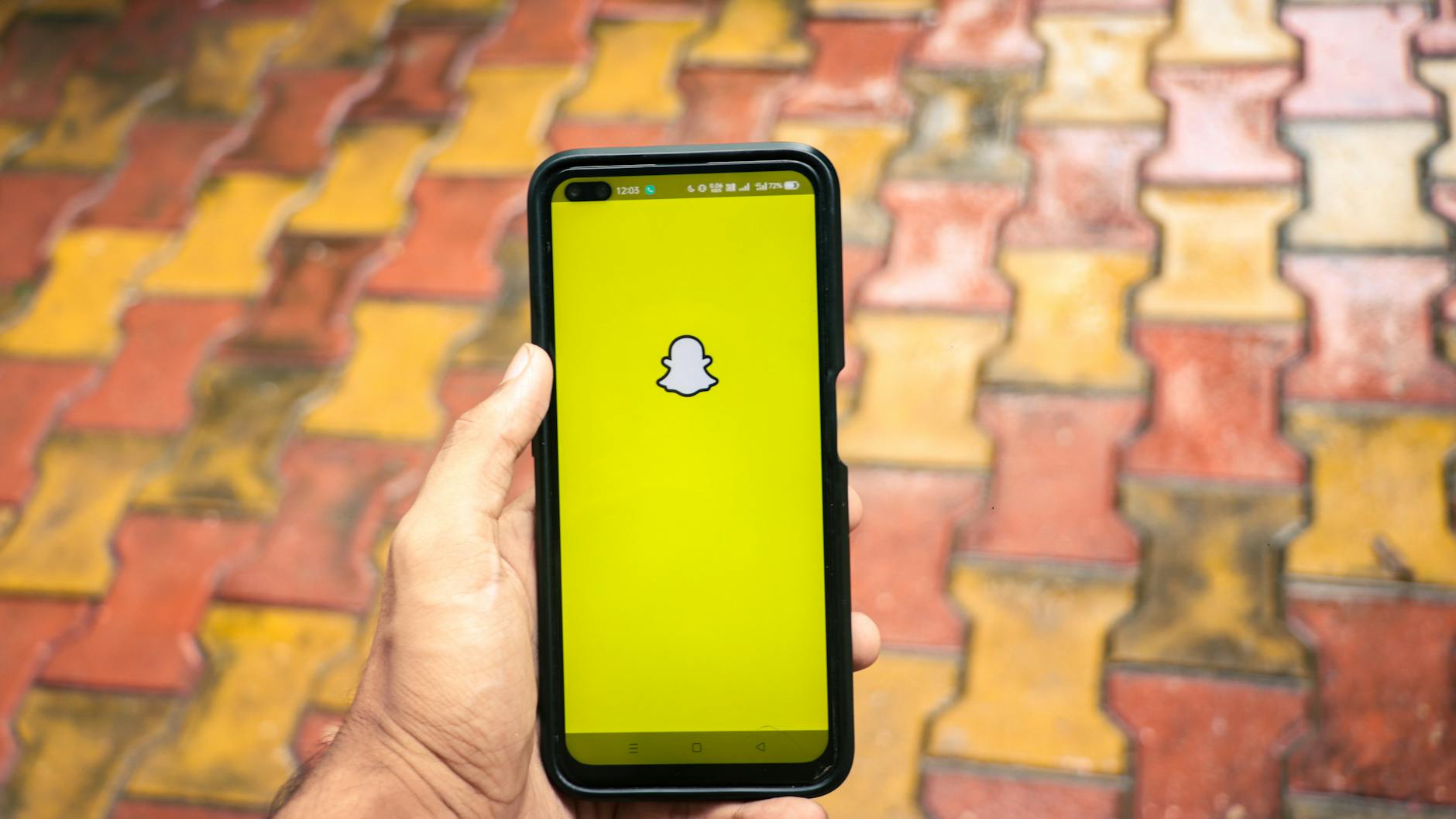
    How I Finally Made a Fucking Snapchat

    For years, I resisted Snapchat with the kind of stubborn determination that only comes from being absolutely convinced you’re right about something. The app seemed pointless to me, genuinely stupid in ways I couldn’t quite articulate but felt deeply in my bones. Every time someone mentioned it, every time I saw those little ghost logos or heard about streaks and stories, I’d feel this visceral resistance, this certainty that whatever Snapchat was offering, I didn’t need it. I had my reasons, or at least I thought I did. The ephemeral nature of it all felt gimmicky, the filters seemed childish, and the whole concept of messages that disappeared struck me as either paranoid or frivolous depending on how generous I was feeling that day. I watched friends obsess over maintaining streaks, those arbitrary chains of daily communication that meant absolutely nothing and yet somehow meant everything, and I felt smugly superior in my refusal to participate. I had Instagram, I had Twitter, I had all the platforms I needed to share whatever I wanted to share with the world. Snapchat seemed like a redundant addition to an already crowded digital landscape, another app demanding my attention and offering nothing substantial in return.

    The thing about Snapchat that bothered me most, I think, was how aggressively casual it seemed. Everything about it felt designed for throwaway moments, for content that didn’t matter enough to preserve. The stories disappeared after twenty-four hours, the messages vanished after you read them, and the whole ecosystem seemed built around the premise that nothing you shared was worth keeping. As someone who cared about creating things that lasted, who spent hours crafting posts and editing photos and thinking about how my online presence would age, this felt almost offensive. Why would I want to put effort into something that would cease to exist almost immediately? The impermanence felt like a feature masquerading as a philosophy, a way to excuse low-quality content by pretending that ephemerality was somehow more authentic than permanence. I didn’t buy it. I thought people who loved Snapchat were settling for less, choosing convenience and immediacy over craft and intention. I thought they were missing the point of social media entirely, which in my mind was about building something, creating a body of work, leaving a digital footprint that meant something beyond the moment it was posted.

    My friends tried to convince me otherwise, of course. They’d tell me about how fun it was, how authentic and unfiltered compared to the carefully curated aesthetics of Instagram or the performative discourse of Twitter. They’d say that Snapchat let them be themselves in ways other platforms didn’t, that the disappearing messages created a freedom to share without worrying about permanent consequences. I’d nod along politely while internally dismissing everything they said. It all sounded like rationalization to me, like people trying to justify their addiction to yet another app by pretending it offered something unique when really it was just another way to waste time and fragment your attention across multiple platforms. I’d see people at dinner parties pulling out their phones to send Snaps instead of engaging with the actual humans in front of them, and it reinforced every negative opinion I’d formed. The app seemed designed to pull you away from reality rather than enhance it, to create artificial urgency around communication that didn’t need to be urgent, to gamify friendship in ways that felt fundamentally dishonest.

    But then, and I’m still not entirely sure how this happened or why it took so long, I had an idea. It came to me today, literally as of writing this post, and it was so obvious in retrospect that I’m almost embarrassed it took me this long to think of it. I could use Snapchat to share my writing. Not just links to my writing hosted elsewhere, not promotional posts directing people to other platforms, but actual pieces of writing shared directly on Snapchat itself. The ephemeral nature that I’d always seen as a flaw suddenly looked like a feature. The casual, unfiltered aesthetic that had seemed cheap and lazy suddenly looked like an opportunity. The platform that I’d dismissed as pointless and stupid and silly suddenly made perfect sense as a space for experimental writing, for fragments and thoughts and pieces that didn’t need to be permanent, that could exist in the moment and then disappear without the weight of permanence attached to them.

    The more I thought about it, the more excited I got. Snapchat could be a space for drafts, for ideas in progress, for writing that was raw and unpolished in ways that felt too vulnerable for other platforms. On Instagram, everything needs to look perfect, needs to fit within a certain aesthetic framework, needs to be optimized for engagement and presentation. On Twitter, everything needs to be clever or insightful or provocative, needs to perform well within the constraints of character limits and algorithmic promotion. But on Snapchat, where everything disappears anyway, where the whole ethos is built around casual sharing and temporary content, I could experiment without the pressure of permanence. I could share stream-of-consciousness pieces, unedited thoughts, fragments of larger works, observations that didn’t need to be polished into essays or compressed into tweets. The lack of permanence that had always felt like a limitation suddenly felt liberating.

    And there was something else too, something about the intimacy of the platform that started to appeal to me once I reframed it through the lens of writing. Snapchat stories feel more personal than Instagram posts, more immediate than blog entries, more direct than tweets floating in the algorithmic void. When someone views your Snapchat story, there’s a sense of intentionality to it, a feeling that they chose to engage with your content in a way that feels different from scrolling past a post in a feed. The audience on Snapchat tends to be smaller, more curated, more genuinely interested in what you’re sharing rather than passively consuming whatever the algorithm serves them. For writing, especially experimental or personal writing, that kind of engaged audience matters. I started imagining sharing short pieces throughout the day, little bursts of writing that captured moments or thoughts or observations as they happened, creating a kind of living literary journal that existed in real-time and then faded away.

    The technical aspects of using Snapchat for writing presented some interesting challenges too, which oddly enough made the idea more appealing rather than less. The character limitations, the visual format, the way text appears on screen, all of these constraints would force me to think differently about how I presented my writing. I’d need to consider how words looked on the screen, how they interacted with backgrounds and images, how they could be broken up across multiple snaps or condensed into single frames. These constraints felt creative rather than limiting, similar to how Twitter’s character count pushed people to be more concise and intentional with their language. Snapchat would require a different kind of writing, something more visual, more immediate, more aware of itself as existing in a specific medium with specific affordances and limitations.

    I also started thinking about how the disappearing nature of Snapchat could actually enhance certain kinds of writing rather than diminish it. Poetry, for instance, often gains power from its transience, from the way it exists in a moment of reading and then lives on only in memory. Flash fiction and micro-essays often work better when they’re encountered as standalone pieces rather than as part of an archive. The confessional, diary-like writing that thrives on immediacy and rawness might actually be better suited to a platform where it doesn’t have to live forever, where the writer can share vulnerable thoughts without worrying about them becoming permanent fixtures of their online identity. The ephemerality that I’d always seen as Snapchat’s biggest weakness suddenly looked like one of its greatest strengths for certain types of creative work.

    There’s also something to be said for reaching audiences where they already are rather than trying to pull them to where you want them to be. I’ve always been guilty of this as a writer, of wanting people to come to my blog or my website or my carefully curated platforms rather than meeting them in the spaces they already inhabit. But the reality is that a lot of people, especially younger people, spend way more time on Snapchat than they do reading blogs or visiting websites or even scrolling Instagram. By refusing to engage with Snapchat, I was essentially refusing to meet a huge potential audience where they already were, insisting that they come to me instead of being willing to go to them. That’s a pretty arrogant position when you think about it, this idea that my preferred platforms are inherently superior and everyone else should adapt to my choices rather than me adapting to theirs.

    So today, I finally did it. I created a Snapchat account, something I never thought I’d do, something that felt almost like a betrayal of all my previous convictions about the platform. But as soon as I set it up, as soon as I started thinking about how I could actually use it for writing, all that resistance melted away. It felt exciting in a way that social media hasn’t felt exciting to me in years, like discovering a new creative medium rather than just signing up for another app. The possibilities started multiplying in my mind, all the different ways I could experiment with sharing writing in this format, all the different types of content I could create that wouldn’t work as well on other platforms.

    I’m sharing my Snapchat here, which also feels strange because I’ve spent so long actively avoiding having a Snapchat to share. But here it is, this thing I finally made after years of resistance: https://snapchat.com/t/uOWAU6Py. I don’t entirely know what I’m going to do with it yet, what form my writing experiments on the platform will take, how frequently I’ll post or what kinds of content I’ll prioritize. But that uncertainty feels good, feels generative, feels like the beginning of something rather than just another obligation or another platform to maintain out of social necessity.

    What strikes me most about this whole experience is how long it took me to have what seems, in retrospect, like an incredibly obvious realization. I spent years dismissing Snapchat without ever seriously considering how it might be useful for my specific interests and goals. I let my initial impressions and biases completely overshadow any possibility that the platform might offer something valuable if approached from a different angle. It’s a good reminder that dismissiveness, even when it feels justified, often blinds us to possibilities we haven’t considered yet. The things we’re most certain are pointless or stupid or silly might actually be incredibly useful once we find the right frame of reference, the right use case, the right way of thinking about them.

    I’m not saying Snapchat is secretly brilliant or that everyone should rush out and create an account. The concerns I had about the platform weren’t entirely wrong, the gamification and the performative aspects and the way it can fragment attention are all still real issues. But my blanket dismissal was too broad, too absolute, too unwilling to acknowledge that something can have problems and still offer value, can be silly in some contexts and useful in others, can be pointless for one purpose and perfect for another. Snapchat isn’t inherently stupid, it turns out. It was just stupid for the uses I was imagining, for the way I was thinking about social media and content creation. Once I found a use case that actually aligned with my interests and goals, the whole platform looked completely different.

    There’s something humbling about changing your mind on something you’ve been stubborn about for years. It requires admitting that you were wrong, or at least that you were missing something important, that your confidence was misplaced. But it also feels good in a weird way, like growth, like evidence that you’re still capable of reconsidering your positions and adapting to new information instead of just calcifying into increasingly rigid opinions. I’m genuinely excited about experimenting with writing on Snapchat, about seeing what kinds of creative work emerge from engaging with the platform’s specific constraints and affordances. Maybe it’ll turn out to be exactly as pointless as I always thought it was, maybe I’ll abandon the account in a week and return to my previous platforms. But maybe not. Maybe this will open up new creative possibilities I haven’t even imagined yet. Maybe the thing I was so certain was stupid will actually teach me something valuable about writing and sharing and connecting with audiences.

    So yeah, I finally made a fucking Snapchat. After years of resistance, after countless conversations where I explained why I’d never create an account, after so much certainty that the platform had nothing to offer me. And the twist, the thing that makes this whole story feel almost absurdly obvious in retrospect, is that the solution was right there the whole time. I could have been using Snapchat for writing all along, could have been experimenting with the format years ago, but I was too busy being certain it was pointless to actually consider whether it might be useful. Sometimes the things we resist most stubbornly are the things we need to reconsider most carefully. Sometimes the platforms we dismiss as stupid are just waiting for us to figure out the right way to use them. Sometimes all it takes is one simple idea, one reframing of the question, to completely change your perspective on something you thought you understood.

    I’m not sure where this experiment will go, what forms my Snapchat writing will take, whether anyone will actually engage with it or if I’ll just be shouting into another void. But for the first time in years, I’m genuinely curious about a social media platform, genuinely excited to see what’s possible rather than just maintaining a presence out of obligation. And that feeling alone, that sense of creative possibility and experimentation, makes creating the account worthwhile. Even if I was wrong about Snapchat being pointless for all these years, at least I’m willing to admit it now, at least I’m open to the possibility that I might discover something valuable in a place I never expected to look.

    Fediverse Reactions