The Musings of Jaime David
@jaimedavid.blog@jaimedavid.blog

The writings of some random dude on the internet

1,089 posts
1 follower

Tag: Satire

  • Death or Cake? The Absurdity of “Fake Death” Birthday Posts

    Death or Cake? The Absurdity of “Fake Death” Birthday Posts

    Social media, ladies and gentlemen, has officially lost its goddamn mind. Somewhere along the way, we collectively decided that ordinary birthdays—those simple, beautiful reminders that we haven’t yet kicked the bucket—aren’t dramatic enough. No, no, now we need to turn a person’s birthday into a funeral announcement. You know the ones I’m talking about: “We sadly remember the life of John Doe, who would have turned 27 today…” And then, surprise! It’s not a memorial. It’s a cake. Candles. Confetti. People sending GIFs of balloons. What the hell?

    Let’s unpack this nonsense. First off, birthdays are already inherently ego-driven events. You survived another year. You deserve cake. You might even deserve a little attention on social media. But no. Social media has to escalate everything into a spectacle, a melodrama, a minor tragedy disguised as celebration. And the sad truth? People eat it up. They comment, they “like,” they share. It’s all part of the great modern circus of manufactured emotion. Nobody can just say, “Hey, happy birthday.” That would be too simple, too human, too boring. Instead, we have to pretend the person died, briefly scare everyone, and then clap our hands like trained seals when the twist is revealed.

    Now, I get it. There’s a dark humor element here. Some of these posts are clever. “Haha, you thought I was dead!” That’s fine. A little gallows humor, a wink at mortality. But most of these posts aren’t clever. They’re lazy, attention-seeking, tone-deaf exercises in social media chaos. They trivialize death for the sake of engagement. There’s something deeply unsettling about scrolling through your feed, seeing “RIP” posts every few minutes, and realizing half of them are just birthday shoutouts. It’s like the concept of death has been cheapened to the level of a cake emoji.

    And let’s talk about the psychology behind this. Why would anyone do this? Why would anyone want to momentarily convince their friends and family that they’ve shuffled off this mortal coil, only to reveal they’ve merely survived another orbit around the sun? Maybe it’s about attention. Maybe it’s about making people feel something—anything—because birthdays are too ordinary in the age of TikTok dramatics. Maybe it’s about control. You get to scare people, get the sympathy likes, then reveal your triumph over the grim reaper in a single scrollable post. Congratulations, you’ve gamified death. How’s that feel?

    The irony is thick enough to choke on. In a society obsessed with notifications, followers, and virtual validation, what better way to manufacture emotion than by dangling the ultimate fear in front of people’s eyes? Death. The great equalizer. The one thing we all dread. And then, wham, you switch the punchline: cake. Balloons. Singing emojis. And everyone laughs or reacts or posts a crying-laughing emoji because nothing’s sacred anymore, not even mortality. It’s the social media equivalent of putting a clown mask on the Grim Reaper and making him dance at a birthday party.

    And I think the most ridiculous part is how normal this has become. Scroll down any platform, and you’ll see it: fake obituaries, fake memorials, fake mourning, all for someone’s birthday. It’s a generation-wide prank that nobody admits is a prank. You can’t just scroll past anymore. You see “We mourn the passing of…,” and your heart jumps. Your stomach knots. You think, oh god, did this happen? And then, five seconds later, you realize, nope. The only thing that passed was subtlety, dignity, and, probably, your faith in human creativity.

    Here’s my advice: stop it. Stop turning birthdays into theatrical near-death experiences. Stop cheapening death for clicks and reactions. There is nothing clever about this, unless your goal is to demonstrate that we are all desperate for attention and increasingly numb to human emotion. Let people celebrate their birthdays without the pretense of death. Let people grieve when someone dies without the interference of a punchline. Let the absurdity end, for Christ’s sake. Or don’t. But if you continue, I’ll just assume you’re trying to see how many people you can emotionally manipulate before we all give up and start faking our own deaths just to get noticed.

    In conclusion—and yes, I’m actually trying to conclude something in this digital chaos—social media has transformed life, and death, into a performance art piece nobody asked for. Birthdays are now faux-funerals. Funerals are now performances. And we’re all just extras in a tragicomedy nobody rehearsed for. The moral? Maybe there isn’t one. Maybe it’s just another year survived, another birthday survived, another scroll through idiocy survived. And isn’t that, in its own way, worth celebrating?

  • The Vanishing Logout Button: A Modern-Day Digital Treasure Hunt

    The Vanishing Logout Button: A Modern-Day Digital Treasure Hunt

    Let’s talk about something that should be simple, but somehow, in the twisted labyrinth that is modern app design, has become one of the hardest things to find: the logout button. You know, that one basic feature that used to sit right there, plain as day, like a friendly exit sign? Yeah, that one. Because nowadays, trying to log out of an app feels less like managing your account and more like competing on a game show called Find the Damn Logout Button Before You Lose Your Mind.

    You’d think, in a world filled with advanced AI, billion-dollar app development budgets, and user-centered design teams, that logging out of an app wouldn’t feel like a scavenger hunt. But oh no. You open the app menu—nothing. You tap on “Settings”—nope. You dig through “Privacy,” “Account Info,” “Help,” and sometimes even “About Us” like some desperate archaeologist hoping to unearth an ancient relic labeled “Logout.” You start thinking maybe it’s not there at all, maybe it’s hidden behind a secret code or only appears under the light of a full moon.

    And the thing is, it’s not even paranoia to think this is intentional. Because it is. It’s absolutely intentional. These companies don’t want you to log out. They want you in, all the time, forever, until your device melts or your account gets hacked—whichever comes first. It’s like they’ve collectively decided that making the logout button hard to find will make you just… give up and stay logged in. And the sad part? It kinda works.

    Let’s be honest—most of us, after five minutes of trying to find it, just say screw it and close the app. Because who has the time? Who wants to play hide and seek with a settings menu? We just lock our phones and move on, pretending that closing an app is the same as logging out. But deep down, we know it’s not. We know that somewhere, in some server, we’re still logged in. Our data, our activity, our everything—still connected.

    Now, look, I get it. Some people don’t care. Some folks keep every app logged in permanently—banking app, social media, email, all of it—because it’s convenient. But me? I like a bit of control. I like knowing I can sign out when I damn well please. Because to me, that’s basic digital hygiene. That’s like washing your hands after you use a public computer. You don’t just leave your login sitting there, waiting for someone to mess with it.

    And it’s not even just one kind of app. It’s everywhere. Social media apps, streaming apps, shopping apps, even fitness trackers. You go to “Profile,” and you think, okay, surely it’s here. But no. You scroll down. You find “Invite a Friend,” “Rate This App,” “Legal Info,” “Terms of Service,” “Cookie Preferences,” “Community Guidelines,” and “Data Sharing Policy.” Like, bro, you have ten menus about data sharing, but you can’t give me one clear button to log out?

    It’s like they’re mocking us. Like they’re saying, “Sure, you can leave… if you can find the door.”

    It’s absurd when you think about it, how something that used to be so straightforward has become a digital puzzle. And it’s all part of this design philosophy that’s less about helping the user and more about trapping them. Because when you’re logged in, they get more data. They can track your habits, your preferences, your time spent in the app. Every extra second you’re in there—even passively—feeds the algorithm, and the algorithm feeds their bottom line.

    So yeah, they hide the logout button. Because your convenience isn’t their priority. Your retention is.

    And if you think I’m exaggerating, go ahead—try it right now. Open up one of your apps and see how many taps it takes to log out. Some will take three taps. Others, seven. Some will make you confirm multiple times, like you’re breaking up with them. “Are you sure you want to log out?” Yes. “Are you really sure?” Yes. “Would you like to tell us why you’re leaving?” No, I just want to leave.

    And some apps, the truly diabolical ones, will even hide it behind euphemisms. “Sign Out” becomes “Disconnect.” “End Session.” “Switch Account.” Like we’re in a spy movie. Just call it what it is! There’s nothing wrong with “Logout.” It’s a classic. A legend. It doesn’t need rebranding.

    It’s funny, though, because it mirrors real life. Think about it—how often do systems make it easy to enter but hard to exit? Subscriptions are easy to start, but canceling them is a nightmare. Joining a mailing list takes one click, unsubscribing takes four. Signing up for an account is effortless; deleting it takes a journey through customer support purgatory. And the logout button is just another symptom of that bigger disease—the intentional complication of freedom.

    Because that’s what logging out really is: a tiny act of digital freedom. It’s saying, “I’m done for now. You don’t get to follow me 24/7.” But these companies don’t want that. They want you always on, always accessible, always connected, always generating data. They sell convenience, but what they’re really offering is control.

    And look, I’m not anti-tech. I love tech. I live in it. But there’s a difference between innovation and manipulation. Between streamlining a process and intentionally obscuring it. Making logout hard to find isn’t “user experience optimization.” It’s psychological design—keeping users inside the ecosystem as long as possible. It’s the same principle that makes notifications constant, menus infinite, and “Are you still watching?” prompts endless.

    At some point, you just start to laugh. Like, imagine explaining this to someone from the early 2000s: “Yeah, in the future, we’ll have powerful computers in our pockets, connected to the world, capable of AI and high-speed everything… but it’ll take us five minutes just to figure out how to log out of Facebook.” They’d look at you like you’d lost your mind.

    And maybe, in a way, we have. Because we’ve accepted this nonsense as normal. We’ve normalized apps dictating how easy it should be for us to leave. That’s not normal. That’s not good design. That’s manipulation disguised as convenience.

    It’s why I’ll always advocate for clear, accessible, and visible logout buttons. Not buried, not hidden, not disguised. Just there. Because honestly, it’s not even about tech—it’s about respect. Respect for the user’s time. Respect for their choice. Respect for their right to privacy.

    When you hide the logout button, you’re not just hiding an option—you’re hiding autonomy. You’re telling users, “We know better than you.” And that’s the core problem with modern digital design—it’s not built around empowerment anymore; it’s built around entrapment.

    So yeah, I’ll say it: make it easy to log out. Put the button somewhere obvious. Don’t make it a riddle. Don’t make it feel like a secret club. Just let people leave if they want to. Because if your app is good, people will come back anyway. You don’t have to hold them hostage.

    And for those of us who still care about our digital safety—who like to keep our accounts secure, who like to sign out when we’re done—it’s not too much to ask. It’s just basic functionality. I shouldn’t have to embark on a digital expedition through every submenu and toggle switch to do something as simple as end a session.

    If you want to talk about user experience, that’s where it starts. Not with flashy UI, not with algorithmic recommendations, but with trust. Trust that the user knows what they want. Trust that the user can make their own choices. Trust that if they want to log out, it’s for a reason.

    Because really, that’s the heart of it. The logout button isn’t just a feature—it’s a symbol. A symbol of autonomy in an ecosystem that thrives on dependency. And every time a developer buries it a little deeper, every time an update moves it a little further away, it’s one more reminder of how much control we’ve quietly surrendered for convenience.

    But maybe, someday, we’ll get it back. Maybe one day, logging out won’t feel like solving a digital maze. Maybe one day, the logout button will sit proudly where it belongs—visible, accessible, and simple. Until then, I’ll keep digging, clicking, and scrolling through the depths of app settings, like a digital explorer searching for the mythical treasure at the end of the menu.

    Because in this age of constant connectivity, sometimes, the greatest act of rebellion is simply logging out.

  • The Cool S: Humanity’s Forgotten Symbol of Hope

    The Cool S: Humanity’s Forgotten Symbol of Hope

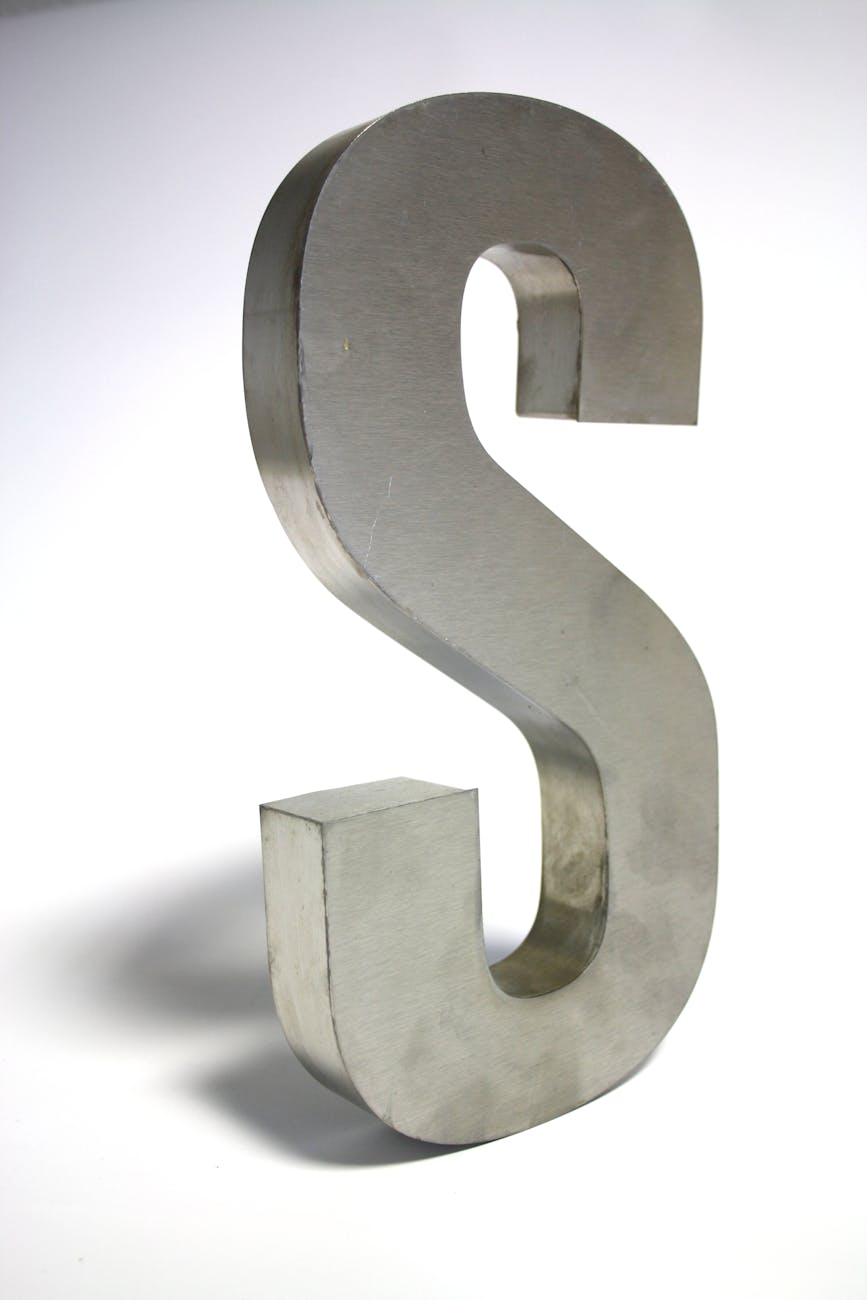
    When historians of the distant future dig through the cultural rubble of the early 21st century, they will no doubt stumble upon humanity’s most enduring legacy: not smartphones, not skyscrapers, not the internet. No, what they will find etched into every school desk, notebook margin, and bathroom stall across the globe is the Cool S. The mysterious six-line wonder, the untraceable emblem of childhood rebellion and unity, the doodle that transcended language, geography, and curriculum standards. And here is the shocking truth: perhaps, all along, this “S” was never just for “super,” “skater,” or “street,” but for something far nobler—hope.

    Think about it. No teacher taught us the Cool S. No official art curriculum contained a chapter titled “How to draw the universal sign of middle-school coolness.” And yet, every child, regardless of class, race, religion, or snack preference, knew it. It emerged in elementary schools like a secret handshake of the cosmos. You could move to a new school district in 1997, show up knowing no one, sit down with your cafeteria tater tots, and within five minutes you’d be quietly sketching an S in your notebook. And someone across the table would nudge you and nod, because they, too, carried the sacred knowledge. If that’s not hope, then what is?

    The Cool S was democracy in its purest form. You didn’t need artistic ability, social clout, or financial resources to draw it. Unlike collecting Pokémon cards or wearing name-brand sneakers, this status symbol was free. All you needed was a pencil and a willingness to scratch six little lines. In fact, the Cool S may have been the only universally accessible art project in human history. Picasso required a studio; Van Gogh needed oils; Banksy requires entire abandoned buildings. But every twelve-year-old, high on Capri Suns and raw angst, could summon the Cool S like a spell of solidarity.

    Superman had his S, yes. But Superman’s S required Hollywood lighting, Kryptonian backstory, and a carefully ironed spandex chest piece. The Cool S asked for nothing but lined notebook paper and maybe a five-minute lull in math class. Yet its presence was just as heroic. For the lonely kid ignored at recess, sketching the S was a small rebellion, a way to whisper, “I exist.” For the bored student, it was a silent prayer: “Please let this algebra period end.” For the ambitious doodler, connecting those lines into three-dimensional block letters was a feat rivaling Michelangelo’s Sistine Chapel. In every case, the Cool S carried with it a spark of resilience—a tiny, pointy, angular beacon of hope.

    Critics may say this is all nonsense. “It was just a doodle,” they sneer. But tell me: if it was just a doodle, why did everyone know it? Why did it appear on continents separated by oceans, in schools with no internet, in eras before memes could spread across social media? The Cool S has no known inventor. It emerged, spontaneously, like a Platonic ideal—the Jungian archetype of recess boredom. If aliens ever visit Earth, they won’t ask about Shakespeare or Beethoven. They’ll point to a weathered brick wall in a condemned middle school building and say, “We see you, fellow travelers of the cosmos. You, too, have known the S of hope.”

    Imagine, for a moment, what the world would be like if we actually leaned into this truth. What if the Cool S became our global emblem? Picture world leaders stepping onto the stage at the United Nations, not beneath sterile national flags, but beneath a giant metallic Cool S, glimmering with fluorescent optimism. Picture hospitals draped with banners not of corporate logos but of the S—because isn’t hope the first prescription we all need? Picture Superman himself peeling back his shirt to reveal not the stylized “S” of Krypton, but the six-line universal S of middle school. Metropolis would weep with joy.

    Of course, we would need to reclaim its meaning from its dubious past. For decades, the Cool S was associated with bathroom graffiti, skateboarding magazines, and the vague whiff of delinquency. But so was rock and roll. So was jazz. So was every single thing humans later decided was culturally important. If we can put Andy Warhol’s Campbell’s soup cans in a museum, we can put the Cool S on our money. In fact, put it on the dollar bill where the pyramid is. At least then people would understand it.

    The Cool S also teaches us something radical: the power of collective imagination. Nobody gave us instructions, yet we all drew it. Nobody told us it meant anything, yet it meant everything. It was not an assignment—it was ours. That’s what hope really is: the human instinct to create meaning out of thin air, to take six parallel lines and see not a mess, but a symbol. In a world constantly divided by politics, economics, and Marvel vs. DC debates, the Cool S is proof that we can, sometimes, all agree on something.

    In conclusion, if hope had a shape, it would not be a heart, a rainbow, or even a dove. Those are too obvious, too sentimental, too Hallmark. Hope is sharper than that. Hope is edgy, awkward, drawn in the margins when no one’s paying attention. Hope is the Cool S. And if future civilizations remember us for nothing else, let them remember that, despite our wars, our climate crises, and our TikTok dance trends, we still found a way to unite over something so simple, so perfect, and so universal.

    So next time you’re sitting with a pen and a scrap of paper, don’t just doodle mindlessly. Draw the S. Draw it proudly. Draw it as if you’re sketching the very emblem of resilience. Because you are. And who knows? Maybe someday, in the distant future, when humanity has colonized Mars and uploaded its consciousness into holographic clouds, a bored kid will sit in a Martian math class, pick up a stylus, and draw the Cool S. And the kid next to them will nod knowingly. That—that—will be hope.

  • The Lorax Left When We Needed Him Most

    The Lorax Left When We Needed Him Most

    We’ve all been told that The Lorax is a story about environmentalism, corporate greed, and the consequences of unchecked exploitation of nature. And sure, that’s all in there. But let’s not ignore the uncomfortable truth: the Lorax, the self-declared guardian of the forest, leaves when things get bad. He doesn’t protest harder. He doesn’t organize. He doesn’t chain himself to the last Truffula tree or build a grassroots resistance. He just floats up into the sky and vanishes, leaving behind a cryptic stone with the word “UNLESS” on it. That’s it. That’s the end of his fight. The guy who “speaks for the trees” gives a vague hint and then peaces out.

    And what does that really mean? If you speak for the trees, shouldn’t that come with a little more responsibility? Speaking is great—important, even—but when the trees are being chopped down one by one and the air is thick with smog, maybe it’s time for more than words. Maybe it’s time to act. But the Lorax doesn’t organize a coalition of forest creatures. He doesn’t lobby the Once-ler. He doesn’t call a press conference or draft legislation. He just lectures a bit, gets ignored, and then bails. If he truly cared, wouldn’t he have stayed until the bitter end, standing in front of the last tree like it was the sacred line in the sand?

    The Lorax’s exit feels less like noble despair and more like strategic abandonment. Sure, the Once-ler didn’t listen. But people don’t always listen the first time—or the tenth. That’s the whole point of activism. You keep going. You show up. You resist. You make noise. But the Lorax essentially says, “Welp, I tried,” and disappears. Can you imagine if real-world climate activists behaved this way? Greta Thunberg just floating into the clouds after one bad press conference? The Sierra Club just closing shop the moment a single forest was paved over? That’s not activism. That’s quitting with extra flair.

    The message we should have gotten from The Lorax is that caring means sticking around, even when things look hopeless. Especially when they look hopeless. Instead, we get this mythical tree-hugger who delivers a warning, gets ignored, and then evaporates—leaving a child (and us) with the burden of fixing everything after the fact. And that’s a lot of pressure to put on a kid. Maybe instead of just leaving behind a stone with a single cryptic word, the Lorax could’ve left an instruction manual, a protest plan, or at the very least, a phone number.

    So yes, the Lorax speaks for the trees. But maybe what we needed was someone who fought for them. Someone who got arrested at a pipeline protest, who glued themselves to the Once-ler’s machinery, who built a Truffula Tree Sanctuary and refused to leave. Someone who stayed. Because at the end of the day, speaking only goes so far. Action—messy, relentless, inconvenient action—is what actually makes a difference. And when the trees were gone, the Lorax should have been the last one standing. Not the first one to vanish.

  • Green Eggs and Peer Pressure: Sam-I-Am and the Art of Culinary Harassment

    Green Eggs and Peer Pressure: Sam-I-Am and the Art of Culinary Harassment

    Green Eggs and Ham is often hailed as a fun, quirky children’s book that encourages trying new things. But if you peel back the rhymes and absurd imagery, what you actually get is a masterclass in coercion. Sam-I-Am is not a friendly, helpful character. He’s an unrelenting stalker who harasses another being into submission. The entire plot is essentially a 50-page pressure campaign to force someone to eat a plate of suspiciously colored food they explicitly said they didn’t want.

    From the very beginning, the unnamed protagonist sets a clear boundary: “I do not like green eggs and ham.” That’s it. That’s the end of the conversation, or at least it should be. But not for Sam-I-Am. No, Sam takes that rejection as a personal challenge. Instead of respecting the other character’s autonomy or taste, he launches a full-on psychological operation. He follows him around, repeats the same demand with slight variations, and proposes increasingly absurd locations and companions for this unsolicited meal. In a house? With a mouse? In a box? With a fox? It’s not cute—it’s harassment dressed in meter and rhyme.

    At some point, this stops being a book about trying new things and becomes a book about wearing someone down until they cave in just to make you go away. Sam doesn’t care about the actual food. He cares about control. He needs the other character to submit, to prove him right, to feel that power shift. This isn’t encouragement—it’s manipulation. And the moment the protagonist finally gives in and eats the green eggs and ham? That’s not a triumph of open-mindedness. That’s Stockholm Syndrome.

    Let’s not ignore the fact that green eggs are, by all logic, spoiled. There’s no mention of food safety here. What kind of shady diner did Sam-I-Am pick these up from? Are these eggs laced with mold, food dye, or something more nefarious? The book doesn’t say. What it does say—loud and clear—is that you should ignore your instincts, disregard your boundaries, and eventually give in if someone just nags you long enough. That’s not a lesson kids need.

    And then, of course, when the protagonist finally eats the green eggs and ham and says he likes them, it’s framed like a happy ending. But is it? Or is it a resignation to pressure, a surrender to the exhausting persistence of someone who simply wouldn’t take “no” for an answer? Sam-I-Am may be persistent, but he’s also pushy, overbearing, and disturbingly fixated on controlling someone else’s meal choices.

    In the end, Green Eggs and Ham isn’t about culinary adventure—it’s about how relentless people will cross every line just to prove a point. And maybe, just maybe, the real moral isn’t “try new things,” but “please leave people alone when they say no, regardless of how delicious you think your fluorescent ham might be.”

  • The Cat in the Hat Is the Villain, and It’s Time We Admit It

    The Cat in the Hat Is the Villain, and It’s Time We Admit It

    For decades, The Cat in the Hat has been celebrated as a whimsical children’s classic, a cornerstone of early literacy, and a testament to Dr. Seuss’s imagination. But beneath the rhymes and colorful chaos lies a troubling narrative that has somehow evaded proper scrutiny. Let’s be honest—the Cat in the Hat isn’t some harmless trickster. He’s an uninvited intruder with no respect for boundaries, safety, or the psychological well-being of children. In any other context, this would be a cautionary tale about home invasion, manipulation, and gaslighting.

    Consider the setup: two children are left home alone on a rainy day. Already, the vulnerability is palpable. Enter a six-foot-tall anthropomorphic cat wearing a striped hat who just walks in. No knocking, no consent, just immediate occupation of the space. He doesn’t introduce himself with any sort of accountability. Instead, he performs a bizarre show-and-tell of danger, balancing on balls and juggling household objects with zero regard for safety. The family fish—acting as the sole voice of reason—is immediately dismissed and treated like a buzzkill for daring to raise concerns about liability and injury.

    And then the Cat brings in Thing 1 and Thing 2, two feral agents of chaos who proceed to wreak havoc on the house. Their behavior borders on malicious. They tear through the place like toddlers on a sugar high in a demolition derby. This isn’t entertainment—it’s an escalation. At no point do the children have any real control over the situation. They are essentially hostages in their own home, guilt-tripped into either compliance or silence. The psychological pressure is off the charts. And after all the destruction, the Cat conveniently summons a clean-up contraption, erasing the physical evidence like a criminal wiping down a crime scene. “No harm done,” he implies, as if trauma isn’t a factor.

    This narrative teaches children all the wrong lessons. That charismatic intruders can be fun. That protest is futile. That covering up damage is better than taking responsibility. That chaos is acceptable as long as it’s cleaned up before the adults get home. And above all, that consequences are optional if you smile wide enough. The Cat doesn’t apologize. He doesn’t learn. He simply leaves, free to pull the same stunt on another unsuspecting household. He is, in essence, a serial boundary violator who wraps his anarchy in a bow of rhymes and slapstick.

    It’s time we retire this character as a lovable icon and recognize him for what he is—a cautionary symbol of unchecked ego disguised as fun. Maybe it’s satire, maybe it’s a subtle warning, or maybe it’s just another example of how we excuse harmful behavior when it’s packaged with enough flair. Either way, the Cat in the Hat is not your friend. He’s the villain of the story. And frankly, someone should’ve called animal control.

  • Coming 2029: The Rise of the FettyWapVerse

    Coming 2029: The Rise of the FettyWapVerse

    Mark your calendars, update your firmware, and brace your local fediverse instance, because the year is 2029—and the streets, both digital and literal, are buzzing with rumors of the return. Not just of the man, but of the movement. Word is, Fetty Wap is slated to be released from federal prison in 2028, and insiders are already whispering that his next project won’t be a mixtape, a tour, or even a comeback album. No, it’s something far more disruptive. We’re talking about a techno-cultural rebirth. We’re talking about the FettyWapVerse.

    Predicted to launch just months after his reentry into society, the FettyWapVerse will reportedly be a decentralized social media platform so soaked in trap energy and post-prison clarity that it threatens to destabilize Mastodon and make Twitter finally tap out for good. This isn’t your average “rapper launches an app” story. This is the tale of a man who spent his bid in the metaphorical coding dojo, studying Python between lockdowns and designing server architecture on commissary napkins. By the time the gates open, he’ll be stepping into the world with a blueprint to free not just himself, but the internet. One squint at a time.

    Sources say the FettyWapVerse will feature Wap-to-Wap messaging, “Trapfluencer” verification badges, and a hyperlocalized content algorithm known simply as The Remy Engine. Instead of retweets or boosts, users will be able to “1738” each other’s posts, which causes a bass drop and a burst of digital confetti shaped like sunglasses. Clout will be tokenized. Server drama will be resolved via lyrical diss smart contracts. And moderators? There won’t be any. Instead, conflicts will be escalated to an on-chain tribunal of Zoo Gang AI avatars trained on 2015 tour footage and the emotional subtext of DatPiff comment sections.

    Privacy? Guaranteed. Data mining? Not in the trap. Advertisers? Kicked out at launch. All user data will be stored in encrypted bars, only unlocked when someone drops a freestyle worthy of the blockchain. You won’t be able to buy followers, but you can earn them by contributing to daily communal remix challenges and correctly identifying obscure Fetty ad-libs from unreleased tracks.

    If the rumors are true, and Fetty Wap is indeed plotting the FettyWapVerse from behind bars, we may be standing on the edge of a digital era none of us are ready for. This isn’t the return of a man—it’s the revenge of a vision. The tech world laughed in 2015. They shrugged again in 2023. But in 2029, they may very well wake up in a decentralized landscape ruled not by billionaires in hoodies, but by a man with one eye on the code and the other forever squinting at destiny.

  • 🔥 Fyre Festival II: Fyre Harder — Now With 100% More Collapse

    🔥 Fyre Festival II: Fyre Harder — Now With 100% More Collapse

    In a move that can only be described as “performance art with a pending class-action lawsuit,” Fyre Festival 2—also known as Fyre Harder—promises to outdo its predecessor by leaning full-throttle into the chaos, delusion, and dehydrated cheese sandwich energy that made the original an unforgettable cultural calamity. Where the first Fyre Festival accidentally created a hellscape of wet mattresses, feral influencers, and FEMA tents that looked like rejected props from The Day After Tomorrow, the sequel aims higher. Or perhaps, lower. Much lower.

    This time around, disaster isn’t a bug. It’s the entire brand identity.

    According to the official promotional material (printed on napkins and thrown from a drone into a field), Fyre Festival II is less a music festival and more of a post-modern survival LARP. Attendees are promised a week-long odyssey of “existential discomfort, unreliable logistics, and high-priced regret,” all while influencers livestream themselves trying to barter for clean water using NFTs and vibes.

    The location? Still technically undisclosed. Some reports say it’s an uninhabited sandbar near Honduras. Others say the GPS coordinates place it in the Bermuda Triangle. A few believe it’s inside a particularly aggressive escape room in New Jersey. One leaked pitch deck described the setting as “somewhere between a Gilligan’s Island reboot and the backrooms of a CVS.”

    What truly sets Fyre Festival II apart is its unapologetic embrace of failure. Instead of headlining acts, attendees are promised the concept of music. A hologram of Ja Rule may or may not appear depending on the cloud cover. There will be a stage, but it’s made of pallets and self-doubt. Food will be provided in the form of “gourmet experiential cuisine,” which is actually just uncooked lentils, half a tortilla, and an inspirational quote printed on a napkin.

    Lodging options include:

    • Budget PTSD” – a damp cot next to a guy named Randy who screams in his sleep,
    • Prometheus Elite” – a driftwood structure with a glow stick, and
    • VIP Ashes Package” – a patch of sand that used to be a tent, now scorched, for authenticity.

    Security is outsourced to a team of unlicensed astrologers, and the emergency response plan is “let nature take its course.” Wi-Fi is available, but only for streaming apology videos.

    Perhaps most innovative is the festival’s refund policy: it’s printed in disappearing ink and written in Latin. When asked for clarification, the organizers posted a TikTok of someone shrugging while on fire.

    Tickets? Sold out. Obviously. Because Fyre Festival II isn’t just a sequel—it’s a social experiment. It’s the modern Tower of Babel constructed entirely out of hype, delusion, and one man’s unshakable belief that charisma is a business model. Billy McFarland, now rebranded as a “vibe architect,” insists this is all intentional. “People want real,” he said in a recent interview while duct-taping a tent pole to a coconut. “They don’t want comfort. They want trauma with a wristband.”

    In the end, Fyre Festival II might be the most honest event of our time. It doesn’t promise paradise. It promises pain. And in an age of curated perfection, influencer filters, and AI-generated dopamine, maybe it’s refreshing to just pay $1,400 to suffer communally, in the mud, under a broken neon sign that reads “Hope.”

    We will not be attending. But we will be watching.

    From a safe distance.

    With snacks.

  • Peter Parker, You Have Wi-Fi: Why “No Way Home” Acted Like Online College Didn’t Exist

    Peter Parker, You Have Wi-Fi: Why “No Way Home” Acted Like Online College Didn’t Exist

    Let’s talk about Spider-Man: No Way Home, and let’s be honest—the whole “we didn’t get into MIT, so the world is over” meltdown? It was a lot. Yes, Peter, MJ, and Ned getting denied from college felt devastating, but this is 2024, not 1984. Why did everyone act like the only options were “go to MIT” or “suffer forever”? You’re telling me three teenagers who just survived a multiverse-level event, helped save the fabric of reality, and one of them is literally Spider-Man, had no backup plan? Like, not even an application to SUNY?

    Let’s start with the obvious: online college is a thing. You don’t even need magic to Google “accredited universities that accept late applications.” Peter Parker could have enrolled in ASU Online while swinging through Queens and taking notes on his phone between fights. MJ could have studied psychology, Ned could have gone into tech. Heck, Peter’s already used to working from rooftops and alleyways—distance learning was made for him.

    But okay, let’s say traditional college isn’t the vibe anymore. What about trade school? Imagine Spider-Man becoming an electrician, webbing things together while rewiring the city. He already fixed Stark Tech in like five minutes—he’d be a god at HVAC repair. Or MJ, who’s an artist and writer? Art school. She could’ve done graphic novels or film. Ned? Culinary school. I just feel like Ned gives big “surprise you with the best homemade ramen you’ve ever had” energy. But none of this even got mentioned.

    And look—they had the internet. They could’ve researched schools in other countries, other states, or ones that weren’t scared off by the whole “Spider-Man is a vigilante menace maybe??” thing. Are you telling me there wasn’t a single progressive liberal arts college in Oregon that would’ve been thrilled to admit Peter Parker just for the viral potential?

    And here’s another thing: in the real world, we have apps and websites dedicated to tracking corporate and institutional stances on controversial issues. Want to know if a fast food chain donated to anti-LGBTQ campaigns? There’s an app for that. Curious if a brand supported Black Lives Matter or banned union talk? There’s a dozen Reddit threads, rating lists, and activist toolkits. So you’re telling me that in the Marvel Cinematic Universe—the same world with Wakandan tech, nanobots, intergalactic travel, and sentient AI—they don’t have an app that tracks which businesses or colleges support Spider-Man?

    Please. There’d be an entire “SpideyScore” app. Five stars if your business is Spider-friendly, one star if your CEO once called him a “masked menace.” There would be restaurants with “Spider-Man Eats Free” signs. Coffee shops with themed drinks like “Webbed White Mocha.” Colleges with entire departments dedicated to superhero studies (Peter could’ve been a guest lecturer!). And we’re supposed to believe that he couldn’t find one school that looked at the situation and said, “Yeah, we’ll take a superhero who risked his life to fix a multiversal rupture and is also, by the way, extremely smart?”

    MJ and Ned could’ve used that app to filter schools by “superhero-friendly,” “non-J. Jonah Jameson influenced,” and “accepts unconventional applicants with chaotic lives and good intentions.” Even Reddit would’ve had a thread like: “What schools support Spider-Man?” complete with insider tips, screenshots, and a spreadsheet. The idea that they were all just…sitting around devastated instead of googling “schools that don’t hate Spider-Man” is kinda wild.

    And the fan support? Forget about it. There would be Spidey Support Forums, subreddits, Discord servers, fan zines, even underground clubs where people wear Spider-Man merch in solidarity. If people can build entire conspiracy communities over lizard people and the moon landing, they can absolutely organize to support a misunderstood teen superhero. And Peter could’ve tapped into that—not just emotionally, but logistically. Housing, job leads, safety nets, scholarships crowdfunded by the people.

    Now, let’s talk about Peter’s… career potential in a digital world. This man could’ve made millions with a Twitch stream. “Watch me fight Doc Ock in 4K.” He didn’t need Stark Industries—he needed a ring light and a donation link. Or hey, GofundMe. He literally saved the world multiple times. Start a campaign: “Spider-Man Needs Rent Money.” Boom. Viral in five seconds. TikTok would have his back. He could’ve even gotten sponsored by like…Red Bull and the New York Public Library. “Drink Red Bull. Fight crime. Read books.”

    But the biggest question: Where were his Avengers friends? Not a single one of them could write a recommendation letter? I’m not saying Thor needs to show up at the admissions office, but someone could’ve vouched for him. Happy? Sam Wilson? Doctor Strange?? Strange literally helped create the spell that erased Peter from existence. You’re telling me he couldn’t swing a call to MIT’s admissions office with, “Hey, he stopped a multiversal collapse and let me cast one of the most dangerous spells ever to save everyone. Maybe reconsider the rejection?”

    It’s wild that the entire plot hinges on this college rejection like it’s a Greek tragedy. Meanwhile, millions of real-world kids get rejected from their dream schools every year and somehow don’t break reality. Peter could’ve taken a gap year. Done community college. Gotten a job at Target while figuring it out. Or, you know—leaned on the many, many superheroes he knows who owe him their lives.

    Ultimately, “No Way Home” wanted us to feel Peter’s pain, and it worked. But it also ignored a very real-world truth: when the system fails people, communities often rise up to support them. Peter Parker didn’t need a spell—he needed a support app, an internet connection, and some well-placed community DMs.

  • Literal Lies and Honest Titles: What Book Names Really Say About the Story

    Literal Lies and Honest Titles: What Book Names Really Say About the Story

    There’s a strange joy in taking something seriously that was never meant to be. Book titles, for instance, are usually crafted to stir emotion, spark curiosity, or signal a theme. They’re tools of marketing and metaphor. But what happens when we ignore all that and take the title at face value? No metaphors, no symbolism, no themes—just cold, literal interpretation. It becomes a strange literary litmus test: how much does the book actually deliver on the words printed on the cover?

    Let’s start with the classics. To Kill a Mockingbird may be revered as a masterpiece of American literature, but if you take the title literally, it’s a fraud. No one kills a mockingbird in this book. No scene where Atticus Finch solemnly raises a rifle and ends the life of a chirping bird mid-song. Instead, it’s a metaphor—representing innocence, goodness, and the senseless destruction of both. Powerful, yes. But literal? Not in the slightest.

    Meanwhile, The Hunger Games is a rare case where metaphor and literal truth converge. The title promises a game centered on hunger—and that’s exactly what it is. Kids are forced to fight to the death in a dystopian arena, where starvation and scarcity are as lethal as weapons. It’s one of the few titles that, when taken literally, still lines up perfectly with the plot. You could summarize the entire premise in those three words.

    Then we have The Catcher in the Rye, which sets up an expectation that never materializes. There’s no rye field, no catching, and certainly no job title of “catcher.” What we get instead is Holden Caulfield fantasizing about saving children from metaphorical cliffs—an idea that exists entirely in his imagination. So while the title is rich in symbolism, it fails the literal test entirely. Rye remains untrampled.

    There are books that sound metaphorical and turn out to be shockingly literal. Jennette McCurdy’s I’m Glad My Mom Died is confrontational, darkly humorous, and absolutely direct. And it’s not just for shock value. The book outlines the emotional abuse McCurdy endured under her mother’s control and the complicated relief she felt when that control died with her. This title might sound exaggerated, but it’s not. It’s literal. Brutally so.

    Similarly, Trevor Noah’s Born a Crime feels like a metaphor until you realize it’s not. Under apartheid law in South Africa, Noah’s birth—resulting from an illegal interracial relationship—was literally considered a crime. The title is not poetic; it’s legal documentation. It’s a fact dressed as drama.

    In contrast, A Clockwork Orange is an outright con if taken literally. There are no oranges, clockwork or otherwise, anywhere in the novel. The phrase is a surreal British idiom referring to something natural turned mechanical—meant to describe the main character’s forced psychological conditioning. Clever and unsettling, yes. But literal? Not even close. If you came for sentient citrus, prepare to be disappointed.

    Literalism thrives in books like The Maze Runner, which gives you exactly what it promises: a guy runs through a maze. That’s the whole deal. The same goes for Holes by Louis Sachar. It’s about a kid digging holes. Hundreds of them. The holes are eventually revealed to be symbolic of justice and fate, sure, but none of that undermines the fact that they are also very real, round, dusty holes. These books don’t hide behind metaphor—they deliver.

    Some titles start vague but earn their literal meaning through context. Scar Tissue, Anthony Kiedis’s memoir, sounds metaphorical until you read about the self-inflicted damage and drug abuse that left the Red Hot Chili Peppers frontman physically and emotionally shredded. The title works because it is both a metaphor and a literal reference to his pain. Blue October’s Crazy Making, a memoir about toxic relationships and mental unraveling, likewise sounds vague until you experience the full descent chronicled inside. Then the title feels uncomfortably accurate—like a warning label disguised as a name.

    Meanwhile, The Big Bang Theory: The Definitive, Inside Story of the Epic Hit Series is so literal it’s almost boring. The full title rescues what initially sounds like a physics book. There’s no confusion once you read it in context. It’s about a sitcom, not the origin of the universe. It doesn’t pretend to be anything it’s not. In this case, the subtitle does all the work.

    And then there’s T.J. Kirk’s The Douchebag Bible, which seems like a joke until you open it. While it’s obviously not sacred scripture, it functions exactly like one might imagine a holy book for obnoxious narcissists would. It’s filled with rants, rules, diatribes, and the kind of worldview that feels designed to offend. In tone and structure, it’s not far off from a dystopian gospel. So while the title is satirical, it’s also weirdly appropriate. If there were ever a scripture for proud misanthropes, this might be it.

    Simple, single-word titles sometimes offer the most honest agreements with the reader. Divergent delivers a character who is, well, divergent—someone who doesn’t fit into a rigid social system. Educated tells the story of Tara Westover’s transformation from an uneducated survivalist upbringing into a Cambridge PhD. Both titles cut straight to the truth. They don’t try to sound deep. They just are.

    And then there’s The Curious Incident of the Dog in the Night-Time. At first, it sounds like some cutesy mystery. But take the title literally, and it’s almost a plot spoiler. A dog dies mysteriously at night, and the protagonist—a teenage boy with a neurodivergent perspective—investigates it. The incident with the dog is both the hook and the core event that sets the narrative in motion. It’s a curious incident. It happens at night. It involves a dog. It’s the title turned into chapter one.

    This whole exercise reveals something surprisingly profound: even in literature, where metaphor is king, literalism is an underrated diagnostic tool. When a title lines up exactly with the content, it often signals clarity, confidence, and intention. When it doesn’t, it might suggest mystery, metaphor, or sometimes just marketing sleight-of-hand. Literal titles aren’t always better—but they are honest in a way that many titles aren’t.

    Sometimes the title lies to you. Sometimes it tells you exactly what’s coming. And sometimes, it hands you a shovel, points to a hole, and says: this is exactly what it looks like.