
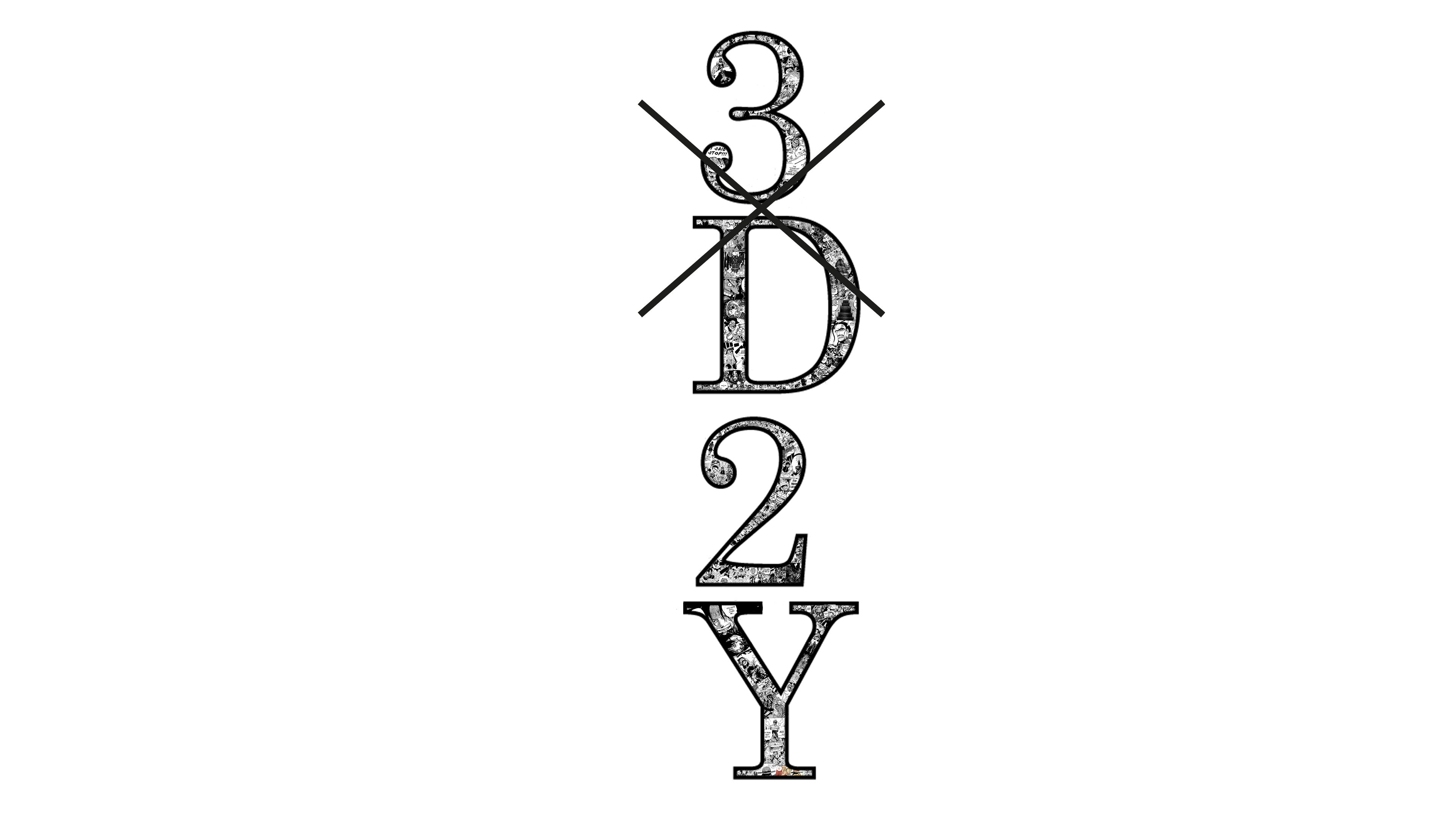
The phrase “3D2Y” is famously recognized among One Piece fans as the message Luffy tattooed on his chest, signaling to his crew to reunite two years later following the harrowing events at Sabaody Archipelago. At face value, this has always been interpreted as a simple marker for a timeskip — a narrative device to show growth, development, and readiness for the challenges ahead. Yet, a closer, more layered reading suggests that “3D2Y” might also function as a cryptic foreshadowing: the convergence of three distinct bearers of the “Will of D” after two years, each representing a powerful faction engaged in the larger struggle shaping the world’s fate.
Luffy, naturally, is the central “D” figure — the protagonist who carries the Will of D. Beyond him, the field expands considerably. Marshall D. Teach, better known as Blackbeard, is an obvious candidate due to his prominence as a D. and his antagonistic role. However, the third “D” is less clear, with several intriguing possibilities. The revolutionary faction, spearheaded by Monkey D. Dragon and supported by his son Sabo, stands as a formidable force carrying the Will of D. Dragon’s leadership of the Revolutionary Army places him in direct opposition to the World Government, though his approach differs fundamentally from the pirates. Meanwhile, enigmatic figures such as Shanks or Buggy, whose connections to the D. lineage are shrouded in mystery, remain tantalizing candidates. The greatest mystery is Imu, the shadowy sovereign presiding over the World Government, whose origins hint at a potential link to the D. lineage, raising questions about whether the Will of D. can be twisted into something dark and controlling.
Even more compelling is the possibility that the Marines harbor their own bearer of the Will of D., challenging the assumption that the Marines stand wholly against the D. legacy. Among them, Admiral Sakazuki—Akainu—emerges as a particularly potent candidate. The theory that Akainu secretly carries the Will of D. sheds new light on his rigid “Absolute Justice.” Rather than a mere zealot enforcing the World Government’s oppressive dictates, Akainu’s harshness might stem from a deep, personal history tied to the D.’s legacy, a conviction born of trauma and survival. He may perceive the chaotic freedom wielded by D. pirates as a threat not just to order, but to the survival of the D. bloodline itself. This perspective could motivate his climb through Marine ranks—to change the world from within and contain the chaos he fears.
Supporting this theory is Akainu’s willingness to challenge even the Celestial Dragons, his rare moments of empathy such as consoling Kizaru, and his visible tensions with the Gorosei and Marine leadership. His frequent confrontations and disdain for corruption suggest a more nuanced allegiance than blind loyalty to the World Government. Akainu’s stoic, unsmiling demeanor also mirrors that of other D. bearers like Dragon, implying that the Will of D. is defined by inner conviction rather than outward expression.
This interpretation aligns seamlessly with One Piece’s recurring theme of the Will of D. manifesting through diverse reactions to oppression and injustice. Luffy’s chaotic freedom, Blackbeard’s ruthless opportunism, Dragon’s revolutionary upheaval, and Akainu’s uncompromising reform all represent facets of this multifaceted legacy. Their convergence two years after Sabaody symbolizes not just a physical meeting, but an ideological showdown that will determine the world’s future.
Adding further complexity is the role of figures like Koby, whose steady rise in the Marines brings a younger generation potentially sympathetic to the Will of D. The existence of SWORD, a covert Marine intelligence faction led by Garp and Sengoku—and possibly guided behind the scenes by Akainu—introduces an additional secret layer of intrigue. Akainu’s possible connection to SWORD, and the fact that his daughter Hibari is a key SWORD operative, implies that Akainu might not simply be enforcing brutal justice, but nurturing a clandestine faction dedicated to subversion and eventual systemic reform. This shadow network operates independently of the World Government’s public face, possibly aiming for long-term change from within.
Further deepening the intrigue is the theory that Kuzan (Aokiji), who defected and aligned with Blackbeard, may be a double agent working for SWORD. If so, the high-profile battle between Akainu and Kuzan could have been a staged spectacle to maintain appearances while enabling secret missions. This paints the Marines not as a monolith but as a battleground of competing factions, each with distinct visions and methods.
Imu’s role remains the most enigmatic. Their control over the World Government and the mysterious, possibly ancient origins hint at a corrupted or alternate Will of D. lineage—one that represents domination and control rather than freedom and justice. Whether Imu is truly a D. or a perversion thereof, they stand as the ultimate obstacle the three converging D.’s will face.
The events at Marineford and the immediate aftermath act as crucial narrative foreshadowing for this theory. The brutal war showcased key D. figures—Luffy, Ace, Blackbeard—locked in a world-shaking conflict. Akainu’s killing of Ace, when viewed through this lens, could be interpreted as a calculated suppression of reckless rebellion threatening a fragile balance that Akainu wishes to maintain or reform. The post-war power shifts—Blackbeard’s meteoric rise, Luffy’s intensive two-year training, Dragon’s ongoing revolutionary campaigns—all signal an inevitable collision of these forces. Concurrently, Akainu’s promotion to Fleet Admiral and possible maneuvers by SWORD imply the Marines are positioning themselves for a pivotal role in the coming upheaval.
Thus, “3D2Y” may serve not just as a crew reunion code but as a harbinger of the inevitable convergence of three ideologically distinct D.’s and their factions: pirates who embody freedom and adventure, revolutionaries who seek to overturn corrupt systems, and marines who pursue reform or order through relentless justice. This triad’s eventual clash will determine the world’s fate and bring the Will of D. to its ultimate reckoning.
Expanding this further, the Revolutionaries are an essential part of the larger battle for the future of the world. Monkey D. Dragon, as the leader of the Revolutionary Army, represents a radically different approach to challenging the World Government, working to dismantle the oppressive power structure. His deep connection to the Will of D. is undeniable, and the possibility that Dragon could die — potentially at the hands of the World Government or in the final battles — raises serious implications for the future of the Revolutionaries. If Dragon were to perish, Sabo, who has already shown immense leadership and dedication to the cause, could take over. Sabo’s own ties to the Will of D. through his adoption of the name “Monkey D.,” and his transformation after Ace’s death, place him at the center of the Revolutionary movement’s next phase. His leadership would bring new strength and direction to the Revolutionaries, particularly in the event of Dragon’s death, allowing them to continue the fight against the World Government.
The Revolutionaries, with their distinct vision for a free world, provide an ideological counterpoint to the Marines’ “Absolute Justice” and the pirates’ chaotic freedom. While the Marines work within the system to create change, and pirates like Luffy disrupt the system through personal journeys of liberation, the Revolutionaries are focused on radical overthrow. This ideological clash among the three factions — pirates, revolutionaries, and marines — will undoubtedly come to a head as the final saga of One Piece unfolds.
On the other hand, figures like Buggy and Shanks, who have long been associated with the D. lineage, add further layers of complexity to this theory. While Shanks’ status as a D. has been a subject of much speculation, his mysterious role as one of the Four Emperors and his close ties to Luffy suggest that his connection to the Will of D. is more than coincidental. Shanks, while often seen as a charismatic and lighthearted character, has the potential to play a crucial role in the ideological showdown, balancing between his personal ties to the pirates and his possible understanding of the broader implications of the Will of D.
Buggy, once a mere comic relief character, has evolved in both role and influence. His connection to the D. lineage is largely speculative, but his survival and unexpected rise in prominence could be indicative of his deeper connection to the Will of D. If Buggy were to emerge as one of the D.’s in the final moments, his chaotic yet unexpected rise could offer a stark contrast to Luffy’s more earnest pursuit of freedom. Whether Buggy’s eventual role will lean into his comedic nature or evolve into something more serious remains to be seen.
The 3D2Y tattoo may serve not just as a reunion code for Luffy and his crew but as a marker of a broader convergence of the Will of D., bringing together three vastly different approaches to revolution, freedom, and justice. As Luffy, Blackbeard, Akainu, Dragon (or Sabo), Shanks, Buggy, and even Imu all come into play, the world of One Piece will be irrevocably changed. Whether through alliances or conflict, the Will of D. will define the course of the final battle, and the “D’s” will converge, not just for a personal reunion, but for the fate of the world itself.