I’ve come to a realization that feels strangely out of step with the era I’m living in, almost countercultural in a way that doesn’t involve trying to be edgy or superior. I honestly don’t have much attachment to my phone. Not in the way most people seem to. If I didn’t need it, if it weren’t required for emergencies, logistics, work communication, and the basic expectations of modern life, I would not carry it around at all. I would leave it at home, forget about it, and feel absolutely fine. Maybe even lighter. This isn’t a moral stance or a flex. It’s not about rejecting technology wholesale or pretending I’m above it. It’s simply an honest assessment of how little emotional or existential value my phone holds for me beyond its utility.
For a lot of people, the phone feels like an extension of the self. It’s a memory bank, a social lifeline, a source of entertainment, validation, distraction, identity, and constant stimulation. For me, it’s a tool. A very effective one, yes, but still a tool. The way I feel about my phone is closer to how I feel about a set of keys or a wallet. Necessary, sometimes annoying, easy to forget about when it’s not actively needed. When I put it down, I don’t feel a pull to pick it back up just to see what’s happening. There’s no itch in my brain demanding I scroll, refresh, check, or respond unless there’s a clear reason to do so.
If I imagine a world where phones weren’t required for daily functioning, where emergencies could be handled another way and communication wasn’t centralized into a single glowing rectangle, I don’t imagine missing it. I imagine relief. I imagine leaving the house without that subtle background awareness that I’m reachable at all times, that anyone can interrupt my thoughts, my focus, my solitude, at any moment. I imagine moving through the day without the low-level obligation of being “on call” to the world. That sounds peaceful to me, not scary.
Part of this comes from how I interact with the world internally. I spend a lot of time in my own head. I observe things, think things through, sit with thoughts longer than most people seem comfortable doing. Silence doesn’t bother me. Boredom doesn’t scare me. Waiting doesn’t feel like a problem that needs to be solved with a screen. If I’m sitting somewhere with nothing to do, my instinct isn’t to pull out my phone. My instinct is to notice what’s around me or to let my mind wander. That feels natural to me in a way that constant stimulation does not.
Phones, for all their convenience, encourage a kind of fractured attention that I find draining. Every buzz, every notification, every subtle vibration is a reminder that my time and focus are not fully my own. Even when notifications are turned off, the expectation lingers. The knowledge that something could be happening, that someone could be messaging, that news could be breaking, creates a constant background hum of potential interruption. I don’t feel enriched by that. I feel thinned out by it, like my attention is being stretched too many directions at once.
I’ve noticed how much energy other people pour into their phones without even realizing it. The reflexive checking, the scrolling without purpose, the way conversations pause while someone glances down “just for a second.” I don’t judge this, because it’s how the system is designed. Phones are built to be sticky, to demand attention, to reward engagement with tiny hits of novelty and validation. But just because something is normalized doesn’t mean it’s nourishing. For me, it often isn’t.
When I say I don’t see much value in using a phone beyond emergencies and communication, I mean that very literally. Those functions matter. Being able to call for help, coordinate plans, stay reachable when necessary, those are real benefits. I’m not denying that. But once those needs are met, the rest feels optional at best. Social media apps, endless content feeds, algorithmic timelines, they don’t add much to my life that I couldn’t get elsewhere in more intentional ways. If anything, they often take more than they give.
There’s also something about phones that subtly compress experience. Everything becomes flattened into the same interface. News, art, personal messages, tragedies, jokes, all scroll past in the same format, reduced to text and images sandwiched between ads and notifications. I find that exhausting. It makes everything feel less distinct, less grounded. I prefer experiences that have texture, that exist in specific contexts rather than all bleeding together on a single screen.
I think a lot of people confuse constant connection with meaningful connection. Having access to everyone at all times doesn’t necessarily make relationships deeper. Sometimes it makes them shallower, more fragmented, more transactional. A quick reaction replaces a real response. A like replaces a conversation. A read receipt replaces understanding. I don’t feel deprived by opting out of as much of that as possible. I feel more present in the interactions I do have.
There’s also a psychological freedom in not tying your sense of self to a device. When your phone isn’t central to your identity, losing it isn’t an existential crisis. A dead battery isn’t a personal emergency. Being unreachable for a few hours isn’t a source of anxiety. I’ve seen how deeply unsettling those situations are for some people, how panicked they become when the connection is severed. That reaction says a lot about how deeply phones have been woven into our sense of safety and control. I’m grateful that I don’t feel that dependence.
This isn’t about nostalgia for some pre-digital golden age. I’m not pretending the world was better before phones. Every era has its problems and its tradeoffs. But I do think we’ve collectively underexamined what it costs to be constantly connected. The mental load, the erosion of solitude, the pressure to perform and respond and keep up, those costs don’t always show up immediately, but they accumulate. For me, minimizing my phone use is a way of pushing back against that accumulation.
If I didn’t need my phone, I wouldn’t carry it. That thought feels honest and clear to me. Not dramatic, not angry, not rebellious. Just factual. I don’t feel emotionally bonded to it. I don’t miss it when it’s not around. I don’t reach for it out of habit when I’m alone with my thoughts. And that tells me something important about how I want to live.
I value depth over immediacy. I value focus over availability. I value being present in a moment without documenting it, sharing it, or filtering it through a screen. Phones make all of those things harder for me, not easier. So I use one because I have to, not because I want to. I keep it in its place as a tool, not a companion.
There’s a quiet kind of resistance in that, even if it’s unintentional. In a culture that constantly demands attention, choosing not to give it freely feels almost radical. Not because it’s flashy or loud, but because it’s calm and deliberate. It’s a refusal to be perpetually reachable, perpetually distracted, perpetually plugged in.
I don’t expect everyone to feel this way. I know many people genuinely find comfort, joy, and connection through their phones. I’m not interested in shaming that or dismissing it. But for me, the absence of attachment feels like clarity. It feels like knowing what I need and what I don’t. And what I don’t need is a device constantly reminding me that the world is louder, faster, and more demanding than I want my inner life to be.
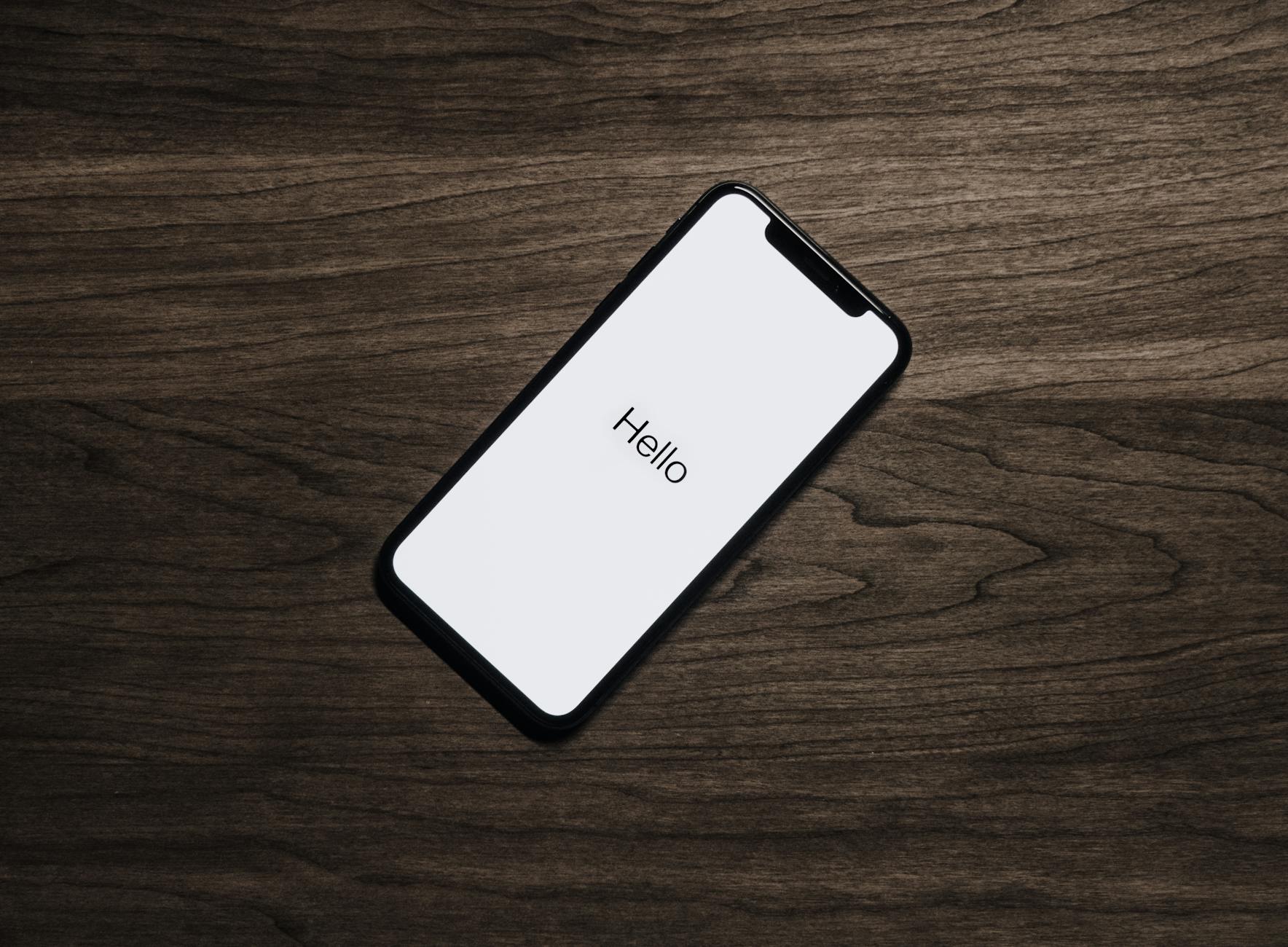
If someday the practical need for a phone disappeared, I wouldn’t mourn it. I’d probably set it down on a table, walk out the door, and not look back. Not because I hate it, but because I never really needed it to begin with, at least not in the ways we’re told we do. And there’s something deeply grounding about realizing that your sense of self, your thoughts, your presence, your ability to exist in the world, don’t actually depend on a glowing screen in your pocket.