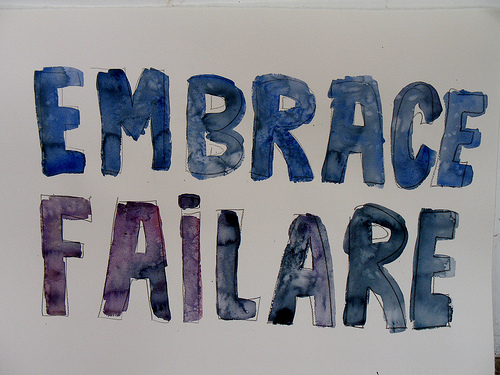
Life is full of opportunities, but the truth is, opportunities mean nothing if you are too afraid to take them. The fear of failure, the fear of judgment, and even the fear of the unknown can become paralyzing forces, stopping us from stepping into new experiences that could define us. Many people spend their lives imagining what might have been, reflecting on paths they never dared to take, and holding themselves back in ways that quietly erode their potential. The paradox is that the very things we fear are often the same things that could propel us forward, challenge us, and bring immense growth. If you never try, you never know what could happen, and living without trying is a slow surrender to the comfort of the predictable and the familiar. Trying, in its essence, is an act of courage. It is a rebellion against stagnation, against the limitations others place on you, and against the boundaries you may have unconsciously set for yourself.
To understand why trying is so important, one must first understand the nature of fear. Fear is a deeply human response designed to protect us, but in modern life, fear often overextends itself. It prevents us from applying for that job we dream about, from asking the person we care for how they truly feel, from moving to a city that excites us but terrifies us in equal measure. Fear convinces us that failure is catastrophic, that rejection is permanent, or that the unknown is inherently dangerous. But life is rarely so absolute. Most failures are temporary, most rejections teach lessons rather than define destiny, and the unknown is often where growth lives. When you allow fear to dictate your decisions, you are effectively giving away your power to circumstances beyond your control. Trying, even when afraid, is the antidote to that surrender. It is the act of reclaiming agency over your life, of stepping into a world of possibility rather than resigning yourself to what feels safe.
The truth is, trying does not guarantee success. Many people have faced repeated failures despite their best efforts, yet what distinguishes those who succeed from those who remain stuck is the willingness to try again. Trying is not a single act; it is a continuous commitment to engagement with life, to moving forward even when the outcome is uncertain. This principle applies universally: an artist who experiments with new forms of expression, a scientist testing unconventional hypotheses, a student tackling a subject they feel unprepared for, or an entrepreneur pursuing an idea that seems risky. Each act of trying carries with it the potential for failure, but also the possibility of discovery, achievement, and self-realization. To live without trying is to remain on the periphery of your own potential, observing life as it passes by rather than participating fully.
Consider the psychological impact of not trying. People who never attempt new experiences often fall into patterns of regret, self-doubt, and resentment. They may look back years later, wondering what could have been, or they may feel envy for those who dared to step forward. Regret is particularly painful because it is rooted in inaction rather than action. You can recover from a failure that came from trying, but you cannot recover time lost to fear and hesitation. Every decision to avoid trying creates a cumulative effect, slowly teaching the mind that comfort and security are more valuable than growth and exploration. This is a subtle but profound trap. The human brain is wired to protect itself, but it is also capable of learning, evolving, and embracing challenge. By choosing to try, you rewire your mindset, training yourself to associate effort and risk with reward, and ultimately, with self-respect and fulfillment.
There is also a deeper existential component to trying. Life, by its nature, is uncertain and temporary. There is no guarantee of time, health, or circumstances aligning perfectly in the future. Waiting for the “perfect moment” to take a chance is often a form of self-deception. The truth is, there is no perfect moment; there is only now. The act of trying becomes an existential affirmation—it is a way of asserting that your life matters, that your choices matter, and that you are willing to engage with the world fully. Each time you try, you honor your capacity to act, to create, to influence, and to grow. Even failure carries this affirmation because it demonstrates courage, intention, and the refusal to remain passive. Life rewards engagement more often than perfection, and those who try—even imperfectly—are the ones who ultimately shape their reality.
Trying also cultivates resilience. When you attempt something, you expose yourself to challenges, mistakes, and unexpected outcomes. Each of these experiences builds strength, adaptability, and wisdom. A person who has tried and failed repeatedly becomes attuned to the lessons embedded in each failure. They learn patience, humility, and persistence. They discover that failure is not a verdict on their worth but a stepping stone toward mastery and understanding. By contrast, avoiding attempts keeps individuals in a fragile state, vulnerable to self-doubt and untested limitations. Resilience is forged in action, and the willingness to try is the spark that ignites that forge. Without it, even minor setbacks can feel insurmountable because the mind has never practiced overcoming obstacles through experience.
Moreover, trying connects us to the world in meaningful ways. Many human connections, relationships, and collaborations are born from the courage to reach out, to share ideas, to express oneself. Without trying, these connections remain unrealized, and life can feel lonely or disconnected. Consider the friendships that never began because one person hesitated to introduce themselves, the creative collaborations that never happened because someone feared rejection, or the love that never blossomed because someone withheld their feelings. Trying is the bridge between potential and reality. It transforms ideas, intentions, and desires into tangible experiences that shape both your life and the lives of others. By refusing to try, you not only limit your own potential but also the impact you could have on the people and the world around you.
The process of trying also teaches self-knowledge. When you take risks and put yourself in unfamiliar situations, you learn about your preferences, your strengths, your values, and your boundaries. Life cannot be fully understood through observation alone; it requires participation. Trying exposes you to your reactions, your resilience, and your creativity. It forces you to confront discomfort, to make decisions, and to navigate uncertainty. Over time, these experiences accumulate into a deep understanding of self—a knowledge that cannot be gained through comfort or avoidance. By trying, you discover who you are and what you are capable of, and this self-knowledge becomes a compass for future choices, guiding you toward meaningful experiences rather than a life defined by fear.
Many people hesitate to try because they equate effort with outcome, believing that if the attempt does not lead to success, it is wasted. This is a fundamental misunderstanding. Trying is never wasted because the act itself is transformative. Every effort creates experience, growth, and understanding. Even failures carry value: they reveal what does not work, illuminate alternative paths, and strengthen your approach. By focusing solely on results, you miss the broader picture of development. Trying is a commitment to the process, to learning, and to engagement. The outcome is important, but it is secondary to the courage and effort it takes to act. Over time, those who embrace trying develop a mindset that sees opportunity, possibility, and lessons in every endeavor, rather than fear and limitation.
There is also a societal aspect to trying. Individuals who dare to act, experiment, and innovate drive progress. Every invention, every artistic movement, every social change, and every scientific breakthrough begins with someone willing to try. If no one tried, the world would remain stagnant. Fear of failure, ridicule, or judgment has historically held back countless potential advances, yet those who act despite fear often inspire others to do the same. Trying is contagious. By modeling courage, persistence, and curiosity, individuals influence their communities, creating ripple effects that extend far beyond themselves. In this sense, trying is not just a personal choice; it is a contribution to the collective growth and evolution of society.
The fear of trying is often amplified by comparisons. People look at others’ successes and believe they must reach the same heights without stumbling. This comparison creates paralysis, because the starting point, circumstances, and journey of others are always unique. Trying requires the humility to accept that your path is your own, and that failure along the way is part of learning and growth. You cannot measure your worth against someone else’s accomplishments; you can only measure your effort, your courage, and your commitment to living authentically. By focusing on your willingness to try, you reclaim your power from external expectations and cultivate a life that is meaningful on your terms.
It is also crucial to recognize that trying is not reckless or unthinking. Courageous action does not mean blind action. Trying involves discernment, planning, and preparation, but it always includes the willingness to step into uncertainty. There is wisdom in assessing risks and making informed choices, but no amount of planning can eliminate the inherent uncertainty of life. The key is to balance preparation with action, and to accept that risk is an unavoidable part of growth. The moment you let the fear of the unknown prevent you from taking even a calculated risk, you sacrifice opportunities that could have defined your life. Trying is about embracing both courage and wisdom, acting despite fear, and being willing to learn through experience.
Ultimately, trying is a declaration of self-belief. It communicates to yourself and to the world that you are willing to engage fully with life, that you trust your ability to navigate challenges, and that you value your own potential. Every attempt reinforces this belief. Even if the outcome is not what you hoped, the act of trying validates your existence, your intentions, and your capacity for growth. Life is a series of unknowns, and the only way to navigate it meaningfully is to act, to try, and to face uncertainty head-on. Those who live without trying surrender to chance, circumstance, and fear. Those who try, however, embrace possibility, agency, and the profound realization that life is defined not by what we avoid, but by what we dare to attempt.
The journey of trying is also deeply personal. It requires confronting insecurities, acknowledging limitations, and embracing vulnerability. To try is to expose oneself to potential judgment, to risk disappointment, and to challenge ingrained habits of comfort and avoidance. Yet within this vulnerability lies power. Vulnerability is the gateway to authenticity, connection, and transformation. By trying, you claim your voice, assert your presence, and participate actively in the world. Fear may always be present, but it no longer dictates your choices. Every act of trying becomes a testament to resilience, courage, and the human spirit’s capacity to evolve.
In conclusion, the refusal to try is the quietest, most insidious form of defeat. Life may not always reward our efforts in ways we expect, and failure is an inevitable companion on the path of growth. Yet the act of trying, regardless of outcome, transforms us, teaches us, and shapes our experience in profound ways. If you never try, you never know what might have been, what you are capable of, or what joy and fulfillment lie just beyond fear. To live fully, to embrace your potential, and to honor the gift of life itself, you must cultivate the courage to try. Trying is not a guarantee, but it is the only way to encounter possibility, to learn, to grow, and ultimately, to live without regret. Step forward, act despite fear, and discover the unknown, because the world does not yield to hesitation—it rewards the brave, the persistent, and those who dare to try.