The Musings of Jaime David
@jaimedavid.blog@jaimedavid.blog

The writings of some random dude on the internet

1,117 posts
1 follower

Tag: time travel

  • The Time Travelers Didn’t Ghost the Party. They Just Didn’t Like Stephen Hawking.

    The Time Travelers Didn’t Ghost the Party. They Just Didn’t Like Stephen Hawking.

    There’s something deeply poetic about the most famous time traveler party in history being attended by absolutely no one.

    For those who don’t know, the legendary physicist once threw a party for time travelers—but here’s the twist: he sent the invitations after the party already happened. The idea was simple. If time travel to the past ever becomes possible, someone, somewhere in the future could show up. Champagne would be poured. History would fold in on itself. Physics would have a fun little existential crisis.

    Instead? Silence.

    No mysterious figures appearing out of thin air. No awkward introductions like, “Hey, I’m from 3026, big fan.” Not even one person stumbling in late saying, “Sorry, traffic in the time vortex was brutal.”

    Nothing.

    Now, the scientific community took this as evidence that backward time travel might not exist.

    But let’s be real for a second.

    What if… they just didn’t want to go?

    Think about it. You’re living in the year 2847. Humanity has colonized distant star systems. You can upload your consciousness into a nebula for fun. You have access to infinite knowledge, infinite entertainment, infinite everything.

    And then you get an invitation.

    “To a party in 2009.”

    In 2009.

    You look around at your hyper-advanced society. Then you look back at the invite.

    The music? Probably mid-2000s playlists.
    The tech? Early smartphones at best.
    The snacks? Questionable.
    The vibes? Uncertain.

    And then there’s the host.

    A genius, yes. A legend, absolutely. But also… imagine the pressure.

    You show up, and now you have to explain time travel to one of the greatest minds in history without accidentally breaking the timeline. One wrong sentence and suddenly you’re responsible for paradoxes, alternate realities, and a version of Earth where pigeons run the government.

    Hard pass.

    And let’s not ignore the social dynamics. You walk in, and it’s just him. Waiting. Watching. Hoping.

    Now you’re not just attending a party—you’re fulfilling a prophecy.

    That’s a lot of pressure for what was probably advertised as a casual gathering.

    So what do you do?

    You don’t go.

    Not because you can’t.

    But because you don’t want to deal with it.

    And honestly, that might be the most human explanation of all.

    We didn’t prove time travel is impossible.

    We just proved that even across centuries, across galaxies, across timelines…

    People will still look at an invite and think,
    “Yeah… I’m gonna stay home.”

    Fediverse Reactions
  • Why Jefferson Should Have Time Manipulation Powers in the Life Is Strange TV Show

    Why Jefferson Should Have Time Manipulation Powers in the Life Is Strange TV Show

    Life is Strange has long been celebrated for its intricate narrative, engaging characters, and emotionally charged storytelling. The core of the game revolves around the character Max Caulfield, a young photography student who discovers she has the ability to rewind time. As Max struggles with the moral implications of this power, she faces increasingly difficult choices, culminating in a final, life-altering decision that will change the fate of her town, Arcadia Bay. However, one element that remains relatively unexplored in the game is the possibility that others may possess similar powers. Specifically, the character of Jefferson, the game’s main antagonist, has long been a subject of fan theories and speculation. Some fans have suggested that Jefferson may have time manipulation abilities of his own. In this post, I will argue that this theory is not only plausible but could significantly enhance the Life Is Strange TV show, offering new layers of tension, complexity, and narrative depth.

    Expanding the Story’s Core Conflict

    In the game, Max is the only character who possesses time manipulation powers, which is central to the game’s plot. The drama unfolds as Max grapples with the responsibility of her abilities and tries to use them to undo her mistakes. However, the show has an opportunity to expand on this central premise by introducing a mirror character to Max in the form of Jefferson. Jefferson, who is already portrayed as a manipulative and calculating character in the game, could be given time manipulation powers, creating a mirror image of Max. This would allow the show to explore how two characters, both with the ability to manipulate time, use their powers for entirely different purposes. Max uses her powers out of necessity, primarily to correct mistakes and save people, while Jefferson would use his powers for control and manipulation, further enhancing his villainous nature.

    This shift in Jefferson’s character would create a powerful dichotomy between him and Max. Instead of simply being a teacher-turned-psychopath, Jefferson would now be a complex villain who mirrors Max in a way that wasn’t fully explored in the game. This makes him not just an antagonist, but a true rival for Max, someone who operates on the same wavelength but with opposing goals. This added layer of complexity would deepen the stakes of the narrative and give both Max and Jefferson a personal stake in their conflict.

    Adding to the Mystery and Suspense

    One of the things that makes Life Is Strange so gripping is the mystery surrounding the characters and events of Arcadia Bay. Jefferson’s potential time manipulation powers would add a new layer of intrigue and suspense. In the game, Jefferson’s quick arrival at key moments, like the junkyard scene, is left unexplained. Players are simply expected to accept that he is always in the right place at the right time, but the reasoning behind this has always been somewhat nebulous. The show, however, would have the opportunity to fill in this gap by revealing that Jefferson’s time manipulation powers are what allow him to stay one step ahead of Max and Chloe.

    This idea can be introduced gradually, with Jefferson’s behavior becoming more suspicious as the story progresses. For example, there could be small moments where Max notices Jefferson arriving at key locations or being able to predict outcomes with unnerving accuracy. As Max becomes more aware of the possibility that he might have powers, the audience’s suspense would grow. This gradual reveal would be both exciting and terrifying, as viewers would slowly come to realize that Jefferson is not just a psychological manipulator but a supernatural force in his own right. The fact that Max doesn’t initially realize Jefferson’s powers would put the audience in a privileged position, allowing them to discover this hidden aspect of the story before Max does, which is a great way to build tension and keep viewers on the edge of their seats.

    A More Powerful Villain

    Making Jefferson a time manipulator would significantly raise the stakes of the show. In the game, Jefferson is a twisted villain who preys on vulnerable young women, using his position of authority as a photography teacher to exploit and manipulate them. While this makes him a compelling antagonist, his character is limited to a psychological threat. He can harm Max and Chloe, but he cannot directly control their fate in the same way Max can. By introducing time manipulation powers, Jefferson would become a much more formidable opponent. His ability to alter the course of events would allow him to actively manipulate situations to his advantage, creating new obstacles for Max and Chloe as they try to uncover the mystery of Rachel’s disappearance and stop the storm. Jefferson’s powers would also allow him to anticipate Max’s actions, creating an intense cat-and-mouse game between the two of them, with Max constantly trying to stay one step ahead of a villain who knows exactly what she will do.

    In addition to making Jefferson a more formidable villain, his powers would give him greater agency in the plot. In the game, Jefferson is a largely reactive antagonist, only coming into play when Max and Chloe uncover his dark secrets. In the TV show, Jefferson could actively manipulate events from the shadows, creating a sense of inevitability as Max and Chloe try to navigate their way through the chaos he’s creating. His powers would make him a more active participant in the events surrounding Arcadia Bay, and his actions would have far-reaching consequences on the world around them.

    Jefferson’s Powers as a Mirror to Max

    The idea of Jefferson having time manipulation powers also opens up an intriguing opportunity to explore the duality of time manipulation. In the game, Max uses her powers with the intent of helping others, trying to undo the mistakes of the past and protect her friends. Jefferson, on the other hand, would use his powers for selfish purposes, manipulating time to maintain control over others and achieve his own goals. This creates a fascinating moral contrast between the two characters, as Jefferson would be a direct mirror to Max — someone who possesses the same abilities but uses them for entirely different, and ultimately more dangerous, ends.

    The juxtaposition of these two characters highlights the central theme of Life Is Strange: the consequences of our choices. Max is constantly grappling with the idea that her actions have unintended consequences, and the show could deepen this theme by showing the two opposing sides of time manipulation. While Max’s journey is about learning to use her powers responsibly, Jefferson’s arc could be about how the abuse of power can lead to chaos and destruction. Their ultimate confrontation would not just be about stopping Jefferson’s evil plans, but also about whether Max can resist the temptation to use her powers for personal gain — a test of morality and responsibility.

    Staying True to the Game

    Some might argue that introducing Jefferson’s powers would deviate too much from the original game, but I believe that this change would actually enhance the story without breaking its core elements. The show could still follow the same basic narrative arc as the game, with Max’s journey to uncover the mystery of Rachel’s disappearance and the impending storm. The core emotional beats — Max’s relationship with Chloe, her internal struggle with her powers, and the difficult choices she faces — would remain intact.

    What Jefferson’s time manipulation powers would add is a layer of complexity to his character, a deeper level of mystery and suspense, and an elevated sense of danger. It doesn’t change the fundamental narrative but instead enhances the central conflict, making it more dynamic and multi-faceted. It also provides a way to explore the themes of choice, consequence, and power in a fresh and engaging way.

    Conclusion

    In conclusion, giving Jefferson time manipulation powers in the Life Is Strange TV show would be a brilliant decision that adds depth to both the character and the overall narrative. By introducing Jefferson as a mirror to Max, the show would explore the duality of time manipulation and the consequences of abusing such power. It would also raise the stakes, making Jefferson a more formidable and active villain, and create a sense of mystery and suspense that keeps the audience on edge. This small change would not alter the core elements of the story but would expand and enrich the narrative in ways that stay true to the themes of the original game. Ultimately, it would make the final confrontation between Max and Jefferson even more impactful, as viewers would see not just a battle of good versus evil, but a struggle for control over time itself.

  • The Lost Legacy of Rocks D. Xebec and the Time-Scattered Sons: An Analytical Theory

    The Lost Legacy of Rocks D. Xebec and the Time-Scattered Sons: An Analytical Theory

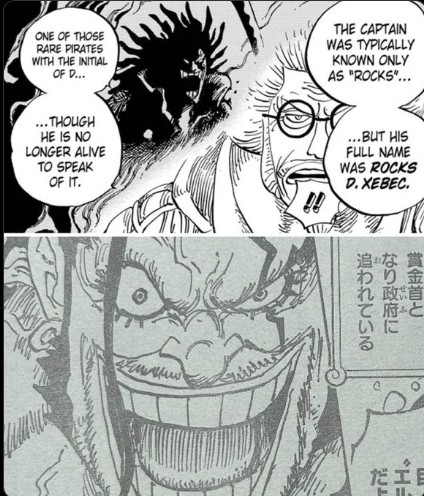
    One Piece Chapter 1154’s reveal of Rocks D. Xebec’s design has reignited intense speculation about the origins of key characters and the deeper family connections in the series. The striking resemblance between Rocks and Blackbeard, combined with fan theories suggesting connections to Buggy and Garp, provides fertile ground for an expansive theory that ties together lineage, time manipulation, and the very foundation of the current world order. This essay proposes a comprehensive theory: Rocks D. Xebec is the biological father of Monkey D. Luffy, Marshall D. Teach (Blackbeard), and Buggy, with Kozuki Toki as their mother. Following the God Valley incident, Toki uses her time manipulation abilities to send her sons to different points in time to protect them. This theory explains age discrepancies, the mysteries surrounding the parentage of these central characters, and connects major arcs such as Wano, God Valley, and the Revolutionary movement.

    Rocks D. Xebec and the Fatherhood of Luffy, Blackbeard, and Buggy

    The core of this theory lies in the proposition that Rocks D. Xebec fathered three sons who would become some of the most influential pirates in history: Luffy, Blackbeard, and Buggy. The revealed likeness of Rocks to Blackbeard, and the longstanding fan observations about Buggy’s visual similarities to Rocks and Blackbeard, support the idea of a shared paternal lineage. Garp’s role as Rocks’ father, while speculative, fits with his established conflicted relationship between his Marine duties and family loyalty.

    The notion that Kozuki Toki is the mother of these three adds a critical link to Wano’s royal bloodline, tying the history of Rocks’ pirate legacy to Wano’s political intrigue. Toki’s character is already deeply intertwined with the themes of sacrifice and protection through her time fruit abilities, making her a logical candidate to shield her offspring from the dangers following God Valley.

    The God Valley Incident and the Scattering of the Sons Across Time

    The God Valley Incident, occurring approximately 38 years ago, was a pivotal event where Rocks was defeated or disappeared. This timeline clashes with Luffy’s age, as Luffy is currently 19, which initially challenges the idea that Rocks could be his father. However, the inclusion of Toki’s time-time fruit (Toki Toki no Mi) introduces a crucial loophole: the ability to send people forward in time.

    This theory posits that Toki used her power to send her sons to different eras for their protection. Buggy and Blackbeard were sent closer to the God Valley era, accounting for their approximate ages and roles in the narrative. Luffy, however, was sent the furthest forward, approximately 19 years ago, explaining his younger age relative to his brothers and his “out of time” feeling. This scattering not only protects the children from immediate threats but also provides a narrative device for the age disparities.

    Toki’s Kidnapping and Its Political Implications

    After the pivotal moment when Toki sent the Scabbards and her sons into the future for their protection, this theory proposes that Toki gave birth to Luffy, Blackbeard, Buggy, and Shanks sometime after the Scabbards’ departure, likely during or shortly before the God Valley Incident. This would place Toki in a critical position during the final days of Rocks D. Xebec’s reign.

    However, after these events, Toki’s time manipulation abilities would have been known by powerful figures like Kaido and Orochi, who were already aligned with the World Government. Fearing the potential threat she posed — given the fact that her children were the biological heirs to Rocks’ legacyKaido and Orochi likely made a dark political bargain with the World Government.

    In exchange for Wano’s protection under Kaido’s rule, they handed over Toki to the World Government, likely at God Valley or during the aftermath. This would explain her sudden disappearance from the timeline and the mysterious absence that has left the fate of Toki shrouded in darkness. The World Government, already eager to wipe out the remnants of the Rocks Pirates and eliminate any potential threats, would have taken Toki captive, seeing her not only as a mother of key figures like Luffy and Blackbeard but also as someone who had the power to alter history itself with her time abilities.

    This betrayal adds a chilling layer to Wano’s political isolation. Kaido and Orochi’s cooperation with the World Government becomes more than just about securing their own power—it’s about suppressing the truth of Toki’s bloodline and preventing the future threat posed by her sons. The World Government’s role here reflects their longstanding efforts to control the Will of D and suppress the lineage tied to Rocks D. Xebec.

    This theory also introduces a potential future arc revolving around the rescue or legacy of Toki, who could play a pivotal role in the final battle against the World Government. As the mother of the time-scattered sons, she could hold the key to understanding the true power of Rocks’ legacy and the Will of D.

    The Role of Monkey D. Garp and the Concealment of Truth

    Monkey D. Garp’s role in this theory is that of a conflicted patriarch caught between his duties as a Marine and his family ties. His decision to raise or entrust Luffy to the Dadan family while hiding the truth about Luffy’s heritage reflects a protective instinct but also a desire to shield the world from the full ramifications of Rocks’ lineage.

    Dragon’s role is more ambiguous but could be interpreted as a guardian figure or a cover for Luffy’s true parentage. Garp’s preference for Luffy to become a Marine rather than follow his father’s path underscores the tension between inherited legacy and personal choice.

    Narrative and Thematic Implications

    This theory interweaves several major One Piece themes: legacy, family, sacrifice, and the struggle between fate and free will. By positioning Luffy, Blackbeard, and Buggy as brothers scattered through time, it explains many mysteries — including parentage, age gaps, and character motivations.

    The scattering through time adds a layer of mythic grandeur to their destinies, framing their eventual convergence as a climactic unification of a fractured lineage. Each brother embodies a facet of Rocks’ legacy: Buggy’s chaos and survival instincts, Blackbeard’s ambition and darkness, and Luffy’s freedom and hope.

    If Kozuki Toki is the mother of Luffy, Blackbeard, and Buggy, then this also means Momonosuke — Toki’s son with Oden — is the half-brother of these three pirate legends. This revelation adds enormous emotional and narrative weight to the Wano arc. Luffy and Momo’s brotherly bond and shared will to protect Wano take on a biological dimension, transforming their relationship from a chosen family to one of blood and legacy. This reframes much of the Wano saga as a long-overdue family reunion unfolding amid the battle for Wano’s freedom.

    The Shanks Connection

    The theory now becomes even more intricate. If Shanks is indeed Toki’s first son, born before she met Rocks, then it adds more emotional weight to Shanks’ eventual mentorship of Luffy. Shanks, having been raised as a World Noble, would understand the corruption of the world and might have been shielded from the worst of it by Toki, while his brothers (Blackbeard, Buggy, and Luffy) lived very different lives.

    This also explains why Shanks, despite his noble bloodline, is neutral in the grand scheme of things. He has a deep sense of family and a desire for freedom, which might stem from his personal struggle with his origins and his role in the larger conflict. He sees Luffy as a brother, passing down the straw hat as a symbol of their shared destiny.

    The Robin Connection: Rocks D. Xebec as Her Father

    Building on the theory’s expansion, Robin’s father is also speculated to be Rocks D. Xebec. Robin’s backstory reveals that her father was a pirate, and this could tie him into the Rocks Pirates, further reinforcing the theory of a complex web of familial connections. If Rocks D. Xebec is indeed Robin’s father, then Robin would be Luffy, Blackbeard, Buggy, and Shanks’ half-sister.

    The potential link between Robin’s father and Rocks adds another layer to this theory, further connecting the “Will of D.” and the fragments of Rocks’ legacy that are scattered across the world. It also explains Robin’s pivotal role in the story, as she carries the weight of ancient knowledge, which was actively suppressed by the World Government due to her father’s affiliations.

    Full Circle: God Valley and Wano’s Connection

    If we tie all of this together, God Valley and Wano aren’t just historical markers; they are destiny-shaping events. The fall of Rocks D. Xebec at God Valley created the foundation for all these characters to be linked in one way or another. Toki’s time fruit becomes the central force that connects them across time, and Wano’s isolation serves as the backdrop for their fragmented family to come together. Wano is the key to unlocking the full legacy of Rocks and understanding how the World Government has manipulated history. If this theory holds true, Luffy would not only be the heir to Rocks’ power but would also be the one to unite the fractured legacy of his half-siblings, confronting the past of God Valley and the future of the World Government.

    Luffy’s Role in Uniting the Family: The Davy Back Fight and Family Reunion

    Building on the previous points, Luffy’s journey could lead to an incredible family reunion—one that spans generations. The Davy Back Fight, where a crew can win members of another crew, serves as a perfect narrative tool for Luffy to reunite his fractured family.

    Imagine a scenario where Luffy unknowingly faces off against his half-brothers: Blackbeard, Shanks, and Buggy. Through a series of challenges, Luffy defeats them in the Davy Back Fight, bringing his brothers under the same flag without them even realizing it at first. This would be a perfect way to bring Luffy’s fractured family together, unknowingly reuniting the sons of Rocks under one banner.

    • Blackbeard, the dark, ambitious brother, would bring his chaos to the crew, but would ultimately become a reluctant member of Luffy’s family.
    • Shanks, the noble son of Toki, would serve as a guide and mentor, helping Luffy navigate the heavy burden of family and destiny.
    • Buggy, the comedic yet cunning half-brother, would be the wild card, bringing a touch of chaos but also a deeper connection to the legacy of their father.

    This unification of Luffy’s family not only rewrites the dynamics of the Straw Hat crew but also reshapes the understanding of the Will of D and the future of the World Government. Luffy, unknowingly, would be the one to rebuild his fractured family and lead them into the final battle against the World Government.

    Conclusion: The Circle of Time

    In conclusion, the theory of Toki being the mother of Luffy, Buggy, Blackbeard, Shanks, and the time-scattered sons, with their scattering through time after the fall of God Valley, creates a truly interconnected family legacy. It ties Wano’s isolation to the mysterious events of God Valley, and places Toki at the center of it all, making her both the protector and the sacrifice for the greater future of her children. This theory reshapes our understanding of the family dynamics in One Piece and offers new insight into the central conflicts of the World Government and the Will of D.


  • Short Story Saturday: Post #5 – The Clockmaker’s Secret

    Short Story Saturday: Post #5 – The Clockmaker’s Secret

    In a tiny workshop tucked between aging bookstores, Elias spent decades crafting exquisite clocks that didn’t just tell time—they seemed to control it. His masterpiece was a pocket watch that could rewind minutes, but only once every day.

    One rainy evening, a desperate stranger appeared, begging to borrow the watch to undo a terrible mistake. Elias hesitated, knowing the cost. Time, he explained, never gives without taking.

    When the stranger vanished at midnight, Elias realized the watch’s hands were stuck… forever.