
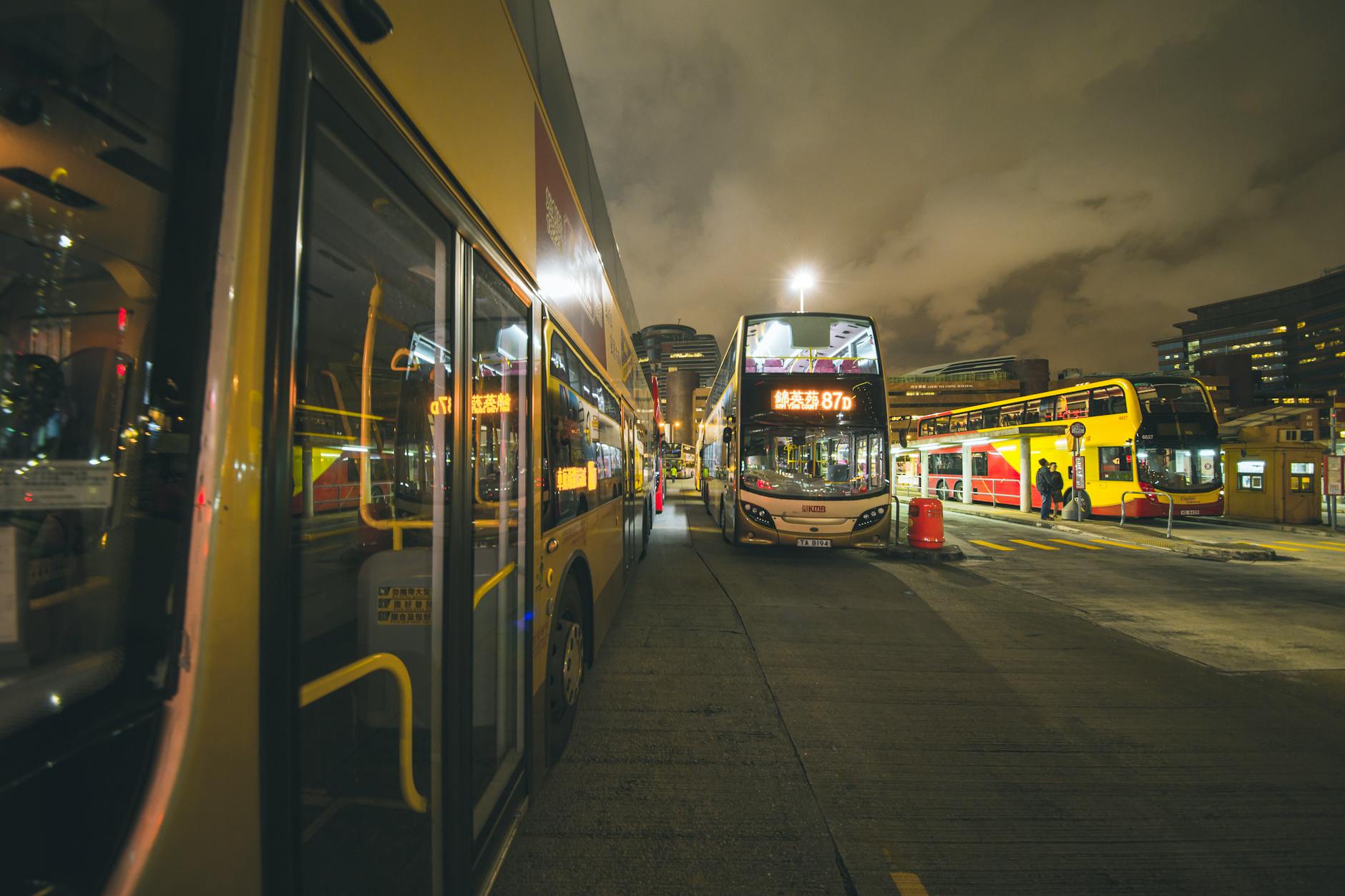
I recently came across a video arguing that New York City needs trams and that buses are inherently inadequate for the city’s transit needs. The premise of the video is familiar: trams, the argument goes, are faster, cleaner, and more efficient, and buses supposedly contribute to congestion while offering an inferior commuting experience. While this might sound compelling at first, a closer look at the realities of NYC streets and transit patterns suggests the opposite is true: buses, not trams, are far better suited to the city’s needs.
First, trams are large, inflexible vehicles that require dedicated tracks. In a city like New York, where streets are already packed and every inch of road space is precious, adding trams would reduce lanes for cars, delivery trucks, and even emergency vehicles. The intended benefit of moving more people per vehicle could easily be outweighed by the increased congestion on the streets that remain. Unlike buses, which can weave around obstacles or adjust their routes in real time, trams are stuck on fixed tracks. A single blockage—from construction, an accident, or even a temporary street closure—could bring an entire line to a halt, leaving commuters stranded.
Second, buses provide unmatched flexibility. They can cover neighborhoods that don’t have subway access, feed into existing subway stations, and be rerouted or scaled up depending on demand. Implementing a tram system would be costly, disruptive, and slow to adapt to the city’s ever-changing traffic conditions. NYC streets are not like the wide avenues of medium-density cities where trams can operate without major trade-offs; they are narrow, crowded, and already home to a complex mix of buses, trucks, taxis, and pedestrians. Introducing trams would likely create more problems than it solves.
Finally, buses can serve a larger portion of the population more efficiently. They can be added or rerouted to match demand, they don’t require expensive construction, and they can complement the city’s extensive subway system without duplicating routes unnecessarily. In contrast, trams are a rigid investment in a limited path. The idea that trams are a superior alternative ignores the realities of urban planning in a dense, chaotic, and ever-evolving city like New York.
Some might argue that a tram system could work if it were built on abandoned or isolated tracks, separate from busy streets. While this avoids some of the congestion problems, it introduces another set of limitations that make trams impractical for New York City. A tram running only on existing tracks is inherently restricted: it can only serve the areas along that track. Once the track ends, the tram ends—there’s no flexibility to extend service to other neighborhoods without laying entirely new tracks, which is costly, disruptive, and slow.
Unlike buses, which can reach virtually any street in the city, a tram confined to old tracks leaves large swaths of the population unserved. Residents outside the tram’s path would see no benefit at all, and the tram would do little to address broader commuting needs. Even with isolated tracks, the fixed route problem remains: you cannot reroute around construction, detours, or sudden spikes in demand. The flexibility that makes buses so effective—being able to go anywhere, anytime, and adjust routes on the fly—is completely lost.
In other words, a tramway, even if separate from roads, does not solve the fundamental challenges of NYC transit. It may provide a limited service along a narrow corridor, but it cannot replace the wide-reaching, adaptable network that buses already provide.
Even if a tramway were built on isolated tracks and avoided the streets entirely, another major problem remains: accessibility. For residents who live far from the tram line, reaching it would require a separate commute. If you have to travel a significant distance just to get to the tram, the convenience of the tram itself becomes almost irrelevant. Commuters naturally prioritize proximity—people are far more likely to use whatever transit option is closest, whether that’s a bus or a subway, rather than making an extra trip just to reach a tram.
In practice, this means that a tram would serve only a very limited slice of the city’s population. Even if it could theoretically get someone closer to their destination faster, the total journey time could actually increase when you factor in the extra distance to reach the tram in the first place. Buses, by contrast, can reach nearly every street and neighborhood, providing convenient and direct access without forcing commuters to go out of their way. A tram that’s difficult to access loses much of its intended value, reinforcing the argument that buses remain the more practical and versatile choice for New York City.
Now, don’t get me wrong: I don’t think buses in NYC are perfect. There are certainly issues with traffic, road conditions, and congestion that affect their efficiency. But compared to subways, trains, or even a proposed tramway, buses remain far superior. Their flexibility, reach, and ability to adapt to the city’s constantly changing streets make them the most practical mode of surface transit available.
That said, there is an even more promising option that could revolutionize urban transit: taxis, specifically services like Uber and Lyft. These vehicles can go almost anywhere in the city, offering direct routes without the need for fixed tracks or rigid schedules. Imagine if the MTA had its own line of taxis, operating at the cost of a local bus fare. This would be game-changing. Cars are smaller and easier to operate than buses or trains, meaning drivers wouldn’t need specialized licenses beyond a standard driver’s license. While each vehicle carries fewer passengers than a bus or train, the trade-off is more vehicles can be deployed simultaneously, increasing overall capacity and coverage.
MTA cabs could operate along designated routes, similar to how buses and trains function now, ensuring efficiency and predictability. Riders could pay with their existing MetroCard or OMNY card, and the system could seamlessly integrate with the existing transit network. This approach combines the flexibility of on-demand transport with the accessibility and affordability of public transit, addressing many of the limitations buses, trams, and even subways currently face. It’s a forward-thinking solution that could transform commuting in NYC far more effectively than building new trams ever could.
And why stop there? If the MTA truly wanted to modernize transportation, it could go beyond cars entirely. Imagine if there were MTA-operated motorcycles, bicycles, or electric scooters — all available to rent or summon through the same system. These smaller vehicles could navigate traffic more easily, reach tighter spaces, and provide commuters with faster, more personalized short-distance travel options.
Just like the MTA’s hypothetical cab system, these vehicles could be integrated with OMNY or MetroCard payments, making them a natural extension of the city’s existing transit network. Instead of relying solely on large, lumbering vehicles that require massive infrastructure, the MTA could create a fleet of smaller, faster, and more agile options that fit the real flow of the city. A system like this would empower commuters with true choice — letting people decide whether they want to take a bus, a cab, or even a scooter, depending on what suits their trip best.
Not only would this kind of system reduce the need for expensive projects like trams, but it would also help cut congestion by diversifying how people get around. Smaller vehicles take up less space, can move more freely, and are ideal for short-distance travel that doesn’t justify an entire bus or train trip. In the end, expanding the MTA’s vision to include all these transport modes would make public transit more flexible, accessible, and responsive to the way New Yorkers actually move through their city.
And even crazier—what if the MTA didn’t just focus on transportation at all? What if it expanded into delivery and commerce? The MTA already moves millions of people daily across an immense network of buses, subways, and rail lines. That same infrastructure could be used to transport more than just people—it could move goods, packages, groceries, and even meals. Imagine MTA delivery services operating alongside existing routes, delivering items throughout the city at a low cost, using the very vehicles already in motion.
It could go even further. Picture buses and trains with small onboard stores or kiosks, selling essentials—snacks, drinks, everyday items—so commuters could shop while they ride. Trains could even have designated delivery cars or compartments for local logistics, allowing small businesses and vendors to reach customers faster and more efficiently. In a city as dense and fast-paced as New York, where delivery demand is constant and space is limited, combining transportation and delivery into one integrated system could be revolutionary.
This wouldn’t just modernize the MTA—it would redefine it. Instead of being just a transportation authority, it would become a full urban mobility and logistics network. People and goods could move together through the same channels, maximizing the use of every mile traveled. It’s an ambitious idea, but it fits perfectly with how New York operates: always moving, always adapting, always finding ways to make the impossible work.
At the end of the day, trams just don’t make sense for New York City. The streets are already too crowded, the infrastructure too complex, and the flow of the city too dynamic for something as rigid as a tram system to fit in smoothly. Trams might work in cities with more open space or less traffic, but New York thrives on constant movement, change, and flexibility. The city’s transportation system needs to reflect that.
Buses, taxis, bikes, scooters, and even futuristic ideas like MTA-operated deliveries all share one key strength: adaptability. They can change routes, adjust to demand, and fit into the ever-evolving pulse of the city. Trams can’t do that. They’re fixed in place, literally bound to the ground they run on. In a city that never stops changing, something so static is bound to fall behind.
New York doesn’t need to look backward to old ideas like trams. It needs to look forward—to smarter, faster, more flexible ways of getting around and connecting everything that makes this city alive.
In short, while trams might work well in other cities, New York City’s unique congestion, street layout, and reliance on a flexible transit network make buses the far smarter choice. Investing in more buses, better bus lanes, and improved service would deliver real benefits for commuters without the massive disruption and risk that introducing trams would entail.