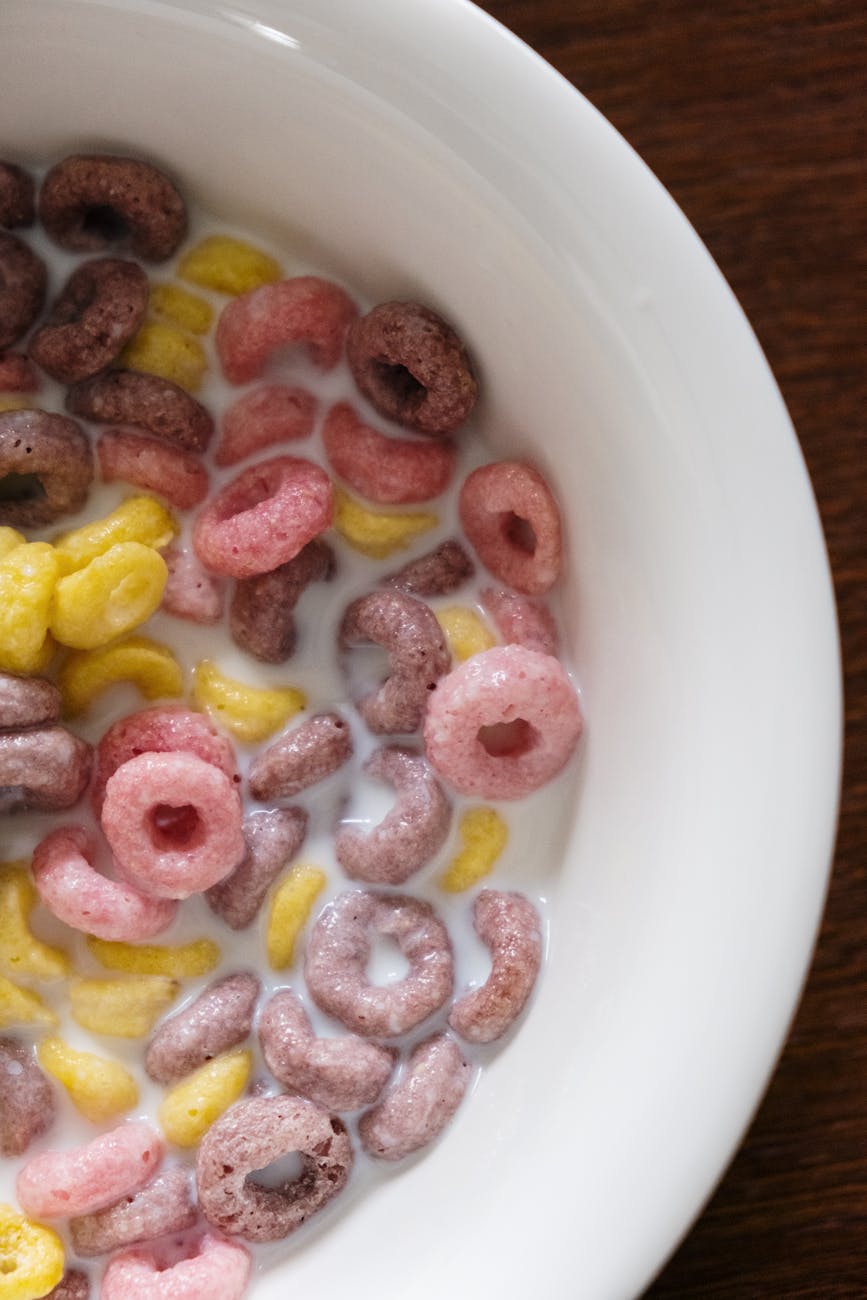
There is something almost ritualistic about breakfast, even for those of us who don’t always treat it that way. It is the first decision we make for our bodies each day, the first act of either intention or neglect. For a long time, breakfast has lived in this strange cultural space where convenience often outweighs nutrition, where sugary cereals and processed pastries dominate the landscape, and where “quick” becomes more important than “good.” That is part of what made me curious about Magic Spoon in the first place. This is not a paid endorsement, not an advertisement, not some attempt to sell anything to anyone. This is simply my honest experience so far, shaped by curiosity, a desire to eat better, and a willingness to try something new even if it comes at a slightly higher price.
I had seen Magic Spoon everywhere before I ever decided to try it. It showed up in YouTube ads, in the middle of videos I was already watching, sometimes in ways that felt almost unavoidable. There is something interesting about that kind of visibility. It plants a seed. At first, I dismissed it the way I dismiss most ads, assuming it was just another overhyped product trying to position itself as healthier than it really is. But over time, the repetition did something subtle. It made me wonder if there was actually something to it. If so many people were talking about it, promoting it, reviewing it, then maybe it was at least worth trying for myself instead of relying on assumptions.
Eventually, curiosity won. I decided to order the variety pack, specifically the protein pastries and the protein cereal bars. I wanted to get a broad sense of what the brand was offering without committing to just one flavor or product type. Right away, one thing stood out: the price. It is not cheap. There is no way around that. Compared to traditional breakfast foods you can grab at a grocery store, Magic Spoon sits at a noticeably higher price point. That alone might be enough to turn some people away, and honestly, I understand that hesitation. When you are used to spending a few dollars on cereal or breakfast bars, paying significantly more feels like a risk.
But sometimes trying something new requires accepting that risk, especially if the goal is to shift toward healthier habits. If you are trying to eat better, you often end up paying more upfront. That is not always fair, and it says a lot about how our food systems are structured, but it is the reality many of us navigate. So I went into this experience knowing it was a bit of an investment, hoping that it would be worth it.
When the package arrived, there was a sense of anticipation that felt oddly significant for something as simple as breakfast food. Maybe it is because I had seen it so many times online. Maybe it is because I was hoping it would actually live up to the idea of being both healthier and enjoyable. There is always that tension when trying “healthier alternatives,” because so often they sacrifice taste in the process. That is usually the trade-off: you either get something that tastes good but isn’t great for you, or something that is good for you but feels like a chore to eat.
The first thing I tried was one of the protein pastries. I went into it with cautious expectations. I did not expect it to taste exactly like a traditional toaster pastry, and I think that mindset helped. When I took the first bite, what stood out immediately was that it was actually enjoyable. Not in a forced, “this is good for what it is” kind of way, but genuinely good. The texture was satisfying, the flavor was solid, and it didn’t feel like I was compromising as much as I expected to.
After that, I moved on to the protein cereal bars. Again, I was expecting something decent but not amazing. And again, I found myself pleasantly surprised. They were flavorful, not overly sweet, and most importantly, they felt filling. That is something that often gets overlooked with typical breakfast bars. You eat them, and an hour later, you are hungry again. With these, there was a noticeable difference. They actually held me over for longer, which is something I value a lot, especially on busy days.
That sense of fullness is important. It changes how you move through your morning. Instead of constantly thinking about when you will eat next, you can focus on what you need to do. It is a small shift, but it matters. And it speaks to one of the core appeals of Magic Spoon: the idea that you can have something convenient that also supports your body in a more meaningful way.
And thinking about it more, that feeling of being full is probably not accidental. It likely comes down to the fact that these products are high in protein. Protein is known for being more satiating than many other nutrients, which means it helps you feel full faster and stay full longer. That changes the entire experience of eating. Instead of needing multiple servings or feeling like you have to keep snacking, you can have less and still feel satisfied. In a way, that even starts to balance out the higher price, because if you are eating fewer portions while still feeling full, it stretches the value a bit further than it might seem at first glance.
Another thing worth mentioning is the ingredient profile. One of the reasons I wanted to try Magic Spoon in the first place is because I have been trying to make more intentional choices about what I eat. That does not mean being perfect or cutting out everything unhealthy, but it does mean being more aware. Compared to many traditional breakfast options, Magic Spoon positions itself as a healthier alternative, with higher protein content and fewer of the things people often try to avoid, like excessive sugar.
Now, I am not going to sit here and claim that it is perfect or that it should replace everything else in your diet. That is not realistic, and it is not the point. But as an alternative, as an option you can reach for when you want something quick but still relatively aligned with healthier goals, it seems to do a good job. It fits into that space between convenience and intention in a way that feels practical.
Of course, the price still lingers in the background of all of this. It is something I keep coming back to, because it is probably the biggest barrier for most people. Even if a product is good, even if it is healthier, even if it is filling, the question remains: is it sustainable? Can you realistically make it a regular part of your routine, or is it more of an occasional thing?
For me, at least right now, it feels like something that falls somewhere in the middle. It is not something I would necessarily have every single day, but it is something I can see myself coming back to. It feels like a worthwhile option to have, especially on days when I need something quick and reliable. And sometimes, that is enough. Not everything needs to be an all-or-nothing decision.
There is also something to be said about the psychological aspect of eating healthier. When you find something that feels like a treat but aligns more closely with your goals, it makes the process easier. It removes some of the friction. Instead of feeling like you are constantly depriving yourself, you feel like you are making choices that still bring some level of enjoyment. That balance is important, because if eating healthier feels like punishment, it is not sustainable in the long run.
Magic Spoon, at least from what I have experienced so far, seems to understand that balance. It is trying to recreate familiar, nostalgic foods in a way that fits more modern health-conscious preferences. And while it may not be identical to the originals, it does not need to be. It just needs to be good enough to stand on its own, and in my experience, it has been.
I think part of why this stood out to me as much as it did is because I am actively trying to shift my habits. I am trying to be more mindful about what I eat, to make choices that support my health without completely removing enjoyment from the equation. That is not always easy. It requires experimentation, trial and error, and a willingness to try things that might not work out.
In this case, it feels like it worked out. At least so far. I have only tried a portion of what I ordered, and I am sure my opinion could evolve over time as I try more flavors and continue incorporating it into my routine. But first impressions matter, and my first impressions have been positive.
That does not mean it will be the same for everyone. Taste is subjective. Priorities are different. What feels worth the price to one person might not feel worth it to someone else. And that is okay. The point of sharing this is not to convince anyone, but simply to offer an honest perspective based on my own experience.
If you are someone who is curious about Magic Spoon, who has seen the ads and wondered if it is actually any good, I would say it might be worth trying at least once if you are able to. Not because it is perfect, not because it will change your life overnight, but because it offers something a little different in a space that often feels stagnant.
At the end of the day, breakfast is just one part of a much bigger picture. But it is also a starting point. It sets the tone. And finding options that make that starting point feel a little better, a little more intentional, can have a ripple effect on the rest of your day.
For me, Magic Spoon has been a small but meaningful step in that direction. It is not the only step, and it will not be the last, but it is one that I am glad I took. And sometimes, that is all you need. Not perfection, not a complete transformation, just one better choice at a time, building into something more over time.