Paste my profile into the search field of your favorite open social app or platform.
Your Profile
Or, if you know your own profile, we can start things that way! Why do I need to enter my profile?
This site is part of the ⁂ open social web, a network of interconnected social platforms (like Mastodon, Pixelfed, Friendica, and others). Unlike centralized social media, your account lives on a platform of your choice, and you can interact with people across different platforms.
By entering your profile, we can send you to your account where you can complete this action.
There are some ideas that feel so obvious, so perfectly aligned with pop culture history, that it’s almost insane they haven’t happened yet.
And this is one of them.
We need a crossover between Grimm, Supernatural, Fringe, and The X-Files.
Not a reboot. Not a remake. Not a “shared universe reboot attempt.”
A true, full-on, multiverse-level paranormal crossover event while the actors are still alive, still capable, and still recognizable as the characters we grew up with.
Because if there was ever a time to do it, it’s now.
These Shows Were Already Basically the Same Universe
Let’s be real for a second.
All four of these shows were already orbiting the same core idea:
Something hidden is going on in the world
Governments either know too much or too little
Monsters, anomalies, or entities exist just beyond normal perception
A small group of people is constantly holding reality together
The X-Files basically laid the foundation. Mulder and Scully set the tone for “investigate the unexplainable, get gaslit by institutions, repeat.”
Then Fringe escalated it into multiverse horror sci-fi with alternate realities, mad science, and collapsing timelines.
Then Supernatural said “what if we just made folklore, demons, angels, gods, and cosmic apocalypse part of a road trip buddy show for 15 seasons.”
And then Grimm came in like “what if fairy tales were real, but hidden among humans, and the cops were secretly monster hunters?”
These shows are not different genres.
They are different dialects of the same language.
The Crossover Concept Writes Itself
You don’t even need to overthink it.
Something goes wrong.
Not just “monster of the week” wrong.
Reality is destabilizing.
Fractures from the Fringe universes begin bleeding into our own timeline. The boundaries between myth, alien phenomena, and supernatural law enforcement collapse.
Suddenly:
FBI agents are getting X-Files cases that don’t behave like X-Files cases
Hunters from Supernatural are seeing creatures that don’t follow known lore
Grimm “wesen” rules start breaking down
And something from the deepest Fringe-style alternate universe is rewriting physics itself
This isn’t “team-up to fight a villain of the week.”
This is:
“All of your shows were documenting different symptoms of the same apocalypse.”
The Characters Already Feel Like They Could Meet
This is the part people underestimate.
The tone compatibility is already there.
The X-Files
The X-Files gives us:
Fox Mulder’s obsession with truth
Dana Scully’s scientific skepticism slowly eroded by reality
And honestly, Mulder meeting literally anyone from these other shows just feels natural. He would immediately believe all of it. Scully would try to document it. Fail. Then still publish a paper about it.
Supernatural
Supernatural gives us:
Dean and Sam Winchester, who have literally fought everything from demons to gods to cosmic destiny itself
At a certain point, they stop being surprised. They would meet Fringe scientists and go:
“Yeah, okay, alternate universe again. Cool. Can we kill it?”
Played by Jensen Ackles and Jared Padalecki, they are basically the emotional backbone of supernatural chaos.
Fringe
Fringe brings:
Olivia Dunham
Walter Bishop
Peter Bishop
This trio would be the “explain what is actually happening” engine of the crossover.
Especially Walter.
Walter would look at everything happening and say something like:
“Oh yes, I saw this once when I accidentally opened a door to a dimension where gravity is emotional.”
Played by Joshua Jackson, Peter is the bridge between madness and logic.
Grimm
Grimm adds:
Hidden monster society
Police procedural grounding
Mythological creatures disguised as humans
Nick Burkhardt walking into this crossover would basically be:
“So you’re telling me this is NOT the weirdest case I’ve ever had?”
And then immediately be proven wrong.
The Villain: It’s Not a Monster, It’s Reality Itself
Here’s where the crossover gets interesting.
Because if you combine:
X-Files government conspiracies
Fringe multiverse instability
Supernatural cosmic hierarchy
Grimm mythological hidden society
You don’t get a monster.
You get a breakdown of structure.
The antagonist shouldn’t be a demon or alien or Wesen.
It should be:
A collapsing “truth layer” where all explanations exist at once, and none of them are stable anymore.
Meaning:
Science stops agreeing with itself
Magic stops obeying rules
Mythology becomes statistically real
Alternate realities overwrite memory
This is the kind of threat where even Winchester logic fails.
Even Walter Bishop gets scared.
The Emotional Core Would Be Insane
What makes this crossover actually work isn’t just spectacle.
It’s grief.
All four shows, in their own way, are about people who sacrifice normal life to hold back the unknown.
Mulder loses normalcy for truth
Scully loses certainty for reality
Dean and Sam lose everything for survival
Nick loses ignorance for responsibility
Olivia loses identity across timelines
Walter loses his mind to understand what’s coming
Put them together and you don’t get a team.
You get survivors of different wars realizing they were all fighting the same war.
Imagine the First Meeting Scene
Picture it:
A government facility collapses due to a dimensional bleed.
Mulder and Scully arrive.
Then Dean and Sam kick in the door, weapons drawn.
Nick Burkhardt is already there, trying to contain a Wesen outbreak that is behaving… wrong.
Walter Bishop is calmly eating a sandwich while saying:
“This is actually very exciting.”
Olivia Dunham arrives last and immediately says:
“This is not our universe.”
And Dean responds:
“Yeah, no kidding.”
That’s it. That’s the show.
Why This Needs to Happen Now
This is the important part.
All of these shows have aging fandoms. Many of the actors are still active. The nostalgia window is open, but it won’t stay open forever.
David Duchovny and Gillian Anderson still have cultural weight as Mulder and Scully
Jensen Ackles and Jared Padalecki are still deeply associated with supernatural storytelling
Joshua Jackson still carries Fringe’s legacy
If there was ever a moment where studios could realistically coordinate something like this, it’s in this era of multiverse storytelling where audiences already accept impossible crossovers.
We’ve literally been trained by modern cinema to say:
“Sure, why not, throw them all together.”
So why not do it with the best paranormal TV shows ever made?
The Real Reason This Works
It’s not just fan service.
It’s thematic completion.
These shows never got closure in relation to each other because they were never connected.
But emotionally?
They already were.
They were all asking the same question in different ways:
“What happens when reality stops being reliable?”
A crossover doesn’t dilute that question.
It amplifies it.
Final Thought
If you brought these universes together, you wouldn’t just get a crossover episode.
You would get a cultural event.
A “where were you when the paranormal multiverse collapsed” moment.
And honestly?
If the actors are still around, if the fandoms are still alive, and if Hollywood is still obsessed with multiverses…
Then not doing this feels like a missed opportunity of almost mythic proportions.
When most people think about Malcolm in the Middle, they think about the chaos, the shouting, the unpredictable energy of a working-class family constantly one step away from total collapse. The show is remembered for its comedy, its relatability, and its raw portrayal of dysfunctional love. But underneath all of that, there’s something else — something subtle yet powerful. The show, whether by design or by accident, presents one of the most interesting subversions of masculinity in television history.
Across the series, the brothers — Francis, Reese, Malcolm, and Dewey — each embody and then quietly reject traditional masculine stereotypes. They grow up in an environment where survival and defiance are practically family traditions, but instead of turning them into caricatures of “tough guys,” the show allows them to explore softer, more complex sides of themselves. Each brother ends up representing a different form of rebellion against what men are supposed to be. And when you really think about it, that’s what makes Malcolm in the Middle so timeless.
Francis: The Failed Man Who Succeeds at Love
Francis is the oldest, and in many ways, he’s the test run for everything the younger brothers will later experience. He’s the family’s first experiment in independence, rebellion, and identity. At the start of the series, he’s sent away to military school — the ultimate symbol of structure, authority, and traditional masculinity. It’s the kind of place that’s supposed to turn boys into men. But what happens? Francis doesn’t thrive there. He rebels against it. He questions it. He resists it with every ounce of energy he has.
His time at military school is defined not by discipline or triumph but by failure and defiance. Later, he tries to become a ranch hand, then a construction worker, and even a wilderness guide — all traditionally “manly” paths. Yet, time and time again, he fails or walks away. Society would label him a screw-up, but the show doesn’t treat him that way. Instead, it paints him as someone searching for meaning beyond the narrow expectations of what being a man is supposed to mean.
And when Francis finally finds stability, it isn’t through success, control, or dominance. It’s through love. His relationship with Piama is genuine and mutual — something rare in the show’s world of constant dysfunction. For all his chaos, Francis becomes a supportive partner, emotionally available and caring. His masculinity finds its strength not in aggression but in compassion and loyalty. It’s ironic that the family’s biggest rebel ends up being the one who discovers the most emotionally mature form of manhood.
In a world that constantly tells men to suppress their emotions and seek power, Francis’s story is a quiet act of rebellion. He fails at being the kind of man society expects him to be — and in doing so, he becomes something more authentic.
Reese: The Brute Who Finds Peace in the Kitchen
Reese, the second oldest, might seem at first like the most stereotypical male of the group. He’s violent, impulsive, aggressive, and constantly in trouble. He fights everyone, picks on people smaller than him, and has almost no emotional filter. If Malcolm in the Middle had leaned into clichés, Reese would have stayed that way — the dumb, tough brother who serves as comic relief. But the show doesn’t let him stay one-dimensional. Beneath all the chaos, Reese has a surprising gift: he loves to cook.
Cooking becomes one of Reese’s most defining traits as the series goes on. It’s not a one-off gag — it’s something he’s genuinely passionate about. And not only that, he’s good at it. It gives him purpose, creativity, and confidence in ways nothing else does. Cooking, of course, has long been seen as “feminine” — tied to domesticity, nurture, and care. But in Reese’s hands, it becomes something else entirely. It’s his art form, his therapy, and his rebellion.
Reese’s love of cooking challenges the idea that masculinity must always be hard-edged. Through food, he finds self-expression and comfort. It’s the one time we see him gentle, precise, and focused — the complete opposite of his usual chaotic self. The kitchen becomes a place where he doesn’t have to be violent to prove himself. He can simply be.
And that’s the beauty of it. The show doesn’t mock Reese for loving something considered “girly.” It celebrates it. In a household filled with yelling and broken furniture, Reese’s cooking is one of the few moments of calm. In that way, Reese embodies a form of masculinity that’s raw, confused, but also quietly evolving. He shows that strength can exist in gentleness, and that identity can be found in the most unexpected passions.
Malcolm: The Genius Who Feels Too Much
Then there’s Malcolm — the middle child, the genius, and the namesake of the show. He’s not strong, athletic, or tough. He’s smart, sensitive, and analytical. And that, in itself, makes him stand out. Intelligence, though respected, isn’t always seen as “masculine” in the traditional sense — especially when paired with emotional vulnerability. Malcolm doesn’t fit in anywhere. He’s too smart for his peers, too emotional for his family, and too self-aware for his own good.
Malcolm’s masculinity is defined by struggle — not physical, but internal. He constantly questions himself, overthinks everything, and tries to make sense of a world that doesn’t reward sensitivity. He’s aware of his emotions, sometimes overwhelmed by them, and unafraid to show them. In a way, Malcolm represents a generation of men learning that intellect and emotion don’t have to be opposites.
Where Francis rebels outwardly, Malcolm rebels inwardly. He challenges the world not by defying authority but by dissecting it. He doesn’t want to dominate; he wants to understand. And that, too, is a form of strength.
But what makes Malcolm’s arc fascinating is that the show doesn’t romanticize his intelligence. It shows how it isolates him, how it makes him cynical, and how it sometimes blinds him to the simple things — love, kindness, connection. In that sense, Malcolm in the Middle critiques not only traditional masculinity but also intellectual elitism. It suggests that being “the smartest person in the room” means nothing if you can’t connect to others.
By the end of the series, Malcolm’s path seems uncertain. He’s brilliant but broken, idealistic yet disillusioned. Still, his refusal to conform — his insistence on thinking, feeling, and questioning — makes him one of the most quietly revolutionary depictions of masculinity in sitcom history.
Dewey: The Artist in a World That Doesn’t Listen
And then there’s Dewey — the softest, strangest, and most emotionally intelligent of the brothers. While the rest of the family yells, schemes, and competes, Dewey observes. He listens. He absorbs. He sees the world differently. He’s not obsessed with power or dominance — he’s drawn to music, art, and imagination. He composes songs, builds his own stories, and quietly develops a rich inner world that contrasts with the noise around him.
In a family where emotion is often expressed through shouting or sarcasm, Dewey’s quiet empathy feels radical. He’s not afraid to feel deeply. He’s not afraid to be kind. And that’s exactly why he’s often underestimated. Society tends to see sensitivity as weakness — especially in boys. But Dewey proves that it’s a kind of strength all its own. He doesn’t win through aggression or intellect; he wins through heart.
Dewey’s love of music, his willingness to forgive, and his refusal to let cruelty define him make him one of the most subversive characters in the show. He’s proof that masculinity doesn’t have to be loud to be powerful. It can be soft, creative, and emotional — and still have immense depth.
The Common Thread: Compassion as Rebellion
What ties all these brothers together isn’t just their dysfunction or their shared chaos — it’s their quiet defiance of what masculinity traditionally demands. None of them fit the archetype of the “strong man.” They’re not stoic, emotionally detached, or dominant. They’re messy, emotional, confused, and constantly failing — but they’re real.
And maybe that’s what makes Malcolm in the Middle so brilliant. Beneath the screaming and the absurdity, the show is telling a story about boys trying to grow into men in a world that gives them all the wrong lessons. Their parents — especially Lois — are strong, complex, and commanding, while Hal, their father, is loving, goofy, and emotionally open. In other words, the show reverses the gender dynamics most sitcoms rely on.
Hal is one of the most emotionally expressive fathers ever put on TV. He cries, he panics, he dances, he loves without shame. And because of that, his sons learn something important: masculinity doesn’t mean suppressing who you are. It means embracing it. Even if it’s awkward. Even if it’s embarrassing. Even if it’s not what society expects.
Each brother learns that in his own way — Francis through love, Reese through cooking, Malcolm through intellect, and Dewey through empathy. Together, they form a mosaic of modern masculinity — flawed, fractured, but deeply human.
Beyond Stereotypes: The Real Message
In a culture obsessed with labeling and categorizing, Malcolm in the Middle refuses to play along. It doesn’t give easy answers or neat character arcs. Instead, it shows that masculinity can be both chaotic and compassionate. It can fail repeatedly and still matter. The show’s humor often comes from destruction and absurdity, but its emotional core comes from honesty.
By allowing its male characters to fail, to feel, and to redefine themselves, Malcolm in the Middle delivers something quietly revolutionary. It tells viewers that being a man doesn’t mean fitting a mold. It means finding authenticity — even if it looks nothing like what you were told it should.
And that’s what makes the show so enduring. Long after the jokes fade and the episodes blur together, you remember the people — their hearts, their struggles, their small moments of self-discovery. You remember Francis finding love in failure, Reese finding joy in cooking, Malcolm finding meaning in thought, and Dewey finding peace in music. You remember that being human is messy — and that’s okay.
In a world overflowing with media, it’s easy to feel like we’ve seen it all. From blockbuster films to trending social media posts, from best-selling books to viral videos, content surrounds us at every turn. But sometimes, the most fascinating and memorable moments in media are the ones that defy expectations—the strange, the quirky, and the unusual. These are the moments that make us pause, laugh, question, or simply scratch our heads. And that is exactly the space my new site, Oddities in Media, is designed to explore.
Oddities in Media is a blog dedicated to highlighting the odd, the overlooked, and the utterly unique corners of all forms of media. It doesn’t matter whether it’s social media, YouTube, movies, TV shows, books, or other creative outlets—if it’s unusual, unexpected, or fascinatingly strange, it belongs here. The goal is simple: to shine a light on the media that most people miss, ignore, or dismiss, and to explore what makes it so compelling.
The idea for this site stems from my fascination with media as a reflection of culture and creativity. Often, the content that seems odd, strange, or even ridiculous at first glance tells us more about society, artistic experimentation, or collective human behavior than the mainstream hits ever could. A bizarre viral video might reveal fascinating trends in internet culture. An obscure movie scene might reflect societal anxieties or creative risks from its era. Even an unusual book or TV episode can challenge conventions, experiment with narrative, or present ideas in ways that demand attention. By exploring these oddities, Oddities in Media offers readers a new lens through which to view and understand the media they consume.
This blog is not just about cataloging strange content—it’s about celebrating it. Media doesn’t always have to be polished or commercially successful to be valuable. Often, it’s the imperfections, the quirks, and the unexpected moments that make a work memorable. A movie scene that seems unintentionally funny, a viral meme that surprises us with its absurdity, or a forgotten book with experimental storytelling all have a story to tell. Oddities in Media aims to give these works the attention and appreciation they deserve. It’s about curiosity, laughter, reflection, and discovery.
Another goal of Oddities in Media is to provide context and analysis. It’s one thing to point out that something is strange; it’s another to explore why it exists, what it reveals, and why it captures—or fails to capture—attention. Posts on the site will often dig deeper, looking at historical, cultural, or artistic context, examining what makes a particular work odd, and exploring the impact it has on audiences. By combining observation with insight, the site encourages readers to think critically while still enjoying the weirdness and charm of unusual media.
The scope of the blog is intentionally broad. It covers a wide variety of media, from the newest viral videos to forgotten movies, TV shows, YouTube channels, or books that may have slipped through the cracks. Oddities can be small, like a quirky line in a scene, or large, like a completely unconventional narrative structure or aesthetic choice. Social media posts, obscure fan videos, experimental art, and unusual adaptations are all fair game. By keeping the focus wide, Oddities in Media can uncover hidden gems, spark curiosity, and provide a space where readers can encounter content they might never have discovered otherwise.
One of the joys of exploring odd media is that it invites conversation. Strange content often provokes strong reactions—laughter, confusion, awe, or curiosity—and discussing it allows us to see different perspectives. Oddities in Media aims to be a space for community engagement, where readers can share thoughts, reactions, and their own discoveries. Whether it’s a particularly bizarre movie scene, a viral social media trend, or a forgotten TV show, there’s always room to discuss, debate, and explore. The blog encourages interaction and discovery, making it more than just a collection of posts—it’s a hub for curiosity.
Oddities in media often reveal patterns, insights, and trends that are otherwise invisible. They show us the unexpected side of creativity, the ways artists experiment, and the ways audiences respond. Sometimes these moments are unintentionally funny or strange; other times they are deeply thought-provoking. By highlighting these works, the blog invites readers to expand their understanding of media, culture, and storytelling. It’s a reminder that the unusual often holds more significance than we realize and that paying attention to what’s “offbeat” can lead to fresh perspectives and new appreciation.
The site also emphasizes the fun of discovery. In a media landscape dominated by algorithms and trending topics, it can be easy to miss the small, strange, or unconventional gems that exist just beyond the mainstream spotlight. Finding an odd, fascinating, or overlooked piece of media can be incredibly rewarding—and that’s exactly the experience Oddities in Media wants to share. Readers can expect posts that uncover hidden gems, explain what makes them unique, and invite discussion, all while celebrating the unpredictability of creative expression.
In short, Oddities in Media is a celebration of curiosity, creativity, and the strange corners of culture. It’s about embracing the weird, the unexpected, and the overlooked, and finding value in moments that might otherwise pass unnoticed. By exploring media through this lens, the site encourages readers to think critically, laugh, reflect, and above all, enjoy the fascinating diversity of the creative world.
I invite readers of The Musings of Jaime David to visit Oddities in Media and join me on this journey. Whether you are looking for strange and hilarious moments in media, overlooked artistic gems, or deeper insights into cultural trends, there’s something here for everyone. By celebrating the unusual and unexpected, Oddities in Media hopes to inspire curiosity, foster discussion, and remind us that sometimes the most memorable experiences come from the things we least expect.
So, if you’ve ever been intrigued by the weird, the quirky, or the wonderfully strange, Oddities in Media is your new destination. Explore, discover, laugh, think, and enjoy. The world of media is vast and full of surprises, and sometimes the oddest corners are the most rewarding to explore.
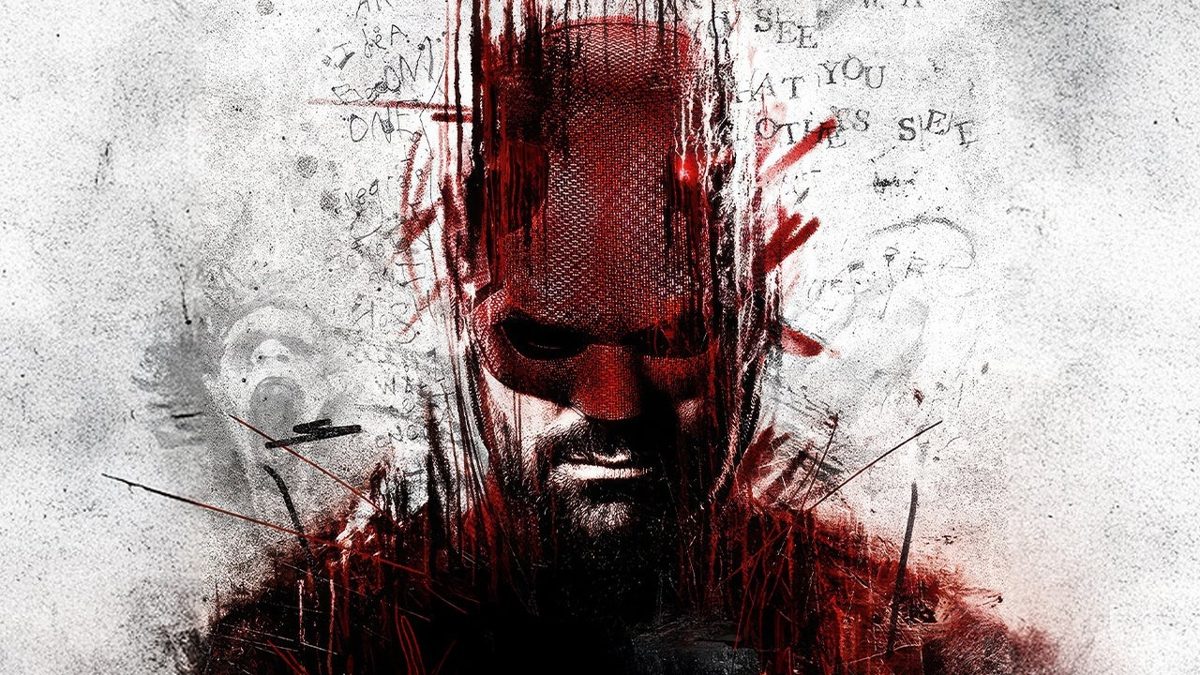
After watching the first two episodes of “Daredevil: Born Again,” I am going to predict how the rest of the season will go. These predictions aren’t going to be in detail. They are just quick thoughts about how I think the show will go based on the first two episodes.
Spoilers ahead for those who have not seen the first two episodes yet.
My first prediction is that I think we will see more of Foggy in flashbacks. I believe we will see flashbacks about what Foggy was looking into before his death. I also think it will be revealed that Fisk was behind Foggy’s death. I don’t think it makes sense to only show Foggy in the first episode and not have him show up in the rest of the season. He is too pivotal of a character to only be relegated to one episode of the new season and that’s it. We need to see more, and I have a strong feeling we will see more of him in flashbacks. As Matt Murdock gets closer to the truth about Fisk, we will see more of Foggy’s perspective in the show before his death. Who was Benny? What were they talking about? How did Benny know what he knew? I think we will find out these answers as the season goes on.
My second prediction is that Daredevil’s secret identity will be revealed. In the second episode, when Fisk gives a speech about stopping vigilantes, he mentions 3 characters in particular. Frank Castle (the Punisher), Spiderman, and Daredevil. Punisher’s identity was revealed to the public in the second season of Daredevil. Spiderman’s identity was revealed in No Way Home (but Dr. Strange wiped everyone’s memory of the event). Daredevil’s identity is the only one that has not been revealed yet. But I think that will change in Daredevil: Born Again. With Fisk in power as mayor, it will be hard for Matt Murdock to be Daredevil, even without the costume, and I think after the events of episode 2, Matt Murdock will be pursued by the law. I also think he will get caught somehow and it will be revealed that he is Daredevil.
My third prediction is that we will see Spiderman in some way in the show. Maybe not a cameo, per se, but we may find out some new information about Spiderman’s whereabouts after the events of No Way Home. He was already referenced in Fisk’s speech in episode 2, so I think it will be the perfect opportunity to have Spiderman to pop up more frequently in the show, even if it’s just easter eggs and references. However, if Spiderman did make a cameo in the show, I think that would be cool. But if he does make an appearance, I feel that we will only see his Spiderman persona, and not Peter Parker.
My fourth prediction for the show is that Fisk will win at the end. He may not get a complete victory. There may be something that costs him significantly. However, I think Fisk winning and being mayor of NYC will shake things up in the MCU and affect the status quo of the MCU’s NYC in a major way. It will make it harder for heroes to be heroes, and it may even lead to other cities in the MCU to crack down on heroes and vigilantes, because similar to real life, lots of cities get policy inspirations from each other. I also think Fisk winning could have major stakes in MCU movies, especially Spiderman. It would be interesting to see Spiderman fight against Fisk, like in the comics.
The fifth prediction I will make about the show is that Fisk’s wife Vanessa will turn on him in some way. Their on-screen interactions in the first two episodes have been tense, to say the least. I think the tension will culminate with Vanessa turning on Fisk.
I had recently seen the first and second episodes of the new series “Daredevil: Born Again.”
There will be spoilers ahead for episode 2. If you do not want to be spoiled, do not read until you have watched the episode.
So, in this episode, it focuses on two plots: Fisk’s new life as mayor and a man who accidentally kills a cop.
This episode hits close to home both on a national stage and a local stage in NYC. In the USA the past few years, there have been stories of vigilantes taking the lives of people and claim self defense. There was one recently in NYC a few years ago, Daniel Penny, who claimed self defense after choking a homeless man on the subway to death. This episode felt a lot like the Daniel Penny case. There have also been a lot of cops who were killed in NYC and around the country the past few years. There has also been a lot of crime on the subway in NYC these past few years, as well, and the problem of subway crime was highlighted in this episode. This episode also highlights how cops and law enforcement and New Yorkers are split about Fisk, similar to how in the real world, cops and law enforcement and New Yorkers are split about Trump. Some see him as a hero and some see right through him and see him as a criminal.
Another aspect that was tackled in this episode was police brutality. It was revealed early on in the episode that when the man tries to stop what he thinks is a crime on the subway, what he actually witnessed was police brutality, because it was revealed shortly after that the man he killed was a cop. This episode hits hard with real life because there have been stories of police brutality and police killing people unjustly. There have also been instances where people have tried defending themselves against police attacking them. Another aspect that is similar to the real world is how victims in police brutality cases face an uphill battle to get justice.
Fisk’s new life as mayor was also portrayed well, too. During his first few days as mayor, he has no regard for the rules as mayor. This is similar to how Trump has been in his first term and how he is so far in his second term. They both get things done regardless of the consequences of their actions.
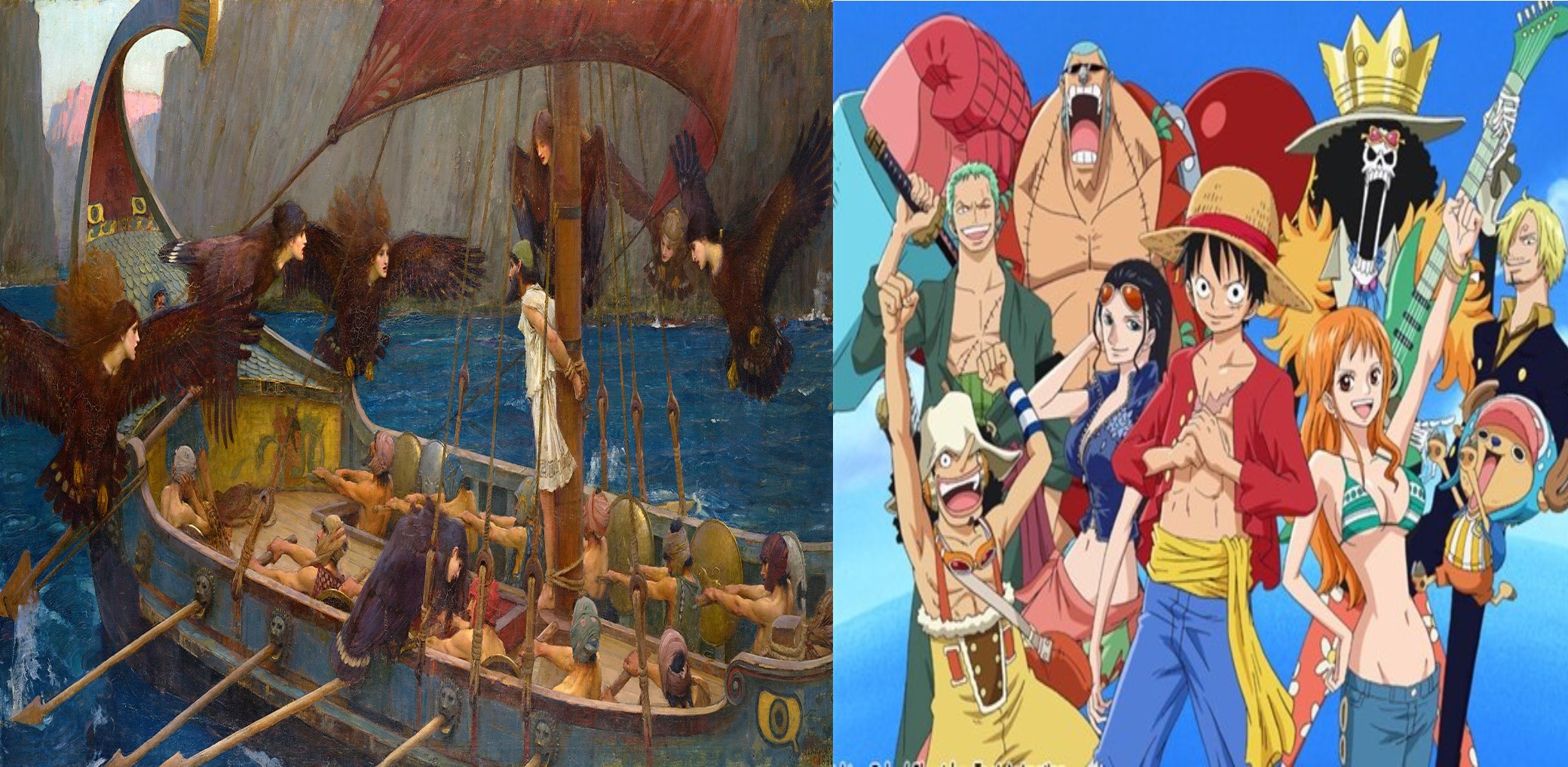
So, I don’t know if I’m the only one who thinks this, but One Piece is a modern-day Odyssey. Nani (for those of you who don’t know, “nani” is the Japanese word for “what”)???? Yes, you heard it right! The anime/manga series “One Piece” is a modern-day version of “The Odyssey!” You know; that epic from ancient Greece that you learn about in high school and whatnot (at least, I assume people learn about it in high school. I don’t know what the curriculum is like in other high schools. I went to a private school, and I know that I learned about “The Odyssey” in my school)? The one that’s written by a guy named Homer who’s last name is not Simpson (and who, as far as I’m aware, doesn’t even have a last name, because it was written during a period of time when last names weren’t a thing, or at the very least, weren’t very common)? Yes; that “Odyssey!” How so? Well, One Piece has a lot of similar themes, and a similar story structure, to The Odyssey! Let me show you what I mean! Now, before I begin, I’m going to point out that there are A LOT of themes in both The Odyssey and One Piece that I could make numerous blog posts about and whatnot, but I’ll save those for another time! For now, I just want to highlight some major themes and story structures that are similar in both works. Oh, and spoiler alert for those who haven’t read the Odyssey nor read/watched One Piece! With that out of the way, let’s begin!
Synopses
As with all comparative essays, one must start with synopses of the works that are being compared. I will do the same for this blog post!
The Odyssey:
“The Odyssey” focuses on Odysseus’ 10-year journey home to Ithaca after the Trojan War. Along the way, he sails the sea, explores different islands, faces many powerful enemies (such as gods and monsters), and meets many different people!
One Piece:
“One Piece” is about a boy named Luffy who sets off to sea at 17 to find the elusive treasure named “The One Piece.” Along the way, he gets together a crew, explores different islands, faces many powerful enemies (some with superhuman abilities, thanks to these fruits called “Devil Fruits,” and some without), and makes many new friends!
Similarities
Now that I’ve summarized the premises of “One Piece” and “The Odyssey,” I will now present to you the various similarities in both works!
Epic-style storytelling:
Right off the bat, one should note that both works have an epic-style storytelling. What is an epic? According to Merriam-Webster dictionary, an epic is defined as “a long narrative poem in elevated style recounting the deeds of a legendary or historical hero” (https://www.merriam-webster.com/dictionary/epic). Now, obviously “The Odyssey” fits this definition exactly. It was a long poem, written during ancient Greece, that narrates the journey of Odysseus as he makes his way home to Greece. Along the way, he accomplishes many feats that seem “legendary” and “heroic.” Odysseus embarks on the hero’s journey, and we see him grow and evolve as the narrative goes on. “The Odyssey” definitely fits the definition of what constitutes an epic. Does “One Piece” fit the definition, as well? I would say yes.
How does “One Piece” fit the definition of what it means to be an epic? Of course, it isn’t a poem. It is an anime/manga series! However, it is focused mainly on the journey of a central character (Luffy) as he travels the world in search of the mysterious “One Piece” and become Pirate King! Throughout the series, Luffy and his crew are seen accomplishing many feats that other characters thought were impossible to achieve! We (the audience) see Luffy and his crew grow and develop throughout the course of the series! Sure, “One Piece” may not be the standard form of an epic tale, however, it is still an epic tale, in my opinion! Luffy embarks on the hero’s journey at the very start of the series, and from there, we witness Luffy’s quest to reach “The One Piece!” Similarly, in “The Odyssey,” we (the audience) witness Odysseus’s quest to get back home!
Importance of the sea:
The sea plays a pivotal role in both “The Odyssey” and “One Piece.” In both works, the sea is used as a mode of transport to get from one destination to another. The characters use sea-faring ships to traverse the sea and go from island to island.
The sea is also a means of escape for the characters in both works. Odysseus uses the sea to escape Calypso’s island, and the Straw Hats use the sea to escape many perilous situations, such as escaping from Enies Lobby after their battle with CP9. The sea also evokes a sense of uncertainty and danger in both “The Odyssey” and “One Piece.” In “The Odyssey,” once Odysseus sets out to see after escaping the island of Calypso, he doesn’t know what lies ahead of him. All he does know is that for him to reach Greece, he has to traverse straight through the uncertainty that lies ahead. In “One Piece,” the end goal of the Straw Hats from the very beginning of the series is to reach Raftel and find the One Piece. To get there, they have to travel along the Grand Line, which has it’s own perils and dangers that many pirates may not expect.
The sea is also used as a means to world-build and character-build. Many interesting characters are met on the sea, many unique places are discovered while traveling on the sea, and many pivotal moments for the characters in both works take place on the sea!
Significance of the number “10”:
The number “10” is prevalent throughout both works. In “The Odyssey,” the number “10” is used to denote how many years have passed since the end of the Trojan War. The Trojan War itself had lasted for 10 years, which parallels how long it’s been since Odysseus has not returned home.
In “One Piece,” the number “10” is the number of crew members Luffy wants to gather before the end of the series (so far, he has nine, which leads fans to speculate who is, or will be, the 10th member of the Straw Hats). The number “10” is also the number of members are on Blackbeard’s crew (excluding Blackbeard himself, and excluding Doc Q’s horse). The 10 crew members on Blackbeard’s crew are nicknamed “The Ten Titanic Captains,” for they are captains of smaller divisions of the Blackbeard crew. Blackbeard and his crew are foreshadowed to be the antitheses for Luffy and his crew, for the are the opposite in almost every single way in terms of personality, but similar in every single way in terms of their capabilities and roles on their respective crews. The number “10” is also the number of years it was between Luffy meeting Shanks for the first time and receiving the Straw Hat at 7 years old to Luffy setting out to sea and beginning his adventure at 17. The number “10” is also the number of years it was between Shanks lost his arm to save Luffy from drowning and getting eaten from the giant Sea King and Luffy defeating the Sea King with one punch, which was a pivotal moment for Luffy and his character. When Luffy was 7, he was weak. He had just eaten the Gum-Gum fruit and received his rubber abilities, so he was not used to his powers and weaknesses (such as losing the ability to swim for the rest of his life). Because Luffy was weak, he could not defend himself from the bandits that kidnapped him, he could not swim to safety, and he could not fight against the Sea King that tried to eat him. Thus, he relied on Shanks, his hero, to save Luffy during those critical moments in his life. At the end of all of that, when Shanks and his crew were about to leave Foosha Village, Luffy tells Shanks that he wants to be just like him when he grows up, and that he’ll gather his own crew and become a pirate just like him. As a symbol of their bond, Luffy’s dreams, and the promise that Luffy makes to Shanks, Shanks gives Luffy the straw hat he was wearing, and tells Luffy to give it back to him when they meet again! Ten-years was also how old Luffy’s brother Sabo had set out to sea and “died.” It was after Sabo’s “death” that Luffy and his brother Ace made a promise to always protect each other, that they’d set out to sea at 17, and that no matter what crew they were on, they’d always be brothers at heart!
As you all can see, the number “10” is a significant number in both works! There are probably even more examples I could list about the significance of the number “10,” but I won’t because I don’t want to sound like a bore. However, it is something interesting to think about!
Larger-than-life villains:
Both works are filled TO THE BRIM with larger-than-life villains, both literally and figuratively! In “The Odyssey,” Odysseus fights against gods, giants, monsters, and creatures. In “One Piece,” Luffy and crew face off against giants, creatures, really big enemies that aren’t considered giants, and characters that are very powerful. In both works, these enemies are represented as larger-than-life, either physically (i.e. size) or figuratively (i.e. power). Significant size differences can make someone seem small. Luffy’s and Odysseus’s sizes are closest to the sizes of a real human, and seeing them face off against gigantic enemies can create a feeling of tension, and it can be very cathartic to see them overcome the enemies that are larger than them.
Obstacles:
In both works, there are TONS of obstacles throughout the worlds! In “The Odyssey,” Odysseus face monsters, giants, gods, and creatures, prevails through storms, whirlpools, and wreckage, treks through different islands, and deals with the wrath of numerous gods in order to get back home.
In One Piece, Luffy and crew come across various obstacles while traveling the seas, from pirate crews attacking them to Marines ambushing them. They also need to brave through storms, fight past sea monsters, and find their way past rocks, cliffs, and mountains that get in their way.
Theme of freedom:
Both works have a running theme of freedom. Odysseus and Luffy both long freedom. For Odysseus, he longs to be free of the curse that the gods put on him so he can get back home. When he is trapped on numerous islands, he wants to be free from his prison so he can get back home. Once Odysseus is home, he defeats all of the suitors so he can be free to be with his wife in private and live the rest of his life in peace and tranquility.
In One Piece, Luffy and crew desire freedom in their own way. They all want to be free to roam the seas without any Marines or pirates attacking them, and they want to be able to freely accomplish the dreams and goals that they have. When Luffy and crew are trapped by enemies, they long to return to the sea, because for them, the sea represents freedom. It is at the sea that they are truly free. On the sea, they can sail away to anywhere. When Luffy sees other people getting hurt, he wants to do everything that he can so that they can be free of the pain and suffering that they are enduring.
Theme of rebellion:
There is a lot of rebellion in both works. In “The Odyssey,” Odysseus rebels against the will of the gods. The gods want him to die, but Odysseus defies what they want. When he returns to Ithaca, he finds that suitors want his wife. Odysseus defies what the suitors want by slaying all of them.
In One Piece, Luffy and crew rebel against antagonistic forces on numerous occasions. When they face Crocodile on Alabasta, they rebel against him and his entire organization in order to save the people living in the kingdom. When they face Doflamingo on Dressrosa, they rebel against him and his crew, and create an uprising of pirates, Marines, citizens, and enslaved denizens so that they can save the island from the evil tyrant. There are so many more examples that I can list, but I won’t. I only listed notable examples from the series.
Theme of loyalty:
In both works, loyalty is a major theme. Both Odysseus and Luffy care about their respective crews and families. Odysseus cares about his crew and his wife a lot. He does all he can to try to bring his crew home, and he does all he can to try to get back to Ithaca to see his wife.
In One Piece, Luffy cares a lot about his crew, his friends, his brothers, his grandpa, anyone he meets along his journey whom he finds really nice, and anyone who is in suffering or is in pain. He does all he can to help people in need, and will go at great lengths for people he cares about, regardless of how long he’s known them. He’s even willing to go so far as to sacrifice himself for his crew. Luffy’s crew is also very loyal to him and one another. Whenever they are faced with difficult situations, they are willing to put themselves on the front line in order to save each other.
Theme of resilience:
The main protagonists in both works are very resilient. Odysseus faces so many foes, obstacles, and hardships to get back home, and even when he’s home, he faces so many enemies to get to his wife. For many, witnessing one’s own crew perish right in front of their own eyes would cause them to break, but not Odysseus. Instead, he stands tall and braves through it all. He braves through every obstacle that the gods throw at him so he can make it back home, even if he winds up returning home alone. It is his resilience, willpower, and bravery that allows him to get back home.
In One Piece, Luffy and crew are very resilient. No matter how tough the enemies may be, they use all of their strength, skills, and wit in order to defeat them. Even if they are almost on the verge of defeat, they manage to pull through and come out victorious.
Differences
Some vs none:
In “The Odyssey,” Odysseus starts out with a crew. Towards the end, he loses his crew, as well as all of the people that helped him get back home. In “One Piece,” Luffy starts his journey by himself. Over the course of the series, he gathered a crew and made allies along the way. Luffy’s journey is the reverse of Odysseus’s in terms of how it starts out. Luffy starts out with no one and eventually ends up with a crew and allies, while Odysseus starts out with a crew and allies, but ends up coming back home without them.
Individualism vs collectivism:
In both works, there are many examples of Odysseus and Luffy holding their own, as well as many examples of them relying on others. When comparing the two characters, however, Odysseus tends to rely on his crew and others a lot, while Luffy relies on himself most of the time. There are some cases, however, where Odysseus is forced to rely on himself (i.e. when his crew members perish in front of his eyes). As for Luffy, there are cases where he needs to rely on his crew (i.e. when there is an enemy that is too strong for any of them to handle individually).
Brains vs brawn:
When it comes to Luffy and Odysseus, there is a stark contrast when it comes to how they deal with enemies. For Odysseus, he is strategic. He plans his every move, and relies on his brains and wit in order to overcome difficult situations. For Luffy, on the other hand, he relies on strength and emotion. He uses his brawn to fight his way through most of his problems. This mentality has gotten Luffy and his crew into trouble on more than one occasion.
Maturity vs immaturity:
To build upon the previous point, relying on brains can be seen as an example of maturity, while relying on strength can be seen as an example of immaturity. When challenges arise in life, one needs to be logical and strategic. Relying on pure emotion gets one nowhere, because it clouds one’s judgment and prevents them from seeing other perspectives, outcomes, and solutions. This is especially true in survival situations. In order to have the best chances of success and making it out alive, one needs to be logical and strategic, for one mistake or mishap could prove fatal.
During the Punk Hazard arc, there is one scene where Zoro scolds Luffy for being too reckless, and that he needs to take things more seriously, otherwise he’d put him and the rest of the crew in serious danger.
Conclusion
So, as you can see, there are a lot of interesting similarities and parallels between “The Odyssey” and “One Piece.” There is a lot more comparisons and contrasts I could probably make, but I think I’ve said enough for now. If you want, check out this blog post from another One Piece fan who had also found interesting similarities between “One Piece” and “The Odyssey.” Give it a read!