The Musings of Jaime David
@jaimedavid.blog@jaimedavid.blog

The writings of some random dude on the internet

1,204 posts
1 follower

Tag: Wordpress

  • Why I Love WordPress—and Why Fall Is a Good Time to Start Your Blog Before the Holidays

    Why I Love WordPress—and Why Fall Is a Good Time to Start Your Blog Before the Holidays

    Affiliate disclosure: This post contains an affiliate link. If you sign up for WordPress through my link, I may earn a commission. That doesn’t change the price you pay, and I wouldn’t recommend something simply because there’s an affiliate opportunity attached to it. I’m sharing WordPress because I actually use it for my own blogging work and have found it useful for what I’m trying to build.

    Fall is here.

    And while everybody else is starting to think about Halloween, Thanksgiving, Black Friday, Christmas, and all the other holiday chaos that’s coming in the next few months, I’ve got another thought:

    If you’ve been thinking about starting a blog, why the hell are you waiting until January?

    Seriously.

    I know January is the traditional “new year, new me” season.

    People make resolutions.

    People start businesses.

    People start diets.

    People buy planners they’ll abandon by February.

    People announce that this is finally going to be the year they accomplish everything they’ve been putting off.

    But if you’ve been thinking about starting a blog, building a website, launching a creative project, or turning your writing into something more serious, fall is actually a pretty damn good time to start.

    You have a few months before the next big wave of holiday content.

    You have time to experiment.

    You have time to figure out what the hell you’re doing.

    And you have time to build something before January arrives.

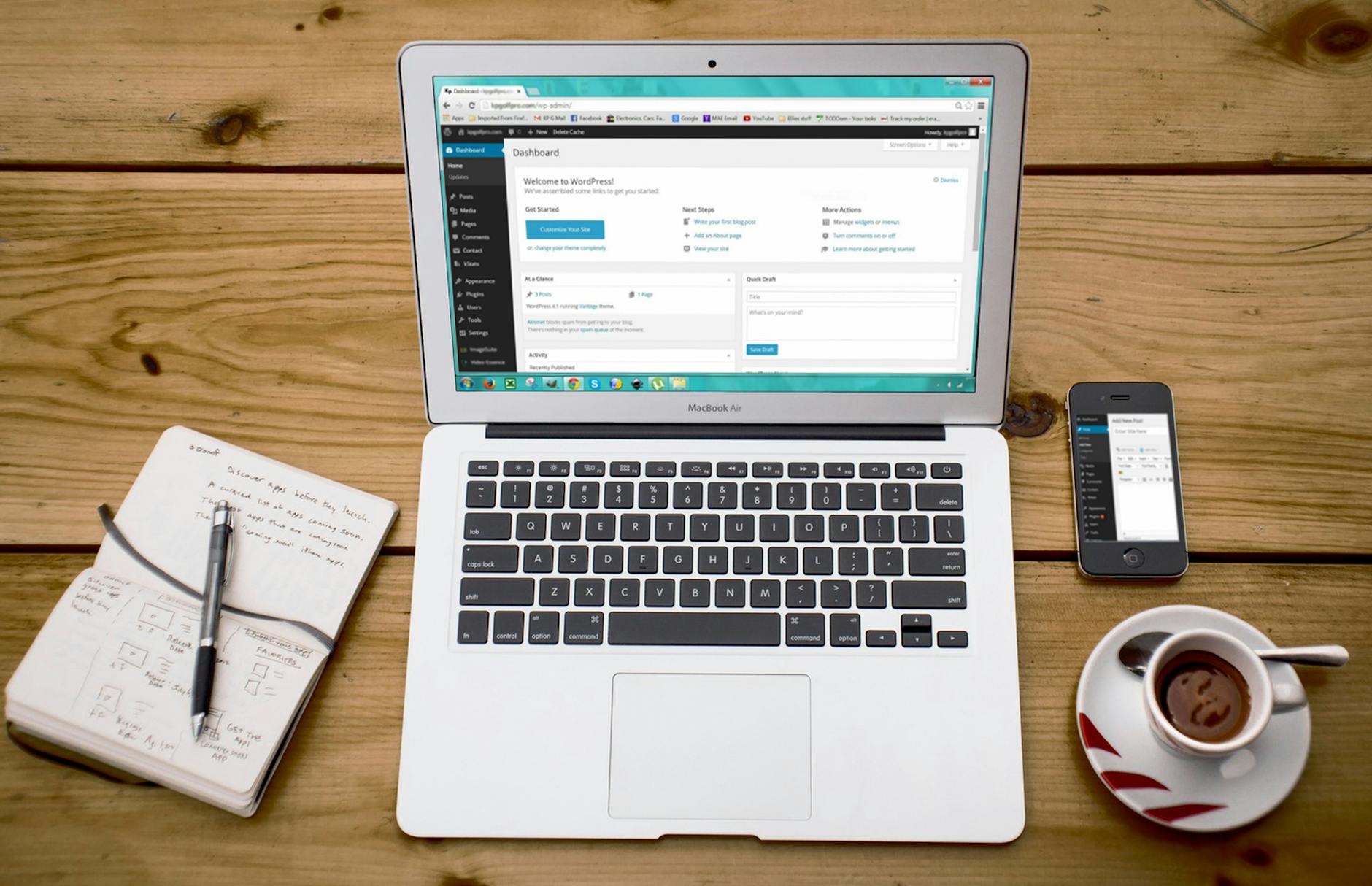
    For me, a huge part of that process has been WordPress.

    And after using it for years—and eventually upgrading my main blog to the WordPress Business Plan—I’ve developed a pretty strong appreciation for what the platform lets me do.

    So let’s talk about it.


    Blogging Isn’t Just About Writing

    This is something I didn’t fully understand when I first started blogging.

    I thought blogging was basically:

    Write thing → publish thing → people read thing.

    Simple.

    Except…

    No.

    Not really.

    There’s the writing.

    Then there’s the design.

    Then SEO.

    Then images.

    Then navigation.

    Then categories.

    Then tags.

    Then analytics.

    Then social sharing.

    Then monetization.

    Then email.

    Then plugins.

    Then customization.

    Then trying to figure out why some random thing on your website suddenly stopped working.

    And eventually you realize that a blog isn’t merely a collection of words.

    It’s a website.

    And once I started treating my blog like an actual creative project rather than just somewhere to dump my thoughts onto the internet, the way I approached it changed.

    That’s one reason WordPress became so important to me.


    WordPress Lets Me Make the Blog Feel Like Mine

    One of my favorite things about WordPress is customization.

    I don’t want my blog to look exactly like everybody else’s blog.

    I want it to feel like my website.

    My writing.

    My weird little corner of the internet.

    My branding.

    My visual choices.

    My structure.

    My personality.

    With the WordPress Business Plan, I’ve been able to take that customization considerably further than I could with a basic blogging setup.

    Themes give you a foundation, but you can customize the experience around that foundation.

    You can experiment with layouts.

    You can change how your content is presented.

    You can build pages around your specific needs.

    You can create something that feels less like “I made a blog” and more like:

    “I built a website.”

    And that distinction matters to me.

    Because at this point, I’m not treating my blog as some random hobby I occasionally remember exists.

    It’s part of my broader creative work.


    Plugins Changed How I Think About Blogging

    Before I really got into WordPress, I didn’t completely understand the power of plugins.

    Now?

    Plugins are one of those things where I occasionally think:

    How the fuck did people do all this manually?

    Plugins can add functionality without you having to build everything from scratch.

    SEO tools.

    Contact forms.

    Analytics.

    Social sharing.

    Galleries.

    Security features.

    Performance tools.

    Various integrations.

    And a whole lot of other things.

    The exact plugins you’ll want obviously depend on what you’re building.

    A photographer is going to have different needs from a novelist.

    A business website is going to have different needs from a personal blog.

    A news site is going to have different needs from somebody writing poetry at two in the morning.

    That’s part of what makes the ecosystem useful.

    You can build around what you need.


    And That’s Really the Point

    I think one of the biggest advantages of a platform like WordPress is that you’re not necessarily forced into one specific definition of what a website should be.

    You can start as a simple blog.

    Then maybe you add an About page.

    Then a contact page.

    Then a newsletter.

    Then an archive.

    Then a shop.

    Then monetization.

    Then additional functionality.

    Then suddenly you look at your website five years later and think:

    Holy shit. I built a whole thing.

    That’s essentially what happened to me.

    My main blog has grown substantially over the years.

    What started as a place for me to publish my writing eventually became part of a much larger creative ecosystem.

    And that growth didn’t happen overnight.

    It happened because I kept experimenting.


    Why Fall Is Actually a Good Time to Start

    This is where the timing comes in.

    We’re heading toward the holidays.

    That means people are going to be online.

    They’re going to be searching for things.

    They’re going to be reading.

    They’re going to be looking for gift ideas.

    They’re going to be researching.

    They’re going to be making plans for the new year.

    And if you’ve been thinking about starting a blog, this is actually a good period to start building your foundation.

    Not necessarily because you need to immediately make money.

    You don’t.

    In fact, please don’t go into blogging expecting to become rich overnight.

    That’s not how this works.

    But you can start building.

    Write some posts.

    Figure out your voice.

    Experiment with your design.

    Learn SEO.

    Understand your analytics.

    Build an archive.

    Start developing an audience.

    And by the time January arrives, you aren’t standing at the starting line wondering what to do.

    You’ve already been running.


    You Don’t Need to Know Everything on Day One

    This is another thing I wish more people understood.

    You don’t need to be an expert before you start.

    When I started blogging, I didn’t know everything I know now.

    Obviously.

    Nobody does.

    You learn.

    You screw things up.

    You change things.

    You realize something you built six months ago was a terrible idea.

    You redesign.

    You experiment.

    You figure out what works.

    Then you figure out something else.

    That’s part of the process.

    And the WordPress ecosystem is huge.

    There are tutorials.

    Guides.

    Documentation.

    Forums.

    Videos.

    Articles.

    Entire communities of people trying to solve the same problems you’re trying to solve.

    You can learn as you go.


    Free Is Fine. But Sometimes You Need More.

    I’m not going to pretend everybody needs a Business Plan.

    They don’t.

    If you just want to occasionally publish some writing online and don’t care about advanced customization or additional functionality, a simpler plan may be completely adequate.

    But there comes a point where you may want more control.

    For me, that point came when I wanted my main blog to function more like an actual website and less like a basic publishing page.

    That’s when the Business Plan became worthwhile for me.

    It gave me access to additional customization and functionality that fit what I was trying to build.

    And yes, it costs money.

    That’s something you should consider before signing up for anything.

    But I also think it’s important to recognize that building a website can be an investment.

    You don’t have to spend money just because you can.

    But if you’re serious about what you’re creating, sometimes investing in the infrastructure behind it makes sense.


    Your Blog Can Become More Than a Blog

    This is probably the biggest lesson I’ve taken from my own experience.

    A blog can start as writing.

    But it doesn’t necessarily have to stay there.

    It can become:

    A portfolio.

    A publication.

    A business.

    A personal brand.

    A community.

    A place to sell books.

    A place to promote music.

    A home for a podcast.

    A newsletter hub.

    A place to experiment with affiliate marketing.

    A digital archive of your work.

    Or some weird combination of all of those things.

    That’s what I love about having my own website.

    I’m not limited to one format.

    I can write an essay one day.

    Publish a poem another day.

    Talk about music.

    Talk about science.

    Talk about books.

    Talk about something completely fucking bizarre.

    And it’s all part of the same larger ecosystem.


    Don’t Wait Until January

    This is probably my biggest piece of advice for somebody who’s been thinking about starting.

    Don’t wait for the perfect moment.

    Don’t wait until January 1.

    Don’t wait until you have the perfect logo.

    Don’t wait until you’ve written fifty posts.

    Don’t wait until you understand SEO perfectly.

    Don’t wait until you have a business plan worthy of a Fortune 500 company.

    Start.

    Then improve.

    Your first post probably won’t be your best post.

    Your first design probably won’t be your final design.

    Your first strategy probably won’t survive six months.

    That’s okay.

    You’re allowed to evolve.


    And Then the Holidays Arrive

    This is where the timing gets interesting.

    Fall gives you time to build.

    Then Thanksgiving arrives.

    Then Black Friday.

    Then Cyber Monday.

    Then Christmas.

    Then New Year’s.

    And suddenly you’re entering a period when people are thinking about what they’re going to do differently next year.

    That’s when somebody might decide:

    “You know what? I’m finally starting that blog.”

    And if that’s you, I’d argue there’s no reason you couldn’t start before the new year.

    Give yourself a head start.

    Get the website.

    Pick your name.

    Start writing.

    Experiment.

    Learn.

    By January, you’ll already have some experience under your belt.


    Why I Keep Using WordPress

    At the end of the day, this is why WordPress works for me.

    It gives me room.

    Room to experiment.

    Room to grow.

    Room to fuck things up and fix them.

    Room to turn a basic blog into something much larger.

    And most importantly, room to make the website feel like mine.

    That’s important when you’re building something creative.

    I don’t want somebody else’s idea of what my website should look like.

    I want to make those decisions myself.

    That’s one of the reasons I continue to use WordPress for my main blog.


    Want to Check It Out?

    If you’ve been thinking about starting a blog, building a website, or simply seeing what WordPress can do, you can check it out here:

    Start Your WordPress Journey

    Again, that’s an affiliate link, so if you sign up through it, I may earn a commission.

    But the bigger point of this post isn’t “HEY, BUY WORDPRESS.”

    It’s this:

    If you’ve been thinking about creating something, you don’t necessarily need to wait for January to become the person who creates it.

    Fall is already here.

    The holidays are coming.

    And there’s still time to build something before the calendar flips.

    So maybe this is the year you stop saying:

    “I’m going to start a blog someday.”

    And finally say:

    “Fuck it. I’m starting one.”


    Fediverse Reactions
  • Federating Substack? Apparently You Can.

    Federating Substack? Apparently You Can.

    For the longest time, I assumed that if you wanted a blog connected to the fediverse, you needed something like WordPress, Blogger, Mastodon, or another platform that was already known for federation support. Substack never really came to mind. In my head, it existed in its own separate ecosystem, disconnected from the wider fediverse.

    Recently, though, I discovered something that genuinely surprised me.

    Through a bit of experimentation, I found out that you can connect a Substack publication to Bridgy Fed and effectively federate your Substack blog. That means your posts can become accessible through the fediverse in a way that I honestly did not think was possible. It was one of those moments where I stumbled across a feature almost by accident and immediately thought, “Wait, more people should know about this.”

    The fediverse has become increasingly interesting to me over the years because it offers an alternative way of distributing content. Instead of relying entirely on centralized platforms, federation allows content to flow across interconnected services. A post made in one place can be seen and interacted with from another. For bloggers, that can potentially mean reaching readers who may never have otherwise discovered their work.

    I already knew that WordPress blogs could be federated. Depending on the setup, WordPress users have had federation options available for quite some time. Blogger blogs can also be connected through services like Bridgy Fed. There are various platforms and websites that can be brought into the fediverse ecosystem if you are willing to spend a little time configuring them.

    What surprised me was seeing Substack join that list.

    Substack is often thought of primarily as a newsletter platform. While many creators use it as a traditional blog, the platform itself does not market federation as one of its major features. Because of that, I never really considered the possibility that my Substack content could become part of the fediverse.

    Yet after experimenting with Bridgy Fed, it appears that it can be done.

    For bloggers who care about discoverability, digital independence, and alternative distribution methods, this could be a valuable tool. A lot of writers spend enormous amounts of time trying to figure out how to get their content in front of new readers. Some focus on social media. Others focus on search engines. Some use email newsletters. Federation adds another potential avenue for people to encounter your work.

    Of course, federation is not a magic solution. Connecting your blog to the fediverse is not going to suddenly bring thousands of readers overnight. Just like every other platform, building an audience still requires consistency, quality content, and engagement. However, it does create another pathway for people to find what you are writing.

    I also think there is a broader lesson here about experimentation.

    Sometimes we make assumptions about what platforms can and cannot do. We develop a mental list of capabilities and limitations and rarely revisit them. Then one day we click around, try something new, and discover that the landscape has changed.

    That is essentially what happened here.

    I assumed Substack and federation lived in separate worlds. It turns out that assumption was wrong.

    So if you have a Substack publication and have ever wished it could participate in the fediverse ecosystem, you may want to look into Bridgy Fed. You might discover, as I did, that federation is more accessible than you thought.

    The internet is constantly evolving. New tools appear. Existing tools gain new capabilities. Connections that seemed impossible a few years ago become surprisingly straightforward. Sometimes the only way to find those possibilities is to experiment and see what happens.

    In this case, that experimentation led me to a discovery that I suspect many bloggers may not know about yet: yes, you can federate a Substack blog.

    And honestly, I think that is pretty cool.

  • The Struggle of Consistency: When You Have Too Much to Say and Sometimes Need a Break

    The Struggle of Consistency: When You Have Too Much to Say and Sometimes Need a Break

    One of the biggest misconceptions people have about blogging is that inconsistency always comes from a lack of ideas. People imagine the writer sitting in front of a blank screen, staring at an empty document, desperately trying to think of something, anything, to write about. Sometimes that does happen. Writer’s block is real. But for me, that is rarely the problem. If anything, I have the opposite issue. I often have too many ideas, too many topics, too many directions I could take. Instead of wondering what to write about, I find myself wondering which of the dozens of possible topics deserves my attention first.

    When you run multiple blogs, that challenge becomes even more noticeable.

    I have my main blog, The Musings of Jaime David, but I also have several other blogs focused on different subjects. There is my politics and news blog, The Interfaith Intrepid. There is my mental health blog, Let’s Be Different Together. There is my music blog. There is my science blog. There is my gaming blog. There are platforms like Medium. There are social media accounts. There are podcasts. There are countless places where ideas can potentially become content.

    At first glance, that sounds like an incredible advantage. More outlets mean more opportunities to create. More opportunities mean more chances to reach people. More chances to reach people mean more opportunities to build communities and conversations.

    And all of that is true.

    The problem is that every new platform and every new blog also creates another place where content could be posted.

    A political news story breaks. Should I write about it on The Interfaith Intrepid?

    I have a thought about creativity. Should that go on The Musings of Jaime David?

    I discover an interesting scientific topic. Does that belong on the science blog?

    I have thoughts about a game I recently played. Should that become a gaming article?

    I find a song that inspires me. Is that something for the music blog?

    Then there are the ideas that overlap multiple categories. Some posts could fit in two or three places simultaneously. Some topics touch on politics, psychology, science, and culture all at once. Deciding where something belongs can become its own task before the writing process even begins.

    People often assume that having many ideas makes consistency easier. In some ways it does. But in other ways it creates a different kind of challenge.

    Imagine standing in front of a restaurant menu that contains three options. Making a decision is relatively simple.

    Now imagine standing in front of a menu containing five hundred options.

    Suddenly choosing becomes harder.

    That is sometimes what blogging feels like.

    There are days when I have ten potential articles in my head before breakfast. There are days when I could easily draft multiple posts on entirely different subjects. There are days when my notes are overflowing with future ideas.

    Yet paradoxically, those can be the days when nothing gets published.

    Not because there is nothing to say.

    Because there is too much to say.

    Every potential article competes with every other potential article for attention.

    Should I write about the thing that is timely?

    Should I write about the thing I am passionate about?

    Should I write about the thing that people are most likely to read?

    Should I write about the thing that has been sitting in my drafts for six months?

    Should I write about the thing that is personally meaningful even if nobody else cares?

    Sometimes all those questions create enough friction that I end up writing nothing at all.

    Another reality that many readers do not see is that blogging is not just writing.

    People see a finished article and naturally focus on the words.

    What they do not always see is everything surrounding those words.

    Research takes time.

    Fact-checking takes time.

    Editing takes time.

    Formatting takes time.

    Creating images takes time.

    Finding tags takes time.

    Sharing posts takes time.

    Responding to comments takes time.

    Maintaining multiple platforms takes time.

    Managing social media takes time.

    Even deciding what to write can take time.

    A thousand-word article might only take an hour to draft. But everything surrounding it can easily double or triple that investment.

    When you multiply that across multiple blogs, multiple audiences, and multiple platforms, the workload grows quickly.

    And sometimes life exists outside blogging.

    That might sound obvious, but creators often feel pressure to act as though content creation is their entire existence.

    People have jobs.

    People have families.

    People have responsibilities.

    People have appointments.

    People have stress.

    People have days when they are tired.

    People have days when they simply do not feel like writing.

    That last one is important.

    Not every break needs a dramatic explanation.

    Sometimes you are exhausted.

    Sometimes your brain is tired.

    Sometimes your creativity needs space.

    Sometimes you want to spend a day doing literally anything except writing.

    And that is okay.

    The internet has created a culture where consistency is often treated like a sacred commandment.

    Post every day.

    Upload every day.

    Stay active every day.

    Engage every day.

    Never disappear.

    Never slow down.

    Never stop.

    Algorithms reward consistency, so there is some practical truth behind that advice. But human beings are not algorithms.

    Human beings get tired.

    Human beings need rest.

    Human beings need room to breathe.

    I think many creators struggle with guilt whenever they take breaks.

    I know I sometimes do.

    You look at your blogs.

    You look at your drafts.

    You look at your ideas.

    You know there are things you could be writing.

    You know there are articles that could be published.

    You know there are readers waiting.

    And yet part of you simply wants to step away for a little while.

    The guilt starts whispering.

    “You should be writing.”

    “You are falling behind.”

    “You are wasting time.”

    “Other creators are posting.”

    “You are losing momentum.”

    Maybe sometimes those concerns are legitimate.

    But sometimes the healthiest thing you can do is ignore them.

    Because burnout helps nobody.

    A burned-out writer is not more productive.

    A burned-out writer is not more creative.

    A burned-out writer is not producing their best work.

    A burned-out writer is simply exhausted.

    One thing I have learned over time is that breaks are not necessarily the enemy of creativity.

    In many cases, they are part of creativity.

    Some of my best ideas have arrived when I was not actively trying to write.

    They arrived while walking.

    They arrived while listening to music.

    They arrived while watching a movie.

    They arrived while scrolling through random conversations online.

    They arrived while doing absolutely nothing related to blogging.

    Creativity often needs input.

    If all you ever do is produce, eventually the well starts running dry.

    Sometimes you need to refill it.

    That means reading.

    That means learning.

    That means experiencing life.

    That means stepping away from the keyboard.

    Ironically, taking a break from writing can sometimes make you a better writer.

    Another challenge with running multiple blogs is that every blog represents a different version of your interests.

    I am not just one thing.

    Most people are not.

    Human beings are complicated.

    We contain countless interests, passions, curiosities, frustrations, and obsessions.

    Some days I am interested in politics.

    Some days I am interested in science.

    Some days I am interested in music.

    Some days I am interested in philosophy.

    Some days I am interested in gaming.

    Some days I want to write about personal experiences.

    Some days I want to write about society.

    Trying to balance all those interests can be difficult.

    If I spend too much time on one blog, another blog sits dormant.

    If I focus heavily on one subject, another subject gets neglected.

    There are only so many hours in a day.

    No matter how many ideas exist, time remains limited.

    I think readers sometimes assume creators have a master plan behind everything.

    The reality is often much messier.

    Sometimes content schedules are carefully planned.

    Sometimes they are not.

    Sometimes a post comes together because inspiration struck at exactly the right moment.

    Sometimes a post exists because it was sitting unfinished in drafts for months.

    Sometimes a post exists because I finally decided to stop overthinking and hit publish.

    The truth is that blogging is often less organized than people imagine.

    And honestly, that is part of the beauty of it.

    Blogs are living things.

    They evolve.

    They change.

    They grow alongside the people creating them.

    My blogs today are not identical to what they were years ago.

    My interests have changed.

    My perspectives have changed.

    My writing style has changed.

    My goals have changed.

    And that evolution will probably continue.

    That is another reason I try not to obsess over perfect consistency.

    Consistency matters.

    I am not denying that.

    Showing up matters.

    Building trust with readers matters.

    Maintaining momentum matters.

    But there is a difference between consistency and rigidity.

    Consistency means continuing the journey.

    Rigidity means refusing to adapt.

    I would rather occasionally take a break than force myself to produce content I do not care about.

    I would rather publish something meaningful than publish something merely because a schedule demands it.

    I would rather maintain my enthusiasm for writing than turn blogging into a chore.

    Because the moment writing becomes nothing but obligation, something important gets lost.

    The passion starts fading.

    The excitement starts fading.

    The curiosity starts fading.

    And those things are often what attracted readers in the first place.

    At the end of the day, all of my blogs exist because I have things I want to talk about.

    They exist because I enjoy sharing ideas.

    They exist because I enjoy exploring different topics.

    They exist because I enjoy connecting with people.

    That remains true whether I publish three articles in a week or take a brief break from posting.

    The ideas are still there.

    The passion is still there.

    The curiosity is still there.

    Sometimes the ideas come faster than I can write them.

    Sometimes there are so many possibilities that choosing becomes difficult.

    Sometimes life gets busy.

    Sometimes energy runs low.

    Sometimes I need a break.

    And honestly, I think that is perfectly normal.

    The pressure to constantly create can make us forget that creators are people first and content producers second.

    Blogs are important to me.

    Writing is important to me.

    The communities surrounding my work are important to me.

    But none of those things change the fact that I am still a human being.

    A human being with limited time.

    A human being with limited energy.

    A human being with countless interests competing for attention.

    A human being who occasionally needs to step away from the keyboard.

    The funny thing is that every time I take one of those breaks, the same thing eventually happens.

    Ideas start piling up again.

    A headline catches my attention.

    A thought appears in my mind.

    A conversation sparks inspiration.

    A topic starts demanding to be explored.

    Before long, I am back at the keyboard with more things to write than I can possibly keep up with.

    Not because I forced myself.

    Not because I followed some productivity formula.

    Not because an algorithm demanded it.

    But because the desire to create eventually returned on its own.

    That is why I am learning to be more accepting of those periods when writing slows down.

    They do not mean the creativity is gone.

    They do not mean the blogs are dead.

    They do not mean I have run out of things to say.

    In many cases, they simply mean I am taking the time necessary to recharge before the next wave of ideas arrives.

    And if there is one thing I have learned from running multiple blogs and maintaining a main blog for years, it is this: sometimes having too much to say can be just as overwhelming as having nothing to say at all. The challenge is not always finding ideas. Sometimes the challenge is choosing between them, giving yourself permission to rest, and trusting that the words will still be there when you come back.

    Fediverse Reactions
  • Check out my books and my podcast and other stuff!!!

    Check out my books and my podcast and other stuff!!!

    Hey everyone!

    Just figured I would make a comprehensive ad that combines all of my major works so far into one.

    Check out my short story compilation book “Some Small Short Stories:”

    Paperback: https://www.lulu.com/shop/jaime-david/some-small-short-stories/paperback/product-gjypv69.html

    Ebook: https://www.lulu.com/shop/jaime-david/some-small-short-stories/ebook/product-7kvw9gg.html

    Check out my poem compilation book “My Powerful Poems:”

    Paperback: https://www.lulu.com/shop/jaime-david/my-powerful-poems/paperback/product-dy68n5r.html

    Ebook: https://www.lulu.com/shop/jaime-david/my-powerful-poems/ebook/product-q6dwzpm.html

    Check out my novel “Wonderment Within Weirdness:”

    Paperback version: https://www.lulu.com/shop/jaime-david/wonderment-within-weirdness/paperback/product-q6kydmk.html?q=wonderment+within+weirdness&page=1&pageSize=4

    Ebook version: https://www.lulu.com/shop/jaime-david/wonderment-within-weirdness/ebook/product-2m42ewm.html?q=wonderment+within+weirdness&page=1&pageSize=4

    Check out my podcast “The Jaime David Podcast” on Spotify, YouTube, and more!

    Spotify: https://open.spotify.com/show/2ckvJZisk8njUvZAkxZNC4

    YouTube: https://youtube.com/playlist?list=PLOaTKcyxB_H5ZuHUKMn8xon94QZVyDWmu&si=SHbV_rpEzDhaofpW

    Follow me on my social media (you can find my social media linked on this page here):

    Also check out my other sites:

    The Interfaith Intrepid: https://theinterfaithintrepid.art.blog/

    Let’s Be Different Together: https://letsbedifferenttogether.wordpress.com/

    Jaime David Science: https://jaimedavidscience.hashnode.dev/

    Jaime David Gaming: https://jaimedavidgaming.hashnode.dev/

    Medium blog: https://medium.com/@jaimedavid327

    Jaime David Music: https://jaimedavidmusic.blogspot.com/

    Jaime David Archive:  https://jaimedavid327.wixsite.com/jaimedavidarchive

  • Check out my books and my podcast and other stuff!!!

    Check out my books and my podcast and other stuff!!!

    Hey everyone!

    Just figured I would make a comprehensive ad that combines all of my major works so far into one.

    Check out my short story compilation book “Some Small Short Stories:”

    Paperback: https://www.lulu.com/shop/jaime-david/some-small-short-stories/paperback/product-gjypv69.html

    Ebook: https://www.lulu.com/shop/jaime-david/some-small-short-stories/ebook/product-7kvw9gg.html

    Check out my poem compilation book “My Powerful Poems:”

    Paperback: https://www.lulu.com/shop/jaime-david/my-powerful-poems/paperback/product-dy68n5r.html

    Ebook: https://www.lulu.com/shop/jaime-david/my-powerful-poems/ebook/product-q6dwzpm.html

    Check out my novel “Wonderment Within Weirdness:”

    Paperback version: https://www.lulu.com/shop/jaime-david/wonderment-within-weirdness/paperback/product-q6kydmk.html?q=wonderment+within+weirdness&page=1&pageSize=4

    Ebook version: https://www.lulu.com/shop/jaime-david/wonderment-within-weirdness/ebook/product-2m42ewm.html?q=wonderment+within+weirdness&page=1&pageSize=4

    Check out my podcast “The Jaime David Podcast” on Spotify, YouTube, and more!

    Spotify: https://open.spotify.com/show/2ckvJZisk8njUvZAkxZNC4

    YouTube: https://youtube.com/playlist?list=PLOaTKcyxB_H5ZuHUKMn8xon94QZVyDWmu&si=SHbV_rpEzDhaofpW

    Follow me on my social media (you can find my social media linked on this page here):

    Also check out my other sites:

    The Interfaith Intrepid: https://theinterfaithintrepid.art.blog/

    Let’s Be Different Together: https://letsbedifferenttogether.wordpress.com/

    Jaime David Science: https://jaimedavidscience.hashnode.dev/

    Jaime David Gaming: https://jaimedavidgaming.hashnode.dev/

    Medium blog: https://medium.com/@jaimedavid327

    Jaime David Music: https://jaimedavidmusic.blogspot.com/

    Jaime David Archive:  https://jaimedavid327.wixsite.com/jaimedavidarchive

  • WordPress spam

    WordPress spam

    What the fuck is up with this spam?

    I’m gone for a few months, and I get over a thousand comments of this shit?

    WordPress has gotta do something about this.

  • Happy Birthday To The RogueReviewer

    Happy Birthday To The RogueReviewer

    Happy Birthday to The RogueReviewer,

    AKA Drew Gaska.

    You are an amazing writer.

    Your reviews bring to light some

    Sociopolitical

    Issues we face on

    A day-to-day basis.

    You are an amazing artist.

    Your work is magnificent.

    You are a very talented individual.

    I hope that on this day,

    You have a great birthday!

  • Thematic Discussion of Daniela Elana’s “Volatile”

    Thematic Discussion of Daniela Elana’s “Volatile”

    This post is going to be something different. I’ve had the idea in my mind for a while. I’d like to discuss some the themes and symbols in my friend Daniela Elana’s book “Volatile,” and share my thoughts. Hope you enjoy. Oh and spoiler alert, if you have not read the book “Volatile,” there will be plot spoilers in this post, so be forewarned! Without further ado, let’s begin.

    Theme of Betrayal

    Betrayal is a pertinent theme that appears throughout Volatile. Maricel first gets betrayed by the guy she meets on the bus who turned out to be a creep. Later on, she feels betrayed by celebrities that she idolized and looked up to when one of them assaults her and later insults her. Later on in the novel, Maricel gets betrayed by her deadbeat dad who comes into her life out of the blue. The two start to develop a connection, until it was later revealed to Maricel that her dad only wanted to connect for her money. She felt betrayed by that. Towards the climax of the novel, Marciel gets betrayed by her lover Claudius, who was revealed to have lied about everything regarding who he was, including his name. Maricel is forced to work together with a few of the enslaved denizens in the secret society of Lemuria, only to be betrayed yet again by one of the allies that she had previously worked with once all of them were out of the fray. Betrayal is a prevalent theme in Volatile, and the lessons that can be learned can be applied to the real world. Sometimes, you don’t know who you can trust, because people whom you could know really well could have the worst of intentions. The only person you can trust is yourself, but even then, not fully, which was the case when Maricel took possession of the crystal skull. She had lost control of herself and became someone she was not; something she was not. Similarly, strong emotions, whether they are positive or negative, can make us act in ways that we wouldn’t normally act. Same thing with substances. We have the potential to act in ways we wouldn’t normally act. If one is not careful, it is possible to lose one’s self. It is possible to act irrational and become someone you’re not. It is possible to do things you would normally not do. In short, you have to be skeptical of people, and try not to act in ways that can hurt yourself or others. Don’t be too skeptical, though. By acting too skeptical of things, it is possible to turn away the people who care about the most, causing them to feel betrayed. This was the case when Maricel pushed her friends and family away after they warned her about who Claudius really was. By the time she found out for herself who he really was, it was too late. So, to summarize, be skeptical, but not too skeptical, be cautious, but not too cautious, be open to listen to people’s concerns, even if you may not believe it 100 percent, try to act in ways that don’t hurt yourself or others, and lastly, try not to push people away, because you might wind up pushing away the people who care about you the most.

    Theme of Change

    Throughout the novel, Maricel evolves as a character. She starts out as a country gal that no one really knew. As time goes on, she becomes a famous actress who everybody knows. By the end of the novel, she loses all of that fame and becomes a nobody once again. Not only that, but her character also changes in the way she acts. At the start of the novel, she’s passive about a lot of things. By the end of the novel, she becomes a strong and independent character who doesn’t take crap from anyone else. In a way, she goes from being a follower to becoming a leader.

    Similarly, her relationship with Claudius changes. In the beginning, he starts off as an elusive character with a mysterious backstory. As Maricel finds out more about Claudius, their relationship changes. It goes from joyful to annoying to abusive to a full-blown nightmare. In the end, she is able to escape him, but at the cost of losing everything and everyone she loved.

    Individualism vs Conformity

    Throughout the novel, the themes of individuality and conformity clash in dynamic and ironic ways. Maricel’s character is the embodiment of individuality. She constantly makes her own choices, which a lot of the time go against what others expect of her. When her friends and family warned her of Claudius, she decided to stay with him despite what they said to her. When she was brought to Lemuria, she was expected to act like a queen, but she didn’t. She did what she wanted to do. Eventually, she turned on the order itself and found a way to escape. She had help, but ultimately, she made it out alone. From the beginning of the novel all the way to the end, Maricel did things her way.

    Claudius embodies both conformity and individuality. He was imprisoned by God, but eventually made his way out. Once he did, he and a group of other angels turned on God and formed their own society. In this sense, they were individualists because they did things their own way. They didn’t go along with what God and the other angels expected of them. That is how Claudius embodies individuality. On the flipside, he also embodies conformity. Sometime after forming a secret society, Claudius became a tyrant and ruled over the society with an iron fist. He oppressed the citizens of Lemuria and forced them to conform with his vision. If they didn’t, there’d be dire consequences for them.

    Symbolism of Fire

    Fire is a major symbol for “Volatile,” and the rest of the “Through the Fire” series. The relationship of Claudius and Maricel is described as “volatile.” In chemistry, volatility relates to vapor pressures and boiling points for liquids or solids. If the vapor pressure is high, volatility is high. If the boiling point, volatility is low. This is because gases are the most unstable form of matter. Usually, a substance’s volatility is recorded at room temperature. If a substance evaporates (for liquids) or sublimates (for solids) at room temperature, that means that for that specific substance, room temperature was a very high temperature for it. In layman’s terms, room temperature is considered “hot” for volatile substances that evaporate or sublimate at room temperature.

    Fire itself burns at high temperatures. It is a very destructive force. It can end lives, burn homes, and destroy ecosystems. If fire is not contained and controlled, it can quickly go out of control and burn everything in its path.

    Love is usually compared to fire or flames. This is because love, just like fire, can burn uncontrollably if it is not contained or controlled. Similarly, other emotions, especially anger, are like fire as well. If they are not controlled or contained, they can go out of control like a wildfire.

    Fire, for the most part, is bad. It is bad if it goes out of control. However, there are some good qualities about fire. Firstly, fire can be a light source. It can light up the darkness that surrounds. A person with a strong, positive personality can have a similar effect, as well. If there is sadness and negativity in a person’s life, a positive person could sometimes brighten up that person’s life, even if it is in a small or brief way. Positive people can also find a way to bring joy into the lives of those they meet, whether it’s friends, family, lovers, or even strangers. Just by being who they are as people, they are able to make people’s lives better.

    Fire can also provide warmth for people. In the frigid, cold months, or in environments with extreme cold, fire can help provide some warmth for people. Heat is able to radiate out of the flames and can warm a person’s external and internal body temperature. Similarly, someone who is a loving individual can give people feelings of warmth and comfort in the ways they speak and act. They can show uplifting emotional support when needed, and are caring and affectionate individuals.

    Lastly, fire has a rejuvenating effect. Once it destroys an ecosystem, it has the potential to allow new ecosystems to thrive. It provides new organisms with homes and shelter, it allows plants and seedlings to grow and thrive, and it enriches the soil by providing it with nutrients! Similarly, when love fails, it makes way for something new. It allows people to find out who they truly are, and it allows people to better themselves as individuals, and it gives them a chance to find a way to tame the flame that they have within them. It allows one to grow, learn, and thrive! It allows one to enrich their lives with whatever it is they enjoy the most and it allows people to figure out what it is they want from love. It allows people to figure out what they want and how they want to be. The ending of love is not an ending; it’s a beginning. It’s the beginning of something new; something better. It’s the beginning of something that is better than anything that came before! That is what love is, and that is how love can make us grow, even when it ends! Sure, love may be volatile, but it’s volatility can bring about change that is needed for people to grow!

    Closing Thoughts

    There are many more themes and symbols in “Volatile” that I could discuss, but for now, I think I’ve written enough. I don’t want this post to get too long, after all! I just wanted to highlight some themes and symbols that I found interesting! I hope you all enjoyed! While you’re at it, feel free to check out my friend Daniela Elana’s blog. It has a lot of great work on there! Take care, everyone! I plan on making more literary discussions like this, not only of my friend’s other books, but also other works that I find interesting, as well, whether it’s movies, TV shows, video games, books from other authors, YouTube videos, music, art, poems, short stories, etc. Anyways, that’s all for now!

    https://danielaelana.wordpress.com/