The Musings of Jaime David
@jaimedavid.blog@jaimedavid.blog

The writings of some random dude on the internet

1,137 posts
1 follower

Tag: writers

  • When Literary Titan Put My Book on Their Podcast

    When Literary Titan Put My Book on Their Podcast

    There are certain moments in an author’s journey that stand out forever.

    Publishing a book is already a surreal experience. For years, a story exists only in your imagination. It lives inside your head. Then, eventually, you take that idea and turn it into something physical. You write the words, edit the manuscript, format the pages, create the cover, and finally release it into the world.

    But once a book is released, something else happens.

    You have to let go.

    The story that was once completely yours now belongs to readers. It belongs to reviewers. It belongs to anyone who decides to pick it up and experience it for themselves.

    As an independent author, those moments can feel especially meaningful because every milestone represents something you built yourself.

    Recently, I experienced another one of those moments.

    My debut novel, Wonderment Within Weirdness, was featured on the Literary Titan podcast, and that podcast episode was recently uploaded to YouTube.

    Seeing that happen was incredibly exciting because Literary Titan was already an important milestone in my journey as an author.

    They were one of the first major literary organizations to recognize my work.

    They reviewed my book.

    They awarded it the Literary Titan Silver Book Award.

    And now, their discussion of my novel has reached an even wider audience through YouTube.

    For an indie author, moments like this are incredibly meaningful.

    When I first published Wonderment Within Weirdness, I knew I was creating something unusual.

    I knew it was not a typical science fiction story.

    I knew it was not going to fit neatly into one category.

    The book was a combination of science fiction, fantasy, satire, adventure, cosmic speculation, and my own personal ideas about life, existence, morality, and the universe.

    It was a story that I wanted to be big.

    I wanted it to feel like an epic journey.

    I wanted it to explore massive ideas while still being driven by personal emotions.

    And when Literary Titan reviewed it, they recognized many of those elements.

    Their podcast discussion focused on exactly what makes Wonderment Within Weirdness the type of story it is.

    The review begins with the basic premise.

    The story follows Matthew Tiberius, who dies and awakens in a strange and unexpected version of heaven.

    Instead of finding a simple, peaceful afterlife, Matthew discovers a bizarre world filled with politics, conflicts, strange systems, and mysteries.

    The heaven of Wonderment Within Weirdness is not just a place of eternal peace.

    It is a fully developed world.

    It has neighborhoods.

    It has organizations.

    It has conflicts.

    It has power struggles.

    It has systems that reflect many of the issues found in human society.

    That was one of the things Literary Titan highlighted.

    The idea of taking something traditionally viewed as perfect and exploring what happens when that environment becomes complicated.

    Because one of the biggest themes behind Wonderment Within Weirdness is questioning systems.

    Questioning authority.

    Questioning judgment.

    Questioning whether even supposedly perfect worlds can contain flaws.

    The podcast also highlighted the scale of the story.

    One thing I always wanted with this series was to create something massive.

    The first book is not just about one character discovering a strange afterlife.

    It expands into larger conflicts involving cosmic forces, different realities, and multiverse-level stakes.

    The goal was to create a feeling of exploration.

    A feeling that the universe was much bigger than the characters initially understood.

    That sense of wonder is something that has always attracted me to science fiction and fantasy.

    The idea that there are endless possibilities beyond what we know.

    The idea that existence itself can be questioned and explored.

    Literary Titan also discussed the tone of the novel.

    And this was something I found especially interesting.

    They described the writing style as bold, loud, messy, and intentionally excessive.

    And honestly, that description fits.

    Wonderment Within Weirdness was never meant to be a quiet story.

    It was never meant to be a small, simple adventure.

    The title itself says a lot.

    There is wonder.

    There is weirdness.

    There is imagination.

    There is chaos.

    The story embraces being unconventional.

    And that is something I have always valued as a creator.

    Not every story has to follow the same formula.

    Not every book has to feel like everything else already published.

    Sometimes the most interesting stories are the ones that take risks.

    Of course, a bold style is not going to appeal to every reader.

    Every creative choice has people who love it and people who do not connect with it.

    But as an author, I would rather create something that has a strong identity than something that feels like it was designed to be completely safe.

    Literary Titan also discussed the world-building.

    One of the biggest ideas behind the novel was imagining heaven as an actual functioning society.

    What would happen if the afterlife had infrastructure?

    What would happen if it had communities?

    What would happen if beings with immense power still had disagreements, conflicts, and different interpretations of existence?

    Those questions helped shape the world of Wonderment Within Weirdness.

    The afterlife in the story is not simply a destination.

    It is a place with history.

    A place with politics.

    A place with mysteries.

    A place where characters still have to confront questions about morality, identity, and purpose.

    Another major point from the review was the exploration of themes.

    At its core, Wonderment Within Weirdness is not just about action and adventure.

    It is also about bigger questions.

    What does it mean to be judged?

    Who gets to decide what is right and wrong?

    What happens when systems designed to create order become complicated?

    How do individuals find meaning in a universe that is larger than themselves?

    These are questions that have fascinated humanity for centuries.

    Science fiction and fantasy have always been powerful genres because they allow creators to explore those ideas through impossible scenarios.

    A spaceship.

    A magical world.

    An alternate reality.

    A strange version of heaven.

    The setting may be fictional, but the questions are often very real.

    That is what I have always loved about speculative fiction.

    It allows us to explore reality by imagining something beyond reality.

    The Literary Titan podcast also emphasized who might enjoy this type of story.

    They highlighted readers who enjoy unconventional indie science fiction and fantasy.

    Readers who enjoy mythological reinterpretations.

    Readers who enjoy stories that are not afraid to experiment.

    Readers who enjoy big ideas and unusual concepts.

    And that means a lot to me because that is exactly the audience I hoped would connect with the book.

    I never wanted Wonderment Within Weirdness to simply be another generic science fiction story.

    I wanted it to feel like something that could only come from my imagination.

    Something unique.

    Something strange.

    Something different.

    The fact that Literary Titan recognized those qualities is incredibly meaningful.

    Especially because independent authors often face a unique challenge.

    When you publish traditionally, there is usually an established system behind you.

    Editors.

    Publishers.

    Marketing teams.

    Distribution networks.

    When you publish independently, you are responsible for much more.

    You are the writer.

    You are the editor.

    You are the marketer.

    You are the person trying to convince the world that your story is worth discovering.

    So when an organization like Literary Titan recognizes your work, it feels like validation that all those hours mattered.

    Receiving the Literary Titan Silver Book Award was already an incredible honor.

    Having them discuss the book on their podcast was another amazing step.

    And now seeing that discussion uploaded to YouTube creates another opportunity.

    It means more people can discover the story.

    More people can learn what Wonderment Within Weirdness is about.

    More people can see what kind of journey I created.

    Looking back, it is still amazing to think about how far this book has traveled.

    It started as an idea.

    Then it became a manuscript.

    Then a published novel.

    Then an award-winning book.

    Then a podcast discussion.

    Then a YouTube video.

    Every step represents another person encountering something that began in my imagination.

    That is one of the most rewarding parts of being an author.

    Stories have a life beyond their creators.

    Once they are released, they can travel places the author never expected.

    They can reach people the author never meets.

    They can create conversations.

    They can inspire thoughts.

    They can become part of someone else’s experience.

    That is the dream every writer has.

    Not necessarily fame.

    Not necessarily becoming the biggest author in the world.

    But simply knowing that something you created reached another person.

    For me, Literary Titan’s recognition of Wonderment Within Weirdness represents exactly that.

    It represents someone else seeing the creativity, ambition, and imagination that went into the book.

    It represents a reminder that taking a chance on yourself can lead to unexpected opportunities.

    And it represents another chapter in my journey as Jaime David.

    When I first wrote Wonderment Within Weirdness, I did not know where it would go.

    I just knew I had a story I wanted to tell.

    Now, years later, that story has been recognized, reviewed, awarded, and discussed by others.

    And that is something I will always appreciate.

    Because every book has a journey.

    Every author has a journey.

    And this has been one of the most incredible parts of mine.

    Fediverse Reactions
  • The Time I Sent a YouTuber Fan Mail

    The Time I Sent a YouTuber Fan Mail

    There are certain moments in life that feel almost impossible to predict. They are the kinds of moments that, years earlier, would have sounded like unrealistic daydreams. You imagine them happening to someone else, not to you. Then, one day, life surprises you.

    Recently, I experienced one of those moments.

    For the first time in my life, I sent fan mail to a YouTuber.

    Not only that, but the package contained something far more personal than a letter or a piece of merchandise. Instead, I sent three books that I wrote and published under my pen name, Jaime David. A short time later, I watched that same YouTuber open the package live on his show, flip through my books, read part of the dedication from my debut novel, discover that I had thanked him in the acknowledgements, and genuinely express his appreciation.

    Even now, it still feels surreal.

    This is the story of how that happened, why I decided to do it, and why this became such a meaningful full-circle moment in my journey as a writer.

    For years, I have watched Dusty Smith on YouTube. Whether you know him from his political commentary, livestreams, or his long-running online presence, he has been one of those creators whose content I have consistently followed.

    Like many people, I do not agree with every single opinion he has or every single thing he says. But beyond that, there has always been something about his content that kept me coming back. I have appreciated his humor, his personality, his ability to build a community, and his willingness to create content that feels different from many other channels online.

    And that is an important part of this story.

    Because when I decided to send my books to Dusty, it was not something I wanted to do with just anyone.

    I did not simply think, “I wrote books, so I should send them to every YouTuber I watch.”

    That was never the point.

    There are thousands upon thousands of creators online. But I specifically chose Dusty because he was someone whose work genuinely mattered to me over the years.

    He was one of my favorite YouTubers.

    That mattered.

    I wanted the books to go to someone whose content I had actually watched, someone whose work had been part of my life for years, and someone who had influenced me creatively.

    There was also another important reason.

    My debut novel, Wonderment Within Weirdness, contains an acknowledgements section where I thank people and creators who helped influence me throughout my writing journey.

    Dusty Smith was included in those acknowledgements.

    That was something personal.

    Writing a book does not happen in a vacuum. Every author has influences. Every creative person has moments, stories, and people who inspire them.

    And in Dusty’s case, there was something especially interesting.

    Dusty was not only a YouTuber.

    He was also an author.

    Years ago, before his current online presence became what many people know him for today, Dusty wrote and published a book called Seven Deadly Sins under the pen name Michael Bishop. This was not the famous science fiction author Michael Bishop, but rather a pen name Dusty used for his own writing.

    While Dusty himself has since been critical of that book and has expressed that he does not necessarily consider it his best work, the fact remains that he was an author.

    He went through the process of writing a book.

    He went through the process of publishing a book.

    He put a creative work into the world.

    And that is something that always stood out to me.

    Because as someone who eventually became an author myself, I understand the significance of taking an idea that exists only in your head and turning it into something physical that other people can hold.

    Even if an author later looks back at an earlier work and thinks, “I could have done that differently,” there is still something meaningful about having created it in the first place.

    That part of Dusty’s story resonated with me.

    I remember when I was in college watching Dusty talk about his book and showcase it on one of his shows.

    At the time, I found it fascinating.

    Here was someone I followed online who had actually written a book.

    Someone who had taken the leap from simply consuming stories to creating one.

    That did not single-handedly inspire me to become an author. My journey came from many different places: science fiction, movies, television, anime, video games, other writers, personal experiences, and my own imagination.

    But that moment was one small piece of the larger puzzle.

    Sometimes inspiration does not come from one huge event.

    Sometimes it comes from small moments that stay with you.

    A creator talking about writing.

    A person sharing their creative process.

    A reminder that ordinary people can create something meaningful.

    So when I eventually became an author myself, it felt fitting that Dusty would be someone I thanked.

    And once I realized he had a P.O. Box for fan mail, I thought about it.

    If I had already written his name in the acknowledgements of my book, why not give him the chance to actually see it?

    That was really the reason I decided to send the books.

    I wanted him to know his work had an impact.

    I wanted him to have the opportunity to read the acknowledgement himself.

    I wanted him to have the chance to check out the books if he wanted.

    Whether he ever opened them, read them, or talked about them was completely his choice.

    There were no expectations.

    It was simply gratitude.

    A way of saying, “Thank you for being part of my journey.”

    I had never sent fan mail to a YouTuber before.

    This was a first.

    And honestly, that made the decision feel even more meaningful.

    Since my books are self-published through Lulu, the process of getting copies to Dusty was not as simple as grabbing books from a shelf.

    My books are produced through print-on-demand.

    For people unfamiliar with self-publishing, print-on-demand is a system where books are created after an order is placed rather than being mass-produced ahead of time.

    Traditional publishing often involves printing large quantities of books, storing them, and distributing them through retailers.

    With print-on-demand, the book is printed specifically for the person who orders it.

    The files are submitted, the book enters production, it is printed, bound, inspected, packaged, and shipped.

    The advantage is that independent authors do not need to spend thousands of dollars upfront printing massive quantities of books.

    There is no need for warehouses.

    There is no need for storing hundreds of copies.

    The book exists whenever someone wants a copy.

    The tradeoff is time.

    Because each copy has to be produced, there is a waiting period before shipping.

    So after placing the order, I waited.

    The books went through production.

    Then they were shipped.

    A few weeks passed.

    Then a few more weeks passed as the package traveled.

    Eventually, the books arrived.

    Seeing your own writing become a physical object never stops being special.

    These were not just books.

    They represented years of ideas, drafts, revisions, editing, formatting, publishing decisions, and perseverance.

    Inside the package were:

    Wonderment Within Weirdness.

    My Powerful Poems.

    Some Small Short Stories.

    I carefully packaged everything and sent them to Dusty’s P.O. Box.

    Then I waited.

    At that point, there was nothing else I could do.

    Maybe he would open it.

    Maybe he would not.

    Maybe he would mention it.

    Maybe he would simply keep the books privately.

    And honestly, any of those outcomes would have been okay.

    The important thing was that I had sent them.

    Last week, I saw that the package had been delivered.

    That alone made me happy.

    The books had reached him.

    Then, during the week of July 6, 2026, Dusty picked up the mail.

    I still had no idea what would happen.

    Creators receive countless packages from viewers. Some things are opened privately. Some things appear on streams. Some things are saved for later.

    There was no guarantee.

    Then came July 8, 2026.

    During Dusty’s livestream, he opened my package.

    And suddenly, there they were.

    My books.

    Watching that moment was difficult to describe.

    These books had once existed only as ideas in my head.

    Now they were sitting in front of someone whose own creative journey had helped inspire mine.

    He picked up My Powerful Poems first.

    He reacted to the size of the book and complimented the printing quality.

    Then he looked through Some Small Short Stories.

    Finally, he reached Wonderment Within Weirdness.

    That was the moment that truly hit me.

    He opened my debut novel.

    He read from the dedication.

    Then he reached the acknowledgements.

    And he saw that I had thanked him.

    Watching that happen was incredibly special.

    Not because a YouTuber noticed my books.

    But because the reason I sent them was recognized.

    He understood that this was someone reaching out with appreciation.

    He thanked me for thinking of him.

    He complimented the quality of the books.

    And he gave my work a moment of recognition.

    After the stream ended, I kept thinking about why this moment meant so much.

    Eventually, I realized it was because of the connection between the past and the present.

    Years ago, I was watching an author who happened to be a YouTuber.

    Now, that same person was watching my own journey as an author.

    A person who once put his own book into the world was now holding mine.

    That is the part that feels like the ultimate full-circle moment.

    It is a reminder that creativity connects people in ways we do not always expect.

    An author can inspire another author.

    A viewer can eventually become a creator.

    A person watching someone else’s dream can eventually create a dream of their own.

    And sometimes, years later, those paths cross.

    Sending these books was not about seeking attention.

    It was not about demanding recognition.

    It was about gratitude.

    It was about saying thank you to someone who, even indirectly, was part of my creative journey.

    And the fact that he opened them, read them, and appreciated them made the experience even more memorable.

    This was my first time ever sending fan mail to a YouTuber.

    And I think it was the perfect reason to do it.

    Because sometimes fan mail is not really about receiving something back.

    Sometimes it is about finally getting the chance to give something.

    A thank you.

    A memory.

    A reminder that someone’s work mattered.

    Years after watching Dusty talk about his own book, I got to experience the incredible feeling of seeing him hold one of mine.

    That is something I will never forget.

    You can find the segment of Dusty unboxing my books starting at 26:33.

    Fediverse Reactions
  • Brian Griffin, Me, and the Difference Between Calling Yourself a Writer and Actually Becoming One

    Brian Griffin, Me, and the Difference Between Calling Yourself a Writer and Actually Becoming One

    There is something strangely fascinating about Family Guy and the way it portrays ambition. Beneath all the absurdity, cutaway gags, offensive jokes, and chaotic humor, the show often presents characters who are deeply stagnant. They dream big, they talk big, they imagine themselves as important, talented, intelligent, or special, but they rarely change. In many ways, that is part of the joke. The characters are trapped in a comedic loop where development resets because the show itself depends on maintaining a status quo. And among all those characters, perhaps none embodies that contradiction more than Brian Griffin.

    Brian Griffin is, supposedly, a writer.

    Or at least, that is what he calls himself.

    Throughout the series, Brian constantly presents himself as intellectual, artistic, cultured, and sophisticated. He drinks wine, quotes literature, criticizes others, talks about philosophy, politics, and culture, and positions himself as the most enlightened member of the Griffin family. But when you actually examine his actions throughout the duration of the show, a very different image emerges. Brian talks about writing far more than he actually writes. He talks about ambition more than he acts on ambition. He talks about becoming successful more than he genuinely works toward success. And while there are episodes where he technically becomes an author or experiences temporary recognition, those moments almost always disappear afterward, resetting him back to square one.

    That matters more than people realize.

    Because in a strange way, Brian represents a very real phenomenon within creative communities. He represents the person who loves the aesthetic of being a writer more than the actual process of writing itself.

    And that is where I compare him to myself.

    Now, on the surface, comparing a real person to a fictional cartoon dog might sound ridiculous. And honestly, it kind of is. But sometimes fictional characters become symbols larger than themselves. Sometimes they reflect archetypes that exist in reality. Brian Griffin is one of those characters. Whether people like it or not, he represents a certain type of writer. The writer who constantly speaks about their future greatness while rarely putting in the sustained work required to actually build something meaningful.

    And when I look at my own life as a writer, I see the exact opposite trajectory.

    I did not just sit around talking about writing.

    I wrote.

    I built.

    I created.

    I spent years constructing something from absolutely nothing.

    My debut novel, Wonderment Within Weirdness, took seven years to write. Seven years. That is not a weekend hobby. That is not pretending to be a writer. That is not casually fantasizing about creativity while doing nothing. That is years of dedication, persistence, rewriting, self reflection, frustration, experimentation, growth, and discipline. A project does not survive for seven years unless someone genuinely believes in it enough to keep going through periods of doubt, exhaustion, and uncertainty.

    And then in 2025, I published not one book, but three.

    That alone separates fantasy from action.

    Because the truth is, writing is easy to romanticize. Society romanticizes writers constantly. People love the image of the writer. The lonely intellectual sitting in cafés. The misunderstood artist. The deep thinker staring out rainy windows while typing profound sentences. Popular culture has turned “being a writer” into an identity aesthetic. But the actual reality of writing is much uglier and much harder than people imagine.

    Real writing is repetition.

    Real writing is discipline.

    Real writing is continuing when nobody cares yet.

    Real writing is building platforms from scratch while feeling invisible.

    Real writing is editing the same paragraph twenty times.

    Real writing is spending years on projects with no guarantee of success.

    Brian Griffin rarely does any of that.

    Instead, Brian often acts entitled to recognition before truly earning it. He wants validation immediately. He wants people to acknowledge his intelligence. He wants to be seen as talented. But he lacks consistency. And consistency is the single most important thing in creative work.

    The uncomfortable truth is that many people who identify as writers never actually commit themselves to writing seriously. They love discussing ideas. They love announcing projects. They love imagining future success. But they do not endure the long, painful process of building something over time.

    I did.

    And that matters.

    Especially in the modern era where attention spans are collapsing and creative burnout happens constantly.

    What makes this comparison even more interesting is that Brian Griffin exists inside a world where excuses are easy. He lives comfortably enough. He has a support system. He has free time. He has opportunities. Yet despite all that, he rarely fully commits himself. He drifts. He procrastinates. He self sabotages. He intellectualizes instead of acting. And honestly, that is one of the most realistic aspects of his character. A lot of people fail not because they lack talent, but because they lack sustained application.

    Talent without consistency becomes meaningless.

    Ideas without execution become meaningless.

    Dreams without action become meaningless.

    And this is why I think Brian is such an important character to analyze, even beyond comedy. He unintentionally exposes a very real issue within artistic culture. There are people who become so attached to the identity of being creative that they never actually create enough.

    Meanwhile, I approached writing differently.

    I built blogs.

    I built podcasts.

    I expanded my online presence across multiple platforms.

    I kept creating.

    And I did it from the ground up.

    Nobody handed me an audience.

    Nobody magically gave me visibility.

    Nobody dropped success into my lap.

    I worked for it.

    That distinction is important because independent creative work in the modern age is brutal. People underestimate how difficult it is to maintain motivation while building something independently. Especially online. The internet creates the illusion that success happens instantly, but behind almost every successful creator is years of invisible labor that nobody saw.

    Seven years spent writing a debut novel is invisible labor.

    Years of blogging is invisible labor.

    Building podcasts is invisible labor.

    Maintaining consistency is invisible labor.

    And unlike Brian Griffin, I did not simply stop at the idea stage.

    I followed through.

    One of the biggest differences between Brian and myself is that I understand creativity as work, not just identity. Brian often treats writing as an extension of his ego. He wants writing to prove he is sophisticated. He wants recognition attached to the title of “writer.” But genuine creative work humbles you very quickly. The process itself destroys ego. Writing forces you to confront your weaknesses repeatedly. It forces you to revise, rethink, fail, and improve. If you genuinely dedicate yourself to writing long term, you eventually stop caring about looking like a writer and start caring about becoming better at writing.

    That shift changes everything.

    Because once creativity becomes practice rather than performance, progress begins happening.

    And honestly, I think that is why Brian remains stagnant throughout most of the show. He rarely transforms because he rarely commits himself fully enough to transformation. He prefers the fantasy version of himself over the difficult process required to actually become the person he imagines he already is.

    Again, I understand why the show does this. Seth MacFarlane and the writers designed Brian this way intentionally. Brian is meant to be hypocritical. He is meant to embody contradiction. The humor comes from the gap between how intelligent he thinks he is and how flawed he actually is. But despite being fictional satire, there is truth embedded in that characterization.

    A lot of people become trapped inside self perception.

    They think talking equals doing.

    They think intentions equal accomplishments.

    They think potential equals achievement.

    It does not.

    Potential means nothing without application.

    That is something I learned firsthand through writing.

    Especially with a project like Wonderment Within Weirdness. Spending seven years on a debut novel changes your perspective entirely. Most people abandon long projects. Many writers never finish their first book. Some spend decades talking about novels they never complete. So to not only finish a novel, but publish it, alongside multiple other books in the same year, represents sustained commitment over fantasy.

    And honestly, I think there is something symbolic about comparing myself to Brian Griffin specifically because he is such a recognizable cultural figure. Millions of people know Brian. Millions of people recognize the archetype he represents. The pseudo intellectual creative who endlessly talks about greatness while rarely manifesting it into consistent output.

    But I think there is another reason this comparison matters.

    Brian reflects fear.

    Underneath his arrogance and intellectualism, there is insecurity. He fears failure. He fears irrelevance. He fears inadequacy. And ironically, those fears contribute to his stagnation. Because the more someone fears failure, the easier it becomes to avoid fully trying. If you never genuinely commit, you never have to fully confront whether you could succeed or fail.

    But when you spend seven years writing a novel, you confront that fear directly.

    When you publish books publicly, you confront that fear directly.

    When you build podcasts and blogs publicly, you confront that fear directly.

    You expose yourself to criticism, rejection, indifference, misunderstanding, and uncertainty.

    That vulnerability is real.

    And it is something Brian often avoids.

    This is why I fundamentally disagree with the version of creativity Brian represents. Writers should not merely identify as writers. They should write. They should create consistently. They should push themselves. They should build something tangible, even if the process is slow and difficult.

    And yes, not everyone needs to publish books or build giant platforms. Success looks different for different people. But there is still a difference between someone who genuinely practices their craft and someone who endlessly talks about doing so without sustained effort.

    The modern internet era makes this issue even more complicated because performance has become deeply intertwined with creativity. Social media encourages people to brand themselves instantly. People introduce themselves as writers, artists, philosophers, creators, entrepreneurs, influencers, visionaries, often before they have actually built much of anything. Identity becomes detached from output.

    Brian Griffin predicted that dynamic before social media fully exploded.

    He is essentially the prototype of performative intellectualism.

    And honestly, that is part of why he remains such an effective character.

    Because despite being a cartoon dog in an absurd comedy series, he reflects something deeply human.

    People want recognition.

    People want meaning.

    People want validation.

    But wanting those things is not enough.

    You have to build.

    You have to persist.

    You have to continue even when progress feels invisible.

    That is what separates fantasy from reality.

    And I think my own journey reflects that distinction clearly. I did not wait for permission to become a writer. I became one through action. Through years of effort. Through long term commitment. Through creation itself.

    There is also another irony here.

    Brian Griffin desperately wants authenticity and depth, yet he often lacks both because he rarely commits himself fully enough to anything. Meanwhile, real authenticity emerges through process. Through persistence. Through long term engagement with your craft. You cannot fake seven years spent writing a novel. You cannot fake maintaining blogs and podcasts over time. You cannot fake sustained creative output forever. Eventually, real work reveals itself.

    And honestly, that is something many aspiring writers need to hear.

    Writing is not about appearing intellectual.

    Writing is not about aesthetics.

    Writing is not about fantasy identities.

    Writing is about writing.

    That sounds obvious, but many people forget it.

    The actual work matters more than the performance surrounding the work.

    Brian often reverses that equation.

    He prioritizes appearance over sustained effort.

    And to be fair, that flaw makes him compelling as a character. Perfect characters are boring. Brian’s contradictions are precisely what make him memorable. But outside fiction, those contradictions become dangerous if people emulate them too closely.

    Because creative stagnation becomes easy.

    Endless planning becomes easy.

    Endless talking becomes easy.

    Endless dreaming becomes easy.

    Finishing things is hard.

    Building platforms is hard.

    Publishing books is hard.

    Remaining consistent for years is hard.

    And yet, that is exactly what I did.

    I think there is also a broader lesson here about self belief. Brian often oscillates between arrogance and insecurity. He wants to believe he is exceptional, but deep down he often doubts himself. That contradiction traps him in cycles of inaction. Meanwhile, real creative growth requires a strange balance between humility and confidence. Enough confidence to continue creating despite uncertainty, but enough humility to recognize that improvement never ends.

    That balance matters enormously.

    Because if you become too arrogant, you stop improving.

    If you become too insecure, you stop creating.

    Writers have to navigate both.

    And honestly, I think surviving seven years of writing a debut novel teaches that lesson naturally. Long projects force endurance. They force patience. They force adaptation. They force you to continue through periods where motivation disappears entirely.

    That is something Brian rarely demonstrates.

    He chases inspiration instead of discipline.

    But discipline is what builds careers.

    Discipline is what creates bodies of work.

    Discipline is what transforms ideas into reality.

    And perhaps that is ultimately the core difference between Brian Griffin and myself.

    Brian wants the identity.

    I embraced the process.

    Brian talks.

    I built.

    Brian dreams about becoming recognized as a writer.

    I spent years actually writing.

    That distinction may sound harsh, but I think it is important. Especially in an era where creativity is increasingly commodified into branding and performance. There is value in reminding people that creation itself still matters. Persistence still matters. Long term dedication still matters.

    And honestly, maybe that is why I felt compelled to make this comparison in the first place.

    Because despite all the absurdity surrounding Family Guy, Brian Griffin accidentally became symbolic of something real. He symbolizes unrealized potential. He symbolizes creative stagnation. He symbolizes the danger of mistaking self image for actual progress.

    Meanwhile, my own story represents something different.

    Not perfection.

    Not instant success.

    Not effortless genius.

    But persistence.

    Commitment.

    Application.

    Years of work.

    And ultimately, tangible results.

    Three published books in 2025.

    Years of blogging.

    Podcasts.

    Platforms.

    Creative output built from the ground up.

    That is not fantasy. That is not performance. That is real effort manifested over time.

    And maybe that is the final irony in all this.

    Brian Griffin, despite constantly calling himself a writer, rarely embodies what writing truly requires.

    But through comparing myself to him, I think the contrast reveals an important truth about creativity itself.

    Being a writer is not about saying you are one.

    It is about continuing to write long after the excitement fades.

    It is about finishing projects.

    It is about enduring uncertainty.

    It is about building something slowly, piece by piece, even when nobody notices yet.

    And perhaps most importantly, it is about applying yourself fully instead of endlessly fantasizing about the person you could become.

    Because eventually, there comes a point where dreams alone are no longer enough.

    At some point, the work has to begin.

    Fediverse Reactions
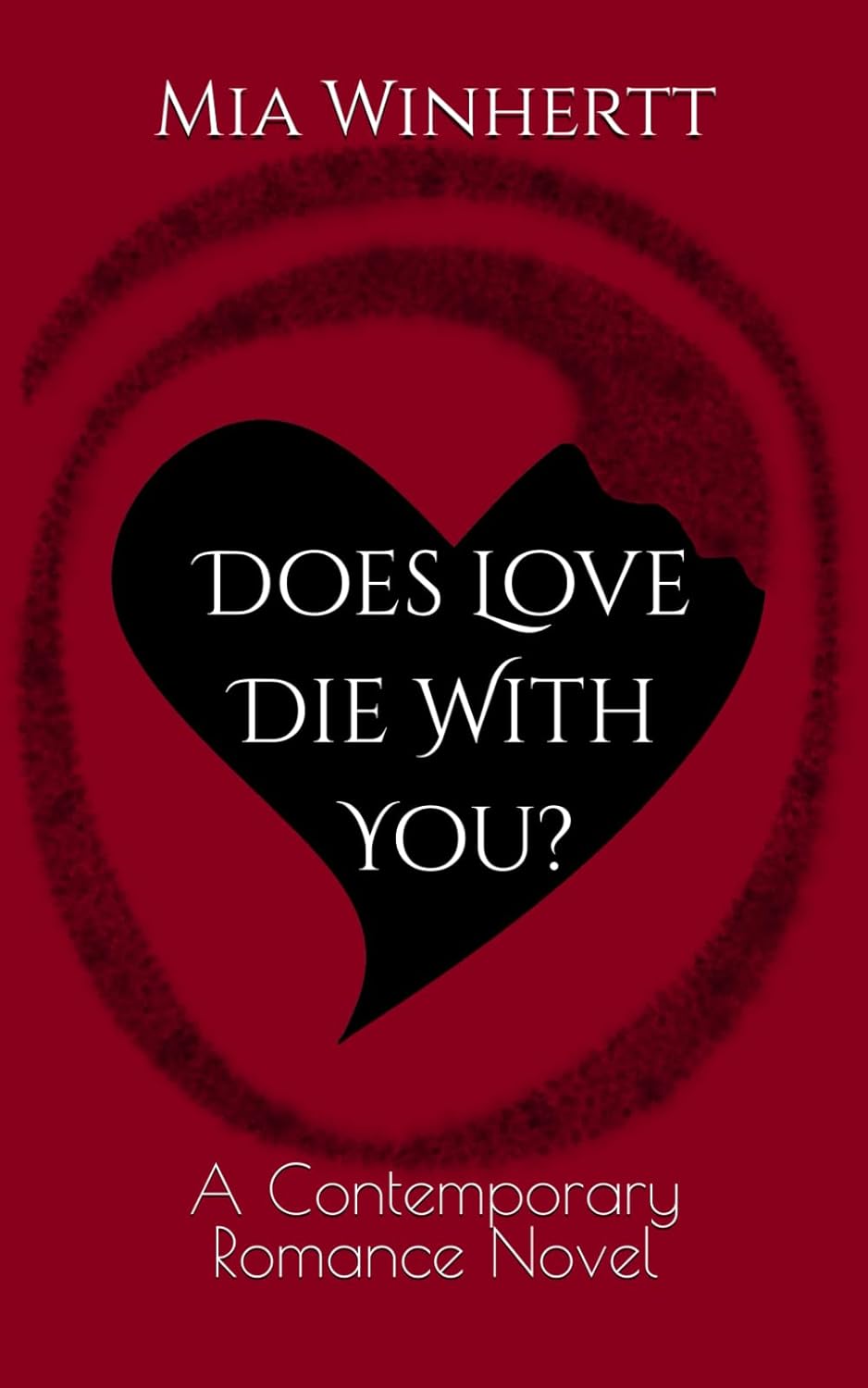
  • Book Recommendation: Does Love Die With You? by Mia Winhertt

    Book Recommendation: Does Love Die With You? by Mia Winhertt

    If you’re in the mood for a heartfelt story that explores the depths of love, loss, and resilience, Does Love Die With You? by Mia Winhertt is a beautiful choice. This contemporary romance follows Aaron and Diya — best friends caught in a tangle of emotions, fate, and the question that lingers: can love truly die?

    With emotional twists and thought-provoking moments, this debut novel promises a moving journey through heartbreak, healing, and what it means to truly live.

    You can check out Does Love Die With You? here on Amazon. Romance lovers — this one’s worth the read!

    Amazon link: https://www.amazon.com/dp/B0F5CZXYJ8

    Check out her wordpress blog here: https://miawinhertt.com/2025/05/21/of-my-first-novel-call-for-support/