The Musings of Jaime David
@jaimedavid.blog@jaimedavid.blog

The writings of some random dude on the internet

1,212 posts
1 follower

Month: July 2025

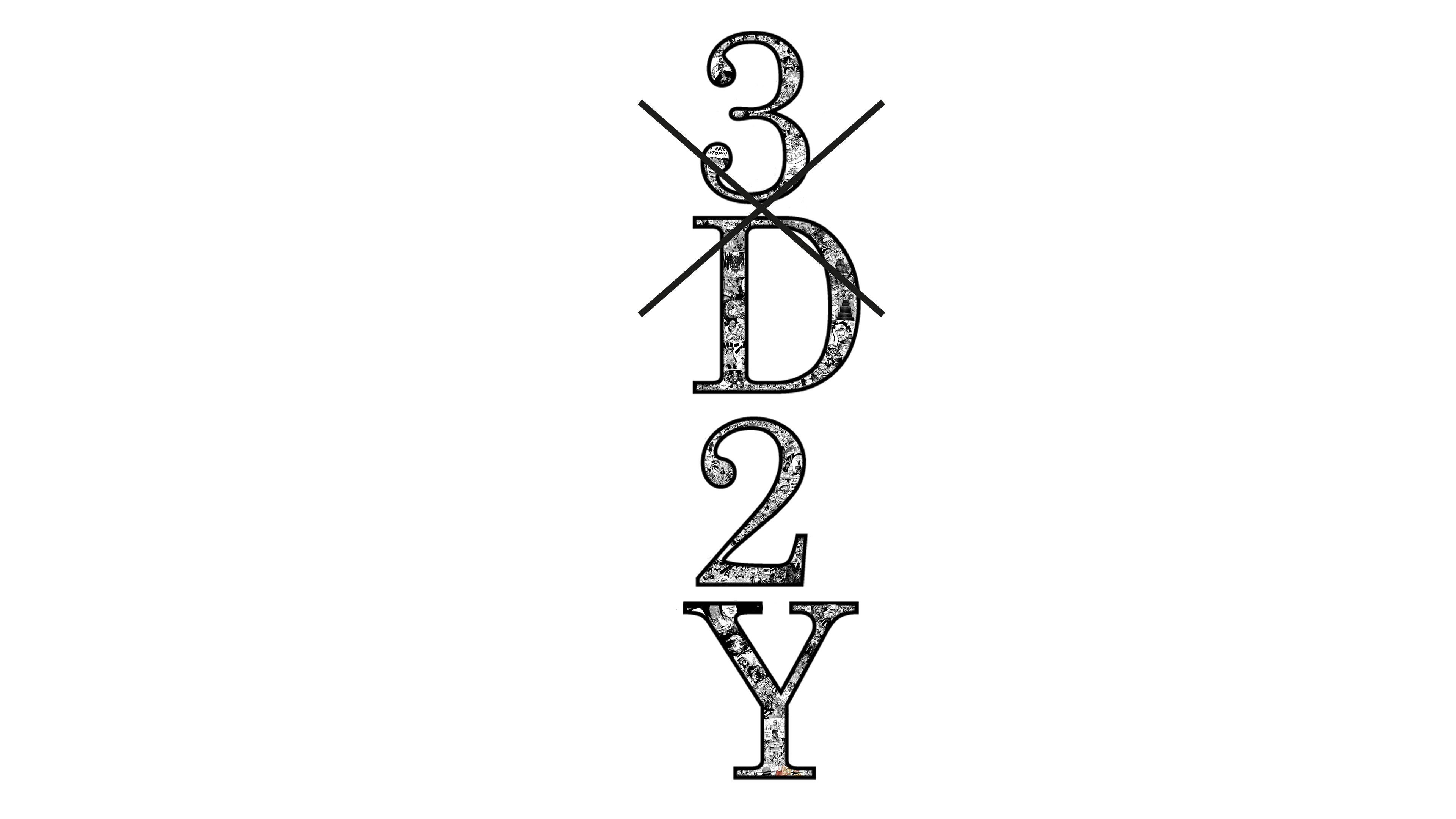
  • The 3D2Y Theory: A Secret Foreshadowing of Three D’s Converging Two Years Later

    The 3D2Y Theory: A Secret Foreshadowing of Three D’s Converging Two Years Later

    The phrase “3D2Y” is famously recognized among One Piece fans as the message Luffy tattooed on his chest, signaling to his crew to reunite two years later following the harrowing events at Sabaody Archipelago. At face value, this has always been interpreted as a simple marker for a timeskip — a narrative device to show growth, development, and readiness for the challenges ahead. Yet, a closer, more layered reading suggests that “3D2Y” might also function as a cryptic foreshadowing: the convergence of three distinct bearers of the “Will of D” after two years, each representing a powerful faction engaged in the larger struggle shaping the world’s fate.

    Luffy, naturally, is the central “D” figure — the protagonist who carries the Will of D. Beyond him, the field expands considerably. Marshall D. Teach, better known as Blackbeard, is an obvious candidate due to his prominence as a D. and his antagonistic role. However, the third “D” is less clear, with several intriguing possibilities. The revolutionary faction, spearheaded by Monkey D. Dragon and supported by his son Sabo, stands as a formidable force carrying the Will of D. Dragon’s leadership of the Revolutionary Army places him in direct opposition to the World Government, though his approach differs fundamentally from the pirates. Meanwhile, enigmatic figures such as Shanks or Buggy, whose connections to the D. lineage are shrouded in mystery, remain tantalizing candidates. The greatest mystery is Imu, the shadowy sovereign presiding over the World Government, whose origins hint at a potential link to the D. lineage, raising questions about whether the Will of D. can be twisted into something dark and controlling.

    Even more compelling is the possibility that the Marines harbor their own bearer of the Will of D., challenging the assumption that the Marines stand wholly against the D. legacy. Among them, Admiral Sakazuki—Akainu—emerges as a particularly potent candidate. The theory that Akainu secretly carries the Will of D. sheds new light on his rigid “Absolute Justice.” Rather than a mere zealot enforcing the World Government’s oppressive dictates, Akainu’s harshness might stem from a deep, personal history tied to the D.’s legacy, a conviction born of trauma and survival. He may perceive the chaotic freedom wielded by D. pirates as a threat not just to order, but to the survival of the D. bloodline itself. This perspective could motivate his climb through Marine ranks—to change the world from within and contain the chaos he fears.

    Supporting this theory is Akainu’s willingness to challenge even the Celestial Dragons, his rare moments of empathy such as consoling Kizaru, and his visible tensions with the Gorosei and Marine leadership. His frequent confrontations and disdain for corruption suggest a more nuanced allegiance than blind loyalty to the World Government. Akainu’s stoic, unsmiling demeanor also mirrors that of other D. bearers like Dragon, implying that the Will of D. is defined by inner conviction rather than outward expression.

    This interpretation aligns seamlessly with One Piece’s recurring theme of the Will of D. manifesting through diverse reactions to oppression and injustice. Luffy’s chaotic freedom, Blackbeard’s ruthless opportunism, Dragon’s revolutionary upheaval, and Akainu’s uncompromising reform all represent facets of this multifaceted legacy. Their convergence two years after Sabaody symbolizes not just a physical meeting, but an ideological showdown that will determine the world’s future.

    Adding further complexity is the role of figures like Koby, whose steady rise in the Marines brings a younger generation potentially sympathetic to the Will of D. The existence of SWORD, a covert Marine intelligence faction led by Garp and Sengoku—and possibly guided behind the scenes by Akainu—introduces an additional secret layer of intrigue. Akainu’s possible connection to SWORD, and the fact that his daughter Hibari is a key SWORD operative, implies that Akainu might not simply be enforcing brutal justice, but nurturing a clandestine faction dedicated to subversion and eventual systemic reform. This shadow network operates independently of the World Government’s public face, possibly aiming for long-term change from within.

    Further deepening the intrigue is the theory that Kuzan (Aokiji), who defected and aligned with Blackbeard, may be a double agent working for SWORD. If so, the high-profile battle between Akainu and Kuzan could have been a staged spectacle to maintain appearances while enabling secret missions. This paints the Marines not as a monolith but as a battleground of competing factions, each with distinct visions and methods.

    Imu’s role remains the most enigmatic. Their control over the World Government and the mysterious, possibly ancient origins hint at a corrupted or alternate Will of D. lineage—one that represents domination and control rather than freedom and justice. Whether Imu is truly a D. or a perversion thereof, they stand as the ultimate obstacle the three converging D.’s will face.

    The events at Marineford and the immediate aftermath act as crucial narrative foreshadowing for this theory. The brutal war showcased key D. figures—Luffy, Ace, Blackbeard—locked in a world-shaking conflict. Akainu’s killing of Ace, when viewed through this lens, could be interpreted as a calculated suppression of reckless rebellion threatening a fragile balance that Akainu wishes to maintain or reform. The post-war power shifts—Blackbeard’s meteoric rise, Luffy’s intensive two-year training, Dragon’s ongoing revolutionary campaigns—all signal an inevitable collision of these forces. Concurrently, Akainu’s promotion to Fleet Admiral and possible maneuvers by SWORD imply the Marines are positioning themselves for a pivotal role in the coming upheaval.

    Thus, “3D2Y” may serve not just as a crew reunion code but as a harbinger of the inevitable convergence of three ideologically distinct D.’s and their factions: pirates who embody freedom and adventure, revolutionaries who seek to overturn corrupt systems, and marines who pursue reform or order through relentless justice. This triad’s eventual clash will determine the world’s fate and bring the Will of D. to its ultimate reckoning.

    Expanding this further, the Revolutionaries are an essential part of the larger battle for the future of the world. Monkey D. Dragon, as the leader of the Revolutionary Army, represents a radically different approach to challenging the World Government, working to dismantle the oppressive power structure. His deep connection to the Will of D. is undeniable, and the possibility that Dragon could die — potentially at the hands of the World Government or in the final battles — raises serious implications for the future of the Revolutionaries. If Dragon were to perish, Sabo, who has already shown immense leadership and dedication to the cause, could take over. Sabo’s own ties to the Will of D. through his adoption of the name “Monkey D.,” and his transformation after Ace’s death, place him at the center of the Revolutionary movement’s next phase. His leadership would bring new strength and direction to the Revolutionaries, particularly in the event of Dragon’s death, allowing them to continue the fight against the World Government.

    The Revolutionaries, with their distinct vision for a free world, provide an ideological counterpoint to the Marines’ “Absolute Justice” and the pirates’ chaotic freedom. While the Marines work within the system to create change, and pirates like Luffy disrupt the system through personal journeys of liberation, the Revolutionaries are focused on radical overthrow. This ideological clash among the three factions — pirates, revolutionaries, and marines — will undoubtedly come to a head as the final saga of One Piece unfolds.

    On the other hand, figures like Buggy and Shanks, who have long been associated with the D. lineage, add further layers of complexity to this theory. While Shanks’ status as a D. has been a subject of much speculation, his mysterious role as one of the Four Emperors and his close ties to Luffy suggest that his connection to the Will of D. is more than coincidental. Shanks, while often seen as a charismatic and lighthearted character, has the potential to play a crucial role in the ideological showdown, balancing between his personal ties to the pirates and his possible understanding of the broader implications of the Will of D.

    Buggy, once a mere comic relief character, has evolved in both role and influence. His connection to the D. lineage is largely speculative, but his survival and unexpected rise in prominence could be indicative of his deeper connection to the Will of D. If Buggy were to emerge as one of the D.’s in the final moments, his chaotic yet unexpected rise could offer a stark contrast to Luffy’s more earnest pursuit of freedom. Whether Buggy’s eventual role will lean into his comedic nature or evolve into something more serious remains to be seen.

    The 3D2Y tattoo may serve not just as a reunion code for Luffy and his crew but as a marker of a broader convergence of the Will of D., bringing together three vastly different approaches to revolution, freedom, and justice. As Luffy, Blackbeard, Akainu, Dragon (or Sabo), Shanks, Buggy, and even Imu all come into play, the world of One Piece will be irrevocably changed. Whether through alliances or conflict, the Will of D. will define the course of the final battle, and the “D’s” will converge, not just for a personal reunion, but for the fate of the world itself.

  • Thoughtful Thursdays: Post 09 – Reading Between the Comments: Online Disagreements with Empathy

    Thoughtful Thursdays: Post 09 – Reading Between the Comments: Online Disagreements with Empathy

    The internet isn’t known for its nuance. But thoughtful digital engagement is possible—if we approach it with empathy.

    When you see a post that rubs you the wrong way:

    • Pause. Take a breath. Ask why it triggers you.
    • Is there a more generous interpretation?
    • Can you respond to the idea, not attack the person?

    You don’t have to engage every time. Silence can be a boundary, too. But if you choose to speak, let your words reflect who you want to be—not just what you feel in the moment.

  • Tunesday #10: Rhythms Rewired – The New Frequencies of Feeling

    Tunesday #10: Rhythms Rewired – The New Frequencies of Feeling

    As the summer deepens, so too does the rhythm of 2025’s music scene—becoming less about genre allegiance and more about emotional circuitry. This isn’t just the year of fusion; it’s the year of feeling-forward production. Artists are sculpting entire moods out of silence, distortion, and unexpected pairings. Music now moves like a heartbeat trying to keep pace with a world in flux—fast, fragile, and fiercely alive.

    This week, we tune into the next wave of innovators rewriting the sonic code.


    1. Grunge Trap: Angst Reloaded
    Gen Alpha’s coming-of-age anthem isn’t a guitar solo—it’s a distorted 808 under a wailing vocal hook. “Grunge trap” is roaring back from the underground, meshing the bleakness of ’90s alternative with the precision of modern trap production. Seattle-based Ash.exe dropped “Bleach for Breakfast,” a song that sounds like Kurt Cobain and Metro Boomin had a breakdown in a recording booth—and it works. It’s messy, angsty, and deeply relatable for a generation choking on climate anxiety and algorithmic alienation.

    2. Bossa Tech: Beach Clubs Meet Code
    On a sunnier note, Brazilian rhythms are swaying back into global consciousness—this time remixed for the dancefloor. Bossa nova and tech house are combining to create “bossa tech,” a hypnotic style perfect for late-night rooftop sessions. DJ duo Sol & Código are heating up Ibiza and São Paulo with “Digital Caipirinha,” a track that sips smooth and burns slow, bringing analog warmth to AI-driven soundscapes.

    3. Gospelcore: Praise with a Pulse
    Spiritual expression is finding a new vessel in “gospelcore,” an electrifying genre that fuses gospel vocals with metalcore breakdowns and punk velocity. Yes, choirs are screaming now. Zion Riot’s debut album Armor of Grace has gone viral among Christian punks and atheist emo kids alike. Their track “Holy Havoc” has become a youth anthem—loud, defiant, and, ironically, full of grace.

    4. Desi Drill: South Asian Firepower
    From London to Lahore, South Asian artists are threading ancestral sounds through the cadence of UK drill. Tapping into tabla rhythms, sitar loops, and Urdu/Punjabi bars, “Desi drill” is a lyrical and percussive powerhouse. Rani Blood’s track “Mirch & Smoke” is topping streaming charts in both the UK and India, telling stories of migration, resistance, and family through fierce beats and bilingual bite.

    5. Ambient Punk: Stillness With Teeth
    One of the strangest, most beautiful evolutions this year is “ambient punk”—a contradiction in terms that somehow makes sense. It’s a genre of long pauses, reverb-drenched chords, and vocals that oscillate between whispers and snarls. The Hum Apparatus recently released Unsaid & Screaming, an album that captures the quiet rage of modern life—where numbness and fury exist in the same breath. It’s punk, but it meditates.

    6. Bluegrass Drill-Hop: Appalachian Innovation
    And then there’s BanjoBoy85, a TikTok sensation who’s gone from meme to movement. His viral fusion of bluegrass banjo licks with Brooklyn drill beats has birthed “drill-hop”—a niche that’s proving weirdly addictive. His breakout hit “Fiddle My Glock” (yes, seriously) is both hilarious and hypnotic, bridging urban tension and rural swagger in a way only 2025 could allow.


    Cultural Pulse Check:
    What we’re hearing this week is a society not just seeking escape, but expression in complexity. Genres that used to stand for fixed identities are now being dismantled and rebuilt into emotional mosaics. Listeners aren’t just seeking “vibes”—they’re craving vulnerability, catharsis, and curiosity.

    Whether it’s a church choir screaming in distortion or a punk track whispering about heartbreak, the music of 2025 is about opposites coexisting. Chaos and calm. Faith and fire. Laughter and lament.

    It’s not always clean, but it’s always real.

  • Tainment Tuesday: Post 10 – Hidden Gems & Underrated Delights

    Tainment Tuesday: Post 10 – Hidden Gems & Underrated Delights

    Welcome back to Tainment Tuesday! This week, we’re shining a spotlight on the lesser-known but equally captivating stories in the entertainment world. From indie games to overlooked anime premieres, here’s what’s catching our eye:


    🎮 Gaming: Indie Innovations and Narrative Adventures

    • Centum: Developed by Estonian studio Hack The Publisher, Centum is a psychological horror game where players interact with an AI that adapts to their choices. Drawing inspiration from titles like The Stanley Parable and Doki Doki Literature Club, it offers a unique narrative experience. en.wikipedia.org
    • Bō: Path of the Teal Lotus: This Metroidvania game, inspired by Japanese folklore, was released earlier than expected on July 17. Despite the unfortunate layoffs at publisher Humble Games, the developers at Squid Shock are seeking community support via Patreon to continue updates. en.wikipedia.org
    • Tales of the Shire: Set to release on July 29, this cozy life sim lets players live as hobbits in the Shire, engaging in activities like gardening, cooking, and fishing. It’s a serene escape into the world of The Lord of the Rings. gamesradar.com

    🎥 Movies: International Thrillers and Biographical Dramas

    • Kingdom: This Indian Telugu-language spy action thriller, directed by Gowtam Tinnanuri, stars Vijay Deverakonda and features music by Anirudh Ravichander. Released on July 4, it’s the first installment of a planned duology. en.wikipedia.org
    • They Cloned Tyrone: Premiering on Netflix on July 21, this sci-fi comedy stars John Boyega, Teyonah Parris, and Jamie Foxx. The film follows a trio uncovering a government cloning conspiracy in their neighborhood. mandarinedesign.com
    • Stephen Curry: Underrated: This documentary, available on Apple TV+ from July 21, offers an intimate look at the basketball star’s journey, highlighting his challenges and triumphs. mandarinedesign.com

    📺 TV Shows: Final Seasons and New Beginnings

    • The Summer I Turned Pretty: Amazon Prime’s teen drama returns for its third and final season on July 16. Based on Jenny Han’s trilogy, the season delves deeper into the love triangle between Belly, Jeremiah, and Conrad. ew.com
    • Leanne: Comedian Leanne Morgan stars in this new Netflix sitcom premiering on July 31. The show, inspired by her stand-up routines, follows a grandmother reinventing her life after a divorce. decider.com
    • Dexter: Resurrection: Michael C. Hall returns as Dexter Morgan in this revival series, which premiered on July 11 on Paramount+. Set in New York City, Dexter faces new challenges and confronts his past. gamesradar.com

    🎥 Anime & Cartoons: Fresh Faces and Long-Awaited Adaptations

    • Onmyo Kaiten Re:Birth Verse: This original anime by David Production premiered on July 3. Combining isekai elements with traditional Japanese mysticism, it offers a unique narrative experience. en.wikipedia.org+1bestencyclopedia.com+1
    • April Showers Bring May Flowers: Airing this July, this anime adaptation of Roku Sakura’s manga explores high school romance and self-discovery. The series features music by Yuki Hayashi and is directed by Mirai Minato. finalweapon.net+1us.oricon-group.com+1
    • Tsuyokute New Saga: After a two-year delay, this fantasy anime premiered in July. It follows the story of Kyle, a magic knight who uses knowledge from his past life to prevent future disasters. animecorner.me

    That’s a wrap for this week’s Tainment Tuesday! Stay tuned for more hidden gems and underrated delights in the world of entertainment.

  • New York’s Subtropical Future: A Grief for a City I Thought I’d Know Forever

    New York’s Subtropical Future: A Grief for a City I Thought I’d Know Forever

    It’s a cold, gray morning in New York City, the kind where the rain seems endless, the air heavy with humidity, and the sky never quite clears. A feeling of sorrow lingers in the streets, as the city I’ve known for so long starts to show signs of becoming something else—something foreign. Something unrecognizable.

    Today, I am sharing a reflection I wrote. I am reflecting on a poem I wrote in 2019 titled “Rain.” You can find the poem here:

    Rain – The Musings of Jaime David

    You can also find the podcast episode of this poem here:

    The Jaime David Podcast – Episode 1: Rain – The Musings of Jaime David

    Recently, I had come across an article stating that NYC is considered subtropical climate. The article can be found here.

    NYC Is So Hot Right Now It’s Considered A Subtropical Climate

    I never wanted to be right. When I wrote that poem back in 2019, I was just trying to make sense of the shifting weather patterns around me. It was a gut feeling that something wasn’t right—constant rain, unseasonably warm winters, and an unnerving frequency of downpours. I tried to make sense of it, as any writer does, by putting the words out into the world. And then I hypothesized: could this be climate change? Could it be that the weather in New York, a city that’s always prided itself on stability, was beginning to break down, shifting into something new?

    Back then, I thought maybe I wouldn’t see the full effects of these changes for another decade or so. Perhaps, I thought, the signs were only visible in the periphery, small shifts that wouldn’t come to fruition for years, or maybe decades. But six years later—six short years later—I’m staring at an article that declares New York City is now officially classified as a humid subtropical climate. I was right. The very thing I feared, the thing I predicted with an aching sense of dread, has come to pass.

    The signs were there, even in 2019. Constant rain. Unpredictable weather. A New York that seemed increasingly out of sync with what I remembered as a stable, temperate climate. And now, in 2025, it’s here, but not in the far-off future I imagined. It’s here now, and it’s happening faster than anyone predicted. The projections I read about in the past—those quiet warnings from climate scientists—weren’t distant dreams. They weren’t hypothetical. They were warnings. And as the days pass, the temperature continues to rise, the skies continue to darken, and the rain continues to fall.

    I wish I wasn’t right. I wish I could take back that moment of realization when I first began to notice the changes and wonder aloud if it was climate change creeping in. But I can’t. And now, as we stand on the brink of what feels like an irreversible shift, there is an urgency to our reality. This is no longer something we can push to the back of our minds or wait for someone else to fix. This is happening in real-time. This is a crisis. And we can’t afford to waste time.

    What does it mean to live in a city like New York if it’s no longer the New York we once knew? To walk these streets and know that something fundamental is slipping away? The New York I grew up with, with its temperate weather and bustling energy, seems to be fading into the background, replaced by a version of the city that feels more like a stranger than a home. The constant rain, the heat waves, the unpredictable storms—this is not what I signed up for.

    But it’s not just about nostalgia. It’s not just about grieving the city’s changing weather patterns. It’s about the urgency of the matter. We can’t waste any more time. We can’t keep pretending that this is some distant problem that won’t affect us for years. The fact is, climate change is here—and it’s happening faster than even I imagined. If we don’t act now, if we don’t recognize the gravity of this moment, there may be no New York left to save.

    So, as I reflect on how quickly the world around us has changed, I can’t help but feel a profound sadness—not just for the city I thought I knew, but for the world that is slipping away beneath our feet. We are running out of time. And I can’t help but wonder, as I look up at the gray skies and listen to the rain, whether we are ready to face what comes next.

  • Matinee Mondays: Post #10 — “Mid-July Magic: Superheroes, Sagas & Surprises”

    Matinee Mondays: Post #10 — “Mid-July Magic: Superheroes, Sagas & Surprises”

    🎬 Now Showing: What to Watch

    In Theaters:

    • Superman (July 11): James Gunn reinvents the Man of Steel with David Corenswet donning the cape and Rachel Brosnahan as Lois Lane. This fresh take explores Clark Kent’s dual identity and his place in today’s world.
    • Sing Sing (Limited Release, July 12): Based on a true story, this drama stars Colman Domingo as a man who finds redemption through a prison theater program. A poignant exploration of art’s transformative power.time.com+10movieinsider.com+10releases.com+10

    Streaming:

    • Too Much (Netflix, July 10): Lena Dunham’s latest series follows Jesse, a New Yorker seeking a fresh start in London after a breakup. Expect sharp humor and emotional depth.en.wikipedia.org+3thedailybeast.com+3ew.com+3
    • Electric Bloom (Disney Channel, July 10): This musical comedy chronicles the rise of a pop band from middle school beginnings to global stardom. With catchy tunes and heartfelt moments, it’s set to be a summer favorite.en.wikipedia.org
    • Call of the Night Season 2 (HIDIVE, July): The vampire-romance anime returns, continuing the story of a boy’s nocturnal adventures and his bond with a mysterious vampire girl.timesofindia.indiatimes.com

    🌟 Spotlight: Rising Stars and Familiar Faces

    Colman Domingo: Known for his compelling performances, Domingo takes center stage in Sing Sing, portraying a man who discovers the power of theater behind bars. His portrayal adds depth to this inspiring true story.movieinsider.com

    Lumi Pollack: As Posey in Electric Bloom, Pollack leads the cast with charisma and vocal prowess. Her performance is poised to resonate with audiences and mark her as a breakout star.en.wikipedia.org+3en.wikipedia.org+3en.wikipedia.org+3


    📺 Pop Culture Pulse: Trends and Talk

    Superhero Saturation?: With Superman soaring into theaters and Thunderbolts still fresh in minds, discussions arise about the superhero genre’s future. While some express fatigue, others appreciate the evolving narratives and character complexities.

    Musical Revivals: The trend of musical adaptations continues to gain momentum. The upcoming Smurfs film, releasing on July 18, features Rihanna as Smurfette, blending nostalgia with contemporary music. This fusion of classic characters and modern soundtracks is resonating with both old and new audiences.decider.com+9en.wikipedia.org+9en.wikipedia.org+9


    As we navigate the mid-summer entertainment landscape, the blend of blockbuster hits and indie offerings ensures there’s something for every viewer. Stay tuned for next week’s highlights, including more hidden gems and anticipated releases.

  • Musing Mondays #10: When Credit Card Spam Just Won’t Quit

    Musing Mondays #10: When Credit Card Spam Just Won’t Quit

    We’ve all been there: you already have a credit card, and it’s more than enough to meet your needs. But then, the flood of offers starts. For some reason, companies like Capital One seem to think that sending you endless emails, texts, and even physical mail about new credit cards is the way to go. Take the Quicksilver card, for example—Capital One pushes it relentlessly, even if you’re already a customer with a perfectly fine card.

    It’s one of those things that sounds good in theory—more cards mean more rewards, right? But in reality, having multiple cards just complicates things. More cards mean more bills, more debt to keep track of, and more potential for financial stress. Even if you’re responsible with your payments, it’s easy to lose track of what’s owed, and that’s just asking for trouble.

    For many, sticking to one card is enough. Simplicity is key. You don’t need a ton of credit cards cluttering up your financial life. If more are needed down the line, the decision should come on your terms, not because of a never-ending stream of spammy offers.

    Anyone else get tired of the constant barrage of credit card promotions?

  • Slam Sunday: Post 10 – “Bodies on the Line”

    Slam Sunday: Post 10 – “Bodies on the Line”

    In a world where workers’ voices are still drowned beneath the hum of machines and the greed of corporations, labor rights remain an urgent battleground. This week, with historic strikes sweeping industries from healthcare to delivery, “Bodies on the Line” roars with the pain and power of those who refuse to be invisible. It’s a visceral slam poem that pulses with solidarity, rage, and the unyielding demand for dignity and justice in work—and life.


    Bodies on the Line

    Hear this —
    the hum of factories, the grind of gears,
    the pounding hearts behind unpaid hours,
    the silent screams in office cubicles,
    the sweat dripping off backs bent under invisible weights—
    these are the bodies on the line.

    Clock in, clock out,
    but whose time is it anyway?
    They measure us in minutes,
    in broken promises,
    in wages that barely kiss the floor—
    while CEOs swim in pools of gold,
    unfazed by hunger’s gnaw or rent’s demand.

    We are the hands that build,
    the voices that care,
    the muscles that move the world forward—
    yet we get crumbs for our battles,
    chains for our struggle.

    But hear this —
    we rise.
    Fists clenched, feet planted,
    voices booming louder than assembly lines,
    because bodies on the line
    will no longer be silent,
    will no longer be invisible.

    This is our strike song,
    our battle cry,
    our refusal to bow to exploitation’s weight.

    Our labor is life—
    our dignity non-negotiable—
    and when we march, when we shout,
    the world will know:
    the future belongs to the fighters.

  • The Lost Legacy of Rocks D. Xebec and the Time-Scattered Sons: An Analytical Theory

    The Lost Legacy of Rocks D. Xebec and the Time-Scattered Sons: An Analytical Theory

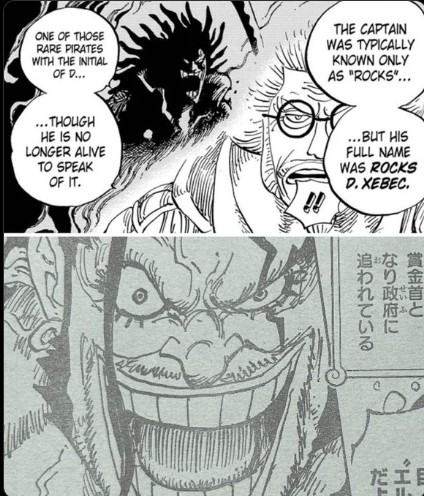
    One Piece Chapter 1154’s reveal of Rocks D. Xebec’s design has reignited intense speculation about the origins of key characters and the deeper family connections in the series. The striking resemblance between Rocks and Blackbeard, combined with fan theories suggesting connections to Buggy and Garp, provides fertile ground for an expansive theory that ties together lineage, time manipulation, and the very foundation of the current world order. This essay proposes a comprehensive theory: Rocks D. Xebec is the biological father of Monkey D. Luffy, Marshall D. Teach (Blackbeard), and Buggy, with Kozuki Toki as their mother. Following the God Valley incident, Toki uses her time manipulation abilities to send her sons to different points in time to protect them. This theory explains age discrepancies, the mysteries surrounding the parentage of these central characters, and connects major arcs such as Wano, God Valley, and the Revolutionary movement.

    Rocks D. Xebec and the Fatherhood of Luffy, Blackbeard, and Buggy

    The core of this theory lies in the proposition that Rocks D. Xebec fathered three sons who would become some of the most influential pirates in history: Luffy, Blackbeard, and Buggy. The revealed likeness of Rocks to Blackbeard, and the longstanding fan observations about Buggy’s visual similarities to Rocks and Blackbeard, support the idea of a shared paternal lineage. Garp’s role as Rocks’ father, while speculative, fits with his established conflicted relationship between his Marine duties and family loyalty.

    The notion that Kozuki Toki is the mother of these three adds a critical link to Wano’s royal bloodline, tying the history of Rocks’ pirate legacy to Wano’s political intrigue. Toki’s character is already deeply intertwined with the themes of sacrifice and protection through her time fruit abilities, making her a logical candidate to shield her offspring from the dangers following God Valley.

    The God Valley Incident and the Scattering of the Sons Across Time

    The God Valley Incident, occurring approximately 38 years ago, was a pivotal event where Rocks was defeated or disappeared. This timeline clashes with Luffy’s age, as Luffy is currently 19, which initially challenges the idea that Rocks could be his father. However, the inclusion of Toki’s time-time fruit (Toki Toki no Mi) introduces a crucial loophole: the ability to send people forward in time.

    This theory posits that Toki used her power to send her sons to different eras for their protection. Buggy and Blackbeard were sent closer to the God Valley era, accounting for their approximate ages and roles in the narrative. Luffy, however, was sent the furthest forward, approximately 19 years ago, explaining his younger age relative to his brothers and his “out of time” feeling. This scattering not only protects the children from immediate threats but also provides a narrative device for the age disparities.

    Toki’s Kidnapping and Its Political Implications

    After the pivotal moment when Toki sent the Scabbards and her sons into the future for their protection, this theory proposes that Toki gave birth to Luffy, Blackbeard, Buggy, and Shanks sometime after the Scabbards’ departure, likely during or shortly before the God Valley Incident. This would place Toki in a critical position during the final days of Rocks D. Xebec’s reign.

    However, after these events, Toki’s time manipulation abilities would have been known by powerful figures like Kaido and Orochi, who were already aligned with the World Government. Fearing the potential threat she posed — given the fact that her children were the biological heirs to Rocks’ legacy — Kaido and Orochi likely made a dark political bargain with the World Government.

    In exchange for Wano’s protection under Kaido’s rule, they handed over Toki to the World Government, likely at God Valley or during the aftermath. This would explain her sudden disappearance from the timeline and the mysterious absence that has left the fate of Toki shrouded in darkness. The World Government, already eager to wipe out the remnants of the Rocks Pirates and eliminate any potential threats, would have taken Toki captive, seeing her not only as a mother of key figures like Luffy and Blackbeard but also as someone who had the power to alter history itself with her time abilities.

    This betrayal adds a chilling layer to Wano’s political isolation. Kaido and Orochi’s cooperation with the World Government becomes more than just about securing their own power—it’s about suppressing the truth of Toki’s bloodline and preventing the future threat posed by her sons. The World Government’s role here reflects their longstanding efforts to control the Will of D and suppress the lineage tied to Rocks D. Xebec.

    This theory also introduces a potential future arc revolving around the rescue or legacy of Toki, who could play a pivotal role in the final battle against the World Government. As the mother of the time-scattered sons, she could hold the key to understanding the true power of Rocks’ legacy and the Will of D.

    The Role of Monkey D. Garp and the Concealment of Truth

    Monkey D. Garp’s role in this theory is that of a conflicted patriarch caught between his duties as a Marine and his family ties. His decision to raise or entrust Luffy to the Dadan family while hiding the truth about Luffy’s heritage reflects a protective instinct but also a desire to shield the world from the full ramifications of Rocks’ lineage.

    Dragon’s role is more ambiguous but could be interpreted as a guardian figure or a cover for Luffy’s true parentage. Garp’s preference for Luffy to become a Marine rather than follow his father’s path underscores the tension between inherited legacy and personal choice.

    Narrative and Thematic Implications

    This theory interweaves several major One Piece themes: legacy, family, sacrifice, and the struggle between fate and free will. By positioning Luffy, Blackbeard, and Buggy as brothers scattered through time, it explains many mysteries — including parentage, age gaps, and character motivations.

    The scattering through time adds a layer of mythic grandeur to their destinies, framing their eventual convergence as a climactic unification of a fractured lineage. Each brother embodies a facet of Rocks’ legacy: Buggy’s chaos and survival instincts, Blackbeard’s ambition and darkness, and Luffy’s freedom and hope.

    If Kozuki Toki is the mother of Luffy, Blackbeard, and Buggy, then this also means Momonosuke — Toki’s son with Oden — is the half-brother of these three pirate legends. This revelation adds enormous emotional and narrative weight to the Wano arc. Luffy and Momo’s brotherly bond and shared will to protect Wano take on a biological dimension, transforming their relationship from a chosen family to one of blood and legacy. This reframes much of the Wano saga as a long-overdue family reunion unfolding amid the battle for Wano’s freedom.

    The Shanks Connection

    The theory now becomes even more intricate. If Shanks is indeed Toki’s first son, born before she met Rocks, then it adds more emotional weight to Shanks’ eventual mentorship of Luffy. Shanks, having been raised as a World Noble, would understand the corruption of the world and might have been shielded from the worst of it by Toki, while his brothers (Blackbeard, Buggy, and Luffy) lived very different lives.

    This also explains why Shanks, despite his noble bloodline, is neutral in the grand scheme of things. He has a deep sense of family and a desire for freedom, which might stem from his personal struggle with his origins and his role in the larger conflict. He sees Luffy as a brother, passing down the straw hat as a symbol of their shared destiny.

    The Robin Connection: Rocks D. Xebec as Her Father

    Building on the theory’s expansion, Robin’s father is also speculated to be Rocks D. Xebec. Robin’s backstory reveals that her father was a pirate, and this could tie him into the Rocks Pirates, further reinforcing the theory of a complex web of familial connections. If Rocks D. Xebec is indeed Robin’s father, then Robin would be Luffy, Blackbeard, Buggy, and Shanks’ half-sister.

    The potential link between Robin’s father and Rocks adds another layer to this theory, further connecting the “Will of D.” and the fragments of Rocks’ legacy that are scattered across the world. It also explains Robin’s pivotal role in the story, as she carries the weight of ancient knowledge, which was actively suppressed by the World Government due to her father’s affiliations.

    Full Circle: God Valley and Wano’s Connection

    If we tie all of this together, God Valley and Wano aren’t just historical markers; they are destiny-shaping events. The fall of Rocks D. Xebec at God Valley created the foundation for all these characters to be linked in one way or another. Toki’s time fruit becomes the central force that connects them across time, and Wano’s isolation serves as the backdrop for their fragmented family to come together. Wano is the key to unlocking the full legacy of Rocks and understanding how the World Government has manipulated history. If this theory holds true, Luffy would not only be the heir to Rocks’ power but would also be the one to unite the fractured legacy of his half-siblings, confronting the past of God Valley and the future of the World Government.

    Luffy’s Role in Uniting the Family: The Davy Back Fight and Family Reunion

    Building on the previous points, Luffy’s journey could lead to an incredible family reunion—one that spans generations. The Davy Back Fight, where a crew can win members of another crew, serves as a perfect narrative tool for Luffy to reunite his fractured family.

    Imagine a scenario where Luffy unknowingly faces off against his half-brothers: Blackbeard, Shanks, and Buggy. Through a series of challenges, Luffy defeats them in the Davy Back Fight, bringing his brothers under the same flag without them even realizing it at first. This would be a perfect way to bring Luffy’s fractured family together, unknowingly reuniting the sons of Rocks under one banner.

    • Blackbeard, the dark, ambitious brother, would bring his chaos to the crew, but would ultimately become a reluctant member of Luffy’s family.
    • Shanks, the noble son of Toki, would serve as a guide and mentor, helping Luffy navigate the heavy burden of family and destiny.
    • Buggy, the comedic yet cunning half-brother, would be the wild card, bringing a touch of chaos but also a deeper connection to the legacy of their father.

    This unification of Luffy’s family not only rewrites the dynamics of the Straw Hat crew but also reshapes the understanding of the Will of D and the future of the World Government. Luffy, unknowingly, would be the one to rebuild his fractured family and lead them into the final battle against the World Government.

    Conclusion: The Circle of Time

    In conclusion, the theory of Toki being the mother of Luffy, Buggy, Blackbeard, Shanks, and the time-scattered sons, with their scattering through time after the fall of God Valley, creates a truly interconnected family legacy. It ties Wano’s isolation to the mysterious events of God Valley, and places Toki at the center of it all, making her both the protector and the sacrifice for the greater future of her children. This theory reshapes our understanding of the family dynamics in One Piece and offers new insight into the central conflicts of the World Government and the Will of D.

  • Everything is Poetry: Exploring the Boundaries of Art and Intention

    Everything is Poetry: Exploring the Boundaries of Art and Intention

    Poetry, traditionally confined to rigid forms and structures, has evolved into an expansive and boundless medium. Today, poetry can take virtually any form, style, or structure. From free verse to spoken word, from concrete poetry to a single, carefully chosen word, the rules are no longer set in stone. The essence of poetry is not found in a specific structure but in its intention—the creator’s desire to evoke meaning, emotion, or reflection. The idea that “everything is poetry” arises from this notion: life, in all its facets, can be perceived as poetic if we choose to see it through that lens. However, this broad, all-encompassing idea is only true under one condition: unless something explicitly states it is not poetry, it holds the potential to be.

    The phrase “everything is poetry” is, in essence, a statement about perception and creative freedom. Poetry is not restricted by form or medium. Whether it’s a single word or an entire novel, the boundaries of poetry are governed only by the creator’s intent. A grocery list, for example, might not seem like poetry at first glance, but if it’s crafted with a particular rhythm or emotional weight, it can be transformed into something poetic. The same goes for mundane or everyday elements of life—poetry can be found in the way we observe and interpret the world around us. What makes something poetry is the intent behind its creation, and if the purpose is to inspire thought, emotion, or deeper understanding, then it qualifies as poetry.

    However, the concept of poetry is not without limits. While everything can be poetry, certain things clearly do not intend to be. The preparation sections in a book, such as the copyright page, acknowledgments, or table of contents, are self-defined as non-poetry. These sections are functional, not artistic—they serve to inform or protect, not to evoke emotion or artistic reflection. In this case, they explicitly exclude themselves from being poetry. The very purpose of these parts is to perform a practical function, and thus, they do not belong to the realm of poetry, despite being part of a larger work of art.

    The distinction between what is and isn’t poetry is governed by the intention of the creator. If something is designed to inform, protect, or explain, it is not intended as poetry, and it should be recognized as such. Legal documents, marketing materials, and instruction manuals may contain creative language or clever turns of phrase, but unless they are specifically created to evoke meaning or emotion, they are not poetry. This explicit self-exclusion is what keeps them outside the bounds of poetry, even if, on a surface level, they might seem artistic. When something is created with the intent to inform or serve a practical function, it isn’t viewed through the lens of artistic expression, and thus, cannot be classified as poetry.

    The potential for anything to be poetry hinges on the artistic intent of the creator. Found poetry, a form of poetry that involves taking existing texts—be it advertisements, signs, or instructions—and rearranging them into a new form, exemplifies this idea. Here, the creativity lies in the act of transformation—turning what was once considered non-poetic into something deeply reflective and artistic. Similarly, conceptual poetry relies on the idea behind the work rather than the traditional structure or content. In these forms of poetry, the message is the medium; it’s about recontextualizing the world in ways that reveal something profound, even from the most ordinary materials.

    In essence, poetry is a flexible, expansive medium that exists wherever there is intention to create art. If the creator intends to communicate something deeper, something that transcends the ordinary, that work can be considered poetry. However, as we’ve seen with functional material like introductions, copyright information, or acknowledgments, intentionality matters. When something explicitly states that it is not poetry, we must respect that boundary. These sections are not attempting to evoke artistic or emotional responses—they are there to serve a different function, and as such, they don’t qualify as poetry.

    In conclusion, the statement “everything is poetry” is true in its potential, but it’s important to recognize that not everything is automatically poetry. Intention defines the boundaries—if something is intended to be art, to evoke thought or emotion, then it can be poetry, regardless of form. However, if something is created with a different purpose—be it legal, informational, or functional—it remains outside the realm of poetry. The beauty of poetry lies in its limitless nature, but its true definition always comes down to one fundamental question: what is the intention behind it?