The Musings of Jaime David
@jaimedavid.blog@jaimedavid.blog

The writings of some random dude on the internet

1,097 posts
1 follower

Month: August 2025

  • Coming 2029: The Rise of the FettyWapVerse

    Coming 2029: The Rise of the FettyWapVerse

    Mark your calendars, update your firmware, and brace your local fediverse instance, because the year is 2029—and the streets, both digital and literal, are buzzing with rumors of the return. Not just of the man, but of the movement. Word is, Fetty Wap is slated to be released from federal prison in 2028, and insiders are already whispering that his next project won’t be a mixtape, a tour, or even a comeback album. No, it’s something far more disruptive. We’re talking about a techno-cultural rebirth. We’re talking about the FettyWapVerse.

    Predicted to launch just months after his reentry into society, the FettyWapVerse will reportedly be a decentralized social media platform so soaked in trap energy and post-prison clarity that it threatens to destabilize Mastodon and make Twitter finally tap out for good. This isn’t your average “rapper launches an app” story. This is the tale of a man who spent his bid in the metaphorical coding dojo, studying Python between lockdowns and designing server architecture on commissary napkins. By the time the gates open, he’ll be stepping into the world with a blueprint to free not just himself, but the internet. One squint at a time.

    Sources say the FettyWapVerse will feature Wap-to-Wap messaging, “Trapfluencer” verification badges, and a hyperlocalized content algorithm known simply as The Remy Engine. Instead of retweets or boosts, users will be able to “1738” each other’s posts, which causes a bass drop and a burst of digital confetti shaped like sunglasses. Clout will be tokenized. Server drama will be resolved via lyrical diss smart contracts. And moderators? There won’t be any. Instead, conflicts will be escalated to an on-chain tribunal of Zoo Gang AI avatars trained on 2015 tour footage and the emotional subtext of DatPiff comment sections.

    Privacy? Guaranteed. Data mining? Not in the trap. Advertisers? Kicked out at launch. All user data will be stored in encrypted bars, only unlocked when someone drops a freestyle worthy of the blockchain. You won’t be able to buy followers, but you can earn them by contributing to daily communal remix challenges and correctly identifying obscure Fetty ad-libs from unreleased tracks.

    If the rumors are true, and Fetty Wap is indeed plotting the FettyWapVerse from behind bars, we may be standing on the edge of a digital era none of us are ready for. This isn’t the return of a man—it’s the revenge of a vision. The tech world laughed in 2015. They shrugged again in 2023. But in 2029, they may very well wake up in a decentralized landscape ruled not by billionaires in hoodies, but by a man with one eye on the code and the other forever squinting at destiny.

  • 🔥 Fyre Festival II: Fyre Harder — Now With 100% More Collapse

    🔥 Fyre Festival II: Fyre Harder — Now With 100% More Collapse

    In a move that can only be described as “performance art with a pending class-action lawsuit,” Fyre Festival 2—also known as Fyre Harder—promises to outdo its predecessor by leaning full-throttle into the chaos, delusion, and dehydrated cheese sandwich energy that made the original an unforgettable cultural calamity. Where the first Fyre Festival accidentally created a hellscape of wet mattresses, feral influencers, and FEMA tents that looked like rejected props from The Day After Tomorrow, the sequel aims higher. Or perhaps, lower. Much lower.

    This time around, disaster isn’t a bug. It’s the entire brand identity.

    According to the official promotional material (printed on napkins and thrown from a drone into a field), Fyre Festival II is less a music festival and more of a post-modern survival LARP. Attendees are promised a week-long odyssey of “existential discomfort, unreliable logistics, and high-priced regret,” all while influencers livestream themselves trying to barter for clean water using NFTs and vibes.

    The location? Still technically undisclosed. Some reports say it’s an uninhabited sandbar near Honduras. Others say the GPS coordinates place it in the Bermuda Triangle. A few believe it’s inside a particularly aggressive escape room in New Jersey. One leaked pitch deck described the setting as “somewhere between a Gilligan’s Island reboot and the backrooms of a CVS.”

    What truly sets Fyre Festival II apart is its unapologetic embrace of failure. Instead of headlining acts, attendees are promised the concept of music. A hologram of Ja Rule may or may not appear depending on the cloud cover. There will be a stage, but it’s made of pallets and self-doubt. Food will be provided in the form of “gourmet experiential cuisine,” which is actually just uncooked lentils, half a tortilla, and an inspirational quote printed on a napkin.

    Lodging options include:

    • Budget PTSD” – a damp cot next to a guy named Randy who screams in his sleep,
    • Prometheus Elite” – a driftwood structure with a glow stick, and
    • VIP Ashes Package” – a patch of sand that used to be a tent, now scorched, for authenticity.

    Security is outsourced to a team of unlicensed astrologers, and the emergency response plan is “let nature take its course.” Wi-Fi is available, but only for streaming apology videos.

    Perhaps most innovative is the festival’s refund policy: it’s printed in disappearing ink and written in Latin. When asked for clarification, the organizers posted a TikTok of someone shrugging while on fire.

    Tickets? Sold out. Obviously. Because Fyre Festival II isn’t just a sequel—it’s a social experiment. It’s the modern Tower of Babel constructed entirely out of hype, delusion, and one man’s unshakable belief that charisma is a business model. Billy McFarland, now rebranded as a “vibe architect,” insists this is all intentional. “People want real,” he said in a recent interview while duct-taping a tent pole to a coconut. “They don’t want comfort. They want trauma with a wristband.”

    In the end, Fyre Festival II might be the most honest event of our time. It doesn’t promise paradise. It promises pain. And in an age of curated perfection, influencer filters, and AI-generated dopamine, maybe it’s refreshing to just pay $1,400 to suffer communally, in the mud, under a broken neon sign that reads “Hope.”

    We will not be attending. But we will be watching.

    From a safe distance.

    With snacks.

  • Schrödinger’s License: The Corey Harris Saga

    Schrödinger’s License: The Corey Harris Saga

    Once upon a time in the mystical bureaucratic labyrinth known as the state of Michigan, a man named Corey Harris did something so profoundly baffling, so cosmically ridiculous, so legally paradoxical, that even Kafka himself would’ve thrown up his hands and said, “I give up.” Corey, a 44-year-old legend in the making, did not simply appear in court. No, he appeared in court via Zoom. And not just via Zoom—he appeared while driving a moving vehicle. In a hearing about driving with a suspended license. Let that sink in. A man joined a legal proceeding for allegedly being an illegal driver, by being a very visibly active, currently-in-progress illegal driver. This was not irony. This was metaphysical performance art.

    The judge, one J. Cedric Simpson, a man perhaps once full of dreams and now drained dry by traffic court nonsense, witnessed this in real time. With a visible shudder of disbelief, a thrown pen, and the kind of existential crisis usually reserved for poets and midlife divorcés, the Honorable Judge Simpson asked the only logical question: “Mr. Harris, are you driving right now?” And with the serene confidence of someone who believed the laws of man and physics did not apply to him, Corey replied: “Actually, I’m pulling into my doctor’s office. So, just give me one second. I’m parking right now.” This was not merely a man in court. This was a man parking in court. The sound you may have heard that day was not thunder. It was the collective gasp of legal professionals across the internet.

    Naturally, Judge Simpson revoked his bond and ordered him to turn himself into the Washtenaw County Jail by 6 p.m. Corey responded not with protest, but with the look of a man who just realized the Matrix might actually be real. “Oh my God,” he muttered, and oh yes, Corey—God was watching.

    But wait. This is not just a story of absurd courtroom antics. No, this tale goes deeper. Because what the judge—and the courtroom, and the Secretary of State, and Corey Harris himself—did not yet realize was that the suspended license Corey was allegedly driving under… didn’t actually exist. Not metaphorically. Not emotionally. Literally. Corey Harris had never had a driver’s license. Not in Michigan. Not in any of the 49 other states. Not in Puerto Rico, Guam, or even a particularly lenient go-kart track. His license was a figment of bureaucratic imagination, suspended before it had even taken form.

    What had actually happened, as unearthed by local reporters and eventually confirmed by a trail of dusty documents, was that Corey had had his driving privileges suspended back in 2007 due to unpaid child support. The state of Michigan, in its infinite wisdom, can suspend your right to drive even if you’ve never had the right in the first place. It’s like being banned from an exclusive club you never joined but walked past once in 2003. Even more brilliantly, in 2022, a judge rescinded that suspension—but thanks to a beautiful bureaucratic ballet of unfiled forms, missed deadlines, and secretarial indifference, the Michigan Secretary of State never got the memo. Nor did Corey, who believed the suspension had been lifted, and thus assumed he had, by osmosis or divine right, earned a license.

    This is where the story could’ve ended. Viral shame. Jail time. A lifetime ban on Zoom usage. But Corey Harris is not a man who gives up at the first sign of scandal. No. Corey Harris is a man who, when cast into the jaws of public ridicule, emerges driving a Dodge and sipping triumph. In June 2024, Corey danced—danced!—his way out of the driving test with a learner’s permit. He, who once roamed the streets under the assumption of legality, had finally earned it the hard way. Then, on July 8, 2024, a date that shall be remembered in the annals of state DMV records, Corey Harris received an official, laminated, legally recognized, capital-L License. He was no longer Schrödinger’s driver. He was a real driver.

    His attorney, the ever-patient and profoundly unshocked Dionne Webster-Cox, praised his resilience. In the face of court hearings, confusion, jail time, and memes, Corey “stayed the course and finished the race.” The man who once parked during a court hearing about his inability to drive, had become a symbol of redemption, of perseverance, of the raw and unfiltered American struggle to overcome one’s own paperwork.

    Even the legal system responded with a shrug and a nod. By the time Corey returned to court in August 2024, newly licensed and unshakably legitimate, the original misdemeanor for driving with a suspended non-license was poised to be downgraded to a civil infraction. Because apparently, if you clean up your legal chaos fast enough, the state of Michigan responds with, “You good, fam.”

    And what of Judge Simpson? Perhaps he recovered. Perhaps he keeps Corey’s DMV record in a folder labeled “unholy anomalies.” Perhaps, late at night, he replays that hearing and wonders if it was all a dream.

    So what is the moral of this epic? What eternal truth lies beneath the absurdity, the Zoom calls, the jail time, the learner’s permit? It’s this: even if your life starts as a viral cautionary tale, even if you’re suspended from a privilege you never had, even if you show up to court while actively violating the reason you’re in court, you can still win. You can still grow. You can still get your license, your dignity, and your freedom. You can still dance out of your driver’s test and into the sunset.

    Corey Harris is no longer a joke. He is a lesson. He is a DMV parable. He is living proof that the universe may delay your paperwork, but it cannot deny your destiny.

    So let us all remember: Handle your business. Stay the course. And for the love of all that is holy—never assume you have a driver’s license until a government employee literally hands it to you. In writing. In triplicate. Notarized. And preferably with a backup copy, just in case.

  • Peter Parker, You Have Wi-Fi: Why “No Way Home” Acted Like Online College Didn’t Exist

    Peter Parker, You Have Wi-Fi: Why “No Way Home” Acted Like Online College Didn’t Exist

    Let’s talk about Spider-Man: No Way Home, and let’s be honest—the whole “we didn’t get into MIT, so the world is over” meltdown? It was a lot. Yes, Peter, MJ, and Ned getting denied from college felt devastating, but this is 2024, not 1984. Why did everyone act like the only options were “go to MIT” or “suffer forever”? You’re telling me three teenagers who just survived a multiverse-level event, helped save the fabric of reality, and one of them is literally Spider-Man, had no backup plan? Like, not even an application to SUNY?

    Let’s start with the obvious: online college is a thing. You don’t even need magic to Google “accredited universities that accept late applications.” Peter Parker could have enrolled in ASU Online while swinging through Queens and taking notes on his phone between fights. MJ could have studied psychology, Ned could have gone into tech. Heck, Peter’s already used to working from rooftops and alleyways—distance learning was made for him.

    But okay, let’s say traditional college isn’t the vibe anymore. What about trade school? Imagine Spider-Man becoming an electrician, webbing things together while rewiring the city. He already fixed Stark Tech in like five minutes—he’d be a god at HVAC repair. Or MJ, who’s an artist and writer? Art school. She could’ve done graphic novels or film. Ned? Culinary school. I just feel like Ned gives big “surprise you with the best homemade ramen you’ve ever had” energy. But none of this even got mentioned.

    And look—they had the internet. They could’ve researched schools in other countries, other states, or ones that weren’t scared off by the whole “Spider-Man is a vigilante menace maybe??” thing. Are you telling me there wasn’t a single progressive liberal arts college in Oregon that would’ve been thrilled to admit Peter Parker just for the viral potential?

    And here’s another thing: in the real world, we have apps and websites dedicated to tracking corporate and institutional stances on controversial issues. Want to know if a fast food chain donated to anti-LGBTQ campaigns? There’s an app for that. Curious if a brand supported Black Lives Matter or banned union talk? There’s a dozen Reddit threads, rating lists, and activist toolkits. So you’re telling me that in the Marvel Cinematic Universe—the same world with Wakandan tech, nanobots, intergalactic travel, and sentient AI—they don’t have an app that tracks which businesses or colleges support Spider-Man?

    Please. There’d be an entire “SpideyScore” app. Five stars if your business is Spider-friendly, one star if your CEO once called him a “masked menace.” There would be restaurants with “Spider-Man Eats Free” signs. Coffee shops with themed drinks like “Webbed White Mocha.” Colleges with entire departments dedicated to superhero studies (Peter could’ve been a guest lecturer!). And we’re supposed to believe that he couldn’t find one school that looked at the situation and said, “Yeah, we’ll take a superhero who risked his life to fix a multiversal rupture and is also, by the way, extremely smart?”

    MJ and Ned could’ve used that app to filter schools by “superhero-friendly,” “non-J. Jonah Jameson influenced,” and “accepts unconventional applicants with chaotic lives and good intentions.” Even Reddit would’ve had a thread like: “What schools support Spider-Man?” complete with insider tips, screenshots, and a spreadsheet. The idea that they were all just…sitting around devastated instead of googling “schools that don’t hate Spider-Man” is kinda wild.

    And the fan support? Forget about it. There would be Spidey Support Forums, subreddits, Discord servers, fan zines, even underground clubs where people wear Spider-Man merch in solidarity. If people can build entire conspiracy communities over lizard people and the moon landing, they can absolutely organize to support a misunderstood teen superhero. And Peter could’ve tapped into that—not just emotionally, but logistically. Housing, job leads, safety nets, scholarships crowdfunded by the people.

    Now, let’s talk about Peter’s… career potential in a digital world. This man could’ve made millions with a Twitch stream. “Watch me fight Doc Ock in 4K.” He didn’t need Stark Industries—he needed a ring light and a donation link. Or hey, GofundMe. He literally saved the world multiple times. Start a campaign: “Spider-Man Needs Rent Money.” Boom. Viral in five seconds. TikTok would have his back. He could’ve even gotten sponsored by like…Red Bull and the New York Public Library. “Drink Red Bull. Fight crime. Read books.”

    But the biggest question: Where were his Avengers friends? Not a single one of them could write a recommendation letter? I’m not saying Thor needs to show up at the admissions office, but someone could’ve vouched for him. Happy? Sam Wilson? Doctor Strange?? Strange literally helped create the spell that erased Peter from existence. You’re telling me he couldn’t swing a call to MIT’s admissions office with, “Hey, he stopped a multiversal collapse and let me cast one of the most dangerous spells ever to save everyone. Maybe reconsider the rejection?”

    It’s wild that the entire plot hinges on this college rejection like it’s a Greek tragedy. Meanwhile, millions of real-world kids get rejected from their dream schools every year and somehow don’t break reality. Peter could’ve taken a gap year. Done community college. Gotten a job at Target while figuring it out. Or, you know—leaned on the many, many superheroes he knows who owe him their lives.

    Ultimately, “No Way Home” wanted us to feel Peter’s pain, and it worked. But it also ignored a very real-world truth: when the system fails people, communities often rise up to support them. Peter Parker didn’t need a spell—he needed a support app, an internet connection, and some well-placed community DMs.

  • Haze

    Haze

    It’s hazy out.

    It’s grey out.

    There’s a haze out.

    The sky’s greyed out.

    It’s because of the smoke

    From the wildfires.

    It seems this has become the norm.

    What a gloomy thing

    To happen so often.

  • How to Self-Publish a Book: A Step-by-Step Guide for First-Time Authors

    How to Self-Publish a Book: A Step-by-Step Guide for First-Time Authors

    Self-publishing has revolutionized the way authors bring their work to the world. With the rise of platforms like Amazon KDP, IngramSpark, and Lulu, authors no longer have to rely on traditional publishers to release their books. Self-publishing means that you take control of the process, from writing and editing to designing and marketing. But how do you actually self-publish a book, and what does that process look like?

    If you’re considering self-publishing your book but don’t quite understand what’s involved, this guide will walk you through everything you need to know, including common platforms, professional advice, and tips for navigating this exciting and empowering journey.


    1. What is Self-Publishing?

    At its core, self-publishing means taking your manuscript and publishing it independently, without going through a traditional publishing house. Instead of submitting your manuscript to a publisher, you decide to handle the entire publishing process, including production, marketing, and sales distribution, yourself.

    • Traditional Publishing: In this model, a book publisher buys the rights to your manuscript, manages the editing, cover design, printing, and marketing, and pays you royalties from book sales.
    • Self-Publishing: Here, the author takes on all or most of the responsibilities. You can choose to use services that assist in book formatting, cover design, editing, and printing, or you can choose to do these tasks yourself. You retain full control over the rights to your book and can make decisions about pricing, distribution, and marketing.

    Why self-publish?

    • Full control over your book’s content, design, and distribution
    • Higher royalties (potentially up to 70%) compared to traditional publishing
    • Faster publishing timeline
    • Creative freedom to market your book as you see fit

    2. Choosing the Right Self-Publishing Platform

    One of the most important steps in self-publishing is deciding where and how to publish your book. There are several platforms available, each offering different services and distribution models. Here are some of the biggest names in the self-publishing world:

    Amazon KDP (Kindle Direct Publishing)

    Amazon KDP is one of the most popular and accessible platforms for self-publishing. It allows authors to publish eBooks and paperbacks and offers a huge distribution network through Amazon.

    • Pros: Free to use, vast global reach, options for both eBooks and paperbacks, royalties of up to 70%.
    • Cons: Limited control over pricing and distribution beyond Amazon.

    IngramSpark

    IngramSpark is a great option for authors looking to distribute their books in print and eBook formats. They have an extensive distribution network to bookstores, libraries, and online retailers.

    • Pros: Great for global distribution, offers both print and digital formats, higher quality printing options.
    • Cons: There are fees for setting up your book, and the platform can be more difficult to navigate compared to Amazon KDP.

    Lulu

    Lulu is an excellent platform for self-publishing print books, including unique formats like photobooks and calendars, along with eBooks. Their distribution options are more flexible than Amazon KDP’s.

    • Pros: Offers multiple formats, allows authors to set up custom orders, and has global distribution options. You can also use Lulu to print-on-demand, so you don’t have to hold inventory.
    • Cons: Not as much direct reach as Amazon, so it requires more effort for marketing.

    Other Platforms:

    • Smashwords: Best for distributing eBooks to multiple retailers like Apple Books, Barnes & Noble, and Kobo.
    • Draft2Digital: Another excellent service for distributing eBooks across many online retailers.
    • Blurb: Ideal for authors looking to publish photobooks or art books.

    Tip: While Amazon KDP offers the widest distribution, you may want to use IngramSpark for physical copies in bookstores or libraries. Lulu is great for special projects or print-on-demand books.


    3. Preparing Your Book for Publication

    Before you hit the publish button, ensure your book is polished and ready for readers. The self-publishing process isn’t just about uploading a file — there are several key steps that ensure your book stands out.

    Editing Your Book

    The first step is editing your manuscript. Professional editing is essential, even if it means investing in a developmental editor for content and a copyeditor for grammar and punctuation. Remember, self-published books are held to the same standards as traditionally published ones.

    • Tip: Consider hiring a professional editor from platforms like Reedsy or Upwork. If you’re on a budget, you can also exchange editing services with other authors in writer communities.

    Designing Your Book Cover

    Your cover is often the first impression a reader will have of your book. Make sure it’s professionally designed, even if you have to pay a freelance designer.

    • Tip: Platforms like 99designs or Fiverr are great for hiring professional designers at various price points. A good cover design should reflect your book’s genre, tone, and target audience.

    Formatting Your Book

    Book formatting is a crucial part of self-publishing. Whether it’s for print or eBook formats, your book must be properly formatted to ensure it looks professional. This includes adjusting margins, font sizes, line spacing, and chapter headings.

    • Tip: You can hire a professional formatter or use Scrivener, Vellum, or Reedsy’s free book editor to format your manuscript yourself.

    4. Pricing and Royalties

    When you self-publish, you have complete control over the pricing of your book. However, it’s essential to do your research to determine a competitive price that reflects the value of your work.

    • eBook Pricing: Typically, self-published eBooks are priced between $2.99 and $9.99 to maximize royalties (usually 70% with Amazon KDP).
    • Print Book Pricing: Print books are more expensive to produce, so be mindful of your printing costs when setting a price.

    Tip: For maximum profitability, price your eBook competitively while considering the quality of the book and how much work went into it. Avoid pricing it too low, as it can devalue the effort you’ve put in.


    5. Marketing Your Self-Published Book

    Self-publishing doesn’t stop at printing. You now have to market your book. Since you’re not backed by a traditional publishing house, you are responsible for promoting your book. Here are a few ways to get started:

    Start with a Website: Create a professional author website with a blog to share updates, behind-the-scenes content, and interact with your readers. Use your website to collect email sign-ups.

    Leverage Social Media: Platforms like Instagram, Twitter, and Facebook are excellent for building an audience and promoting your work. Share snippets, quotes, and visuals from your book.

    Paid Ads: Once your book is published, consider running Facebook or Amazon Ads to boost your book’s visibility.

    Use Book Promotion Sites: Sign up for BookBub, BookSends, or other book promotion platforms that can help you get your book in front of readers.

    Tip: Establish an email list to keep readers informed about upcoming releases, special offers, and updates about your books.


    6. Additional Tips for Success

    • Know Your Rights: When you self-publish, you retain the copyright to your work. This means you can also make updates or edits as needed.
    • Patience is Key: Self-publishing takes time. Be prepared for a slow start as you build an audience and reputation.
    • Keep Writing: The more books you publish, the more recognition you’ll gain. Focus on building a backlist of books to increase your sales and credibility.

  • Made a merch store..

    Made a merch store..

    Made a merchstore on T-spring.

    go check that out

    Jaime David merch

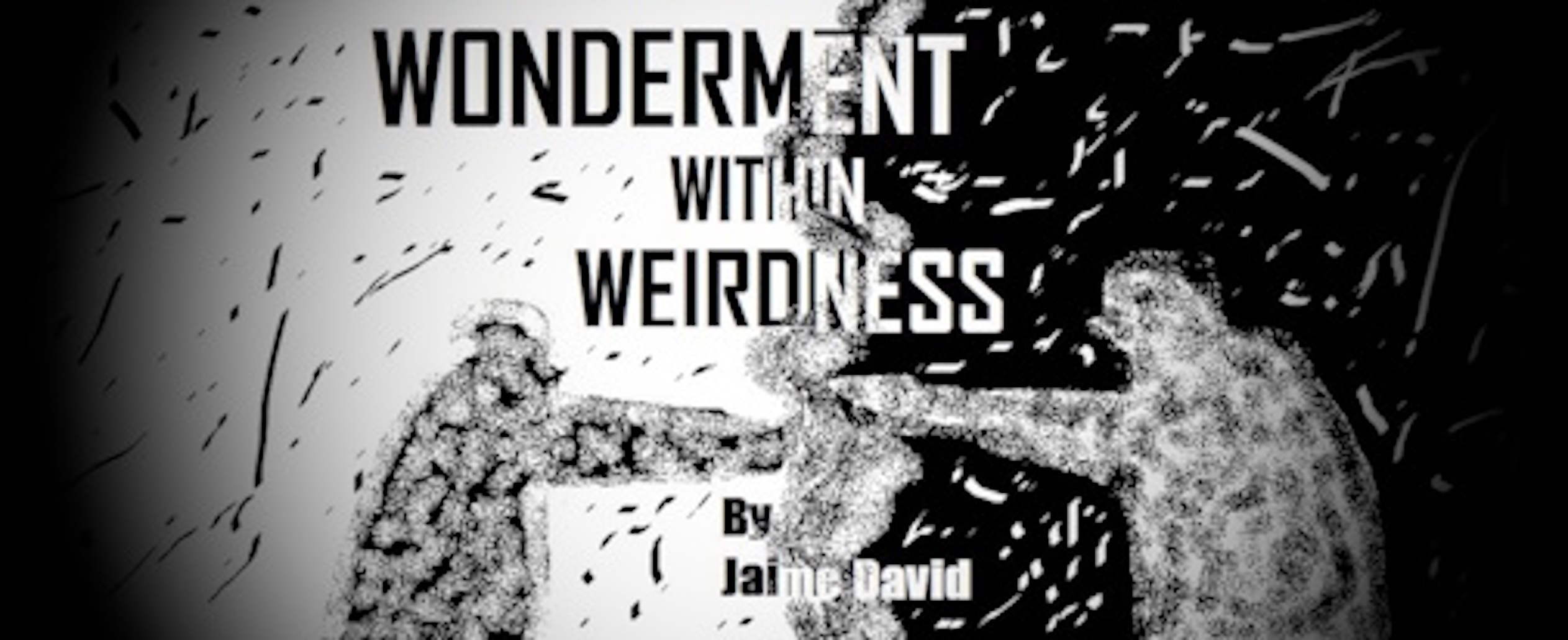
  • Check out my debut book “Wonderment Within Weirdness!!”

    Check out my debut book “Wonderment Within Weirdness!!”

    It has been a bit over 7 years that I have been writing my book, but now I can finally say that my book “Wonderment Within Weirdness” is now officially published.

    The digital and paperback versions can be found here on Lulu (and soon elsewhere).

    Still new to this self-publishing thing. Lol.

    Here is a brief synopsis of my novel:

    “A sci-fi, action adventure novel about some regular guy who gets caught up in a multiversal battle to save the multiverse from an evil threat.”

    Ebook version:

    https://www.lulu.com/shop/jaime-david/wonderment-within-weirdness/ebook/product-2m42ewm.html?q=wonderment+within+weirdness&page=1&pageSize=4

    Paperback version:

    https://www.lulu.com/shop/jaime-david/wonderment-within-weirdness/paperback/product-q6kydmk.html?q=wonderment+within+weirdness&page=1&pageSize=4

    Cover image of the book 'Wonderment Within Weirdness' by Jaime David, featuring abstract art with two figures reaching out towards each other against a dark background.