
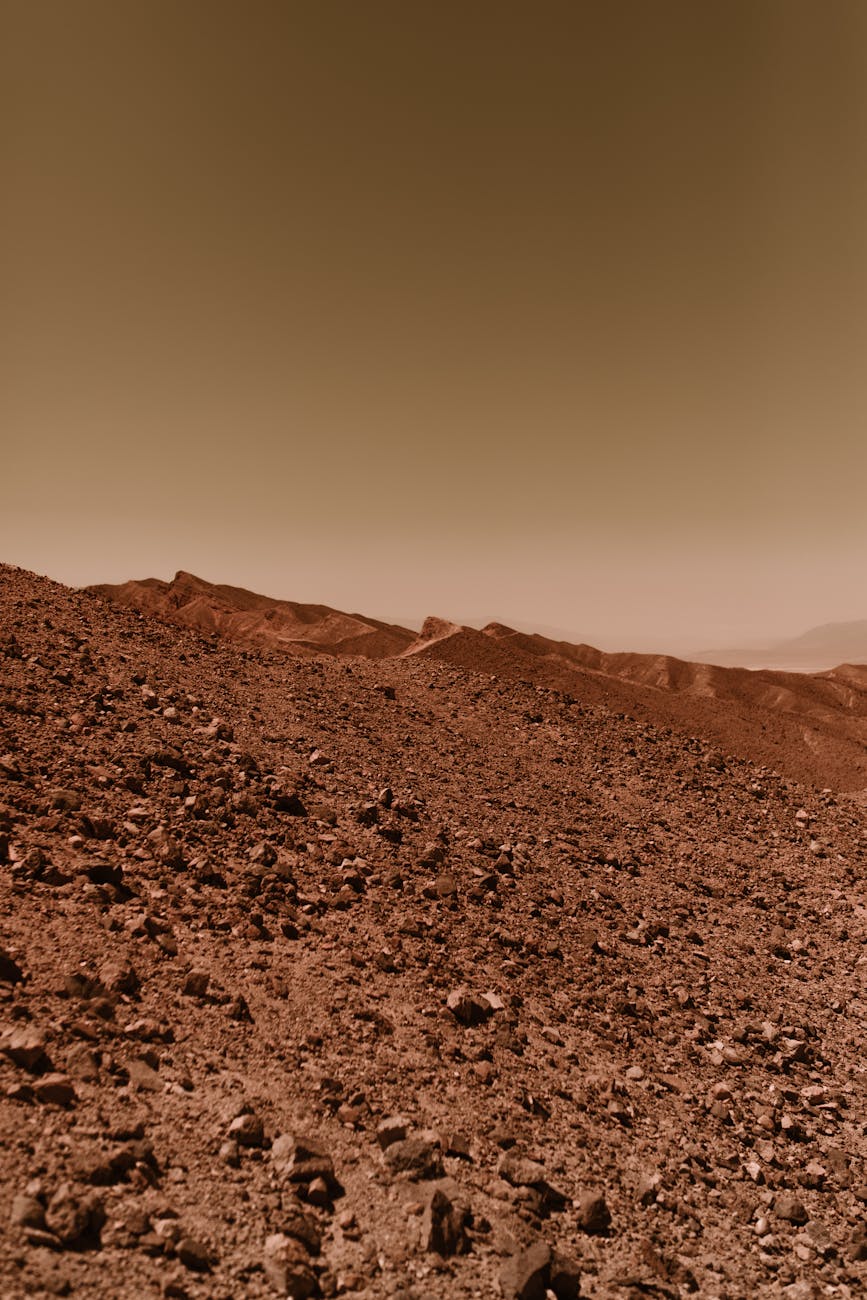
When audiences first watched Matt Damon in The Martian (2015), they met Mark Watney: the clever, resourceful astronaut stranded alone on Mars, surviving against all odds. His story was one of ingenuity, humor, and hope, showing humanity at its best. A year earlier, Damon appeared in Christopher Nolan’s Interstellar (2014) as Dr. Mann, the brilliant but ultimately tragic astronaut who betrays his team. On the surface, the characters are polar opposites: one a hero, the other a cautionary tale.
Yet, if we look purely at the plots and timelines of these films, an intriguing fan theory emerges: The Martian could actually take place before Interstellar, and Mark Watney could grow into Dr. Mann. This headcanon isn’t official, of course, but the storylines align in a way that makes the theory surprisingly plausible — and deeply compelling.
The Timeline Connection
In this theory, The Martian represents the final golden age of public space exploration. NASA is active and transparent, manned Mars missions are happening, and the world watches as Watney survives using science, grit, and humor. This places the story in the mid-21st century, long before Earth becomes uninhabitable. Interstellar, by contrast, shows a planet in ecological decline, where dust storms ravage crops and the future of humanity is uncertain. NASA operates secretly, sending Lazarus missions through a wormhole to find habitable planets.
By placing The Martian first, the timeline becomes coherent: humanity experiences a near-future era of optimism, then slowly descends into desperation. Watney survives Mars as a symbol of human resilience, but decades later, as the world falters, he reemerges in a new identity, hardened by experience and disillusionment, as Dr. Mann.
Fame and Its Consequences
After surviving Mars, Mark Watney would have become one of the most famous humans alive. Globally celebrated, he would have been invited to conferences, honored by governments, and interviewed by countless media outlets. His story would inspire generations — and also weigh heavily on him.
The pressure of being a living legend could have been suffocating. Every failure on Earth, every shortage or disaster, would be contrasted against the miracle of Watney’s survival. Public perception might have turned against him if humanity failed to measure up. In this light, the fame that once seemed like a reward could become a burden, pushing Watney toward the desire to disappear.
Reinventing Himself
Here’s where the name change makes sense. Mark Watney, the hero of Mars, wants to vanish. He wants to shed the burden of fame and the public expectation that he embodies hope itself. Adopting the identity of “Dr. Mann” allows him to step away from the symbol of optimism and reinvent himself in a world growing darker by the day.
This reinvention is not just cosmetic. It marks a psychological shift. By hiding behind a new name, Watney begins to embrace cynicism and pragmatism over idealism and hope. He becomes Mann, a man driven less by inspiration than by survival — a stark contrast to the witty, resourceful astronaut audiences first met on Mars.
Trauma’s Lasting Effects
Surviving Mars left scars. Watney endured extreme isolation, constant life-threatening danger, and the ever-present possibility of failure. Even though he kept a sense of humor in The Martian, the psychological effects ran deep. In our headcanon, these scars intensify over the decades, amplified by Earth’s worsening climate crisis and society’s failure to prepare.
This is where Mann’s chilling line in Interstellar, “I’ve seen things,” takes on new significance. If Mann is indeed Watney, then those things aren’t just vague horrors — they’re the lived reality of months stranded alone on Mars. He has experienced extreme isolation, near-death moments every day, and the immense weight of survival. Mann’s fear on his planet, his paranoia, and even his betrayal can all be traced back to a man who has already faced being utterly alone in the universe once — and knows he doesn’t want to endure it again.
Jaded by Humanity
Watney’s experience on Mars gave him unique insight into human resilience, but also into human fragility. Surviving alone, he saw how small mistakes could be fatal, how reliant humans were on preparation and cooperation. Returning to Earth, he likely noticed that society was not adequately prepared for real crises. Governments were slow to act, infrastructure was fragile, and large-scale disasters could threaten millions.
This realization could have turned hope into disillusionment. Mann is a Watney who has lost faith in humanity’s ability to survive on its own. His betrayal in Interstellar is not merely cowardice; it is the tragic culmination of decades of jaded experience. The man who once inspired the world becomes the man who endangers it, convinced that he alone can secure his survival.
Technological Leap
Some might argue that the tech gap between The Martian and Interstellar is too wide. The Martian features near-future Mars rovers and habitats, while Interstellar has cryosleep, wormholes, and AI-driven spacecraft. In this headcanon, however, the leap is plausible. Between Watney’s Mars survival and the Lazarus missions, decades pass. NASA continues secret, high-risk projects that push technology beyond public knowledge, eventually enabling interstellar travel. The Lazarus missions represent a quiet, desperate effort to save humanity, hidden from the failing world below.
Survival, Light and Dark
Thematically, this theory casts the two films as two sides of the same coin. The Martian represents the light side of survival: optimism, ingenuity, and collaboration. Interstellar shows the dark side: paranoia, betrayal, and moral compromise. By imagining Watney as Mann, we see a full spectrum of human endurance. Survival is not a single narrative but a continuum — and the same person can embody both extremes, shaped by experience, trauma, and circumstance.
Mann’s “I’ve seen things” line becomes a bridge connecting these extremes. It’s the echo of Watney’s humor, hope, and ingenuity now transformed into fear and survival obsession. The line is no longer just dramatic dialogue — it is a reflection of a man haunted by having already survived the impossible.
The Cover-Up
Watney’s reinvention as Mann also explains why no one recognizes him in Interstellar. The collapse of Earth, the secrecy of NASA, and the passage of decades could erase the public memory of his Mars exploits. The story of the heroic survivor becomes a myth, and Dr. Mann emerges in the historical record as a brilliant, isolated, and ultimately tragic figure.
Conclusion
While The Martian and Interstellar are not officially connected, the plots align in ways that make this fan theory surprisingly plausible. Mark Watney’s survival on Mars could logically precede the events of Interstellar, and the psychological, societal, and technological changes between the two films create a believable path from hero to tragic figure.
Watney as Mann transforms the story into a cautionary tale of survival, fame, and the fragility of the human spirit. The man who once inspired humanity eventually becomes the man who challenges it — a full-circle arc that is as tragic as it is compelling.
In the realm of fan theories, this one not only connects two beloved science fiction stories but deepens their themes, showing that hope and despair, heroism and betrayal, can all inhabit the same human soul. And when Mann says, “I’ve seen things,” we can imagine that he truly has — the lonely nights and life-or-death challenges of Mars, forever etched into the man who once was Mark Watney.




Leave a Reply