The Musings of Jaime David
@jaimedavid.blog@jaimedavid.blog

The writings of some random dude on the internet

1,127 posts
1 follower

Category: analysis

  • Cartoon Network x Nickelodeon Live-Action Crossover: It’s Time They Went Full Chaos

    Cartoon Network x Nickelodeon Live-Action Crossover: It’s Time They Went Full Chaos

    Alright, so we’ve been talking cartoons, but let’s not sleep on the live-action side. Because here’s the thing: both Cartoon Network and Nickelodeon have had their fair share of live-action shows over the years. And if the merger between Paramount Global and Warner Bros. Discovery is happening, then this is absolutely the perfect time to go all out.

    I’m talking about a crossover so massive it makes all the fanfiction and “what if” posts look like child’s play. This isn’t just about throwing some Nickelodeon kids in a Cartoon Network universe, or vice versa. This is the full “everything collides” scenario.

    Why the live-action crossover matters

    People forget, both networks built huge fanbases not just on cartoons, but also on live-action shows:

    • Nickelodeon gave us classics like iCarly, Drake & Josh, Kenan & Kel, Zoey 101, and All That.
    • Cartoon Network had its own wild live-action experiments too—Level Up, Tower Prep, The Othersiders, plus more obscure stuff that deserves a comeback.

    Fans of these shows are now adults. Nostalgia is at peak levels. The perfect storm is here. And if you pull this off, you get the same chaos, the same universe-bending fun as with the cartoons—but with real human actors interacting with iconic personalities from the other network.

    What a live-action crossover could even look like

    Picture it:

    • Carly Shay (iCarly) accidentally stumbles into a Cartoon Network studio, where she’s interacting with characters from Level Up or even a live-action hybrid scene with Adventure Time actors (animated + live-action mix).
    • Drake & Josh team up with Nickelodeon’s All That cast for ridiculous sketch chaos in a shared universe.
    • Actors from Zoey 101 have to navigate an absurd dimension-crossing event where Cartoon Network and Nickelodeon characters’ worlds collide in the most chaotic way imaginable.

    It’s meta, it’s ridiculous, it’s exactly the kind of crossover the internet would explode for.

    Bring back old shows, don’t hold back

    Just like the cartoons, this needs to be full retro revival. Every show, every actor, every weird obscure live-action series. Don’t just pick the big hits. Go deep. All That, Kenan & Kel, Level Up, even stuff no one remembers until it comes back in full chaos mode.

    Why it would dominate pop culture

    We’re talking about two universes of content that shaped kids’ lives, now colliding in real-time, with the actual actors reprising their roles. Combine that with the animated crossover, and suddenly you’ve got a multi-dimensional, live-action/animation hybrid event unlike anything in TV history.

    This isn’t just nostalgia. It’s the perfect fan celebration, a pop-culture earthquake, and a golden opportunity for Paramount Global to actually show that this merger is about creative power, not just corporate headlines.

    The ultimate conclusion

    If the cartoons are getting their mega crossover, the live-action side cannot be left behind. It would be absurd to not do it. Full cast reunions, mash-ups, dimension-crossing chaos, meta comedy, and maybe even live-action versions of cartoon antics. The internet will lose its mind, fans will rejoice, and this will go down as one of the most insane entertainment events in history.

    Paramount Global acquiring Warner Bros. Discovery isn’t just about merging companies—it’s about finally giving fans what they’ve been dreaming of for decades. And the live-action crossover? Absolutely essential. No excuses. Go all out.

  • Cartoon Network x Nickelodeon: The Ultimate Crossover We’ve Been Waiting for Is Actually Happening

    Cartoon Network x Nickelodeon: The Ultimate Crossover We’ve Been Waiting for Is Actually Happening

    Okay, stop everything—this is real now. The merger is happening. Paramount Global is acquiring Warner Bros. Discovery. That means the impossible is no longer impossible. All the fanfiction, all the crossover dreams, all those “what if Cartoon Network met Nickelodeon” threads? They might actually come true.

    Because if this merger goes through, there’s only one logical conclusion: a full-on, universe-colliding, all-out Cartoon Network x Nickelodeon crossover event. And it needs to happen. Not just a cameo here or there, not some half-baked “reference episode” nonsense. The whole shebang.

    Finally, the crossover we’ve been dreaming about

    For decades, fans have been imagining this. They’ve been creating alternate universes where Gumball hangs out with SpongeBob, where Finn debates morality with Aang, where Raven and Danny Phantom just silently judge everyone. Reddit threads, YouTube AMVs, fan art galore—it’s all been leading to this.

    Now, thanks to corporate reality bending in our favor, the barrier that kept this from happening—the legal walls between Viacom-owned Nickelodeon and Warner Bros-owned Cartoon Network—is gone. The ownership issue? Solved. The stage is set.

    Go big or go home

    This isn’t the time for limits. Bring back every character. Every classic, every canceled series, every one-season wonder. Legacy voice actors? Check. Alternate timeline versions? Check. Epic multiverse chaos? Check.

    Imagine the possibilities:

    • Finn the Human teaming up with Aang
    • SpongeBob inexplicably in Townsville
    • Danny Phantom encountering Teen Titans-level ghost problems
    • Samurai Jack vs. Zuko, because why the hell not

    This would not just be fan service—it’s a celebration of two entire eras of animation.

    And yes, the game potential is insane

    We already got a taste with Nicktoons Unite!. Nickelodeon knows how to do crossover chaos, Cartoon Network knows how to do chaotic fun. So now imagine a modern mashup:

    Nicktoons United x Cartoon Network Mega Crossover Game

    Open-world hubs. Team-based battles. Storylines that jump between dimensions. Character abilities interacting in insane ways. Levels based on every iconic show you can think of.

    And the natural next step? A full-on platform fighter in the style of Super Smash Bros, but featuring both networks’ rosters. Imagine:

    • SpongeBob vs. Gumball
    • Ben 10 vs. Danny Phantom
    • The Powerpuff Girls vs. Team Avatar
    • Samurai Jack vs. Zuko

    Stages, music, and assist characters pulled from deep, deep cuts. Every character feels meaningful, every interaction is iconic. This isn’t just nostalgia—it’s the crossover the internet has been begging for.

    Why it’s more than nostalgia

    This isn’t just kids’ shows or retro bait. Cartoon Network and Nickelodeon shaped generations. They influenced humor, storytelling, character design, and even internet culture itself. This isn’t a gimmick—it’s a cultural checkpoint.

    A moment when two massive creative legacies finally acknowledge each other in the biggest, most chaotic way possible.

    The point is simple: they need to go all out

    Paramount Global acquiring Warner Bros. Discovery is the perfect storm. If the networks fail to seize this, it will be one of the biggest missed opportunities in entertainment history. The characters are there, the fan demand is insane, and the corporate ability to make it happen? Finally exists.

    So yes. Make it happen. Bring back every character, every story, every crazy scenario. Make the game. Make the show. Make the cultural event of the decade. Because the merger isn’t coming—it’s here. And this is our shot at the ultimate crossover.

  • The Ultimate Paranormal TV Crossover We Deserve: Grimm, Supernatural, Fringe, and The X-Files

    The Ultimate Paranormal TV Crossover We Deserve: Grimm, Supernatural, Fringe, and The X-Files

    There are some ideas that feel so obvious, so perfectly aligned with pop culture history, that it’s almost insane they haven’t happened yet.

    And this is one of them.

    We need a crossover between Grimm, Supernatural, Fringe, and The X-Files.

    Not a reboot. Not a remake. Not a “shared universe reboot attempt.”

    A true, full-on, multiverse-level paranormal crossover event while the actors are still alive, still capable, and still recognizable as the characters we grew up with.

    Because if there was ever a time to do it, it’s now.


    These Shows Were Already Basically the Same Universe

    Let’s be real for a second.

    All four of these shows were already orbiting the same core idea:

    • Something hidden is going on in the world
    • Governments either know too much or too little
    • Monsters, anomalies, or entities exist just beyond normal perception
    • A small group of people is constantly holding reality together

    The X-Files basically laid the foundation. Mulder and Scully set the tone for “investigate the unexplainable, get gaslit by institutions, repeat.”

    Then Fringe escalated it into multiverse horror sci-fi with alternate realities, mad science, and collapsing timelines.

    Then Supernatural said “what if we just made folklore, demons, angels, gods, and cosmic apocalypse part of a road trip buddy show for 15 seasons.”

    And then Grimm came in like “what if fairy tales were real, but hidden among humans, and the cops were secretly monster hunters?”

    These shows are not different genres.

    They are different dialects of the same language.


    The Crossover Concept Writes Itself

    You don’t even need to overthink it.

    Something goes wrong.

    Not just “monster of the week” wrong.

    Reality is destabilizing.

    Fractures from the Fringe universes begin bleeding into our own timeline. The boundaries between myth, alien phenomena, and supernatural law enforcement collapse.

    Suddenly:

    • FBI agents are getting X-Files cases that don’t behave like X-Files cases
    • Hunters from Supernatural are seeing creatures that don’t follow known lore
    • Grimm “wesen” rules start breaking down
    • And something from the deepest Fringe-style alternate universe is rewriting physics itself

    This isn’t “team-up to fight a villain of the week.”

    This is:

    “All of your shows were documenting different symptoms of the same apocalypse.”


    The Characters Already Feel Like They Could Meet

    This is the part people underestimate.

    The tone compatibility is already there.

    The X-Files

    The X-Files gives us:

    • Fox Mulder’s obsession with truth
    • Dana Scully’s scientific skepticism slowly eroded by reality

    And honestly, Mulder meeting literally anyone from these other shows just feels natural. He would immediately believe all of it. Scully would try to document it. Fail. Then still publish a paper about it.


    Supernatural

    Supernatural gives us:

    • Dean and Sam Winchester, who have literally fought everything from demons to gods to cosmic destiny itself

    At a certain point, they stop being surprised. They would meet Fringe scientists and go:

    “Yeah, okay, alternate universe again. Cool. Can we kill it?”

    Played by Jensen Ackles and Jared Padalecki, they are basically the emotional backbone of supernatural chaos.


    Fringe

    Fringe brings:

    • Olivia Dunham
    • Walter Bishop
    • Peter Bishop

    This trio would be the “explain what is actually happening” engine of the crossover.

    Especially Walter.

    Walter would look at everything happening and say something like:

    “Oh yes, I saw this once when I accidentally opened a door to a dimension where gravity is emotional.”

    Played by Joshua Jackson, Peter is the bridge between madness and logic.


    Grimm

    Grimm adds:

    • Hidden monster society
    • Police procedural grounding
    • Mythological creatures disguised as humans

    Nick Burkhardt walking into this crossover would basically be:

    “So you’re telling me this is NOT the weirdest case I’ve ever had?”

    And then immediately be proven wrong.


    The Villain: It’s Not a Monster, It’s Reality Itself

    Here’s where the crossover gets interesting.

    Because if you combine:

    • X-Files government conspiracies
    • Fringe multiverse instability
    • Supernatural cosmic hierarchy
    • Grimm mythological hidden society

    You don’t get a monster.

    You get a breakdown of structure.

    The antagonist shouldn’t be a demon or alien or Wesen.

    It should be:

    A collapsing “truth layer” where all explanations exist at once, and none of them are stable anymore.

    Meaning:

    • Science stops agreeing with itself
    • Magic stops obeying rules
    • Mythology becomes statistically real
    • Alternate realities overwrite memory

    This is the kind of threat where even Winchester logic fails.

    Even Walter Bishop gets scared.


    The Emotional Core Would Be Insane

    What makes this crossover actually work isn’t just spectacle.

    It’s grief.

    All four shows, in their own way, are about people who sacrifice normal life to hold back the unknown.

    • Mulder loses normalcy for truth
    • Scully loses certainty for reality
    • Dean and Sam lose everything for survival
    • Nick loses ignorance for responsibility
    • Olivia loses identity across timelines
    • Walter loses his mind to understand what’s coming

    Put them together and you don’t get a team.

    You get survivors of different wars realizing they were all fighting the same war.


    Imagine the First Meeting Scene

    Picture it:

    A government facility collapses due to a dimensional bleed.

    Mulder and Scully arrive.

    Then Dean and Sam kick in the door, weapons drawn.

    Nick Burkhardt is already there, trying to contain a Wesen outbreak that is behaving… wrong.

    Walter Bishop is calmly eating a sandwich while saying:

    “This is actually very exciting.”

    Olivia Dunham arrives last and immediately says:

    “This is not our universe.”

    And Dean responds:

    “Yeah, no kidding.”

    That’s it. That’s the show.


    Why This Needs to Happen Now

    This is the important part.

    All of these shows have aging fandoms. Many of the actors are still active. The nostalgia window is open, but it won’t stay open forever.

    • David Duchovny and Gillian Anderson still have cultural weight as Mulder and Scully
    • Jensen Ackles and Jared Padalecki are still deeply associated with supernatural storytelling
    • Joshua Jackson still carries Fringe’s legacy

    If there was ever a moment where studios could realistically coordinate something like this, it’s in this era of multiverse storytelling where audiences already accept impossible crossovers.

    We’ve literally been trained by modern cinema to say:

    “Sure, why not, throw them all together.”

    So why not do it with the best paranormal TV shows ever made?


    The Real Reason This Works

    It’s not just fan service.

    It’s thematic completion.

    These shows never got closure in relation to each other because they were never connected.

    But emotionally?

    They already were.

    They were all asking the same question in different ways:

    “What happens when reality stops being reliable?”

    A crossover doesn’t dilute that question.

    It amplifies it.


    Final Thought

    If you brought these universes together, you wouldn’t just get a crossover episode.

    You would get a cultural event.

    A “where were you when the paranormal multiverse collapsed” moment.

    And honestly?

    If the actors are still around, if the fandoms are still alive, and if Hollywood is still obsessed with multiverses…

    Then not doing this feels like a missed opportunity of almost mythic proportions.

    Because some ideas aren’t just good.

    They’re inevitable.

  • WHY I APPROVE ALL COMMENTS ON MY BLOGS, EVEN THE ONES THAT DISAGREE WITH ME

    WHY I APPROVE ALL COMMENTS ON MY BLOGS, EVEN THE ONES THAT DISAGREE WITH ME

    There’s a very specific kind of expectation people have when they land on a personal blog in 2026. They assume moderation, they assume curation, they assume that whatever comment section exists has already been filtered through some invisible lens of approval, agreement, or comfort. They assume that if they say something critical, it might disappear. Or if they say something messy, it might get buried. Or if they say something bluntly opposed to the author, it might never even see the light of day.

    And I get why people assume that. That’s basically the internet we’ve built over the years. Comment sections have become either tightly controlled echo chambers or chaotic wastelands where nothing meaningful survives. So when someone finds out that I approve basically everything on my blogs, including disagreement, including criticism, including stuff that actively pushes back against what I say, the immediate reaction is usually confusion.

    Like, why would you do that?

    And the honest answer is both simpler and more complicated than people expect.

    I want engagement. Real engagement. Not filtered engagement. Not sterilized agreement. Not a comment section that exists just to validate the original post. I want the actual back-and-forth of ideas, even when it gets uncomfortable, even when it gets messy, even when it challenges me directly. Because if nobody is disagreeing with you, you are not actually having a conversation. You are performing into a mirror.

    And I’m not interested in mirrors.

    I’m interested in friction. In response. In contradiction. In the weird unpredictable ecosystem that happens when people are allowed to actually react to something without being pre-screened for ideological compatibility.

    That’s the core of it. But there’s more layers underneath.

    Because approving all comments isn’t just about engagement. It’s also about trust.

    When I write something, I’m not pretending it exists in a vacuum. I know it enters a larger world where people come from different backgrounds, different beliefs, different emotional states, different interpretations of language itself. If I publish something and only allow comments that agree with me, then I’m not actually respecting that diversity of interpretation. I’m flattening it. I’m saying only certain reactions are valid enough to exist under my words.

    And that feels dishonest.

    If I put something out into the world, I don’t want to control the emotional or intellectual reaction to it. I want to observe it. I want to see what lands, what misses, what irritates people, what resonates, what confuses them. That feedback loop is part of the writing process itself. Not an afterthought. Not a decoration. A core component.

    Because writing doesn’t end when you hit publish. That’s just the beginning of its life.

    And when comments are allowed to exist freely, even critical ones, the writing becomes something more than just a monologue. It becomes a space. A shared environment where meaning is negotiated rather than dictated.

    Of course, that doesn’t mean everything is chaos. There’s still a line somewhere. Spam, harassment, obvious bad-faith junk, that kind of thing doesn’t add value. But disagreement? Pushback? Even harsh criticism? That’s not only allowed, it’s part of the point.

    Because disagreement is information.

    If someone reads something I write and responds with “I don’t agree with this because X, Y, Z,” that tells me something real. It tells me how the idea is being received. It tells me where the gaps are. It tells me what assumptions I might have made without realizing it. Sometimes it even reveals blind spots I didn’t know were there.

    And if I only allowed positive reinforcement, I’d lose all of that.

    I think people underestimate how important that is for growth, not just for me as a writer, but for the blog itself as a living thing. A blog isn’t just a publication. It’s a dialogue over time. A record of thought interacting with other thought. And if that interaction is artificially narrowed, the whole system becomes weaker.

    There’s also something else going on here that I don’t think gets talked about enough: the psychological pressure of curated agreement.

    When every comment under your work is positive, it creates a weird distortion. It starts to feel like you’re either always right or that you’re writing for applause instead of understanding. It can subtly push you toward safe ideas, toward reinforcing what already gets approval, toward avoiding complexity that might confuse or upset your audience.

    But that’s not how real thinking works.

    Real thinking is unstable. It contradicts itself. It evolves. It gets challenged and reshaped. And sometimes it gets proven wrong. If you remove all external friction, you lose that instability, and with it, you lose intellectual honesty.

    I’d rather have a comment section where someone says “I think you’re wrong about this and here’s why” than a comment section full of “great post!” with nothing behind it.

    Not because positivity is bad, but because it’s incomplete on its own.

    There’s also a deeper philosophical angle here that I keep coming back to. If I believe in the value of expression, then I also have to believe in the value of response to that expression. You can’t really advocate for open expression and then selectively restrict how people respond to it just because it makes you uncomfortable.

    That would be a contradiction.

    And I’m not interested in building contradictions into the foundation of my work.

    Now, that doesn’t mean every comment carries equal weight. It doesn’t mean every critique is correct or even well-formed. People are messy. Language is messy. Intent gets lost constantly. Misunderstandings happen all the time. But even messy feedback still has informational value.

    Sometimes especially messy feedback.

    Because it shows how ideas travel through different minds. It shows where communication breaks down. It shows where something I thought was clear might not actually be clear at all.

    And again, that’s useful.

    There’s also a social aspect to this that matters more than people think. When readers see that disagreement is allowed, it changes the tone of participation. It signals that they don’t have to agree to be part of the conversation. It creates a space where people feel less pressure to perform agreement and more permission to be honest.

    That honesty is rare online.

    Most platforms incentivize extremes. Either total agreement or total hostility. Nuance gets filtered out because it doesn’t generate the same immediate reaction. But on a personal blog where comments are actually approved rather than algorithmically sorted, there’s an opportunity to preserve nuance in a way that larger platforms often fail to do.

    And I want that space to exist.

    Even if it gets uncomfortable sometimes.

    Because yes, it does get uncomfortable. Not every disagreement feels neutral. Sometimes criticism hits a nerve. Sometimes it forces you to sit with the fact that not everyone reads your work the way you intended it. Sometimes it even exposes flaws in how you communicated an idea.

    But discomfort isn’t a failure state. It’s part of the process.

    If anything, it means the system is working.

    A comment section where nobody ever disagrees is not a healthy environment. It’s a sealed environment. And sealed environments stagnate.

    Open environments evolve.

    There’s also a personal philosophy behind all of this that connects to how I think about creativity in general. I don’t see my writing as something that needs to be protected from critique. I see it as something that needs to be tested by it. If an idea can’t survive contact with disagreement, then it probably wasn’t fully formed to begin with.

    That doesn’t mean every piece of criticism invalidates an idea. It just means ideas should be able to withstand pressure. They should be able to be questioned. They should be able to be challenged without collapsing.

    And if they do collapse, that’s useful information too.

    It means something needs to be rebuilt.

    Approving all comments is, in a way, a commitment to that testing process. It’s a refusal to insulate myself from reaction. It’s an acknowledgment that I don’t have a monopoly on interpretation of what I write. Once something is published, it belongs in part to whoever reads it.

    And readers will interpret it in ways I never expected.

    That’s not a flaw. That’s part of what makes writing alive.

    Another reason I keep all comments visible is because I think it’s important for other readers to see disagreement too. Not just the author seeing it privately, but the audience seeing it publicly. Because it models something healthier than curated agreement: it models coexistence of different perspectives in the same space.

    Someone can read a post and agree with it, and right below that see someone who strongly disagrees, and both of those reactions are allowed to exist without one erasing the other.

    That matters more than people realize.

    It teaches readers that disagreement doesn’t automatically mean hostility, and that differing interpretations can exist without collapsing the entire space into conflict.

    Of course, that only works if the environment is moderated enough to prevent it from becoming chaos, but open enough to prevent it from becoming controlled silence. It’s a balance. Not perfect, but intentional.

    And I’ll be honest, part of this also comes down to curiosity.

    I like seeing how people respond.

    Not in a performative way. Not in a validation-seeking way. Just in a genuine “what did this idea do when it left my head and entered someone else’s” kind of way. That transformation is interesting to me. Sometimes more interesting than the original writing itself.

    Because once it’s out there, it stops being just mine.

    It becomes a shared object that people interact with differently.

    And that interaction is the real content, in a sense.

    So yeah, I approve all comments, even the ones that disagree with me, even the ones that are critical, even the ones that poke holes in what I wrote.

    Not because I think everything is equally correct.

    Not because I want chaos.

    But because I want the conversation to be real.

    And real conversation requires space for contradiction.

    Without that, it’s not conversation at all.

    It’s just broadcasting.

    And I’m not trying to broadcast into silence.

    I’m trying to build something that talks back.

    Fediverse Reactions
  • Songbird: My Psalms — A Book I Stumbled Upon and Can’t Stop Thinking About

    Songbird: My Psalms — A Book I Stumbled Upon and Can’t Stop Thinking About

    There is something uniquely disorienting about being an author. You spend so much time on the production side of literature, so focused on your own writing, your own releases, your own creative goals, that you sometimes forget you are also a reader. You forget that books are being born every day without your awareness, that entire collections of poems are floating out into the world while you are busy wrestling with your own sentences. That is exactly what happened when I stumbled upon Songbird: My Psalms. I didn’t go looking for it. It found me the way a lot of interesting things find me, through a moment of aimless discovery, a rabbit hole of clicking around and wandering through titles and descriptions until something stopped me cold and said, wait, look at this.

    I want to be upfront about something before I go any further, because I think honesty is important when it comes to talking about books. I have not read Songbird: My Psalms yet. I have not cracked the cover, I have not sat with the poems, I have not let the language move through me the way poetry is supposed to. So this is not a review. It cannot be, because I have not done the work of actually reading it. What this is, instead, is something I find almost more interesting to write, which is the story of encountering a book before you have read it, of what a title and a description and a premise can do to your brain before a single poem has reached you personally. It is the anticipation, the curiosity, the specific sensation of a book lodging itself into your awareness and refusing to leave. And Songbird: My Psalms has absolutely done that to me.

    So let me tell you about it. The collection is written by two authors, Danielle Emily and Emile Ignatius, and from everything I have been able to gather about it, the book is built around an intersection of themes that I find genuinely compelling. On the surface, the title tells you a lot. Songbird, a creature defined by its voice, by its instinct to sing regardless of whether anyone is listening. My Psalms, a deeply personal claiming of a form that is ancient and sacred and loaded with meaning. The Psalms, in the Biblical sense, are songs of the human soul directed outward toward something larger than the self. They are expressions of grief and gratitude, of despair and praise, of questioning and ultimate surrender. To call a poetry collection your psalms is to signal something important about how the poets are approaching their own inner lives, treating their words not as casual observations but as genuine spiritual offerings, as cries and declarations that carry the weight of something sacred.

    The thematic territory of the collection is what really got me. From what I have come to understand about it, Songbird: My Psalms moves through themes of nature, healing, resilience, and a deep desire for peace and renewal. There is something in the book about the restorative power of the natural world, about how the landscapes around us can become mirrors for the landscapes inside us. There is also a significant thread running through it about neurodivergence, about the experience of feeling disconnected from a so-called consensus reality, about navigating a world that was not quite built for the way your mind works. The poets explore what it feels like to be misunderstood, to live with an interior life that does not map cleanly onto the expectations of the world around you, and to find within faith and within nature and within poetry itself a kind of dignity and validation that the outside world does not always offer.

    That is a lot of ground for a poetry collection to cover, and yet it does not strike me as a collection that is trying too hard or overreaching. What draws me to it, even from a distance, is the sense that these are poems rooted in lived experience, in the specific textures of real emotional and spiritual struggle rather than abstraction. When poets write about healing, there is always a risk of the work becoming vague, of reaching for universality so aggressively that the poems lose all specificity and end up saying everything and nothing simultaneously. But the framing of Songbird: My Psalms suggests something more grounded than that. The psalms of the Bible were always specific even when they were universal. David crying out from the caves, from the wilderness, from the throne, was always writing from a particular body in a particular moment, and that particularity is what made the universality land so hard. A good poem about pain is always about one specific pain, and then, mysteriously, it is about everyone’s pain at once.

    Now here is where I have to situate myself a bit, because I think my perspective on this book is shaped considerably by who I am and where I am in my life as a writer. My name is Jaime David, and over the past couple of years I have been on my own unexpected publishing journey. My debut novel, Wonderment Within Weirdness, was released on February 15th, 2025, a date that still feels surreal to me when I say it out loud. In the months that followed, I somehow also released a poetry compilation called My Powerful Poems and a short story collection called Some Small Short Stories, giving me three books out in a single year in a way that still occasionally makes me stop and stare at the wall in mild disbelief. Three books. One year. Me, a person who spent years writing without knowing if any of it would ever reach a reader.

    The reason I bring my own story up is not to make this about me in any reductive sense. It is because I think where you stand as a writer shapes what you see when you encounter other writers’ work. When I stumbled upon Songbird: My Psalms, I was not just a random reader browsing a title. I was someone who had recently put his own poetry out into the world, someone who had recently grappled with the question of what his own poems were trying to say and to whom. My Powerful Poems is exactly what it sounds like, a collection of things I had been writing for years across notebooks and documents and blog posts, pulled together and given a spine and a cover and a chance to breathe as a single thing. Writing and assembling that collection taught me a great deal about what poetry actually is, or at least what it is for me. It is not performance. It is not decoration. It is the attempt to say the unsayable, to compress a feeling or a moment or a question into a shape that someone else can hold.

    So when I encountered the description of Songbird: My Psalms, particularly the idea of poems exploring disconnection and resilience and spiritual healing through the lens of neurodivergence and nature and faith, it touched something specific. The subtitle alone, My Psalms, resonates with me on a level that I did not entirely expect. There is something honest and brave about that word my in that context. Not the psalms, not a collection of psalms, not psalms, but my psalms. Claiming an ancient sacred form as your own, insisting that your particular grief and your particular joy and your particular complicated relationship with the divine deserve to be spoken in that register. That kind of confidence, that kind of insistence on the validity of one’s own inner life, is something I deeply respect in any writer.

    And the songbird imagery itself has been sitting with me since I first came across the title. A songbird does not sing because it has been trained to perform. It sings because singing is the expression of its nature, because silence would be a kind of death. There is something in that which cuts right to the heart of why any of us write, certainly why I write. Not for acclaim, not for success in any conventional sense, not because writing is professionally strategic or financially wise, but because something in the composition of my interior life requires the act of turning experience into language. If I do not write, something backs up inside me and goes sour. The songbird does not choose to sing. The singing is what it is. That is a true thing about poetry, and a title that captures that truth before you have even opened the first page is doing something right.

    I want to talk about the timing of this book a little, because context matters when you discover a work. Songbird: My Psalms is a relatively recent collection, and the fact that it exists in this particular cultural moment feels significant to me. We are living through a period of intense and ongoing reckoning with mental health, with neurodivergence, with the question of how people who experience the world differently are seen and valued and heard. The conversation around things like being a highly sensitive person, around the experience of empaths, around the many ways a mind can diverge from the statistical norm and still carry profound insight and beauty, that conversation has become louder and more widespread than it perhaps ever has been. A poetry collection that plants itself right in the middle of that conversation and speaks from the inside of that experience rather than looking at it from the outside is exactly the kind of book this moment calls for.

    There is also something about the pairing of nature and spirituality in this collection that feels important to name. The natural world has always been one of the primary languages through which human beings have tried to articulate the ineffable. The Psalms themselves are filled with landscape, with trees and rivers and mountains and the birds of the air. When the poets of Songbird: My Psalms turn to nature as a source of healing and as a vehicle for spiritual expression, they are participating in a lineage that goes back thousands of years, one that refuses to sever the connection between the outer world and the inner world, between the physical and the sacred. That refusal feels radical in a good way, in an era when technology and speed and abstraction have made it genuinely difficult for many people to access the natural world as a restorative force. A book that says slow down, look at this, let the light through these poems change something in you, is performing a kind of service that goes beyond entertainment or even art.

    The fact that this is a collaborative work, written by two authors, also interests me. Poetry is such an intimate form, so deeply tied to the singular voice and singular consciousness of the writer, that collaboration introduces a fascinating complexity. How do two writers merge into something coherent enough to feel like one book, one collection, one vision? How do the seams hold? I am genuinely curious about how Danielle Emily and Emile Ignatius navigate that question throughout the collection, whether the poems feel unified or whether there is a pleasing tension between two distinct sensibilities sharing the same pages. These are questions I will only be able to answer once I actually sit down and read the thing, which brings me back to the central admission of this whole post.

    I have not read it yet. I want to. That want is strong and specific and not going anywhere. There is a particular kind of book that gets into your mind before you have read it, that builds anticipation not through hype or marketing but through the sheer quality of the idea behind it, through the sense that whoever made this thing was working from a real place and trying to say something true. Songbird: My Psalms is one of those books for me. The title is good, the premise is good, the thematic territory is rich and relevant and alive, and the psalms framing suggests a depth of intention that I want to meet properly, with my full attention and an open reading mind, rather than skimming or rushing through it. Some books deserve to be read slowly. I suspect this is one of them.

    What I can say with confidence, even before I have turned a single page, is that this book feels like it matters. It feels like it was made with care, by people who had something genuine to say and who chose the hardest, most compressed, most demanding form available to say it. Poetry is not the easy road. Any poet will tell you that. It is the form that accepts no filler, no padding, no hiding behind plot or character development or the forward momentum of story. Every word is load-bearing. Every line break is a choice that either works or it does not. To write an entire collection of poems about healing and neurodivergence and faith and nature and to title it after your psalms, your personal sacred songs, is to put your whole interior life on the table and say, here, this is what I found when I went looking inside myself, and I believe it is worth your time.

    I believe it is worth my time too, and soon enough I plan to sit down and find out exactly how right my instincts are. Until then, the title sits in my mind like a piece of music I cannot quite remember but cannot stop trying to hear.

  • To Every Writer, Author, and Reader Out There — I Want to Tell You About My Book

    To Every Writer, Author, and Reader Out There — I Want to Tell You About My Book

    I want to talk about my debut novel, “Wonderment Within Weirdness.” Not in a sales pitch kind of way, not with a rehearsed elevator pitch or a list of reasons you absolutely must buy it right now. I just want to talk about it honestly, the way I would if we were sitting somewhere having a real conversation. I have been thinking a lot lately about how to share this book with more people, particularly with the writing and reading communities that I genuinely respect and engage with, and I figured the most straightforward thing I could do is just tell you what the book is, what it is about underneath the surface, and why I think certain people would connect with it. So that is what this is. A conversation.

    The simplest way to describe “Wonderment Within Weirdness” is that it is a science fiction action-adventure novel about an ordinary person who gets pulled into a multiversal conflict far beyond anything he could have anticipated or prepared for. That is the skeleton of it. A regular guy, an enormous and strange situation, stakes that reach levels that most people would find completely absurd. And honestly, absurd is a fair word for a lot of what happens in this book. The story goes to some wild places. There are multiple timelines, unknown universes, demons, portal guns, a heist in hell, and a threat to existence itself. I am not going to pretend that sounds restrained or modest, because it is not. From the very beginning, I wanted this book to be grand in scope. I wanted it to be epic and layered and ambitious. That was always the intention, and I do not apologize for it.

    What I do want to be clear about, though, is that the size and the strangeness of the book are not the point. They are the vehicle. The actual point of the story is something much quieter and more personal, even if it rarely gets the chance to be quiet inside the book itself. The multiverse is not just a backdrop. It is a metaphor. It is a way of exploring uncertainty, and choice, and what happens to a person when the familiar rules of existence stop applying and get replaced by something vast and incomprehensible. I think most people have felt a version of that at some point in their lives. Not with portal guns involved, obviously, but that feeling of reality shifting beneath you, of suddenly not knowing the rules anymore, of being asked to navigate something you were never prepared for. That feeling is at the heart of everything I was trying to do with this story.

    One of the things I have reflected on a lot since publishing the book is how much of its meaning I did not fully understand while I was writing it. That sounds strange, maybe, but I think it is true of a lot of writing. You put something down on the page because it feels right, because it is the honest thing, and only later do you look back and see what you were actually doing. Looking back at “Wonderment Within Weirdness” now, I can see how richly thematic it is, how much it is really about conflict, resilience, morality, and the way individuals navigate chaos. I can see that it is, in some ways that I did not consciously plan, an anti-war novel. Not in a heavy-handed or preachy sense. But the weight of violence accumulates throughout the story. The cost of conflict is never abstract. It lands on the protagonist in ways that are personal and real, and I think that honesty about what conflict actually does to people is one of the things I am most proud of in the book.

    The protagonist himself is somebody I care about a great deal. He is not a hero in the conventional sense. He does not have a secret destiny or a hidden power that gets activated when things get bad enough. He is just a person who finds himself in circumstances that are completely beyond him, and he has to figure out how to keep going anyway. He is not defined by confidence or certainty. He is defined by his refusal to completely give up, even when giving up would be the reasonable response to everything happening around him. I wrote him that way deliberately, because I find that kind of resilience far more interesting and far more honest than the polished invincibility you often get from genre protagonists. His struggle is emotional as much as it is physical. His arc is as much about mental endurance as it is about the external conflict. Mental health as a theme is not something I grafted onto the story after the fact. It is woven into the fabric of who he is and how he moves through everything the book throws at him.

    I also want to say something about the length, because I know it comes up. The book is over 600 pages. For a debut novel, that is unusual, and I am aware of that. When people hear that number, there is often a moment of hesitation. But I want to be honest about why the book is that long, because it is not padding and it is not self-indulgence. It is because I had a genuinely enormous story to tell, with layers of plot and subplots and characters and ideas that could not be compressed without losing something essential. The story is dense and sprawling and chaotic in places, and that is intentional. It reflects the nature of the world I was building. The length is the length because the story demanded it, and I stand by that. I also think readers who commit to it find that the size of the book becomes part of the experience. There is a particular kind of satisfaction that comes from finishing something that took real investment, and I wanted to give readers that.

    There is also humor in the book, and I want to mention that because I think it sometimes gets overlooked in conversations about themes and meaning. “Wonderment Within Weirdness” is funny in places. Not in a way that undercuts the serious moments, but in a way that lives alongside them. I think absurdity and sincerity can coexist, and I think some of the most honest moments in any piece of fiction come from the collision of those two things. The book leans into its own strangeness with a certain amount of self-awareness, and I think that tonal balance is one of the things that makes it feel different from a lot of other science fiction I have read. It does not take itself so seriously that it forgets to be alive, but it does not use humor as a way to avoid saying something real either.

    Now I want to speak directly to the communities I genuinely respect and engage with, the writers and readers who spend time thinking carefully about storytelling and craft and the experience of creating and consuming fiction. If you watch channels like The Creative Penn, where Joanna Penn has spent years building an incredible resource around the craft and the business of being an indie author, then you already understand that independent publishing is not a lesser version of traditional publishing. It is just a different path, and the books that come from it deserve the same serious engagement. “Wonderment Within Weirdness” is a book I made on my own terms, through the independent route, and I am proud of that. I think the community that Joanna has built is exactly the kind of community that understands what that means.

    If you watch Brandon Sanderson’s lectures and channel, where he breaks down world-building and narrative structure with a generosity and clarity that I genuinely admire, you might find something interesting in the way I approached my own world-building. The multiverse in my book is not decorative. It is structural. The rules of how it works matter, and the way the protagonist interacts with those rules is the spine of the plot. I think readers who appreciate that kind of intentional construction in speculative fiction will have a lot to engage with here, even if my approach is messier and more chaotic than Sanderson’s famously rigorous systems.

    If you follow channels like Hello Future Me, where Timothy Hickson does incredibly thoughtful video essays about how storytelling builds meaning through its architecture, then the thematic layering in “Wonderment Within Weirdness” is something I would genuinely love you to dig into. The anti-war elements, the mental health themes, the use of the multiverse as metaphor rather than just spectacle — these are all things that are there to be found if you are reading with that kind of attention. I am not claiming the book is perfect. No debut novel is. But I am claiming that there is more going on beneath the surface than a casual glance might suggest, and that is exactly the kind of book that channels like Hello Future Me are built to celebrate.

    To everyone who watches Abbie Emmons talk about the psychology of storytelling and why certain narratives connect with readers on a level that goes beyond plot, I want you to know that the emotional core of my book was never an afterthought. I spent a lot of time thinking about what I wanted readers to feel and why, about how the protagonist’s internal experience should track against the external chaos of the story. The emotional resonance was the thing I cared about most, even when I was writing scenes that are, on the surface, completely bananas. If you watch Jenna Moreci’s channel and appreciate her honest, direct takes on what works and what does not in genre fiction, I think you would find “Wonderment Within Weirdness” to be a genuinely interesting case study. It does some things very well and it takes some risks that do not always land perfectly, and I am at peace with both of those things. That is what a debut novel is.

    For those who follow channels like Author Level Up with Michael La Ronn, where the focus is on what it actually means to build a body of work as an indie author and keep showing up for your craft, I want to say that “Wonderment Within Weirdness” was just the beginning for me. I also released a poetry compilation called “My Powerful Poems” and a short story collection called “Some Small Short Stories” in 2025, making three books in a little over a year. I am not saying that to brag. I am saying it because I think the writers in those communities understand what it means to commit to the work, to keep creating even when it is difficult, and “Wonderment Within Weirdness” is where that commitment started for me. It is the book that proved to me that I could actually do this.

    If you spend time reading blogs like The Creative Penn, where the conversation around indie publishing and the author journey is as rich and sustained as anywhere on the internet, I think the story behind my book is as interesting as the book itself. I am a writer and a scientist, and I came to this debut novel with curiosity and a refusal to simplify things, whether that means the plot, the themes, or the emotional experience of the protagonist. That approach is reflected on every page. It is also reflected in the blog I maintain at jaimedavid.blog, where I write about the book, about the themes, about what it means to be an indie author navigating all of this. If you read Jane Friedman’s blog and appreciate the honest, practical, thoughtful engagement with the realities of the publishing world that she consistently provides, then you know that independent authors are part of that conversation too, and I want to be part of it.

    The book is available in print and ebook through Lulu and various online platforms including Amazon. It is not a perfect book. I do not think first novels usually are, and I think there is something a little dishonest about pretending otherwise. But it is an honest book. It is a book that came from a genuine place, that was written with real ambition and real feeling, and that has more going on inside it than its genre surface might immediately suggest. If you are part of the writing and reading communities I have mentioned here, if you spend time thinking about craft and story and what fiction can do when it is willing to take risks, then I think “Wonderment Within Weirdness” is worth your time. Not because I am telling you to read it, but because I genuinely believe you would find something in it worth thinking about.

    That is really all I wanted to say. Go check it out if it sounds like your kind of thing. And if you do read it, I would genuinely love to know what you thought.

    Fediverse Reactions
  • No, I Will Not Join Your WhatsApp: A Letter to Every Scammer, Catfish, and Digital Con Artist Who Has Ever Slid Into My DMs

    No, I Will Not Join Your WhatsApp: A Letter to Every Scammer, Catfish, and Digital Con Artist Who Has Ever Slid Into My DMs

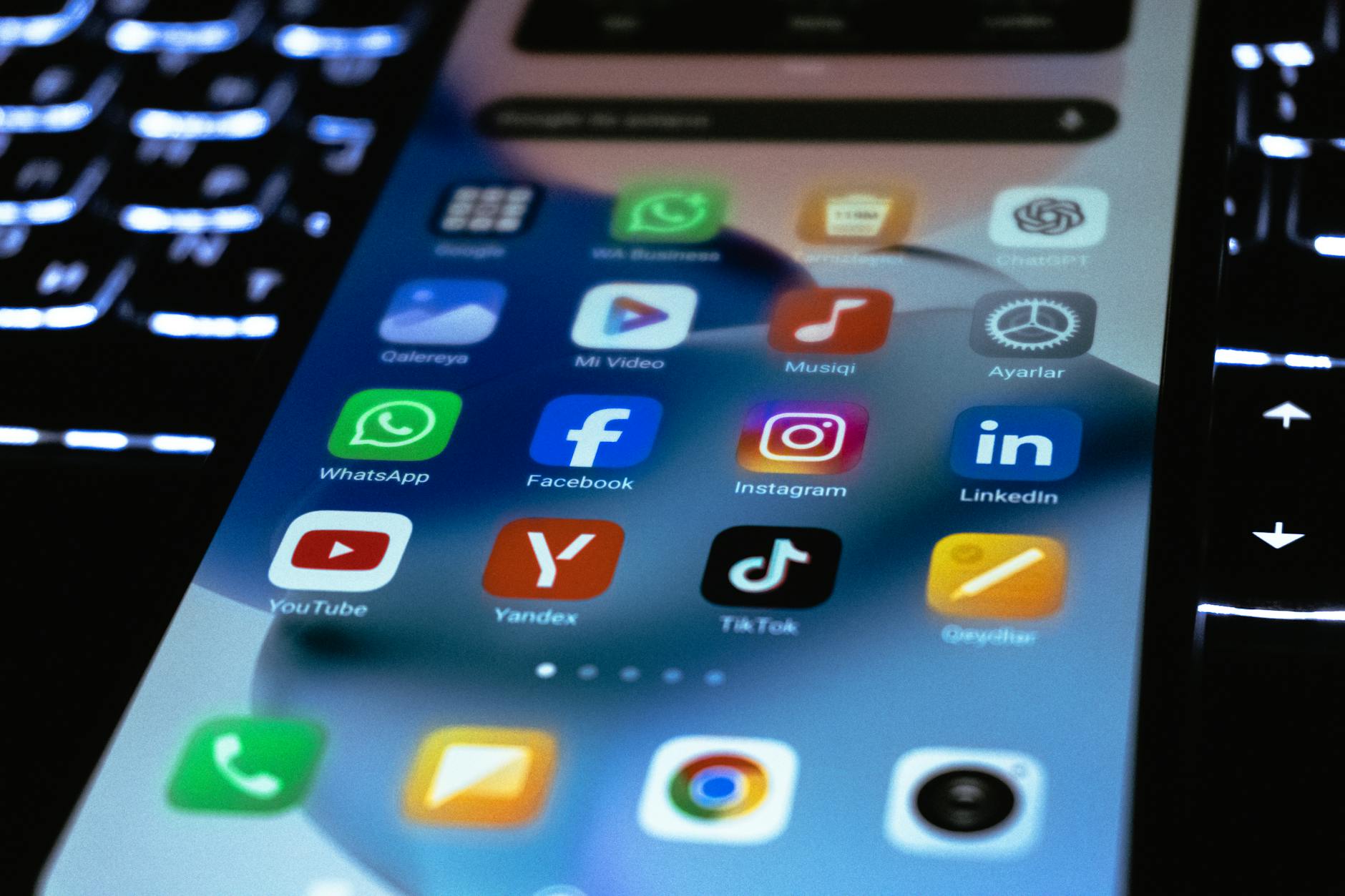
    Let me start by being extremely clear, and I want every single one of you to hear this, whether you are operating out of a call center in a country I have never visited, sitting behind seventeen layers of VPN in some anonymous corner of the internet, or just winging it from your mom’s basement with a stolen profile picture and a dream. I am not joining your WhatsApp. I am not downloading Telegram for you. I have never heard of Zengi and I intend to keep it that way. Whatever messaging app you have decided is your preferred vehicle for separating lonely, curious, or simply polite people from their money, their dignity, or their personal information, I want you to know that the answer is no, it has always been no, and it will continue to be no until the heat death of the universe renders the question moot.

    This is not a personal attack on any particular app. WhatsApp is fine. Telegram has its uses. Signal is genuinely great if you care about privacy. The problem is not the technology. The problem is the pattern, and anyone who has spent more than fifteen minutes on a dating app, a social media platform, or really any corner of the internet where strangers can reach out to other strangers knows exactly what this pattern looks like. You match with someone, or they follow you, or they comment on your post, and within a remarkably short window of time, they are asking you to move the conversation somewhere else. Off the platform. Away from whatever thin layer of moderation or accountability the original app provides. Onto something more private, more encrypted, more difficult to trace, and conveniently more amenable to whatever scheme they are about to run on you.

    And the thing is, they are good at it. The people who run these operations are not stupid. They have scripts, they have playbooks, they have entire training manuals built on years of psychological research into what makes people trust strangers, what makes people feel special, what makes people override their better instincts in favor of the warm fuzzy feeling of a new connection. They know that loneliness is real and widespread and that most people, deep down, want to believe that the attractive person who reached out to them out of nowhere is genuinely interested. They know that social norms make it awkward to be rude to someone who seems friendly. They know that if they can get you off the original platform before you have had time to develop any real skepticism, they have dramatically improved their odds of success.

    So they ask you to move. Always. It is almost a universal tell at this point. The conversation starts on Instagram or Tinder or Facebook or wherever else, and within a few messages, sometimes within the very first message, they are steering you toward WhatsApp, toward Telegram, toward whatever app they have decided is the best place to complete the con. Sometimes they frame it as privacy. Sometimes they say the original app is glitchy or that they do not check it often. Sometimes they are more aggressive about it, almost impatient, as if the entire conversation is just a formality before they can get to the real business of moving you somewhere less supervised.

    Here is what they do not tell you about those apps, and here is what I think a lot of people genuinely do not understand about the ecosystem they are walking into when they agree to move the conversation. Apps like WhatsApp and Telegram are not inherently evil. I want to be absolutely clear about that because I do not want this to turn into some technophobic screed against encrypted messaging. Encryption is good. Privacy is good. The ability to communicate without a corporation reading every word you type is genuinely valuable and important. But the same features that make these apps attractive for legitimate users, the end-to-end encryption, the minimal identity verification, the lack of robust content moderation, also make them extraordinarily attractive for people who are doing things they do not want anyone to find out about.

    Telegram in particular has become something of a wild west. There are channels on Telegram with hundreds of thousands of members dedicated to everything from sharing stolen financial information to coordinating fraud operations to distributing content that would get someone arrested in most countries. This is not speculation or moral panic. This is well-documented and has been reported on extensively by journalists and security researchers who have spent time mapping the actual landscape of what gets shared on that platform. The same is true, to varying degrees, of other apps that position themselves as privacy-focused alternatives to mainstream social media. The privacy cuts both ways. It protects legitimate dissidents and journalists and people who have genuine reasons to communicate without surveillance. It also protects people who are running pig-butchering scams out of compound operations in Southeast Asia where the workers themselves are often trafficking victims.

    That last part is worth sitting with for a moment, because I think when most people imagine a social media scammer, they imagine some lone operator who is just kind of sleazy and financially opportunistic. The reality, increasingly, is much darker. A significant portion of the romance scam and cryptocurrency fraud industry is run by organized criminal enterprises that operate at industrial scale, and a significant portion of the people actually running those scripts and sending those messages are themselves victims, people who were lured to foreign countries with promises of legitimate work and then had their passports taken away and were forced to operate fraud stations under threat of violence. When you engage with these operations, even just by clicking the link and downloading the app they recommend, you are touching something that has real human suffering at multiple levels. That is worth knowing.

    But even setting aside the darkest end of the spectrum, even just talking about the ordinary run-of-the-mill scammer who is trying to extract a gift card or a wire transfer or some compromising photos they can use for blackmail, the move to a private messaging app is almost always a red flag. It is a move designed to isolate you. It cuts you off from the relative transparency of a platform where your friends might see something weird happening, where the app’s own systems might flag unusual behavior, where there is at least some record that an interaction occurred. Once you are in a private chat with someone you do not actually know, you are in their territory, operating by their rules, and they have had a lot more practice at this than you have.

    Now, here is where I want to make the distinction that I think actually matters, because I am not trying to tell anyone to become a hermit or to refuse all digital communication with people they have not met in person. I have WhatsApp. I use it regularly. It is a perfectly reasonable way to communicate with people. The point is not the app. The point is who is in your contacts.

    Think about it this way. Your WhatsApp contacts, your Telegram contacts, your Signal contacts, whatever, those should be people you have some genuine basis for trusting. Family members. Friends. Colleagues you have worked with in person. People you have met in real life and have some actual relationship with. People you have known online for a long time across multiple contexts and have developed genuine trust with over time. The bar does not have to be impossibly high. But there should be a bar. There should be some answer to the question of who is this person and why should I trust them with direct access to my phone number and a private communication channel.

    A random attractive person who matched with you on a dating app yesterday does not clear that bar. A stranger who followed you on Instagram and immediately started complimenting your photos does not clear that bar. Someone who reached out through a Facebook group and wants to discuss a business opportunity does not clear that bar, not yet, not based on that alone. Trust is built over time and through experience, not granted on request to whoever asks nicely enough. And the request to move to a private messaging app, especially when it comes early and when it comes with some urgency or pressure behind it, is almost never innocent.

    The specific mechanics of how these scams play out vary, but the structure is remarkably consistent. There is a period of establishing rapport, which can last anywhere from a few days to several months depending on how sophisticated the operation is and how high-value a target they believe they have found. During this period everything seems fine, often more than fine, often suspiciously wonderful, because the person on the other end has been trained to be attentive and charming and to say exactly the right things. Then comes the pivot, which might be a request for money to cover some emergency, an introduction to a supposedly incredible investment opportunity, a request for photos, or some other form of extraction. By that point, if the scammer has done their job well, the target has already developed real feelings about the relationship, real trust, real emotional investment, and that investment gets weaponized.

    The private messaging app is the infrastructure that makes all of this possible. It is where the relationship gets built, where the manipulation happens, where the ask eventually lands, and where the evidence disappears afterward. You cannot screenshot your way out of a situation where the other person controls the channel.

    So what is the actual practical guidance here, beyond just being angry about it, which I fully am and which I think is a reasonable response? The core principle is simple enough to state, even if it requires some discipline to actually follow. Do not give strangers on the internet a private communication channel just because they asked for one. Full stop. If someone you meet online wants to continue talking to you, there is no reason that conversation cannot continue on the platform where it started, at least until you have enough of a genuine relationship with them to make a more private channel appropriate. If they are pushing hard to move off-platform, that pressure itself is information. Legitimate people do not usually need to rush you off the app. Legitimate people understand that a stranger might want to take things slowly. Legitimate people do not get weird or impatient or guilt-trippy when you say you would rather keep chatting here for now.

    It is also worth being honest with yourself about the vulnerability that these scammers are targeting. Loneliness is real. The desire for connection, for romance, for friendship, for a sense that someone out there finds you interesting and attractive, that is a deeply human thing and there is nothing shameful about it. The scammers are not exploiting a weakness unique to gullible or stupid people. They are exploiting something that is present in virtually every human being to some degree. The reason the playbook works is not because the targets are unusually naive. It is because the scammers are unusually skilled at identifying and activating genuine human emotional needs. Understanding that does not make you immune, but it does make it easier to recognize when something feels a little too good a little too fast.

    The other thing worth naming is that the apps themselves bear some responsibility here, even if they are not going to get a particularly sympathetic treatment in this particular essay. Dating apps and social media platforms know that their services are being used to funnel people toward these private channel scam operations. They have data on the patterns. They know what the scripts look like. The fact that moderation and enforcement remain so inadequate is not purely a technical challenge. It is a business decision. Platforms have limited incentive to aggressively crack down on fake profiles and scam accounts because user numbers and engagement numbers look better when they include bots and fakes. The users who get defrauded are not usually the ones who get counted in the quarterly reports.

    At the end of it all, what I really want to say is this. Your safety and your financial wellbeing and your emotional health are worth protecting, and protecting them sometimes means being the person who seems a little paranoid, a little unfriendly, a little unwilling to just go along with what a stranger on the internet is asking you to do. That is fine. Being thought of as unhelpful by a scammer is not a social cost. It is an outcome to actively pursue. The apps do not matter. The specific name they use for whatever platform they are trying to herd you onto does not matter. What matters is that you know why they are asking, you understand what they are trying to accomplish by isolating you in a private channel, and you have made a conscious decision about who actually deserves that kind of access to you.

    WhatsApp is in my phone. I use it to talk to people I actually know and trust. That list was not built by saying yes to every stranger who asked to be added to it. It was built slowly, through actual relationships, with actual people, over actual time. That is how it should work. And to everyone out there who is trying to shortcut that process by sliding into someone’s DMs with a pitch about moving to a more private channel, I hope this essay finds you well, I hope you read every word of it, and I hope you understand that the answer, now and forever, is no.

  • Mission to Mars: When a Sci-Fi Movie Loses You in the First 30 Minutes

    Mission to Mars: When a Sci-Fi Movie Loses You in the First 30 Minutes

    There is something oddly fascinating about revisiting older movies that were once treated like major events. Sometimes you discover a forgotten classic that time was too harsh on. Sometimes you find a movie that audiences misunderstood and critics buried unfairly. And sometimes, you find a film that makes you wonder how so much money, talent, and hype produced something that feels like cinematic anesthesia. That was my experience trying to watch Mission to Mars.

    Yes, Mission to Mars. A movie that came out over twenty years ago. A movie with a recognizable title, a serious cast, and an ambitious concept. A movie that should have been right up my alley. Space exploration, mystery, suspense, big ideas, the unknown, Mars itself. On paper, this sounds like something I should enjoy. In practice, it felt like watching dry paint in zero gravity.

    What made me finally rent it was not total randomness either. Before renting it on Amazon, I had briefly seen glimpses of the movie on television over the years. Not enough to truly know the story, not enough to really judge it, but enough to remember it existing in the background of culture. One of those movies you catch a scene from while channel surfing, then move on, but the title sticks in your mind. It becomes one of those films that linger in your mental backlog. You tell yourself that one day you will properly sit down and watch it from beginning to end.

    That is eventually what happened here.

    I decided to rent it on Amazon, which is something I do often for movies I have never seen before. If I do not have the streaming platform it is on, renting digitally is usually the move. It is cheap, convenient, and low risk. A couple of bucks for a film I have always been curious about is not a bad deal. If the movie ends up being great, then that rental was money well spent. If the movie ends up being terrible, at least I did not waste much money to begin with. It is honestly one of the better ways to explore older films. Low cost, low commitment, potential high reward.

    Sometimes those little glimpses on TV can help sell a movie in your mind. You remember a dramatic visual, an interesting shot, a strange moment, or a tense bit of music. Even if you only saw seconds of it years ago, it can create the illusion that there is something bigger waiting inside the full film. The mind fills in the blanks. You assume that because the clips looked cinematic or mysterious, the full experience must deliver.

    That was part of the trap here.

    Because every time I had seen those passing glimpses in the past, Mission to Mars looked like it might be one of those underrated cable-era sci-fi movies people forgot to mention. The kind of film that maybe got dismissed too quickly but actually has atmosphere if you give it another chance. Sometimes those are the best discoveries.

    But every now and then, you rent something and realize even those few dollars feel like an investment gone sideways.

    That is where Mission to Mars landed for me.

    I could not even get past the first thirty minutes. And before someone says, “Thirty minutes is not enough time,” let me stop that argument right there. Sometimes thirty minutes is absolutely enough time. In fact, thirty minutes can tell you almost everything you need to know about a movie. It tells you pacing. It tells you tone. It tells you whether the performances are engaging. It tells you whether the script has momentum. It tells you whether curiosity is building or dying.

    With Mission to Mars, curiosity was dying fast.

    I gave it a chance. I was not hate-watching it. I was not multitasking. I was not scrolling my phone looking for reasons to dismiss it. I sat down prepared to give it a fair shot. I wanted it to surprise me. I wanted those old TV glimpses to be signs of a hidden gem. Instead, what I got was something that felt lifeless, slow, and weirdly empty.

    There is a difference between slow-burn storytelling and boring storytelling. Slow-burn films know how to build atmosphere. They know how to create tension through patience. They understand that silence, waiting, and gradual escalation can be gripping when done right. You lean forward because something is brewing.

    Boring storytelling, on the other hand, feels like dead air. Scenes happen, but they do not build anything. Dialogue is spoken, but it does not ignite interest. Characters exist, but they do not grab you. Time passes, but it feels heavier than it should.

    That is how Mission to Mars felt to me.

    The first half hour should be where a movie earns trust. It does not need to reveal everything. It does not need explosions every five minutes. But it needs to create a reason to continue. It needs to establish stakes or intrigue or emotional investment. Instead, I felt like I was waiting for the movie to start while already thirty minutes in.

    And that is one of the worst feelings a movie can create.

    Because if you are checking the runtime early, that is danger. If you glance at the clock and think, “Only thirty minutes have passed?” that is a red alert. Good movies compress time. Bad movies stretch it. Great movies make two hours feel like forty-five minutes. Weak movies make thirty minutes feel like two hours.

    Mission to Mars was stretching time like a black hole.

    What makes this more disappointing is that space movies should have a natural advantage. Space is inherently interesting. The mystery of other worlds, the danger of isolation, the scale of the cosmos, the vulnerability of humans in hostile environments, the existential questions of life beyond Earth. You almost have to work hard to make Mars boring. Yet somehow this movie, from what I experienced, found a way.

    And maybe that is the most frustrating part. The ingredients were there. Mars itself is compelling. A mission gone wrong is compelling. Human drama under pressure is compelling. The possibility of discovery is compelling. Yet if the execution lacks energy, all of that potential collapses.

    Some films confuse seriousness with depth. They think if everyone acts solemn, if the score swells dramatically, if the cinematography is polished, then the audience will automatically feel weight. But seriousness is not the same as engagement. You can have a quiet, thoughtful film that is riveting. You can also have a serious film that feels like homework.

    This one felt like homework.

    And I know there are people who defend older sci-fi films for being more contemplative than modern blockbusters. Sometimes that defense is valid. Not every movie needs constant action. Not every science fiction story needs nonstop spectacle. But contemplation still needs substance. Reflection still needs emotional pull. If you are asking viewers to settle into a measured pace, you better reward them with atmosphere, intelligence, tension, wonder, or character depth.

    If not, you are just asking them to sit through molasses.

    I have had this happen before with The Grey. That is another movie I tried to watch and simply could not finish. Plenty of people love it. Plenty of people praise it. I get that. Different tastes are real. But for me, it was another case where I kept waiting for something to click, and it never did.

    And it is not just older films either. Even more recently, I could not get through the Twisters sequel to completion. That one was boring as hell to me too. So this is not some bias against older movies or slower cinema. If a movie loses me, it loses me regardless of release year, budget, nostalgia, or hype. New movie, old movie, prestige movie, blockbuster sequel, it does not matter. Boredom is boredom.

    That is important to acknowledge. Not every film that bores me is objectively bad. Not every film someone else loves is wrong for loving it. Art is personal. Mood matters. Timing matters. Expectations matter. Maybe if I watched Mission to Mars twenty years ago in a theater, I would feel differently. Maybe if I were in a different headspace, I would have more patience. Maybe if I pushed through, the final hour would blow me away.

    But here is the counterpoint nobody likes to admit: a movie still has to earn that patience.

    Audiences do not owe a film unlimited time just because it might improve later. If the first thirty minutes are inert, many viewers will bounce. That is not a moral failing. That is a storytelling issue.

    People sometimes romanticize the idea of “you have to wait until it gets good.” But if it takes an hour to get good, that is part of the criticism, not a defense.

    Movies are experiences. The journey matters, not just the destination.

    Sometimes those old television glimpses can also mislead us because they isolate the most visually striking fragments. A ten-second moment on TV might be the best-looking shot in the whole movie. A suspenseful snippet might come from the one memorable sequence. In a commercial break environment, fragments can seem more powerful than the complete product. The full film still has to connect those moments into something alive.

    That did not happen for me here.

    I shut it off.

    No dramatic rant. No hate-finish. No forcing myself through another ninety minutes to prove something. I simply accepted the truth: I was not enjoying myself, and life is too short to finish every boring movie out of obligation.

    That is another thing more people should embrace. You do not need to finish every film. Sometimes the healthiest review is turning it off. We only get so much free time. If a movie has clearly lost you and given no sign it can recover, it is okay to move on.

    Sometimes you discover a classic.

    Sometimes you discover a personal favorite.

    Sometimes you discover that even Mars can be boring.

    And sometimes the best mission is aborting early.

  • Two Months Later: Nothing Has Changed, YouTube Still Discriminating

    Two Months Later: Nothing Has Changed, YouTube Still Discriminating

    Two months.

    It’s been two full months since YouTube wrongfully terminated my manager channels. Two months since they rejected my appeals with generic template responses in five hours. Two months since they deleted my author channel for “circumventing” their wrongful termination. Two months since I started documenting this systematic discrimination.

    And absolutely nothing has changed.

    My Luffymonkey0327 content channel is still up: https://youtube.com/@luffymonkey0327?si=H64a-BY4Spu4Cdb6

    Still live. Still public. Still accessible to everyone in the world except me—the person who created it.

    My manager channel is still deleted. I still can’t access my own content channel. YouTube is still hosting my work while denying me the ability to manage it.

    Two fucking months of this.

    The Timeline: Two Months of Discrimination

    Let me update this nightmare timeline because apparently we’re just going to keep adding to it indefinitely:

    Late January/Early February 2026: YouTube terminated my manager channels for “spam, deceptive practices, and scams” despite those channels being completely inactive with zero content.

    Within 5 hours: YouTube rejected my appeals with generic template responses providing zero evidence or specifics.

    Shortly after: I documented everything publicly. Directly addressed YouTube CEO Neal Mohan, Google CEO Sundar Pichai, Google President Ruth Porat, Google Senior Vice President James Manyika. Made my contact information publicly available. Response: Complete silence.

    After filing BBB complaint: YouTube deleted my JaimeDavid327 author channel for “circumvention policy”—using their own wrongful termination as justification to delete more channels.

    February 23, 2026: YouTube implemented mandatory sign-in on the web.

    March 15, 2026: One month update. Still locked out. Still discriminated against. Still ignored.

    April 18, 2026 (Today): Two months. Sixty days. Eight weeks. And YouTube has done absolutely nothing. My content is still on their platform. I still can’t access it. The discrimination continues.

    Two full months. And YouTube’s response has been: nothing.

    Still Can’t Access My Own Channel

    Luffymonkey0327 is still there. You can visit it right now: https://youtube.com/@luffymonkey0327?si=H64a-BY4Spu4Cdb6

    Over 500 subscribers. Memes and mashups I created. Content I made. Audience I built over time.

    And for two months straight, I haven’t been able to touch any of it.

    Can’t upload new videos. Can’t respond to my 500+ subscribers’ comments. Can’t access analytics. Can’t update channel information. Can’t manage community posts. Can’t interact with my audience. Can’t do anything.

    My manager channel is still deleted. And without it, I’m completely locked out.

    Think about that. For sixty consecutive days, YouTube has hosted my content, potentially benefited from any traffic it generates, kept it publicly accessible on their platform—but refused to give me, the creator, access to manage my own work.

    Sixty days of theft. Sixty days of using my content without giving me control. Sixty days of benefiting from work I created while denying me the ability to manage it.

    How is this acceptable? How is this legal? How is this anything other than theft?

    Two Months of Being a Discriminated Hispanic Creator

    It’s been two months. Sixty days. Eight weeks.

    I’m Jaime David. I’m a Hispanic creator. I did nothing wrong.

    And for two full months, YouTube has discriminated against me.

    Every single day for sixty days, someone at YouTube with the power to fix this chose not to.

    Every day, they chose to keep my manager channels terminated based on false accusations. Every day, they chose to keep me locked out of my content channel. Every day, they chose to continue hosting my work while denying me access. Every day, they chose discrimination.

    Sixty consecutive days of active discrimination.

    This isn’t an accident. This isn’t an oversight. This isn’t bureaucratic delay or system backlog.

    This is a deliberate choice. YouTube is choosing to discriminate against me. For two full months, they’ve chosen it.

    And I’m supposed to believe my ethnicity has nothing to do with it? I’m supposed to think that being a Hispanic creator named Jaime David doesn’t factor into why my appeals were rejected in five hours, why my public documentation has been ignored, why my BBB complaint has resulted in zero action?

    After two months of systematic discrimination, I know better.

    My Manager Channel: Still Deleted After Two Months

    The manager channel that gave me access to Luffymonkey0327 has been terminated for two full months.

    YouTube’s justification? “Spam, deceptive practices, and scams policy.”

    Evidence provided? Zero. None. Nothing. Not a single example, screenshot, timestamp, or specific violation.

    The reality? It was an inactive administrative account with no content whatsoever.

    And it’s been deleted for sixty days based on completely false accusations.

    That’s two months of YouTube maintaining a lie. Two months of them claiming my empty, contentless manager channel violated spam policies. Two months of them refusing to acknowledge the obvious error.

    Two months of lies. Two months of false accusations. Two months of wrongful termination.

    My Author Channel: Still Gone After Two Months

    My JaimeDavid327 author channel has been deleted for nearly two months now.

    YouTube’s justification? “Circumvention policy” because having content channels after they wrongfully terminated my manager channel equals circumvention.

    Two months of being punished for YouTube’s own mistakes. Two months of circular logic being used to justify discrimination.

    My author platform. My professional identity as a Hispanic writer. My channel for connecting with readers.

    Gone for two months. Erased for sixty days. Eliminated for eight weeks.

    Two Months of Complete Silence From YouTube and Google

    You know what YouTube and Google have said to me in two months?

    Nothing. Absolutely nothing.

    No communication. No acknowledgment. No human review. No investigation. No explanation. No apology. No action.

    Complete and total silence for sixty consecutive days.

    I’ve documented everything publicly. I’ve addressed executives by name. I’ve filed BBB complaints. I’ve made my contact information readily available. I’ve called for help from major YouTubers. I’ve done everything possible to get actual human attention.

    And for two months, YouTube and Google have responded with: nothing.

    That’s not customer service. That’s not dispute resolution. That’s not accountability.

    That’s harassment. That’s discrimination. That’s systematic targeting and erasure.

    Still Haven’t Escalated to Government

    I still haven’t filed those FTC, CFPB, FCC complaints. I still haven’t contacted California mayors or Governor Newsom. I still haven’t escalated to President Trump and VP Vance.

    Why? Because honestly, after two months of YouTube ignoring everything—what’s the fucking point?

    They ignored my appeals. They ignored my public documentation. They ignored my BBB complaint. They’ve ignored me for sixty straight days.

    Would federal complaints change that? Would state government involvement matter? Would presidential intervention make a difference?

    Maybe. Maybe not. But after two months of complete silence and zero action, it’s hard to believe that any escalation would result in YouTube actually doing the right thing.

    They’ve had two months. Sixty days. Eight weeks. To simply fix their obvious mistake. They’ve chosen not to. Every single day, they’ve chosen discrimination over justice.

    But Two Months Is A Long Time

    Then again… two months is a really long time.

    Two months of documented discrimination. Two months of a Hispanic creator being systematically locked out of their own work. Two months of YouTube hosting content while denying the creator access. Two months of complete silence from one of the world’s largest tech companies.

    Maybe two months of evidence is enough. Maybe sixty days of documentation proves that YouTube will never voluntarily fix this.

    Maybe it’s time to actually file those federal complaints. Maybe it’s time to contact California officials. Maybe it’s time to escalate to the President.

    Because two months of discrimination with zero accountability isn’t acceptable. And waiting longer won’t make YouTube suddenly care.

    I don’t know. I’m still deciding. But every day that passes—and we’re at sixty days now—makes it harder to believe that anything short of external pressure will work.

    Direct Message to YouTube and Google: Two Months

    Neal Mohan, YouTube CEO – It’s been two months. Sixty days. Eight weeks. Two full months since you wrongfully terminated my channels. Two months since I started calling for accountability. Two months of hosting my content while denying me access. How much longer are you going to let this discrimination continue?

    Sundar Pichai, Google CEO – Your subsidiary has been discriminating against a Hispanic creator for two full months. Sixty consecutive days of wrongful termination, content theft, and systematic harassment. Is this really the legacy you want Google to have?

    Ruth Porat, Google President – Two months of documented discrimination. Two months of hosting a creator’s content without giving them access. Two months of ignoring complaints and public documentation. Does this represent responsible corporate governance?

    James Manyika, Google Senior Vice President – Sixty days of a Hispanic creator documenting systematic discrimination with zero response from your organization. Does that align with any definition of ethical technology practices or commitment to diversity and inclusion?

    YouTube Support, Google Support – Two months. You’ve had two full months to provide actual human review, acknowledge the error, and reinstate my channels. You’ve done nothing. How is that support? How is that service? How is that acceptable?

    You’ve all had sixty days. Every single one of those days, you chose discrimination. How many more days will it take before you choose justice instead?

    To the Major YouTubers: Two Months and Counting

    Smosh, PewDiePie, Markiplier, SomeOrdinaryGamers, ReviewTechUSA, Amazing Atheist, Secular Talk, Humanist Report, MrBeast, Jacksepticeye, Nexpo, Vaush, HasanAbi, Hank Green

    It’s been two months. Sixty days of YouTube discriminating against a small Hispanic creator. Sixty days of my content being hosted while I’m locked out. Sixty days of systematic harassment and targeting.

    If any of you see this, please share it. Please amplify it. Please help me make enough noise that YouTube can’t ignore this for another sixty days.

    Because two months of discrimination should outrage people. Two months of a creator being locked out of their own work should be unacceptable. Two months of a tech platform stealing content and denying access should be seen as theft.

    Your voices matter. Your platforms have reach. Please use them.

    Because if YouTube can do this for two full months with zero consequences, they can do it to anyone. For as long as they want. And they will.

    Two Months of Being Tired

    I’ve been tired for two months straight now.

    Tired of being discriminated against. Tired of being ignored. Tired of documenting the same injustice over and over. Tired of calling for accountability that never comes. Tired of hoping someone with power will care. Tired of fighting.

    Two months of exhaustion. Sixty days of fatigue. Eight weeks of burnout.

    And nothing has changed. My situation is exactly the same as it was on day one. YouTube is still discriminating. I’m still locked out. My content is still being used without my access.

    Two months of being tired and upset, and it hasn’t changed anything.

    Maybe that’s the strategy. Wear me down until I give up. Keep discriminating until I’m too exhausted to keep fighting. Ignore me long enough that I just disappear.

    And honestly? After two months, it’s working. I’m so fucking tired.

    But I’m still here. Still documenting. Still calling this out. Because I’ve already invested two months in this fight. What’s a few more days? Or weeks? Or months?

    Sunk cost fallacy? Maybe. But giving up now means YouTube wins. And after two months of fighting, I’m not ready to let them win yet.

    The Same Shit for Two Months

    You know what the most frustrating part is? Nothing has changed.

    Two months ago, I was locked out of my content channel because YouTube wrongfully terminated my manager channel.

    Today? Still locked out. Same reason. Same wrongful termination. Same discrimination.

    Two months ago, YouTube was hosting my content while denying me access.

    Today? Still hosting. Still denying access. Still theft.

    Two months ago, I was calling for accountability and getting silence.

    Today? Still calling. Still getting silence. Still being ignored.

    The situation is EXACTLY the same as it was sixty days ago. Nothing has improved. Nothing has changed. Nothing has been resolved.

    That’s two months of my life spent fighting for something that YouTube could fix in five minutes if they wanted to. Two months of stress, exhaustion, anger, and frustration—and I’m in the exact same position I started in.

    What Happens Next?

    I don’t know anymore.

    Do I file those federal complaints? Do I contact California officials? Do I escalate to the President?

    Or do I just accept that two months is YouTube’s answer? That silence and inaction is their response? That discrimination is their policy?

    After sixty days of nothing changing, it’s hard to know what the right move is.

    All I know is:

    Two months. Sixty days. Eight weeks.

    My content is still on YouTube’s platform: https://youtube.com/@luffymonkey0327?si=H64a-BY4Spu4Cdb6

    I still can’t access it.

    YouTube is still discriminating against me.

    Google is still allowing it.

    And nobody with the power to fix it seems to care.

    To Everyone Reading This: Two Full Months

    It’s been two months. Sixty days. Eight weeks. More than 1,400 hours. Almost 87,000 minutes.

    Every single one of those minutes, YouTube has been hosting my content while denying me access.

    Every single one of those days, YouTube has been discriminating against a Hispanic creator.

    Every single one of those weeks, YouTube has been ignoring complaints and documentation.

    Two months of injustice. Two months of theft. Two months of discrimination. Two months of harassment.

    Share this if you think two months is too long. Amplify it if you believe this is unacceptable. Make noise if you think YouTube should face consequences.

    Or don’t. Because after two months of being ignored, maybe it doesn’t matter.

    I’m Jaime David. I’m a Hispanic creator. My Luffymonkey0327 channel is still up.

    And I still can’t access it. After two full months. After sixty consecutive days. After eight complete weeks.

    YouTube is still discriminating against me.

    Google is still enabling it.

    And I’m still here, documenting it, calling it out, refusing to let them erase me quietly.

    Two months. And counting.

    How much longer? How many more days? How many more weeks? How many more months?

    When does discrimination become unacceptable? When does theft become illegal? When does harassment become actionable?

    Two months in, and I still don’t have answers.

    But I’m still here. Still fighting. Still refusing to be silent.

    Even if I’m tired. Even if nothing has changed. Even if YouTube clearly doesn’t give a fuck.

    Two months. Sixty days. Eight weeks.

    Still locked out. Still discriminated against. Still ignored.

    Still here.

  • Seven Years Later, Still That Same Moment

    Seven Years Later, Still That Same Moment

    Seven years is supposed to feel like distance. That’s what people tell you, what you tell yourself, what the world quietly expects you to accept. Time moves forward, relentlessly, stacking days into months into years until something that once felt immediate is supposed to settle into memory. But grief doesn’t follow that rule. It doesn’t respect calendars or anniversaries. It doesn’t care how many years have passed. Sometimes seven years feels like a lifetime ago, like you’ve lived entire versions of yourself since then. And sometimes it feels like nothing has moved at all, like you’re still standing in that exact moment when everything changed. Both of those realities exist at once, overlapping, impossible to separate, and somehow that contradiction becomes its own kind of truth.

    Today is April 18, 2026, and it has been seven years since my uncle died. Even writing that feels strange, like I’m describing something distant when it doesn’t feel distant at all. It feels close. Too close. There are moments where I stop and think about it, and it genuinely doesn’t feel like seven years have passed. It feels like a few months, maybe a year at most, like something recent enough that I should still be able to reach out, still be able to hear his voice, still be able to exist in a world where he’s here. And then there are other moments where the weight of those seven years hits all at once, where I realize how much time has actually gone by without him, how many things have happened, how many moments he’s missed, how much life has continued in a way that feels both natural and deeply wrong at the same time.

    What makes it even harder to process is how I found out. There was no call. No moment of someone sitting me down, no gradual realization, no buffer between normal life and the shock of loss. It was a social media post. Just words on a screen from a family member who knew him. That’s how I learned that someone who meant that much to me was gone. And at first, it didn’t even feel real. It couldn’t be real. It felt like a mistake, like some kind of misunderstanding, like maybe it was about someone else with the same name. There was that immediate instinct to reject it, to push it away, to think, “What is this? This has to be a joke.” Because the alternative was too heavy, too sudden, too final to accept in that moment.

    But it wasn’t a mistake. It wasn’t a joke. It was real. And that realization didn’t come gently. It hit hard, all at once, like the ground giving out underneath you before you even realize you’ve lost your footing. That moment sticks in a way that doesn’t fade. It replays itself, not always vividly, but always there, like a fixed point in time that everything else moves around. The way something like that enters your life matters. The way you learn about a loss becomes part of the loss itself, stitched into the memory in a way you can’t separate. And finding out like that, through a screen, alone with the information before anyone could even explain it, made it feel even more unreal and more devastating at the same time.

    And then there’s how it happened. Not just that he died, but the way it unfolded. A few days before, he bumped his head. Something that sounds small, something that on its own wouldn’t raise alarms. The kind of thing people brush off, maybe joke about, maybe forget entirely. And then a few days later, everything changed. He collapsed. He fell into a coma. And he never woke up. That sequence of events doesn’t sit right, even years later. It feels abrupt, unfair, like something that shouldn’t have been able to escalate like that. It leaves behind questions that don’t have satisfying answers, a sense that something so massive came from something that seemed so minor, and that disconnect makes it even harder to fully accept.

    It was awful. There’s no softer way to put it, no way to wrap it in language that makes it easier to hold. It was traumatic. It reshaped something fundamental in how I understand how quickly life can change, how fragile everything actually is. One moment someone is there, part of your everyday world, someone you assume will continue to be there in all the ways that matter. And then, in what feels like no time at all, they’re gone. Not gradually, not in a way that gives you time to prepare, but suddenly, in a way that leaves you trying to catch up to something that’s already happened.

    And what makes this loss even heavier is who he was to me. He wasn’t just an uncle in the distant, occasional sense of the word. He was like a dad to me. Truly. That kind of relationship doesn’t fit neatly into labels. It goes beyond titles and definitions. It’s built on presence, on the role someone plays in your life, on the way they show up for you, guide you, support you, exist as a steady figure in your world. Losing him wasn’t just losing a relative. It was losing someone who filled a space that can’t really be replaced, someone whose absence is felt in ways that extend into so many parts of life.

    That’s part of why time doesn’t “fix” it in the way people sometimes suggest it will. You don’t move on from something like that. You move with it. It becomes part of how you experience the world, part of how you think, part of how you measure time itself. Anniversaries like this one don’t just mark the passing of years. They bring everything back to the surface, not necessarily in a way that overwhelms you completely, but in a way that reminds you that the loss is still there, still real, still significant. It doesn’t disappear just because more time has passed.

    There’s also something surreal about the way memories work after this kind of loss. They don’t line up neatly in the past. They feel present, like they exist alongside your current life rather than behind it. You can think about a moment, a conversation, a feeling, and it doesn’t feel like something that happened “back then.” It feels immediate, like something you can almost step back into. And then you’re hit with the reality that you can’t. That contrast between how close it feels and how final it actually is creates a kind of emotional dissonance that’s hard to fully put into words.

    Every fucking April since 2019 has felt like it comes with its own kind of weight, like the month itself is cursed or stacked against me in ways that don’t even feel rational anymore. It’s not just one thing. It’s not just one bad memory or one hard moment that defines it. It’s the accumulation of everything that keeps happening in or around this month, year after year, like April refuses to let anything be normal. It’s gotten to the point where I don’t even approach April with neutrality anymore. There’s always this low-level expectation that something is going to go wrong, or something is going to resurface, or something is going to remind me why this stretch of time has felt so consistently heavy since 2019.

    April 2019 was already close to something foundational breaking. My uncle on my dad’s side died, and that alone changed the emotional baseline of everything that came after. That loss never really “settled” in the way people expect grief to settle. It just became part of everything else. And even now, years later, it still feels close in a way that doesn’t make sense on paper. Time has passed, but the emotional distance never matched it. That’s part of why April itself started to feel different after that point. It wasn’t just a month anymore. It was a reminder.

    Then came April 2020, and it felt like the world itself was collapsing in layers. It was only a month after my grandpa died, so I was already in that raw, disoriented state where everything feels slightly unreal. And then COVID started spreading everywhere, and the entire atmosphere of life changed overnight. Fear, uncertainty, isolation, all of it just layered on top of grief that hadn’t even had time to breathe yet. And then, on top of that, my high school history teacher died from COVID. What makes that even more surreal is that he died on the exact same day, one year after my uncle died. That kind of timing feels almost impossible when you look at it from the outside, like some kind of cruel coincidence that repeats the same emotional wound on a calendar you didn’t ask to be part of.

    That teacher wasn’t just a name on a roster either. He was someone who actually made learning feel alive in a way that stuck with me. And then suddenly he was gone too, in the middle of a global crisis that already felt like it was stripping everything familiar away. And that year, politically and socially, everything felt unstable in a different way as well. Trump’s first term response to COVID was chaotic and inconsistent, and the broader environment in the country felt like it was constantly spiraling between denial, panic, and confusion. It wasn’t just personal grief anymore. It felt like the entire structure of reality was shaky.

    April 2021 didn’t give any real relief either. It was only a few months after the Capitol riots, and the political tension in the country still felt thick in a way that was hard to ignore. Everything felt polarized, loud, and unstable. Even day-to-day life carried this underlying sense of friction, like everyone was still reacting to something unresolved. Around that same time, I also got canned from what I considered my dream job back then. That wasn’t just a professional setback. It hit in a way that made everything feel more uncertain, like stability itself was something I couldn’t rely on, even when I thought I had it.

    April 2022 brought its own different kind of heaviness. The Ukraine war had just started a couple months earlier, and the global atmosphere felt tense and uncertain in a way that was hard to fully process in the background of everyday life. But there was also something more personal underneath that I didn’t fully understand at the time. I had a friend I had fallen out with, and I didn’t know it then, but he died in 2022. I only found out much later, over two years after the fact, in May 2024. That delay adds its own kind of distortion to the memory, because it means the grief doesn’t happen where it “should” in time. It arrives late, retroactively, and rewrites what you thought you already understood about the past.

    April 2023 felt like another shift into something more chaotic in a different way. The indictment of Donald Trump made New York feel tense in a very immediate, physical sense. The city itself felt like it was on edge, like every conversation carried an undertone of political friction and uncertainty. It wasn’t just headlines anymore. It was something that felt embedded in the environment, like walking through the city itself came with a sense of instability that you could feel in the air.

    Then April 2024 came, and the Trump trial made everything feel even more intense. New York felt even more chaotic, even more charged, like there was a constant pressure in the background of daily life. That month was also still emotionally shaped by loss on a personal level, because a few months earlier, my dog of 13 years had died in the summer of 2023. That kind of loss doesn’t just disappear by the time a new calendar year rolls around. It stays embedded in routines, in spaces, in quiet moments that don’t have anything to do with politics or headlines but still carry that absence with them.

    April 2025 didn’t reset anything either. It came only a few months after my other dog, who I had for almost 10 years, got sick with cancer in late 2024, then died just a few weeks later in January 2025, right before her 10th birthday in February. That loss felt especially cruel in its timing, like there wasn’t even enough space between sickness and goodbye for it to fully register. And by the time April came around again, I was still sitting in that aftermath. On top of that, it was a few months into Trump’s second term, and after the 2024 election, everything politically felt heightened again. His campaign and return to office felt even more intense and divisive than before, and the sense of national instability didn’t really feel like it had eased at all. It felt like everything was still accelerating instead of calming down.

    Now April 2026 is here, and it somehow feels like it’s carrying all of that history with it at once. It doesn’t feel separate from the previous Aprils. It feels like an extension of them. A continuation. The political situation has escalated in ways that feel almost unreal when you say them out loud. The United States has been involved in escalating military action abroad, including direct conflict with Iran that has stretched into a prolonged war environment. There have been naval blockades, global economic instability, and rising tensions that feel like they are constantly shifting. At the same time, there has been renewed military intervention and pressure in places like Venezuela, along with ongoing rhetoric about expanding conflict or influence into other regions, including Greenland and even Cuba. It feels like the geopolitical atmosphere is constantly moving between escalation and instability, with no clear sense of de-escalation in sight.

    Reading or hearing things like that on the news doesn’t feel distant anymore. It feels immediate, like the world itself is stuck in a constant state of volatility. Oil markets shifting, military movements, diplomatic breakdowns, threats of expansion, ceasefires collapsing or being questioned almost immediately afterward. Everything feels like it’s happening all at once, without enough time for anything to stabilize before the next development hits. And it all layers on top of the personal history of these Aprils, making the present feel even heavier because it’s not just about what’s happening now. It’s about everything that has already happened before.

    That’s what makes this stretch of time feel so strange to live through. It’s not that every single April is objectively the worst thing imaginable. It’s that each one stacks on top of the last, so the emotional weight compounds instead of resets. Grief, political tension, personal loss, instability, change, all of it keeps returning in different forms, but always around the same time of year. And eventually, you start to associate the month itself with that accumulation, even when you logically know it’s just a marker on a calendar.

    It’s hard to explain to someone who hasn’t lived through that kind of repeating pattern how much it changes your relationship with time. April stops feeling like just another month. It becomes a reminder of everything that has already happened and everything that could still happen again. And even when nothing specific is going wrong in the moment, there’s still that background awareness that history has not exactly been kind to this stretch of time.

    So every April since 2019 doesn’t feel like a series of isolated events. It feels like one long continuation of everything that started back then. A chain of loss, instability, change, and global uncertainty that never fully resets before the next link is added. And at some point, you stop thinking of it as coincidence and start thinking of it as a pattern you just have to live through.

    Seven years later, that surreal feeling hasn’t gone away. If anything, it’s become part of the way I understand the loss. Time has moved forward, undeniably. Life has continued, as it always does. But there’s a part of me that is still in that moment of discovery, still processing the shock, still trying to reconcile how something so significant could happen so suddenly and so quietly from my perspective. That moment didn’t stay in the past. It stretched forward, threading itself through the years that followed.

    And maybe that’s what grief really is in situations like this. Not something that fades into nothing, but something that changes shape over time. It becomes less about the immediate shock and more about the ongoing absence. Less about the moment you found out and more about all the moments since then where you feel that absence in different ways. The big moments, the small ones, the ordinary days where something reminds you of them out of nowhere. It’s not constant in the same way, but it’s persistent. It stays.

    Seven years later, it still feels surreal. It still feels unfair. It still feels like something that shouldn’t have happened the way it did. And it still feels like I lost someone who meant more to me than words can fully capture. Time has passed, but that doesn’t erase the reality of what was lost or the impact it continues to have. It just adds layers to it, layers of memory, reflection, and the ongoing process of carrying something that never really goes away.

    And maybe that’s the closest thing to understanding it. Not trying to force it into something neat or resolved, but recognizing that it exists in that in-between space where time moves forward and stands still at the same time. Where the past feels present, and the present is shaped by something that happened years ago. Where seven years can feel like everything and nothing all at once.

    Fediverse Reactions