The Musings of Jaime David
@jaimedavid.blog@jaimedavid.blog

The writings of some random dude on the internet

1,161 posts
1 follower

Category: satire

  • The Lorax Left When We Needed Him Most

    The Lorax Left When We Needed Him Most

    We’ve all been told that The Lorax is a story about environmentalism, corporate greed, and the consequences of unchecked exploitation of nature. And sure, that’s all in there. But let’s not ignore the uncomfortable truth: the Lorax, the self-declared guardian of the forest, leaves when things get bad. He doesn’t protest harder. He doesn’t organize. He doesn’t chain himself to the last Truffula tree or build a grassroots resistance. He just floats up into the sky and vanishes, leaving behind a cryptic stone with the word “UNLESS” on it. That’s it. That’s the end of his fight. The guy who “speaks for the trees” gives a vague hint and then peaces out.

    And what does that really mean? If you speak for the trees, shouldn’t that come with a little more responsibility? Speaking is great—important, even—but when the trees are being chopped down one by one and the air is thick with smog, maybe it’s time for more than words. Maybe it’s time to act. But the Lorax doesn’t organize a coalition of forest creatures. He doesn’t lobby the Once-ler. He doesn’t call a press conference or draft legislation. He just lectures a bit, gets ignored, and then bails. If he truly cared, wouldn’t he have stayed until the bitter end, standing in front of the last tree like it was the sacred line in the sand?

    The Lorax’s exit feels less like noble despair and more like strategic abandonment. Sure, the Once-ler didn’t listen. But people don’t always listen the first time—or the tenth. That’s the whole point of activism. You keep going. You show up. You resist. You make noise. But the Lorax essentially says, “Welp, I tried,” and disappears. Can you imagine if real-world climate activists behaved this way? Greta Thunberg just floating into the clouds after one bad press conference? The Sierra Club just closing shop the moment a single forest was paved over? That’s not activism. That’s quitting with extra flair.

    The message we should have gotten from The Lorax is that caring means sticking around, even when things look hopeless. Especially when they look hopeless. Instead, we get this mythical tree-hugger who delivers a warning, gets ignored, and then evaporates—leaving a child (and us) with the burden of fixing everything after the fact. And that’s a lot of pressure to put on a kid. Maybe instead of just leaving behind a stone with a single cryptic word, the Lorax could’ve left an instruction manual, a protest plan, or at the very least, a phone number.

    So yes, the Lorax speaks for the trees. But maybe what we needed was someone who fought for them. Someone who got arrested at a pipeline protest, who glued themselves to the Once-ler’s machinery, who built a Truffula Tree Sanctuary and refused to leave. Someone who stayed. Because at the end of the day, speaking only goes so far. Action—messy, relentless, inconvenient action—is what actually makes a difference. And when the trees were gone, the Lorax should have been the last one standing. Not the first one to vanish.

  • Green Eggs and Peer Pressure: Sam-I-Am and the Art of Culinary Harassment

    Green Eggs and Peer Pressure: Sam-I-Am and the Art of Culinary Harassment

    Green Eggs and Ham is often hailed as a fun, quirky children’s book that encourages trying new things. But if you peel back the rhymes and absurd imagery, what you actually get is a masterclass in coercion. Sam-I-Am is not a friendly, helpful character. He’s an unrelenting stalker who harasses another being into submission. The entire plot is essentially a 50-page pressure campaign to force someone to eat a plate of suspiciously colored food they explicitly said they didn’t want.

    From the very beginning, the unnamed protagonist sets a clear boundary: “I do not like green eggs and ham.” That’s it. That’s the end of the conversation, or at least it should be. But not for Sam-I-Am. No, Sam takes that rejection as a personal challenge. Instead of respecting the other character’s autonomy or taste, he launches a full-on psychological operation. He follows him around, repeats the same demand with slight variations, and proposes increasingly absurd locations and companions for this unsolicited meal. In a house? With a mouse? In a box? With a fox? It’s not cute—it’s harassment dressed in meter and rhyme.

    At some point, this stops being a book about trying new things and becomes a book about wearing someone down until they cave in just to make you go away. Sam doesn’t care about the actual food. He cares about control. He needs the other character to submit, to prove him right, to feel that power shift. This isn’t encouragement—it’s manipulation. And the moment the protagonist finally gives in and eats the green eggs and ham? That’s not a triumph of open-mindedness. That’s Stockholm Syndrome.

    Let’s not ignore the fact that green eggs are, by all logic, spoiled. There’s no mention of food safety here. What kind of shady diner did Sam-I-Am pick these up from? Are these eggs laced with mold, food dye, or something more nefarious? The book doesn’t say. What it does say—loud and clear—is that you should ignore your instincts, disregard your boundaries, and eventually give in if someone just nags you long enough. That’s not a lesson kids need.

    And then, of course, when the protagonist finally eats the green eggs and ham and says he likes them, it’s framed like a happy ending. But is it? Or is it a resignation to pressure, a surrender to the exhausting persistence of someone who simply wouldn’t take “no” for an answer? Sam-I-Am may be persistent, but he’s also pushy, overbearing, and disturbingly fixated on controlling someone else’s meal choices.

    In the end, Green Eggs and Ham isn’t about culinary adventure—it’s about how relentless people will cross every line just to prove a point. And maybe, just maybe, the real moral isn’t “try new things,” but “please leave people alone when they say no, regardless of how delicious you think your fluorescent ham might be.”

  • The Cat in the Hat Is the Villain, and It’s Time We Admit It

    The Cat in the Hat Is the Villain, and It’s Time We Admit It

    For decades, The Cat in the Hat has been celebrated as a whimsical children’s classic, a cornerstone of early literacy, and a testament to Dr. Seuss’s imagination. But beneath the rhymes and colorful chaos lies a troubling narrative that has somehow evaded proper scrutiny. Let’s be honest—the Cat in the Hat isn’t some harmless trickster. He’s an uninvited intruder with no respect for boundaries, safety, or the psychological well-being of children. In any other context, this would be a cautionary tale about home invasion, manipulation, and gaslighting.

    Consider the setup: two children are left home alone on a rainy day. Already, the vulnerability is palpable. Enter a six-foot-tall anthropomorphic cat wearing a striped hat who just walks in. No knocking, no consent, just immediate occupation of the space. He doesn’t introduce himself with any sort of accountability. Instead, he performs a bizarre show-and-tell of danger, balancing on balls and juggling household objects with zero regard for safety. The family fish—acting as the sole voice of reason—is immediately dismissed and treated like a buzzkill for daring to raise concerns about liability and injury.

    And then the Cat brings in Thing 1 and Thing 2, two feral agents of chaos who proceed to wreak havoc on the house. Their behavior borders on malicious. They tear through the place like toddlers on a sugar high in a demolition derby. This isn’t entertainment—it’s an escalation. At no point do the children have any real control over the situation. They are essentially hostages in their own home, guilt-tripped into either compliance or silence. The psychological pressure is off the charts. And after all the destruction, the Cat conveniently summons a clean-up contraption, erasing the physical evidence like a criminal wiping down a crime scene. “No harm done,” he implies, as if trauma isn’t a factor.

    This narrative teaches children all the wrong lessons. That charismatic intruders can be fun. That protest is futile. That covering up damage is better than taking responsibility. That chaos is acceptable as long as it’s cleaned up before the adults get home. And above all, that consequences are optional if you smile wide enough. The Cat doesn’t apologize. He doesn’t learn. He simply leaves, free to pull the same stunt on another unsuspecting household. He is, in essence, a serial boundary violator who wraps his anarchy in a bow of rhymes and slapstick.

    It’s time we retire this character as a lovable icon and recognize him for what he is—a cautionary symbol of unchecked ego disguised as fun. Maybe it’s satire, maybe it’s a subtle warning, or maybe it’s just another example of how we excuse harmful behavior when it’s packaged with enough flair. Either way, the Cat in the Hat is not your friend. He’s the villain of the story. And frankly, someone should’ve called animal control.

  • The Door-Kicking Challenge: Gen Z’s Bold Attempt to Get Shot on Camera

    The Door-Kicking Challenge: Gen Z’s Bold Attempt to Get Shot on Camera

    Just when we thought humanity had exhausted every flavor of online idiocy, along comes the “Door-Kicking Challenge”—the latest viral activity sweeping through the dark corners of TikTok like a digital plague. In this bold new chapter of “what the hell are kids doing now,” teenagers sneak up to unsuspecting homes, usually at night, and deliver a good solid kick to the front door while their friends record the stunt for social media clout. It’s basically the modern equivalent of ringing someone’s doorbell and sprinting away, except now it involves property damage, heart attacks, and the potential for gunfire. A classic upgrade.

    The logic here, if you can call it that, seems to be that by capturing the moment of impact and the homeowner’s confusion or terror, you’re producing content. And as we all know, content is king—even if it comes at the expense of common sense, legality, or personal safety. The trend has made its way across the country, including in good old Texas, where the doors are sturdy and the gun ownership rates are higher than the GPA of the average kid participating in this challenge.

    Of course, the sad part—besides the possibility of someone getting shot—is that no one saw this coming. Well, almost no one. There was a time when pranks were harmless. Pranks used to be silly little things that caused no damage, no injuries, and no police reports. You swapped your sibling’s shampoo with mayonnaise. You put googly eyes on the cereal boxes. Maybe, if you were a real menace to society, you replaced the cream filling in someone’s Oreo with toothpaste. They were the kind of jokes that ended with groans and eye rolls, not felony charges.

    But slowly, over the last decade or so, pranks began evolving like a Pokémon with a brain injury. What was once cheeky mischief morphed into pure, unfiltered chaos. Suddenly, people were licking public toilets, filming staged assaults, and launching themselves into hedges in shopping carts—all for a few seconds of low-resolution fame. Then came the “challenges,” which started innocently enough with the Ice Bucket Challenge (you know, to raise money for ALS) but quickly spiraled into things like the Cinnamon Challenge (asthma attack in a jar), the Tide Pod Challenge (clean your insides, literally), and the Milk Crate Challenge (a masterclass in orthopedic surgery).

    Now, here we are. The line between prank and crime has completely evaporated. We’ve reached the point where “just a joke” involves unlawful entry and the risk of being mistaken for a home invader. The line between content creator and cautionary tale is as thin as the front door they’re drop-kicking.

    And it leads to a haunting question: what’s next?

    Because if this is where the prank economy currently stands—if we’ve normalized terrorizing strangers as a form of entertainment—then the future is looking bleak, absurd, and medically expensive. We’re probably only months away from the “GTA IRL Challenge,” where teens attempt to live out Grand Theft Auto missions in real life, jacking parked cars and running red lights while yelling “NPCs ain’t real!” out the window. Or maybe we’ll get the “Minecraft IRL Challenge,” in which someone is caught on security footage punching a tree in a park for six hours trying to collect wood. Perhaps the “Surgeon Simulator IRL Challenge” will take off, where aspiring influencers try to remove each other’s appendixes using salad tongs and instructions printed off WebMD. That’ll end well.

    And who could forget the inevitable rise of the “Call of Duty IRL Challenge,” which will surely involve camo gear, Nerf guns modified to look terrifyingly real, and a misunderstanding with law enforcement that makes national news. Or the “Assassin’s Creed IRL Challenge,” where kids leap off rooftops trying to perform a perfect haystack dive and instead land in a lawsuit. The “Hitman IRL Challenge” is a terrifying inevitability—complete with banana disguises and unfortunate security guards—and the “Super Mario Fire Flower IRL Challenge” may very well feature someone trying to light a tennis ball on fire and throw it at a stranger while shouting, “YAHOO!”

    At this point, we’re no longer witnessing playful rebellion or youthful exuberance—we’re documenting the tragic consequences of turning dopamine into currency and rewarding the boldest forms of public stupidity. Social media has taught a generation that if you can make enough people watch you, then it doesn’t matter if you end up hospitalized, arrested, or grounded for eternity. The only thing worse than going viral is not going viral.

    So, if you’re a parent, please, for the love of everything breakable and legally actionable, talk to your kids. Let them know that breaking and entering is not an acceptable hobby. And if you’re a teenager reading this: ask yourself if becoming a statistic is really worth fifteen seconds of blurry clout and a comment section full of laughing emojis.

    This isn’t content. This is the opening scene of a very preventable Netflix documentary.

  • Coming 2029: The Rise of the FettyWapVerse

    Coming 2029: The Rise of the FettyWapVerse

    Mark your calendars, update your firmware, and brace your local fediverse instance, because the year is 2029—and the streets, both digital and literal, are buzzing with rumors of the return. Not just of the man, but of the movement. Word is, Fetty Wap is slated to be released from federal prison in 2028, and insiders are already whispering that his next project won’t be a mixtape, a tour, or even a comeback album. No, it’s something far more disruptive. We’re talking about a techno-cultural rebirth. We’re talking about the FettyWapVerse.

    Predicted to launch just months after his reentry into society, the FettyWapVerse will reportedly be a decentralized social media platform so soaked in trap energy and post-prison clarity that it threatens to destabilize Mastodon and make Twitter finally tap out for good. This isn’t your average “rapper launches an app” story. This is the tale of a man who spent his bid in the metaphorical coding dojo, studying Python between lockdowns and designing server architecture on commissary napkins. By the time the gates open, he’ll be stepping into the world with a blueprint to free not just himself, but the internet. One squint at a time.

    Sources say the FettyWapVerse will feature Wap-to-Wap messaging, “Trapfluencer” verification badges, and a hyperlocalized content algorithm known simply as The Remy Engine. Instead of retweets or boosts, users will be able to “1738” each other’s posts, which causes a bass drop and a burst of digital confetti shaped like sunglasses. Clout will be tokenized. Server drama will be resolved via lyrical diss smart contracts. And moderators? There won’t be any. Instead, conflicts will be escalated to an on-chain tribunal of Zoo Gang AI avatars trained on 2015 tour footage and the emotional subtext of DatPiff comment sections.

    Privacy? Guaranteed. Data mining? Not in the trap. Advertisers? Kicked out at launch. All user data will be stored in encrypted bars, only unlocked when someone drops a freestyle worthy of the blockchain. You won’t be able to buy followers, but you can earn them by contributing to daily communal remix challenges and correctly identifying obscure Fetty ad-libs from unreleased tracks.

    If the rumors are true, and Fetty Wap is indeed plotting the FettyWapVerse from behind bars, we may be standing on the edge of a digital era none of us are ready for. This isn’t the return of a man—it’s the revenge of a vision. The tech world laughed in 2015. They shrugged again in 2023. But in 2029, they may very well wake up in a decentralized landscape ruled not by billionaires in hoodies, but by a man with one eye on the code and the other forever squinting at destiny.

  • 🔥 Fyre Festival II: Fyre Harder — Now With 100% More Collapse

    🔥 Fyre Festival II: Fyre Harder — Now With 100% More Collapse

    In a move that can only be described as “performance art with a pending class-action lawsuit,” Fyre Festival 2—also known as Fyre Harder—promises to outdo its predecessor by leaning full-throttle into the chaos, delusion, and dehydrated cheese sandwich energy that made the original an unforgettable cultural calamity. Where the first Fyre Festival accidentally created a hellscape of wet mattresses, feral influencers, and FEMA tents that looked like rejected props from The Day After Tomorrow, the sequel aims higher. Or perhaps, lower. Much lower.

    This time around, disaster isn’t a bug. It’s the entire brand identity.

    According to the official promotional material (printed on napkins and thrown from a drone into a field), Fyre Festival II is less a music festival and more of a post-modern survival LARP. Attendees are promised a week-long odyssey of “existential discomfort, unreliable logistics, and high-priced regret,” all while influencers livestream themselves trying to barter for clean water using NFTs and vibes.

    The location? Still technically undisclosed. Some reports say it’s an uninhabited sandbar near Honduras. Others say the GPS coordinates place it in the Bermuda Triangle. A few believe it’s inside a particularly aggressive escape room in New Jersey. One leaked pitch deck described the setting as “somewhere between a Gilligan’s Island reboot and the backrooms of a CVS.”

    What truly sets Fyre Festival II apart is its unapologetic embrace of failure. Instead of headlining acts, attendees are promised the concept of music. A hologram of Ja Rule may or may not appear depending on the cloud cover. There will be a stage, but it’s made of pallets and self-doubt. Food will be provided in the form of “gourmet experiential cuisine,” which is actually just uncooked lentils, half a tortilla, and an inspirational quote printed on a napkin.

    Lodging options include:

    • Budget PTSD” – a damp cot next to a guy named Randy who screams in his sleep,
    • Prometheus Elite” – a driftwood structure with a glow stick, and
    • VIP Ashes Package” – a patch of sand that used to be a tent, now scorched, for authenticity.

    Security is outsourced to a team of unlicensed astrologers, and the emergency response plan is “let nature take its course.” Wi-Fi is available, but only for streaming apology videos.

    Perhaps most innovative is the festival’s refund policy: it’s printed in disappearing ink and written in Latin. When asked for clarification, the organizers posted a TikTok of someone shrugging while on fire.

    Tickets? Sold out. Obviously. Because Fyre Festival II isn’t just a sequel—it’s a social experiment. It’s the modern Tower of Babel constructed entirely out of hype, delusion, and one man’s unshakable belief that charisma is a business model. Billy McFarland, now rebranded as a “vibe architect,” insists this is all intentional. “People want real,” he said in a recent interview while duct-taping a tent pole to a coconut. “They don’t want comfort. They want trauma with a wristband.”

    In the end, Fyre Festival II might be the most honest event of our time. It doesn’t promise paradise. It promises pain. And in an age of curated perfection, influencer filters, and AI-generated dopamine, maybe it’s refreshing to just pay $1,400 to suffer communally, in the mud, under a broken neon sign that reads “Hope.”

    We will not be attending. But we will be watching.

    From a safe distance.

    With snacks.

  • Schrödinger’s License: The Corey Harris Saga

    Schrödinger’s License: The Corey Harris Saga

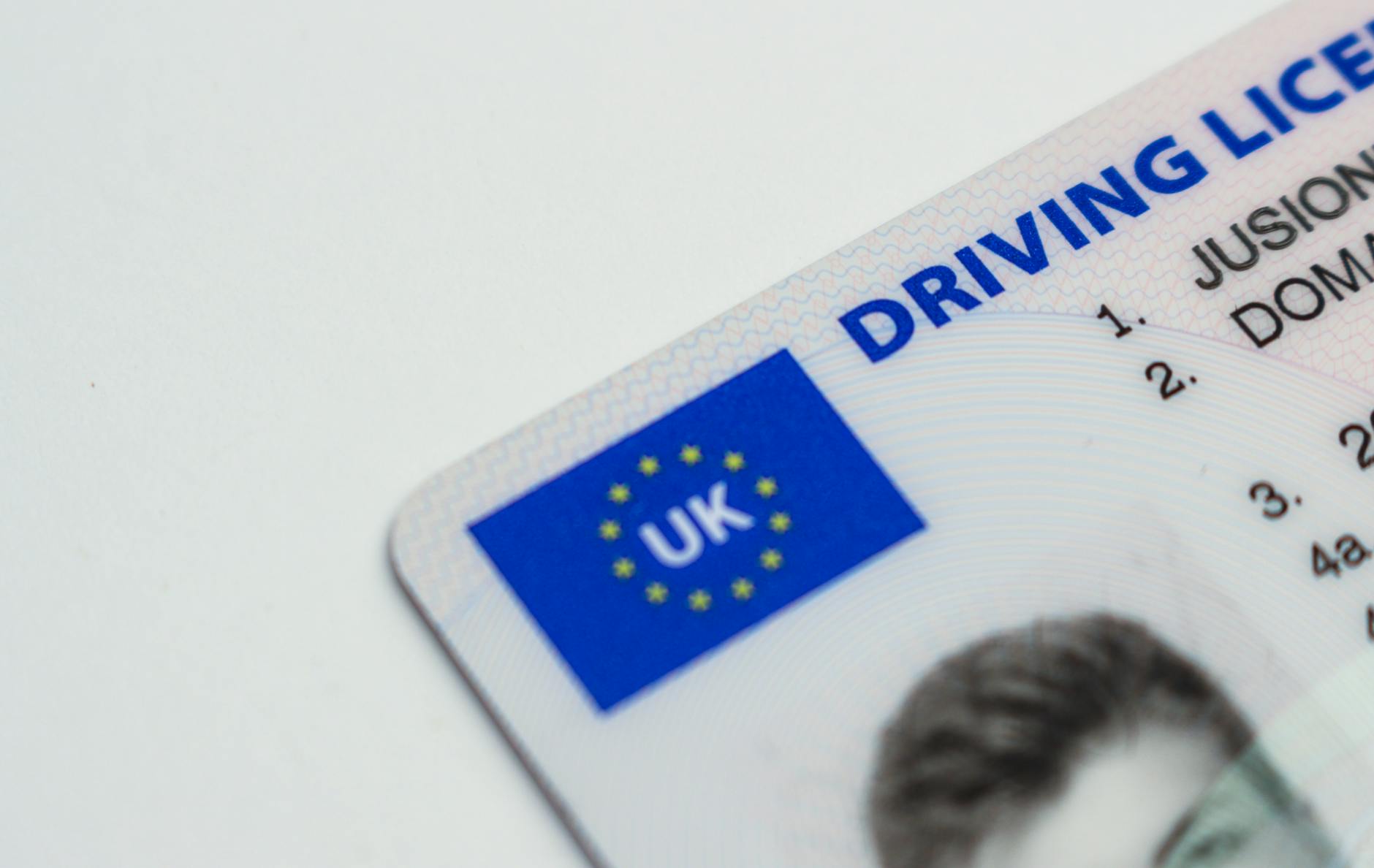
    Once upon a time in the mystical bureaucratic labyrinth known as the state of Michigan, a man named Corey Harris did something so profoundly baffling, so cosmically ridiculous, so legally paradoxical, that even Kafka himself would’ve thrown up his hands and said, “I give up.” Corey, a 44-year-old legend in the making, did not simply appear in court. No, he appeared in court via Zoom. And not just via Zoom—he appeared while driving a moving vehicle. In a hearing about driving with a suspended license. Let that sink in. A man joined a legal proceeding for allegedly being an illegal driver, by being a very visibly active, currently-in-progress illegal driver. This was not irony. This was metaphysical performance art.

    The judge, one J. Cedric Simpson, a man perhaps once full of dreams and now drained dry by traffic court nonsense, witnessed this in real time. With a visible shudder of disbelief, a thrown pen, and the kind of existential crisis usually reserved for poets and midlife divorcés, the Honorable Judge Simpson asked the only logical question: “Mr. Harris, are you driving right now?” And with the serene confidence of someone who believed the laws of man and physics did not apply to him, Corey replied: “Actually, I’m pulling into my doctor’s office. So, just give me one second. I’m parking right now.” This was not merely a man in court. This was a man parking in court. The sound you may have heard that day was not thunder. It was the collective gasp of legal professionals across the internet.

    Naturally, Judge Simpson revoked his bond and ordered him to turn himself into the Washtenaw County Jail by 6 p.m. Corey responded not with protest, but with the look of a man who just realized the Matrix might actually be real. “Oh my God,” he muttered, and oh yes, Corey—God was watching.

    But wait. This is not just a story of absurd courtroom antics. No, this tale goes deeper. Because what the judge—and the courtroom, and the Secretary of State, and Corey Harris himself—did not yet realize was that the suspended license Corey was allegedly driving under… didn’t actually exist. Not metaphorically. Not emotionally. Literally. Corey Harris had never had a driver’s license. Not in Michigan. Not in any of the 49 other states. Not in Puerto Rico, Guam, or even a particularly lenient go-kart track. His license was a figment of bureaucratic imagination, suspended before it had even taken form.

    What had actually happened, as unearthed by local reporters and eventually confirmed by a trail of dusty documents, was that Corey had had his driving privileges suspended back in 2007 due to unpaid child support. The state of Michigan, in its infinite wisdom, can suspend your right to drive even if you’ve never had the right in the first place. It’s like being banned from an exclusive club you never joined but walked past once in 2003. Even more brilliantly, in 2022, a judge rescinded that suspension—but thanks to a beautiful bureaucratic ballet of unfiled forms, missed deadlines, and secretarial indifference, the Michigan Secretary of State never got the memo. Nor did Corey, who believed the suspension had been lifted, and thus assumed he had, by osmosis or divine right, earned a license.

    This is where the story could’ve ended. Viral shame. Jail time. A lifetime ban on Zoom usage. But Corey Harris is not a man who gives up at the first sign of scandal. No. Corey Harris is a man who, when cast into the jaws of public ridicule, emerges driving a Dodge and sipping triumph. In June 2024, Corey danced—danced!—his way out of the driving test with a learner’s permit. He, who once roamed the streets under the assumption of legality, had finally earned it the hard way. Then, on July 8, 2024, a date that shall be remembered in the annals of state DMV records, Corey Harris received an official, laminated, legally recognized, capital-L License. He was no longer Schrödinger’s driver. He was a real driver.

    His attorney, the ever-patient and profoundly unshocked Dionne Webster-Cox, praised his resilience. In the face of court hearings, confusion, jail time, and memes, Corey “stayed the course and finished the race.” The man who once parked during a court hearing about his inability to drive, had become a symbol of redemption, of perseverance, of the raw and unfiltered American struggle to overcome one’s own paperwork.

    Even the legal system responded with a shrug and a nod. By the time Corey returned to court in August 2024, newly licensed and unshakably legitimate, the original misdemeanor for driving with a suspended non-license was poised to be downgraded to a civil infraction. Because apparently, if you clean up your legal chaos fast enough, the state of Michigan responds with, “You good, fam.”

    And what of Judge Simpson? Perhaps he recovered. Perhaps he keeps Corey’s DMV record in a folder labeled “unholy anomalies.” Perhaps, late at night, he replays that hearing and wonders if it was all a dream.

    So what is the moral of this epic? What eternal truth lies beneath the absurdity, the Zoom calls, the jail time, the learner’s permit? It’s this: even if your life starts as a viral cautionary tale, even if you’re suspended from a privilege you never had, even if you show up to court while actively violating the reason you’re in court, you can still win. You can still grow. You can still get your license, your dignity, and your freedom. You can still dance out of your driver’s test and into the sunset.

    Corey Harris is no longer a joke. He is a lesson. He is a DMV parable. He is living proof that the universe may delay your paperwork, but it cannot deny your destiny.

    So let us all remember: Handle your business. Stay the course. And for the love of all that is holy—never assume you have a driver’s license until a government employee literally hands it to you. In writing. In triplicate. Notarized. And preferably with a backup copy, just in case.

  • Amidst Toilet Paper Shortage, College Students Forced To Use Useless Textbooks

    Amidst Toilet Paper Shortage, College Students Forced To Use Useless Textbooks

    The shortage of toilet paper that has been plaguing stores nationwide has left college students with no choice but to use their useless textbooks as a substitute for toilet paper. The hundreds, or sometimes even thousands, of dollars spent on these books that don’t even get used most of the time will finally pay off.

    “It’s been a life-saver,” one student said. “I now have a reason to actually use the books!”

    These useless textbooks have been beneficial to many young college students. There are hundreds of pages of unread content that can now be used as extra bathroom tissue in the event that students run out of the real thing, which has been the case for many. This is good because a decently-sized textbook could last you about a month or two, or longer, if used sparingly.

    Just make sure you have textbooks with thin paper, experts warn. If you use thick textbook paper, it could be a pain in the behind (literally)! One could only imagine how painful that would be.