The Musings of Jaime David
@jaimedavid.blog@jaimedavid.blog

The writings of some random dude on the internet

1,104 posts
1 follower

Category: short story

  • Spring Stream-of-Consciousness: Emerging from the Quiet

    Spring Stream-of-Consciousness: Emerging from the Quiet

    Spring, in its most raw and unfiltered form, is a burst of chaotic energy. The earth cracks open and spills forth life in every direction. But within that vibrant display of growth, there’s an undercurrent of quiet emotional turmoil. What do we do with the fresh start spring offers us? How do we reconcile the hope that the season promises with the uncertainty of the emotions that bubble up to the surface?

    Spring is a season of contradictions—warm days followed by unexpected chills, flowers blooming while the earth still holds onto its cold core. And within this contradiction lies a flood of raw emotions that often mimic the season’s unpredictability. We can feel the stirrings of something new inside us, but we also carry the weight of the past, the remnants of winter’s introspection.

    In this stream-of-consciousness post, I allow my thoughts to wander as spring takes hold. It’s a messy, emotional, and freeing process. The thoughts are fragmented, unruly, and yet deeply honest. Spring doesn’t ask us to be perfect; it simply invites us to grow, to shed the old skin, and to step into a new chapter of possibility.

    Through this raw emotional writing, I invite you to join me in exploring the fragility and strength that spring brings. Let’s embrace the confusion and the clarity, the vulnerability and the growth, as we step into a season of renewal.

  • February Freewrites: Black History in the Veins of Our Time

    February Freewrites: Black History in the Veins of Our Time

    Black History Month is not just about looking back—it is about acknowledging the ways in which history shapes us today. The stories of Black resilience, struggle, and triumph echo through every part of society, and it’s important to reflect on how these narratives continue to influence the present. In this freewriting post, I want to explore how Black History is more than a month—it’s a living, breathing force that pulses through the veins of our time.

    The legacy of Black history is both painful and powerful. It is woven into the fabric of every struggle for justice, every fight for equality, and every celebration of freedom. As we reflect on the history of Black Americans, we must also think about how it shapes our current reality. How do we honor that history in our daily lives? How do we make space for the stories that are often silenced or erased?

    In this post, I dive into these questions and more, allowing the emotions and thoughts to flow freely. Black History is not a chapter closed—it is an ongoing narrative that shapes and defines our world today.

    Fediverse Reactions
  • Holiday Musings: The Light That Shines Through the Darkest Days

    Holiday Musings: The Light That Shines Through the Darkest Days

    The holidays are a time of celebration, but they can also bring with them a quiet sense of loneliness or grief. For many, the festive season is a reminder of what has been lost, or what feels out of reach. Yet, even in the darkness, there is light. The holiday season brings with it a special kind of magic, where the simple things—a glowing candle, a shared meal, a moment of kindness—can shine brighter than ever.

    In this post, I reflect on the duality of the holiday season. It is a time of joy for some, but for others, it is a time of solitude and reflection. The contrast between these emotions is what makes the season so poignant. It’s about holding space for both joy and sorrow, recognizing that the holidays are complex and personal.

    The light of the holiday season, whether it’s from a Christmas tree or the hope of a new year, reminds us that even in the darkest of times, there is always something to hold onto. It’s a time for community, for reflection, and for gratitude. As we gather with loved ones or spend time alone, we must remember that the season’s true light shines in the heart.

  • Winter’s Silent Stories: The Stillness That Speaks

    Winter’s Silent Stories: The Stillness That Speaks

    Winter speaks in silence. The world falls quiet, wrapped in a blanket of snow and cold. The stillness invites introspection, forcing us to confront the parts of ourselves we’ve hidden away during the louder, warmer months. The beauty of winter lies in this silence—it forces us to stop and listen, to hear what we’ve been too busy to notice.

    In this post, I reflect on the quiet, almost sacred nature of winter. The world slows down, and so must we. Winter is a time for inward journeys, for sitting with our own thoughts, and for contemplating the year gone by. The cold, while harsh, brings clarity. The absence of noise allows the internal dialogue to take center stage.

    But winter is not without its beauty. The cold forces us to seek warmth, to huddle together, and to find comfort in the simplest of things: the glow of a fire, the warmth of a cup of tea, the stillness of a snow-covered landscape. It is in these moments that winter reveals its stories—the quiet ones that speak to our hearts.

    In this post, I explore the concept of silence as a storyteller. Winter may be quiet, but it is far from empty. It is a time for contemplation, for stillness, and for reflection. Let us embrace this season of silence, for it carries with it stories that speak louder than any words ever could.

  • Fall Feels Friday: Autumn’s Whispering Reflection

    Fall Feels Friday: Autumn’s Whispering Reflection

    As autumn settles in, there’s a certain hush that blankets the world. The once-lush green trees begin to shed their leaves, turning shades of gold, red, and amber. The crispness in the air signals change—not just in the weather, but in ourselves. Fall has a way of inviting us to reflect on the past year, to take stock of where we’ve been and where we are headed.

    Autumn has a quiet wisdom. It doesn’t shout; it speaks softly, urging us to slow down and listen. It’s in the crunch of leaves underfoot, the smell of pumpkin spice wafting through the air, and the stillness of the evenings that draw us inward. The world seems to be asking us to pause and remember.

    Fall is a time of letting go. Just as the trees release their leaves, we too have moments in our lives that we must release. The nostalgia that comes with this season is both bittersweet and beautiful. It’s a time to embrace the fullness of what we’ve experienced, to appreciate the beauty of things passing, and to recognize that change is inevitable, yet always necessary.

    In this post, I reflect on the quiet wisdom of fall—the season that invites us to breathe deeply, take stock, and prepare for the renewal that comes with the winter months. I invite you to reflect on your own journey and the lessons autumn has to offer.

  • Schrödinger’s License: The Corey Harris Saga

    Schrödinger’s License: The Corey Harris Saga

    Once upon a time in the mystical bureaucratic labyrinth known as the state of Michigan, a man named Corey Harris did something so profoundly baffling, so cosmically ridiculous, so legally paradoxical, that even Kafka himself would’ve thrown up his hands and said, “I give up.” Corey, a 44-year-old legend in the making, did not simply appear in court. No, he appeared in court via Zoom. And not just via Zoom—he appeared while driving a moving vehicle. In a hearing about driving with a suspended license. Let that sink in. A man joined a legal proceeding for allegedly being an illegal driver, by being a very visibly active, currently-in-progress illegal driver. This was not irony. This was metaphysical performance art.

    The judge, one J. Cedric Simpson, a man perhaps once full of dreams and now drained dry by traffic court nonsense, witnessed this in real time. With a visible shudder of disbelief, a thrown pen, and the kind of existential crisis usually reserved for poets and midlife divorcés, the Honorable Judge Simpson asked the only logical question: “Mr. Harris, are you driving right now?” And with the serene confidence of someone who believed the laws of man and physics did not apply to him, Corey replied: “Actually, I’m pulling into my doctor’s office. So, just give me one second. I’m parking right now.” This was not merely a man in court. This was a man parking in court. The sound you may have heard that day was not thunder. It was the collective gasp of legal professionals across the internet.

    Naturally, Judge Simpson revoked his bond and ordered him to turn himself into the Washtenaw County Jail by 6 p.m. Corey responded not with protest, but with the look of a man who just realized the Matrix might actually be real. “Oh my God,” he muttered, and oh yes, Corey—God was watching.

    But wait. This is not just a story of absurd courtroom antics. No, this tale goes deeper. Because what the judge—and the courtroom, and the Secretary of State, and Corey Harris himself—did not yet realize was that the suspended license Corey was allegedly driving under… didn’t actually exist. Not metaphorically. Not emotionally. Literally. Corey Harris had never had a driver’s license. Not in Michigan. Not in any of the 49 other states. Not in Puerto Rico, Guam, or even a particularly lenient go-kart track. His license was a figment of bureaucratic imagination, suspended before it had even taken form.

    What had actually happened, as unearthed by local reporters and eventually confirmed by a trail of dusty documents, was that Corey had had his driving privileges suspended back in 2007 due to unpaid child support. The state of Michigan, in its infinite wisdom, can suspend your right to drive even if you’ve never had the right in the first place. It’s like being banned from an exclusive club you never joined but walked past once in 2003. Even more brilliantly, in 2022, a judge rescinded that suspension—but thanks to a beautiful bureaucratic ballet of unfiled forms, missed deadlines, and secretarial indifference, the Michigan Secretary of State never got the memo. Nor did Corey, who believed the suspension had been lifted, and thus assumed he had, by osmosis or divine right, earned a license.

    This is where the story could’ve ended. Viral shame. Jail time. A lifetime ban on Zoom usage. But Corey Harris is not a man who gives up at the first sign of scandal. No. Corey Harris is a man who, when cast into the jaws of public ridicule, emerges driving a Dodge and sipping triumph. In June 2024, Corey danced—danced!—his way out of the driving test with a learner’s permit. He, who once roamed the streets under the assumption of legality, had finally earned it the hard way. Then, on July 8, 2024, a date that shall be remembered in the annals of state DMV records, Corey Harris received an official, laminated, legally recognized, capital-L License. He was no longer Schrödinger’s driver. He was a real driver.

    His attorney, the ever-patient and profoundly unshocked Dionne Webster-Cox, praised his resilience. In the face of court hearings, confusion, jail time, and memes, Corey “stayed the course and finished the race.” The man who once parked during a court hearing about his inability to drive, had become a symbol of redemption, of perseverance, of the raw and unfiltered American struggle to overcome one’s own paperwork.

    Even the legal system responded with a shrug and a nod. By the time Corey returned to court in August 2024, newly licensed and unshakably legitimate, the original misdemeanor for driving with a suspended non-license was poised to be downgraded to a civil infraction. Because apparently, if you clean up your legal chaos fast enough, the state of Michigan responds with, “You good, fam.”

    And what of Judge Simpson? Perhaps he recovered. Perhaps he keeps Corey’s DMV record in a folder labeled “unholy anomalies.” Perhaps, late at night, he replays that hearing and wonders if it was all a dream.

    So what is the moral of this epic? What eternal truth lies beneath the absurdity, the Zoom calls, the jail time, the learner’s permit? It’s this: even if your life starts as a viral cautionary tale, even if you’re suspended from a privilege you never had, even if you show up to court while actively violating the reason you’re in court, you can still win. You can still grow. You can still get your license, your dignity, and your freedom. You can still dance out of your driver’s test and into the sunset.

    Corey Harris is no longer a joke. He is a lesson. He is a DMV parable. He is living proof that the universe may delay your paperwork, but it cannot deny your destiny.

    So let us all remember: Handle your business. Stay the course. And for the love of all that is holy—never assume you have a driver’s license until a government employee literally hands it to you. In writing. In triplicate. Notarized. And preferably with a backup copy, just in case.


  • Check out my books and my podcast and other stuff!!!

    Check out my books and my podcast and other stuff!!!

    Hey everyone!

    Just figured I would make a comprehensive ad that combines all of my major works so far into one.

    Check out my short story compilation book “Some Small Short Stories:”

    Paperback: https://www.lulu.com/shop/jaime-david/some-small-short-stories/paperback/product-gjypv69.html

    Ebook: https://www.lulu.com/shop/jaime-david/some-small-short-stories/ebook/product-7kvw9gg.html

    Check out my poem compilation book “My Powerful Poems:”

    Paperback: https://www.lulu.com/shop/jaime-david/my-powerful-poems/paperback/product-dy68n5r.html

    Ebook: https://www.lulu.com/shop/jaime-david/my-powerful-poems/ebook/product-q6dwzpm.html

    Check out my novel “Wonderment Within Weirdness:”

    Paperback version: https://www.lulu.com/shop/jaime-david/wonderment-within-weirdness/paperback/product-q6kydmk.html?q=wonderment+within+weirdness&page=1&pageSize=4

    Ebook version: https://www.lulu.com/shop/jaime-david/wonderment-within-weirdness/ebook/product-2m42ewm.html?q=wonderment+within+weirdness&page=1&pageSize=4

    Check out my podcast “The Jaime David Podcast” on Spotify, YouTube, and more!

    Spotify: https://open.spotify.com/show/2ckvJZisk8njUvZAkxZNC4

    YouTube: https://youtube.com/playlist?list=PLOaTKcyxB_H5ZuHUKMn8xon94QZVyDWmu&si=SHbV_rpEzDhaofpW

    Follow me on my social media (you can find my social media linked on this page here):

    Also check out my other sites:

    The Interfaith Intrepid: https://theinterfaithintrepid.art.blog/

    Let’s Be Different Together: https://letsbedifferenttogether.wordpress.com/

    Jaime David Science: https://jaimedavidscience.hashnode.dev/

    Jaime David Gaming: https://jaimedavidgaming.hashnode.dev/

    Medium blog: https://medium.com/@jaimedavid327

    Jaime David Music: https://jaimedavidmusic.blogspot.com/

    Jaime David Archive:  https://jaimedavid327.wixsite.com/jaimedavidarchive

  • How to Write a Short Story: A Step-by-Step Guide for Aspiring Writers

    How to Write a Short Story: A Step-by-Step Guide for Aspiring Writers

    Writing a short story is a fulfilling and highly rewarding experience. Whether you’re creating a single story or aiming for a collection, there’s no singular “right” way to approach it. However, there are proven strategies to help you organize your thoughts and make the writing process smoother. Here’s a step-by-step guide that offers a clear structure for writing a compelling short story, packed with professional tips and insights.


    1. Start with an Idea — The Seed of Your Story

    The first step in writing any story is coming up with an idea. But how do you generate that spark of inspiration?

    • Where to Find Ideas: Your story might be inspired by a random thought, a memory, a scene you can’t shake, or a question you’ve been pondering. It could even be inspired by an image or emotion.
    • Tip: Keep a journal or a digital note app handy for random ideas, dreams, observations, or intriguing conversations. These fleeting moments can turn into the core of your next short story.
    • Key Questions: What theme do I want to explore? What do I want the reader to feel? Is it a character-driven or plot-driven story? Getting clarity here will set the foundation for everything that comes next.

    2. Plan Your Story (or Don’t)

    Some writers love outlining, while others prefer a more organic approach, writing as they go. The key is to find what works best for you.

    • Outlining: If you thrive with structure, create a simple outline. You don’t need to detail every scene but outline the beginning, middle, and end. Consider the story arc, the rise and fall of tension, and how the plot will unfold.
    • Pantser Approach: If you’re more of an instinctual writer, let your characters guide the story. Allow them to evolve as you write and see where the plot takes you.
    • Tip: Even if you’re not an outliner, it’s helpful to have a sense of the core conflict and ending. These elements will anchor your story without limiting creativity.

    3. Write the First Draft — Don’t Worry About Perfection

    The first draft is all about getting the story out. Don’t worry about making it perfect or editing as you go. The goal here is momentum.

    • Tip: Write without stopping. If you’re worried about missing details, just make a note and keep going. Editing is for later. The priority now is to fill the page.
    • Reminder: No first draft is perfect. Get the story down, then you can refine it. A messy first draft is better than an empty page.

    4. Take a Break — Let the Story Sit for a While

    Once your first draft is done, step away from the story. It’s tempting to jump right into editing, but distance will give you fresh perspective.

    • Tip: Take at least a few days (or even a week) away from your story. Do something unrelated — read, relax, or start another project. When you come back, you’ll be able to spot issues you missed before.
    • Why It Works: You’ll return with fresh eyes and an objective mind. Sometimes the problems in a story aren’t obvious until you’ve let it rest.

    5. Edit for Structure, Plot, and Character Development

    Editing isn’t just about fixing grammar; it’s about refining the structure and flow of the story.

    • Key Focus Areas:
      • Story Arc: Ensure the conflict is clear, the rising action is compelling, and the resolution is satisfying.
      • Character Development: Ask yourself if your characters grow and change. Are they motivated by their internal conflicts?
      • Pacing: Make sure the story moves forward at a good pace without dragging in any sections.
    • Tip: Don’t get bogged down in grammar yet. Look at the big picture first: structure, plot, and character. Once you’re happy with these, go back and fine-tune the details.

    6. Polish the Details — Grammar, Pacing, and Clarity

    Now that your story structure is solid, it’s time to focus on the details.

    • Tip: Use tools like Grammarly or ProWritingAid for basic grammar and punctuation issues. But don’t rely entirely on them; read through your story as a whole to catch things like tone consistency and clarity.
    • Note: Ensure your sentences flow smoothly and don’t disrupt the reader’s experience. Edit for clarity, eliminating anything that feels out of place.

    7. Share and Seek Feedback — The Final Step

    Once you’re happy with your revisions, it’s time to share your work. Beta readers can provide invaluable feedback.

    • Tip: Send your story to multiple readers, each with different backgrounds or perspectives. A diverse set of feedback will help you improve your story from all angles.
    • Why It’s Important: Feedback helps spot blind spots in your work. Maybe a plot point is unclear, or a character’s motivations aren’t strong enough. Use this feedback to make your story even better.

    8. Submit or Publish

    After all the editing, it’s time to submit your story for publication. If you’re going the indie route, self-publish it on platforms like Amazon or Smashwords.

    • Tip: Submit your story to literary magazines or anthologies. If you’re interested in a collection, start building your portfolio. You can also consider posting it to websites like Medium or Wattpad.

    Final Thoughts — Keep Writing and Improving

    The most important thing to remember is that writing is a journey. Your first short story might not be perfect, but every story you write helps you improve your craft. Don’t get discouraged by setbacks. Keep experimenting, learning, and growing as a writer.

    • Tip: Embrace imperfection. The more you write, the more you’ll refine your voice and discover what works for you. Keep going, and remember: every short story brings you closer to mastery.

  • They Were Just There, Like They Belonged: NYC’s Shifting Wildlife and the Subtropical Future We Can’t Ignore

    They Were Just There, Like They Belonged: NYC’s Shifting Wildlife and the Subtropical Future We Can’t Ignore

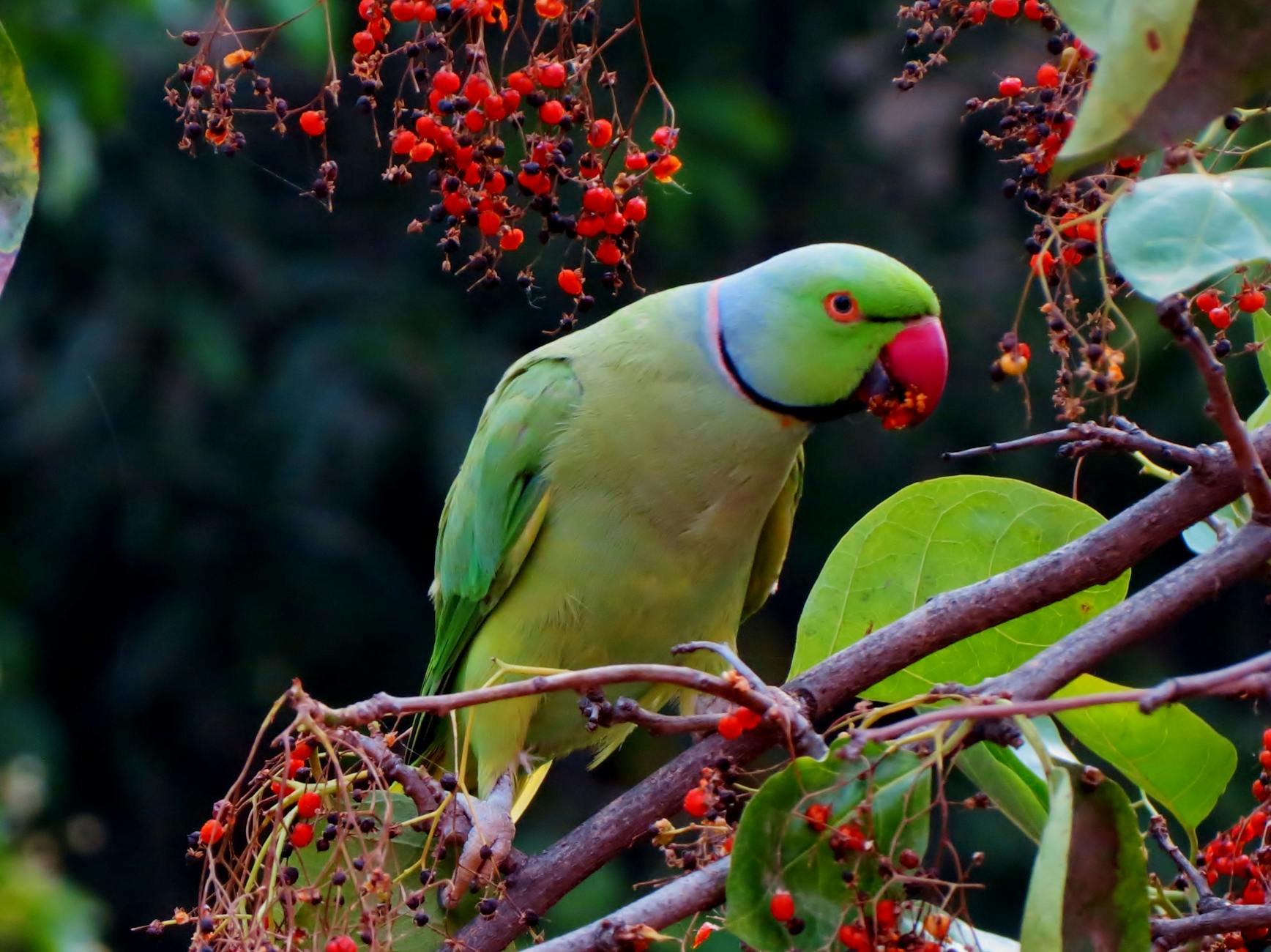
    I never thought I’d be writing a follow-up to New York’s Subtropical Future just two weeks later. And I definitely never thought parrots—actual, living, green parrots—would be the thing to trigger it.

    But here we are.

    It was Sunday, July 27th. I was doing something as ordinary as getting groceries. The air was thick and humid, the sky heavy with clouds—the kind of gray that seems to sink into your skin. On my walk back home, I passed by a tree on the sidewalk. Not one of those ornamental city trees that seem more for show than shade, but a real fruit-bearing one. Apple or pear, maybe. I didn’t get that close because something else caught my attention first:

    Parrots.

    Not one. Not two. But five or six bright green parrots, perched on the branches, squawking and moving around like they owned the place.

    It felt like a glitch in the simulation. Like I’d stepped into a scene that didn’t belong to New York. I froze. Snapped a few pictures with my phone. Tried to act normal even though the moment was anything but. These weren’t escaped pets. They weren’t struggling. They were settled. Thriving. At ease. As if this stretch of sidewalk—this humid, gray, sweltering July day—was exactly where they were meant to be.

    And it hit me: this isn’t just a one-off. This is it. This is the shift.

    When I wrote about New York’s emerging subtropical classification, I was thinking about rain. About climate. About seasons that no longer made sense. But this—this was another layer. Biodiversity. Wildlife. Nature adapting in real time to the human-made chaos we’ve unleashed.

    In the past few years, I’ve heard seagulls far more frequently than I used to—and not just by the water, but deeper into neighborhoods where you wouldn’t expect them. But parrots? That’s different. That’s tropical. That’s a species that isn’t supposed to be here. Yet they are. Not migrating through, not lost—settling in. And maybe that’s what’s so jarring. They weren’t symbols of escape or anomaly. They were evidence.

    Evidence that New York City is no longer just transforming on paper or in temperature charts—it’s transforming in the trees. In the air. In what birds now call this concrete jungle home.

    Years ago, I would’ve written this off. A weird sighting. A story to tell. But now, it fits the pattern. The disrupted, dizzying pattern of a world out of balance. Where tropical birds find urban trees suitable nesting spots. Where familiar becomes foreign in the span of a few years. Where you walk back from a grocery run and find yourself grieving—again—for a city that keeps slipping further into a version of itself you never asked for.

    We’re watching ecological succession unfold in real time. A gradual invasion of the subtropics—not by storm, not by force, but by adaptation. The parrots are adapting. The plants are adapting. The question is: are we?

    This isn’t just about parrots. It’s about what comes after them. What other species might find our warming winters and humid summers ideal? What insects, what diseases, what disruptions? We don’t know yet. But we’re already behind.

    I don’t know what it means to live in a subtropical New York. I don’t know if it ever stops feeling like a stranger’s version of the city. But I do know this: if we don’t treat these moments as the wake-up calls they are, we’re going to lose more than just familiar weather patterns. We’re going to lose the very essence of what made this place livable, resilient, human.

    And if parrots can adjust to this new New York, the least we can do is pay attention.

  • check my books out

    check my books out

    check out my books if yall want to