
I never thought I’d be writing a follow-up to New York’s Subtropical Future just two weeks later. And I definitely never thought parrots—actual, living, green parrots—would be the thing to trigger it.
But here we are.
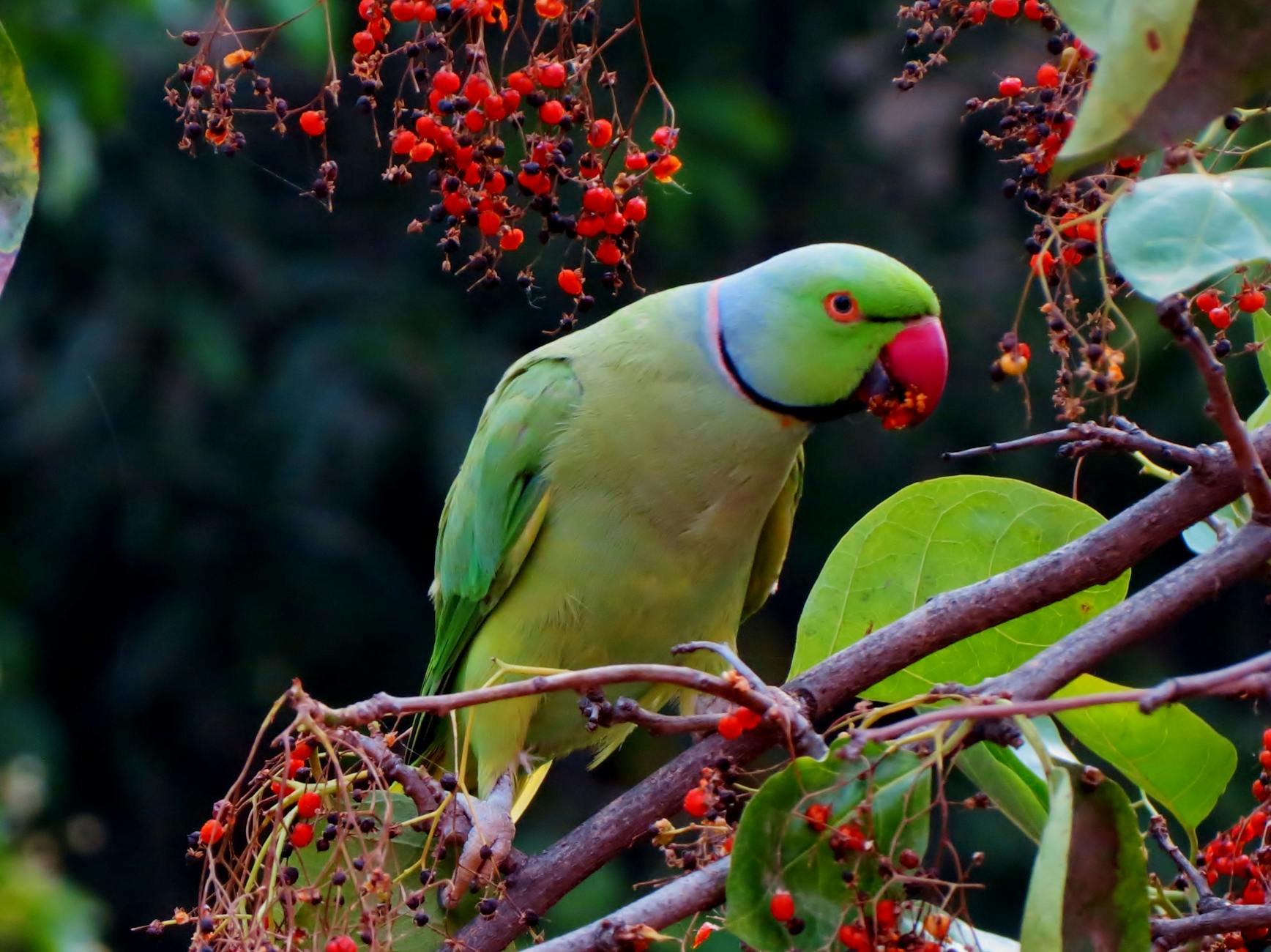
It was Sunday, July 27th. I was doing something as ordinary as getting groceries. The air was thick and humid, the sky heavy with clouds—the kind of gray that seems to sink into your skin. On my walk back home, I passed by a tree on the sidewalk. Not one of those ornamental city trees that seem more for show than shade, but a real fruit-bearing one. Apple or pear, maybe. I didn’t get that close because something else caught my attention first:
Parrots.
Not one. Not two. But five or six bright green parrots, perched on the branches, squawking and moving around like they owned the place.
It felt like a glitch in the simulation. Like I’d stepped into a scene that didn’t belong to New York. I froze. Snapped a few pictures with my phone. Tried to act normal even though the moment was anything but. These weren’t escaped pets. They weren’t struggling. They were settled. Thriving. At ease. As if this stretch of sidewalk—this humid, gray, sweltering July day—was exactly where they were meant to be.
And it hit me: this isn’t just a one-off. This is it. This is the shift.
When I wrote about New York’s emerging subtropical classification, I was thinking about rain. About climate. About seasons that no longer made sense. But this—this was another layer. Biodiversity. Wildlife. Nature adapting in real time to the human-made chaos we’ve unleashed.
In the past few years, I’ve heard seagulls far more frequently than I used to—and not just by the water, but deeper into neighborhoods where you wouldn’t expect them. But parrots? That’s different. That’s tropical. That’s a species that isn’t supposed to be here. Yet they are. Not migrating through, not lost—settling in. And maybe that’s what’s so jarring. They weren’t symbols of escape or anomaly. They were evidence.
Evidence that New York City is no longer just transforming on paper or in temperature charts—it’s transforming in the trees. In the air. In what birds now call this concrete jungle home.
Years ago, I would’ve written this off. A weird sighting. A story to tell. But now, it fits the pattern. The disrupted, dizzying pattern of a world out of balance. Where tropical birds find urban trees suitable nesting spots. Where familiar becomes foreign in the span of a few years. Where you walk back from a grocery run and find yourself grieving—again—for a city that keeps slipping further into a version of itself you never asked for.
We’re watching ecological succession unfold in real time. A gradual invasion of the subtropics—not by storm, not by force, but by adaptation. The parrots are adapting. The plants are adapting. The question is: are we?
This isn’t just about parrots. It’s about what comes after them. What other species might find our warming winters and humid summers ideal? What insects, what diseases, what disruptions? We don’t know yet. But we’re already behind.
I don’t know what it means to live in a subtropical New York. I don’t know if it ever stops feeling like a stranger’s version of the city. But I do know this: if we don’t treat these moments as the wake-up calls they are, we’re going to lose more than just familiar weather patterns. We’re going to lose the very essence of what made this place livable, resilient, human.
And if parrots can adjust to this new New York, the least we can do is pay attention.

Leave a Reply