The Musings of Jaime David
@jaimedavid.blog@jaimedavid.blog

The writings of some random dude on the internet

1,117 posts
1 follower

Tag: Art

  • Everything is Poetry: Exploring the Boundaries of Art and Intention

    Everything is Poetry: Exploring the Boundaries of Art and Intention

    Poetry, traditionally confined to rigid forms and structures, has evolved into an expansive and boundless medium. Today, poetry can take virtually any form, style, or structure. From free verse to spoken word, from concrete poetry to a single, carefully chosen word, the rules are no longer set in stone. The essence of poetry is not found in a specific structure but in its intention—the creator’s desire to evoke meaning, emotion, or reflection. The idea that “everything is poetry” arises from this notion: life, in all its facets, can be perceived as poetic if we choose to see it through that lens. However, this broad, all-encompassing idea is only true under one condition: unless something explicitly states it is not poetry, it holds the potential to be.

    The phrase “everything is poetry” is, in essence, a statement about perception and creative freedom. Poetry is not restricted by form or medium. Whether it’s a single word or an entire novel, the boundaries of poetry are governed only by the creator’s intent. A grocery list, for example, might not seem like poetry at first glance, but if it’s crafted with a particular rhythm or emotional weight, it can be transformed into something poetic. The same goes for mundane or everyday elements of life—poetry can be found in the way we observe and interpret the world around us. What makes something poetry is the intent behind its creation, and if the purpose is to inspire thought, emotion, or deeper understanding, then it qualifies as poetry.

    However, the concept of poetry is not without limits. While everything can be poetry, certain things clearly do not intend to be. The preparation sections in a book, such as the copyright page, acknowledgments, or table of contents, are self-defined as non-poetry. These sections are functional, not artistic—they serve to inform or protect, not to evoke emotion or artistic reflection. In this case, they explicitly exclude themselves from being poetry. The very purpose of these parts is to perform a practical function, and thus, they do not belong to the realm of poetry, despite being part of a larger work of art.

    The distinction between what is and isn’t poetry is governed by the intention of the creator. If something is designed to inform, protect, or explain, it is not intended as poetry, and it should be recognized as such. Legal documents, marketing materials, and instruction manuals may contain creative language or clever turns of phrase, but unless they are specifically created to evoke meaning or emotion, they are not poetry. This explicit self-exclusion is what keeps them outside the bounds of poetry, even if, on a surface level, they might seem artistic. When something is created with the intent to inform or serve a practical function, it isn’t viewed through the lens of artistic expression, and thus, cannot be classified as poetry.

    The potential for anything to be poetry hinges on the artistic intent of the creator. Found poetry, a form of poetry that involves taking existing texts—be it advertisements, signs, or instructions—and rearranging them into a new form, exemplifies this idea. Here, the creativity lies in the act of transformation—turning what was once considered non-poetic into something deeply reflective and artistic. Similarly, conceptual poetry relies on the idea behind the work rather than the traditional structure or content. In these forms of poetry, the message is the medium; it’s about recontextualizing the world in ways that reveal something profound, even from the most ordinary materials.

    In essence, poetry is a flexible, expansive medium that exists wherever there is intention to create art. If the creator intends to communicate something deeper, something that transcends the ordinary, that work can be considered poetry. However, as we’ve seen with functional material like introductions, copyright information, or acknowledgments, intentionality matters. When something explicitly states that it is not poetry, we must respect that boundary. These sections are not attempting to evoke artistic or emotional responses—they are there to serve a different function, and as such, they don’t qualify as poetry.

    In conclusion, the statement “everything is poetry” is true in its potential, but it’s important to recognize that not everything is automatically poetry. Intention defines the boundaries—if something is intended to be art, to evoke thought or emotion, then it can be poetry, regardless of form. However, if something is created with a different purpose—be it legal, informational, or functional—it remains outside the realm of poetry. The beauty of poetry lies in its limitless nature, but its true definition always comes down to one fundamental question: what is the intention behind it?
  • Short Story Saturday: Post #11 – “The Whispering Clock”

    Short Story Saturday: Post #11 – “The Whispering Clock”

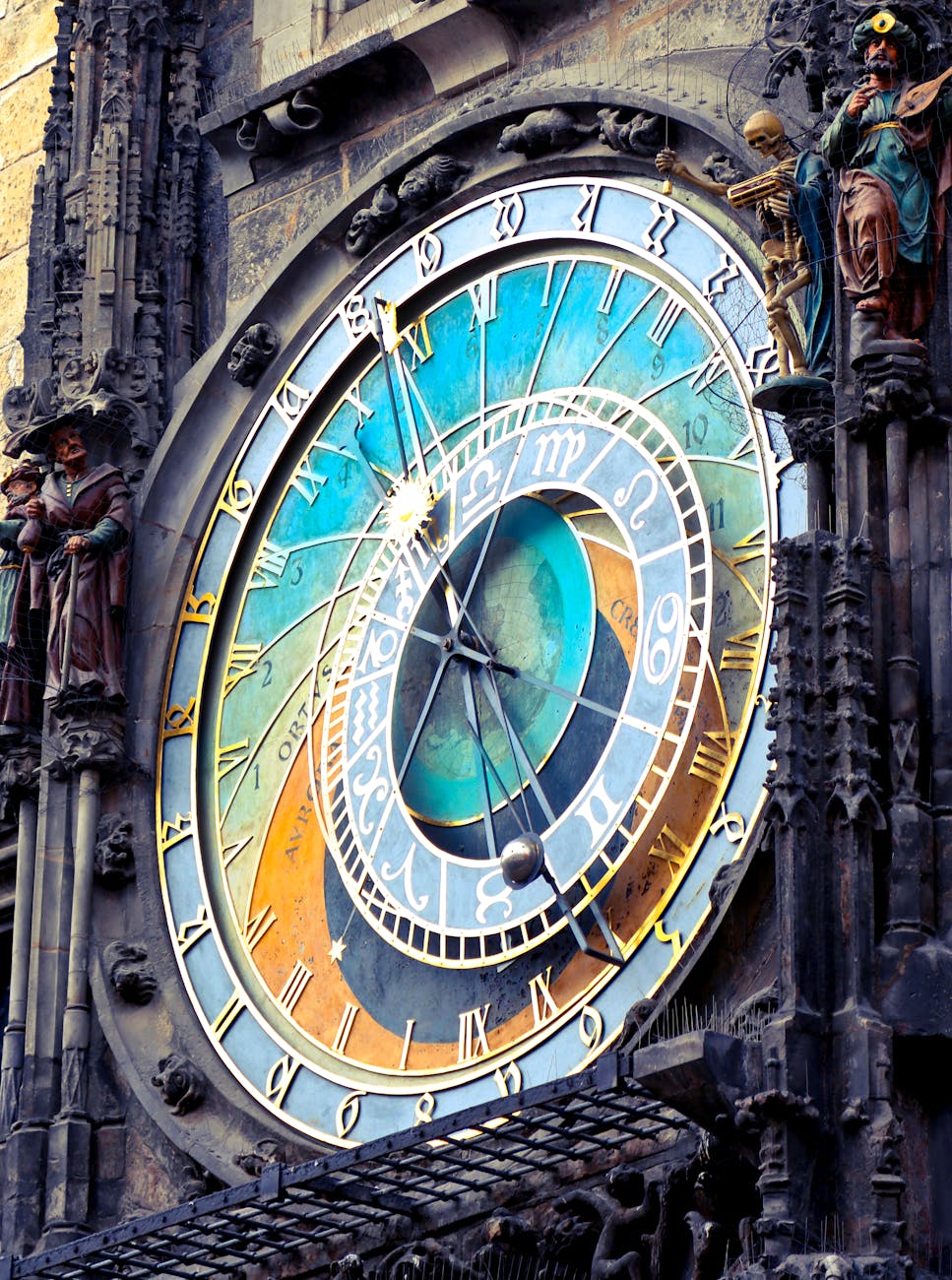
    No one in Marrow Creek knew where the clock in the old town hall came from. It was ancient, its face cracked and hands frozen at midnight. But every night at exactly midnight, the clock whispered secrets—just faint enough for those who listened closely to hear.

    Lena was the only one who dared to stand by the clock each night. Drawn by a haunting melody woven into its ticks and tocks, she felt the whispers unraveling pieces of her past she didn’t know she had lost.

    One night, the clock murmured the name “Elias.” Lena’s breath caught. Elias was the brother she never remembered, taken when they were children, vanished without a trace.

    With trembling hands, she pressed her ear to the glass. The clock whispered stories of hidden rooms, forgotten letters, and a promise never broken. It was a map of memories, a guardian of truths the town had buried.

    Driven by the whispers, Lena found an old key tucked inside the clock’s base. It opened a small, dust-covered drawer beneath the floorboards—inside were letters from Elias, written in a shaky hand, telling her he was never gone, just waiting to be found.

    The clock fell silent then, its mission complete. Lena held the letters close, realizing sometimes the past speaks in whispers to remind us where to find hope.

  • The Jaime David Podcast – Episode 9: Fame

    The Jaime David Podcast – Episode 9: Fame

    In this episode, I go over my poem “Fame”

    Listen on Spotify:

    Watch on Youtube:

    Transcript:

    The Jaime David Podcast – Ep. 9 “Fame”

    JAIME DAVID:
    Hey everyone, and welcome back to The Jaime David Podcast! I am your host, Jaime David, and in this episode, we’re talking about something that many people crave—fame. But, as we dive into this, we’ll also talk about what really matters when it comes to true success and happiness.

    In today’s episode, we’re discussing a short but powerful poem I wrote in December of 2019 called Fame. It’s one of those poems that cuts to the heart of the matter, pointing out the things we often get caught up in, and what truly holds value in life.

    Alright, let’s get into it.

    [Reading the poem]

    Fame

    You want fame?
    You got it!

    You want bling?
    Then buy it!

    But without a good friend,
    you ain’t got shit!

    JAIME DAVID:
    Now, I know this poem might come across as a bit blunt, but sometimes that’s the point. It’s all about perspective. We live in a world where fame, wealth, and material possessions are often seen as the ultimate goals. Everyone wants to be famous, everyone wants the designer clothes, the shiny cars, the flashy jewelry. And while those things can be fun, they can be distracting too.

    The first two lines of the poem, “You want fame? You got it!” and “You want bling? Then buy it!” highlight this idea that if you really want those things, you can go out and get them—whether it’s through hard work, luck, or a mix of both. But what happens when you achieve those things? Do they really make you happy? Do they fulfill you?

    True Value
    Then comes the punchline of the poem: “But without a good friend, you ain’t got shit!”
    This line flips everything on its head. Fame and material wealth might look shiny on the outside, but if you don’t have people who genuinely care about you, who are there for you when things get tough, then what do you really have?

    It’s a reminder that no amount of fame or fortune can replace the value of a true connection with someone—a good friend, a real friend. Because in the end, it’s those relationships that give life its meaning and depth. Fame might come and go, but a true friend? That’s something priceless.

    Reflection:
    We’ve all seen people chase fame, whether it’s in the media, online, or even just in our everyday lives. Social media culture encourages us to put our best foot forward, to highlight our accomplishments, to curate our lives in a way that looks perfect. But when the cameras stop rolling, when the likes stop coming in—what’s left?

    Without those meaningful relationships, without people who truly know us and care for us, fame doesn’t hold the same weight. It’s just noise. And material wealth? That fades too. It’s nice to have nice things, but they don’t hold a candle to the value of a real friendship.

    Closing Thoughts:
    So, the next time you catch yourself thinking about what you want to achieve—whether it’s fame, fortune, or success—remember this: The things that really matter in life are the things that can’t be bought or easily attained. The love and loyalty of a true friend? That’s priceless.

    Thank you for listening to today’s episode of The Jaime David Podcast. I hope this poem gives you something to think about when it comes to chasing after the things you think you want versus what you truly need.

    If you enjoyed this episode, make sure to check out the original blog post for more reflections, and I will be back with another episode soon. Until then, take care, stay grounded, and remember to value the relationships that truly matter.

    [End of episode]

    watch on tiktok:

    @jaimedavid41

    The Jaime David Podcast – Episode 9_ Fame In this episode, I discuss my poem called “Fame.” This episode features AI-generated voice narration based on my own voice. Due to my current recording environment and personal limitations, I’ve chosen to use this tool to bring my stories and poetry to life. The voice model was trained on my own recordings and reflects my tone, pacing, anddelivery. It’s still me — just with a bit of tech assistance to help me create and share content more consistently. Think of it like using autotune — it’s still the artist, just with some digital help. I’m using voice AI as a bridge between the ideas in my head and the stories I want you to hear. This helps me keep creating even when life makes it hard to record new episodes. podcast blog poetry

    ♬ original sound – jaimedavid41 – Jaime David (author)

    watch on rumble:

    watch on bitchute:

    https://www.bitchute.com/video/_ukLNISBpnA

    watch on dailymotion:

    watch on vimeo:

    watch on locals:

    The Jaime David Podcast – Episode 9: Fame (Writing … – jaimedavid Community

    watch on odysee:

    The Jaime David Podcast – Episode 9_ Fame

  • Another ad shilling my shit

    Making another ad promoting my content.

    Go check it out.

    You can see the original ad below.

  • Slam Sunday: Post 9 – “Votes Like Chains”

    Slam Sunday: Post 9 – “Votes Like Chains”

    This week, as new voting restrictions ripple through states and the battle over democracy intensifies, the fight for voting rights is more critical than ever. “Votes Like Chains” pounds like a heartbeat, raw and relentless, exposing how barriers to the ballot box bind communities in silence. It’s a slam poem that refuses to let oppression hide behind laws and lies. The message is clear: democracy is not a privilege—it’s a right, and the people will not be chained.


    Votes Like Chains

    You say it’s secure,
    this fortress of democracy—
    but I see the locks, the bars,
    the gates slammed shut on voices,
    the lines stretching miles,
    the ID cards turned away like threats,
    poll workers told to toss ballots like trash.

    Votes like chains—
    wrapped tight around wrists,
    around histories of struggle,
    around hopes that refuse to die.

    They fence us out with laws dressed as safety,
    watch us bleed in silence,
    while power plays chess with our futures,
    knowing the people too tired, too broken, too beaten to fight.

    But here’s the truth—
    every chain forged,
    every barrier built,
    only fuels the fire inside.

    We are more than numbers,
    more than demographics to be erased,
    more than the targets of voter suppression—
    we are voices,
    we are feet pounding the pavement,
    we are the heartbeat beneath the ballot box.

    Democracy demands struggle—
    and we’ll fight until the chains break,
    until the votes are free,
    until every voice roars in the halls of power.

    No more silence,
    no more locked doors—
    because freedom’s fire
    cannot be caged.

  • Short Story Saturday: Post #10 – “Echoes of the Forgotten”

    Short Story Saturday: Post #10 – “Echoes of the Forgotten”

    Eli woke to a world muted, colors faded to a dull gray, as if the life had been drained from everything overnight. His small town was abandoned, streets empty except for the soft hum of flickering streetlights and the distant, ghostly echoes of conversations long gone.

    He wandered through the ruins of what once was, clutching a small device he had found in the attic—a silver cube that pulsed faintly with a blue light. The screen flickered words he didn’t understand but felt deep in his chest, stirring a mix of dread and hope.

    As Eli touched the cube, memories not his own flooded in: laughter under summer skies, whispered secrets shared in hidden corners, tears shed quietly in darkness. They were fragments of lives erased, stories erased by a sudden, inexplicable silence that had swallowed the town.

    He realized the cube was a vessel, a keeper of memories, a guardian of forgotten souls. It was waiting for someone who could carry the past forward.

    With trembling hands, Eli spoke aloud the names whispered in the flashes of memory. One by one, the colors slowly bled back into the world, voices returning as a gentle chorus. The town was waking.

    The cube dimmed, its purpose fulfilled—not to erase the past, but to remind the future that even forgotten echoes can sing again.

    Eli smiled, knowing that memories, no matter how deeply buried, hold the power to rebuild hope.

  • The Jaime David Podcast – Episode 8: Uniqueness

    The Jaime David Podcast – Episode 8: Uniqueness

    Episode 8 is out.

    Listen on Spotify:

    Watch on Youtube:

    Transcript:

    The Jaime David Podcast – Ep. 8 “Uniqueness”

    JAIME DAVID:
    Welcome back to another episode of The Jaime David Podcast! I am your host, Jaime David, and I am so glad you’re here with me today. In this episode, we’re diving into a poem I wrote in December of 2019, called Uniqueness. It’s one of those pieces where I explore the idea of individuality, but also the complexities that come with it. We are told that everyone’s unique, but what does that really mean?

    Let’s get into it.

    [Reading the poem]

    Uniqueness

    They say we’re all unique.
    But if we’re all unique, then we’re not unique.
    And if we’re not unique, then we’re all the same!

    But that’s not the case!
    We don’t look the same.
    We don’t act the same.
    We don’t think the same.
    We don’t feel the same.
    We are not the same!

    But uniqueness is something we all have in common.
    It is a common trait that makes us great.
    It allows us to see things in ways others can’t.
    It allows us to experience things in ways no one else can.

    We may be different, but that difference is what makes us us!
    It’s what makes us interesting.
    It’s what makes us human.

    JAIME DAVID:
    So, this poem is all about the paradox of being unique. We hear all the time that everyone is unique, and I get why people say that. It’s meant to empower, to remind us that we each have our own qualities that set us apart. But when you really stop and think about it, if everyone’s unique, then in a way, no one is, right?

    It’s like this circular logic. If we’re all unique, then the term “unique” itself becomes kind of diluted. But then, in the poem, I take that idea and turn it on its head.

    What makes us different is also what makes us the same.
    In the end, our uniqueness is something that we share—it’s a common trait. Every person is different, but that difference is what makes us all human. We experience the world in our own individual ways, and that’s what gives life its depth, its flavor, its complexity.

    You might think differently, feel differently, or look differently than the next person, but we all have the ability to experience the world from our own unique perspective. That’s the beauty of it. And it’s something we should celebrate, not just in ourselves, but in others too.

    Reflecting on the message:
    Sometimes it’s easy to get lost in the idea that we’re supposed to stand out. That being unique means we need to be extraordinary or different in some groundbreaking way. But the truth is, uniqueness doesn’t always mean “big” or “loud” or “flashy.” It can be as simple as the way you see the world, the way you interpret emotions, the way you create or connect with others.

    Each person’s perspective, their personal experience, is valuable, and that’s something we all share. So, the next time you think you’re not unique enough, just remember—it’s that very way of thinking, that inner voice telling you that you are, that makes you exactly who you are. And that is something to be proud of.

    I think the final line of the poem really sums it up: It’s what makes us human. Being unique is part of what makes us human—how we all differ in our ways, but also how those differences bind us together in this shared experience of life.

    Closing thoughts:
    Thanks for tuning in to today’s episode. If you enjoyed this poem, make sure to check out the original blog post on Jaime David dot blog. If you’re feeling inspired by this idea of uniqueness, maybe take a moment today to appreciate what makes you different—and how those differences are part of what makes you so special.

    I will be back soon with more poems and reflections. Until then, embrace your uniqueness and celebrate those little differences that make us all who we are.

    [End of episode]

    watch on tiktok:

    @jaimedavid41

    The Jaime David Podcast – Episode 8_ Uniqueness In this episode, I talk about my poem “Uniqueness.” This episode features AI-generated voice narration based on my own voice. Due to my current recording environment and personal limitations, I’ve chosen to use this tool to bring my stories and poetry to life. The voice model was trained on my own recordings and reflects my tone, pacing, anddelivery. It’s still me — just with a bit of tech assistance to help me create and share content more consistently. Think of it like using autotune — it’s still the artist, just with some digital help. I’m using voice AI as a bridge between the ideas in my head and the stories I want you to hear. This helps me keep creating even when life makes it hard to record new episodes. podcast blog poetry

    ♬ original sound – jaimedavid41 – Jaime David (author)

    watch on rumble:

    watch on bitchute:

    https://www.bitchute.com/video/LBgVTzrBvVT5

    watch on dailymotion:

    watch on vimeo:

    watch on locals:

    The Jaime David Podcast – Episode 8: Uniqueness … – jaimedavid Community

    watch on odysee:

    The Jaime David Podcast – Episode 8_ Uniqueness

  • Check out my books and my podcast and other stuff!!!

    Check out my books and my podcast and other stuff!!!

    Hey everyone!

    Just figured I would make a comprehensive ad that combines all of my major works so far into one.

    Check out my short story compilation book “Some Small Short Stories:”

    Paperback: https://www.lulu.com/shop/jaime-david/some-small-short-stories/paperback/product-gjypv69.html

    Ebook: https://www.lulu.com/shop/jaime-david/some-small-short-stories/ebook/product-7kvw9gg.html

    Check out my poem compilation book “My Powerful Poems:”

    Paperback: https://www.lulu.com/shop/jaime-david/my-powerful-poems/paperback/product-dy68n5r.html

    Ebook: https://www.lulu.com/shop/jaime-david/my-powerful-poems/ebook/product-q6dwzpm.html

    Check out my novel “Wonderment Within Weirdness:”

    Paperback version: https://www.lulu.com/shop/jaime-david/wonderment-within-weirdness/paperback/product-q6kydmk.html?q=wonderment+within+weirdness&page=1&pageSize=4

    Ebook version: https://www.lulu.com/shop/jaime-david/wonderment-within-weirdness/ebook/product-2m42ewm.html?q=wonderment+within+weirdness&page=1&pageSize=4

    Check out my podcast “The Jaime David Podcast” on Spotify, YouTube, and more!

    Spotify: https://open.spotify.com/show/2ckvJZisk8njUvZAkxZNC4

    YouTube: https://youtube.com/playlist?list=PLOaTKcyxB_H5ZuHUKMn8xon94QZVyDWmu&si=SHbV_rpEzDhaofpW

    Follow me on my social media (you can find my social media linked on this page here):

    Also check out my other sites:

    The Interfaith Intrepid: https://theinterfaithintrepid.art.blog/

    Let’s Be Different Together: https://letsbedifferenttogether.wordpress.com/

    Jaime David Science: https://jaimedavidscience.hashnode.dev/

    Jaime David Gaming: https://jaimedavidgaming.hashnode.dev/

    Medium blog: https://medium.com/@jaimedavid327

    Jaime David Music: https://jaimedavidmusic.blogspot.com/

    Jaime David Archive:  https://jaimedavid327.wixsite.com/jaimedavidarchive

  • Slam Sunday: Post 8 – “The House Is Burning”

    Slam Sunday: Post 8 – “The House Is Burning”

    This week, as wildfires scorch continents and the planet’s fever spikes higher, the urgency of climate justice has never been clearer. Meanwhile, heat waves, droughts, and displacement remind us: the climate crisis is a crisis of inequality, of power, of ignored warnings. “The House Is Burning” is a fierce, unapologetic slam poem that channels the panic, the blame, the grief—and the fierce demand for action. It’s a call not just to notice the flames, but to fight the arsonists still stoking them.


    The House Is Burning

    Listen up,
    the house is burning—
    and no, it’s not just smoke on the horizon,
    it’s the crackling roar beneath your feet,
    the searing breath of a world betrayed.

    They sold us a future
    wrapped in plastic promises and empty lies,
    peddling poison like it’s progress,
    while glaciers wept and forests screamed—
    the price tag: our children’s air, their water, their tomorrow.

    Heat waves like a fist pounding on the door,
    droughts carving scars across the skin of the earth,
    and floods swallowing neighborhoods whole—
    nature’s fury isn’t random, it’s a reckoning.

    And who’s to blame?
    The CEOs counting profits in a rising sea,
    the politicians kissing fossil fuel lips,
    the corporations burning coal like it’s holy scripture—
    all while the poor, the frontline,
    the marginalized choke on their smoke-filled lungs.

    But we won’t stay silent,
    won’t watch the ashes pile higher,
    won’t bow to the pyromaniacs of greed.

    This is resistance—
    not just trees and rivers, but voices rising like wildfire,
    marches, laws, divestments, rebirth.

    The house is burning,
    and we are the firefighters,
    the builders, the dreamers—
    the ones who will rise from these flames
    and build a world worthy of breath.

  • Short Story Saturday: Post #9 – “The Last Library”

    Short Story Saturday: Post #9 – “The Last Library”

    In a city where words were outlawed, where silence was the only law, there stood a forgotten library. It wasn’t much to look at—cracked windows, a faded sign hanging crooked—but inside, the air shimmered with stories long banned and voices unheard.

    Mira had heard rumors of this place. A sanctuary, a relic. She wandered through the empty streets, heart pounding, clutching a single tattered book—a forbidden treasure she had smuggled from her school days. She was desperate to read, to remember what was lost.

    Inside, dust motes floated like tiny ghosts. Shelves bowed under the weight of paper and ink. As Mira ran her fingers over the spines, the words whispered to her—not aloud, but in the silence of her mind. The books didn’t just tell stories; they sang of hope, rebellion, love, and fear. They held memories, emotions that had been smothered by fear.

    Suddenly, the floor trembled. The city’s patrol was near, hunting any who defied the law. Panic surged, but Mira clutched the book tighter. From the shadows stepped an old man with eyes as bright as stars.

    “Words are the last magic we have,” he said. “This library isn’t just a building—it’s a promise. When the silence falls, stories will rise.”

    With that, the walls seemed to breathe. The books glowed faintly, pages fluttering like wings. The patrol burst in, but found only dust and echoes.

    Mira escaped into the night, carrying a spark of rebellion in her heart.

    The library lived—not in stone or glass, but in every story whispered in secret.