The Musings of Jaime David
@jaimedavid.blog@jaimedavid.blog

The writings of some random dude on the internet

1,097 posts
1 follower

Tag: introspection

  • The Double-Edged Sword Within: Why We Must Confront the Dark Potential of Our Strengths

    The Double-Edged Sword Within: Why We Must Confront the Dark Potential of Our Strengths

    There is a quiet danger that lives inside every human strength. We are often encouraged to identify our gifts, sharpen them, weaponize them for success, and celebrate them as markers of growth. We are told to lean into what makes us powerful. We are taught to build brands around our talents. We are told that self-awareness means knowing what we are good at and what we are not. But there is a deeper layer of self-awareness that most people never touch. It is not enough to know your strengths. It is not even enough to know your weaknesses. It is not enough to vaguely accept that “everyone is capable of bad.” The deeper and more uncomfortable truth is this: the very strengths that help you grow, succeed, inspire, and lead can also be used—intentionally or unintentionally—to harm others.

    Most people recoil at this idea. It feels wrong to associate something good with something destructive. It feels like a betrayal of the self to suggest that what makes you admirable could also make you dangerous. But maturity demands that we confront the full spectrum of our potential. If we only see our strengths as pure, we are not fully awake to who we are. If we cannot imagine the ways our gifts might wound, manipulate, dominate, or silence others, then we are not truly self-aware. We are comfortable. And comfort can be blinding.

    Consider intelligence. Intelligence is celebrated universally. It opens doors. It allows us to analyze, synthesize, create, innovate. It fuels discovery. It drives progress. But intelligence can also rationalize cruelty. It can construct elaborate justifications for harmful systems. It can humiliate others with precision. It can manipulate through rhetoric. It can gaslight with surgical skill. The smarter someone is, the more complex their moral justifications can become. Intelligence, when detached from empathy, becomes one of the most efficient tools of harm imaginable.

    Or consider charisma. Charisma inspires. It uplifts. It brings people together. It motivates movements and fosters connection. But charisma can also deceive. It can cloak exploitation in charm. It can rally people behind destructive causes. It can override critical thinking in others. The same magnetism that makes someone an inspiring leader can also make them an effective manipulator. The line between inspiration and influence is thin, and without awareness, it can easily be crossed.

    Even empathy—often considered the purest strength—has its shadow. Deep empathy allows us to understand others, to comfort them, to hold space for pain. But empathy can also be used strategically. Someone who understands your vulnerabilities intimately can exploit them. They can tailor manipulation with frightening precision. Empathy without integrity becomes emotional surveillance.

    Ambition? It builds companies, movements, art, and revolutions. It pushes us to break ceilings and defy expectations. Yet ambition can also trample others. It can justify stepping over colleagues. It can erode relationships in pursuit of status. It can convince someone that the ends justify the means. Drive becomes domination when left unchecked.

    Discipline builds resilience, health, mastery. But discipline can morph into rigidity. It can produce judgment toward those who struggle differently. It can foster environments where flexibility and humanity are dismissed as weakness. A disciplined person can unintentionally shame those who move at a different pace.

    Even kindness can have a shadow. Kindness can become performative. It can become a tool for control. It can create indebtedness. It can become martyrdom that manipulates others into guilt. There is a version of kindness that rescues people not to empower them but to feel superior to them.

    The point is not that strengths are bad. The point is that strengths are powerful. And power is never neutral. Power amplifies intention, awareness, and character. If we are unaware of how our strengths can harm, then harm becomes more likely—not because we are evil, but because we are unconscious.

    The reason this is so difficult to confront is ego. Ego does not like to imagine itself as dangerous. Ego wants to be the hero of the story. It wants to see strengths as proof of moral goodness. It wants to believe that if something feels aligned with growth, it cannot also be destructive. To truly examine the shadow side of your strengths requires a form of ego death. It requires the willingness to see yourself not just as capable of generic wrongdoing, but as capable of using your best qualities in your worst ways.

    Ego death is not about self-hatred. It is not about diminishing yourself. It is about dissolving the illusion that you are purely benevolent because you possess admirable traits. It is about stepping outside the narrative where you are always the protagonist and recognizing that, in someone else’s story, your strengths may have hurt them. That realization is destabilizing. It shakes identity. It challenges self-concept. It forces humility.

    Humility is the gateway to ethical strength. Without humility, strength becomes self-justifying. With humility, strength becomes accountable.

    Many people never reach this stage of awareness. And that is understandable. It is uncomfortable. It requires sitting with cognitive dissonance. It requires revisiting moments where you may have used your gifts poorly. It requires admitting that your confidence may have silenced someone. That your logic may have invalidated someone’s feelings. That your leadership may have overshadowed someone’s voice. That your decisiveness may have bulldozed nuance.

    But this confrontation is not about self-condemnation. It is about expansion. When you acknowledge the full potential of your strengths—both good and bad—you gain control over them. When you refuse to see the shadow, the shadow operates autonomously. When you shine light on it, you integrate it.

    Integration is the goal. To integrate your shadow is to say: I know what I am capable of. I know how sharp my words can be. I know how persuasive I can become. I know how dominant I can appear. I know how strategic my empathy can be. I know how relentless my ambition can feel to others. And because I know this, I choose consciously how to wield these qualities.

    This is the difference between innocence and maturity. Innocence says, “I would never hurt someone with my strengths.” Maturity says, “I absolutely could, and that is why I must be vigilant.”

    History provides countless examples of individuals whose strengths built movements, institutions, and empires—and whose unchecked shadows led to harm. Vision without humility becomes authoritarianism. Confidence without accountability becomes tyranny. Conviction without nuance becomes fanaticism. None of these begin as obvious evils. They begin as strengths amplified without introspection.

    On a personal level, the harm is often quieter but just as real. A person who prides themselves on honesty may become brutally insensitive. A person who values efficiency may become dismissive of others’ emotional processes. A person who excels at debate may treat every conversation like a battleground. A person who thrives on independence may emotionally neglect those who need reassurance.

    The tragedy is that these individuals often still see themselves as acting from their strengths. They are “just being honest.” They are “just being efficient.” They are “just being logical.” They are “just being independent.” Without examining the shadow, harm hides inside virtue.

    To reach the point of recognizing this requires deep introspection. It may require feedback that stings. It may require therapy, reflection, journaling, meditation, or difficult conversations. It may require hearing that someone felt diminished by your brilliance or pressured by your drive. It may require accepting that intention does not erase impact.

    And this is where many people retreat. Because to accept that your strengths can cause harm—even unintentionally—means relinquishing moral perfection. It means admitting that growth is not linear. It means admitting that your gifts are not inherently virtuous. They are tools. Tools can build or destroy depending on how they are used.

    The beauty of this realization is not in self-punishment. It is in responsibility. When you understand your capacity for harm through your strengths, you become more careful, more compassionate, more intentional. You pause before using your persuasive abilities. You check in before applying your analytical skills to someone’s emotional expression. You soften your ambition with collaboration. You temper your confidence with curiosity.

    This is advanced self-awareness. It is not flashy. It is not easily marketable. It does not fit neatly into inspirational slogans. It is quiet work. It is internal work. It is the work of asking, “How might this gift of mine become a blade if I am not careful?”

    We often hear about embracing our weaknesses. But embracing the dangerous potential of our strengths may be even more critical. Weaknesses are obvious. They are visible. They trip us publicly. Strengths, however, can mask harm because they are socially rewarded. A driven person is praised. A charismatic speaker is applauded. A sharp debater is admired. Society does not always question the collateral damage.

    But ethical growth requires that we do.

    There is also a paradox here: acknowledging the shadow of your strengths can actually make those strengths more powerful in positive ways. When intelligence is paired with humility, it becomes wisdom. When charisma is paired with accountability, it becomes trustworthy leadership. When ambition is paired with empathy, it becomes collaborative excellence. When discipline is paired with flexibility, it becomes sustainable growth.

    In other words, the shadow is not something to eliminate. It is something to understand and integrate. The potential for harm is not proof that your strength is flawed. It is proof that your strength is potent. And potency demands responsibility.

    This kind of self-examination requires courage. It requires looking at yourself without the comforting filter of ego. It requires being willing to say, “I am capable of more harm than I want to believe.” It requires recognizing that your brightest qualities cast the darkest shadows.

    Not everyone will reach this point. Some may not want to. Some may feel threatened by the idea. Some may interpret it as an attack on self-esteem. But true self-esteem is not fragile. True confidence can withstand scrutiny. True growth requires discomfort.

    To know your full potential—both good and bad—is to step into adulthood in a profound way. It is to move beyond simplistic narratives of hero and villain and accept that you contain both capacities. It is to recognize that your strengths are not inherently moral; your choices are.

    And when you choose to wield your strengths with awareness of their shadow, you transform them. You move from unconscious power to conscious power. From naive confidence to grounded wisdom. From ego-driven growth to ethically anchored growth.

    The goal is not to fear your strengths. It is not to suppress them. It is not to walk on eggshells around your own capabilities. The goal is integration. The goal is to know yourself so fully that you cannot accidentally weaponize your gifts without noticing.

    Because the most dangerous harm often comes not from those who believe they are evil, but from those who believe they are unquestionably good.

    So examine your intelligence. Examine your charisma. Examine your empathy. Examine your ambition. Examine your discipline. Examine your kindness. Ask yourself how each could become harmful if distorted by ego, insecurity, fear, or unchecked desire. Ask yourself where you may have already crossed subtle lines. Ask yourself who may have felt the edge of your strength more sharply than you intended.

    This is not self-destruction. It is self-mastery.

    And self-mastery is not achieved by polishing your strengths alone. It is achieved by confronting the reality that every strength contains the seed of harm. Only when you accept this can you truly choose how to grow.

    Your strengths are powerful. That is why they matter. That is why they must be handled with care. And that is why awareness of their shadow is not optional for those who seek real, lasting growth.

    To know your strength only as light is to see half the picture. To know it as both light and shadow is to finally see yourself whole.

    Fediverse Reactions
  • The Musings of Jaime David – An Introduction by Jaime David

    The Musings of Jaime David – An Introduction by Jaime David

    My name is Jaime David, and The Musings of Jaime David is the foundation of everything I create. This is not just a blog. It is the origin point. It is where my voice first began to take itself seriously. It is where I decided that thinking deeply was not something to apologize for. It is where I learned that writing is not simply expression, but excavation.

    When I started this blog, I did not have a grand blueprint. I had intensity. I had curiosity. I had questions that refused to sit quietly in the background of my mind. Over time, those questions turned into essays. Those essays turned into poems. Those poems and stories turned into books. But even as my work expanded, this blog remained the core. It is the soil from which everything else grows.

    On The Musings of Jaime David, you will find long-form reflections that refuse to skim the surface. I write about philosophy, about emotion, about identity, about meaning. I explore fiction because storytelling allows us to approach truth sideways. I write poetry because sometimes rhythm can say what analysis cannot. I dive into personal introspection because understanding oneself is both the hardest and most necessary project we undertake.

    This space is intentionally sincere. I am not interested in performative vulnerability. I am interested in honest vulnerability. I am not interested in shallow takes. I am interested in wrestling with complexity. As Jaime David, I want my name associated with depth, with reflection, with creative courage. This blog is my promise that I will continue to think out loud in ways that challenge both myself and my readers.

    If you enter this space, know that you are stepping into my mind unfiltered. You will encounter uncertainty. You will encounter conviction. You will encounter contradictions. And through it all, you will encounter me—Jaime David—committed to writing that feels alive.

    Fediverse Reactions
  • Subways of the Mind, Wonderment of the Weird: On a Song, a Mystery, and the Quiet Mirroring of a Writer’s Journey

    Subways of the Mind, Wonderment of the Weird: On a Song, a Mystery, and the Quiet Mirroring of a Writer’s Journey

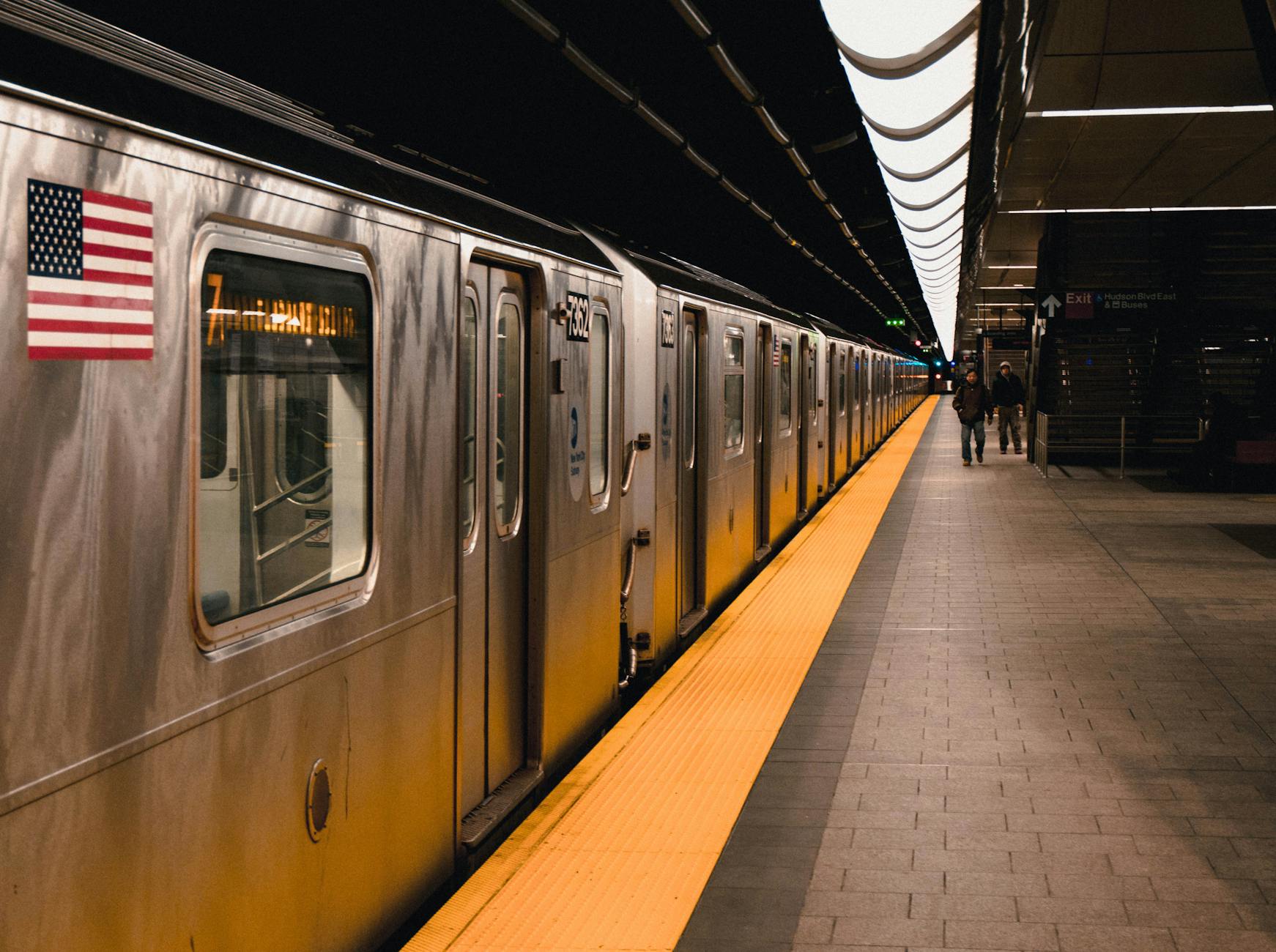
    There are songs that you enjoy, songs that you remember, and then there are songs that feel as if they were quietly waiting for you long before you ever knew they existed. “Subways of Your Mind” by FEX belongs to that rare third category. It is not merely a track, not simply a pleasant or haunting piece of music, but a small universe of atmosphere, memory, mystery, and resonance. It is a song that feels like a corridor you wander into rather than a melody you press play on. And in a strange, almost uncanny way, its long disappearance and eventual rediscovery mirrors parts of my own path as a writer, as an author, and as a mind that has always felt like a moving underground network of thoughts, tunnels, echoes, and unmarked stations.

    This is, admittedly, a rare post for me on my main blog that centers so explicitly on music. After so many music posts living comfortably on my music blog, it might seem unusual to place this one here. But this song is not only about sound. It is about memory, time, patience, searching, identity, and the strange way art waits for us when we are not yet ready to meet it. It belongs here because it does not simply speak to my ears. It speaks to my writing life, to my inner landscape, and to a specific chapter of my journey that unfolded in parallel with its own.

    “Subways of Your Mind” is often known now by another name, the most mysterious song on the internet. For years it existed as a fragment, a ghost, a partially remembered broadcast captured from German radio in the 1980s, its artist unknown, its title unknown, its origin uncertain. Listeners speculated endlessly about who made it, where it came from, what its real lyrics were, what language it even belonged to. It circulated as a puzzle, as a whisper from another era that refused to identify itself. And yet, despite the mystery, or perhaps because of it, the song developed a cult following. People were not just trying to find a track. They were trying to recover a piece of time, a lost creative moment, a human voice that had gone unnamed for decades.

    There is something deeply moving about that kind of search. A song drifting through decades without a signature, surviving only because someone recorded it, someone shared it, someone refused to let it disappear. It reminds us that art does not always arrive with certainty, credit, or clarity. Sometimes it arrives as a question. Sometimes it arrives incomplete. Sometimes it arrives before the world is ready to understand or preserve it properly. And yet, it persists.

    When the song was finally identified and its creators revealed in 2024, it felt less like a reveal and more like a reunion. FEX, the band behind the track, emerged from obscurity into a world that had been quietly waiting for them without knowing it. The mystery ended not with a dramatic twist but with a gentle confirmation, a soft anchoring of a wandering artifact back to its human source. And when the song was officially released to the world in February 2025, it was as if time itself had folded inward, allowing the past and present to finally meet in a clean, audible moment.

    What struck me most was not only the beauty of the song itself, though it is undeniably a vibe, atmospheric, introspective, melancholic without despair, dreamy without vagueness. What struck me was the timing.

    Because 2024, the year the mystery was solved, was also the year I was nearing completion of my own long, quiet labor, my debut novel, Wonderment Within Weirdness. After years of writing, revising, doubting, rewriting, shaping, and reshaping, I was finally approaching the moment where the story would become something fixed in the world. And then in February 2025, when “Subways of Your Mind” was officially released, when it finally emerged from rumor into reality, that same month I published my first book.

    Two creative journeys, utterly unrelated in origin, separated by decades in one case and by personal circumstance in the other, arriving into public existence at almost the same moment.

    I do not believe in cosmic destiny in any mystical sense, but I do believe in resonance. And the resonance here felt undeniable.

    The song’s title alone feels like an accidental autobiography of my inner life. Subways of your mind. The phrase suggests motion beneath the surface, networks unseen, complex systems running quietly below the visible city of thought. It implies layers, intersections, detours, forgotten platforms, trains arriving late, thoughts switching tracks without warning. It implies that the mind is not a single road but a map, dense, confusing, alive, echoing.

    That has always been how my mind feels.

    My thinking has never been linear. It is associative, branching, recursive, layered with memory, imagination, analysis, emotion, philosophy, and narrative all moving at once. Ideas do not come in straight lines. They come as trains from different directions, sometimes colliding, sometimes missing each other, sometimes arriving at the same station from opposite ends of the map. Writing for me has always been less about inventing roads and more about learning how to navigate the tunnels that already exist inside me.

    Listening to “Subways of Your Mind,” I hear that internal geography made audible. The drifting synth lines feel like passing lights through tunnel windows. The restrained rhythm feels like rails humming beneath a city. The vocals feel distant but intimate, like hearing someone speak in the next car over, close enough to feel present, far enough to feel unreachable. The song does not demand attention. It invites wandering.

    That is how I write.

    When I was working on Wonderment Within Weirdness, much of the process felt subterranean. The story developed below conscious planning, in fragments, in images, in half-formed scenes that surfaced only after long incubation. I was not always sure where the narrative was going. I often trusted instinct more than outline. I let the trains run and watched where they arrived.

    And like the song, much of that work existed in obscurity for a long time. Not because it was lost, but because it was unfinished, unnamed, private. Drafts piled up like unmarked stations. Scenes changed titles. Characters evolved. Entire sections vanished and reappeared in new forms. The book existed, but it did not yet exist in the world.

    There is a particular loneliness to that phase of creation. You are working on something that matters deeply to you, but that no one else can yet see. You are convinced of its reality, but it has no public proof. You are both its only witness and its only advocate.

    In that sense, the mysterious song and my manuscript shared a quiet kinship. Both existed in limbo, known to a few, half-known to many, fully known to almost no one. Both waited for the moment when they would finally be named.

    When “Subways of Your Mind” was identified, I remember thinking about how fragile art can be. How easily it can disappear if no one preserves it, credits it, remembers it. How many songs, poems, stories, and paintings have vanished because the chain of memory broke at the wrong moment. The survival of this song was not guaranteed. It was an accident, a lucky recording, a stubborn community of listeners who refused to let the trail go cold.

    Publishing my book felt similar in spirit, if not in scale. It was an act of preservation. A way of saying, this story existed, this mind existed, this particular configuration of thought and feeling passed through the world and left a trace.

    That is, in the end, what all art is doing. It is leaving tunnels behind.

    The official release of the song in February 2025 felt strangely ceremonial to me. Not because I had anything to do with it, but because it symbolized the end of waiting. After decades of uncertainty, the track was finally whole. It had a name, an artist, a date, a place in history. It could now be listened to without a question mark hovering over it.

    That same month, my own long question mark resolved into a physical book.

    Holding Wonderment Within Weirdness for the first time felt like surfacing from underground. For years, the story had been entirely inside me. Now it existed independently, capable of being read by strangers, misread, loved, ignored, criticized, reinterpreted. It had left my subway system and entered someone else’s.

    Listening to “Subways of Your Mind” now, after knowing its story, after knowing my own, the song feels like a companion piece to that transition. It is about movement without spectacle, about introspection without isolation, about mystery without despair. It does not rush. It trusts time.

    There is also something deeply comforting in the idea that art can wait. That a song recorded in the 1980s can find its audience in the 2020s. That a story written in quiet isolation can find its readers years after its first sentence was typed. That creative work is not always bound to the moment of its creation, but to the moment of its recognition.

    As a writer, that idea matters to me more than almost anything.

    So much of the anxiety around publishing, around visibility, around success, comes from the pressure to be immediate. To be timely. To be viral. To matter now or not at all. But “Subways of Your Mind” is proof that relevance can be delayed without being diminished. That obscurity does not equal failure. That sometimes the world simply has not yet built the ears capable of hearing you.

    My own journey has never been fast. I published my first book after years of blogging, experimenting, doubting, refining, and redefining what I wanted to say and how I wanted to say it. I am still building my voice. Still discovering my rhythms. Still mapping my internal transit lines.

    And in that ongoing process, this song feels like a small affirmation. A reminder that creative timelines are strange, nonlinear, deeply personal things. A reminder that being lost for a while does not mean being gone forever.

    It also feels fitting that this post lives on my main blog rather than my music blog. Because this is not really about a song. It is about a mirror.

    It is about how art recognizes us even when we do not recognize ourselves yet. How a phrase written by strangers decades ago can suddenly feel like the most accurate description of your own mind. How discovery can happen in parallel across completely different lives, bound only by timing and resonance.

    “Subways of Your Mind” is a vibe, yes. It is atmospheric, moody, quietly hypnotic. But more than that, it is a map. Not of a city, but of an interior world. A world where thoughts travel in loops, where memory and imagination share tracks, where past and present meet at unmarked platforms.

    That is the world I write from.

    And perhaps that is why this song feels less like something I discovered and more like something that discovered me.

    In the end, the mystery of the song was solved. But the mystery of the mind never is. It keeps building new tunnels, new stations, new hidden routes. Writing is simply my way of riding those trains and describing what I see through the window.

    Sometimes, very rarely, a song rides with me.

    And when it does, I pay attention.

  • A Few Days In: What the New Year Actually Feels Like Once the Noise Dies Down

    A Few Days In: What the New Year Actually Feels Like Once the Noise Dies Down

    A few days have passed since New Year’s now, which means the champagne metaphors have gone flat, the fireworks are long gone, and the artificial drama of the countdown has already started to feel vaguely embarrassing. The year has officially begun doing what years always do: continuing. No grand reset. No cinematic transition. Just the same world, the same self, slightly more tired, slightly more aware, slightly less interested in pretending that January 1st is magic.

    I’ve always thought the days immediately after New Year’s are more honest than New Year’s itself. The moment itself is too loud, too performative. Everyone is busy announcing resolutions, declaring transformations, promising reinvention. A few days later, the declarations start to dissolve into reality. The gym photos slow down. The word “manifest” quietly disappears from sentences. The year stops being symbolic and starts being practical. This is the part I trust more.

    So this isn’t a “fresh start” post. It’s not a resolution post. It’s not a vision board disguised as prose. It’s a check-in. A few days into the year, when the adrenaline is gone and what’s left is the quieter question of how it actually feels to be here, continuing forward with the same unfinished thoughts and unresolved contradictions.

    What strikes me most, sitting here now, is how little I feel like a different person. And I don’t mean that negatively. If anything, it’s grounding. There’s a strange pressure every New Year to perform personal evolution on command, as if growth must align neatly with the calendar. But growth doesn’t work like that. Growth happens when it happens, often invisibly, often inconveniently, often without your consent. Expecting to wake up on January 1st as a rebranded version of yourself is a recipe for quiet disappointment.

    Instead, I feel like myself. The same curiosities. The same sensitivities. The same questions that didn’t get answered last year and probably won’t get fully answered this year either. And that’s okay. I’m starting to believe that being unresolved isn’t a flaw. It’s just a state of being human.

    The past year, when I think about it now, doesn’t compress into a single narrative. It doesn’t resolve cleanly. It feels more like a collage of moods, efforts, false starts, and small internal shifts that don’t photograph well. There were moments of momentum, moments of stagnation, moments of genuine joy, moments of exhaustion that felt bone-deep. There were days when I felt aligned with myself, and days when I felt like I was watching my life from a slight distance, unsure how I ended up here or where exactly I was going.

    And yet, I kept going. That sounds simple, but it’s not nothing. Continuing is an underrated achievement. Especially in a world that constantly tells you that if you’re not accelerating, optimizing, or visibly improving, you’re somehow failing. Most of the meaningful work I did last year didn’t look impressive from the outside. It looked like thinking. Reconsidering. Sitting with discomfort. Letting certain illusions quietly die without replacing them immediately.

    A few days into this year, I’m noticing how tired I am of pretending I have a clear plan. I don’t mean I have no direction at all. I mean I’m done pretending that direction has to be rigid, linear, or publicly legible. There’s something deeply exhausting about constantly narrating your life as if it’s a pitch deck. Goals, milestones, timelines, outcomes. Sometimes all you have is a sense of what no longer works, and that has to be enough for now.

    Creatively, that tension hasn’t gone away. If anything, it’s more pronounced. I still feel pulled between wanting to create freely and wanting to create purposefully. Between writing because I have something to say and writing because I feel like I should be saying something. A few days into the year, I don’t have a manifesto. I have a quieter intention: to keep writing in ways that feel honest, even when honesty doesn’t feel productive or marketable or clean.

    Looking back, I realize how much of last year was spent negotiating with myself. Not dramatically, but constantly. Negotiating energy levels. Negotiating expectations. Negotiating how much of myself to give to the world versus how much to protect. There’s a version of me that wants to be louder, more visible, more assertive. There’s another version that craves retreat, depth, solitude, and slow thought. I don’t think either of them is wrong. I think the friction between them is just part of who I am.

    A few days into the new year, I’m less interested in resolving that friction and more interested in understanding it. Not everything needs to be smoothed out. Some tensions are structural. Some contradictions are permanent. Maybe the work isn’t to eliminate them, but to learn how to live inside them without self-contempt.

    There’s also a strange relief in admitting that the year doesn’t feel “new” yet. It feels ongoing. It feels like a continuation of conversations already in progress. I’m still thinking about the same themes I was thinking about months ago: identity, belonging, creativity, fatigue, meaning, the pressure to define oneself in a world obsessed with labels and outcomes. If anything, the repetition itself is revealing. The fact that these questions persist suggests they matter, even if they resist resolution.

    Emotionally, the start of the year feels muted rather than euphoric. Not sad. Not joyful. Just muted. A low, steady hum instead of a spike. And honestly, I trust that more. Big emotions burn fast. Subtle ones linger. This feels like a year that will unfold quietly, not announce itself loudly. A year of accumulation rather than revelation.

    I don’t know what this year will bring. That’s not false humility; it’s just reality. I don’t know which plans will survive contact with time. I don’t know which parts of myself will feel familiar by the end of it and which will feel unrecognizable. I don’t know what will shift internally in ways that won’t make sense until much later. And for once, I’m trying not to treat that uncertainty as a problem to be solved.

    A few days in, what I do know is this: I want to be present enough to notice the year as it happens. Not just document it after the fact, not just reduce it to outcomes and highlights. I want to notice the small internal movements, the subtle recalibrations, the moments when something clicks or quietly unravels. I want to pay attention to what drains me and what sustains me, even when that information is inconvenient.

    This blog, at its core, has always been about that kind of noticing. Not perfection. Not authority. Just attention. Writing here isn’t about having answers; it’s about making space for questions without rushing them out of existence. A few days into the year, that still feels like the right approach.

    I’m not setting resolutions here. I’m not declaring what kind of year this will be. I’m acknowledging where I am right now: a few days in, slightly disoriented, still carrying last year with me, still unsure, still thinking, still writing. That’s not a failure of imagination. It’s a starting point.

    If the year ends up being quiet, that’s fine. If it ends up being difficult, I’ll deal with that too. If it surprises me, I hope I’m paying enough attention to notice. For now, it’s enough to be here, a few days in, letting the year begin not with declarations, but with honesty.

    Time doesn’t reset. We don’t reboot. We just continue. And maybe that’s not as dramatic as we’re told it should be, but it’s real. And real is something I’m learning to value more than symbolic freshness.

    So here’s to the year, a few days late, stripped of its spectacle, already imperfect, already in motion. No promises. No slogans. Just presence, curiosity, and the willingness to keep going, even when “going” looks a lot like standing still and thinking.

    Fediverse Reactions
  • Winter’s Silent Stories: The Stillness That Speaks

    Winter’s Silent Stories: The Stillness That Speaks

    Winter speaks in silence. The world falls quiet, wrapped in a blanket of snow and cold. The stillness invites introspection, forcing us to confront the parts of ourselves we’ve hidden away during the louder, warmer months. The beauty of winter lies in this silence—it forces us to stop and listen, to hear what we’ve been too busy to notice.

    In this post, I reflect on the quiet, almost sacred nature of winter. The world slows down, and so must we. Winter is a time for inward journeys, for sitting with our own thoughts, and for contemplating the year gone by. The cold, while harsh, brings clarity. The absence of noise allows the internal dialogue to take center stage.

    But winter is not without its beauty. The cold forces us to seek warmth, to huddle together, and to find comfort in the simplest of things: the glow of a fire, the warmth of a cup of tea, the stillness of a snow-covered landscape. It is in these moments that winter reveals its stories—the quiet ones that speak to our hearts.

    In this post, I explore the concept of silence as a storyteller. Winter may be quiet, but it is far from empty. It is a time for contemplation, for stillness, and for reflection. Let us embrace this season of silence, for it carries with it stories that speak louder than any words ever could.

  • The Hardest Walk Away: Confronting Your Own Self

    The Hardest Walk Away: Confronting Your Own Self

    The hardest walks we take in life are often not away from people, places, or circumstances, but away from versions of ourselves that no longer serve us, that hold us back, or that reflect fears we would rather ignore. Dazzling1’s video about finding the strength to walk away resonated with me deeply, but it also made me realize that for me, the most difficult departure has always been from my own self. Walking away from external situations, while challenging, is comparatively simple because there is a clear target, a tangible source of discomfort or limitation. Walking away from oneself is invisible, nebulous, and relentless, because it demands confronting what we are made of, the patterns we have built, the habits we cling to, and the fears we have nurtured over years, sometimes decades.

    Over time, I have noticed that the struggle of trying to become a better version of oneself is layered and paradoxical. On the surface, it seems straightforward: identify what you want to change, set goals, and act. But the reality is far more complicated. For me, as an extrovert, this inner journey can feel especially isolating. Looking inward, examining the thoughts that swirl in my mind, facing the parts of myself I avoid acknowledging, is terrifying. Unlike outward struggles, there is no applause, no validation from others, and no external sign of progress except the quiet evidence of inner work, which is often slow, uneven, and painfully visible only to oneself.

    When I envision a better version of myself, I often see a clear image of what I want to become. I see the habits I hope to cultivate, the mindset I want to embody, the confidence I want to carry, the person I hope others will recognize in me. But the vision rarely comes with a map. I rarely have a concrete plan for achieving these changes, no step-by-step guide that will reliably take me from the person I am to the person I hope to be. This gap between vision and action can be deflating. It can leave me feeling lost, uncertain, and frustrated, because the desire to change is so strong, yet the path remains obscure. There is a tension between aspiration and execution, between the self I currently inhabit and the self I long to inhabit, and navigating this tension is exhausting in ways that few external challenges can match.

    The difficulty of walking away from oneself is also deeply tied to discomfort. Change is painful. Growth requires confronting truths about ourselves we would rather avoid. It requires acknowledging weaknesses, mistakes, and failures that we often shield from even our closest companions. It requires staring at loneliness, fear, and inadequacy without flinching, without distraction, without escape. For me, this process is particularly intense because it removes the social buffer that I often rely on as an extrovert. In a crowded room, surrounded by conversation, laughter, and distraction, I can avoid myself. Alone with my thoughts, however, I am forced to confront the discomfort that comes with recognizing where I fall short, where I am stuck, and where I repeat patterns that do not serve me.

    And yet, there is also a strange kind of power in this confrontation. Walking away from the old version of oneself, or at least trying to, is a declaration of hope. It is an acknowledgment that, while we may be flawed, capable of harm, or mired in old patterns, we also have the potential to grow, to evolve, to redefine what is possible in our lives. It is a reminder that self-transformation is a courageous act, one that requires patience, compassion, and persistence. It is not a single walk or a single choice, but a continuous series of small, deliberate departures from old habits, old thought patterns, and old limitations.

    Even with this awareness, the process can feel agonizing. I have felt, repeatedly, the frustration of seeing the version of myself I aspire to become and not knowing how to bridge the gap. The image exists, vivid and compelling, but the path to reach it is obscured by uncertainty, fear, and self-doubt. It is a liminal space, suspended between who I am and who I wish to be, where the mind and heart feel heavy with longing and inadequacy. It is a place where the discomfort of introspection is paired with the yearning for transformation, creating an emotional tension that is both painful and necessary.

    I have also learned that this struggle cannot be rushed. There is no shortcut or magic formula to walk away from oneself. Growth is incremental, often imperceptible from day to day, but significant in aggregate over time. The challenge is to persist in small steps, to act even when clarity is lacking, to embrace discomfort as a teacher rather than a threat. To walk away from oneself is not a rejection, but an evolution. It is not about abandoning who we are entirely, but about learning which parts of ourselves we must release to become more aligned with our potential, our values, and the lives we wish to lead.

    Perhaps the most essential aspect of this journey is compassion. Walking away from oneself can easily become a process of harsh self-criticism, a relentless accounting of flaws and failures. Without compassion, the path becomes punishing, demoralizing, and unsustainable. But with compassion, even fleeting or imperfect moments of growth are acknowledged, even the smallest efforts are celebrated, and even mistakes become opportunities for learning rather than evidence of inadequacy. Compassion transforms the walk away from oneself from a trial into a journey, a journey that, while difficult, is meaningful and affirming.

    Ultimately, the hardest walk away is not toward the unknown world or even toward a new life—it is toward a new self. It requires courage to face the discomfort of change, patience to navigate the uncertainty of growth, and compassion to soften the harshness of self-critique. It demands that we stand alone with our thoughts, confront what we fear, and release what no longer serves us. And in this process, we may discover not only the better version of ourselves that we long to become but also the resilience, creativity, and depth we carry within, qualities that have always been present but have waited for the moment when we were willing to face ourselves fully.

    Walking away from oneself is the journey that defines every other journey. It is difficult, unsettling, and lonely, but it is also deeply empowering, profoundly transformative, and ultimately liberating. It is the act that allows us to shed the weight of old patterns, to embrace our potential, and to approach life with authenticity, courage, and hope, even when the path is unclear, even when the steps are uncertain, and even when the struggle feels unending.

  • I Don’t Have My Shit Together

    I Don’t Have My Shit Together

    I don’t have my shit together. I used to think I did. I used to think I had it figured out — maybe not perfectly, but enough to function, enough to give off the impression that I was balanced and grounded. I even still like to think that maybe, to some small extent, I might have it somewhat together. But if I’m being completely honest with myself, I’d be kidding myself to say I have it completely together. I don’t. Not even close.

    I think a part of me has always wanted to believe that having your life together meant balance — the ability to juggle everything without dropping too much. Work, relationships, mental health, personal goals, family, the endless day-to-day maintenance of just existing. And for a while, maybe I did keep that illusion alive. I worked hard, I cared deeply, I showed up for others. I looked like I was managing. But beneath the surface, things were slipping.

    The truth is, I haven’t really had my shit together since 2019 — since my uncle died. That was when everything changed for me. Before that, I think I was holding things together through routine and optimism. But when he died, something cracked open inside me. Something fragile that I didn’t know how to repair. I remember that feeling — like the ground had been pulled out from under me. It wasn’t just grief. It was like losing an anchor that had quietly kept me stable.

    Since then, I’ve been trying to patch the holes in my life, one by one, but it feels like they keep reopening. Every time I think I’m doing okay, that I’ve found some sense of balance, something else happens — another loss, another setback, another wave of exhaustion. It’s not dramatic, it’s just this constant low hum of instability. Like I’m always one step behind the version of myself that has it together.

    And the hardest part is, I want to be that person who has it together. I want to be dependable. I want to be the person people can come to when things fall apart. And honestly, I am that person, a lot of the time. I’m there for my friends, my family, my coworkers, my neighbors. I’m the person people text when they need advice, when they need to vent, when they just need someone to listen. And I don’t resent that — I actually love being that person.

    It’s part of who I am. As an ENFJ and as a highly empathetic person, I get genuine joy from helping others. Seeing the people I care about happy gives me energy, gives me purpose. It makes me feel like I’m doing something right in a world that often feels wrong. But the problem is, when I pour that much of myself into others, I forget to leave enough for me.

    It’s so easy for me to be there for everyone else — to check in, to show up, to make sure people are okay — and so incredibly hard to do the same for myself. I neglect my own needs, push my own emotions down, tell myself I’ll deal with it later. But later never comes. Because there’s always someone else who needs me more.

    And it’s not like I don’t know better. I know the whole “put your own oxygen mask on first” analogy. I know that you can’t pour from an empty cup. I’ve heard all the self-care mantras, read all the motivational quotes, even written some of them myself. But knowing and doing are two completely different things. Because when you’re wired to care, to give, to love, it’s not as easy as saying, “I’m going to take time for me.” It feels selfish, even when you know it’s not.

    Sometimes I wonder if the reason I try so hard to hold things together for others is because I’m afraid of what will happen if I stop. Like if I stop being the reliable one, if I stop being the one who shows up, maybe everything will fall apart — not just for others, but for me. Maybe being that person for others is my last defense against total collapse.

    The last few years haven’t made that any easier. Everything has felt heavier — emotionally, mentally, spiritually. The world feels unstable, and so do I. It’s not one big catastrophe, it’s a collection of small, relentless pressures. The kind of slow-burn exhaustion that seeps into your bones and stays there. It’s the kind of heaviness that doesn’t go away with a nap or a weekend off. It just lingers.

    And because I’m so focused on making sure everyone around me is okay, I rarely take a real moment to check in with myself. I tell myself I’m fine. I tell myself it’s not that bad. I tell myself I’ll rest after this next thing, after I help this person, after I finish this project. But there’s always another “next thing.” There’s always another person who needs something. And by the time I look up, I’m completely drained.

    There have been nights where I just sit in silence, not even listening to music, not watching anything, just sitting there, trying to process the noise in my own head. It’s weird, because sometimes silence feels safer than anything else. When I’m in those crash-out moments — when the weight of everything catches up to me — even things I love start to feel overwhelming. Music, conversation, creativity — all of it becomes too much.

    And I hate that feeling. Because those are the things that usually bring me joy, the things that make me feel like myself. But in those moments, they just remind me of how tired I am. How much I’ve given. How much I’ve lost.

    It’s hard to admit that I don’t have my shit together, because part of me still wants to believe I do. I want to believe that I’m strong, resilient, and composed. That I can handle whatever comes my way. And I think, on some level, that’s still true. I am strong. I am resilient. But strength doesn’t mean stability. Resilience doesn’t mean peace. You can be both strong and struggling. Both compassionate and crumbling. Both giving and completely empty.

    The more I think about it, the more I realize that maybe nobody really has their shit together. Not completely. Maybe we’re all just figuring it out, day by day, pretending we have a handle on things while quietly trying to hold the pieces in place. Maybe the illusion of “having it together” is just that — an illusion we tell ourselves to keep moving forward.

    Because the alternative — admitting that we don’t — feels terrifying.

    But lately, I’ve been trying to be more honest with myself. To stop pretending everything’s fine when it’s not. To stop masking exhaustion with productivity, or sadness with humor, or emptiness with overcommitment. I’ve been trying to let myself feel what I feel, without judgment.

    I’ve also been trying to show myself the same compassion I give to others. It sounds simple, but it’s one of the hardest things I’ve ever done. It’s uncomfortable. It feels unnatural. But I’m realizing that I can’t keep running on empathy I don’t extend to myself. If I want to keep showing up for the people I love — my friends, my family, my pets, my neighbors, my coworkers — then I have to start showing up for me too.

    That means resting. It means saying no sometimes. It means not answering every text right away. It means allowing myself to have bad days without guilt. It means accepting that I’m human — not some endless well of emotional energy that can keep giving without ever refilling.

    Because the truth is, I can’t be there for others the way I want to be if I’m running on empty. My empathy doesn’t work right when I’m burnt out. My compassion becomes thin when I’ve neglected myself. And I don’t want that. I want to give from a place of wholeness, not depletion.

    It’s still a work in progress. I still fall into old habits — overextending, overthinking, over-caring. I still catch myself trying to fix everything for everyone else while ignoring my own mess. But I’m learning to notice it sooner. I’m learning to pause. To breathe. To ask myself, “What do I need right now?”

    And sometimes the answer is simple — a quiet moment, a walk, a nap, a meal, a little time to do nothing. Sometimes it’s something deeper, like forgiveness or space or emotional honesty. Whatever it is, I’m trying to listen to it.

    I don’t have my shit together. But maybe that’s okay. Maybe I’m not supposed to. Maybe life isn’t about having it all figured out — maybe it’s about learning how to live with the mess. Learning how to care deeply without losing yourself. Learning how to rebuild, again and again, no matter how many times things fall apart.

    Maybe having your shit together isn’t about perfection or control. Maybe it’s about self-awareness. Maybe it’s about honesty. Maybe it’s about getting up, even when you don’t feel ready, and trying again.

    I don’t have my shit together. But I’m still here. I’m still trying. I’m still showing up for the people I love — and slowly, learning how to show up for myself too.

    And maybe, just maybe, that’s enough for now.

    Fediverse Reactions
  • Living Through My “Worst Era”

    Living Through My “Worst Era”

    I hate that phrase — worst era. It’s kind of cringe, and I’m not even a fan of Taylor Swift, but honestly, it fits. The last few years have felt exactly like that — a personal “worst era.” Not because everything was terrible all the time, but because the weight of it all, the accumulation of losses, disappointments, and exhaustion, has been relentless. It’s like living in a storm that doesn’t let up, and somehow, you have to keep walking through it.

    For me, the cracks started showing a few years ago. There was personal loss, like my uncle dying in 2019, and that opened a hole I’ve been trying to patch ever since. Since then, life hasn’t exactly been kind. More loss, more stress, more moments where it felt like I was just barely holding on. The last few years have piled on, one hard thing after another, and the emotional fatigue has been real.

    I’ve always felt things deeply. Being both an ENFJ and a highly sensitive person, I feel the highs and lows with intensity that sometimes feels like too much to carry. And the last few years have tested that in ways I didn’t even know were possible. Some days I wake up and feel like I’m carrying the weight of everything — my own struggles, the struggles of the people around me, the heaviness of just being alive in a world that often feels indifferent.

    This “worst era” hasn’t been dramatic in a flashy way. It’s been quiet, slow, grinding, relentless. It’s the small, constant hits that wear you down — grief, disappointment, exhaustion, anxiety, loneliness. And it’s hard to put into words, because when everything stacks up like that, it becomes a background hum in your life. It’s always there, whether you notice it or not, slowly pulling at your energy, your focus, your optimism.

    I’ve felt this way before, but never quite like this. And what makes it worse is how isolating it can feel. People move through their own lives, their own “worst eras” or maybe just regular lives, and you look around and feel like you’re the only one drowning. Or maybe you feel like you shouldn’t be drowning, like you should have figured it out by now. It’s a lonely feeling — to know that so much of this pain is invisible to everyone else, and that even if they see it, they can’t really understand it.

    There’s this strange tension in it — the urge to keep going, to keep trying, to stay empathetic and present, while simultaneously feeling like everything inside you is collapsing. I’ve tried to hold onto compassion, to not let the weight of the years turn me cold. But the truth is, it’s hard. Really hard. And it’s okay to admit that. Sometimes surviving this “worst era” isn’t about fixing everything or being strong all the time — it’s about acknowledging that it’s heavy, and letting yourself feel it anyway.

    Even amidst all of this, there are moments of light. Little things that remind you that life hasn’t completely stripped away the capacity for joy. A song that lands in the right spot, a quiet morning, a laugh that comes from nowhere. Those moments don’t erase the weight, but they remind you that you’re still here, still breathing, still capable of noticing the small pockets of beauty that exist even in hard times.

    So yes, these last few years have been my “worst era.” It’s been exhausting, heartbreaking, confusing, and sometimes terrifying. But it’s also been a period of endurance. A period of learning that it’s okay to struggle, that it’s okay to feel overwhelmed, and that it’s okay to be sensitive in a world that often prizes numbness.

    I don’t know exactly when this era will end, or what the next one will look like. But I do know this — surviving it, day by day, is an act of quiet strength. Feeling the weight, acknowledging the pain, and still showing up for myself and for the people I care about — that’s what matters. And maybe one day, when I look back on this era, I’ll see it not just as a period of suffering, but as a testament to the resilience it took to keep going when everything felt like it was falling apart.

    Because even in a “worst era,” we can still find pieces of ourselves worth holding onto. We can still find moments that remind us we’re alive. And we can still keep moving forward, even when the weight feels impossible.

  • A Man Who Left Echoes

    A Man Who Left Echoes

    Daily writing prompt
    Describe a family member.

    There are people whose presence shapes the world around them in ways you don’t fully understand until they’re gone, people whose absence leaves not just a void but a subtle weight that settles into the corners of memory, lingering in quiet moments when the world feels a little too loud or a little too empty. My uncle was one of those people. I remember him not as a figure from a photograph or a fleeting image in the past, but as a presence — a combination of gestures, laughter, words, and silences that somehow managed to make the world feel more grounded, more bearable, more alive. He had a way of filling a room without trying, quietly, almost invisibly, but undeniably. When he entered a space, it wasn’t the clamor of someone demanding attention, but the gravity of someone who seemed to understand its weight, who made it feel lighter simply by being there.

    He was a man who noticed things others overlooked, a man whose attention to detail was never intrusive but always comforting. He remembered birthdays months in advance, not because it was an obligation, but because he cared, genuinely and fully. He remembered stories you barely told in passing, the small confessions of life that you thought were insignificant, and he remembered them in a way that made you feel seen. It was never about showing off knowledge or being impressive; it was about being present, about showing that people mattered, that moments mattered, that you mattered.

    Humor was one of his most subtle gifts. It wasn’t boisterous or performative; it was sly, dry, occasionally mischievous, and always disarming. He could crack a joke at the exact right moment, a joke that landed not with loud laughter but with the quiet release of tension you didn’t even realize you were carrying. And he laughed in a way that made you want to laugh too, not because it was funny on the surface, but because it carried warmth, the warmth of someone who had lived, observed, and emerged from life with a softness rather than a hardness, with a clarity that didn’t judge but understood.

    He loved stories. Not just books or movies, though he loved those as well, but stories of people, the kind of narratives that happen quietly, behind closed doors, in kitchens and living rooms and quiet walks. He had a way of listening that made the teller of a story feel important, felt like their life, their experiences, their small victories and failures, mattered. And in those moments, you didn’t just share a story with him; you shared a part of yourself, and he held it carefully, reverently, as if it were a precious thing. There was an art to his listening, an intimacy that seemed effortless but was intentional, a kind of generosity that left its mark in ways words often fail to capture.

    Grief doesn’t arrive like a storm; it sneaks in like a shadow that grows longer and darker the more you try to ignore it. Losing him in 2019 hit like that — quiet, insistent, unrelenting. There were days when it felt like the air had grown heavier, when the world itself seemed smaller, quieter, less certain. His absence was everywhere, in the laughter that no longer echoed in family rooms, in the stories that no longer had a living witness, in the small, ordinary moments that suddenly felt incomplete. And yet, even in that grief, even in the silence and the ache, he left something behind: a thread, a spark, a reminder. He had always been a quiet teacher, and even in death, he taught. He taught me about presence, about kindness, about the quiet ways you can leave a mark on the world.

    It’s strange, how people live on in the echoes of their actions, in the memories they shape, in the habits and values they instill. My uncle’s influence is woven through the life I lead now, through the words I write, the ways I observe the world, the ways I respond to pain, joy, confusion, and beauty. He left behind a kind of blueprint for attention and care, a reminder that being present, being attentive, being real, can resonate far longer than any flashy gesture or grand declaration. In every post I write, every story I tell, every poem I craft, there is a trace of him — a whisper of his presence, a residue of his wisdom, a spark of his warmth.

    I remember sitting with him in the kitchen during long, unremarkable afternoons, talking about everything and nothing, and yet feeling like these conversations carried weight, like they were shaping me in ways I couldn’t understand at the time. He had this way of asking questions that didn’t feel intrusive but opened doors, questions that guided rather than demanded, that encouraged reflection rather than defensiveness. And when he spoke, it wasn’t always profound in an obvious sense, but it carried clarity, insight, and empathy. He had a gift for noticing the small things — the way someone held a cup of coffee, the hesitation in a word, the fleeting expression that revealed a deeper truth. And he remembered those details, not for manipulation or advantage, but because they mattered.

    Grief has a strange way of teaching you about absence, about the invisible threads that bind us to others. Losing him was like losing a part of my internal compass. There were moments when I felt adrift, moments when the world seemed too harsh, too loud, too indifferent. And yet, in those same moments, memories of him — small, fleeting, ordinary — became lifelines. The way he laughed at my worst jokes, the way he encouraged curiosity, the way he simply sat with you in silence when the world was overwhelming — these became touchstones, guiding me through dark days, reminding me that presence matters, that kindness matters, that attention matters.

    He was not perfect. No one is. But he carried flaws with a kind of grace that made them human rather than burdensome. He could be stubborn, opinionated, occasionally sharp, yet even those traits were tempered with humor and warmth. And in his imperfections, he taught the most profound lessons: that human beings are complicated, contradictory, and evolving, and that love and respect aren’t about perfection but about effort, understanding, and persistence.

    Looking back, it’s clear how much he shaped my approach to writing, to observation, to expression. My blogs, my stories, my poems — they are infused with the curiosity, empathy, and attentiveness that he embodied. Writing became my outlet, my way of processing grief, my way of carrying forward lessons that could no longer be shared in person. In many ways, the act of writing is a dialogue with him, a way of translating his presence into words, a method of keeping his spirit alive in the spaces I create.

    I remember one afternoon in particular, years before he passed, sitting with him and my family in a small, sunlit living room. We were laughing over some absurd memory, and he paused, looked at us, and said something I didn’t fully appreciate at the time: “Life’s messy, sure, but it’s worth noticing.” I didn’t understand then how much weight those words carried. I understood it later, after his passing, when I was trying to navigate grief and uncertainty, when I was searching for a way to keep going. It was in that simple phrasing — “worth noticing” — that I found a principle to live by, a lens for observing the world, a framework for writing.

    He had a subtle, almost invisible influence on the way I approach empathy. Watching him interact with the world, observing his attentiveness, his patience, his gentle insistence on understanding before judging — it shaped how I see others, how I listen, how I respond. In writing, this translates to the care I take with words, the way I try to inhabit perspectives, the way I seek to illuminate human experience with honesty and respect. It is, in a sense, a continuation of his influence, a channeling of the lessons he imparted without ever lecturing, without ever instructing overtly.

    Loss is a teacher in its own right, albeit a harsh one. Losing him revealed not only the depth of my grief but also the resilience embedded in memory, in love, in the echoes of a person’s life. It taught me to find meaning in ordinary moments, to notice the small gestures that carry immense significance, to cherish the people in my life while they are present. And it underscored the value of creative expression as a lifeline, a method of processing, a way of keeping connection alive across absence.

    As I reflect on him now, six years after his passing, I realize that describing a family member — truly describing them — is never about completeness. It’s about tracing the ripples they leave, the impact they have, the ways they persist in memory and action. My uncle’s influence isn’t contained in anecdotes or physical presence; it’s alive in the ways I write, in the empathy I try to cultivate, in the attention I give to others. It’s in the quiet insistence that life, with all its mess and grief, is worth noticing, worth engaging, worth transforming into meaning.

    He would have appreciated the irony in all this — the idea that someone could live on through words, through blogs, through stories, through poems. He wasn’t one for dramatics, yet he understood the power of small acts to ripple outward, to touch lives, to carry essence beyond presence. And that is what I strive for now, in memory of him: to take what was given, what was observed, what was learned, and channel it into something tangible, something that can comfort, connect, and illuminate, even in the absence of his voice, his hands, his laugh.

    My uncle’s life reminds me that legacy isn’t measured by grand gestures or monumental achievements. It’s measured by attentiveness, by warmth, by the quiet ways you shape the world around you. It’s in the laughter you inspire, the curiosity you nurture, the empathy you model, the care you take in noticing others. It’s in the lives you touch, subtly, gently, consistently. And in that sense, he is everywhere — in the moments I remember, in the stories I tell, in the words I write, in the attention I give to life itself.

    To describe him fully in words is impossible, yet in trying, I honor him. I honor the presence that shaped me, that influenced me, that continues to guide me. I honor the humor, the kindness, the attentiveness, the quiet insistence that life — even in its messiness and grief — is worth noticing. And I honor the ways his absence has taught me, shaped me, and inspired me to create, to write, to live with intention.

    Even now, as I write these words, I feel the pull of his presence, not as a ghost, not as a shadow, but as a living echo. He is the subtle rhythm in my observations, the reminder to notice the small gestures, the inspiration to express care, empathy, and curiosity. Six years later, I carry him not as a memory alone, but as a living thread woven into the fabric of my creative life, my reflections, my stories.

    And so, in answering the question — describing a family member — I find that I cannot separate him from the life I live now, from the writing I do, from the empathy I strive to cultivate. To describe him is to describe the ripples he left behind, the quiet insistence that life is worth noticing, worth engaging, worth reflecting upon. It is to honor presence, influence, and the enduring power of ordinary human attentiveness to transform, shape, and inspire.

    My uncle lives on in every post, every paragraph, every poem, every story I write. He lives on in the attention I give to others, in the way I listen, in the way I notice, in the way I try to understand. He lives on in the quiet insistence that life — messy, painful, beautiful, fleeting — is worth noticing. And in that, he has become eternal, not through grand monuments or accolades, but through the subtle, indelible echoes of a life well-lived, a presence fully given, and a love quietly, persistently expressed.

    Fediverse Reactions
  • The Fear of Getting Close: An ENFJ Reflection on Love and Vulnerability

    The Fear of Getting Close: An ENFJ Reflection on Love and Vulnerability

    This might sound strange to some people, but it’s something I’ve been thinking about for a while — something I’ve never really written about before, or even talked about much with anyone. It’s about love. About romance. About what it means to get close to someone — truly close.

    I do want romance. I do want to find someone special. To meet someone I connect with deeply, to build something real and supportive and lasting. That’s something I’ve always wanted, something that’s felt important to me. But alongside that want — there’s also this quiet worry. Not fear exactly, but a kind of deep uncertainty.

    I think about what happens when you really get close to someone — when you let them see you fully, all your sides, even the ones you keep hidden from most people. And that thought, as beautiful as it is, also feels a little heavy. Because closeness means vulnerability. It means someone knowing your patterns, your fears, your past, your emotions, your quiet moments.

    It’s not that I don’t want that. I do. But I guess I just wonder — what happens then? What happens when someone really sees you? When someone really knows you? Would they understand? Would they accept it all — the good, the bad, the confusing, the complicated?

    And then there’s the other side — what if I understand too much? What if I start reading too deeply into things, feeling their emotions, sensing their moods, carrying their weight like it’s mine? That’s something that comes naturally to me as an ENFJ — this ability to feel people. But it can be intense, especially when love is involved. Because when I care, I really care. I invest my energy, my time, my heart.

    And so, the thought of getting close feels both exciting and a little intimidating. Because I know what it means — I know how deep it goes. For me, love isn’t something casual. It’s not something half-hearted. It’s something that requires honesty, trust, and mutual care.

    I think that’s why I sometimes hesitate. Not because I don’t believe in love — I absolutely do. But because I take it seriously. I think about the emotional depth, the responsibility, the shared understanding that comes with it.

    It’s not about perfection. I don’t expect anyone to be perfect. I just hope for understanding. For someone who listens. Someone who sees me for who I am — caring, emotional, sometimes overthinking, sometimes quiet — and doesn’t judge me for it. Someone who knows that empathy can be both a gift and a weight, and still chooses to stay.

    I’ve never really written about this before, because I didn’t see the point. I guess part of me thought, well, it’ll happen when it happens. But lately, I’ve been reflecting more on what it means to be ready — emotionally, mentally, even spiritually — for something that deep.

    Maybe being ready doesn’t mean having everything figured out. Maybe it just means being open to it. Being open to someone new, to something real, to the idea that love, as complex as it is, is worth it.

    And maybe, for someone like me, that’s the real step forward — learning that it’s okay to want closeness and still be cautious. That it’s okay to want love and still take your time. Because even when love feels uncertain, it’s still something beautiful to believe in.