The Musings of Jaime David
@jaimedavid.blog@jaimedavid.blog

The writings of some random dude on the internet

1,097 posts
1 follower

Tag: introspection

  • Feeling the Vibe: How I Pick Up on People’s Emotions

    Feeling the Vibe: How I Pick Up on People’s Emotions

    There’s something I’ve come to realize about myself — something I didn’t always have words for, but that’s always been there. I can pick up on people’s emotions. Like, really pick up on them. Even when they’re not saying much, even when the words don’t tell the full story, I can feel it. It’s like I can sense what someone’s feeling underneath the surface. Sometimes I can even guess what they’re about to say, or what they’re holding back from saying.

    It’s not some mystical power or anything. It’s more like a deep form of awareness — an intuitive sensitivity that just comes naturally. And it’s something I think a lot of ENFJs can relate to. We tend to pick up on emotional energy, body language, tone, the pauses between words — all the invisible cues that tell you what’s really going on.

    It’s almost like emotional radar. Someone doesn’t have to say, “I’m upset.” I can feel it in the way their smile tightens, the way their eyes shift, the rhythm of their voice. Or I can tell when someone’s genuinely happy — not because they’re saying all the right things, but because the energy around them feels lighter, freer. It’s in the vibe, the air, the subtle details most people overlook.

    I’ve noticed this ability shows up even in first conversations. I can talk to someone once and already get a read on who they are, what kind of person they might be, how they handle emotions, whether they’re guarded or open, sincere or performative. It’s not about judging them — it’s more about feeling them. Getting a sense of their emotional rhythm.

    I think part of it comes from listening — not just with your ears, but with your presence. When I talk to someone, I’m not just hearing words. I’m observing tone, pace, expression, microreactions. I’m taking in the whole person. It’s almost like I’m tuning into their frequency — feeling the vibrations behind their words.

    And that tuning-in happens naturally. I don’t have to force it or overthink it. It just happens. Someone starts talking, and I start sensing. I can tell when someone’s hiding pain behind humor. I can tell when they’re pretending to be okay. I can tell when they’re tired, or when something deeper is weighing on them.

    It’s not always easy, though. Because when you can pick up on emotions like that, it can be heavy sometimes. You don’t just see what people show — you feel what they don’t show. You pick up the undercurrents, the things unsaid. And when you care deeply — as most ENFJs do — that can get overwhelming. You want to help, to comfort, to make things better. You want to hold space for them. But sometimes people don’t want to be read that way. Sometimes they’re not ready to open up. And you have to respect that, even if you can feel what’s going on.

    Still, I wouldn’t trade this ability for anything. Because it’s also what makes connection so meaningful. When I vibe with someone — really vibe with them — it’s more than just a conversation. It’s resonance. It’s that feeling when both energies sync, when you understand each other without having to explain everything. It’s that unspoken “I get you” that exists beyond words.

    I think this ability has helped me in countless ways. In friendships. In work. In creative projects. Even in writing. It helps me see people — really see them. Their fears, their hopes, their contradictions. It’s like emotional pattern recognition — the way someone’s face tightens when they’re unsure, the way their tone shifts when they’re trying to sound confident but don’t quite believe themselves yet. Those details tell stories words can’t.

    And when you notice them, you start realizing how much of life happens between the lines. We live in a world obsessed with what’s said out loud — statements, posts, declarations. But so much more exists in the subtleties. The quiet moments. The silences. The looks. The energy that passes between people when no one’s talking. That’s where truth often hides.

    It’s funny because people sometimes ask how I can “just know” certain things about them. Like, I’ll say something empathetic, and they’ll pause — almost surprised, like I read their mind. But it’s not mind reading. It’s pattern reading. It’s intuition combined with observation. It’s years of paying attention to human behavior, listening deeply, and feeling the energy in every interaction.

    I think empathy is often misunderstood as simply “feeling for others.” But real empathy — deep empathy — is about feeling with others. It’s about tuning yourself so closely to someone else’s emotional state that, for a moment, you step inside it. You sense what they’re feeling without needing them to explain it. And while that can be emotionally intense, it’s also profoundly beautiful. It’s what makes human connection so raw and genuine.

    As an ENFJ, that’s something that defines me. It’s like this inner compass that guides how I move through the world. I read the room instinctively. I can tell when tension is thick, when someone’s uncomfortable, when someone needs a change in tone. I can adjust, mirror, soften — not to manipulate, but to create safety. It’s almost like emotional choreography — dancing with the energy in the room so everyone feels seen and understood.

    Of course, it’s not perfect. Sometimes my readings are off. Sometimes I project, or misunderstand. Sometimes I pick up an emotion that’s more about me than them. It’s part of being human. Intuition isn’t infallible — it’s a tool, not a guarantee. But more often than not, it leads me somewhere real.

    And honestly, this kind of awareness also helps with compassion. Because when you can sense what people feel, you understand that everyone’s carrying something. That person who seems rude? Maybe they’re scared. The quiet one? Maybe they’re overwhelmed. The one making jokes? Maybe they’re hurting. It changes the way you see people. It softens your reactions. You stop taking things so personally and start responding with care.

    That’s something I’ve learned — sensitivity doesn’t make you weak. It makes you attuned. It helps you navigate human emotions like a musician hearing every note in a song. You become fluent in subtlety. You notice the tremor in someone’s voice, the glance they give when something hits too close. You feel when something shifts in the emotional atmosphere. It’s powerful — not in a controlling way, but in a connective way.

    Sometimes, though, it’s hard to “turn off.” Because when you’re that tuned-in, you can’t help but pick up on tension or sadness around you, even when it’s not directed at you. It’s like walking through an emotional echo chamber — you can feel everything vibrating. That’s when grounding becomes important. You have to remember that not everything you feel is yours. Some emotions you pick up are simply passing through you, like echoes from someone else’s story.

    But the gift of it — the real gift — is understanding. When you can read emotions well, you build trust faster. People feel seen around you. They relax, open up, reveal themselves in ways they don’t around most others. And that’s sacred. That’s what connection is made of — safety and understanding.

    Sometimes I wonder if everyone feels energy this strongly. Maybe some people do, but they ignore it. Maybe others have it, but don’t trust it. For me, it’s like second nature. I can walk into a room and just know the mood. I can sense tension before words even begin. It’s subtle but powerful — and it’s shaped so much of who I am.

    Even online, I can feel it — through messages, tone, phrasing, rhythm. The emotion seeps through. I can tell when someone’s anxious, or pretending to be fine. Words carry emotional fingerprints. You just have to look closely enough.

    It’s something I’ve come to value deeply — this ability to vibe people, to read them, to feel them. Because in a world where so much is superficial and rushed, being able to tune into what’s real feels grounding. It reminds me of what connection actually means.

    At its best, this emotional intuition helps build empathy, trust, and genuine understanding. It helps me be a better friend, listener, writer, and human being. It helps me see beyond appearances — to the person underneath.

    I think that’s the essence of what being an ENFJ is about. Feeling deeply. Understanding naturally. Sensing before knowing. Connecting before speaking.

    And maybe that’s the quiet magic of it all — not just knowing people, but feeling them.

  • Fall Feels Friday: Autumn’s Whispering Reflection

    Fall Feels Friday: Autumn’s Whispering Reflection

    As autumn settles in, there’s a certain hush that blankets the world. The once-lush green trees begin to shed their leaves, turning shades of gold, red, and amber. The crispness in the air signals change—not just in the weather, but in ourselves. Fall has a way of inviting us to reflect on the past year, to take stock of where we’ve been and where we are headed.

    Autumn has a quiet wisdom. It doesn’t shout; it speaks softly, urging us to slow down and listen. It’s in the crunch of leaves underfoot, the smell of pumpkin spice wafting through the air, and the stillness of the evenings that draw us inward. The world seems to be asking us to pause and remember.

    Fall is a time of letting go. Just as the trees release their leaves, we too have moments in our lives that we must release. The nostalgia that comes with this season is both bittersweet and beautiful. It’s a time to embrace the fullness of what we’ve experienced, to appreciate the beauty of things passing, and to recognize that change is inevitable, yet always necessary.

    In this post, I reflect on the quiet wisdom of fall—the season that invites us to breathe deeply, take stock, and prepare for the renewal that comes with the winter months. I invite you to reflect on your own journey and the lessons autumn has to offer.

  • Musing Mondays #14: The Existential Weight of Loading Screens

    Musing Mondays #14: The Existential Weight of Loading Screens

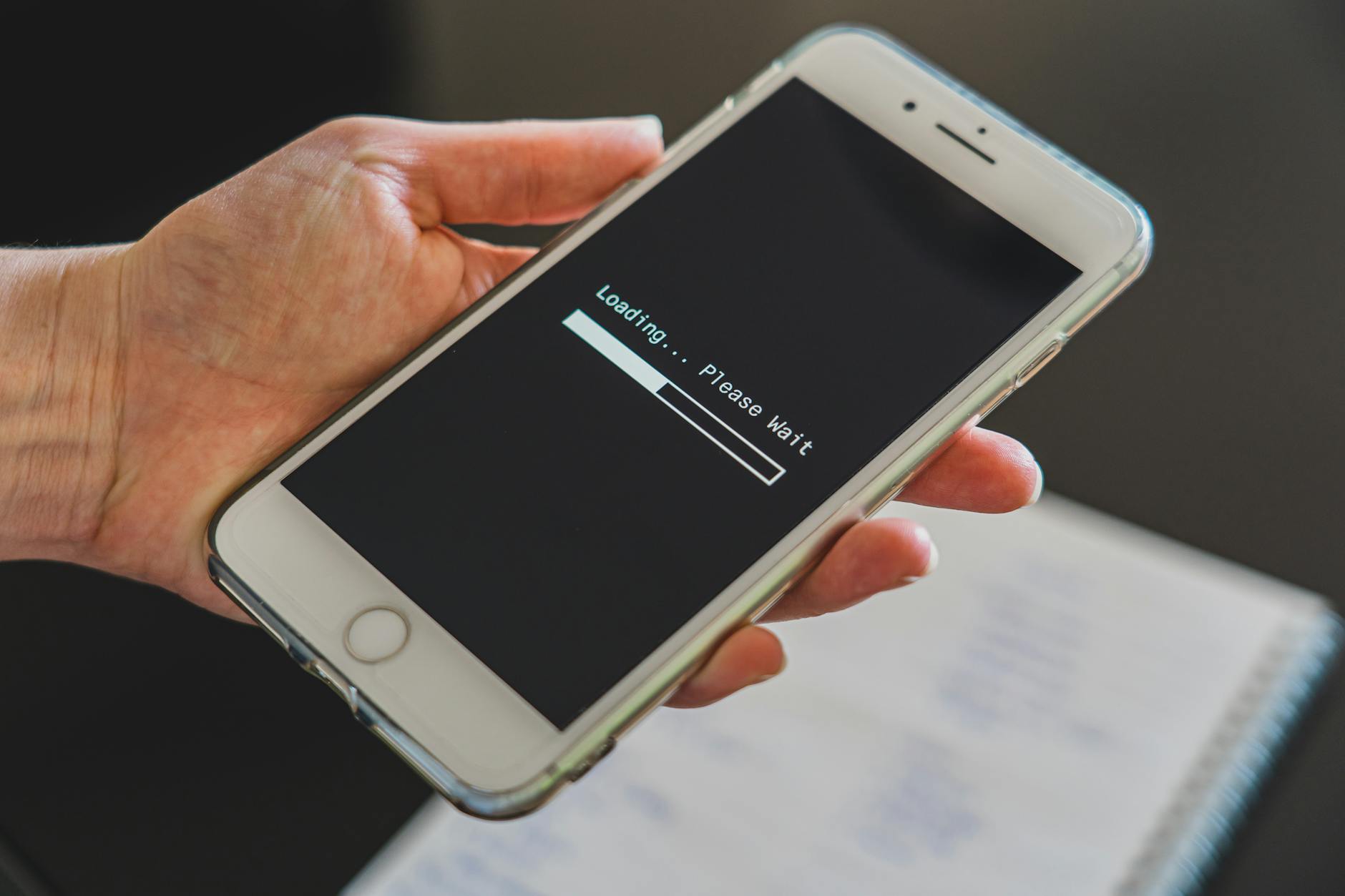
    You ever realize that loading screens are the modern version of waiting rooms? Just… digital purgatory. They’re spaces where nothing’s really happening, but you can’t go anywhere else either. You’re forced to just be—in limbo—while a system decides when you’re allowed to move on.

    Sometimes it feels like life does that too. Like you’re stuck in your own personal loading screen—waiting on health to improve, jobs to call back, people to change. No progress bar. No music. Just vibes. And maybe some spinning wheel of doom.

    And what do we usually do during loading screens? Grab our phones. Scroll. Mentally bail. Because being alone with our thoughts—even for a few seconds—can feel unbearable. But maybe those moments could mean something. Maybe waiting is underrated. Maybe the in-between is where we actually process.

  • Wisdom Wednesdays #9: The Echo of Enough

    Wisdom Wednesdays #9: The Echo of Enough

    In a world that urges us to keep climbing—toward more success, more improvement, more validation—it can feel almost radical to pause and ask: What if I’m already enough?

    We’re often taught that growth means never stopping, that our worth is earned through productivity, perfection, or comparison. But true wisdom, the kind that settles deep in the soul, whispers something different. It says: You were always enough. Not because of what you do, but because of who you are.

    Enoughness doesn’t shout—it echoes quietly in moments we often overlook. In the morning light slipping through the curtain, in the breath we didn’t realize we were holding, in the steady beat of our hearts carrying us through another day. It is present not in our achievements, but in our presence.

    To recognize our own enoughness is not to deny the desire to grow—it is to root that growth in love instead of lack.

    Imagine a garden. The gardener does not water the soil because it is unworthy, but because it holds the potential to bloom. Similarly, acknowledging that you are enough doesn’t mean you’ll never change; it means you are growing from a place of wholeness rather than emptiness.

    And yet, how often do we chase approval like a mirage—believing we’ll finally feel worthy when we reach the next goal, relationship, milestone, or version of ourselves?

    But every time we arrive, the bar shifts.

    The echo of enough gets drowned out by noise: internal criticism, external expectations, the pressure to prove ourselves. We forget that enough is not a destination. It’s a recognition. A remembering. A return.

    This week, I invite you to notice the small affirmations of enough in your daily life. The way your laughter lifts a room. The quiet resilience that got you through the last hard day. The dreams you still carry, even when the path feels uncertain.

    Let this be your reminder: You are not a problem to be fixed. You are a story in progress. You are not behind. You are becoming.

    And you are enough—not because of what you’ve done, but because of who you are when you are simply still, fully present, and deeply human.

    Where in your life can you let the echo of enough rise above the noise?

  • Wisdom Wednesdays #8: The Gift of Being Unfinished

    Wisdom Wednesdays #8: The Gift of Being Unfinished

    We often chase the feeling of being “complete.” We want tidy endings, firm resolutions, and a sense of having arrived. But life, in all its complexity and wonder, is rarely that neat. What if our unfinishedness isn’t a flaw to be corrected—but a quiet, ongoing miracle?

    To be unfinished is to be alive.

    We are stories still being written, songs still humming their way into form. The brush is still on the canvas, the clay still soft in the sculptor’s hand. Each day, each breath, is another stroke in our unfolding masterpiece. And though we may long for certainty or finality, it is this very fluidity that gives us space to grow.

    A tree does not mourn its lack of fruit in winter. It simply continues its process—rooting, resting, reaching. So too, we move through seasons, some vibrant with bloom, others bare and still. When we allow ourselves to exist within the arc of becoming, we grant ourselves grace. We stop demanding perfection from what is still in progress.

    There’s a kind of wisdom in not rushing to resolve the story too soon.

    Perhaps your healing is still in motion. Perhaps the clarity you crave is still forming beneath the surface. Perhaps the version of yourself you’re meant to meet is just around the bend—and you’re not late. You’re simply not there yet. And that’s okay.

    Sometimes, the pressure to be complete, healed, or perfect comes from a deeper fear: that we are not enough in our current state. But being a work-in-progress does not mean you are broken. It means you are real. It means you are growing, breathing, and beautifully human.

    Instead of asking, “When will I arrive?”—try asking, “What can I learn from where I am?”

    Because right here, in the unfinished chapter, is where some of the richest truths are born. Here is where we practice patience, cultivate resilience, and deepen our understanding of what it means to live with openness and hope.

    So this week, let yourself be a little unfinished. Let the paint still be wet. Let the notes trail off into silence. Trust that the beauty of your becoming is enough, even now.

    What if your unfinishedness is not a gap—but a garden still growing?

  • Wisdom Wednesdays #7: The Quiet Strength of Surrender

    Wisdom Wednesdays #7: The Quiet Strength of Surrender

    There is a subtle power in surrender—a kind of strength that is often mistaken for weakness in a world that celebrates control, hustle, and constant striving. Yet, if we pause long enough to listen, life whispers that not all battles are meant to be fought. Some are meant to be released.

    Surrender is not giving up. It is not failure, nor is it passivity. Surrender is the conscious choice to release the illusion that we can—or must—control everything. It is the moment when we unclench our fists and loosen our grip on what no longer serves us: old identities, outdated expectations, rigid timelines, or the need for certainty.

    In this act of letting go, we begin to see things more clearly. The fog of resistance lifts, and we are left with a soft clarity. Like a leaf floating down a stream, we begin to trust the current, recognizing that the river knows the way.

    Consider the way trees bend in the wind. They do not fight the gusts; they move with them. And in that fluid dance, they survive storms that would break something more brittle. Surrender is like that: not a sign of weakness, but of deep-rooted strength and wisdom.

    In relationships, surrender might look like releasing the need to be right in order to truly listen. In personal growth, it may appear as accepting where you are instead of shaming yourself for not being further. In grief, it is the breath you exhale when you stop holding back the tears. There is a quiet grace in these moments—a reminder that healing often begins where resistance ends.

    It takes courage to surrender. To say, “I don’t know where this is going, but I will trust the unfolding.” It asks us to soften, to trust something greater than our plans—be it the rhythm of nature, the quiet pull of intuition, or the wisdom of life itself.

    And yet, time and again, surrender leads us not into chaos, but into deeper alignment. We discover that when we let go, we don’t fall—we land. Often in a place we didn’t expect, but somehow needed all along.

    So perhaps the next time life asks you to loosen your grip, you can take a breath and ask: What am I holding onto that is holding me back?

    Let that question sit with you this week. Let it ripple through your thoughts like a soft wave, and notice what it stirs.

    You may find that surrender doesn’t take something away—it gives something back.

  • Wisdom Wednesdays #6: The Mirror of Relationships

    Wisdom Wednesdays #6: The Mirror of Relationships

    The people we surround ourselves with are often mirrors reflecting parts of ourselves—both the shadows and the light.

    Relationships are not just connections with others—they’re opportunities for profound self-discovery.

    When you find yourself triggered, hurt, or frustrated by someone, it’s often a reflection of an inner wound, fear, or unresolved part of yourself.

    Instead of blaming others, try looking inward. Ask yourself: What is this relationship teaching me about myself?

    Are you being shown a pattern you keep repeating? Are you learning boundaries, forgiveness, or self-compassion?

    Wise relationships challenge us to grow. They invite us to see our blind spots and to expand our emotional capacity.

    So the next time conflict arises, consider it a gift—a mirror held up to your own soul, inviting you to evolve.

  • Wisdom Wednesdays #3: Let the Wound Be the Teacher

    Wisdom Wednesdays #3: Let the Wound Be the Teacher

    Our culture teaches us to avoid pain at all costs—to protect ourselves from the hurts of life. We medicate, distract, and suppress anything that feels uncomfortable. But what if our wounds are not things to be ashamed of, but instead opportunities for growth?

    Every wound, whether emotional or physical, has the potential to teach us something profound. It’s in our deepest pain that we often learn the most about ourselves. The scars of our past are not marks of failure, but symbols of resilience.

    Consider the idea that every painful experience we face—be it a betrayal, a loss, or a mistake—has something to teach us. In the aftermath of a difficult experience, we have the choice to reflect, to grow, and to change. The key lies in how we choose to approach the wound.

    Rather than avoiding or numbing the pain, try sitting with it for a moment. What does it reveal about you? What patterns are emerging? How can this experience help you grow stronger, wiser, and more compassionate?

    The road to healing is not linear—it’s messy, raw, and often difficult. But in this very messiness, there is profound wisdom. As you face your wounds, remember that they are not here to break you, but to teach you.

    Each wound is a lesson. Let it be your teacher.


  • Wisdom Wednesdays #1: The Weight of Stillness

    Wisdom Wednesdays #1: The Weight of Stillness

    In today’s fast-paced world, we’re taught to constantly strive for more: more success, more social media followers, more productivity. But in the pursuit of more, we often lose the most precious thing we can have—our inner stillness.

    The truth is, stillness is not an absence of action, but a presence of awareness. It’s the space between thoughts, the pause before reacting, the quiet mind that allows clarity to emerge.

    When was the last time you gave yourself permission to simply be? To sit in silence without guilt or discomfort? Stillness isn’t about escaping the world; it’s about reconnecting with it from a place of deep presence.

    There’s wisdom in the gaps—the moments between our frantic doing. Stillness is where we find our truest self, untainted by external expectations. It’s in the silence that we hear our own heart, unencumbered by the clamor of the world around us.

    Let this be your reminder: you don’t need to fill every moment with noise. Sometimes, the most profound insights arise when we simply listen to the quiet, giving ourselves space to breathe and reflect.