The Musings of Jaime David
@jaimedavid.blog@jaimedavid.blog

The writings of some random dude on the internet

1,161 posts
1 follower

Tag: loss

  • Seven Years Later, Still That Same Moment

    Seven Years Later, Still That Same Moment

    Seven years is supposed to feel like distance. That’s what people tell you, what you tell yourself, what the world quietly expects you to accept. Time moves forward, relentlessly, stacking days into months into years until something that once felt immediate is supposed to settle into memory. But grief doesn’t follow that rule. It doesn’t respect calendars or anniversaries. It doesn’t care how many years have passed. Sometimes seven years feels like a lifetime ago, like you’ve lived entire versions of yourself since then. And sometimes it feels like nothing has moved at all, like you’re still standing in that exact moment when everything changed. Both of those realities exist at once, overlapping, impossible to separate, and somehow that contradiction becomes its own kind of truth.

    Today is April 18, 2026, and it has been seven years since my uncle died. Even writing that feels strange, like I’m describing something distant when it doesn’t feel distant at all. It feels close. Too close. There are moments where I stop and think about it, and it genuinely doesn’t feel like seven years have passed. It feels like a few months, maybe a year at most, like something recent enough that I should still be able to reach out, still be able to hear his voice, still be able to exist in a world where he’s here. And then there are other moments where the weight of those seven years hits all at once, where I realize how much time has actually gone by without him, how many things have happened, how many moments he’s missed, how much life has continued in a way that feels both natural and deeply wrong at the same time.

    What makes it even harder to process is how I found out. There was no call. No moment of someone sitting me down, no gradual realization, no buffer between normal life and the shock of loss. It was a social media post. Just words on a screen from a family member who knew him. That’s how I learned that someone who meant that much to me was gone. And at first, it didn’t even feel real. It couldn’t be real. It felt like a mistake, like some kind of misunderstanding, like maybe it was about someone else with the same name. There was that immediate instinct to reject it, to push it away, to think, “What is this? This has to be a joke.” Because the alternative was too heavy, too sudden, too final to accept in that moment.

    But it wasn’t a mistake. It wasn’t a joke. It was real. And that realization didn’t come gently. It hit hard, all at once, like the ground giving out underneath you before you even realize you’ve lost your footing. That moment sticks in a way that doesn’t fade. It replays itself, not always vividly, but always there, like a fixed point in time that everything else moves around. The way something like that enters your life matters. The way you learn about a loss becomes part of the loss itself, stitched into the memory in a way you can’t separate. And finding out like that, through a screen, alone with the information before anyone could even explain it, made it feel even more unreal and more devastating at the same time.

    And then there’s how it happened. Not just that he died, but the way it unfolded. A few days before, he bumped his head. Something that sounds small, something that on its own wouldn’t raise alarms. The kind of thing people brush off, maybe joke about, maybe forget entirely. And then a few days later, everything changed. He collapsed. He fell into a coma. And he never woke up. That sequence of events doesn’t sit right, even years later. It feels abrupt, unfair, like something that shouldn’t have been able to escalate like that. It leaves behind questions that don’t have satisfying answers, a sense that something so massive came from something that seemed so minor, and that disconnect makes it even harder to fully accept.

    It was awful. There’s no softer way to put it, no way to wrap it in language that makes it easier to hold. It was traumatic. It reshaped something fundamental in how I understand how quickly life can change, how fragile everything actually is. One moment someone is there, part of your everyday world, someone you assume will continue to be there in all the ways that matter. And then, in what feels like no time at all, they’re gone. Not gradually, not in a way that gives you time to prepare, but suddenly, in a way that leaves you trying to catch up to something that’s already happened.

    And what makes this loss even heavier is who he was to me. He wasn’t just an uncle in the distant, occasional sense of the word. He was like a dad to me. Truly. That kind of relationship doesn’t fit neatly into labels. It goes beyond titles and definitions. It’s built on presence, on the role someone plays in your life, on the way they show up for you, guide you, support you, exist as a steady figure in your world. Losing him wasn’t just losing a relative. It was losing someone who filled a space that can’t really be replaced, someone whose absence is felt in ways that extend into so many parts of life.

    That’s part of why time doesn’t “fix” it in the way people sometimes suggest it will. You don’t move on from something like that. You move with it. It becomes part of how you experience the world, part of how you think, part of how you measure time itself. Anniversaries like this one don’t just mark the passing of years. They bring everything back to the surface, not necessarily in a way that overwhelms you completely, but in a way that reminds you that the loss is still there, still real, still significant. It doesn’t disappear just because more time has passed.

    There’s also something surreal about the way memories work after this kind of loss. They don’t line up neatly in the past. They feel present, like they exist alongside your current life rather than behind it. You can think about a moment, a conversation, a feeling, and it doesn’t feel like something that happened “back then.” It feels immediate, like something you can almost step back into. And then you’re hit with the reality that you can’t. That contrast between how close it feels and how final it actually is creates a kind of emotional dissonance that’s hard to fully put into words.

    Every fucking April since 2019 has felt like it comes with its own kind of weight, like the month itself is cursed or stacked against me in ways that don’t even feel rational anymore. It’s not just one thing. It’s not just one bad memory or one hard moment that defines it. It’s the accumulation of everything that keeps happening in or around this month, year after year, like April refuses to let anything be normal. It’s gotten to the point where I don’t even approach April with neutrality anymore. There’s always this low-level expectation that something is going to go wrong, or something is going to resurface, or something is going to remind me why this stretch of time has felt so consistently heavy since 2019.

    April 2019 was already close to something foundational breaking. My uncle on my dad’s side died, and that alone changed the emotional baseline of everything that came after. That loss never really “settled” in the way people expect grief to settle. It just became part of everything else. And even now, years later, it still feels close in a way that doesn’t make sense on paper. Time has passed, but the emotional distance never matched it. That’s part of why April itself started to feel different after that point. It wasn’t just a month anymore. It was a reminder.

    Then came April 2020, and it felt like the world itself was collapsing in layers. It was only a month after my grandpa died, so I was already in that raw, disoriented state where everything feels slightly unreal. And then COVID started spreading everywhere, and the entire atmosphere of life changed overnight. Fear, uncertainty, isolation, all of it just layered on top of grief that hadn’t even had time to breathe yet. And then, on top of that, my high school history teacher died from COVID. What makes that even more surreal is that he died on the exact same day, one year after my uncle died. That kind of timing feels almost impossible when you look at it from the outside, like some kind of cruel coincidence that repeats the same emotional wound on a calendar you didn’t ask to be part of.

    That teacher wasn’t just a name on a roster either. He was someone who actually made learning feel alive in a way that stuck with me. And then suddenly he was gone too, in the middle of a global crisis that already felt like it was stripping everything familiar away. And that year, politically and socially, everything felt unstable in a different way as well. Trump’s first term response to COVID was chaotic and inconsistent, and the broader environment in the country felt like it was constantly spiraling between denial, panic, and confusion. It wasn’t just personal grief anymore. It felt like the entire structure of reality was shaky.

    April 2021 didn’t give any real relief either. It was only a few months after the Capitol riots, and the political tension in the country still felt thick in a way that was hard to ignore. Everything felt polarized, loud, and unstable. Even day-to-day life carried this underlying sense of friction, like everyone was still reacting to something unresolved. Around that same time, I also got canned from what I considered my dream job back then. That wasn’t just a professional setback. It hit in a way that made everything feel more uncertain, like stability itself was something I couldn’t rely on, even when I thought I had it.

    April 2022 brought its own different kind of heaviness. The Ukraine war had just started a couple months earlier, and the global atmosphere felt tense and uncertain in a way that was hard to fully process in the background of everyday life. But there was also something more personal underneath that I didn’t fully understand at the time. I had a friend I had fallen out with, and I didn’t know it then, but he died in 2022. I only found out much later, over two years after the fact, in May 2024. That delay adds its own kind of distortion to the memory, because it means the grief doesn’t happen where it “should” in time. It arrives late, retroactively, and rewrites what you thought you already understood about the past.

    April 2023 felt like another shift into something more chaotic in a different way. The indictment of Donald Trump made New York feel tense in a very immediate, physical sense. The city itself felt like it was on edge, like every conversation carried an undertone of political friction and uncertainty. It wasn’t just headlines anymore. It was something that felt embedded in the environment, like walking through the city itself came with a sense of instability that you could feel in the air.

    Then April 2024 came, and the Trump trial made everything feel even more intense. New York felt even more chaotic, even more charged, like there was a constant pressure in the background of daily life. That month was also still emotionally shaped by loss on a personal level, because a few months earlier, my dog of 13 years had died in the summer of 2023. That kind of loss doesn’t just disappear by the time a new calendar year rolls around. It stays embedded in routines, in spaces, in quiet moments that don’t have anything to do with politics or headlines but still carry that absence with them.

    April 2025 didn’t reset anything either. It came only a few months after my other dog, who I had for almost 10 years, got sick with cancer in late 2024, then died just a few weeks later in January 2025, right before her 10th birthday in February. That loss felt especially cruel in its timing, like there wasn’t even enough space between sickness and goodbye for it to fully register. And by the time April came around again, I was still sitting in that aftermath. On top of that, it was a few months into Trump’s second term, and after the 2024 election, everything politically felt heightened again. His campaign and return to office felt even more intense and divisive than before, and the sense of national instability didn’t really feel like it had eased at all. It felt like everything was still accelerating instead of calming down.

    Now April 2026 is here, and it somehow feels like it’s carrying all of that history with it at once. It doesn’t feel separate from the previous Aprils. It feels like an extension of them. A continuation. The political situation has escalated in ways that feel almost unreal when you say them out loud. The United States has been involved in escalating military action abroad, including direct conflict with Iran that has stretched into a prolonged war environment. There have been naval blockades, global economic instability, and rising tensions that feel like they are constantly shifting. At the same time, there has been renewed military intervention and pressure in places like Venezuela, along with ongoing rhetoric about expanding conflict or influence into other regions, including Greenland and even Cuba. It feels like the geopolitical atmosphere is constantly moving between escalation and instability, with no clear sense of de-escalation in sight.

    Reading or hearing things like that on the news doesn’t feel distant anymore. It feels immediate, like the world itself is stuck in a constant state of volatility. Oil markets shifting, military movements, diplomatic breakdowns, threats of expansion, ceasefires collapsing or being questioned almost immediately afterward. Everything feels like it’s happening all at once, without enough time for anything to stabilize before the next development hits. And it all layers on top of the personal history of these Aprils, making the present feel even heavier because it’s not just about what’s happening now. It’s about everything that has already happened before.

    That’s what makes this stretch of time feel so strange to live through. It’s not that every single April is objectively the worst thing imaginable. It’s that each one stacks on top of the last, so the emotional weight compounds instead of resets. Grief, political tension, personal loss, instability, change, all of it keeps returning in different forms, but always around the same time of year. And eventually, you start to associate the month itself with that accumulation, even when you logically know it’s just a marker on a calendar.

    It’s hard to explain to someone who hasn’t lived through that kind of repeating pattern how much it changes your relationship with time. April stops feeling like just another month. It becomes a reminder of everything that has already happened and everything that could still happen again. And even when nothing specific is going wrong in the moment, there’s still that background awareness that history has not exactly been kind to this stretch of time.

    So every April since 2019 doesn’t feel like a series of isolated events. It feels like one long continuation of everything that started back then. A chain of loss, instability, change, and global uncertainty that never fully resets before the next link is added. And at some point, you stop thinking of it as coincidence and start thinking of it as a pattern you just have to live through.

    Seven years later, that surreal feeling hasn’t gone away. If anything, it’s become part of the way I understand the loss. Time has moved forward, undeniably. Life has continued, as it always does. But there’s a part of me that is still in that moment of discovery, still processing the shock, still trying to reconcile how something so significant could happen so suddenly and so quietly from my perspective. That moment didn’t stay in the past. It stretched forward, threading itself through the years that followed.

    And maybe that’s what grief really is in situations like this. Not something that fades into nothing, but something that changes shape over time. It becomes less about the immediate shock and more about the ongoing absence. Less about the moment you found out and more about all the moments since then where you feel that absence in different ways. The big moments, the small ones, the ordinary days where something reminds you of them out of nowhere. It’s not constant in the same way, but it’s persistent. It stays.

    Seven years later, it still feels surreal. It still feels unfair. It still feels like something that shouldn’t have happened the way it did. And it still feels like I lost someone who meant more to me than words can fully capture. Time has passed, but that doesn’t erase the reality of what was lost or the impact it continues to have. It just adds layers to it, layers of memory, reflection, and the ongoing process of carrying something that never really goes away.

    And maybe that’s the closest thing to understanding it. Not trying to force it into something neat or resolved, but recognizing that it exists in that in-between space where time moves forward and stands still at the same time. Where the past feels present, and the present is shaped by something that happened years ago. Where seven years can feel like everything and nothing all at once.

    Fediverse Reactions
  • Four Years Later: Connor, Silence, and the Things Addiction Leaves Behind

    Four Years Later: Connor, Silence, and the Things Addiction Leaves Behind

    Before You Read: A Necessary Disclaimer

    I need to say something before you continue.

    What you’re about to read is the heaviest thing I have ever shared publicly.

    Not just on this blog.

    On any blog.

    On any platform.

    This is not a dramatic exaggeration. It is a sincere warning. I have written about difficult topics before. I have written about personal growth, loneliness, identity, frustration, politics, science, and the complexity of being human. But this piece is different.

    This one carries real loss.
    Real death.
    Real names.
    Real consequences.

    It deals with addiction.
    It deals with overdose.
    It deals with guilt.
    It deals with silence.
    It deals with the uncomfortable reality of how society treats certain kinds of grief.

    And it is deeply personal.

    Before anything else, there is something I want to address directly.

    If Connor’s family ever finds this piece — and they may — they might recognize who I am. They might know my real name. They might wonder why I chose to share this under a pen name.

    The answer is simple, and it is not evasive.

    I am a writer.

    The name you see attached to this post is not a mask I hide behind. It is the identity I built my work around. It is the name under which I publish, think, reflect, and create. It is consistent across my writing. It is part of the creative life I have intentionally constructed.

    Choosing to publish this under my pen name is not about distancing myself from Connor or from accountability. It is about continuity. This is the space where I write honestly. This is the name attached to my voice. This is where my reflections live.

    If his family reads this, I want them to understand that nothing about the name changes the sincerity behind these words.

    This is not anonymity as avoidance.

    It is authorship.

    There is something else I want to say — something that does not fit cleanly inside the story itself, but feels important to acknowledge here.

    Connor’s humor was one of the most inspiring things about him.

    When I met him in seventh grade, he wasn’t just funny in the casual, classroom-disruption way. He was imaginative. He was a storyteller. He would spin these wildly elaborate narratives out of thin air — cinematic, chaotic, ridiculous in the best way.

    There was one running bit in particular: over-the-top, action-movie-style stories about our school bus driver. I won’t go into detail here. But they were absurd. Explosive. Dramatic. Completely unnecessary — and absolutely hilarious.

    It sounded like something pulled straight out of a high-budget action film.

    He committed to the bit every time.

    And he was good at it.

    Looking back now, I sometimes think that if Connor had found steadier ground — if life had bent differently — writing might have been a real knack for him. He had the imagination for it. The instinct for escalation. The rhythm of storytelling.

    I don’t know if he ever considered that path.

    But I know this:

    A scene in my debut novel, Wonderment Within Weirdness, was directly inspired by those bus-driver stories.

    There is a school bus action battle scene in that book.

    That’s all I will say about it.

    It exists because of him.

    I chose not to place this in the body of the story you’re about to read because I did not want to dilute the emotional focus. But it matters to me that this is said somewhere.

    Connor did not just influence my memories.

    He influenced my creativity.

    He influenced my imagination.

    He influenced my writing.

    And if you are someone who has read my work before this post, then in some quiet, indirect way, you have already encountered a small echo of him.

    If you are here for something light, this is not that post.

    If you are here to skim, this is not that post.

    If you are here looking for tidy conclusions or inspirational platitudes, you will not find them.

    This story does not resolve cleanly.
    It does not tie itself into a neat moral.
    It does not offer a satisfying arc.

    It is layered. It is uncomfortable. It is honest.

    And honesty can be heavy.

    I debated sharing this for a long time.

    Years, actually.

    Part of me believed that some stories are meant to stay private. That some grief is better processed quietly. That naming things publicly makes them more real in a way that can’t be undone.

    But there is another part of me — the part that believes in documentation, in storytelling, in refusing to let silence erase people — that knows this story deserves to exist outside of my head.

    Still, I want to be clear about what you’re walking into.

    This piece discusses:

    • Substance use disorder.
    • Fentanyl and overdose.
    • The death of someone I once loved as a friend.
    • The aftermath of that death.
    • The complicated emotions that come with distance, boundaries, and unresolved conversations.
    • The societal discomfort surrounding overdose deaths.
    • Survivor’s guilt.
    • Anger.
    • Silence from people who once shared history with the person who died.

    It also includes reflections shaped by reporting, court proceedings, and the broader fentanyl crisis in the United States.

    If any of these topics are triggering or overwhelming for you, I encourage you to pause here. Protect your peace. There is no obligation to read this.

    This is not written to shock.
    It is not written to sensationalize.
    It is not written to exploit tragedy for engagement.

    It is written because grief that goes unnamed turns into something heavier.

    And because overdose deaths are too often reduced to statistics.

    I want to make something else clear:

    This is not a takedown.
    This is not an indictment.
    This is not an attempt to assign blame to individuals in my past.

    There are people mentioned in this story — former classmates, a friend’s mother, legal actors — who are human beings navigating their own grief, guilt, and complexity. This piece reflects my perspective and my emotional processing. It does not claim to hold the full truth of anyone else’s experience.

    Memory is imperfect.
    Grief reshapes perception.
    Time alters narrative.

    I am not presenting myself as the hero of this story.
    I am not presenting myself as the villain either.

    I am presenting myself as human.

    You will read about a friendship that meant a great deal to me.
    You will read about how addiction changes people.
    You will read about how I eventually stepped away.
    You will read about how that choice still lives with me.
    You will read about how I found out two years after the fact that my former friend had died.
    You will read about how I tried to share that information with others who once knew him.
    You will read about silence.

    There will be frustration in these words.

    There will be anger.

    There will be moments where I question people’s empathy.

    But I ask that you read those moments with nuance.

    Grief is rarely tidy.
    It is rarely calm.
    It is rarely perfectly diplomatic.

    When someone dies young — especially in a way that carries stigma — emotions do not arrive filtered.

    Another thing I want to say before you begin:

    This is not a universal story about addiction.

    It is one story.

    Addiction is complex. It intersects with mental health, trauma, environment, neurobiology, economics, policy, and access to care. It is not reducible to one choice, one moment, or one person. It is also not fully explainable from the outside.

    I am not an addiction specialist.
    I am not a clinician.
    I am not writing from professional authority.

    I am writing from lived proximity.

    From having watched someone change.
    From having tried to stay.
    From having eventually stepped back.
    From having later read about the final hours of a life I once knew closely.

    If you are someone who has struggled with substance use, please know that this piece is not written in judgment of you.

    If you are someone who has lost someone to overdose, please know that I see you. I understand that grief in this category carries a unique weight — one shaped not only by loss but by stigma.

    If you are someone who has distanced yourself from a person battling addiction, you may recognize parts of yourself here. That recognition is not condemnation. It is reflection.

    I also need to say this clearly:

    This post may challenge how you think about empathy.

    It may challenge how you respond to uncomfortable news.

    It may challenge assumptions about what we owe people from our past.

    It may challenge the way society ranks certain deaths as more mournable than others.

    That is intentional.

    Not to provoke.
    Not to shame.
    But to invite reflection.

    The silence that followed when I shared news of his death affected me deeply. But silence can come from many places — shock, avoidance, guilt, confusion, fear of saying the wrong thing.

    I am not claiming to know the internal worlds of the people who did not respond.

    I am only sharing how it felt.

    And feelings, even when raw, are valid data points in a human story.

    You should also know that this piece does not romanticize addiction.

    It does not glamorize self-destruction.

    It does not attempt to make tragedy poetic.

    It attempts to hold two truths at once:

    Someone can be funny, magnetic, formative in your life — and also deeply unwell.

    Someone can be loved — and still lose to a substance.

    You can step away from someone — and still grieve them.

    You can feel anger at the system — and still understand individual accountability exists within it.

    Complexity is uncomfortable.

    But I am no longer interested in flattening complexity to make it easier to digest.

    This is also a boundary-setting disclaimer.

    If you choose to read this piece, I ask that you do so with care.

    Do not screenshot it for gossip.
    Do not mine it for drama.
    Do not reduce it to a headline.
    Do not weaponize it in conversations disconnected from its context.

    This is not content.

    This is a memory.

    This is not a spectacle.

    This is a person who once made me laugh in seventh grade.

    I have tried to write this in a way that preserves dignity — his dignity, his mother’s dignity, my own.

    That doesn’t mean it will be comfortable.

    But discomfort is not the same as harm.

    Another reason this disclaimer is long is because I understand the internet.

    I understand how quickly nuance can be lost.

    How easily people skim.

    How rapidly opinions form without full context.

    So let me say this plainly:

    If you are not in a space to engage thoughtfully, it is okay to skip this.

    If you feel defensive while reading, pause and ask yourself why.

    If you feel called out, consider whether that feeling is about me — or about something unresolved in yourself.

    This piece is not about being right.

    It is about being honest.

    And honesty, especially about death, requires care.

    I am aware that by publishing this, I am making something private public.

    That choice carries risk.

    There may be people who feel exposed.
    There may be people who disagree with my framing.
    There may be people who wish I had stayed silent.

    I have considered that.

    And still, I believe that stories like this deserve to be told — not to shame, but to illuminate.

    Because overdose deaths often happen quietly.
    They are whispered about.
    They are softened in obituaries.
    They are avoided in conversation.

    And in that avoidance, people disappear twice.

    First physically.

    Then socially.

    I am not willing to let that happen here.

    This is also, in a strange way, an act of closure.

    Not neat closure.
    Not cinematic closure.

    But personal closure.

    Writing allows me to integrate fragmented memories — middle school laughter, high school reconnection, adult distance, a courtroom transcript, a petition I found two years too late — into one narrative.

    Without integration, grief lingers as loose threads.

    With integration, it becomes part of your story instead of something that ambushes you from the dark.

    Finally, I want you to understand something important:

    This post is heavy because the subject is heavy.

    But it is not hopeless.

    There is sadness here.
    There is anger.
    There is frustration.

    But there is also gratitude.

    Gratitude that I knew him when I did.
    Gratitude for the ways he changed my life at a formative age.
    Gratitude that I am still here.
    Gratitude that some people did respond with care.
    Gratitude that I can write this at all.

    If you choose to continue, read slowly.

    Sit with it.

    Resist the urge to rush to judgment — of him, of me, of anyone.

    This is not a morality tale.

    It is a human one.

    And human stories deserve patience.

    Thank you for taking that on.

    There is one more thing I need to say before you begin.

    The reason I am choosing to share this publicly now is not impulsive.

    For a long time, I kept this story private. Even after I found out what happened. Even after I read the reporting. Even after I processed the anger and the grief and the silence. I sat with it.

    Part of me felt that this wasn’t my story to tell.

    But then something shifted.

    His family chose to go public.

    They shared his story in major outlets — in The New York Times, in Newser. They allowed the details of his final day, his struggle, the legal aftermath, and the broader fentanyl crisis to be documented publicly.

    That was not a small decision.

    That was intentional.

    When a family chooses to bring something that painful into the public record, it changes the landscape of what is private and what is part of a larger conversation.

    They did not hide him.

    They did not obscure what happened.

    They did not soften it into something vague.

    They told the truth.

    And because they told the truth, I no longer feel like I am exposing something secret by telling my side of knowing him.

    I am not breaking silence.

    The silence was already broken — by courage.

    By transparency.

    By a mother willing to say, “This happened to my son.”

    And when I saw that, something in me settled.

    I realized that if his family could carry their grief publicly in order to confront stigma and tell the reality of overdose, then I could carry my small, personal piece of knowing him publicly too.

    Not to add noise.

    Not to center myself.

    But to add dimension.

    The news articles tell the story of his death.
    They tell the story of addiction.
    They tell the story of the courtroom.

    This post tells the story of a seventh-grade classroom.
    Of laughter.
    Of a friendship that once felt formative.
    Of distance.
    Of boundaries.
    Of what it feels like to find out too late.
    Of what it feels like when others don’t respond.

    Both can exist.

    Both are true.

    And I would not be sharing this if his family had chosen privacy.

    That distinction matters to me.

    This is not an act of exposure.
    It is an act of remembrance within a story that has already entered the public record.

    If anything, I hope it reinforces what their decision to go public already makes clear:

    He was more than the headline.
    More than the court case.
    More than the statistic.

    He was known in classrooms.
    He was known in friend groups.
    He was known in ordinary, unremarkable, human ways.

    And those versions of him deserve space too.

    So I am choosing to add my voice — carefully, respectfully, and with the awareness that this is shared grief, not owned grief.

    Now you can begin.


    Connor

    Two months from now, it will be four years since Connor died.

    Even writing that feels strange. Four years sounds like something that should have softened by now. Something that should sit neatly in the past, filed away, manageable.

    It doesn’t.

    Grief doesn’t follow the calendar. It doesn’t respect logic or timelines or the quiet agreements we make with ourselves about how long mourning is supposed to last. It circles back. It tightens around anniversaries. It resurfaces when you hear a certain song, or when you catch yourself laughing at something he would have found funny too, and then the laughter goes hollow.

    Four years. And some mornings it still feels like the ground is slightly uneven beneath me.

    His name was Connor Barr.

    And before anything else, I need to make something clear. I was never involved in the kind of life he ended up in. I never used substances. I never got mixed up in that world. In that sense, we were opposites. Different coping mechanisms. Different paths. Different outcomes.

    So how did we become friends?

    We met in seventh grade.

    Back then, I was lonely. Not casually lonely — the kind of lonely that becomes its own ecosystem. The kind that reshapes how you move through a hallway, how you eat lunch, how you convince yourself that invisibility is the same as safety. I had very few friends. I struggled socially in ways I couldn’t fully articulate at the time. School felt like something to endure rather than enjoy — a place I showed up to and waited through.

    Connor changed that.

    He was magnetic. Funny in a way that didn’t feel performed or forced. He had this quality — rare in middle schoolers, rare in most people — of making a room feel lighter without seeming to try. The kind of kid who could make a classroom burst out laughing with a single well-timed line and then look almost surprised that it worked. Being around him made things easier. More bearable. For someone like me, who had spent months on the periphery of everything, that mattered more than I probably understood at the time.

    That year became a turning point. For the first time in a long time, I wasn’t invisible. I had a place to stand. A person who actually saw me.

    You don’t forget that. You can’t.

    He left the school in eighth grade, but we stayed in touch — the way you do when a friendship has genuine roots. In high school, even though we were at different schools, our friendship deepened rather than faded. He blended into my friend group seamlessly, as if he’d always been there. It felt natural. Easy.

    But as we grew up, something darker started to surface.

    At first it wasn’t obvious. Or maybe it was subtle enough that I didn’t want to see it. When you care about someone, you can rationalize a lot. You can explain things away. You can interpret instability as just going through a hard time, erratic behavior as stress, withdrawal as needing space.

    But over time, the signs became harder to ignore.

    Psychiatric struggles. Instability that ran deeper than circumstance. And then — slowly, unmistakably — addiction.

    Addiction rarely arrives loudly. It doesn’t announce itself at the door. It edges in. It borrows. It takes a little more than it gives back, and then a little more than that. And by the time you understand what you’re dealing with, the person you love has already reorganized themselves around something you can’t reach.

    By the time college came around, the spiral was clearer. There were falling-outs. Reconciliations. Distance. Attempts to reconnect that felt hopeful and then didn’t.

    In late 2018, we tried again. He seemed like he was finding some footing. I let myself believe it. I think I needed to.

    But by 2020, I was exhausted in a way I didn’t have language for. Being his friend had become emotionally overwhelming — not because I had stopped caring, but because caring had started to cost me things I didn’t know how to keep giving. I wanted to be steady for him. I tried to be. But there’s a particular kind of helplessness in watching someone struggle with something that doesn’t respond to love or loyalty or presence.

    You cannot compete with addiction. That’s not a metaphor. It is a physiological and psychological reality. Addiction rewires the brain’s reward system so fundamentally that it changes what a person responds to, what they pursue, what they are able to prioritize. You can be a good friend. You can be patient and present and honest. And addiction will still outbid you every time.

    In 2021, he tried to reach out again. And I didn’t respond.

    I told myself I was protecting my peace. I told myself I had done what I could.

    That was the last time we spoke.

    In April 2022, Connor died of a fentanyl overdose in his mother’s Brooklyn basement. He was 25 years old.

    April has always carried a heavy weight for me, though I didn’t fully realize it until the events surrounding Connor. April 2022, the month he died, is seared into my memory, but the significance stretches back further. April 2019 was when my uncle, on my dad’s side, passed away. He was a quiet, grounding presence in my life, someone whose calm words, stories, and humor could always lift the weight of a difficult day. Losing him hit me hard. The grief was raw, fresh, and unrelenting. At that time, I don’t think I would have said I struggled deeply with mental health, but his passing shifted something in me. It began a period of emotional vulnerability, a time when the world felt heavier, and life’s losses piled up one after the other.

    By 2020, when I reached a breaking point in my friendship with Connor, that grief from losing my uncle was still very much present. My emotional reserves were low. I was exhausted, hurting, and struggling to find peace within myself. Connor’s instability — the unpredictability, the reckless choices, the chaos that seemed to surround him — became too much for me to bear. I wanted to be a grounding presence for him, to offer support and stability where I could, but I was already stretched thin. My own grief and inner turmoil made it impossible to continue being the friend I knew he needed. It was a painful, heartbreaking realization, but I had to step back.

    In 2021, Connor tried to reach out. He attempted to reconnect, to bridge the distance that had grown between us. But I could not respond. I didn’t want to hurt him, and I wanted the best for him, but I was in a place where engaging would have been emotionally unsustainable. I was still carrying my uncle’s death, still processing grief that felt unfinished, and I could not take on the additional emotional weight of Connor’s struggles. Not responding was not a lack of care; it was a recognition of my own limits, of my human capacity to manage pain and maintain boundaries.

    By April 2022, when Connor died, I was already two years removed from our friendship. I did not know what had happened until 2024. Yet even knowing I had cut him off, I still wanted the best for him. I wanted him to grow, to heal, to become the person I believed he could be. I believed at that point that everyone had the capacity for change, even people struggling with addiction. But he never got the chance to experience that change. His death, compounded by my grief for my uncle and the losses I had carried over the years, hit with a force that was devastating.

    Reflecting on this now, I understand more about human limits, grief, and the ways timing shapes our lives. The convergence of my uncle’s death, my own mental health struggles, and the complexities of my friendship with Connor created a painful intersection of loss and helplessness. I was trying, but there are moments in life when even the best intentions cannot prevent tragedy. And in those moments, all we can do is bear witness to the loss, honor the memory of those who are gone, and carry forward the lessons and love they left behind.

    I didn’t find out Connor died in 2022.

    I found out in 2024. Two years after it happened. A friend stumbled across a petition his mom had created, and that’s how I learned — not from a phone call, not from a mutual friend reaching out, but from a link in a message that I almost didn’t open.

    When I first found out how Connor died, it was through a petition. His mom had made it, one of those online calls to action, and a friend of mine had stumbled across it and sent it to me. At first, I almost didn’t want to open it. There was a quiet dread in my chest, a small voice whispering, don’t look, don’t find out, maybe it’s not real. But curiosity, that stubborn, unavoidable part of me, won out. I clicked the link. And then the words hit me like a physical force. The words made sense, they described what had happened, but they didn’t compute. They couldn’t. My mind refused to accept it. Connor was gone. Connor, who had once filled my days with laughter, with wild stories and magnetic energy, was gone. And just like that, in a simple click, a single moment, the life I had known him in became irrevocably history.

    It felt surreal in every sense of the word. I kept reading and re-reading the lines, scrolling back up and down, hoping, somehow, that I had misunderstood. That it was a mistake. That maybe the date was wrong, maybe it wasn’t him, maybe there was some clerical error. The mind has these ways of protecting itself from unbearable truths, and I clung to it desperately. I remembered how he used to make us laugh in seventh grade, the way he had bounced into my life with this irrepressible energy that made loneliness, mine at the time, almost bearable. I remembered his stories about the school bus driver, wild and ridiculous action-movie-style tales that made the mundane seem epic. He had been alive then. He had been vibrant and funny, a storyteller who could make a joke out of anything. And now, according to this petition, he wasn’t.

    The words didn’t feel real, and yet the evidence was concrete. Dates, names, descriptions. His mother had poured her grief into it, her desire for justice palpable through every line. And the surreal feeling was compounded by the way I learned it. I didn’t hear it from a friend who had seen him last, I didn’t stumble across a news clipping in passing. I found out through an online petition. It felt clinical in a way that hurt more than it should. It was a page of pixels, digital and distant, but it carried a grief and a reality that no screen could diminish. I wanted to close it, to turn it away, to pretend the message hadn’t arrived, but I couldn’t. I couldn’t look away.

    And then came the wave of memories, unbidden and relentless. I saw him in my mind’s eye as he had been at our middle school, walking down the hall with that half-smile, mischievous and knowing, always a step ahead, always making people laugh without even trying. I saw the way he would tell his stories, the way he could bend reality just enough to make everything larger than life. And I remembered how, despite the paths we had both taken, despite the differences in our choices and lifestyles, he had been a friend to me, someone who had made my lonely days lighter, even if only in small doses. And now he was gone.

    The grief was immediate, raw, and yet confusing. It didn’t feel like the grief I had known with my uncle. Losing my uncle was a slow unraveling of certainty and comfort, a grounding loss that reshaped my inner world. Connor’s death, discovered in this disembodied, digital way, was something else entirely. It was shocking. It was surreal. And it was accompanied by a strange guilt, the kind that gnaws quietly. Questions like could I have done more? Could I have reached him before it was too late? Did my decision to step away from him in 2020 contribute in some small, unknowable way? floated endlessly. Even knowing the timeline — that I had cut him off before this, that he had tried to reach out in 2021, that I didn’t respond — did not soften it. It only layered complexity onto a grief that already felt too large to hold.

    I remember sitting there for what felt like hours after opening the petition, staring at the screen, feeling my chest tighten in ways I didn’t know were possible. I wanted to scream, to cry, to do something — anything — but words felt hollow. They felt inadequate to the reality I was facing. And I also felt this acute sense of disorientation. Connor had existed in my life, in shared histories and laughter, and now, as I stared at the petition, it felt like a veil had been lifted from some hidden truth. A life I thought I understood, a story I thought had a certain continuity, had ended abruptly, violently, tragically. And there was nothing I could do to change that.

    There was also anger, buried deep beneath the initial shock. Anger that the circumstances of his death were so preventable in ways that no one really could control, yet that someone, somewhere, had sold him the substance that ended his life. Anger at the world for being cruel in ways that felt indiscriminate. Anger at myself for not being able to reach him in ways that mattered at the end, for not knowing the full scope of what he was going through, for missing the signs that might have hinted at where he was heading. That anger intertwined with grief in a way that was almost physical, a tension in my chest that made breathing feel deliberate, laborious, painful.

    And alongside grief and anger came a strange sort of nostalgia, tinged with heartbreak. I remembered the moments that made him remarkable to me. His humor, his storytelling, the way he could make people laugh without thinking twice. The same humor that had inspired a scene in my debut novel, Wonderment Within Weirdness. The school bus driver story, wild and improbable, had been a small seed in my imagination, a memory that I carried with me through writing, through life. I realized then how much of his energy, his imaginative spark, had touched my life, had shaped my creative instincts. And yet now, the person behind those stories was gone, lost in a way that no creative homage could ever fully compensate for.

    There was also a heavy sense of isolation in learning this way. When I shared the petition with people who had known him from middle school, hoping they might feel some connection, some empathy, the response — or lack thereof — was staggering. Most left my messages on read, some blocked me, and many didn’t open them at all. Only a handful, three out of dozens, actually cared. And that added another layer of surreal pain. How could people who knew him, who shared parts of their childhoods with him, not care? It was incomprehensible. And in that incomprehension, the surrealness of the whole moment deepened. It was like being caught between the digital reality of the petition and the human reality of shared experiences, and realizing that the two did not align. That the collective memory of a life could be fractured so easily, so painfully.

    Even now, thinking about that day, I feel the dissonance. A friend’s message, a petition, and suddenly a full, irrevocable truth lands in your lap. It is not mediated by the intimacy of a phone call, or the warmth of a face-to-face conversation. It is a headline, a petition, a document — a marker that something real, something irretrievable, has occurred. And yet it is in this stark, unembellished confrontation with reality that the depth of human grief becomes most evident. Surrealness and grief are intertwined in ways I could not have predicted.

    There is also the guilt, quiet but persistent, that comes from knowing that I had stepped away before it was too late, that I had set boundaries for my own mental health but still feel the pull of what if. The what if is an insidious companion, whispering possibilities that will never exist, paths that will never be walked, conversations that will never happen. The surreal nature of the petition — a cold, digital marker of something that once lived — amplifies that what if, making it tangible, painful, and impossible to resolve.

    And yet, amid the shock, the grief, the anger, the nostalgia, and the guilt, there was also a sense of responsibility. Seeing his story shared publicly, knowing that his family had brought it to the news through Newser and the New York Times, stirred in me a desire to bear witness. If they had made his story public, then I wanted to share mine as well. I wanted to honor his memory, to acknowledge the bond we had, the joy he had brought me, and the tragedy of a life cut short. And doing so, even through a pen name, even through words that cannot repair the loss, felt like a small, necessary act of love and remembrance.

    The surrealness of that moment lingers because it was a collision of worlds: the personal and intimate memories of friendship, the cold, external reality of his death, the digital documentation of a petition, and the public exposure of his story through media. It was impossible to reconcile fully, and maybe it never will be. But it was real. And in acknowledging its reality, I could begin to process my grief, to situate my own experience in the broader narrative of loss, empathy, and memory.

    Surrealness is, in many ways, the way grief chooses to manifest when tragedy is sudden, unexpected, and mediated by distance — emotional, temporal, and digital. It is the feeling of knowing and not knowing simultaneously, of experiencing a reality that your mind cannot fully accept, and of staring at evidence that is undeniable but somehow detached. When I learned about Connor through that petition, I experienced all of this, and more. The world became simultaneously smaller and larger: smaller because the life I had known him in was now irretrievably gone, larger because the public sharing of his story made it part of a collective consciousness that I could not escape, and that would not let me.

    Ultimately, learning about his death in that way, through a petition, through his mother’s grief, through the mediated reality of digital documentation, taught me something profound about loss, memory, and the human heart. It taught me that grief can be surreal, that love can endure even across boundaries of life and death, and that bearing witness is both a privilege and a responsibility. And it reminded me, painfully and beautifully, that Connor existed, that he mattered, and that even though he is gone, the imprint of his humor, his stories, and his friendship remains, indelible, haunting, and profoundly human.

    When I finally read the full story — the reporting, the court details, the timeline — it felt like the ground shifted. Like something I had been standing on without knowing it had quietly given way beneath me long before I looked down.

    He had just returned from rehab in Florida. One of many. Over the years there had been at least ten inpatient programs. More than a dozen sober living houses. Multiple states. Relapses. Attempts. Psychiatric interventions stretching back to his teenage years.

    On the day he died, he withdrew cash. Bought what was likely sold as heroin. It contained fentanyl.

    He used in the basement.

    Upstairs, his mother paced for hours, listening, hoping he would come up. Eventually she went down and found him.

    The article quoted her saying something that hasn’t left me:

    “There is a hierarchy of dying… and drug overdoses are at the bottom.”

    That line contains a whole world of pain. It explains, without excusing, why so many people go quiet. Why grief over overdose deaths happens in isolation. Why families light candles in private while the world scrolls past.

    Because the truth is, we have constructed an informal and brutal social ranking of whose deaths deserve public mourning. Cancer gets a ribbon. Accidents get vigils. Suicide has made slow, painful progress toward destigmatization. But overdose still carries a whisper of what did they expect — even when the people who loved them know the full, unbearable complexity of what actually happened.

    When I found out, I felt an immediate drive to tell the people from our middle school class. The people who had known him before any of this. The people who had laughed with him in classrooms, who had been part of the same small world he lit up before the world got harder.

    Some of them had known him longer than I had. Years longer.

    I thought they would want to know. I would have wanted someone to tell me.

    So I shared the petition. I explained what happened. I wasn’t asking for a public memorial. I wasn’t looking for drama. I was just reaching out the way humans are supposed to reach out to each other when someone is gone — asking for acknowledgment. Recognition. The basic human response of I’m sorry. That’s awful. He mattered.

    Out of dozens of people, three responded with genuine care.

    Most left me on read.

    Some didn’t open the messages at all.

    A few blocked me.

    I’ve spent a lot of time sitting with that silence, trying to understand it, trying to decide how much anger it deserves.

    Here’s what I’ve landed on: the silence wasn’t really about Connor. It was about what Connor’s death forced people to confront.

    Overdose deaths are uncomfortable in a specific way that other deaths aren’t. They arrive with context. They arrive with a story people already think they know. And that story — the addict, the choices, the downward spiral — gives people an exit ramp from empathy. It gives them a place to stand that feels safer than grief.

    Because if you acknowledge the death fully, you have to acknowledge the person fully. And acknowledging the person means sitting with the fact that he was funny and real and someone who mattered to you once, and that none of that was enough, and that you don’t know what to do with that.

    It’s easier to not open the message.

    There’s also guilt in the silence, I think. Not the kind that speaks — the kind that hides. People who drift away from someone struggling with addiction often carry a quiet, unexamined guilt about it. They’ve told themselves the same things I told myself: I had to protect myself. I did what I could. There was nothing more I could have done.

    Those things may be true. They were true for me. But confronting someone else’s grief over that person breaks open all the rationalizations you’ve spent years building. It’s easier to leave the message unread than to sit with the possibility that you could have done something differently, even if that possibility isn’t grounded in reality.

    And maybe some of the silence was simply this: they didn’t know what to say, so they said nothing. That is one of the most common and most damaging failures of human community — not cruelty, but the paralysis of not knowing the right words, and choosing silence over imperfect ones.

    What they didn’t understand — what I wish I could make them understand — is that there are no right words. There is only the act of showing up. Even a message that just says I had no idea. I’m so sorry. That’s enough. That’s everything. The bar is not eloquence. The bar is presence.

    His death mattered. His life mattered. And the refusal to acknowledge it — the deliberate or passive choice to look away — is its own kind of erasure. Every time someone goes quiet in the face of an overdose death, they are participating, even unconsciously, in the hierarchy his mother named. They are saying: this death is too complicated for me to grieve publicly. And the person gets buried twice — once in the ground, and once in the silence.

    And then there’s the system itself. Because Connor’s death didn’t happen in a vacuum, and it would be dishonest to write about it as if it did.

    Seventy-three thousand people died of drug overdoses in 2022 alone. Seventy-three thousand. That number is so large it stops making sense. It’s more than the entire population of some small cities. It’s more than American combat deaths in the Vietnam War. It’s a catastrophe that has become so normalized it barely registers as news.

    Fentanyl is now the leading cause of death for Americans between the ages of 18 and 49. Not car accidents. Not cancer. Not heart disease. Fentanyl.

    It is fifty times more potent than heroin. A quantity the size of a few grains of salt can be lethal. It has contaminated the illicit drug supply so thoroughly that someone buying what they believe to be heroin, cocaine, or even counterfeit prescription pills can be exposed to it without knowing. The margin for error is essentially zero.

    This is not the addiction story most people carry in their heads — the one that involves clear choices and predictable consequences. This is a poisoned supply chain. This is people making a decision they’ve made before, in the same amounts as before, with the same substances as before, and dying because the composition changed without warning.

    That doesn’t eliminate personal responsibility. It complicates it. It demands that we hold two things at once: that people make choices, and that those choices are being made in an environment that has been made catastrophically more deadly by forces far beyond the individual.

    Connor tried, by every measurable standard, to get better. Ten inpatient programs. Twelve or more sober living placements. Multiple states. Years. His family spent tens of thousands of dollars. They fought for him longer than most people could sustain. The system — such as it is — was accessed and accessed and accessed again.

    And the system, such as it is, still failed him.

    Because our approach to addiction treatment remains fragmented, underfunded, and inconsistent. Because insurance coverage for long-term treatment is inadequate. Because sober living homes exist in a largely unregulated space where quality varies enormously. Because mental health care and addiction care are still often treated as separate systems when they almost always need to be addressed together. Because we do not have a single, coherent national response to a crisis that has been killing tens of thousands of people every year for over two decades.

    The dealer in Connor’s case pleaded guilty. The judge said the enemy was drug addiction. The prosecutor said there was a death and someone had to answer for it. Both of those things are simultaneously true, and the fact that both can be true at once is part of what makes this so hard to hold.

    Who is responsible for 73,000 deaths a year? The dealers? The distributors? The manufacturers? The regulators who missed it? The insurance companies that denied treatment? The policymakers who underfunded prevention? The culture that taught us to see addiction as a moral failure rather than a medical condition?

    The answer is: all of them, in different proportions, in ways that can’t be neatly assigned or prosecuted. And so the responsibility diffuses, and the deaths continue, and the mothers pace the floors of basements waiting for their children to come upstairs.

    And then there’s the guilt. My guilt specifically.

    Not the abstract kind. The particular, specific, 3am kind.

    The kind that asks: what if you had responded in 2021?

    What if you had picked up the phone?

    What if you had said I’m here, I’m not going anywhere, let’s try again?

    I’ve asked myself those questions more times than I can count. And I’ve had to do the slow, difficult work of answering them honestly — not reassuringly, but honestly.

    Here’s what I know:

    His parents loved him completely and fought for him without ceasing, and it wasn’t enough. Professionals with training and resources and clinical tools intervened again and again, and it wasn’t enough. A system that he navigated with more persistence than most people could manage over many years — it wasn’t enough.

    My friendship, renewed in 2021, would not have been the deciding variable. I know that. I believe that. And yet.

    And yet grief doesn’t traffic in logic. Guilt doesn’t care about rational analysis. There is a part of me that will always wonder, not because the wondering is grounded in reality, but because I cared about him, and caring means you never fully release the wish that you could have done more.

    That’s the cruelest trick grief plays: it disguises itself as a question with an answer. It makes you feel like if you could just identify the lever you missed, the thing you failed to do, you could absorb the loss differently. You could make sense of it.

    But there was no lever. There was a person. There was an illness. There was a contaminated supply of a lethal substance. There was a system that tried and fell short. There were a hundred different forces converging on a single day in April.

    I couldn’t have outrun all of that. Neither could his mother. Neither could he.

    You can love someone deeply and still not be stronger than fentanyl. That isn’t a failure of love. It is the terrible arithmetic of this particular crisis.

    You can care and still set limits on what you can carry. You can walk away and still grieve. You can protect yourself and still feel the weight of someone’s absence for the rest of your life.

    Both things are true. All of it is true at once.

    As this four-year anniversary approaches, I’m sitting with all of it.

    The laughter from seventh grade that I can still hear if I try. The falling-outs and the reconciliations. The guilt that doesn’t fully leave. The courtroom details I read at 1am on a phone screen two years after they happened. The silence from people who should have said something. The anger at the drugs, the supply chain, the system, the randomness of it. The sadness for his mother, who still lives with April 2022 every single day. The frustration at a country that treats 73,000 deaths a year as background noise.

    And underneath all of it: him.

    Not the addiction. Not the overdose. Not the statistic.

    Him.

    The kid who walked into a classroom in seventh grade and, without trying to, changed the entire texture of my year. Who made me feel seen when I had gotten very good at being invisible. Who was funny and magnetic and complicated and real.

    He mattered before addiction entered the picture.

    He mattered during it — through all the relapses and the rehabs and the falling-outs, through the hard years and the hopeful stretches, through everything.

    He mattered after. He matters now.

    Even when messages go unread. Even when people choose the comfort of silence over the discomfort of acknowledgment. Even when overdose deaths sit at the bottom of society’s hierarchy of grief. Even when the system moves on and the numbers become statistics and the statistics become background.

    I won’t let him be reduced to how he died.

    Four years later, I still remember the kid from seventh grade who changed my world in small, ordinary, irreplaceable ways.

    That version of him — the one who existed before everything got hard — deserves to be remembered.

    And so does every version that came after. All the complicated, struggling, still-human ones.

    Connor Barr was here. He mattered. And I’m not going to stop saying so.

    I know I mentioned this in the disclaimer, but I want to reiterate it here at the end of the post, because I think it’s important to leave readers with the context for why I am sharing this now. Why post it now? Why tell this story after so many years, after so much time has passed? The answer is simple, yet layered: I wanted to respect his family’s timeline. I wanted to give them space, to honor the way they were processing their grief, and to recognize that there was a time when sharing any story about Connor publicly might have been too soon, too raw, too painful. I wanted to honor their mourning, their need for privacy, their process. Their story came first.

    And now, after they shared his story with the world — with Newser, and with the New York Times in August and September of 2025 — I feel that the time is right for me to share mine. I didn’t know about these news pieces until February of 2026, months after the fact. And in a strange, bittersweet way, I think it was good that I didn’t discover them immediately. Their stories were able to stand alone, unaccompanied, unmediated by my perspective. They could exist for the world as the mother’s account of grief, loss, and justice. They were, in that moment, entirely theirs. And that was as it should be. But now, after some months have passed, after the initial waves of publication have settled, I feel compelled to step forward. I feel compelled to add my voice to the narrative, to share the experiences I had with Connor, the moments we shared, the complexities of our friendship, and the ways in which his life, and ultimately his death, has shaped my understanding of loss, love, and the fragility of human life.

    It is not an easy thing to share someone else’s story, even partially, through the lens of your own experiences. There is a responsibility in writing about someone who is no longer here, who cannot speak for themselves, who cannot offer context, clarification, or defense. And yet, I feel that my perspective matters because I am part of his story too. I am someone who knew him, who interacted with him, who experienced his humor, his unpredictability, his energy, and the ways in which he touched the lives around him. Sharing my experience is a way of honoring that connection, even if it is incomplete, even if it is filtered through my own memory, my own emotions, my own lens.

    I remember when I first saw the petition his mother had made. The words were stark, heartbreaking, and undeniable. They revealed the circumstances of his death, the tragedy that had unfolded in ways I hadn’t anticipated. At first, I didn’t want to believe it. It felt impossible. How could someone I had laughed with, argued with, shared secrets and stories with, be gone in that way? How could the bright, chaotic, wildly imaginative person I remembered end like that, reduced to a petition on a screen, a document of loss? The surrealness of that moment has stayed with me, lingering in ways that are difficult to articulate. But it was real. And it demanded acknowledgment.

    And so now, sharing my story is not only an act of personal reflection, but also an act of bearing witness. I want others to see that there is weight to every friendship, every bond, every connection, even if it feels small or insignificant at the time. You never know who is struggling, what someone is going through behind closed doors, in quiet moments, in spaces where nobody else is watching. It could be a family member, it could be a friend, it could even be you. And the truth is, there are things we cannot always see, problems we cannot always fix, but that does not mean our awareness or empathy is irrelevant. It is crucial. It is necessary.

    I think the most important lesson I have taken from Connor’s story is that substances are not a joke. The world can feel like a place of experimentation, risk, curiosity, rebellion, but certain paths carry dangers that are nearly impossible to mitigate once you are fully involved. Once someone enters into a life of drugs, especially opioids like fentanyl, the spiral can be swift and irreversible. Some people do succeed. Some people find help, find treatment, find recovery, and are able to rebuild their lives. But some people do not. And the consequences of not are severe, heartbreaking, and permanent. Connor’s story is a stark illustration of that truth.

    I also think it is vital to say that I share this not to shame anyone, not to lecture anyone, but to bear witness, to honor him, and to offer insight that might be preventative. There is a reality to these substances that cannot be understated. There is a reality to addiction that is brutal, unflinching, and unforgiving. If you are not currently in that life, if you have only thought about experimenting or dipping your toes into that world, my strongest advice — from my experience and from watching Connor’s journey unfold — is to stop before it starts. Just don’t. There is no way to predict how it will affect you, how it will shape your future, and how it may spiral out of control before you even realize it.

    It is also true that grief is complex. Sharing Connor’s story now, after his family’s story has been made public, is my way of navigating that grief. It is my way of ensuring that the experiences we shared, the humor, the chaos, the moments of insight and connection, are not lost to memory or obscured by tragedy. I want the world to know, even in some small measure, that Connor existed as a person beyond the headlines, beyond the details of his death. He existed in laughter, in imagination, in storytelling. He existed in the lives he touched, even mine, and that existence matters.

    The act of writing this, of sharing this post, is also a way of connecting to him again. He cannot share his story anymore, but I can share mine with him. I can honor the friendship we had, the conversations we shared, the ways in which he challenged me, inspired me, made me laugh, and shaped the person I am today. That is part of the responsibility of memory — to keep the essence of someone alive through the act of remembrance. Even if it is incomplete, even if it is filtered through my perspective, it is real. And in that reality, there is meaning.

    It has been nearly four years since his death now, and nearly seven years since the loss of my uncle, which first began the pattern of heavy Aprils in my life. The grief of losing loved ones, of watching people struggle, of witnessing preventable tragedy, has taught me something about the fragility and urgency of human connection. I want readers to understand that sharing my experience is not just about grief; it is about responsibility. It is about saying, look, pay attention, care, recognize the stakes. It is about urging compassion for those around us and caution for those decisions that might seem inconsequential but can carry tremendous weight.

    I also want to leave readers with a sense of hope, however fragile it may feel. The reality of loss is unchangeable, and the loss of Connor is permanent, but sharing these stories, reflecting on these experiences, and offering lessons learned is a form of action. It is a way of turning grief into guidance, memory into education, and sorrow into empathy. The knowledge that some people succeed in recovery, that some can turn their lives around, must coexist with the warning that not everyone does. Life is unpredictable. Loss is permanent. And awareness, care, and connection are vital.

    So, why now? Because the time is right. Because his family has shared their story, and I respect and honor that. Because I need to share mine. Because Connor’s life mattered. Because his story, and my story with him, hold lessons that I hope someone else can see before it is too late. Because memory, reflection, and acknowledgment are some of the only ways to honor those we have lost.

    In sharing this, I hold onto the hope that someone reading will pause, will reflect, will consider those around them who might be struggling, and will act with empathy. I hold onto the hope that Connor’s story, though tragic, will serve as a reminder of the stakes of life, the dangers of substances, and the urgency of human connection. And I hold onto the hope that by writing, remembering, and honoring, I am, in my own way, keeping a piece of him alive.

    I still remember him. I remember his humor, his imagination, his storytelling. I remember the way he could light up a room, even for a brief moment. I remember the energy he brought into my life, into the lives of those who knew him, even if few recognized it fully. And now, I write to ensure that memory endures, that those lessons are preserved, and that the love, friendship, and connection we shared are not forgotten.

    Connor is gone, but I remember him. I remember the laughter, the stories, the shared moments, and the way he made ordinary days extraordinary. I remember him. And through writing, through sharing, through reflection, I am keeping a part of him alive, carrying him forward in the only way I can — by memory, by story, by testimony, by witness.

    For those who have followed my blog over the years, you know that my writing has always been a reflection of the path I’ve been on, a philosophical and emotional arc that has stretched across both light and shadow, moments of clarity and moments of struggle. These past few years, in particular, have been marked by an intense focus on self-improvement, self-discovery, and trying to understand not just the world around me, but the depths of my own heart and mind. I have grappled with loss, with grief, with the kind of profound questions that don’t have easy answers, and in doing so, I’ve realized that life asks of us not just endurance, but intentionality in the way we treat ourselves and others.

    After the death of Charlie Kirk in September of 2025, I found myself reflecting more deeply on what it means to live ethically, honestly, and with purpose. While I never agreed with him politically, his passing struck me in a way that transcended ideology. It forced me to confront the question of how we can collectively, as human beings, strive to make things better — radically better — not just for ourselves, but for the people around us. And I came to a realization that has fundamentally shaped how I approach both my writing and my life: if we want the world to be better, it begins with radical compassion, radical empathy, and radical honesty. These are not just ideas or concepts. They are practices. They are ways of being that must start from within. From ourselves. Before we can truly extend these principles outward, we must embody them inwardly, continuously, even when it is difficult.

    This story, the one I have shared here, is part of that practice. Writing about Connor, sharing the experiences I had with him, reflecting on the moments of connection, loss, and understanding — it is an act of living by these principles. It is radical empathy, because it is putting myself in the position to honor someone else’s story and life. It is radical compassion, because it acknowledges the suffering that exists in the world, the pain of addiction, the complexity of human struggle, and the fragility of life. And it is radical honesty, because it is about telling the truth of my experience, even when that truth is messy, complicated, and emotionally heavy. Most people would never share a story like this. Even among those who do, few would find a way to frame it so that, while the story itself is heartbreaking, the lessons it imparts might empower, guide, or inspire others. That is what I have tried to do here.

    I have been a writer since October of 2019, when I first started blogging. At that time, I was in a particularly dark place. I had been grieving the loss of my uncle on my dad’s side, whose passing in April of that year left a void that was impossible to ignore. My earliest posts reflected the rawness of that grief — the confusion, the sorrow, the struggle to navigate life while carrying the weight of loss. But even in the midst of that darkness, I turned to writing as a lifeline. It became a way to process, to reflect, to make sense of my experiences, and to create something tangible out of the emotional chaos that seemed to surround me.

    Over the years, I have grown. I have matured. I have learned, sometimes painfully, that growth is not linear. It is not easy. It is not tidy. There are days when the weight of the past, the pressure of the present, and the uncertainty of the future converge, and it feels almost unbearable. And yet, I try. I try to keep going. I try to keep moving forward. Because I care. I care about the people in my life, my friends, my family, and yes, even those whose lives intersected with mine in ways that were complicated, challenging, or difficult. Connor was one of those people. Even though our friendship became strained toward the end, I still considered him my friend. I never wished him harm. I never wanted anything bad to happen to him. I wanted him to improve, to grow, to find peace. I believed in his potential. I truly did. Because I don’t believe anyone is ever truly beyond hope. No one is. We are all human. We all have the capability to become better versions of ourselves. Some may face harder obstacles than others, but hard does not mean impossible.

    As I have written in past posts, the power to make the impossible possible exists within each of us. It requires faith, belief, and confidence in oneself. It requires the courage to act even without a blueprint, even without a script, even when the future feels uncertain. I have struggled with this myself. I struggle with it now, and I expect I always will to some extent. But the awareness of that struggle is the first step toward growth. Recognizing that there is work to do, recognizing that there are patterns to change, recognizing that you are responsible for your own journey — these are the foundations upon which transformation is built.

    Sharing this story, sharing Connor’s story alongside my reflections, is part of that transformation. It is my acknowledgment of the interconnectedness of human lives, of the responsibility we hold toward one another, and of the reality that choices have consequences, often far beyond what we anticipate. Connor’s life and death serve as both a caution and a lesson, a reminder of the fragility of life, the dangers of substances, and the importance of empathy and presence in the lives of those we care about.

    But beyond the cautionary elements, this is also a story about the enduring capacity for hope, for learning, and for meaning-making. Even in grief, there is clarity to be found. Even in loss, there are lessons to carry forward. Even in heartbreak, there is a path to understanding and self-reflection. Writing this, reflecting on Connor, reflecting on my own journey since 2019, I see the ways in which struggle, suffering, and loss have shaped me — not into someone hardened or indifferent, but into someone striving for radical compassion, radical empathy, and radical honesty.

    These principles are not abstract. They are lived. They are practiced. And they manifest in the way I approach my writing, my friendships, my family, and even strangers. They guide my decisions, inform my reflections, and serve as a moral and emotional compass as I navigate a world that is often unpredictable, challenging, and unjust. They remind me that caring deeply, feeling deeply, and acting with intention are not weaknesses. They are strengths. They are the forces that allow connection, growth, and transformation to occur, even in the most difficult circumstances.

    This story is also an act of courage. Writing it is not comfortable. It is not light. It is not easy. But that discomfort is part of the work. It is part of the commitment to truth, to empathy, and to honesty. Most people would shy away from sharing something so deeply personal, something so laden with grief, guilt, reflection, and love. But I cannot shy away from it. I choose to confront it, to examine it, to share it, because I believe that there is power in vulnerability, power in bearing witness, and power in the lessons that can emerge from even the darkest experiences.

    Connor’s story, and my story with him, is a testament to the human experience in all its complexity — joy and pain, laughter and loss, potential and tragedy. It reminds us that our actions matter, that our connections matter, that our presence and our care for others have real, tangible impact. It also reminds us that self-reflection, growth, and striving toward betterment are ongoing, never-ending processes.

    I write this as a continuation of the philosophical and emotional arc I have been on since 2019. I write this as an embodiment of radical empathy, radical compassion, and radical honesty — not just in theory, but in practice. I write this as someone who has seen the fragility of life, the consequences of addiction, the depths of grief, and the potential for human growth. I write this as a way to honor Connor, to honor my own journey, and to leave readers with a sense of responsibility, awareness, and hope.

    And so, at the very end of this post, I leave you with this: life is fragile. Human connection is precious. Choices have consequences. Loss is real. Hope is necessary. And growth is always possible. We are all capable of becoming better versions of ourselves. We are all capable of radical empathy, radical compassion, and radical honesty. We are all capable of learning, of loving, of striving for more. Even when it is hard. Even when it feels impossible. Even when we have failed before.

    I have struggled. I continue to struggle. But I try. I strive. I write. I reflect. I remember. And in doing so, I honor the people I have loved, the people I have lost, and the person I continue to become. Connor will not read this. But I write it for him, and I write it for myself, and I write it for anyone who may find themselves in the shadow of loss, in the weight of grief, in the complexity of human life. May it offer guidance. May it offer reflection. May it offer hope.

    This is not a conclusion, not an ending. It is a continuation — of memory, of reflection, of living with intention. It is a promise to carry forward the lessons, the love, the empathy, and the honesty that life demands. It is a commitment to keep striving, to keep caring, to keep growing. And it is a testament to the belief that even in the face of darkness, even in the aftermath of grief, we can choose to live radically, fully, and with compassion. That is the philosophy I have built. That is the journey I continue. That is the life I strive to honor, for myself, for those I have lost, and for those I still have the privilege of walking beside.

    I wrote this post about a friend. For a friend. Connor was my friend. I considered him my friend. And that simple truth carries a weight that is hard to put into words. It is deceptively simple — a single statement that attempts to summarize a complex web of feelings, experiences, memories, and lessons. But truthfully, friendships, like life itself, are rarely simple. They are layered. They are complicated. They are messy. They are beautiful, frustrating, illuminating, heartbreaking, and inspiring all at once. And that was exactly what Connor was to me — a complex friend, a complicated friend, a friend whose presence in my life cannot be reduced to a single story, a single moment, or a single definition.

    Friendship is a relationship built on shared moments, mutual understanding, trust, care, and sometimes even patience with the parts of one another that are difficult to handle. Connor and I shared all of these things in different measures throughout our friendship. We had moments of laughter, moments of connection, moments where it felt like we were fully understood by one another. And yes, there were moments where that connection frayed, where frustration crept in, where circumstances and the weight of our own personal struggles made it harder to sustain the bond we had. But even in those moments, even when things were hard, even when I felt distant or hurt, I never stopped considering him my friend. I never stopped caring about him.

    Friendship is also not a static thing. It evolves. It shifts. It responds to the circumstances and the people involved. Connor was a complicated individual. He had struggles that I could not always fix. He had pain and instability that sometimes became too much for me to bear. And yet, even in the face of those challenges, even in the times when I had to step back, when I had to distance myself to protect my own mental health, the recognition of him as a friend never disappeared. I never erased the history we shared, the experiences that shaped our connection, the moments of joy and laughter, the glimpses of his humor and imagination. Those things remained, and they always will.

    I think part of the complexity of friendship, especially in cases like ours, is the tension between care and self-preservation. There were times when I struggled to maintain my own mental health, when my life felt like it was spinning out of control, when grief and depression and the weight of other losses made it hard to show up fully. Those struggles impacted the way I engaged with Connor, just as his struggles impacted the way he engaged with me. And yet, the fact that a friendship can be affected by life’s challenges does not negate the bond itself. It does not erase the care that exists underneath. It does not eliminate the moments where friendship was real, tangible, meaningful.

    Connor’s complexity was part of what made him who he was. He was not easy to define, and he was not easy to navigate. But that is the truth of human relationships. The people we care about are rarely perfect, and friendships that endure are not built on perfection. They are built on acceptance, understanding, and the willingness to engage with one another despite flaws, challenges, and imperfections. Connor’s flaws, his struggles, his unpredictability — these were parts of him that made him real, made him human, made him someone worth considering a friend. Because friendship is not about convenience or ease. Friendship is about connection, depth, and the recognition of another human being’s value.

    In reflecting on our friendship, I realize that it was also marked by the lessons we learned from one another. I learned patience, empathy, and compassion. I learned to navigate the difficulty of caring deeply for someone whose life was complicated and chaotic in ways I could not always control. I learned that friendship sometimes means holding space for someone else’s pain without having all the answers. I learned that it is possible to care for someone even when it is hard, even when it feels like you are doing everything wrong, even when the world seems unfair.

    Connor taught me about imagination and humor as well. Even in his struggles, there was a light in him, a spark of creativity and storytelling that left an imprint on me. I saw it in the stories he told, the wild scenarios he imagined, the laughter he brought even in the darkest moments. That spark is what inspired a scene in my debut novel, “Wonderment Within Weirdness.” It is a testament to the way his presence in my life influenced my own creative work, even in subtle ways. The school bus action battle scene, inspired by his imaginative storytelling, is just one example of how a friendship can ripple outward, leaving traces on the art and life of those who experience it.

    Writing this post is my way of honoring all of that. It is a recognition that friendship is not always perfect, that it does not always follow a linear path, and that it is not always easy to sustain. But it is also a declaration that the moments that matter, the connections that shape us, the laughter and care and shared experiences — those endure. Connor was a friend to me. He remains a friend in memory, in reflection, and in the way that his presence continues to influence my thoughts, feelings, and work.

    There is also something profoundly human in acknowledging the complexity of loss within friendship. To grieve a friend is not only to grieve the person themselves but to grieve the dynamics of the relationship, the moments that were never resolved, the conversations that were never had, the apologies that were never made, and the chances that were never taken. I grieve all of that. And yet, in the midst of that grief, there is gratitude — gratitude for having known him, for having had the chance to share in the moments that mattered, for the humor, the storytelling, the shared memories, the glimpses of brilliance and kindness.

    Connor’s life was not simple, and neither was our friendship. But complexity does not diminish value. It enhances it. It creates depth, texture, and resonance. It makes the connection real. It makes the experience meaningful. And that is why I can say, without hesitation, that he was a friend, even in the moments when our relationship was difficult. Even in the moments when I felt overwhelmed. Even in the moments when distance became necessary. He was a friend because he mattered. Because he made a difference in my life. Because our shared experiences created a bond that could not be erased, no matter the circumstances.

    Friendship, in this sense, is an act of recognition. It is an acknowledgment that another person has shaped your life, that they have impacted your thoughts, feelings, or growth in some way, that they have left a mark. Connor left a mark on me. His humor, his creativity, his struggles, and his presence all contributed to my understanding of the world, of life, and of human connection. That mark is permanent, and it is something I will carry with me always.

    Even though our time together ended before his death, even though our friendship had strained and fractured in some ways, the truth of his impact remains. I consider him a friend. I honor him as a friend. I remember him as a friend. And writing this, reflecting on the totality of our connection, is my way of keeping that friendship alive in memory, in reflection, and in the act of sharing it with others. Because to acknowledge a friendship is also to acknowledge the humanity in both parties, to recognize the complexity of life, and to bear witness to the ways in which we are shaped by those we care about.

    Friendship is not defined by perfection. It is not defined by convenience. It is not defined by a single moment of happiness or frustration. It is defined by connection, by care, by the willingness to engage, to show up, to attempt understanding even when the path is difficult. By that measure, Connor was, and always will be, my friend. Complex, complicated, imperfect, and profoundly significant. And that is enough.

    Writing this is also an act of closure. It is an acknowledgment that the relationship we had, with all its complications and beauty, mattered. It is a way to honor the person he was, the friend he was, and the lessons he imparted, intentionally or unintentionally, simply by being present in my life. I carry that forward. I hold that close. And I share it here, in this post, as both a tribute and a reminder of the value of friendship, even in its most complex forms.

    Connor was my friend. A complicated friend, a challenging friend, an inspiring friend, a funny friend, a memorable friend. A friend. That truth remains, and it is enduring. That truth matters. And it is enough to honor him, to remember him, and to recognize that even in the imperfection of life and friendship, there is significance, there is meaning, and there is love.

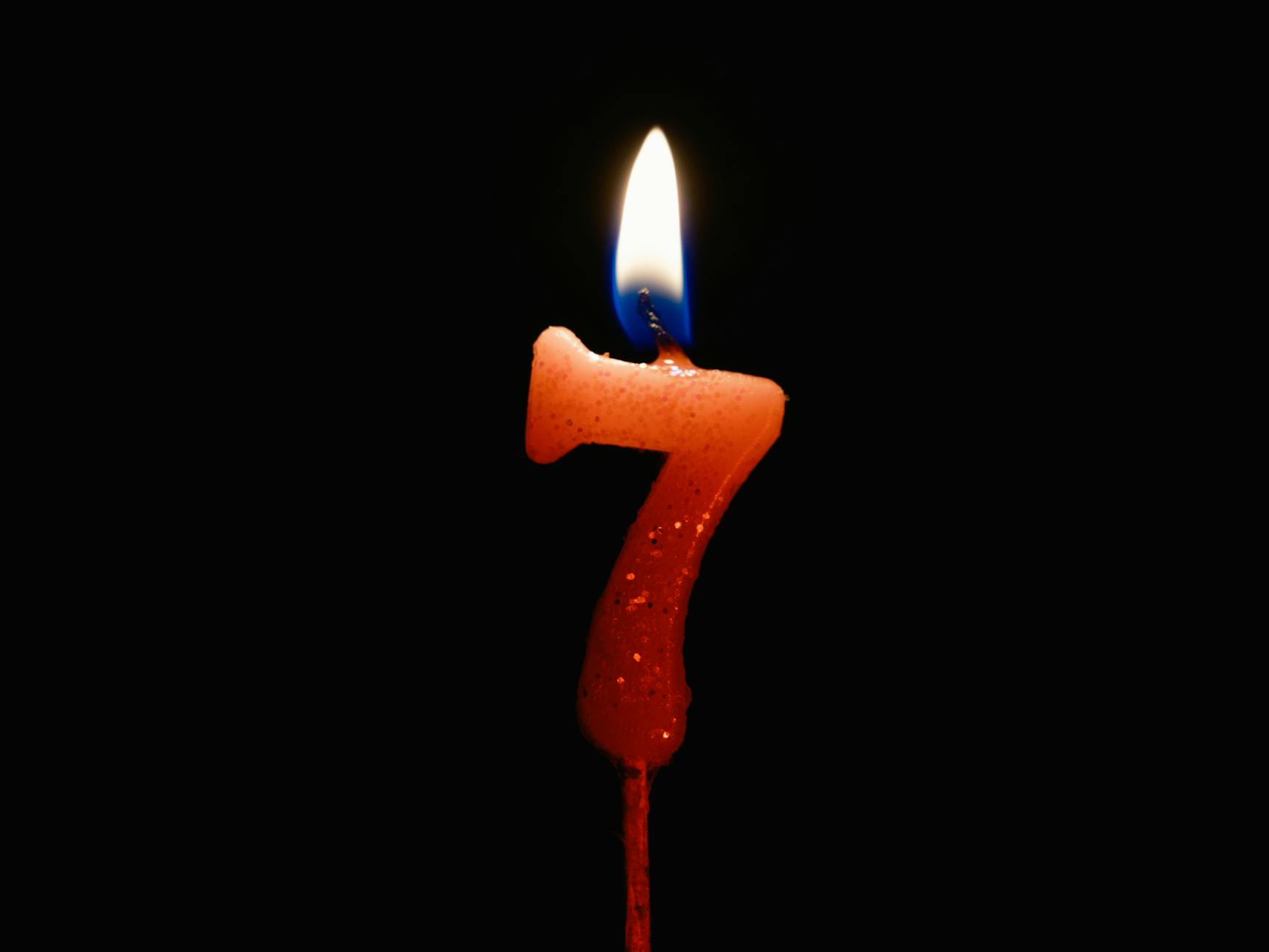
  • 7 and 13: Unlucky, Lucky, and Everything In Between

    7 and 13: Unlucky, Lucky, and Everything In Between

    Numbers are strange little markers in our lives. Most people see them as simple counters, dates, ages, or statistics. But for me, two numbers have taken on lives of their own: 7 and 13. Most would consider 7 lucky. A number that appears on dice, on slots, in myths and stories, bringing with it a sense of magic, of chance in one’s favor. And 13? The classic “unlucky” number, feared by hotels, shunned by superstitious traditions, a number that seems to drag bad fortune in its wake. Yet, for me, the story is not so simple. 7 and 13 are not just numbers—they are markers of pain, growth, and the strange alchemy of life’s lessons. As 2026 unfolds, these numbers resonate with me more than ever, because it has now been 7 years since 2019 and 13 years since 2013.

    Let’s start with 2019. Seven years ago, a year that changed everything. For many, the number 7 might signify a streak of good fortune, but for me, the luck of 7 never appeared in 2019. That was the year I lost my uncle, someone who was like a father to me, someone whose presence in my life shaped who I am in ways I could not even articulate at the time. Losing him hit me harder than anything I had experienced before. It was not just grief; it was a seismic shift in my emotional landscape. For months, even years, I was adrift in a fog of sadness, questioning the fragility of life and the randomness of suffering. Depression didn’t just visit—it moved in. The walls of my world felt like they were closing in, and I struggled to reconcile the permanence of loss with the fragility of youth and potential.

    But 2019 was not only about loss. Oddly enough, it was also the year I started my blog, the first real step I took toward expressing myself publicly and exploring my own thoughts in a structured way. That might seem trivial compared to the devastation of losing someone so central to your life, but in hindsight, it was a lifeline. Writing became a kind of therapy, a way to process pain that otherwise would have consumed me entirely. And 2019 also marked the beginning of a philosophical journey, one that has been ongoing ever since, one that has shaped the way I see myself and the world around me. It forced me to question not just what life is about, but how to live it, how to hold onto meaning even when the ground beneath you feels shaky.

    Yet, seven years later, as I reflect from the vantage point of 2026, I see 2019 with a different lens. That year remains painful, yes, but it is also a year of transformation. Its shadow lingers, but so does its light—the light of introspection, of growth, of understanding that life can break you, yes, but it can also mold you into someone stronger, someone more aware of the fragile beauty of existence. In a strange way, 7, the number that once seemed so ironic in its lucklessness, has become a symbol of endurance. Seven years from my worst year, I am still standing, still thinking, still growing.

    And now, 13. Thirteen years ago, 2013, a year that for the longest time I would have called my worst. Not because of death or overt tragedy, but because of the quiet, gnawing pain of unrequited love. For the first time, I felt the weight of crushing disappointment in the heart, a sense of longing that could not be fulfilled. It was a different kind of suffering than what I experienced in 2019, but it cut just as deeply. There was fear in that year, fear of inadequacy, fear of being invisible, fear of rejection in the simplest, most human form. It was confusing and painful and entirely formative. For years, I avoided writing about 2013 because it felt too raw, too vulnerable. But now, as I look back from 2026, I realize that avoiding it only delayed understanding.

    In 2013, I learned the first real lessons of emotional endurance. Love, friendship, and human connection became more than abstract ideas—they became concrete experiences that shaped my expectations, my empathy, and my understanding of how to navigate relationships. The pain of unrequited love was not just suffering; it was education. It was a curriculum in emotional literacy, teaching me what it means to feel deeply, to hope, to be disappointed, and eventually, to heal. And heal I did, mostly, though I know some small parts of that pain linger, like a faint scar, a trace of who I once was. And that’s okay. It’s part of my history, my lore, my identity.

    Interestingly, 2013, tied to the number 13, seems to carry more lessons than 2019, even though 13 is traditionally unlucky. There is irony in this. The “unlucky” year turned out to be an essential one for my personal growth. It forced me to confront emotions I would have otherwise ignored. It gave me a foundation for resilience, for empathy, and for the nuanced understanding of relationships that I carry today. And while 2019 was catastrophic in its own way, it also validated the lessons of 2013, reminding me that pain is never permanent, that growth is possible even through tragedy, and that life’s worst moments can coexist with its greatest lessons.

    Both years are also markers of time, milestones in a continuum that stretches from who I was to who I am becoming. 2013, thirteen years ago, taught me patience, empathy, and the complexity of human emotion. 2019, seven years ago, taught me endurance, resilience, and the necessity of facing grief rather than running from it. And now, 2026, the year that marks both 7 and 13 simultaneously in relation to these personal histories, feels like a kind of numerological mirror. The numbers themselves, symbols often dismissed as superstition, hold meaning because of lived experience. 7, usually lucky, reminds me that even in pain there can be growth. 13, usually unlucky, reminds me that lessons can be found in suffering, that wisdom often comes disguised as disappointment.

    I have thought a lot about regret over the years, and I can confidently say that I have none for either year. 2013 was painful, yes, but it shaped the emotional intelligence I carry today. 2019 was devastating, yes, but it catalyzed personal growth I might not have achieved otherwise. Both years, and the numbers they are tied to, form a unique symmetry in my life: 13 and 7, pain and growth, unlucky and ironically transformative, all converging as I step into 2026.

    Numbers like 7 and 13 also feel like bookmarks in a long, ongoing narrative. They are markers that help me see patterns, see progress, see the cumulative weight of experiences that have shaped me. Seven years since 2019 is a reminder that time moves, healing works in small increments, and that endurance is a kind of quiet triumph. Thirteen years since 2013 is a reminder that early heartbreak, early challenges, and early fears are not wasted; they are the roots from which resilience grows. Both numbers, both years, serve as a kind of compass, guiding reflection and perspective in a life that is always in motion.

    And perhaps there is something almost therapeutic in writing about this now. Reflecting on 2013 and 2019, on 13 and 7, is not just cathartic—it is instructive. It forces me to articulate lessons, to confront old pain, and to recognize the ways in which those years shaped not just my emotional landscape, but also my intellectual and philosophical one. These numbers, these years, are not just history; they are active parts of my psyche, shaping decisions, perspectives, and emotional responses in subtle but significant ways.

    As 2026 unfolds, I carry these lessons forward. Seven years from my worst year, thirteen years from another formative year, I have perspective that I could not have imagined as a teen in 2013 or even in my early 20s in 2019. Perspective does not erase pain, but it does contextualize it. It allows for gratitude, however complex, for experiences that once felt purely cruel. It allows for a recognition of the intricate dance of luck and misfortune, of joy and grief, of growth and suffering. Seven and thirteen are no longer just numbers; they are symbols of endurance, of lessons learned, and of the strange, often paradoxical beauty of life’s unfolding narrative.

    In the end, I see 2013 and 2019 not as outliers, not as random tragedies or fleeting misfortunes, but as integral threads in the tapestry of my life. Thirteen years ago, I learned about heartbreak. Seven years ago, I learned about grief. Both times, both experiences, taught me about myself. Both numbers, 13 and 7, carry the weight of lived experience, the resonance of time, and the quiet confirmation that life, in all its pain and complexity, is also deeply instructive.

    So here I stand in 2026, reflecting on 7 and 13. I do not see luck or unluckiness in the traditional sense. I see experience, I see growth, I see lessons that were painfully earned but deeply meaningful. And perhaps that is the true alchemy of numbers: they become meaningful not because of superstition, but because of the stories we attach to them, the lives we live, and the reflections we carry forward. 7 and 13 are no longer just numbers. They are milestones, guides, and mirrors, showing me not only where I have been but also hinting at who I might yet become.

    And in this reflection, I find a strange peace. Not happiness, not relief, not closure, but a kind of acknowledgment. That 2013 and 2019, 13 and 7, were what they were, and I am what I am because of them. And perhaps that is enough. Perhaps that is the point: to see the numbers, see the years, see the pain and the lessons, and to continue forward with awareness, gratitude, and a quiet respect for the strange ways life shapes us.

    2026 may be another year full of unknowns. But 7 and 13 remind me that time is both teacher and healer, that suffering is not meaningless, and that growth often emerges from the most unlikely of places. And perhaps, just perhaps, that is the truest kind of luck.

    Fediverse Reactions
  • The Myth of the “Right Time”

    The Myth of the “Right Time”

    There is a phrase that floats through almost every human life, a soft and reasonable sounding excuse that disguises itself as wisdom. “When the time is right.” We tell ourselves we’ll start when the timing is better. We’ll speak when the moment feels safer. We’ll love when the conditions are clearer. We’ll leave when the ground beneath us is steadier. We’ll create when the chaos settles. We’ll change when we feel ready. And in all of that waiting, in all of that quiet bargaining with the future, we slowly trade our lives for a promise that may never arrive.

    The idea of the “right time” feels comforting. It implies order. It suggests that somewhere ahead of us, hidden in the calendar or in fate or in some cosmic alignment, there exists a perfect window where everything will finally make sense. A moment when fear disappears, uncertainty fades, responsibilities loosen their grip, and clarity arrives like a gift. It’s an appealing fantasy. It gives us permission to delay. It gives us an explanation for our hesitation that sounds thoughtful instead of afraid. It makes inaction feel responsible. But the longer you live, the more obvious it becomes that this “right time” is less a reality and more a story we tell ourselves so we don’t have to confront how terrifying choice actually is.

    Because life does not pause to become convenient.

    There is always something in the way. There is always a bill, a deadline, a crisis, a distraction, a fear, a doubt, a voice in your head telling you to wait just a little longer. There is always another reason to postpone what matters. There is always another condition that could be improved. Another variable that feels unresolved. Another emotional knot that doesn’t quite feel untangled enough yet. If you are waiting for a moment when nothing interferes, when nothing hurts, when nothing distracts, when nothing scares you, you are not waiting for a time that exists in reality. You are waiting for a time that belongs only to imagination.

    And yet, almost all of us fall into this trap at some point.

    I did.

    For a long time, I convinced myself that patience was wisdom. That restraint was maturity. That delaying big feelings and big risks and big decisions meant I was being careful. Responsible. Strategic. I told myself that once I had more stability, more clarity, more confidence, more certainty, then I would finally act. Then I would finally say what I meant. Then I would finally pursue what I wanted. Then I would finally allow myself to become who I felt I was supposed to be.

    But what I didn’t realize at the time was that every “not yet” was quietly shaping my life anyway.

    Time does not wait for permission.

    While you are preparing, the world keeps moving. While you are hesitating, relationships shift. While you are planning, people leave. While you are waiting for the right moment, moments are passing. You are aging. Others are aging. Circumstances are changing. Opportunities are appearing and disappearing in ways you often don’t even notice until they are already gone. The future you are waiting for is not standing still and patiently holding space for you. It is constantly being rewritten by forces you do not control.

    And eventually, if you live long enough, something happens that shatters the illusion.

    You lose someone.

    Or you almost lose someone.

    Or you get sick.

    Or you watch time run out for somebody else.

    And suddenly the phrase “there’s still time” no longer feels as solid as it once did.

    Loss has a way of clarifying things in the most brutal and honest way possible. When someone you love disappears from your life, whether through death, distance, estrangement, or circumstances you cannot undo, the fantasy of endless tomorrows collapses. You realize that there were conversations you assumed you’d have later. Feelings you assumed you’d express eventually. Apologies you thought you could offer someday. Gratitude you meant to show when things slowed down. And now, that later no longer exists.

    Regret does not usually come from the things we did wrong.

    It comes from the things we never did at all.

    It comes from the words we swallowed. The risks we refused. The love we never admitted. The truth we kept hiding from ourselves and others. The paths we didn’t explore. The art we didn’t make. The boundaries we didn’t set. The life we postponed.

    What hurts most about regret is not that we failed.

    It is that we never even tried.

    And this is the part no one likes to say out loud: waiting for the right time is often just fear wearing a polite disguise.

    Fear of rejection. Fear of failure. Fear of embarrassment. Fear of loss. Fear of change. Fear of being seen too clearly. Fear of wanting something too badly and not getting it. Fear of discovering that the life you imagined might not actually fit you. Fear of learning that the dream you held onto might dissolve once you finally touch it.

    So instead, we tell ourselves stories.

    We say we’re not ready.

    We say the timing is off.

    We say we need more information.

    We say we need more money.

    We say we need more healing.

    We say we need more certainty.

    And sometimes those things are true. Sometimes waiting is necessary. Sometimes patience is wise. Sometimes caution protects us. Not every impulse should be followed. Not every desire should be acted on immediately. There are real responsibilities. Real consequences. Real limits. I am not arguing for recklessness or impulsivity. I am not saying that every moment of hesitation is wrong.

    But there is a difference between wisdom and avoidance.

    And most of us know, deep down, which one we are practicing.

    Avoidance has a particular feeling to it. It feels heavy. It feels repetitive. It feels like the same internal conversation looping endlessly without resolution. It feels like constantly moving the goalpost for when you are allowed to begin. It feels like life happening around you while you remain suspended in preparation mode. It feels like safety slowly turning into stagnation.

    And stagnation is not neutral.

    It costs you time.

    It costs you experiences.

    It costs you growth.

    It costs you connection.

    It costs you yourself.

    The cruel irony is that the conditions we are waiting for rarely arrive because the very actions we are postponing are often what would create those conditions in the first place. We wait to feel confident before we act, when confidence is usually built by acting. We wait to feel worthy before we speak, when worthiness often comes from being honest. We wait to feel ready before we change, when readiness is usually the result of choosing to change. We wait for clarity before we move, when clarity is often born from movement.

    Life is not something you solve before you live it.

    It is something you understand by living it.

    And the longer you delay participation, the more disconnected you become from your own unfolding.

    There is also another uncomfortable truth hiding inside the myth of the right time.

    It assumes that you will always have another chance.

    It assumes that people will remain accessible.

    It assumes that health will remain stable.

    It assumes that circumstances will remain reversible.

    It assumes that doors, once closed, can always be reopened.

    But anyone who has lived long enough knows that some opportunities are not repeatable.

    Some people leave and never come back.

    Some relationships change in ways that cannot be undone.

    Some windows close quietly and permanently.

    Some versions of yourself only exist for a short season of your life.

    And when that season passes, you cannot simply return to it.

    This is not meant to be morbid.

    It is meant to be honest.

    The finiteness of time is not a threat. It is a teacher.

    It reminds you that your life is not a rehearsal.

    That this is not a draft.

    That you do not get infinite revisions.

    And that waiting too long does not protect you from pain.

    It often guarantees it.

    Because here is the part that no one prepares you for: the pain of regret is usually heavier than the pain of action.

    Failure hurts, yes.

    Rejection hurts.

    Embarrassment hurts.

    But those wounds tend to heal.

    You learn from them.

    You integrate them.

    They become part of your story.

    Regret, on the other hand, is quieter and more persistent.

    It shows up at night.

    It appears in memories.

    It whispers in alternate timelines.

    It asks you who you might have been.

    It lingers in unanswered questions.

    It stays long after the moment has passed.

    And unlike most pain, regret offers no resolution.

    There is no redo.

    No apology.

    No confession.

    No second chance.

    Only acceptance.

    So at some point, after enough loss, enough near misses, enough almosts, enough maybes, something shifts.

    You stop asking when the time will be right.

    And you start asking whether you are willing to live with the consequences of never trying.

    You realize that courage is not the absence of fear.

    It is the decision that regret is worse.

    You realize that readiness is not a feeling.

    It is a choice.

    You realize that the right time is rarely a moment of perfect alignment.

    It is simply the moment you decide to stop waiting.

    This does not mean life suddenly becomes easier.

    In fact, often the opposite.

    Choosing to act usually makes things more complicated, at least in the short term.

    You disrupt routines.

    You risk relationships.

    You expose vulnerabilities.

    You invite uncertainty.

    You step into territory where outcomes are unclear.

    But you also begin to live more honestly.

    More fully.

    More consciously.

    You stop deferring your life to a hypothetical future version of yourself who is braver, calmer, stronger, wiser.

    You become that version by acting now.

    And slowly, something remarkable happens.

    You begin to notice that the chaos you were waiting to disappear was never going to vanish.

    That life is always unfinished.

    Always imperfect.

    Always in flux.

    And that meaning does not come from perfect timing.

    It comes from presence.

    From choosing to engage while things are messy.

    From loving while things are uncertain.

    From creating while things are unstable.

    From speaking while things are risky.

    From becoming while things are incomplete.

    The people you admire most are rarely the ones who waited until everything was ideal.

    They are the ones who moved while afraid.

    Who spoke while unsure.

    Who loved while vulnerable.

    Who changed while unready.

    Who acted while conditions were still flawed.

    Not because they were reckless.

    But because they understood something essential.

    That waiting forever is its own kind of decision.

    And often, the most dangerous one.

    At some point in my life, after enough grief and enough reflection, I made myself a quiet promise.

    I would no longer let fear disguise itself as patience.

    I would no longer postpone the words that mattered.

    I would no longer assume that time was abundant.

    I would no longer trade honesty for comfort.

    I would no longer wait for permission to be myself.

    This does not mean I rush everything.

    It does not mean I ignore consequences.

    It does not mean I abandon discernment.

    It means that when something matters deeply enough, I refuse to bury it beneath the fantasy of a better tomorrow.

    If I care about someone, I try to let them know.

    If I need to apologize, I do it sooner rather than later.

    If I feel called to create, I create now, even imperfectly.

    If I sense a truth rising inside me, I speak it while I still can.

    Because I have seen what happens when people wait too long.

    I have seen conversations that never happened.

    I have seen love that was never confessed.

    I have seen forgiveness that arrived too late.

    I have seen lives narrowed by caution.

    I have seen dreams quietly abandoned.

    And I know, with painful clarity, that someday my own time will also run out.

    Not dramatically.

    Not with a warning.

    Just one ordinary day when there are no more tomorrows left to postpone things into.

    So no, I do not believe in the right time anymore.

    I believe in this time.

    This flawed, inconvenient, complicated, imperfect moment you are living in right now.

    Because it is the only one that actually exists.

    Everything else is imagination.

    If there is something you need to say, say it.

    If there is someone you need to love, love them.

    If there is a truth you need to face, face it.

    If there is a path you feel drawn toward, take a step.

    Not because it is safe.

    Not because it is guaranteed.

    Not because the conditions are perfect.

    But because your life is happening now.

    And someday, sooner than you think, now will be gone.

    And I, for one, refuse to look back on my life and realize that I spent most of it waiting to begin.

  • The Pain of Loneliness: A Deep Dive into Eiichiro Oda’s Quote and the Struggles of an ENFJ

    The Pain of Loneliness: A Deep Dive into Eiichiro Oda’s Quote and the Struggles of an ENFJ

    Introduction

    Eiichiro Oda, the genius behind One Piece, has created a world full of colorful characters, fantastical adventures, and emotional depth. However, one of the most poignant insights from Oda comes from a seemingly simple statement: “Loneliness is more painful than being hurt.” For those of us who connect deeply with others, this sentiment resonates on a profound level. As an ENFJ, someone who places an immense value on relationships and caring for others, I find Oda’s words not just relatable, but also a painful truth that speaks directly to the core of who I am.

    Loss, grief, and loneliness are often portrayed as the darkest shadows of human existence. They touch all of us, whether through the death of a loved one or the quieter, more insidious feeling of being alone despite being surrounded by people. The pain of loneliness is not just emotional; it is a deep, existential ache that burrows into the heart and mind. And for someone like me, who thrives on connection, that loneliness can be unbearable. This essay explores how Oda’s quote reflects my own experiences with loneliness, especially after the loss of my uncle, and how it shapes my understanding of relationships, empathy, and what it means to care for others.


    The Role of Empathy in the ENFJ Personality

    To understand why this quote resonates so deeply with me, it’s important to examine the ENFJ personality. ENFJs are often described as “The Protagonists” or “The Givers” of the Myers-Briggs personality types. We are natural-born nurturers, deeply caring for the well-being of others. Our actions are driven by a desire to support and connect with those around us, whether it’s friends, family, or even strangers. It’s not just that we want to help; it’s that we feel compelled to do so.

    Being an ENFJ means that we often put others’ needs before our own. Our empathy and emotional intelligence can be overwhelming at times, as we absorb the emotions of those we care about. While this allows us to form deep and meaningful connections, it also leaves us vulnerable to the pain of loss and isolation. This is where Oda’s quote hits hard. For an ENFJ, the idea of being alone, disconnected from those we care about, is perhaps one of the most terrifying things we can face.


    The Crushing Weight of Loss

    When I lost my uncle in 2019, it was like the floor dropped out from beneath me. My uncle was not just family; he was a father figure to me. His death was sudden, and I had no preparation for it. Before his passing, I had experienced loss in my life, but it had always felt distant. Losing a pet or a distant relative didn’t leave the same scar. But the death of my uncle was different. It wasn’t just that I had lost someone I loved; it was that a part of my sense of self was ripped away.

    There’s a misconception that people “move on” from grief, but in my experience, grief doesn’t work that way. It lingers. Six years later, I still feel the void that his passing created. There are days when I can feel the loneliness as if it’s a physical presence in the room with me. And while I know that time has softened the sharp edges of that pain, it hasn’t erased it. What Oda’s quote brings to the forefront for me is that the loneliness that comes with loss is more painful than the injury itself. It’s not just the absence of a person; it’s the existential realization that life continues without them.


    The Terrifying Reality of Loneliness

    Loneliness is a paradox. On one hand, I have friends and family who care about me. But on the other hand, there are moments—especially when I am alone with my thoughts—when I feel as though I am entirely isolated. As an ENFJ, my sense of identity is often tied to how I connect with others. And when those connections are disrupted or lost, it leaves me feeling unmoored. I try my best to remain strong, to maintain the facade of someone who has it all together. But in the quietest moments, when I’m alone, the truth is undeniable: I am lonely.

    I’ve come to realize that this feeling is not just about the absence of people around me. It’s about the lack of deep, meaningful connections—the kind that make you feel truly seen and understood. For an ENFJ, loneliness isn’t just about being alone; it’s about not having the emotional intimacy that sustains us. It’s when I can’t share my thoughts, my fears, or my joy with those who matter most that the ache of loneliness becomes unbearable. And that is when Oda’s words ring true for me: loneliness is more painful than being hurt.


    The Fear of Losing Those You Love

    One of the most difficult aspects of caring for others, as an ENFJ, is the ever-present fear of losing them. The fear isn’t just about the pain of their absence; it’s about how that loss will alter me. I often worry about what would happen if something were to happen to my friends or family. The idea that I would have to navigate the world without them is a source of deep anxiety for me. I know that death is an inevitable part of life, and yet, the thought of facing it alone, without the people who make life feel meaningful, is a terrifying prospect.

    In a way, this fear of loss is a manifestation of my empathy. Because I care so deeply about others, I am acutely aware of how fragile our connections are. This sensitivity makes the thought of loneliness even more unbearable. It’s not just the fear of being without someone; it’s the fear of not having anyone to share my life with in the way that I so desperately want to. This fear, at its core, is a reflection of my need for connection.


    The Struggle to Stay Strong

    In the face of this loneliness, I often find myself caught in a struggle. On one hand, I want to be strong, to remain composed, and to keep moving forward despite the pain. On the other hand, there are days when the weight of it all is too much to bear. It’s on these days that I am reminded of just how much I rely on the connections in my life to sustain me.

    Sometimes, I can almost feel the crushing weight of loneliness when I am alone with my thoughts. It is in these moments that the truth of Oda’s words becomes undeniable. Loneliness can sometimes feel more painful than any physical injury. It’s not just a passing feeling; it’s a deep, aching emptiness that clings to you long after the moment has passed. And while I try to stay strong for the sake of my family and friends, there are days when I just have to acknowledge that I am feeling alone—and that’s okay too.


    Conclusion

    Eiichiro Oda’s quote, “Loneliness is more painful than being hurt,” resonates deeply with me, especially as an ENFJ who feels things so intensely. The pain of loss, the fear of loneliness, and the struggle to maintain meaningful connections are all part of the human experience, and they are especially difficult for those of us who are wired to care for others. The fear of being alone, of not having anyone to share our lives with, is a terror that we can’t easily escape.

    But despite the darkness that loneliness can bring, it’s important to remember that the connections we have with others are what make life meaningful. Even in the midst of grief and loss, the love we share with others remains a guiding light. For me, it’s a reminder that even though loneliness is painful, it is also a testament to how deeply I care. And perhaps, in the end, that is what makes the pain worth enduring.

  • Through Loss, I Learned to Live Without Regret

    Through Loss, I Learned to Live Without Regret

    When my uncle passed away in 2019, it changed something fundamental in me. His death wasn’t just a moment of loss—it was a mirror. A mirror that forced me to look at myself, my choices, and how I lived my life. Up until then, I had heard that old adage—“live life with no regrets”—countless times, but it always felt cliché, something people said because it sounded poetic. It wasn’t until I experienced grief firsthand that I truly understood what it meant. Losing him made me realize how fleeting everything is. How tomorrow is never guaranteed. And from that point on, I made a promise to myself: I would live my life without regret.

    That didn’t mean living recklessly or impulsively. It meant being conscious—deeply conscious—of my words, my actions, my thoughts, and how I treated others. It meant treating every day as if it could be my last, because one day, it will be. That awareness doesn’t come from fear anymore, but from appreciation. Every day I wake up and remind myself that the small irritations, the grudges, the little moments of anger or resentment—none of it is worth holding onto. I used to get caught up in them, like everyone does. Someone cutting me off in traffic, a message left on “read,” a rude comment online. But now, I’ve learned to breathe through it, to let it go. Life is too fragile to waste on bitterness.

    I’ve also learned to take chances. Not wild, reckless leaps, but meaningful ones—the kind that push you forward. The kind that force you to live a little more openly. Losing my uncle reminded me that fear is often the thing that keeps us from really living. Fear of failure, fear of rejection, fear of embarrassment. But when you realize how finite life is, those fears lose their power. I still consider risks carefully, but I’ve learned that sometimes the greater risk is in not taking one. Whether that means opening up to someone, trying something new, or just saying what I truly feel, I’ve learned that authenticity is worth more than comfort.

    In a strange way, grief softened me. It didn’t harden me, even though it easily could have. It made me more empathetic, more understanding of what others might be carrying silently. I’ve learned to communicate better—to tell people how I feel instead of bottling it up. I’ve learned to listen more and judge less. And I’ve learned that expressing myself doesn’t make me weak; it makes me human. Grief teaches that life isn’t about perfection—it’s about presence.

    That lesson has also helped quiet some of the anxious thinking that used to plague me. I used to catastrophize everything—if someone didn’t reply right away, I’d imagine the worst. If something went slightly wrong, I’d spiral. But now, I try to remind myself of perspective. The worst thing that can happen, truly, is the loss of life. And most things aren’t that. Most things are temporary inconveniences or misunderstandings that don’t deserve the weight we give them. Losing someone teaches you scale—it teaches you what really matters.

    But this awareness is a balance. Knowing that life can end at any moment doesn’t mean living in constant dread of it—it means living in constant gratitude despite it. I’ve learned to tell people how I feel, to express appreciation, to say “I love you” or “thank you” or even just “I’m sorry” when it matters. Because if any day could be the last, I wouldn’t want anyone to carry a negative memory of me as their final impression. I wouldn’t want to leave words unsaid or kindness unshown.

    My uncle’s death was painful, but the lessons it brought were transformative. Through loss, I gained clarity. Through grief, I found grace. I learned that “living with no regrets” isn’t about doing everything right—it’s about living honestly. It’s about forgiving yourself and others, taking risks that honor your heart, and remembering that the small stuff is just that—small. Every day since, I’ve tried to live like I mean it. Because in the end, that’s what it means to live without regret—to live fully, consciously, compassionately, before the day comes when you no longer can.

    Fediverse Reactions
  • A Man Who Left Echoes

    A Man Who Left Echoes

    Daily writing prompt
    Describe a family member.

    There are people whose presence shapes the world around them in ways you don’t fully understand until they’re gone, people whose absence leaves not just a void but a subtle weight that settles into the corners of memory, lingering in quiet moments when the world feels a little too loud or a little too empty. My uncle was one of those people. I remember him not as a figure from a photograph or a fleeting image in the past, but as a presence — a combination of gestures, laughter, words, and silences that somehow managed to make the world feel more grounded, more bearable, more alive. He had a way of filling a room without trying, quietly, almost invisibly, but undeniably. When he entered a space, it wasn’t the clamor of someone demanding attention, but the gravity of someone who seemed to understand its weight, who made it feel lighter simply by being there.

    He was a man who noticed things others overlooked, a man whose attention to detail was never intrusive but always comforting. He remembered birthdays months in advance, not because it was an obligation, but because he cared, genuinely and fully. He remembered stories you barely told in passing, the small confessions of life that you thought were insignificant, and he remembered them in a way that made you feel seen. It was never about showing off knowledge or being impressive; it was about being present, about showing that people mattered, that moments mattered, that you mattered.

    Humor was one of his most subtle gifts. It wasn’t boisterous or performative; it was sly, dry, occasionally mischievous, and always disarming. He could crack a joke at the exact right moment, a joke that landed not with loud laughter but with the quiet release of tension you didn’t even realize you were carrying. And he laughed in a way that made you want to laugh too, not because it was funny on the surface, but because it carried warmth, the warmth of someone who had lived, observed, and emerged from life with a softness rather than a hardness, with a clarity that didn’t judge but understood.

    He loved stories. Not just books or movies, though he loved those as well, but stories of people, the kind of narratives that happen quietly, behind closed doors, in kitchens and living rooms and quiet walks. He had a way of listening that made the teller of a story feel important, felt like their life, their experiences, their small victories and failures, mattered. And in those moments, you didn’t just share a story with him; you shared a part of yourself, and he held it carefully, reverently, as if it were a precious thing. There was an art to his listening, an intimacy that seemed effortless but was intentional, a kind of generosity that left its mark in ways words often fail to capture.

    Grief doesn’t arrive like a storm; it sneaks in like a shadow that grows longer and darker the more you try to ignore it. Losing him in 2019 hit like that — quiet, insistent, unrelenting. There were days when it felt like the air had grown heavier, when the world itself seemed smaller, quieter, less certain. His absence was everywhere, in the laughter that no longer echoed in family rooms, in the stories that no longer had a living witness, in the small, ordinary moments that suddenly felt incomplete. And yet, even in that grief, even in the silence and the ache, he left something behind: a thread, a spark, a reminder. He had always been a quiet teacher, and even in death, he taught. He taught me about presence, about kindness, about the quiet ways you can leave a mark on the world.

    It’s strange, how people live on in the echoes of their actions, in the memories they shape, in the habits and values they instill. My uncle’s influence is woven through the life I lead now, through the words I write, the ways I observe the world, the ways I respond to pain, joy, confusion, and beauty. He left behind a kind of blueprint for attention and care, a reminder that being present, being attentive, being real, can resonate far longer than any flashy gesture or grand declaration. In every post I write, every story I tell, every poem I craft, there is a trace of him — a whisper of his presence, a residue of his wisdom, a spark of his warmth.

    I remember sitting with him in the kitchen during long, unremarkable afternoons, talking about everything and nothing, and yet feeling like these conversations carried weight, like they were shaping me in ways I couldn’t understand at the time. He had this way of asking questions that didn’t feel intrusive but opened doors, questions that guided rather than demanded, that encouraged reflection rather than defensiveness. And when he spoke, it wasn’t always profound in an obvious sense, but it carried clarity, insight, and empathy. He had a gift for noticing the small things — the way someone held a cup of coffee, the hesitation in a word, the fleeting expression that revealed a deeper truth. And he remembered those details, not for manipulation or advantage, but because they mattered.

    Grief has a strange way of teaching you about absence, about the invisible threads that bind us to others. Losing him was like losing a part of my internal compass. There were moments when I felt adrift, moments when the world seemed too harsh, too loud, too indifferent. And yet, in those same moments, memories of him — small, fleeting, ordinary — became lifelines. The way he laughed at my worst jokes, the way he encouraged curiosity, the way he simply sat with you in silence when the world was overwhelming — these became touchstones, guiding me through dark days, reminding me that presence matters, that kindness matters, that attention matters.

    He was not perfect. No one is. But he carried flaws with a kind of grace that made them human rather than burdensome. He could be stubborn, opinionated, occasionally sharp, yet even those traits were tempered with humor and warmth. And in his imperfections, he taught the most profound lessons: that human beings are complicated, contradictory, and evolving, and that love and respect aren’t about perfection but about effort, understanding, and persistence.

    Looking back, it’s clear how much he shaped my approach to writing, to observation, to expression. My blogs, my stories, my poems — they are infused with the curiosity, empathy, and attentiveness that he embodied. Writing became my outlet, my way of processing grief, my way of carrying forward lessons that could no longer be shared in person. In many ways, the act of writing is a dialogue with him, a way of translating his presence into words, a method of keeping his spirit alive in the spaces I create.

    I remember one afternoon in particular, years before he passed, sitting with him and my family in a small, sunlit living room. We were laughing over some absurd memory, and he paused, looked at us, and said something I didn’t fully appreciate at the time: “Life’s messy, sure, but it’s worth noticing.” I didn’t understand then how much weight those words carried. I understood it later, after his passing, when I was trying to navigate grief and uncertainty, when I was searching for a way to keep going. It was in that simple phrasing — “worth noticing” — that I found a principle to live by, a lens for observing the world, a framework for writing.

    He had a subtle, almost invisible influence on the way I approach empathy. Watching him interact with the world, observing his attentiveness, his patience, his gentle insistence on understanding before judging — it shaped how I see others, how I listen, how I respond. In writing, this translates to the care I take with words, the way I try to inhabit perspectives, the way I seek to illuminate human experience with honesty and respect. It is, in a sense, a continuation of his influence, a channeling of the lessons he imparted without ever lecturing, without ever instructing overtly.

    Loss is a teacher in its own right, albeit a harsh one. Losing him revealed not only the depth of my grief but also the resilience embedded in memory, in love, in the echoes of a person’s life. It taught me to find meaning in ordinary moments, to notice the small gestures that carry immense significance, to cherish the people in my life while they are present. And it underscored the value of creative expression as a lifeline, a method of processing, a way of keeping connection alive across absence.

    As I reflect on him now, six years after his passing, I realize that describing a family member — truly describing them — is never about completeness. It’s about tracing the ripples they leave, the impact they have, the ways they persist in memory and action. My uncle’s influence isn’t contained in anecdotes or physical presence; it’s alive in the ways I write, in the empathy I try to cultivate, in the attention I give to others. It’s in the quiet insistence that life, with all its mess and grief, is worth noticing, worth engaging, worth transforming into meaning.

    He would have appreciated the irony in all this — the idea that someone could live on through words, through blogs, through stories, through poems. He wasn’t one for dramatics, yet he understood the power of small acts to ripple outward, to touch lives, to carry essence beyond presence. And that is what I strive for now, in memory of him: to take what was given, what was observed, what was learned, and channel it into something tangible, something that can comfort, connect, and illuminate, even in the absence of his voice, his hands, his laugh.

    My uncle’s life reminds me that legacy isn’t measured by grand gestures or monumental achievements. It’s measured by attentiveness, by warmth, by the quiet ways you shape the world around you. It’s in the laughter you inspire, the curiosity you nurture, the empathy you model, the care you take in noticing others. It’s in the lives you touch, subtly, gently, consistently. And in that sense, he is everywhere — in the moments I remember, in the stories I tell, in the words I write, in the attention I give to life itself.

    To describe him fully in words is impossible, yet in trying, I honor him. I honor the presence that shaped me, that influenced me, that continues to guide me. I honor the humor, the kindness, the attentiveness, the quiet insistence that life — even in its messiness and grief — is worth noticing. And I honor the ways his absence has taught me, shaped me, and inspired me to create, to write, to live with intention.

    Even now, as I write these words, I feel the pull of his presence, not as a ghost, not as a shadow, but as a living echo. He is the subtle rhythm in my observations, the reminder to notice the small gestures, the inspiration to express care, empathy, and curiosity. Six years later, I carry him not as a memory alone, but as a living thread woven into the fabric of my creative life, my reflections, my stories.

    And so, in answering the question — describing a family member — I find that I cannot separate him from the life I live now, from the writing I do, from the empathy I strive to cultivate. To describe him is to describe the ripples he left behind, the quiet insistence that life is worth noticing, worth engaging, worth reflecting upon. It is to honor presence, influence, and the enduring power of ordinary human attentiveness to transform, shape, and inspire.

    My uncle lives on in every post, every paragraph, every poem, every story I write. He lives on in the attention I give to others, in the way I listen, in the way I notice, in the way I try to understand. He lives on in the quiet insistence that life — messy, painful, beautiful, fleeting — is worth noticing. And in that, he has become eternal, not through grand monuments or accolades, but through the subtle, indelible echoes of a life well-lived, a presence fully given, and a love quietly, persistently expressed.

    Fediverse Reactions
  • Six Years Later: From Loss to Light

    Six Years Later: From Loss to Light

    2019 was a dark year for me. One of those years that changes you in quiet, irreversible ways. I lost my uncle and my cousin that year. Two people who meant a lot to me, gone within months of each other. The kind of loss that settles deep inside your chest, where words don’t quite reach. Everything felt heavier back then — the days, the air, the silence. I was trying to find some kind of outlet, some way to process everything I was feeling. I didn’t really know where to start or what to do with all the weight I was carrying.

    And then, one day in October 2019, a friend told me about WordPress. They told me about blogging — about how it could be a place to write, to share, to release. I didn’t know much about it, but something in me needed that — needed something. A spark. A direction. A place to put the words I couldn’t say out loud. So I decided to jump into it. I made an account, opened up a blank page, and started to write.

    That’s how The Musings of Jaime David was born.

    It started simple — just me, my thoughts, and a keyboard. I wasn’t thinking about audience or engagement or analytics. I wasn’t even thinking long-term. I just wanted to write something real. To take everything I’d been holding inside — the grief, the confusion, the flickers of hope — and put it somewhere safe. Somewhere outside of me. That first post, though small and uncertain, felt monumental. It was my way of saying, I’m still here. I’m still trying.

    Back then, I couldn’t have imagined what that small act of creation would become. I didn’t know that it would lead to six years of writing, expanding, and evolving. I didn’t know it would grow into multiple blogs, books, and even a podcast. I just knew that in that moment — in that year of loss — I needed something that would help me keep going. And WordPress became that lifeline.

    Now, here I am, in October 2025 — six years later. Looking back, it’s hard not to feel emotional. Because what began from grief and uncertainty turned into something bigger than I ever expected. Six years of words, ideas, reflection, and growth. Six years of navigating life’s chaos, both global and personal. Six years of learning to use creativity as a way to survive, heal, and connect.

    When I look at my journey, it still amazes me how far things have come. It started with one simple site — The Musings of Jaime David. Then, in 2020, I created The Interfaith Intrepid. That year was one of upheaval for everyone. The pandemic hit, the world shifted, and suddenly everything felt uncertain again. But writing remained a constant. The Interfaith Intrepid gave me a place to talk about society, politics, and the bigger questions that were weighing on so many of us. It became my outlet for understanding not just myself, but the world around me.

    From there, things began to branch out further. Over time, I realized that I wasn’t just one kind of writer. I had many sides, many interests, many voices that wanted to be heard. Earlier this year, in 2025, I created Let’s Be Different Together, my mental health blog — something that came from a deeply personal place. That blog wasn’t just about writing; it was about connection. It was about reminding others that they weren’t alone. It was about reminding myself that I wasn’t alone either.

    Not long after that, I created even more spaces — Jaime David Music, Jaime David Science, and Jaime David Gaming. Each one represented a different part of who I am. The musician and music lover. The scientist and thinker. The gamer and storyteller. Each blog gave me another way to explore the world, to express something unique.

    And then, just recently, I created two new blogs — Anime, Manga, and Comics and Oddities in Media. Those came from my love of storytelling, art, and the strange, fascinating corners of media that often go unnoticed. I wanted spaces where I could talk about the things that inspire me, that challenge me, that remind me why I fell in love with stories in the first place.

    It’s surreal when I pause and look at all of it together — eight blogs, each with its own tone, purpose, and identity. What started as one small corner of the internet has grown into an entire creative ecosystem. And through it all, I can trace a thread — a line that runs from that dark year in 2019, through every post, every project, every piece of growth.

    These six years haven’t been easy. I’ve lived through three presidencies, two elections, a pandemic, and countless global shifts. The rise of AI, the explosion of TikTok, wars in Ukraine and Gaza, floods, wildfires, shutdowns — the world has changed in ways we couldn’t have imagined. And personally, I’ve faced my own storms. More losses. More growing pains. Times of doubt, times of clarity, times of rediscovery. But through it all, the writing stayed. It was my anchor when things got too loud.

    And I think that’s the beauty of creative expression — it doesn’t erase pain, but it gives it shape. It turns it into something that can live outside of you, something that can even comfort others. In many ways, my writing has become a record not just of my growth, but of resilience — of the quiet persistence to keep going no matter what happens.

    This year, 2025, has been one of the most defining yet. Not just because of the new blogs, but because of everything else that came to life alongside them. This was the year I published my three books — Wonderment Within Weirdness, My Powerful Poems, and Some Small Short Stories. Seeing those books come to life felt like a culmination of years of work, reflection, and courage. My novel captured my imagination and my love for storytelling. My poetry book carried the raw emotion of years of introspection. And my short story collection held small pieces of humanity — fragments of observation and empathy that I’ve carried with me along the way.

    I also launched The Jaime David Podcast and my YouTube channel this year. The podcast has been especially meaningful — revisiting old poems, giving them voice, and reflecting on how far I’ve come since those early days of writing. There’s something powerful about hearing your own words aloud — about realizing how they’ve changed, how you’ve changed. The YouTube channel opened another door, one that allowed me to connect with others visually and emotionally. Both projects have been reminders that creativity is always evolving — that there’s always a new way to tell a story.

    When I think about these six years, I don’t just see accomplishments. I see survival. I see transformation. I see a journey that began in pain and found meaning through creation. Every blog post, every paragraph, every story — they all trace back to that moment in 2019 when I needed something to hold onto. And I found it in words.

    I’ve come to realize that writing, for me, isn’t just a passion — it’s a lifeline. It’s how I make sense of things. It’s how I process the world. And maybe, in some small way, it’s how I try to make the world a little softer. Because when I write, I’m not just talking to myself. I’m talking to anyone who’s ever felt lost, anyone who’s ever needed a reason to keep going.

    Of course, over these six years, there’s been growth — not just emotional or creative, but in reach as well. My main blog has surpassed 10,000 views. There are hundreds of subscribers and readers who have followed my work across different sites and platforms. That means a lot to me. But at the same time, I’ve never done this for the numbers. I’ve never written to chase likes or clicks. I write because it’s part of who I am. Because expression matters more than validation.

    That doesn’t mean I don’t appreciate it — I do, deeply. Every reader, every comment, every message — they all remind me that there’s connection in what I’m doing. But even if no one were to read, I would still write. Because writing has never been about popularity. It’s been about truth. About showing up as I am, flaws and all, and putting something honest into the world.

    If anything, these six years have taught me that authenticity matters more than anything else. In an age where so much feels curated, filtered, and performative, being genuine is an act of quiet rebellion. And that’s what I’ve always wanted my work to be — real. Whether it’s joyful or painful, hopeful or uncertain, I want it to feel human.

    When I look back on that younger version of myself in 2019 — the one struggling with loss, unsure of the future, typing words into a void — I want to tell him that it’s all going to matter. That the pain won’t disappear, but it will transform. That he’ll find meaning in unexpected places. That one small decision to write will set off a chain reaction of creation, healing, and growth.

    Because now, six years later, I can see it. I can see how far I’ve come. From grief to expression. From uncertainty to direction. From silence to voice.

    These six years haven’t just been about writing — they’ve been about becoming. Every site, every project, every piece of content is a part of that becoming. They tell the story of who I was, who I am, and who I’m still becoming.

    This anniversary feels different. More grounded. More real. Because I understand now that milestones aren’t just markers of achievement — they’re markers of endurance. They’re the quiet proof that you’ve kept going, even when it was hard.

    Six years ago, I was searching for something — maybe meaning, maybe purpose, maybe just a way to keep breathing through the hurt. And what I found was a voice. A space to grow. A way to turn pain into something that could be shared, something that could connect.

    I don’t know what the next six years will look like. Maybe more books, more blogs, new directions entirely. Maybe things I can’t even imagine yet. But I do know this: I’ll keep writing. I’ll keep creating. I’ll keep expressing. Because it’s not just what I do — it’s who I am.

    To everyone who has read my work, from the very beginning to now — thank you. Thank you for being part of this journey. Whether you’ve commented, shared, or quietly read along, you’ve made this experience richer. You’ve made me feel seen.

    Six years later, I’m still here — still writing, still growing, still learning. The losses of 2019 still live somewhere inside me, but they’ve evolved into something else now — something gentler. They’ve become part of the story. And maybe that’s what writing is really about — not escaping pain, but transforming it into meaning.

    So here’s to six years of The Musings of Jaime David, to every word that’s carried me forward, and to everyone who’s joined me along the way. Here’s to loss and healing, to creation and persistence, to everything that’s been and everything still to come.

    Thank you for reading. Thank you for being here.

  • Growth Through Time, Loss, and Understanding

    Growth Through Time, Loss, and Understanding

    There comes a point in life when you look back and realize you are not the same person you used to be. Not just in the obvious ways — the way you dress, the things you like, or the people you surround yourself with — but in the way you think, the way you feel, and the way you see the world. Growth, true growth, is something that doesn’t happen overnight. It takes years of mistakes, heartbreak, healing, and introspection. It takes loss. It takes disappointment. It takes a willingness to look in the mirror and admit that the person staring back at you is still a work in progress.

    For me, that process of growth began years ago, but it really started to take shape after 2019, when my uncle passed away. His death was one of those moments that forces you to stop and take stock of your life — not just of what you have, but of who you are. Before then, I’ll admit, I often felt stuck in my own head. I used to think I couldn’t change. I thought my circumstances, my flaws, my habits — all of it — were permanent. That I was just “this way.” I didn’t really believe in personal growth because I didn’t see it in myself. And I think a lot of people feel that way at some point. It’s easy to believe that self-improvement is something other people are capable of — people who are stronger, smarter, or luckier. But at the time, I didn’t think I was one of them.

    It took me years to break out of that mindset. Losing my uncle didn’t magically fix everything, but it broke something open in me — something that needed to be broken. It made me realize how fragile and temporary life really is. It made me understand that the moments we spend angry, bitter, or resentful are moments we can never get back. And in the years since, I’ve tried, slowly but surely, to live differently.

    I’ve learned to be more empathetic. That might sound like a simple or overused word, but true empathy isn’t just about understanding how someone feels — it’s about making space for it. It’s about realizing that everyone is fighting a battle you might not see, that people have reasons for why they are the way they are. I used to be quick to judge, quick to assume, quick to take things personally. But now, I try to pause. I try to think before reacting. I try to see where others are coming from, even if I don’t agree.

    Empathy has taught me patience. It’s taught me that the world doesn’t revolve around my feelings, my timing, or my perspective. It’s helped me see beyond myself — to recognize that kindness isn’t weakness, and that understanding doesn’t mean agreeing. When you start to see people as whole, flawed, and complicated human beings, it changes the way you move through the world. You stop seeing others as obstacles or irritations, and you start seeing them as reflections — mirrors of all the things you’re trying to understand in yourself.

    I’ve also learned to be more compassionate. Compassion is empathy in action. It’s not just feeling for someone — it’s doing something about it. It’s showing up when you don’t have to. It’s forgiving when it’s easier to hold a grudge. It’s giving the benefit of the doubt, even when part of you doesn’t want to. Compassion has taught me to see the humanity in everyone, even the people who have hurt me. Because the truth is, most people hurt others from their own pain. Understanding that doesn’t excuse what they do, but it gives you the power to respond with grace instead of anger.

    There was a time when I let anger control me more than I’d like to admit. I thought anger made me strong — that it protected me. But really, it just kept me trapped. I carried grudges like weights, thinking they’d make me tougher, when in reality they were only slowing me down. I used to believe that being vengeful or spiteful was a way of standing up for myself. But over time, I’ve learned that there’s more strength in letting go than in holding on.

    Peace isn’t something you find by winning arguments or proving people wrong — it’s something you find by releasing the need to. That’s one of the hardest lessons I’ve had to learn. To not be hateful, to not be vengeful, to not let bitterness take root. It’s not easy. It takes real effort to unlearn that kind of emotional reflex — to not respond in kind when someone hurts you. But I’ve learned that forgiveness, even when it doesn’t come naturally, is a gift you give to yourself as much as to others.

    And honestly, learning to not sweat the small stuff has been one of the greatest reliefs of my life. I used to overthink everything. I used to let small inconveniences ruin my day, let misunderstandings spiral in my head until they became full-blown conflicts that didn’t even exist in reality. But life is too short for that. When you lose someone close to you, it puts everything into perspective. The things that once seemed so big start to feel small. The things you used to stress over start to lose their power over you.

    I’ve learned that peace of mind comes from picking your battles carefully. Not every situation deserves a reaction. Not every comment needs a response. Not every person deserves your energy. Sometimes walking away is the strongest thing you can do.

    More than anything, I’ve learned to appreciate life. To really appreciate it — the way the morning light hits the window, the sound of laughter in a room, the comfort of a familiar song, the feeling of being understood by someone who cares. These moments used to slip by unnoticed because I was too caught up in what I didn’t have, or what wasn’t going right. But now, I try to stop and take them in. Because those are the moments that make life worth living.

    I’ve also learned to appreciate the people in my life more deeply. It’s so easy to take people for granted — to assume they’ll always be there, that there’s always time to say what we mean or to make things right. But time has a way of reminding us that tomorrow isn’t promised. That realization doesn’t have to be scary — it can be grounding. It can remind you to hug your loved ones a little tighter, to say “thank you” more often, to listen instead of waiting for your turn to speak.

    Losing someone you love changes you. It softens you. It humbles you. It makes you realize that no matter how much time you have with someone, it will never feel like enough. But it also teaches you to cherish every moment you do get. My uncle’s passing hurt deeply, but it also gave me perspective — it made me want to live a life that honors him. It made me want to be someone he’d be proud of.

    In the six years since he’s been gone, I can honestly say I’ve grown more than I ever expected to. I’ve learned to slow down, to reflect, to choose peace over pride, understanding over judgment, and love over resentment. Growth isn’t linear — there are still days I fall back into old habits, days I struggle with anger or self-doubt. But the difference now is that I recognize it. I don’t run from it. I try to understand it, learn from it, and move forward.

    Growth, I’ve realized, isn’t about becoming perfect — it’s about becoming aware. It’s about being conscious of who you are and who you’re becoming. It’s about catching yourself in those small moments and choosing differently than you used to. That’s what real transformation looks like.

    Looking back, I don’t think I would’ve believed I could change as much as I have. I used to think self-improvement was something you read about in books or saw in movies — not something you actually lived. But change isn’t always dramatic. Sometimes it’s quiet. Sometimes it happens in the pauses — in the moments when you choose not to yell, when you choose to forgive, when you choose to take a breath instead of reacting. Those moments add up. They shape who you are becoming.

    I still miss my uncle. I probably always will. But now, instead of only feeling pain when I think of him, I also feel gratitude. Gratitude that I got to know him, that his life had such an impact on mine, that his memory continues to guide me. He taught me, even in his absence, that love doesn’t end — it just changes form.

    And I think that’s what life is really about — change. It’s about learning to let go of the person you once were to make room for the person you’re meant to be. It’s about realizing that growth doesn’t mean forgetting the past, but using it as a foundation to build something stronger. It’s about living with intention, appreciating the simple things, and understanding that even when life is hard, it’s still worth living fully.

    If there’s one thing I’ve learned through all of this, it’s that personal growth isn’t a destination — it’s a journey. You never really “arrive.” You just keep going, learning, adjusting, and evolving. Some lessons are painful. Some are gentle. But all of them matter.

    And if I could go back and talk to my younger self — the one who thought he couldn’t change, who felt stuck and powerless — I’d tell him this: you can. It won’t happen all at once, but it will happen. You’ll lose people, you’ll make mistakes, you’ll stumble — but you’ll also heal, learn, and grow. You’ll learn to let go of the anger, the grudges, the bitterness. You’ll learn to love people better. You’ll learn to appreciate the small things. You’ll learn that peace isn’t found in control, but in acceptance.

    And someday, without even realizing it, you’ll look back and see just how far you’ve come.

    Fediverse Reactions
  • Letting Go: Reflections on Loss and “El Camino”

    Letting Go: Reflections on Loss and “El Camino”

    April 2019 was a month that left a permanent mark on my life. It was the month I lost my uncle, someone who had been a constant presence throughout my childhood and into adulthood. His passing felt sudden, and yet, somehow inevitable, a stark reminder of the fragility of life. Losing him forced me into a space I had never fully encountered before—a space of grief, reflection, and ultimately, learning to let go. I didn’t know at the time just how long the journey would be or how deeply it would affect me. But the universe has a way of giving us reflections, subtle and strange, in unexpected forms. For me, one of those reflections came in the form of a movie that arrived just months after my uncle’s death: El Camino: A Breaking Bad Movie.

    El Camino was released in October 2019, six months after I had said goodbye to my uncle. The timing was uncanny, almost eerie, yet in that coincidence, I found a strange kind of comfort. The film follows Jesse Pinkman in the aftermath of the Breaking Bad series finale, dealing with the consequences of a life surrounded by chaos, betrayal, and loss. Walt is gone. Jesse has survived, but at a tremendous cost. In the movie, he struggles with freedom, guilt, and the uncertainty of what comes next—an emotional and psychological journey that, in many ways, mirrored my own experience of loss. Watching Jesse navigate his post-Walt life felt almost symbolic, as if the story were acknowledging a personal grief I hadn’t fully articulated yet.

    Grief is strange in how it manifests. When someone you love passes away, the immediate absence is almost tangible. You notice the empty chair at the table, the silence on the phone, the lack of shared laughter in familiar spaces. For me, losing my uncle was more than losing a family member; it was losing a touchstone, a figure who represented stability, guidance, and unconditional support. In the weeks following his death, I felt untethered. Life continued around me, moving forward in a rhythm I couldn’t keep up with, and yet, I was stuck in a loop of remembrance, replaying memories, and grappling with the weight of absence.

    Watching El Camino in that context was unexpectedly cathartic. Jesse’s journey after the fall of Walter White resonated with me because it was a story about transition—about the painful process of leaving behind something that defined you, even if it was destructive or complicated. Jesse had to navigate a world without Walt, a figure who, despite everything, had been central to his life. Similarly, I had to navigate a world without my uncle, someone whose influence had been deeply woven into the fabric of my own life. The parallel was not exact, of course. Jesse’s world was fictional, violent, and chaotic, while my own grief was personal, quiet, and internal. But the emotional truth—the challenge of learning to let go and move forward—was shared between us.

    Letting go is not a single act; it is a process that unfolds over time. There is no magic moment when grief disappears or when pain is erased. Instead, it becomes a series of small concessions, moments of acceptance, and quiet realizations that life continues despite the hole left by those we have lost. For me, the first step was acknowledging the depth of my grief without judgment. There were days when I could not focus, when laughter felt impossible, and when the world seemed absurdly unfair. And yet, there were also moments of reflection, where the memory of my uncle brought warmth instead of pain, and gratitude instead of sorrow.

    The next step, as I gradually realized, was understanding that letting go does not mean forgetting. It does not mean erasing someone from your life or pretending their influence did not exist. Rather, it means finding a way to carry their memory forward without allowing it to anchor you in a place of perpetual mourning. Just as Jesse ultimately has to step into a new life at the end of El Camino, I had to find a way to step into a life that acknowledged loss without being defined by it. It was a process of learning to breathe, to move, and to accept that the world continues—even when it feels unbearably empty.

    The connection between my grief and El Camino was not something that struck me immediately. At first, the timing of the movie’s release felt coincidental, almost trivial in the shadow of actual loss. But as I reflected on Jesse’s story, I began to see the resonance. There is a universality in his struggle: the grappling with freedom, responsibility, and identity after a profound rupture. In the months following my uncle’s death, I recognized the same themes in my own life. I had to redefine myself, my routines, and my emotional boundaries. I had to confront questions I had never anticipated: How do you honor someone’s memory while still allowing yourself to live? How do you reconcile love with absence? How do you find peace in a world that feels smaller without them?

    The journey is ongoing. Even now, years later, there are moments when grief resurfaces unexpectedly—a song, a smell, a fragment of a conversation. But the difference lies in the way I relate to it. Instead of resisting, I try to acknowledge it, allowing myself to feel without being consumed. I try to carry forward the lessons, the laughter, and the love that my uncle imparted, using them as guideposts rather than weights. It is a delicate balance, a negotiation between memory and presence, past and future.

    In some ways, El Camino became more than a film for me. It became a metaphor, a reflective lens through which I could view my own experience. Jesse’s journey from chaos to tentative freedom mirrored my own path from shock to acceptance. His struggles reminded me that grief is not linear, that the process of letting go is messy, unpredictable, and profoundly human. And while his story is fictional, the emotional truth it conveys is undeniably real: loss is transformative, and the way we respond shapes the lives we continue to live.

    Ultimately, what my uncle’s passing and the release of El Camino taught me is that letting go is not about closure in the conventional sense. It is about integration—finding a way to include absence in the ongoing story of your life. It is about moving forward without erasing the past, honoring love while embracing the possibility of new experiences. And it is about recognizing, in both fiction and reality, that survival, adaptation, and hope are inextricably linked to the human condition.

    The year 2019, marked by loss and cinematic reflection, became a pivotal point in my life. It reminded me that grief can coexist with growth, that pain can coexist with gratitude, and that letting go can be an act of courage rather than surrender. Just as Jesse steps into an uncertain but promising future at the end of El Camino, I continue to navigate my own path forward, carrying memory, love, and lessons learned. The journey is ongoing, sometimes challenging, sometimes surprisingly beautiful, but always a testament to the resilience of the human spirit and the enduring impact of those we have loved and lost.