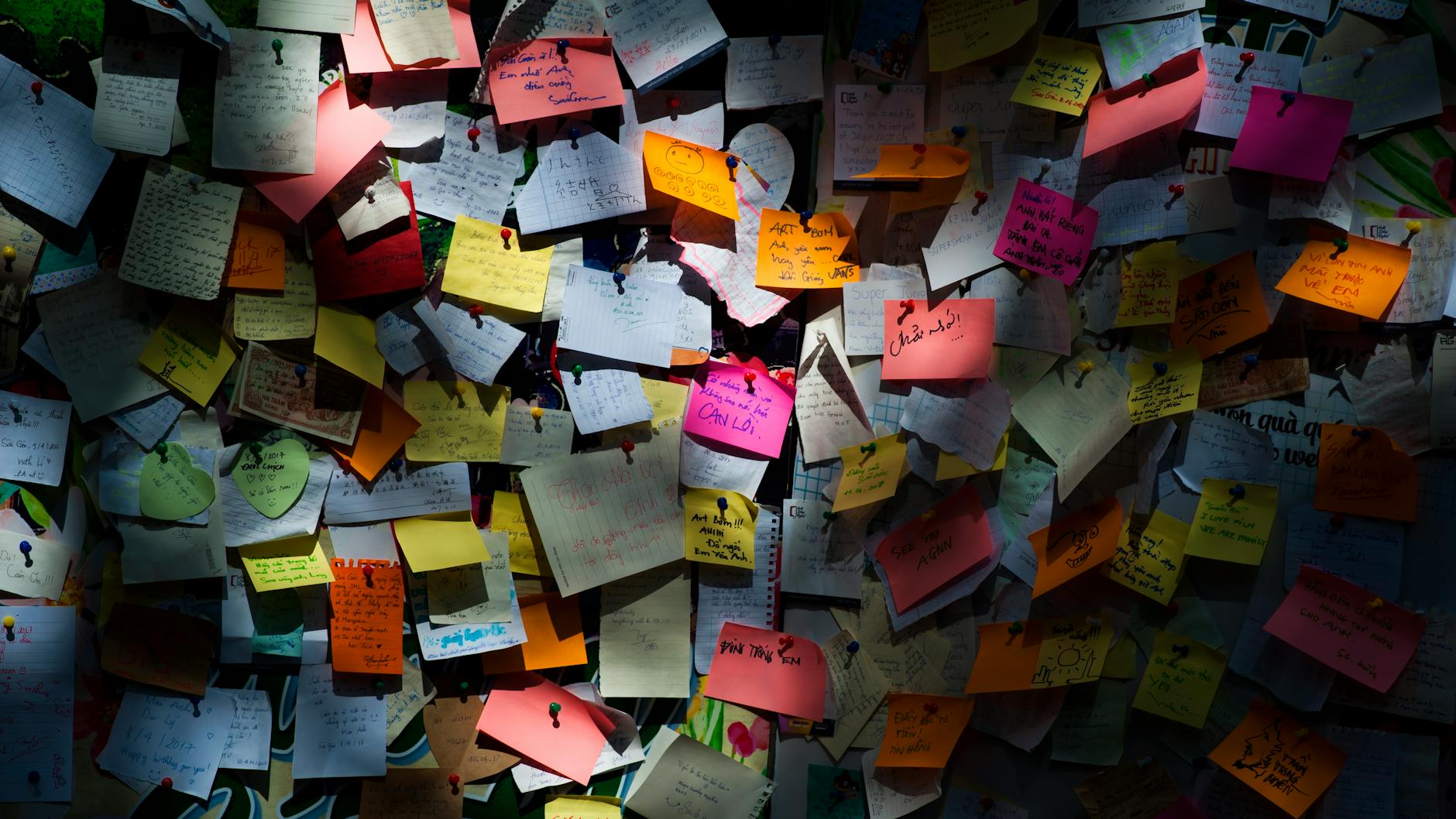
For many people, the idea of having too many choices feels suffocating. The phrase “too many options” is usually followed by anxiety, indecision, paralysis. We live in a culture that constantly warns us about burnout, overload, and the mental strain of abundance. Choice fatigue is treated almost like a universal law of the human experience. The more doors in front of you, the harder it becomes to walk through any of them. And I understand that perspective. I really do. I’ve felt that paralysis before. I’ve watched people freeze under the weight of possibility, terrified of making the wrong move, terrified that every decision closes off a better life that could have been. But for me, something strange happens when the number of options grows. Instead of panic, I feel clarity. Instead of confusion, I feel energized. Instead of fear, I feel excitement.
This might sound backward, especially in a world that constantly tells us to simplify, narrow down, cut back, focus on one thing. We’re taught that clarity comes from reduction, that peace comes from limitation. Pick a lane. Choose a path. Eliminate distractions. And yet, when I’m faced with a wide open field of possibilities, something in my brain clicks into place. The chaos organizes itself. The noise becomes information instead of threat. The abundance doesn’t crush me; it reassures me. Because to me, more possibilities don’t mean more chances to fail. They mean more chances for things to go right.
I think part of this comes down to how we interpret uncertainty. For a lot of people, uncertainty feels like danger. The unknown becomes a looming shadow filled with worst-case scenarios. If nothing is guaranteed, then anything could go wrong. But I tend to experience uncertainty differently. To me, uncertainty is spacious. It’s breathable. It’s a reminder that the future hasn’t hardened yet, that it’s still soft and malleable, still responsive to effort, still open to surprise. When there’s only one path forward, failure feels catastrophic. When there are many paths, failure feels survivable. It becomes just one outcome among many, not the end of the story.
Having many options also strips perfection of its power. If there is only one “right” choice, then that choice becomes sacred, fragile, terrifying. Every decision carries unbearable weight. But when there are many viable paths, perfection loses its grip. You stop chasing the mythical best possible outcome and start looking for a good enough one, a meaningful one, a workable one. And strangely, that’s when things start to feel clearer. The pressure eases. The fear quiets. You’re no longer trying to engineer a flawless future; you’re engaging with a living, evolving present.
I’ve noticed that when people talk about being overwhelmed by choices, they’re often haunted by the idea of regret. What if I choose wrong. What if I miss out. What if the life I could have had is better than the one I end up with. Regret becomes this looming specter that turns every decision into a potential tragedy. But abundance reframes regret for me. If there are many possibilities, then no single choice holds the monopoly on happiness. Joy is no longer scarce. Meaning isn’t locked behind one correct answer. If one path doesn’t work out, there are others. Different, yes, but not necessarily worse.
This mindset doesn’t come from blind optimism or denial of reality. I know things don’t always work out. I know plans fall apart. I know effort doesn’t guarantee success. But I also know that life rarely collapses completely because of one imperfect choice. More often, it bends, reroutes, adapts. And the more possible routes there are, the more room there is for adaptation. Possibility becomes a safety net, not a threat.
There’s also something deeply human about imagining different futures. We’re storytelling creatures. We’re constantly running simulations in our heads, picturing what might happen if we do this instead of that. For some people, that internal storytelling becomes overwhelming, a loop of what-ifs that never resolves. For me, it feels like exploration. I’m not trapped in indecision; I’m mapping a landscape. Each possibility teaches me something about what I value, what excites me, what scares me, what I’m willing to risk. The abundance of options becomes a mirror, reflecting parts of myself I might not notice otherwise.
Clarity, for me, doesn’t come from certainty. It comes from contrast. When I can see multiple paths side by side, I can feel which ones resonate and which ones don’t. My intuition has something to push against. When there’s only one option, it’s harder to tell if I want it or if I’m just accepting it because it’s there. Choice, paradoxically, helps me listen to myself better.
I think this is especially true in creative and intellectual spaces. When you’re writing, for example, having only one idea can feel terrifying. If that idea fails, everything collapses. But when you have many ideas, you’re free to experiment. You can follow one thread, abandon it, return to another. Creativity thrives on possibility. It needs room to wander, to make mistakes, to circle back. For me, life feels similar. When there are many potential directions, I feel more alive, more engaged, more willing to try.
There’s also a quiet comfort in knowing that progress doesn’t have to be linear. Too many choices can feel overwhelming if you believe that you must choose once and then stick with that choice forever. But life rarely works that way. We revise. We pivot. We change our minds. We grow. Possibility means you’re allowed to evolve. You’re not locking yourself into a single identity or destiny. You’re acknowledging that who you are today might not be who you are tomorrow, and that’s okay.
Some people crave closure, a sense of finality that comes with narrowing things down. I get that. There’s safety in commitment, in knowing where you stand. But I’ve learned that openness doesn’t mean a lack of commitment. You can commit to growth, to curiosity, to effort, without committing to a single rigid outcome. You can move forward while still acknowledging that other futures exist. That awareness doesn’t weaken your resolve; it strengthens it, because your commitment is to the process, not just the result.
Another reason abundance brings me clarity is that it reframes success. When success is defined narrowly, as one specific outcome, the stakes become unbearable. Anything less feels like failure. But when success can take many forms, it becomes more attainable, more humane. You stop measuring your life against one imagined ideal and start recognizing progress in smaller, quieter victories. Things don’t have to go perfectly to go positively. In fact, they rarely do. And that’s okay.
There’s a subtle but important distinction between chaos and complexity. Chaos is noise without meaning. Complexity is richness with structure. Many choices can feel chaotic if you don’t trust yourself to navigate them. But if you do, if you believe that you can learn, adapt, and recover, then complexity becomes stimulating rather than overwhelming. It becomes an invitation instead of a warning sign.
Trust plays a huge role here. Trust in your ability to make decisions, even imperfect ones. Trust in your resilience if things don’t work out. Trust that you’re not one mistake away from total ruin. When that trust exists, possibility becomes exciting. It becomes a reminder that your life isn’t fragile glass, but something flexible, something that can absorb impact and keep moving.
I think a lot of people were taught, explicitly or implicitly, that the world is unforgiving. That one wrong move can ruin everything. That there’s a narrow window for success and if you miss it, you’re done. In that kind of worldview, too many choices are terrifying, because every choice feels like a test you can fail permanently. But I’ve come to believe that life is far more forgiving than we’re led to think. Not easy, not fair, not gentle all the time, but forgiving in the sense that it allows for course correction. Possibility is evidence of that forgiveness.
There’s also joy in not knowing exactly how things will turn out. Anticipation, curiosity, surprise. When everything is predetermined, life feels flat. When there are many potential futures, each day feels charged with possibility. Even mundane moments carry a quiet sense of potential, a feeling that something unexpected could emerge. That feeling keeps me engaged with the present instead of obsessing over a single imagined endpoint.
This doesn’t mean I never feel overwhelmed. I do. There are moments when the noise gets loud, when the options blur together, when decision-making feels heavy. But even in those moments, I’d rather have too many doors than none. I’d rather feel briefly overwhelmed by abundance than permanently trapped by scarcity. Overwhelm can be managed. Scarcity suffocates.
At its core, my relationship with possibility is tied to hope. Not naive hope that everything will work out perfectly, but grounded hope that something can work out well enough. That even if things go wrong, they won’t go wrong in every possible way at once. That there are multiple ways to build a meaningful life, multiple definitions of success, multiple forms of happiness. Possibility reminds me that the story isn’t over yet.
And maybe that’s why abundance gives me clarity. Because clarity, for me, isn’t about knowing exactly what will happen. It’s about knowing that I’m not stuck. That I’m not boxed in. That I’m allowed to imagine, to try, to fail, to adjust. The more possibilities there are, the more room there is for grace, for learning, for unexpected joy.
Another layer to why possibility feels calming rather than overwhelming for me is how I view failure itself. A lot of fear around choices comes from fear of failing, but when I really sit with that fear and examine it, most failures aren’t actually that terrifying. Unless a failure can realistically make me sick, injured, dead, or imprisoned, it doesn’t carry the kind of existential weight people often assign to it. It might be uncomfortable. It might be embarrassing. It might sting my pride or force me to recalibrate. But those things are survivable. They’re temporary. They don’t define me unless I let them.
I think many people are taught to treat all failures as catastrophic, as moral indictments or permanent stains. Fail the wrong class, pick the wrong job, say the wrong thing, and suddenly it feels like your entire future is compromised. But when I zoom out, most failures are just information. They tell me what didn’t work, what didn’t fit, what needs adjustment. They don’t erase my worth or my potential. In a landscape full of possibilities, failure becomes just another data point, not a verdict.
There’s even a strange sense of calm I find in this realization. A kind of zen. When you stop inflating failure into something monstrous, it loses its power to terrify you. You’re no longer walking on eggshells, terrified that one misstep will end everything. You can move more freely, more honestly. You can try things without the constant background noise of dread. That freedom makes abundance feel manageable, even comforting.
Ironically, accepting failure is what makes possibility feel lighter. When failure isn’t the end of the world, choices stop feeling like traps. They become experiments. Explorations. Attempts. Some will work. Some won’t. And that’s fine. The world doesn’t collapse because you chose wrong; it simply responds, and you respond back.
This mindset also strips fear of its urgency. If the worst realistic outcome is disappointment, inconvenience, or the need to start again, then fear doesn’t get to dominate the decision-making process. Caution still has a place, especially when health, safety, or freedom are on the line. But outside of those high-stakes boundaries, fear becomes background noise instead of a command. I can acknowledge it without obeying it.
And that’s where the calm really comes from. Knowing that I don’t need to avoid every possible failure to live a good life. Knowing that I’m allowed to stumble, to misjudge, to learn the hard way sometimes. Possibility paired with survivable failure isn’t overwhelming; it’s liberating. It means I don’t have to get it right the first time, or even the second. I just have to keep engaging, keep moving, keep choosing.
In that context, even a future full of unknowns doesn’t feel threatening. It feels open. And openness, to me, is peace.
So when people talk about choice overload and decision fatigue, I understand the concern. I don’t dismiss it. But I also know that for some of us, possibility is not a burden. It’s a lifeline. It’s the thing that keeps us moving forward when certainty would paralyze us. It’s the quiet reassurance that even if the path ahead isn’t clear, there are many paths, and that somewhere among them, there are outcomes that are good, meaningful, and worth striving for, even if they’re imperfect.
Because perfection was never the goal. Growth was. Meaning was. Motion was. And in a world full of possibilities, those things feel not just attainable, but inevitable in some form. And that, strangely and beautifully, brings me peace.