The Musings of Jaime David
@jaimedavid.blog@jaimedavid.blog

The writings of some random dude on the internet

1,168 posts
1 follower

Tag: social media

  • Discover the Strange, the Quirky, and the Unexpected: Introducing Oddities in Media

    In a world overflowing with media, it’s easy to feel like we’ve seen it all. From blockbuster films to trending social media posts, from best-selling books to viral videos, content surrounds us at every turn. But sometimes, the most fascinating and memorable moments in media are the ones that defy expectations—the strange, the quirky, and the unusual. These are the moments that make us pause, laugh, question, or simply scratch our heads. And that is exactly the space my new site, Oddities in Media, is designed to explore.

    Oddities in Media is a blog dedicated to highlighting the odd, the overlooked, and the utterly unique corners of all forms of media. It doesn’t matter whether it’s social media, YouTube, movies, TV shows, books, or other creative outlets—if it’s unusual, unexpected, or fascinatingly strange, it belongs here. The goal is simple: to shine a light on the media that most people miss, ignore, or dismiss, and to explore what makes it so compelling.

    The idea for this site stems from my fascination with media as a reflection of culture and creativity. Often, the content that seems odd, strange, or even ridiculous at first glance tells us more about society, artistic experimentation, or collective human behavior than the mainstream hits ever could. A bizarre viral video might reveal fascinating trends in internet culture. An obscure movie scene might reflect societal anxieties or creative risks from its era. Even an unusual book or TV episode can challenge conventions, experiment with narrative, or present ideas in ways that demand attention. By exploring these oddities, Oddities in Media offers readers a new lens through which to view and understand the media they consume.

    This blog is not just about cataloging strange content—it’s about celebrating it. Media doesn’t always have to be polished or commercially successful to be valuable. Often, it’s the imperfections, the quirks, and the unexpected moments that make a work memorable. A movie scene that seems unintentionally funny, a viral meme that surprises us with its absurdity, or a forgotten book with experimental storytelling all have a story to tell. Oddities in Media aims to give these works the attention and appreciation they deserve. It’s about curiosity, laughter, reflection, and discovery.

    Another goal of Oddities in Media is to provide context and analysis. It’s one thing to point out that something is strange; it’s another to explore why it exists, what it reveals, and why it captures—or fails to capture—attention. Posts on the site will often dig deeper, looking at historical, cultural, or artistic context, examining what makes a particular work odd, and exploring the impact it has on audiences. By combining observation with insight, the site encourages readers to think critically while still enjoying the weirdness and charm of unusual media.

    The scope of the blog is intentionally broad. It covers a wide variety of media, from the newest viral videos to forgotten movies, TV shows, YouTube channels, or books that may have slipped through the cracks. Oddities can be small, like a quirky line in a scene, or large, like a completely unconventional narrative structure or aesthetic choice. Social media posts, obscure fan videos, experimental art, and unusual adaptations are all fair game. By keeping the focus wide, Oddities in Media can uncover hidden gems, spark curiosity, and provide a space where readers can encounter content they might never have discovered otherwise.

    One of the joys of exploring odd media is that it invites conversation. Strange content often provokes strong reactions—laughter, confusion, awe, or curiosity—and discussing it allows us to see different perspectives. Oddities in Media aims to be a space for community engagement, where readers can share thoughts, reactions, and their own discoveries. Whether it’s a particularly bizarre movie scene, a viral social media trend, or a forgotten TV show, there’s always room to discuss, debate, and explore. The blog encourages interaction and discovery, making it more than just a collection of posts—it’s a hub for curiosity.

    Oddities in media often reveal patterns, insights, and trends that are otherwise invisible. They show us the unexpected side of creativity, the ways artists experiment, and the ways audiences respond. Sometimes these moments are unintentionally funny or strange; other times they are deeply thought-provoking. By highlighting these works, the blog invites readers to expand their understanding of media, culture, and storytelling. It’s a reminder that the unusual often holds more significance than we realize and that paying attention to what’s “offbeat” can lead to fresh perspectives and new appreciation.

    The site also emphasizes the fun of discovery. In a media landscape dominated by algorithms and trending topics, it can be easy to miss the small, strange, or unconventional gems that exist just beyond the mainstream spotlight. Finding an odd, fascinating, or overlooked piece of media can be incredibly rewarding—and that’s exactly the experience Oddities in Media wants to share. Readers can expect posts that uncover hidden gems, explain what makes them unique, and invite discussion, all while celebrating the unpredictability of creative expression.

    In short, Oddities in Media is a celebration of curiosity, creativity, and the strange corners of culture. It’s about embracing the weird, the unexpected, and the overlooked, and finding value in moments that might otherwise pass unnoticed. By exploring media through this lens, the site encourages readers to think critically, laugh, reflect, and above all, enjoy the fascinating diversity of the creative world.

    I invite readers of The Musings of Jaime David to visit Oddities in Media and join me on this journey. Whether you are looking for strange and hilarious moments in media, overlooked artistic gems, or deeper insights into cultural trends, there’s something here for everyone. By celebrating the unusual and unexpected, Oddities in Media hopes to inspire curiosity, foster discussion, and remind us that sometimes the most memorable experiences come from the things we least expect.

    So, if you’ve ever been intrigued by the weird, the quirky, or the wonderfully strange, Oddities in Media is your new destination. Explore, discover, laugh, think, and enjoy. The world of media is vast and full of surprises, and sometimes the oddest corners are the most rewarding to explore.

  •  Scammers on Mastodon: Stop Falling for the Fake Verification Trap

     Scammers on Mastodon: Stop Falling for the Fake Verification Trap

    The beauty of Mastodon is its decentralized nature. It’s a network built on trust, community, and people’s desire to connect without the constant noise and exploitation of big social media platforms. But unfortunately, where there’s an online community, there will always be someone looking to exploit it. Over the past few months, I’ve seen a troubling rise in scam attempts on Mastodon—specifically, accounts pretending to be “Mastodon staff” or “verification teams,” tagging users publicly and telling them to click a link to “verify” their account. Let me be blunt: this is a scam. Every time.

    These scammers have a very simple playbook. They’ll create an account that looks vaguely official—often with a username that includes “support,” “help,” or “mastodon.” Then they make a post tagging unsuspecting users, claiming something along the lines of “You need to verify your account to avoid suspension” or “Click this link to keep your account active.” The tone is designed to create panic and urgency. But if you stop for even one second, the scam falls apart. Mastodon will never, and I mean never, tag you in a random public post to tell you to click a sketchy link.

    Here’s the thing about real account issues: they are private matters. If something is wrong with your Mastodon account—maybe there’s a problem with your login, or your instance is having a technical hiccup—you will be contacted through legitimate channels. That usually means email, sent directly to the address associated with your account. Sometimes, depending on the instance you’re on, an official support account may reach out to you directly via private message. But what they will not do is blast your handle in a public post, telling you to click on some random site you’ve never heard of. That would be both unprofessional and insecure, the exact opposite of how Mastodon and its admins operate.

    Another important point: verification on Mastodon doesn’t even work like it does on corporate social media platforms. There’s no “blue check” you pay for or some kind of centralized authority deciding who’s real. Instead, Mastodon’s verification is domain-based. If you want that green verified link on your profile, all you need to do is host a website or page where you can insert a snippet of HTML linking back to your Mastodon account. That’s it. It’s user-controlled, transparent, and not subject to arbitrary gatekeeping. Which means if someone is telling you that Mastodon “staff” needs to personally verify you through a link, they’re lying outright.

    Scammers thrive on confusion and fear. They know that many people are still new to Mastodon, unsure of how things work compared to Twitter or Facebook. They weaponize that uncertainty. They throw around words like “suspension,” “policy violation,” or “account termination,” because they know users will panic and click before they think. And once you click, you’re opening yourself up to phishing attempts, malware, or worse. That shady link isn’t leading you to a legitimate Mastodon portal—it’s leading you straight into their trap.

    This is why I feel the need to speak up. It’s not enough for individuals to quietly ignore these scams; we need to actively warn others. If you see one of these scam posts, don’t just scroll past it. Report the account. Block them. Boost posts from others calling out the scam. Talk about it. The more awareness we raise, the less likely someone else will fall into the trap.

    It also helps to remember that Mastodon isn’t a monolithic company. Each server, or instance, is independently run. That means “official communication” will always depend on your instance administrator, not some vague all-encompassing Mastodon authority. If you’re ever genuinely worried about your account, the best thing you can do is contact your instance admin directly. They are the ones responsible for your account, not some random person tagging you in a public post.

    The scams I’ve been seeing lately have become almost laughably obvious, but that doesn’t mean they’re harmless. All it takes is one person in a moment of panic to click the wrong link, and their account—or even their device—could be compromised. And unlike big tech platforms with giant security teams, Mastodon is powered by communities of volunteers and enthusiasts. The best defense we have is collective vigilance.

    Let me repeat this one more time for anyone who needs to hear it: Mastodon will never ask you to verify your account through a public post. They will never tag you randomly to click on a suspicious link. If there is a problem, you’ll hear from your instance admin privately, or you’ll get an email. And verification itself is not something handled by staff—it’s something you do yourself, if you want, through your own website.

    So the next time you see one of these fake “Mastodon staff” accounts tagging people, don’t get scared. Recognize it for what it is: a lazy scam. Don’t click, don’t engage, just block, report, and move on. And if you feel so inclined, let your followers know what’s going on so they’re better prepared too. Because the only way these scammers succeed is if they catch us off guard. Let’s make sure they don’t.

    Mastodon deserves better than to be polluted by the same shady tactics we left behind on corporate social media. Part of what makes this space so refreshing is the sense of community and mutual responsibility. So let’s keep that spirit alive. Look out for each other. Share knowledge. And when the scammers come knocking, slam the door in their faces.

    Fediverse Reactions
  • add me on linkedin

    add me on linkedin

    Jaime David | LinkedIn

    you can add me on linkedin here if you want

  • Check out my books and my podcast and other stuff!!!

    Check out my books and my podcast and other stuff!!!

    Hey everyone!

    Just figured I would make a comprehensive ad that combines all of my major works so far into one.

    Check out my short story compilation book “Some Small Short Stories:”

    Paperback: https://www.lulu.com/shop/jaime-david/some-small-short-stories/paperback/product-gjypv69.html

    Ebook: https://www.lulu.com/shop/jaime-david/some-small-short-stories/ebook/product-7kvw9gg.html

    Check out my poem compilation book “My Powerful Poems:”

    Paperback: https://www.lulu.com/shop/jaime-david/my-powerful-poems/paperback/product-dy68n5r.html

    Ebook: https://www.lulu.com/shop/jaime-david/my-powerful-poems/ebook/product-q6dwzpm.html

    Check out my novel “Wonderment Within Weirdness:”

    Paperback version: https://www.lulu.com/shop/jaime-david/wonderment-within-weirdness/paperback/product-q6kydmk.html?q=wonderment+within+weirdness&page=1&pageSize=4

    Ebook version: https://www.lulu.com/shop/jaime-david/wonderment-within-weirdness/ebook/product-2m42ewm.html?q=wonderment+within+weirdness&page=1&pageSize=4

    Check out my podcast “The Jaime David Podcast” on Spotify, YouTube, and more!

    Spotify: https://open.spotify.com/show/2ckvJZisk8njUvZAkxZNC4

    YouTube: https://youtube.com/playlist?list=PLOaTKcyxB_H5ZuHUKMn8xon94QZVyDWmu&si=SHbV_rpEzDhaofpW

    Follow me on my social media (you can find my social media linked on this page here):

    Also check out my other sites:

    The Interfaith Intrepid: https://theinterfaithintrepid.art.blog/

    Let’s Be Different Together: https://letsbedifferenttogether.wordpress.com/

    Jaime David Science: https://jaimedavidscience.hashnode.dev/

    Jaime David Gaming: https://jaimedavidgaming.hashnode.dev/

    Medium blog: https://medium.com/@jaimedavid327

    Jaime David Music: https://jaimedavidmusic.blogspot.com/

    Jaime David Archive:  https://jaimedavid327.wixsite.com/jaimedavidarchive

  • We Were Wrong About Holden Caulfield — He Cares More Than We Thought

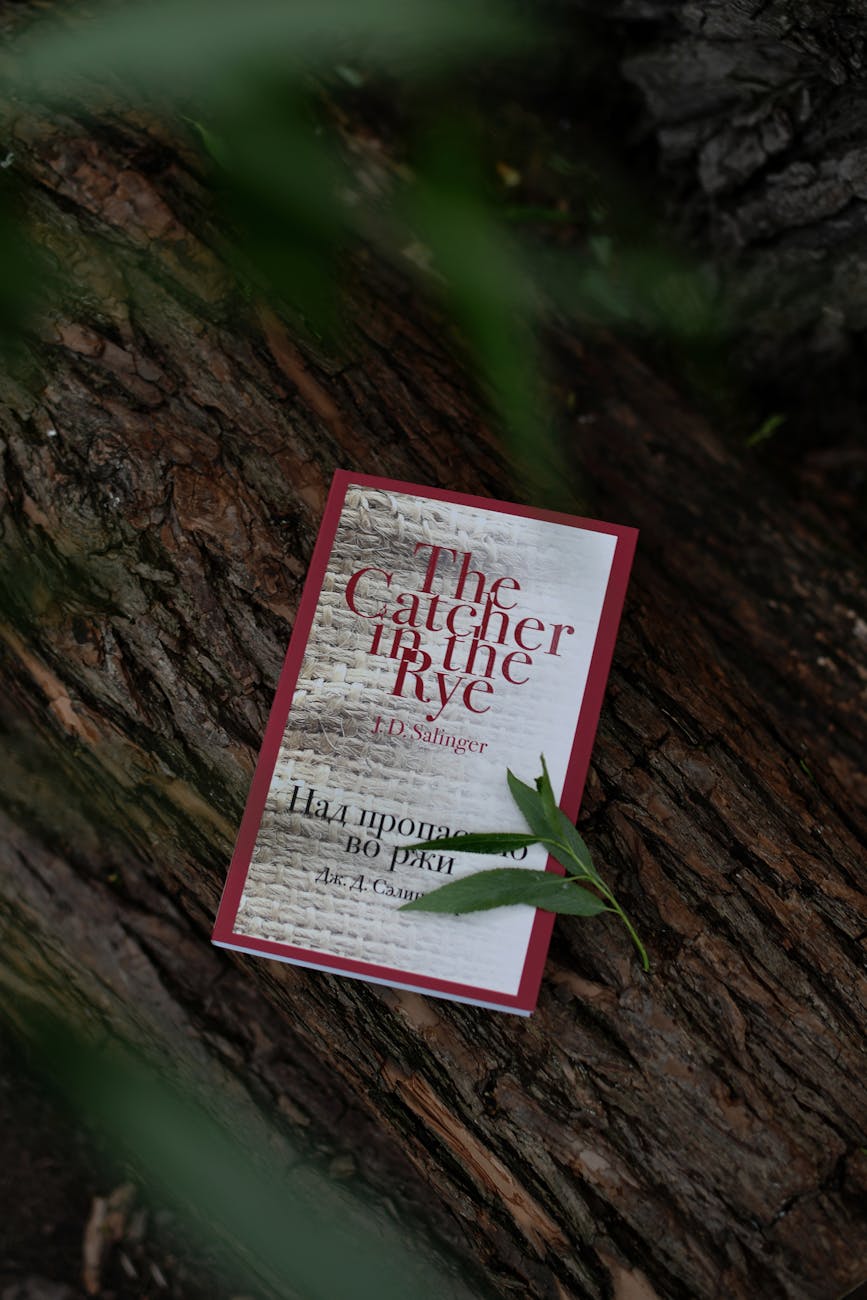
    We Were Wrong About Holden Caulfield — He Cares More Than We Thought

    If Holden Caulfield were somehow transported into the year 2025, immersed in the dizzying swirl of our modern digital age, it would be a mistake to imagine him as merely angry or rebellious in the shallow, stereotypical teenage sense. No, Holden’s emotional landscape is far more complex, far more aching, and far more layered with contradictions than a simple outburst of adolescent defiance. At his core, the man who famously wielded the word phony as a kind of battle cry against insincerity would actually be struggling under the weight of something far heavier: a profound and wrenching mix of frustration and hope, tangled together so tightly it’s nearly impossible to separate one from the other.

    That word phony — often reduced by casual readers to a throwaway insult or a juvenile declaration — is in truth a deeply raw, visceral cry from someone who desperately yearns for the world to be better, more honest, and ultimately more real. Holden is not just railing against the surface-level fake or the trivial hypocrisy; he’s mourning the loss of genuine human connection and authenticity in a society increasingly overwhelmed by masks, performances, and illusions. In today’s chaotic 2025, where social media filters blur faces and expressions, AI bots masquerade as real people with eerie precision, scams and catfishers weave complex webs of deception, and cryptographic technologies like NFTs and cryptocurrencies spin dizzying new illusions of value and trust, Holden’s distress about phoniness feels not only relevant but more urgent and poignant than ever before.

    His frustration isn’t born of apathy or cynical detachment. Instead, it emerges from an almost unbearable depth of care — care for a world that no longer seems to value sincerity, care for people who are all too often invisible behind their masks, care for connection in an age of alienation. Holden wants a world where sincerity is not a precious rarity but a widespread currency. The more superficial the world becomes, the more he feels like a lone voice crying out in an increasingly deafening storm of façades. Importantly, he is not condemning the world simply to reject it outright; rather, he mourns what has been lost and painfully longs for what might still be recovered. This longing is not a small part of who Holden is; it is his essence — a deeply sensitive soul gasping for air in an environment suffocated by noise and superficiality.

    Holden’s pain is not simply a private or individual anguish; it carries a cultural and existential weight. Every time he calls someone “phony,” he is identifying a symptom of a broader social sickness — a society that increasingly rewards performance over presence, spectacle over substance, style over authenticity. The very concept of being “real” in this context becomes, almost paradoxically, a revolutionary act. His frustration is not mere teenage angst, but a profound cry for genuine authenticity in a world that seems more and more constructed from illusion and pretense.

    When Holden flings around the term phony in The Catcher in the Rye, he is not merely venting bitterness or staging an act of rebellion against the world. Instead, he is overwhelmed by emotions that are so immense and complex, they evade simple verbal expression: sadness that runs deep, crushing loneliness, and a sense of betrayal by the very people and institutions he hoped to trust. As a highly sensitive person, one whose emotional antennae pick up the faintest signals of pain and insincerity, Holden wrestles with these floods of feelings. “Phony” becomes his singular, catch-all term for capturing the hollowness he perceives in the world — the emotional exhaustion of constant performances and fakeness that threaten to drown out any possibility of true connection.

    His bluntness and sometimes abrasive tone are more than just defensive armor; they are a coping mechanism and a desperate plea for something genuine and meaningful. Beneath his dismissive, sarcastic exterior lies a heart that is aching, vulnerable, and painfully raw. To Holden, the insincerity of the world is not a mere annoyance or inconvenience — it is a wound, one that cuts to the very core of his fragile hope for human connection.

    Importantly, Holden’s anger at phoniness is not rooted in hatred. It is a form of hope — a hope so raw and unpolished it wears the rough disguise of anger and tough love. It is a hope that the people around him might somehow be kinder, more authentic, and more genuinely connected to one another. This makes him profoundly relatable today, even if many don’t immediately recognize it. The modern world is flooded with its own versions of phoniness: “grifters” — from social media influencers peddling carefully curated but ultimately fake lifestyles, to multi-level marketing bosses who exploit emotional trust, to hollow gurus hawking quick fixes and empty promises. These are the phonies of Holden’s time, the ones he would have feared and condemned.

    But his reaction to them would be more nuanced than simple disdain. He would be frightened by what their deception reveals about human nature and society: that people are so hungry for genuine connection and meaning that they are willing to believe illusions and lies, that the social fabric is so frayed that trust has become a scarce commodity. The success of these grifters signals not only their cunning but also the profound fractures in our cultural landscape and the scarcity of true realness. Holden’s warnings about phoniness go beyond calling out individual bad actors; they are indictments of a society that increasingly elevates surface-level performance and pretense over truth, where meaning is drowned out by noise.

    Yet Holden is not without his own flaws and contradictions. He lies, he performs, he lashes out — not because he is callous or uncaring, but because he is terrified to confront his own vulnerability. Deep inside, he suspects that he might be just as phony as the people he harshly judges. This painful paradox — being both the accuser and the accused — is what makes him so raw, so real, and so profoundly human.

    This internal battle is at the heart of Holden’s tragedy, but also his resilience. His self-awareness of his own flaws does not weaken him; rather, it sharpens his judgments and preserves his genuineness. It is this self-reflection and humility that prevents him from sliding into complete cynicism or nihilism. Instead, Holden is a broken idealist who continues to try, to fail, and to try again to find authenticity in a world that often seems to reject it. This vulnerability is exactly what makes him eternally relatable to readers across generations.

    From a psychological perspective, Holden fits the personality profile of an ENFJ — the empathetic, emotionally intense “compassionate truth-teller” who suffers deeply when those around him fall short of his high ideals. Combined with traits typical of a highly sensitive person, Holden’s capacity to care deeply is both his strength and his source of profound pain. In a world overwhelmed by noise, pretense, and relentless surface-level interaction, he feels utterly isolated in his search for sincerity. His fierce criticisms are often a mask for his yearning to connect and to protect those he cares about.

    Imagine Holden navigating the digital landscape of today. He would see bots pretending to be humans, scammers hiding behind fabricated identities, catfishers weaving elaborate lies to manipulate and gain attention, and parasocial relationships built on one-sided obsession. He would watch people fall in love with influencers who don’t even know they exist, and witness AI-generated content that blurs the lines between authentic and artificial reality. These phenomena would deepen his sense of alienation and loss.

    And then there is the physical world: knockoff perfumes, counterfeit sneakers, cheap imitations flooding both brick-and-mortar stores and online marketplaces. To Holden, these objects would not be merely cheap products but potent symbols of a culture that values image and hype over substance and honesty. As he walked through bustling city streets or scrolled endlessly through advertising feeds, he might mutter under his breath, “Goddamn phonies.” This would be no mere expression of irritation, but a mournful lament for a world where what is real becomes harder and harder to find.

    Even the economy would not escape Holden’s sharp critique. The rise of NFTs and cryptocurrencies — often dismissed by critics as speculative bubbles or empty hype — would appear to him as mass delusions, where millions are spent on digital images or tokens lacking intrinsic value. It would matter little how sophisticated the technology is or how much promise it holds for decentralization. To Holden, these trends would be perfect metaphors for a culture entranced by surface over substance, the latest signs of how easily we are seduced by illusions and empty hype.

    Philosophically, Holden’s deep suspicion of the world would find resonance in simulation theory — the provocative idea that reality itself might be a computer-generated illusion. While this remains unproven, the concept would echo Holden’s darkest fears about universal phoniness and deception. If the world around us is merely a simulation, then where does that leave hope for truth, for connection, for genuine human experience? This cosmic dread would only deepen his internal struggle and his profound sense of alienation, feeding the loneliness at the very core of his being.

    But Holden’s skepticism is far from isolated. His distrust of the status quo aligns, though uneasily, with many voices across today’s fractured ideological landscape: from MAGA loyalists convinced the system is rigged, to anarchists calling for radical upheaval, libertarians rejecting centralized authority, “truthers” questioning official narratives, sociologists who deconstruct social realities, and nihilists who deny inherent meaning in life. These groups vary widely in their beliefs and approaches, but they share with Holden a fundamental sense that the world’s script is broken — that something essential is amiss.

    This widespread skepticism is less about shared ideology and more about a collective feeling of distrust, alienation, and disillusionment. It reflects a society grappling with complexity, contradiction, and suspicion. Holden’s feelings connect across this broad spectrum not as a political statement or endorsement but as an expression of the universal human struggle to find meaning and authenticity amid confusion.

    Ironically, Holden would likely view many of his own fans as phonies — those who don Catcher in the Rye merchandise or idolize his rebellious image. To him, this commodification of his pain and confusion would feel like yet another mask obscuring the very vulnerability he struggles to express. He never aspired to be anyone’s hero; he simply wanted to survive his own confusing, painful world. Watching his story become a cultural icon might deepen his sense of being misunderstood, amplifying his feeling of isolation.

    At the very center of it all, Holden knows he is a phony too. The finger he points outward always reflects back upon himself. He judges performance, but he performs as well. He fears fakery but wonders if he has already been consumed by it. His fierce desire to protect innocence stands in contrast to his own deeply wounded soul. This painful self-awareness, far from weakening him, is what grounds him in reality and makes him endlessly relatable.

    Ultimately, Holden endures not because he is perfect or certain but because he feels deeply and hopes fiercely. He is flawed, lost, angry, scared — yet still yearning for something genuine in a world that often feels like a carefully staged play. In an age dominated by masks, bots, and simulations, Holden’s stubborn hope for authenticity is itself a radical act of resistance: a quiet, fierce defiance that reminds us all of the profound meaning of truly caring.

  • Check out my books and my podcast and other stuff!!!

    Check out my books and my podcast and other stuff!!!

    Hey everyone!

    Just figured I would make a comprehensive ad that combines all of my major works so far into one.

    Check out my short story compilation book “Some Small Short Stories:”

    Paperback: https://www.lulu.com/shop/jaime-david/some-small-short-stories/paperback/product-gjypv69.html

    Ebook: https://www.lulu.com/shop/jaime-david/some-small-short-stories/ebook/product-7kvw9gg.html

    Check out my poem compilation book “My Powerful Poems:”

    Paperback: https://www.lulu.com/shop/jaime-david/my-powerful-poems/paperback/product-dy68n5r.html

    Ebook: https://www.lulu.com/shop/jaime-david/my-powerful-poems/ebook/product-q6dwzpm.html

    Check out my novel “Wonderment Within Weirdness:”

    Paperback version: https://www.lulu.com/shop/jaime-david/wonderment-within-weirdness/paperback/product-q6kydmk.html?q=wonderment+within+weirdness&page=1&pageSize=4

    Ebook version: https://www.lulu.com/shop/jaime-david/wonderment-within-weirdness/ebook/product-2m42ewm.html?q=wonderment+within+weirdness&page=1&pageSize=4

    Check out my podcast “The Jaime David Podcast” on Spotify, YouTube, and more!

    Spotify: https://open.spotify.com/show/2ckvJZisk8njUvZAkxZNC4

    YouTube: https://youtube.com/playlist?list=PLOaTKcyxB_H5ZuHUKMn8xon94QZVyDWmu&si=SHbV_rpEzDhaofpW

    Follow me on my social media (you can find my social media linked on this page here):

    Also check out my other sites:

    The Interfaith Intrepid: https://theinterfaithintrepid.art.blog/

    Let’s Be Different Together: https://letsbedifferenttogether.wordpress.com/

    Jaime David Science: https://jaimedavidscience.hashnode.dev/

    Jaime David Gaming: https://jaimedavidgaming.hashnode.dev/

    Medium blog: https://medium.com/@jaimedavid327

    Jaime David Music: https://jaimedavidmusic.blogspot.com/

    Jaime David Archive:  https://jaimedavid327.wixsite.com/jaimedavidarchive

  • Slam Sunday: Post 5 – “Screens of Discontent”

    Slam Sunday: Post 5 – “Screens of Discontent”

    Intro:
    In a world addicted to the glow of screens, this poem digs into how technology shapes truth, divides us, and fuels discontent — the digital battleground where reality fractures and rage spreads.

    Poem:
    Scroll, swipe, like, repeat,
    A digital heartbeat, incomplete.
    Truth gets filtered, bent, and spun,
    Behind every click, a war begun.

    Algorithms cage us tight,
    Feeding fears in the dead of night.
    Echo chambers, walls of sound,
    Where common ground is rarely found.

    We rant in pixels, fight in threads,
    While empathy quietly dreads.
    Fake news breeds in shadowed code,
    And lies grow heavy like a load.

    But what if we looked up, eyes wide,
    And found the humans on the other side?
    Could connection break the chain,
    Or will we drown in our own disdain?

  • Some Youtube channels I watch

    Some Youtube channels I watch

    This post is gonna be a bit different. It’s a list of some Youtubers I watch. Feel free to check them out! There is no rhyme or reason to it. It is just a random list of Youtubers that I watch. I may make a more comprehensive list detailing my favorite Youtubers for specific video categories, but for now, I just wanted to make this list! Hope y’all enjoy!

    https://www.youtube.com/channel/UC_VfjlVOw3M7l8HiZdQ0b0g Caleb Oliver

    https://www.youtube.com/channel/UC_nPT2Kd9xJ_PYoNlw74n0A Dazzling1

    https://www.youtube.com/channel/UCKSfM-RoVyyJQ2E7sTjSY0Q Daniela Elana

    https://www.youtube.com/channel/UC7mEX52hf21xU4Wj0HBQyeQ ASilva528

    https://www.youtube.com/channel/UC__Oy3QdB3d9_FHO_XG1PZg Reviewtechusa

    https://www.youtube.com/channel/UC0M0rxSz3IF0CsSour1iWmw Cinemassacre

    https://www.youtube.com/channel/UCYxrnDjNQZIs_aAcdhqSveg Rob Gavagan

    https://www.youtube.com/channel/UCq6VFHwMzcMXbuKyG7SQYIg penguinz0

    https://www.youtube.com/channel/UCtMVHI3AJD4Qk4hcbZnI9ZQ Someordinarygamers

    https://www.youtube.com/channel/UCejehlk5eLZlzgGP1rUx8kw Linkara-AtopTheFourthWall

    https://www.youtube.com/channel/UCmA-0j6DRVQWo4skl8Otkiw Comicstorian

    https://www.youtube.com/channel/UCKxQmKgrkUv4S7P5w0pLayw Comics Explained

    https://www.youtube.com/channel/UCIWD1MzoJTPt41tYce18I1w TheBurgerkrieg

    https://www.youtube.com/channel/UC228Y4vvOMPieeT_XYTbe-A Repzion

    https://www.youtube.com/channel/UClHofEiTcGYPMA9jqaFbmGA Tehmimi

    https://www.youtube.com/channel/UCRdyjE3lE7dtCOxU4rTsXVA Tekking101

    https://www.youtube.com/channel/UCZ04pLI44c0PWRzubEV6ogA ralphthemoviemaker

    https://www.youtube.com/user/KingOfLighting King Of Lightning

  • Mental health support group

    Mental health support group

    https://www.facebook.com/groups/139839214072165

    A support group for people with social/learning disabilities, emotional trauma, anxiety, and depression to be themselves without any judgement. You can ask for advice or give it. You can also meet other people who have disabilities, depression, anxiety, and emotional trauma.