The Musings of Jaime David
@jaimedavid.blog@jaimedavid.blog

The writings of some random dude on the internet

1,117 posts
1 follower

Tag: Technology

  • Social Media Addiction: A Personal Reflection on Recent Legal Developments

    Social Media Addiction: A Personal Reflection on Recent Legal Developments

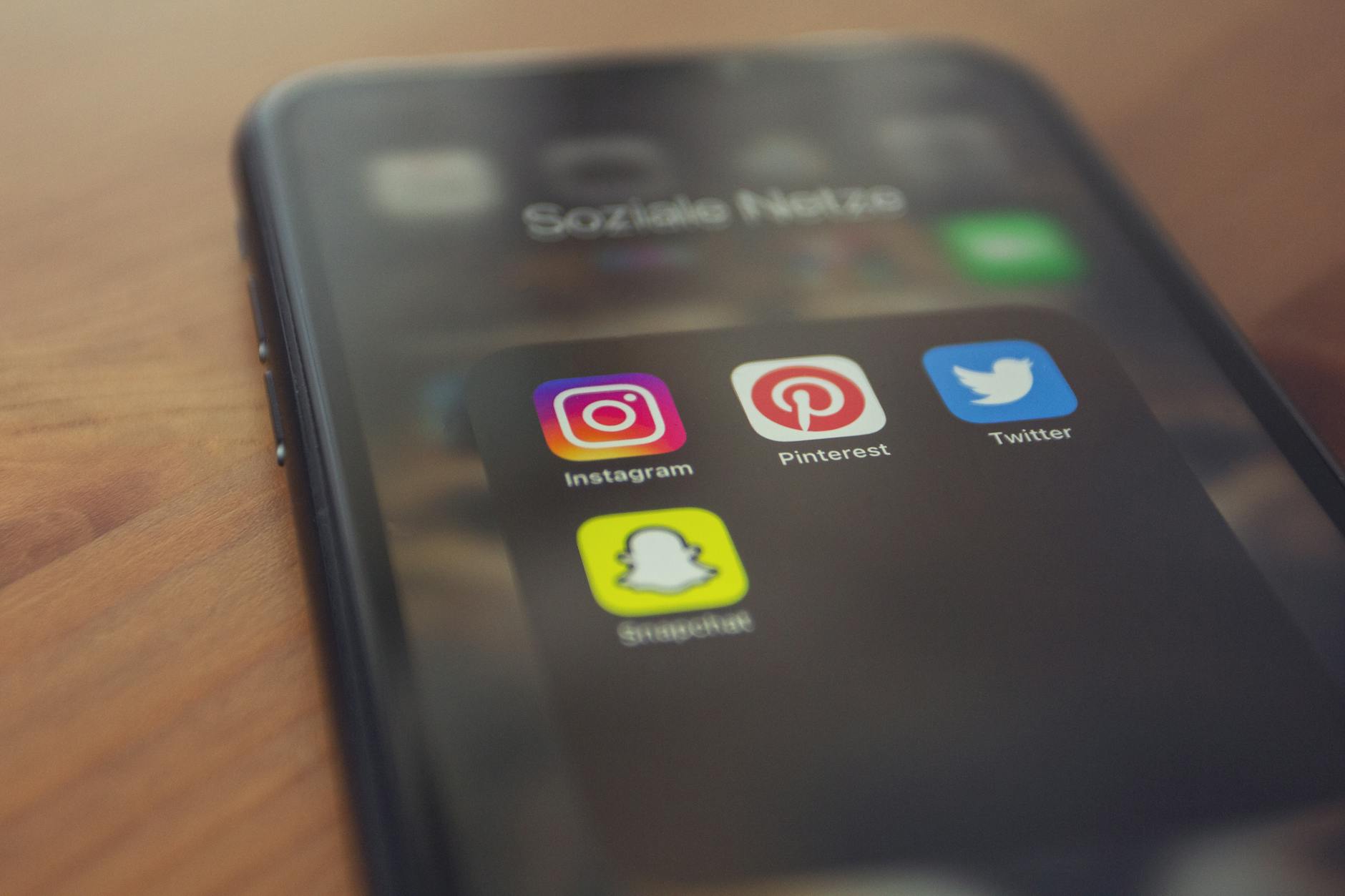
    The recent lawsuits against major social media companies, alleging harm caused by addictive design, have caught my attention and prompted reflection on the nature of social media use in my own life and the lives of those around me. These cases, where courts have held platforms liable for contributing to compulsive behavior, underline the seriousness of an issue that many people still dismiss as trivial or exaggerated. While the plaintiffs in these cases are young individuals claiming mental health impacts, the implications extend far beyond age groups, reaching into adult behavior, family dynamics, and our broader understanding of how technology influences human habits.

    Watching the news coverage and reading about the court’s findings, I couldn’t help but see parallels in my own experiences. People I know, older adults even, exhibit patterns that resemble what the lawsuits describe. Hours spent scrolling, compulsive checking, waking up to engage with content, and frustration or denial when confronted about usage—these are not just habits, they are behaviors characteristic of addiction. It is easy to dismiss such actions as a harmless pastime, but when observed closely, they reveal a persistent pattern where engagement becomes prioritized over rest, social interactions, or personal well-being.

    I have noticed this in someone I know. Their use of online video platforms and other internet content has gradually intensified over the past decade, becoming an almost constant presence in daily life. They often spend hours at the computer, beginning the day by immediately logging in, and sometimes continuing late into the night, even waking in the middle of sleep to resume. Attempts to gently suggest moderation are met with defensiveness or denial, an emotional response consistent with addictive behaviors. While the individual themselves may not perceive a problem, the patterns are clear to others who observe from the outside, highlighting the disconnect between self-perception and observable reality.

    The recognition of social media addiction as a legitimate concern is, in my view, long overdue. Society often underestimates the power of algorithms and design features in shaping behavior. Infinite scroll, autoplay, personalized recommendations, and reward cues exploit the brain’s dopamine pathways, creating a loop that encourages continued engagement. The lawsuits against the platforms are a public acknowledgment that these design features are not neutral; they actively foster compulsive usage. When combined with human susceptibility, these elements create a potent environment for behavioral addiction.

    The personal relevance of these developments extends beyond observation into reflection on responsibility and empathy. Understanding addiction requires recognizing that denial, defensiveness, and minimization are common reactions. People caught in these patterns may genuinely believe their behavior is normal or harmless, even while it disrupts their routines, sleep, or relationships. Witnessing someone close to me exhibit these behaviors has reinforced my belief that social media addiction is not a trivial issue but a legitimate form of compulsive behavior, deserving the same attention and care as other recognized addictions.

    Moreover, these cases raise broader societal questions about accountability. If platforms knowingly design tools that exploit psychological vulnerabilities, what obligations do they have to users? Should there be stricter regulations on engagement-based design, especially when it targets vulnerable populations? The legal precedent being set suggests that responsibility does not lie solely with the individual, but is shared with the entities that engineer the environments in which addiction can flourish. This is a critical shift in perspective, acknowledging that technology is not merely neutral but can shape behavior in profound ways.

    Reflecting on these developments also prompts consideration of preventive measures and support structures. Encouraging self-awareness and moderation, offering alternatives to compulsive usage, and fostering environments where discussion about online habits is normalized are important steps. In personal contexts, this might involve gentle observation and conversation, helping individuals recognize patterns without judgment. On a societal level, it might involve education about digital wellness, access to resources for behavioral management, and public discourse about the ethics of design and its consequences.

    In addition, these lawsuits highlight the universality of addictive tendencies. Addiction does not discriminate by age, occupation, or social status. While the cases focused on younger users, the patterns I observe in older adults demonstrate that susceptibility persists across the lifespan. Prior experiences with other addictive behaviors can also influence vulnerability, reinforcing the need for awareness and proactive strategies in addressing digital consumption. Recognition of these patterns, combined with compassion and practical support, can help mitigate the harm associated with excessive engagement.

    The conversations around social media addiction, legal accountability, and personal observation intersect to create a powerful narrative about modern life. Technology is deeply embedded in our daily routines, yet the potential for harm is significant and often overlooked. These lawsuits serve as both a wake-up call and a validation for those who have long recognized the addictive potential of online platforms. They encourage society to move beyond casual dismissal and toward acknowledgment, understanding, and constructive action.

    On a personal level, seeing the alignment between observed behavior and documented cases strengthens my conviction that intervention, awareness, and dialogue are essential. Addiction thrives in secrecy and denial, but recognition and support can create space for moderation, recovery, and balance. While technology will continue to evolve, the principles of self-awareness, responsibility, and empathy remain crucial in managing the impact of digital tools on human behavior.

    Ultimately, the acknowledgment of social media addiction in the legal realm mirrors the experiences many witness in daily life. Whether it is a young person struggling with compulsive engagement or an older adult exhibiting prolonged, immersive use, the patterns are recognizable and significant. These insights encourage reflection on how society, families, and individuals can approach the challenge, emphasizing compassion, informed dialogue, and practical strategies for healthier interaction with technology.

    As social media continues to shape culture, communication, and personal habits, recognizing its addictive potential is critical. The recent lawsuits highlight not only the responsibility of platforms but also the importance of awareness among users and their communities. Observing addiction in familiar contexts, acknowledging its legitimacy, and fostering strategies for management create pathways toward balance. The conversation is ongoing, both legally and personally, and underscores the need for vigilance, empathy, and proactive engagement in addressing the complexities of digital life.

  • The Quiet Freedom of Not Being Attached to My Phone

    The Quiet Freedom of Not Being Attached to My Phone

    I’ve come to a realization that feels strangely out of step with the era I’m living in, almost countercultural in a way that doesn’t involve trying to be edgy or superior. I honestly don’t have much attachment to my phone. Not in the way most people seem to. If I didn’t need it, if it weren’t required for emergencies, logistics, work communication, and the basic expectations of modern life, I would not carry it around at all. I would leave it at home, forget about it, and feel absolutely fine. Maybe even lighter. This isn’t a moral stance or a flex. It’s not about rejecting technology wholesale or pretending I’m above it. It’s simply an honest assessment of how little emotional or existential value my phone holds for me beyond its utility.

    For a lot of people, the phone feels like an extension of the self. It’s a memory bank, a social lifeline, a source of entertainment, validation, distraction, identity, and constant stimulation. For me, it’s a tool. A very effective one, yes, but still a tool. The way I feel about my phone is closer to how I feel about a set of keys or a wallet. Necessary, sometimes annoying, easy to forget about when it’s not actively needed. When I put it down, I don’t feel a pull to pick it back up just to see what’s happening. There’s no itch in my brain demanding I scroll, refresh, check, or respond unless there’s a clear reason to do so.

    If I imagine a world where phones weren’t required for daily functioning, where emergencies could be handled another way and communication wasn’t centralized into a single glowing rectangle, I don’t imagine missing it. I imagine relief. I imagine leaving the house without that subtle background awareness that I’m reachable at all times, that anyone can interrupt my thoughts, my focus, my solitude, at any moment. I imagine moving through the day without the low-level obligation of being “on call” to the world. That sounds peaceful to me, not scary.

    Part of this comes from how I interact with the world internally. I spend a lot of time in my own head. I observe things, think things through, sit with thoughts longer than most people seem comfortable doing. Silence doesn’t bother me. Boredom doesn’t scare me. Waiting doesn’t feel like a problem that needs to be solved with a screen. If I’m sitting somewhere with nothing to do, my instinct isn’t to pull out my phone. My instinct is to notice what’s around me or to let my mind wander. That feels natural to me in a way that constant stimulation does not.

    Phones, for all their convenience, encourage a kind of fractured attention that I find draining. Every buzz, every notification, every subtle vibration is a reminder that my time and focus are not fully my own. Even when notifications are turned off, the expectation lingers. The knowledge that something could be happening, that someone could be messaging, that news could be breaking, creates a constant background hum of potential interruption. I don’t feel enriched by that. I feel thinned out by it, like my attention is being stretched too many directions at once.

    I’ve noticed how much energy other people pour into their phones without even realizing it. The reflexive checking, the scrolling without purpose, the way conversations pause while someone glances down “just for a second.” I don’t judge this, because it’s how the system is designed. Phones are built to be sticky, to demand attention, to reward engagement with tiny hits of novelty and validation. But just because something is normalized doesn’t mean it’s nourishing. For me, it often isn’t.

    When I say I don’t see much value in using a phone beyond emergencies and communication, I mean that very literally. Those functions matter. Being able to call for help, coordinate plans, stay reachable when necessary, those are real benefits. I’m not denying that. But once those needs are met, the rest feels optional at best. Social media apps, endless content feeds, algorithmic timelines, they don’t add much to my life that I couldn’t get elsewhere in more intentional ways. If anything, they often take more than they give.

    There’s also something about phones that subtly compress experience. Everything becomes flattened into the same interface. News, art, personal messages, tragedies, jokes, all scroll past in the same format, reduced to text and images sandwiched between ads and notifications. I find that exhausting. It makes everything feel less distinct, less grounded. I prefer experiences that have texture, that exist in specific contexts rather than all bleeding together on a single screen.

    I think a lot of people confuse constant connection with meaningful connection. Having access to everyone at all times doesn’t necessarily make relationships deeper. Sometimes it makes them shallower, more fragmented, more transactional. A quick reaction replaces a real response. A like replaces a conversation. A read receipt replaces understanding. I don’t feel deprived by opting out of as much of that as possible. I feel more present in the interactions I do have.

    There’s also a psychological freedom in not tying your sense of self to a device. When your phone isn’t central to your identity, losing it isn’t an existential crisis. A dead battery isn’t a personal emergency. Being unreachable for a few hours isn’t a source of anxiety. I’ve seen how deeply unsettling those situations are for some people, how panicked they become when the connection is severed. That reaction says a lot about how deeply phones have been woven into our sense of safety and control. I’m grateful that I don’t feel that dependence.

    This isn’t about nostalgia for some pre-digital golden age. I’m not pretending the world was better before phones. Every era has its problems and its tradeoffs. But I do think we’ve collectively underexamined what it costs to be constantly connected. The mental load, the erosion of solitude, the pressure to perform and respond and keep up, those costs don’t always show up immediately, but they accumulate. For me, minimizing my phone use is a way of pushing back against that accumulation.

    If I didn’t need my phone, I wouldn’t carry it. That thought feels honest and clear to me. Not dramatic, not angry, not rebellious. Just factual. I don’t feel emotionally bonded to it. I don’t miss it when it’s not around. I don’t reach for it out of habit when I’m alone with my thoughts. And that tells me something important about how I want to live.

    I value depth over immediacy. I value focus over availability. I value being present in a moment without documenting it, sharing it, or filtering it through a screen. Phones make all of those things harder for me, not easier. So I use one because I have to, not because I want to. I keep it in its place as a tool, not a companion.

    There’s a quiet kind of resistance in that, even if it’s unintentional. In a culture that constantly demands attention, choosing not to give it freely feels almost radical. Not because it’s flashy or loud, but because it’s calm and deliberate. It’s a refusal to be perpetually reachable, perpetually distracted, perpetually plugged in.

    I don’t expect everyone to feel this way. I know many people genuinely find comfort, joy, and connection through their phones. I’m not interested in shaming that or dismissing it. But for me, the absence of attachment feels like clarity. It feels like knowing what I need and what I don’t. And what I don’t need is a device constantly reminding me that the world is louder, faster, and more demanding than I want my inner life to be.

    If someday the practical need for a phone disappeared, I wouldn’t mourn it. I’d probably set it down on a table, walk out the door, and not look back. Not because I hate it, but because I never really needed it to begin with, at least not in the ways we’re told we do. And there’s something deeply grounding about realizing that your sense of self, your thoughts, your presence, your ability to exist in the world, don’t actually depend on a glowing screen in your pocket.

  • The Silent Failure of OMNY: How the MTA’s “Modern” System Leaves Riders Behind

    The Silent Failure of OMNY: How the MTA’s “Modern” System Leaves Riders Behind

    The MTA sold OMNY as the future. A sleek, contactless, modern payment system designed to replace the MetroCard, speed up commutes, and drag New York’s transit infrastructure into the 21st century. It was marketed as a seamless solution, a smoother way to move millions of people every day, a tap-and-go miracle. Except, as every rider who has actually lived with OMNY knows, this future has been more frustrating than freeing, more glitchy than graceful, and more annoying than any system this essential should ever be.

    OMNY scanners suck. And they don’t just suck in the casual way we complain about daily inconveniences. They suck in a deeper, structural, systemic way that reveals exactly how disconnected the MTA is from the actual lived experience of the people who rely on it. When your entire city depends on public transportation the way New York does, when people need those subways and buses to survive, to work, to attend school, to get groceries, to see family, everything about the system matters. And OMNY is simply not good enough for the weight it carries.

    What makes OMNY especially aggravating is that it’s not failing at some abstract, futuristic technical dream. It’s failing at the basics. It struggles with the simplest part of its purpose: letting people enter the station. The scanner doesn’t need to do anything complicated. It just has to accept a tap quickly, consistently, and reliably. But it often doesn’t. Instead, it’s slow, it freezes, it glitches, it double-charges, it doesn’t read certain cards, it doesn’t read certain phones, and sometimes it just gives up entirely. The amount of times riders have watched the screen blink, stall, or spit out a big red X is embarrassing for a system that cost hundreds of millions of dollars.

    Every rider knows the feeling. You approach the turnstile, tap your card or phone, and—nothing. The screen stutters, thinking about it as if it’s weighing some metaphysical question, like “Do I truly want to grant you access to the train?” Meanwhile the person behind you starts shifting impatiently, you try again, maybe the angle was wrong, maybe your phone was too close to your wallet, maybe the scanner is just being finicky today. Finally, after multiple taps, maybe it works. Or maybe it still doesn’t and you have to shame-walk to another turnstile and hope that one isn’t possessed by the same demon.

    What was supposed to be faster is somehow slower. What was supposed to be futuristic feels already outdated. What was supposed to be convenient has introduced a whole new category of everyday irritation into the lives of people who already have enough to stress about.

    And let’s talk about the double-charging problem, because if OMNY has one defining trait besides unreliability, it’s the way it has absolutely no shame about taking extra money from riders. You tap your phone, it doesn’t register, so you tap again. Except it did register, it just didn’t show it. Or maybe it showed it, but lagged. Or maybe it pretended not to show it but secretly registered it behind the scenes. The end result is the same: overcharges. Invisible mistakes. A system that is supposed to make payment easier instead leads to more confusion, more checking bank statements, more disputes, more money lost.

    MetroCard readers were far from perfect, but at least you knew where you stood. A swipe was a swipe. If the swipe didn’t work, it told you instantly. The physicality of it made sense. With OMNY, the tap exists in this weird limbo where the scanner may or may not have captured the transaction, and you’re left guessing until your bank account tells you hours later.

    That’s another thing—OMNY relies on banking infrastructure in a way MetroCard never did. OMNY assumes everyone has a contactless debit card, or a credit card, or a smartphone capable of storing digital payment methods. It assumes everyone has stable enough finances that daily transit charges won’t cause problems. It assumes everyone is comfortable letting every ride be tied to their personal financial footprint.

    But that is not the reality of millions of riders. The MetroCard system was more equitable. You could buy a card with cash. You could put in $5, $10, $20, whatever you had. You could do it anonymously. You could budget. OMNY pushes people into a world where your commute is something you must tether to your banking identity. It quietly erodes the last remnants of accessible transit anonymity. And when you combine that with the already-existing issues of surveillance, data collection, and the increasing digitization of public life, OMNY becomes not just annoying, but unsettling.

    Even the OMNY card—which was supposed to solve the issue for people who don’t use or can’t use digital payment methods—is poorly implemented. Harder to find than MetroCards ever were, more expensive upfront, and confusingly marketed. It’s like the MTA forgot the purpose of transit payment systems: to be simple, affordable, and universally accessible.

    And then there’s the placement problem. OMNY scanners are often angled awkwardly. They’re mounted at positions that force people to twist their wrists or contort their phones. Some are too low, some too high. Some are on turnstiles that wobble when you lean your hand against them. For a system reliant on physical motion—tapping—basic ergonomics should have been a priority. It wasn’t.

    The worst part is how all of these small issues compound during rush hour. When thousands of people are funneling through a limited number of turnstiles, every delay matters. Every glitch becomes amplified. Every red X becomes a microscopic traffic jam. And people become frustrated with each other, when the real culprit is a system that simply doesn’t work as smoothly as it should.

    A truly functional system anticipates the realities of its users. OMNY feels like it was built in a vacuum. Designed by committees who don’t ride trains, approved by people who never experience the daily grind, engineered with assumptions instead of empathy. The MTA saw what other cities were doing—London’s Oyster/contactless hybrid system, for example—and wanted to replicate it. But they overlooked the fact that London’s system works because it is stable, consistent, and thoroughly tested. OMNY feels like the opposite: rushed, buggy, half-baked, and constantly needing “software updates” like some broken app you regret downloading.

    The irony is that New Yorkers never asked for this. Riders didn’t demand the death of the MetroCard. They didn’t beg for a contactless system. They didn’t rally for OMNY. This was pushed from above, marketed as progress, and framed as inevitable. But progress is only progress when it actually improves people’s lives. OMNY has not done that. If anything, it has created new layers of friction in a system where friction is the last thing anyone needs.

    It’s especially bad for disabled riders. People with mobility issues, tremors, limited reach, or sensory sensitivity often find OMNY’s tap system much harder than MetroCard’s swipe. The scanner requires precision. It requires stillness. It requires a very specific type of movement. And if you don’t tap at the correct distance or angle, it rejects you. For people with disabilities, that’s not just annoying—it’s discriminatory. Technology should expand accessibility, not restrict it.

    Then there’s the issue of outages. When MetroCard machines went down, it was annoying, but you could still swipe your existing card. But if OMNY goes down, entire stations can bottleneck. Suddenly every single turnstile turns into a dead end. Riders who are already stressed, late, tired, and overwhelmed now face a new obstacle. A modern system should have redundancy, yet OMNY outages show just how brittle the whole setup really is.

    And let’s not ignore another glaring flaw: OMNY eliminates the psychological assurance that a MetroCard provided. You could see your MetroCard balance. You knew exactly how many rides you had left. With OMNY, you just trust that your bank is charging correctly. You trust that the weekly fare cap will trigger. You trust a system that has already proven it struggles with the basics.

    Riders shouldn’t have to trust. They should know. That is the purpose of a transit payment tool—to give people certainty. OMNY fails at that in nearly every way.

    The frustrating thing is, OMNY could have been better. The concept isn’t inherently bad. Contactless systems can work beautifully when done right. But implementation matters. Execution matters. Testing matters. Listening to riders matters. And the MTA has a long history of rolling things out without ever listening to the people who actually use them.

    With MetroCard being phased out, people don’t even have the comfort of choosing which system works better for them. They’re being forced into OMNY, forced into a system that’s not ready, forced into a system that wasn’t built with them in mind. You can’t call something modernization when the end result is inconvenience.

    The larger issue is that OMNY represents a trend—the idea that tech is always the answer, that newer is always better, that digital solutions automatically improve quality of life. But sometimes technology complicates things. Sometimes the low-tech option is exactly what a city needs. Sometimes physical infrastructure is more reliable than digital infrastructure. And sometimes, like with OMNY, the push to innovate becomes performative rather than practical.

    The MTA wanted to look modern. But looking modern and being effective are two completely different things.

    A payment system touching the lives of eight million people a day shouldn’t need multiple taps. It shouldn’t freeze. It shouldn’t introduce anxiety. It shouldn’t rely on bank tech that varies from person to person. It shouldn’t cause people to miss trains. It shouldn’t be unreliable during the busiest hours. It shouldn’t create new forms of financial vulnerability. It shouldn’t overcharge, glitch, or lag.

    It should just work. Every time. Instantly. Honestly. Predictably. Consistently. Quietly.

    Instead, OMNY has become another symbol of how the city’s infrastructure fails riders—overpromising, underdelivering, and leaving people to deal with the fallout.

    And it’s not just a minor annoyance. It’s a reflection of how much we tolerate because we have no choice. New Yorkers deserve better. Riders deserve better. The system deserves better. The future of public transit shouldn’t be defined by inconvenience, frustration, and the feeling of being beta-testers for something that should have been perfected before it ever went live.

    OMNY scanners suck not because technology is bad, but because the execution was sloppy, careless, and disconnected from rider experience. And until the MTA acknowledges that, until they commit to real improvements rather than PR campaigns, OMNY will remain what it is now: a daily reminder that modernization means nothing if it doesn’t actually work for the people who need it most.

  • Musing Mondays #23: Why AI’s “Creativity” Is a Mirror, Not a Muse

    Musing Mondays #23: Why AI’s “Creativity” Is a Mirror, Not a Muse

    There’s a lot of buzz about AI “creating” art, music, writing — but here’s the thing: AI doesn’t create from inspiration or emotion. It’s more like a mirror reflecting what humans have already made.

    AI learns patterns, styles, and data from human input and then recombines those pieces. It’s impressive, sometimes eerily good, but fundamentally derivative. It can’t dream, suffer, or feel joy — all crucial ingredients for true creativity.

    That raises a question: does AI creativity threaten human artists? Or does it push us to think differently about what creativity means?

    Maybe AI will become a powerful tool — like a paintbrush or a musical instrument — helping humans push boundaries. But the spark, the soul, the why behind creativity? That’s still ours alone.

    Fediverse Reactions
  • The Frustration of AI in Customer Service: A Digital Maze of Disconnection

    The Frustration of AI in Customer Service: A Digital Maze of Disconnection


    We’ve all been there—calling a customer service number, expecting a quick resolution to an issue, only to be greeted by the cold, mechanical voice of an automated system. It promises assistance but offers none. The artificial intelligence (AI) behind the system isn’t there to help; it’s there to frustrate you. And, perhaps more maddeningly, to make you waste your precious time before you can even get close to speaking with a human being.

    I recently found myself in this exact situation, and it left me questioning just how much more “convenient” these systems really are. I called a vendor, expecting to get a straightforward answer or at least some direction. What I got instead was an endless loop of robotic prompts that failed to understand the most basic of requests: “Representative.” That’s all I wanted. Just a human who could assist me. But no. The system, in its infinite wisdom, kept insisting it could help, even though I knew, from experience, that it couldn’t.

    When I repeated my request, the AI responded with a bland, “I know you want to speak with a representative, but I can help.” It’s the kind of answer you’d expect from a robot that doesn’t really get what you need but thinks it’s helping by offering something it’s not equipped to provide. I was patient, giving the system a chance to resolve the issue on its own. But as I asked again, and again, I was greeted with more promises and less action. Finally, after what felt like an eternity, I was cut off. The call was dropped.

    Frustration turned to fury as I realized I would have to call back and start the process over. This time, the system demanded that I select an option from the menu to proceed. It wouldn’t even allow me to bypass the digital labyrinth. Forcing me to listen to irrelevant prompts, while I knew all I wanted was a human. But it’s not just that—it’s the underlying problem with AI in customer service: it’s designed to delay, not solve.

    These systems are supposed to make our lives easier. They’re meant to be time-savers, offering fast, automated responses to common problems. But in reality, they create barriers, taking us further away from the help we need. If I could talk to a human directly, the issue could have been resolved in minutes. Instead, I spent far too much time navigating a maze designed by a machine that doesn’t understand my needs. It’s as though the company that set this up doesn’t trust its customers enough to be able to communicate directly with a representative, forcing us into a frustrating game of digital cat-and-mouse.

    The problem isn’t necessarily with the technology itself—AI has the potential to provide tremendous efficiency and convenience. The issue lies in how it’s being implemented in customer service. Instead of working for the customer, it often works against them. These systems need to be more intuitive, more responsive to the needs of the caller, and above all, less about making the company’s process “efficient” and more about making the experience customer-centered.

    So why are we still stuck in this digital maze? Perhaps it’s about cost-cutting, minimizing the need for actual employees. But in the process, companies are sacrificing quality service and pushing customers into corners. AI should be a tool to enhance customer experience, not a barrier. If businesses are going to rely on AI for customer service, they need to ensure that it doesn’t come at the cost of customer satisfaction.

    Next time you call a customer service number and end up battling with an AI that just won’t let you speak to a human, remember—you’re not alone. And maybe, just maybe, it’s time for a change.

  • Sony’s $5 Paywall on a $2,500 Phone: A Case Study in Corporate Betrayal

    Sony’s $5 Paywall on a $2,500 Phone: A Case Study in Corporate Betrayal

    In an era where technology should be empowering users, some companies appear more committed to nickel-and-diming them. Sony’s latest move is a prime example. The tech giant recently placed a $4.99 per month subscription fee on a core feature of its $2,500 Xperia smartphone: the ability to use the phone as a camera monitor or viewfinder. This was not a minor feature tucked away in some obscure menu—it was one of the primary selling points for creatives and professionals who bought into Sony’s flagship device. To place it behind a recurring paywall after consumers already spent thousands of dollars feels not just tone-deaf, but outright predatory.

    Louis Rossmann, a well-known consumer advocate and repair rights activist, captured the frustration many are feeling in his recent video on the subject. He describes Sony’s decision as a “bait-and-switch,” and it’s hard to disagree. When customers pay for a premium device, especially one marketed for its utility in professional creative workflows, they reasonably expect that the key features advertised are included outright. Locking them away later under a subscription model undermines consumer trust, devalues the purchase, and sets a dangerous precedent for the entire industry.

    The situation raises an important question: what is happening with Sony’s smartphone division? Rossmann points out that Xperia phones are already becoming increasingly scarce—even on Sony’s own website. It gives the impression that Sony is quietly winding down its smartphone presence, but before exiting, it’s attempting to squeeze as much profit as possible from the loyal user base still holding on. This interpretation may sound cynical, but the evidence suggests otherwise. Companies rarely vanish from a market overnight; instead, they cut back support, reduce innovation, and push users into last-ditch monetization schemes. For Xperia owners, the writing seems to be on the wall.

    The consequences of Sony’s choices extend beyond the smartphone division. Rossmann himself expressed that this move caused him to cancel plans to purchase a $4,000+ Sony camera. Why? Because trust once lost is difficult to regain. When a company shows it is willing to hold customers hostage with subscriptions for basic features, it calls into question every other purchase decision across its product line. If a phone can lose critical functionality without warning, what’s stopping a $4,000 camera from doing the same? For professionals who depend on their gear, uncertainty is unacceptable. Rossmann even noted that Panasonic may be a safer alternative moving forward, suggesting that Sony’s reputation among creators could be on the line.

    What makes this decision particularly jarring is the contrast with Sony’s own history. Rossmann recalls a time when Sony was actually ahead of the curve in consumer rights. Their old parts website for legacy cameras, complete with schematics and component access, was once praised as a model for how companies could support repair and ownership. That same company is now demanding $5 a month to use a phone as a monitor—a feature that should be bundled in from the start. This shift highlights a broader transformation in the industry: from empowering customers to extracting as much value from them as possible, long after the initial sale.

    Beyond paywalls, the Xperia line has also seen the erosion of once-beloved features. Sony was one of the few manufacturers that held on to headphone jacks and microSD card slots, making them invaluable to mobile media creators who needed flexibility and reliability on the go. Today, those features are disappearing not only from Xperia phones but across the industry. Instead of advancing functionality for professional users, smartphones are becoming increasingly homogenized, chasing trends rather than serving needs. Rossmann laments this regression, and he’s not alone. Many creators have expressed frustration at losing practical, tangible features that once made certain devices stand out.

    The problem isn’t just about features; it’s also about safety. Rossmann rightly highlights that Sony has failed to deliver timely Android updates to Xperia devices, leaving them stuck with outdated operating systems. This poses significant security risks, particularly for professionals handling sensitive data. In a world where breaches and data leaks are more common than ever, running a device with an outdated OS is a gamble no professional should have to take. When a phone costs $2,500, the bare minimum expectation is that it receives updates that keep it secure. Sony’s inability—or unwillingness—to do so underscores its lack of commitment to long-term customer support.

    Taken together, Sony’s choices paint a picture of a company that has lost its way. Instead of strengthening ties with its loyal user base, it is alienating them. Instead of supporting its flagship products, it is abandoning them. Instead of innovating, it is imposing artificial limitations for the sake of monetization. Rossmann sums it up bluntly: this is a betrayal of loyal customers. And it’s not just about Sony—it’s about the industry trend at large. Subscription models are creeping into spaces where they don’t belong, from cars to household appliances, and now into smartphones. The idea that you don’t truly own the devices you purchase, but are instead perpetually renting their features, erodes the very concept of ownership.

    Rossmann urges viewers to track such practices through the Consumer Rights Wiki, a resource designed to expose and document companies that engage in anti-consumer behavior. Transparency and accountability are crucial if customers hope to push back against these trends. One company making a misstep may not topple the industry, but when enough companies see that users tolerate it, it becomes the new normal. The only way to resist is to refuse—refuse subscriptions for basic functionality, refuse to purchase from companies that break trust, and refuse to let ownership be redefined by corporate greed.

    Ultimately, the $4.99/month subscription is about more than money. It’s about respect. Respect for the consumer’s intelligence, respect for the value of their purchase, and respect for the principle of ownership. Sony’s move is a stark reminder that no matter how advanced or premium a device may be, its worth is only as strong as the company’s commitment to supporting its users. Once that commitment is broken, the cost isn’t just $5 a month—it’s the loss of loyalty, reputation, and relevance.

  • Musing Mondays #16: Data is a Mirror—But Only If You Know How to Look

    Musing Mondays #16: Data is a Mirror—But Only If You Know How to Look

    We throw around the word “data” like it’s objective, clean, absolute truth. But data’s messy. Biased. Shaped by who’s collecting it, who’s interpreting it, and what gets ignored in the process.

    Think about it like a funhouse mirror. It shows you something, but it might be distorted. Sometimes on purpose. Sometimes by accident. Sometimes because the mirror was made for someone else entirely.

    We live in a time where we’re swimming in data, but most people don’t know how to read it. Or question it. Or even notice when it’s manipulating them. And that’s dangerous. Because if we don’t interrogate what we’re looking at, we’ll accept the reflection at face value—even when it’s warped beyond recognition.

  • The Convenience Paradox: How Big Tech and Corporations Are Failing Customers by Moving Away from Email Support

    The Convenience Paradox: How Big Tech and Corporations Are Failing Customers by Moving Away from Email Support

    In today’s fast-paced digital world, convenience is supposed to be king. Companies like Google, Facebook, and even healthcare providers and banks constantly advertise their tech-savvy, streamlined services, promising ease and efficiency. Yet, when it comes to customer support, these same companies often fall short, placing obstacles in the way of a simple, effective solution. At the heart of this issue is one simple, yet deeply important, question: Why are so many large corporations moving away from providing basic support through email?

    The answer seems to lie in the mistaken belief that more complex, automated systems—chatbots, forums, and static support pages—are somehow more convenient than a straightforward, human-driven email conversation. But in practice, these systems are often designed to serve the companies’ interests, not the customers’. The idea is that bots and forums can handle a higher volume of inquiries, which, in theory, reduces the strain on support teams and cuts operational costs. But what’s the real cost to the customer?

    Take, for example, the frustration of dealing with a chatbot. These systems are often programmed with a limited set of responses, leading customers to waste time repeating their issues only to be stuck with generic answers that don’t solve their problem. The promise of instant, automated help quickly turns into a never-ending loop of dead-ends, as the chatbot can’t understand or address specific concerns. This isn’t convenience—it’s a barrier between the customer and the solution they need.

    And then there’s the problem with forums. While they may seem like a great way for customers to share tips and solutions, forums are no substitute for direct, professional support. When companies direct their customers to a forum, they are essentially passing the buck, leaving users to sort through unrelated posts in the hopes of finding a solution. Worse still, many forums are run by users, not the company itself, meaning there’s little guarantee of reliable, accurate advice. In the end, forums only add to the frustration, especially when customers have urgent or complex issues that can’t be resolved by community input.

    Support pages, often static and filled with general FAQs, are yet another example of companies offering “help” without truly helping. If a customer’s problem doesn’t fit neatly into one of the preset categories, the support page is essentially useless. Customers are left to search through page after page of irrelevant information, hoping to find an answer that addresses their unique problem. Again, this isn’t convenience—it’s an obstacle course.

    And let’s not forget about telephone support—another method that companies often rely on to provide assistance. While telephone support seems like it should solve some of these problems, it has its own set of limitations. For one, phone calls are live, meaning you’re expected to communicate your issue in real-time. This can be especially difficult when you’re not sure what the problem is yourself. You might miss details, forget important points, or struggle to explain yourself fully. When you can’t articulate the issue clearly, or when the person on the other end doesn’t fully understand what you’re saying, it can lead to a back-and-forth where neither side is able to move forward. And if you’re trying to describe something complex, the conversation can quickly become frustrating for both parties. The result is often a drawn-out exchange where the problem is still unresolved. While phone support does allow for live, real-time communication, it doesn’t necessarily make it easier to convey complex issues—sometimes, it makes it harder.

    It’s not just tech giants that are guilty of this approach. Healthcare companies, banks, and even retail stores are moving away from providing email addresses for customer service. Instead, they encourage customers to use live chat, submit forms, or visit forums. While these options may be convenient for the company, they often create more hassle for the customer, making them feel like their time and concerns don’t matter.

    So, what’s the solution? It’s simple: email support. For all the advancements in technology, email remains one of the most effective and user-friendly ways for companies to connect with their customers. With email, customers can articulate their problems in detail, attach necessary documents or screenshots, and send them at any time. It also provides a record of the communication, ensuring nothing gets lost in the shuffle. The customer has control over the conversation, and the company has the ability to respond thoughtfully, without the constraints of a chatbot or the vagueness of a forum.

    It’s not about rejecting technology; it’s about using it to enhance customer service, not complicate it. Large corporations could easily manage multiple support email addresses for different products or services. They already have the infrastructure to handle a flood of emails, and email support would give customers a reliable, straightforward way to resolve their issues without having to jump through hoops.

    Ultimately, what customers want is simple: they want to feel heard. They want a direct line of communication, where they can explain their problem in full and get a response from a real person. The failure to provide this basic form of support shows a lack of respect for customers’ time and needs. In a world where convenience is king, it’s clear that these companies have failed to keep up. Offering a straightforward support email address wouldn’t be revolutionary—it would just be good business.

  • Musing Mondays #14: The Existential Weight of Loading Screens

    Musing Mondays #14: The Existential Weight of Loading Screens

    You ever realize that loading screens are the modern version of waiting rooms? Just… digital purgatory. They’re spaces where nothing’s really happening, but you can’t go anywhere else either. You’re forced to just be—in limbo—while a system decides when you’re allowed to move on.

    Sometimes it feels like life does that too. Like you’re stuck in your own personal loading screen—waiting on health to improve, jobs to call back, people to change. No progress bar. No music. Just vibes. And maybe some spinning wheel of doom.

    And what do we usually do during loading screens? Grab our phones. Scroll. Mentally bail. Because being alone with our thoughts—even for a few seconds—can feel unbearable. But maybe those moments could mean something. Maybe waiting is underrated. Maybe the in-between is where we actually process.

  • Musing Mondays #13: Why Do We Still Use Paper Receipts?

    Musing Mondays #13: Why Do We Still Use Paper Receipts?

    In a world obsessed with digital everything, why do we still get paper receipts shoved in our hands? They’re often long, wasteful, and nobody really reads them. Most of us just toss them in the trash or stuff them in our bags only to lose them later.

    Is it habit? Legal protection? Or maybe it’s a weird comfort—a physical proof of purchase that feels more “real” than a digital blip?

    And what about the environmental cost? Thousands of trees, gallons of water, and pounds of ink for a few centimeters of paper that last maybe a day.

    This tiny everyday thing feels like a metaphor for all the outdated rituals we cling to, even when smarter, cleaner options exist. Progress isn’t always about invention — sometimes it’s about letting go.