The Musings of Jaime David
@jaimedavid.blog@jaimedavid.blog

The writings of some random dude on the internet

1,204 posts
1 follower

Tag: Technology

  • The Convenience Paradox: How Big Tech and Corporations Are Failing Customers by Moving Away from Email Support

    The Convenience Paradox: How Big Tech and Corporations Are Failing Customers by Moving Away from Email Support

    In today’s fast-paced digital world, convenience is supposed to be king. Companies like Google, Facebook, and even healthcare providers and banks constantly advertise their tech-savvy, streamlined services, promising ease and efficiency. Yet, when it comes to customer support, these same companies often fall short, placing obstacles in the way of a simple, effective solution. At the heart of this issue is one simple, yet deeply important, question: Why are so many large corporations moving away from providing basic support through email?

    The answer seems to lie in the mistaken belief that more complex, automated systems—chatbots, forums, and static support pages—are somehow more convenient than a straightforward, human-driven email conversation. But in practice, these systems are often designed to serve the companies’ interests, not the customers’. The idea is that bots and forums can handle a higher volume of inquiries, which, in theory, reduces the strain on support teams and cuts operational costs. But what’s the real cost to the customer?

    Take, for example, the frustration of dealing with a chatbot. These systems are often programmed with a limited set of responses, leading customers to waste time repeating their issues only to be stuck with generic answers that don’t solve their problem. The promise of instant, automated help quickly turns into a never-ending loop of dead-ends, as the chatbot can’t understand or address specific concerns. This isn’t convenience—it’s a barrier between the customer and the solution they need.

    And then there’s the problem with forums. While they may seem like a great way for customers to share tips and solutions, forums are no substitute for direct, professional support. When companies direct their customers to a forum, they are essentially passing the buck, leaving users to sort through unrelated posts in the hopes of finding a solution. Worse still, many forums are run by users, not the company itself, meaning there’s little guarantee of reliable, accurate advice. In the end, forums only add to the frustration, especially when customers have urgent or complex issues that can’t be resolved by community input.

    Support pages, often static and filled with general FAQs, are yet another example of companies offering “help” without truly helping. If a customer’s problem doesn’t fit neatly into one of the preset categories, the support page is essentially useless. Customers are left to search through page after page of irrelevant information, hoping to find an answer that addresses their unique problem. Again, this isn’t convenience—it’s an obstacle course.

    And let’s not forget about telephone support—another method that companies often rely on to provide assistance. While telephone support seems like it should solve some of these problems, it has its own set of limitations. For one, phone calls are live, meaning you’re expected to communicate your issue in real-time. This can be especially difficult when you’re not sure what the problem is yourself. You might miss details, forget important points, or struggle to explain yourself fully. When you can’t articulate the issue clearly, or when the person on the other end doesn’t fully understand what you’re saying, it can lead to a back-and-forth where neither side is able to move forward. And if you’re trying to describe something complex, the conversation can quickly become frustrating for both parties. The result is often a drawn-out exchange where the problem is still unresolved. While phone support does allow for live, real-time communication, it doesn’t necessarily make it easier to convey complex issues—sometimes, it makes it harder.

    It’s not just tech giants that are guilty of this approach. Healthcare companies, banks, and even retail stores are moving away from providing email addresses for customer service. Instead, they encourage customers to use live chat, submit forms, or visit forums. While these options may be convenient for the company, they often create more hassle for the customer, making them feel like their time and concerns don’t matter.

    So, what’s the solution? It’s simple: email support. For all the advancements in technology, email remains one of the most effective and user-friendly ways for companies to connect with their customers. With email, customers can articulate their problems in detail, attach necessary documents or screenshots, and send them at any time. It also provides a record of the communication, ensuring nothing gets lost in the shuffle. The customer has control over the conversation, and the company has the ability to respond thoughtfully, without the constraints of a chatbot or the vagueness of a forum.

    It’s not about rejecting technology; it’s about using it to enhance customer service, not complicate it. Large corporations could easily manage multiple support email addresses for different products or services. They already have the infrastructure to handle a flood of emails, and email support would give customers a reliable, straightforward way to resolve their issues without having to jump through hoops.

    Ultimately, what customers want is simple: they want to feel heard. They want a direct line of communication, where they can explain their problem in full and get a response from a real person. The failure to provide this basic form of support shows a lack of respect for customers’ time and needs. In a world where convenience is king, it’s clear that these companies have failed to keep up. Offering a straightforward support email address wouldn’t be revolutionary—it would just be good business.


  • Musing Mondays #14: The Existential Weight of Loading Screens

    Musing Mondays #14: The Existential Weight of Loading Screens

    You ever realize that loading screens are the modern version of waiting rooms? Just… digital purgatory. They’re spaces where nothing’s really happening, but you can’t go anywhere else either. You’re forced to just be—in limbo—while a system decides when you’re allowed to move on.

    Sometimes it feels like life does that too. Like you’re stuck in your own personal loading screen—waiting on health to improve, jobs to call back, people to change. No progress bar. No music. Just vibes. And maybe some spinning wheel of doom.

    And what do we usually do during loading screens? Grab our phones. Scroll. Mentally bail. Because being alone with our thoughts—even for a few seconds—can feel unbearable. But maybe those moments could mean something. Maybe waiting is underrated. Maybe the in-between is where we actually process.

  • Musing Mondays #13: Why Do We Still Use Paper Receipts?

    Musing Mondays #13: Why Do We Still Use Paper Receipts?

    In a world obsessed with digital everything, why do we still get paper receipts shoved in our hands? They’re often long, wasteful, and nobody really reads them. Most of us just toss them in the trash or stuff them in our bags only to lose them later.

    Is it habit? Legal protection? Or maybe it’s a weird comfort—a physical proof of purchase that feels more “real” than a digital blip?

    And what about the environmental cost? Thousands of trees, gallons of water, and pounds of ink for a few centimeters of paper that last maybe a day.

    This tiny everyday thing feels like a metaphor for all the outdated rituals we cling to, even when smarter, cleaner options exist. Progress isn’t always about invention — sometimes it’s about letting go.

  • Musing Mondays #6: The Future of Gaming Media – Could SD Cards Replace Discs and Downloads?

    Musing Mondays #6: The Future of Gaming Media – Could SD Cards Replace Discs and Downloads?

    Gaming has come a long way since the days of cartridges, floppy disks, and even CDs. The transition from physical to digital media has revolutionized the way we experience games, but it also raises an intriguing question: What’s next for gaming media?

    With the rise of ultra-fast SSDs and cloud storage, it seems like the days of discs might be numbered. But what if there’s a middle ground between old-school physical media and the ever-growing world of digital downloads? Enter SD cards — those tiny, compact storage devices that could just be the next big thing in gaming.


    Why SD Cards Are a Game-Changer:

    1. Compact and Durable
      Unlike fragile discs that can scratch or get damaged, SD cards are incredibly durable. No more worrying about your precious game getting ruined by a simple drop or scratch. Plus, their compact size makes them super portable—you could fit your entire game library in your pocket.
    2. Massive Capacity
      As SD cards continue to grow in size, so do their potential. Current SDXC cards go up to 1TB (and beyond), making them more than capable of holding even the largest modern games. Imagine not having to juggle multiple disks or worry about your console running out of space — just pop in a card and go.
    3. Fast Load Times
      SD cards have come a long way from their humble beginnings. The read/write speeds of high-end SD cards can rival SSDs, which means faster load times and smoother gameplay. If you’ve ever had a frustrating load screen, you know how much of a difference this could make.

    The Nintendo Switch Already Shows the Way:

    Let’s take a look at Nintendo’s Switch as a case study. It’s one of the few consoles that has embraced the SD card format for game cartridges. While the Switch’s cartridges aren’t technically the same as consumer-grade SD cards, they are very similar in size and function.

    • The Switch game cards are small, durable, and easy to use.
    • They also support offline gaming, meaning players don’t need to worry about downloading updates or games to play. Just insert the card, and you’re good to go.

    This approach works so well that it begs the question: Why haven’t other consoles adopted SD cards as the go-to format for games?


    Why Not? The Challenges Ahead:

    While SD cards present an exciting opportunity for a new gaming media format, there are several hurdles standing in the way of widespread adoption.

    1. Cost and Scalability
      Unlike traditional optical discs, SD cards are more expensive to produce — especially when you start talking about higher capacities and speed. The cost per card could easily outweigh that of mass-producing discs, especially for large-scale game releases.
    2. Piracy and Security Concerns
      One of the reasons why physical media like discs are still used is because of their DRM (Digital Rights Management) capabilities. SD cards are easily transferable and could be more susceptible to piracy unless robust encryption and hardware keys are used. This means developers would need to design entirely new systems to protect games from being copied or shared.
    3. Changing Console Design
      While consoles like the Nintendo Switch have embraced SD cards, PlayStation and Xbox are firmly rooted in disc-based and digital-only formats. Switching to SD card-based game formats would require major redesigns for hardware and software compatibility.

    A Vision for the Future:

    So, what if we could combine the best of both worlds? Imagine a future where we have a universal SD game card format. Here’s what it could look like:

    • Universal Compatibility: A standard SD card format that works across multiple platforms. No more worrying about whether your favorite game will work on your PC, console, or handheld device.
    • Offline Convenience: Just like the Nintendo Switch, SD cards could offer true offline gaming — no need for an internet connection to play your games.
    • Seamless Integration: With higher-capacity SD cards and faster speeds, future consoles could easily support entire game libraries, all stored on compact, secure media. Players could pop their SD card into any compatible device and be up and running in no time.

    The combination of security, portability, and ease of use would make SD cards an appealing choice for both players and developers.


    The Bottom Line:

    As gaming continues to evolve, the question of physical vs. digital media will keep popping up. SD cards might just be the perfect solution — merging the best of both worlds. They’re small, secure, fast, and could easily replace discs and even some digital-only downloads.

    Will SD cards be the future of gaming? Only time will tell. But if the Nintendo Switch is any indication, they’re already showing us what’s possible.

    So, here’s the real question: Would you trade your digital downloads for a more portable, secure, and tangible game format?

    Let us know your thoughts in the comments!

  • Slam Sunday: Post 5 – “Screens of Discontent”

    Slam Sunday: Post 5 – “Screens of Discontent”

    Intro:
    In a world addicted to the glow of screens, this poem digs into how technology shapes truth, divides us, and fuels discontent — the digital battleground where reality fractures and rage spreads.

    Poem:
    Scroll, swipe, like, repeat,
    A digital heartbeat, incomplete.
    Truth gets filtered, bent, and spun,
    Behind every click, a war begun.

    Algorithms cage us tight,
    Feeding fears in the dead of night.
    Echo chambers, walls of sound,
    Where common ground is rarely found.

    We rant in pixels, fight in threads,
    While empathy quietly dreads.
    Fake news breeds in shadowed code,
    And lies grow heavy like a load.

    But what if we looked up, eyes wide,
    And found the humans on the other side?
    Could connection break the chain,
    Or will we drown in our own disdain?

  • Liberation Day

    Liberation Day

    “Tomorrow’s the day,” my friend said to me as we were standing on top of the heaps of rubble that surrounded us, watching the sun go down. “Liberation Day.”

    “The day we’ve all been waiting for,” I said with awe.

    “Tell me about it,” he said. “You think it’s actually going to happen?”

    “Of course it is!,” I exclaimed, reassuring him. “We had predicted that tomorrow, there’s an 85% chance that a coronal mass ejection will hit the Earth, rendering all electronics powerless.”

    “And what if it doesn’t happen?,” he asked.

    “Well then, we’re fucked,” I told him bluntly.

     For twenty years too long, we have been enslaved by machines. Artificial intelligence became so advanced that it was able to replicate itself without human input. We tried to stop it, but by then, it was too late. The machines were so advanced that we could no longer predict their moves. It was at that moment that we were outmatched by machines.

    We used every means possible to stop them. We used guns, lasers, bombs, flamethrowers. Heck, we even used nukes. We threw everything we got at them. Nothing seemed to work. Eventually, we tried developing an EMP device. When we were close to finishing it, we were ambushed by the machines. Most of the scientists working on the device were killed. My friend and I were the only survivors.

    Now, we’re in hiding. We’ve banded together with a rag-tag group of resistance fighters. We’ve developed all sorts of gadgets in secrecy. So far, our efforts have given humanity a fighting chance against the machines. However, it was still not enough to defeat them completely. We needed a sure-fire way to be rid of them for good. A few months back, we may have found our solution.

    One day, we were viewing the Sun through the UV-filtering telescope we had built from scratch. While we were observing the Sun, we had noticed that there was a lot of coronal activity at one particular location. Based on our estimates, we had predicted that within a few months time, a coronal mass ejection was going to be heading in the Earth’s trajectory.

    Every day since our initial discovery, we’ve monitored the Sun, in case anything changed. For months now, the coronal activity has increased exponentially. It has increased by so much that earlier today, we were fairly certain that an ejection will happen tomorrow.

    “Tomorrow, we’ll know our answer,” my friend said.

    “Yes we will,” I replied.

    I didn’t know 100% if the CME would happen tomorrow, or if at all. It was a long-shot; a gamble. We were essentially betting on nature. The thing with nature, though, is that nature is unpredictable. However, I had remained hopeful that things would work out in our favor, because without hope, there wasn’t much.

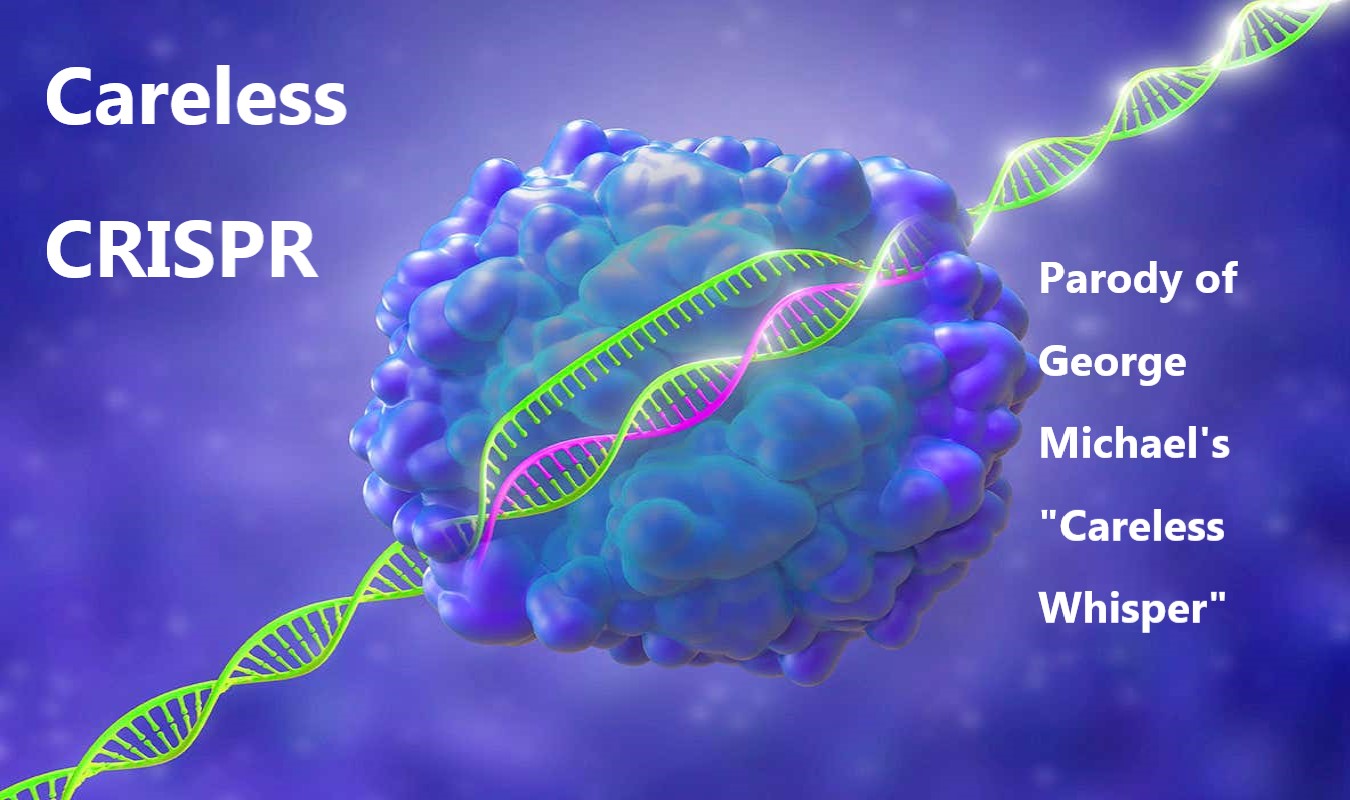
  • Careless CRISPR – Parody of George Michael’s “Careless Whisper”

    Careless CRISPR – Parody of George Michael’s “Careless Whisper”

    These are lyrics for a song parody of “Careless Whisper” by George Michael called “Careless CRISPR,” which is about CRISPR technology, and the potential downsides to using it. The idea came from YouTuber penguinz0. Here is the link to his channel:

    https://www.youtube.com/channel/UCq6VFHwMzcMXbuKyG7SQYIg

    And here is the video where I got the idea for “Careless CRISPR.”

    Without further, ado, here are the lyrics for this parody. And if anyone with musical talent wants to use these lyrics for making a parody song using my lyrics, feel free to!

    Also, if you want to find out more about what CRISPR is, check out these articles here!

    https://www.livescience.com/58790-crispr-explained.html

    https://www.abc.net.au/news/2016-08-25/crispr-gene-editing-technology-explained/7783916

    https://www.digitaltrends.com/cool-tech/what-is-crispr-a-beginners-guide/

    What is the answer?

    Should I delete this pair to try and cure your cancer?

    If I don’t you’ll die.

    If I do, it might

    Cause an unintended consequence

    If I remove that gene sequence.

    You could have a deformed head.

    Guilt will eat me from the inside.

    If you wind up suffering,

    I will be a fool.

    Should I go ahead and let you die

    Knowing I could have done something?

    You’re predisposed to this condition.

    I could edit you!

    Science can never mend

    The careless CRISPRs of a parent.

    Your future’s in my mind.

    If I’m ignorant, I might

    Cause discomfort inside you.

    Pain will be in your life.

    You could be born with no legs.

    Guilt will eat me from the inside.

    If you wind up suffering,

    I will be a fool.

    Should I go and try to save your life

    Knowing that I can now do something?

    Your genetics, I could mend.

    I could edit you!

    Maybe I shouldn’t, though.

    Tonight my thoughts are raging loud!

    This debate has left me bound.

    I could choose to go one way

    And remove the sequence that can cause you pain.

    If I do that, it could cure your cancer

    Or you’ll have no ambulation.

    I cannot decide today!

    Forgive me!

    You could be born without a brain.

    Guilt will eat me from the inside.

    If you wind up suffering,

    I will be a fool.

    Should I go ahead and let you die

    Knowing I could save you right now?

    Your genetics, I could mend.

    I could edit you!

    Now you are grown!

    (Now you are grown) Was I in the wrong, the wrong?

    Did I make the right choice?

  • A Day With A Smartphone

    A Day With A Smartphone

    Called a cab. Missed it.

    That’s okay.

    Just use the Uber app.

    Tell it where you’re going, and pay right away.

    Five minutes later, the cab’s outside.

    Get inside, and you’re on your way.

    Get dropped off at McDonald’s. Meet with your friends.

    Go to the counter, and pick up your order.

    Show the cashier your phone screen and the purchase you made on the McD’s app.

    Two minutes later, your food’s in your hand.

    How very convenient.

    Sit down with your friends and chat about whatever.

    Show them the latest Marvel movie trailer by searching it up on the YouTube.

    Just then, you get a Twitter notification about whatever it was a celebrity had said.

    You then get an update from the NY Times app about a recent speech The President has made.

    Later on in the day, you’re ready to go home. You use Google Maps to find out where you are

    And where the nearest train or bus stops are.

    Once you find them, you decide to walk there, so that way you can enjoy a breath of fresh air.

    You soon get to the train station, and you use the local train app to pay.

    The gate is now open, and you can go through, so you do.

    On the train, you debate what you want for dinner.

    Since it will be a long way until you get home, you decide to order from GrubHub.

    You schedule it to be delivered in an hour and a half, since the train ride takes an hour.

    Once that’s out of the way, you decide to relax for the rest of the way.

    You download some tunes from Spotify and enjoy the rest of your ride.

    Once you’re home, your food is outside. You take it inside, eat it, and go to sleep for the night.

    You set the alarm on your phone to wake you up in the morning.

  • The Internet

    The Internet

    Is it a detriment or a benefit?

    Is it harmful or is it helpful?

    Is it a tool to communicate, or does it only isolate?

    Does it make us very social or antisocial?

    What I do know for sure

    Is that it’s a double-edged sword!