The Musings of Jaime David
@jaimedavid.blog@jaimedavid.blog

The writings of some random dude on the internet

1,120 posts
1 follower

Month: July 2025

  • When Perception Shifts: Coming to Terms with Changing Views of People

    When Perception Shifts: Coming to Terms with Changing Views of People

    There’s a strange, quiet weight that settles in your chest when someone you once respected no longer fits the image you had of them.

    Sometimes it happens slowly — little signs you overlook at first. Other times it crashes down in a single moment, like a shutter slamming shut. One day, you think you know someone. The next, you’re forced to re-evaluate everything you thought you understood about them.

    It could be a friend, a mentor, a family member, or even a public figure. Someone who once seemed trustworthy, grounded, maybe even admirable. And then, through their actions, choices, or revelations, they become unfamiliar — even unrecognizable.

    What’s hard is that the memories don’t just disappear. The laughs you shared, the moments of camaraderie, the conversations where you felt understood — those were real at the time. That version of the person did exist, at least in that space. But people are layered. And sometimes, a side you never imagined ends up changing how you see the whole picture.

    This shift in perception can leave you questioning your own judgment. How did I not see it sooner? Was I naive? Did I ignore red flags? But the truth is, hindsight is always clearer. Most of us approach others with a good-faith mindset. We assume decency until proven otherwise. That’s not a flaw — it’s part of being human.

    As difficult as it is to come to terms with these changes, they teach us something valuable: to hold space for complexity. People are not just one thing. Sometimes, the very people we once looked up to end up becoming lessons — not in who we want to be like, but in who we don’t.

    It’s okay to mourn the version of them you thought you knew. It’s okay to feel angry, or confused, or betrayed. And it’s also okay to grow from it. Not every ending has closure. Not every truth will be clean. But clarity, even when uncomfortable, gives us the chance to move forward with sharper instincts and stronger boundaries.

    And maybe most importantly: it reminds us that the way someone appears isn’t always who they are. Sometimes, perception must evolve with the truth.

  • Heat

    Heat

    This heat is awful.

    It sucks.

    It is the worst.

    It’s too hot.

    It’s not cool.

    It’s not good.

    It’s bad.

    It’s hotter than a frying pan.

    It’s hot enough to cook an egg.

    This heat sucks.

    The humidity, too.

    It’s an awful combo.

    It’s not good, yo.

  • Today had literally just started. Lol

    Daily writing prompt
    Was today typical?

    The day for me had literally just started. Lol. So, it is hard to say if the entire day was typical if today had just started out. I mean, I guess the morning so far has been somewhat typical, somewhat routine. But the entire day, well, that’s yet to be seen.

    I would like to hope so. I would like to hope today is a typical day. Yesterday most certainly was. As for today, well, today has yet to unfold for me, but I would like to hope that today would be a typical day just like yesterday and day before yesterday.

  • Finding Hope Through Hurt: A Reflection on the Manhattan Shooting

    Finding Hope Through Hurt: A Reflection on the Manhattan Shooting

    On the evening of July 28, 2025, a tragic event unfolded in Midtown Manhattan, forever altering the lives of many. A shooting at 345 Park Avenue claimed the lives of four people, including a beloved New York City police officer, Officer Didarul Islam, who was serving to protect others. While the pain of this loss weighs heavily on the hearts of those directly affected, it also serves as a powerful reminder of the strength, resilience, and kindness that exists within our community, even in the darkest of times.

    In moments like these, it’s easy to feel overwhelmed by the sorrow and uncertainty that tragedy brings. It’s hard not to wonder how such a senseless act of violence can occur, especially in a city as familiar and bustling as New York. Yet, even in the midst of grief, we must hold on to the hope that together, we can find a way through the hurt.

    One of the most inspiring aspects of this tragedy is the story of Officer Islam himself. A man who, despite knowing the risks of his job, chose to protect others with unwavering courage. He gave his life so that others might live, a reminder of the extraordinary sacrifices so many first responders make each day to keep us safe. His legacy will not be defined by the violence that took him, but by the love he had for his family, his community, and his city.

    While it is important to acknowledge the pain, it is equally important to recognize the ways in which we come together in times of crisis. In the aftermath of the shooting, New Yorkers have once again shown their strength, offering support to those who were affected and coming together as one community. The NFL and its employees are rallying around one of their own who was injured in the attack, and local law enforcement has continued to show unwavering dedication to keeping us safe.

    This is what we must hold on to. In the face of sorrow, there is also kindness. In times of fear, there is hope. We have seen it time and time again in New York, where, no matter what happens, the city unites to support each other. This tragedy may have shaken us, but it will not break us. We will rise above the hurt, and in the process, we will be reminded of the deep connections we share with one another.

    In the days and weeks to come, it’s essential that we continue to lean on each other. Whether through a kind word, a helping hand, or simply standing together in solidarity, we can each play a part in healing. Though it may feel like a dark time now, we can take comfort in knowing that we are not alone. We will get through this, just as we’ve gotten through past challenges—together.

    As we reflect on the lives lost, let’s also remember to celebrate the goodness around us: the courage of those who protect us, the compassion of our neighbors, and the strength of our collective spirit. We are more than the pain we experience. We are defined by how we come together in the face of adversity, how we lift each other up, and how we move forward with hope, even in the darkest of times.

  • Musing Mondays #12: The Invisible Energy of Social Awkwardness

    Musing Mondays #12: The Invisible Energy of Social Awkwardness

    Social awkwardness is weirdly powerful. It’s like static electricity in a crowded room — you can feel it, but no one talks about it directly. It disrupts the flow, makes people hesitate, and sometimes creates invisible walls between us.

    But here’s the thing: social awkwardness often comes from wanting to connect so badly that we get tangled in our own nerves and thoughts. It’s not rejection; it’s just humanity stumbling over itself.

    What if instead of fighting it, we saw awkwardness as a sign that connection matters? That the discomfort means we care about being seen and accepted? Maybe the awkward moments are actually some of the most honest ones.

  • They Were Just There, Like They Belonged: NYC’s Shifting Wildlife and the Subtropical Future We Can’t Ignore

    They Were Just There, Like They Belonged: NYC’s Shifting Wildlife and the Subtropical Future We Can’t Ignore

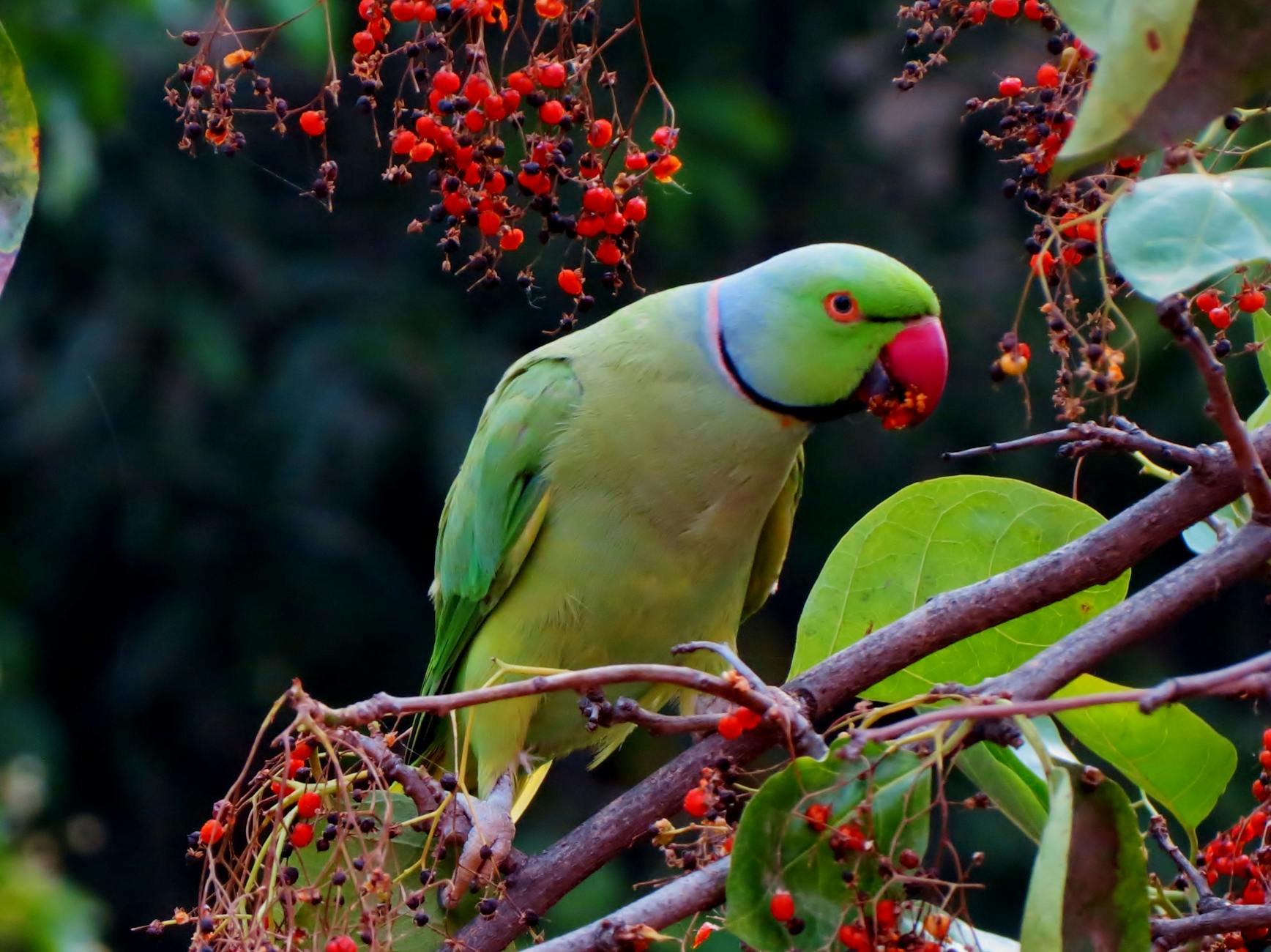
    I never thought I’d be writing a follow-up to New York’s Subtropical Future just two weeks later. And I definitely never thought parrots—actual, living, green parrots—would be the thing to trigger it.

    But here we are.

    It was Sunday, July 27th. I was doing something as ordinary as getting groceries. The air was thick and humid, the sky heavy with clouds—the kind of gray that seems to sink into your skin. On my walk back home, I passed by a tree on the sidewalk. Not one of those ornamental city trees that seem more for show than shade, but a real fruit-bearing one. Apple or pear, maybe. I didn’t get that close because something else caught my attention first:

    Parrots.

    Not one. Not two. But five or six bright green parrots, perched on the branches, squawking and moving around like they owned the place.

    It felt like a glitch in the simulation. Like I’d stepped into a scene that didn’t belong to New York. I froze. Snapped a few pictures with my phone. Tried to act normal even though the moment was anything but. These weren’t escaped pets. They weren’t struggling. They were settled. Thriving. At ease. As if this stretch of sidewalk—this humid, gray, sweltering July day—was exactly where they were meant to be.

    And it hit me: this isn’t just a one-off. This is it. This is the shift.

    When I wrote about New York’s emerging subtropical classification, I was thinking about rain. About climate. About seasons that no longer made sense. But this—this was another layer. Biodiversity. Wildlife. Nature adapting in real time to the human-made chaos we’ve unleashed.

    In the past few years, I’ve heard seagulls far more frequently than I used to—and not just by the water, but deeper into neighborhoods where you wouldn’t expect them. But parrots? That’s different. That’s tropical. That’s a species that isn’t supposed to be here. Yet they are. Not migrating through, not lost—settling in. And maybe that’s what’s so jarring. They weren’t symbols of escape or anomaly. They were evidence.

    Evidence that New York City is no longer just transforming on paper or in temperature charts—it’s transforming in the trees. In the air. In what birds now call this concrete jungle home.

    Years ago, I would’ve written this off. A weird sighting. A story to tell. But now, it fits the pattern. The disrupted, dizzying pattern of a world out of balance. Where tropical birds find urban trees suitable nesting spots. Where familiar becomes foreign in the span of a few years. Where you walk back from a grocery run and find yourself grieving—again—for a city that keeps slipping further into a version of itself you never asked for.

    We’re watching ecological succession unfold in real time. A gradual invasion of the subtropics—not by storm, not by force, but by adaptation. The parrots are adapting. The plants are adapting. The question is: are we?

    This isn’t just about parrots. It’s about what comes after them. What other species might find our warming winters and humid summers ideal? What insects, what diseases, what disruptions? We don’t know yet. But we’re already behind.

    I don’t know what it means to live in a subtropical New York. I don’t know if it ever stops feeling like a stranger’s version of the city. But I do know this: if we don’t treat these moments as the wake-up calls they are, we’re going to lose more than just familiar weather patterns. We’re going to lose the very essence of what made this place livable, resilient, human.

    And if parrots can adjust to this new New York, the least we can do is pay attention.

  • How to Write a Novel: A Step-by-Step Guide for Beginners

    How to Write a Novel: A Step-by-Step Guide for Beginners

    Writing a novel is an exciting but challenging journey that requires planning, perseverance, and dedication. As someone who’s been through the process, here’s a structured guide that not only breaks down what you need to do but gives you a roadmap to avoid burnout and stay focused.

    1. Clarify Your ‘Why’ — Why Do You Want to Write a Novel?

    Before you dive into writing, it’s critical to clarify your motivation. Why do you want to write this novel? Are you writing to tell a unique story, express a personal experience, or simply because you love writing? Understanding the purpose behind your project will help you stay focused and motivated when the process gets tough.

    2. Find Your Core Idea — Start with What Inspires You

    Start by identifying the core concept of your novel. This could be a character, a setting, or a scene that sparks your imagination.

    Once you have your starting point, think about why this idea excites you. What do you want to explore? From this, you’ll begin to develop the central theme of your story.

    Themes are the emotional heart of your novel, giving your story depth and meaning. If you can identify your theme early, you’ll have a solid foundation to build the rest of your narrative around.

    3. Flesh Out Characters and Plot

    With your theme in mind, start developing your characters. Think about their goals, desires, flaws, and how they relate to your theme. Ask yourself: How will your characters’ personal journeys align with the emotional arc of the story?

    Next, outline your plot. Character and plot development go hand in hand— your plot should be shaped by your characters’ decisions, challenges, and transformations. Focus on creating emotional conflicts that tie into the theme you identified earlier.

    4. Outlining Your Novel (or Not)

    If you’re a planner, outlining your novel can be a game-changer. However, if you’re more of a pantser (someone who writes without a rigid plan), don’t stress. A loose outline can still be helpful to stay on track. If outlining feels restrictive, just start with a basic framework: the beginning, middle, and end.

    Here are some ideas to consider:

    • The Three-Act Structure: Divide your plot into three key parts — beginning, middle, and end.
    • The Snowflake Method: Start with a one-sentence summary of your novel and expand from there, gradually adding complexity.

    Whether you choose to outline in detail or write more freely, the goal is to have enough structure to guide you through the story.

    5. Write the First Draft — Just Write!

    Once you’ve set up your characters and plot, it’s time to write. Don’t worry about perfection during the first draft. The goal here is to get the story down. It’s common to feel like the first draft is a mess — that’s okay! You can fix everything later.

    • Tip: Focus on momentum, not perfection. Don’t stop to edit — keep writing and push through the rough parts. Every word written brings you closer to your goal.

    6. Take a Break Before Revising

    After finishing your first draft, it’s time to step back. Put your manuscript aside for a few days or weeks. This will give you fresh eyes when you return to it.

    When you come back, don’t dive straight into line editing. Instead, focus on big-picture revisions:

    • Does the plot flow logically?
    • Are the character arcs clear and satisfying?
    • Does the theme come through?

    7. Rewriting & Refining

    Once you’ve done the major revisions, it’s time to refine your novel.

    • Focus on pacing: Ensure the narrative doesn’t drag or feel rushed. Each scene should serve a purpose in advancing the plot or character development.
    • Improve dialogue: Dialogue should feel natural and reveal character traits. If it feels stilted, read it aloud to see how it sounds.
    • Strengthen emotional impact: Go deeper into the emotions your characters experience and how those emotions shape their actions.

    The key here is to rework the narrative until it matches your vision. Don’t be afraid to cut or rework sections that aren’t serving the story.

    8. Seek External Feedback

    After you’ve revised, seek feedback from trusted beta readers or a writing group. Choose people who will give you honest feedback on your writing, not just praise. Pay attention to their comments on pacing, character development, and whether the theme comes through effectively.

    9. Study Craft — Keep Improving

    Writing is a lifelong learning process. Study your weaknesses and continue to improve. If your dialogue feels stiff, read books or take courses on writing great dialogue. If you struggle with pacing, learn about building tension and creating suspense. Use the feedback you get from beta readers to focus your study on areas you need to grow in.

    Remember, it’s normal for your writing to evolve — perfection comes with practice.

    10. The Final Draft — Publish or Submit

    Once you’ve finished your manuscript, you have two options: self-publish or submit to agents/publishers. If you self-publish, make sure to invest in quality editing and cover design to make your book stand out.

    Whether you self-publish or go the traditional route, start building your author platform early on. Build a blog, a social media presence, and an email list to connect with readers and promote your book when it’s ready.


    In Conclusion: Keep Writing

    Writing a novel isn’t a straight path. There will be obstacles, frustrations, and moments of doubt. But it’s also a deeply rewarding journey. Stay committed to your vision, keep writing, and remember that the process itself is part of what makes your story meaningful.

    Writing your novel is a marathon, not a sprint — but with the right tools, patience, and persistence, you’ll get there. Start today and keep pushing forward!

  • How would I describe myself?

    How would I describe myself?

    Daily writing prompt
    How would you describe yourself to someone?

    I would say, I am a writer and an author. That’s what I would say to summarize myself. But if I wanted to go more in depth, I would also add, I have a background in science. I like music, art, anime, gaming, youtube, drawing, writing, coding, and memes. I’m also chill.

  • Dinosaur I’d bring back

    Dinosaur I’d bring back

    Daily writing prompt
    If you could bring back one dinosaur, which one would it be?

    The T-rex. I would bring back the T-rex if I could do so. They were really cool.