Paste my profile into the search field of your favorite open social app or platform.
Your Profile
Or, if you know your own profile, we can start things that way! Why do I need to enter my profile?
This site is part of the ⁂ open social web, a network of interconnected social platforms (like Mastodon, Pixelfed, Friendica, and others). Unlike centralized social media, your account lives on a platform of your choice, and you can interact with people across different platforms.
By entering your profile, we can send you to your account where you can complete this action.
As Labor Day approaches, I’m inviting writers, poets, and artists to reflect on the value of work, resilience, and social justice. Whether you have a personal story, a poem, or artwork inspired by labor, the working class, or the struggles and triumphs of hard work, I’d love to feature your work!
What i enjoy most about writing is that it is a form of expression. I can express myself and my thoughts in a detailed and creative sort of way. I can express myself in a way that I may not be able to when speaking. When I write, I can control when I want the writing to be shared and how detailed I want the writing to be.
Humans have a tendency to label animals as “bad” when their behavior causes harm, inconvenience, or frustration. A fox stealing chickens, a raccoon tearing into garbage, or a shark attacking a swimmer often triggers moral outrage. But the truth is, no animal is capable of being “bad” in the human sense. Animals operate entirely on instinct, survival, and learned behavior, not on moral reasoning.
Predators, for example, may attack livestock or pets, and invasive species may disrupt ecosystems, while domestic animals can misbehave in ways that frustrate us. In all these cases, the “wrongdoing” is a result of natural behavior, not malice. Wolves hunting sheep are not evil; they are hunting to survive. Burmese pythons in Florida are not malicious; they are following the basic instincts of their species. Even a cat scratching furniture or a dog chewing shoes is simply acting on instincts, not defying human rules intentionally.
Labeling animals as “bad” is a projection of human moral frameworks onto creatures that have no concept of ethics. Animals do not understand “right” or “wrong”; they only act according to what their species has evolved to do. Fear, annoyance, or harm caused by animals is a mismatch of natural behavior and human priorities, not a moral failing of the animal.
Understanding this distinction is crucial for coexistence. Instead of reacting with anger or resentment, humans can focus on observation, prevention, and management. Fences, repellents, behavioral training, and habitat adjustments are far more effective than moral judgment. By letting go of the idea that animals can be “bad,” we not only foster compassion but also find more practical solutions to conflicts between humans and the natural world.
In short, animals are not bad—they are animals. Our frustration is natural, but it must be tempered with understanding, empathy, and realistic strategies for coexistence.
I recently watched a video called “The System is Using Us, It’s Time We Start Using the System…” by Timothy Ward, and it really got me thinking. Ward talks about something that hits home for a lot of us: how modern life, with all its rules, expectations, and “shoulds,” can subtly steer us into lives that don’t actually feel fulfilling.
Recognizing the Trap
Ward’s message starts with a wake-up call: noticing that we’re often being shaped—sometimes almost unconsciously—by societal pressures. Work, status, money, possessions, approval… it’s easy to get caught up in chasing all these things without asking, “Why am I even doing this?” I think a lot of people can relate. I know I’ve felt that tug before—whether it’s worrying about metrics, comparing myself to others, or just keeping up with the endless flow of online content.
Finding Simplicity
One of the most refreshing parts of the video is how Ward talks about slowing down and embracing simplicity. He’s not talking about giving up everything or living in a cabin in the woods (unless that’s your thing!). It’s about minimalism in a way that actually frees you: shedding excess, letting go of social pressures, and focusing on what genuinely matters—peace, freedom, and self-awareness. For me, that hit hard because blogging, writing, and content creation can easily become another “chase.” Simplifying even small things—like commitments, clutter, or the pressure to post constantly—can make a big difference.
Reversing the Power Dynamic
The heart of Ward’s message is that instead of being used by the system, we can use it strategically. Some of the ways he suggests are simple but powerful:
Living below your means, so money doesn’t control your life
Prioritizing time over money, because moments with people or personal projects often matter more than material stuff
Opting out of toxic work environments, even if it means making unconventional choices
Building a life that matches your own values, not just society’s script
It’s a reminder that life doesn’t have to feel like an endless rat race. You can step off the treadmill, take a breath, and decide what matters to you.
My Take
For me, watching this felt like a nudge to reflect on my own routines. As someone who blogs, writes, and experiments with content creation, it’s easy to get swept up in metrics, schedules, and trends. But stepping back and asking, “Does this serve me or just the system?” has been eye-opening. Even small changes—like slowing down posting, focusing on quality over quantity, or just giving yourself permission to take a break—can make life feel more intentional.
At the end of the day, the system is always going to be there, but we don’t have to be passive participants. We can engage on our own terms, make choices that reflect our values, and still find space for creativity, joy, and peace.
In recent days, Roblox has been making headlines for several controversies that shine a spotlight on the challenges digital platforms face when it comes to safety, fairness, and accountability. The issues range from legal disputes with creators to lawsuits about child safety and even government investigations. While each story has its own details, together they point to a bigger question: how should platforms balance protecting their users with supporting the creators who make their spaces thrive?
Legal Disputes With Creators
One of the most talked-about stories involves Roblox’s response to a YouTuber known as Schlep, who has been raising concerns about harmful behavior on the platform. Instead of collaborating with him, Roblox issued legal threats and banned his accounts, saying that his methods conflicted with their safety protocols. Many critics feel this decision was a missed opportunity for partnership and progress, especially given the company’s ongoing struggles to fully address community safety.
Government Investigations and Lawsuits
On top of this, Roblox is under investigation by the U.S. Securities and Exchange Commission for potential financial concerns. While details are still emerging, the news adds to growing scrutiny of the company’s practices.
At the same time, multiple lawsuits have been filed alleging that Roblox has not done enough to protect its young audience. Some families argue that the platform needs stronger safeguards and better systems in place to ensure a safe environment for kids and teens. These lawsuits, paired with the government’s investigation, have fueled broader conversations about how platforms manage both user safety and business responsibility.
Concerns From Developers
Another layer to the controversy is how Roblox treats the developers who create games on the platform. Many are young creators themselves, and critics say the current revenue model puts them at a disadvantage. Roblox takes a large cut of earnings and often pays developers in virtual currency, which can make it harder for them to benefit from their hard work in tangible ways. This has led to ongoing debate about whether the platform is supporting or exploiting its developer community.
Connecting the Dots: Roblox, YouTube, and AI Moderation
These issues with Roblox echo a wider trend across the internet. In fact, they closely connect with conversations happening on YouTube right now. As I wrote recently, YouTube is rolling out an AI-driven age verification system that has many creators worried about false restrictions, privacy concerns, and the future of their work.
What ties Roblox and YouTube together is the question of trust. Creators want to feel supported, not punished. Families want reassurance that platforms are safe for young audiences. And audiences as a whole want transparency. Whether it’s Roblox dealing with safety lawsuits or YouTube experimenting with AI moderation, the core issue is the same: how do platforms protect their communities without stifling the very creativity and connection that made them successful in the first place?
My Take as a Creator
As a blogger and a small YouTuber myself, I see how easy it is to feel caught in the middle of all this. On one hand, I want platforms to take safety seriously. On the other hand, I worry that in trying to protect users, they sometimes shut out or silence creators—especially the smaller ones who don’t have much visibility to begin with.
It’s also worth remembering that content creation is not just about video. Blogging, audio content, art, and more all deserve attention in these conversations. If platforms can impose sweeping rules on video creators, what’s stopping them from doing the same for bloggers or podcasters? For many people, these spaces are more accessible and even easier to monetize than video, which makes the possibility of over-regulation even scarier.
At the end of the day, whether we’re talking about Roblox, YouTube, or any other platform, the same principle applies: the internet only works when there’s a balance between safety and creativity. Without that balance, we risk losing the diversity of voices and ideas that make these platforms worth visiting in the first place.
YouTube has always walked a tightrope between protecting its audience and supporting its creators. Every few years, the platform introduces changes that spark debates, backlash, and speculation about what the future holds. The latest controversy? YouTube’s new AI-driven age restriction update.
In his video, “Creators Worry The AI Age Restriction Update Could End YouTube,” Xanderhal explores why this system is raising alarms across the creator community. The update uses artificial intelligence—specifically, facial analysis and other biometric cues—to estimate whether a viewer is old enough to watch certain content. On the surface, this seems like a reasonable move. After all, YouTube has a responsibility to keep age-inappropriate videos out of children’s hands. But the more you dig into it, the more unsettling the implications become.
The biggest concern is accuracy. If an AI incorrectly flags a video as “age-restricted,” the consequences for a creator are immediate and severe. Restricted videos often disappear from recommendations, get buried in search results, and lose monetization opportunities. For creators who depend on YouTube revenue, one bad flag can mean the difference between paying rent and struggling to make ends meet. Imagine putting hours of work into a project, only to have an algorithm decide that your content is too “mature” for audiences—even when it clearly isn’t.
Then there’s the issue of privacy. To verify age, the system relies on biometric data. That means analyzing people’s faces and other personal cues. Not only does this raise ethical questions about consent, but it also pushes YouTube into murky legal territory, especially in countries with strict data protection laws. If users start to feel that simply watching a video comes with invasive surveillance, will they stick around?
Beyond privacy and accuracy lies the broader impact on YouTube as a whole. If creators continue to see their content unfairly flagged and their income shrink, many might feel forced to abandon the platform. The diversity of voices that made YouTube what it is today could start to vanish. What’s left would be a sanitized, risk-averse video library—safe for advertisers and regulators, but stripped of the creativity and boldness that once defined the site.
The irony is that YouTube’s update, meant to protect the platform, could end up accelerating its decline. Creators are the foundation of YouTube. Without them, there’s no community, no innovation, no reason for viewers to keep coming back. If AI-driven restrictions continue unchecked, it’s not far-fetched to imagine creators migrating to other platforms, taking their audiences with them.
My Take as a Creator
I may not be a big YouTuber, but I do run a couple of small channels—one for memes and another tied to my author persona. Neither are monetized, and honestly, I doubt they ever will be. I post on YouTube for the sake of creativity, not income. But even as a smaller creator, I can’t ignore how policies like this could shape the platform’s future.
What worries me is how these systems don’t just affect “big creators” with millions of subscribers. They affect everyone. If my videos—or anyone’s—got unfairly restricted, it wouldn’t be about losing money, but about losing visibility, connection, and motivation. For smaller creators like me, who already face an uphill climb just to be noticed, one wrong algorithmic flag could make that climb impossible.
And this concern isn’t limited to YouTube. I’m also a blogger, and blogging is one of the most accessible forms of content creation out there. In some ways, it’s even easier to monetize a blog than a YouTube channel, and it’s definitely easier for people to start one. That accessibility is what makes blogging so special—but it’s also what makes me nervous. If YouTube, the largest video platform, is willing to introduce these kinds of sweeping AI-driven restrictions, how long until other video sites do the same? And how long after that until blogging platforms follow?
If blogs ever became subject to the same kind of algorithmic scrutiny, the internet as we know it could change dramatically. It would no longer matter how creative or authentic your writing is—what would matter is whether an algorithm “approved” of it. That possibility scares me, because it suggests a future where the barrier to creation isn’t talent or effort, but compliance with a machine’s standards.
At the end of the day, creators—big and small, video makers and bloggers alike—want the same thing: a fair shot to share their work without an algorithm standing in the way. YouTube’s new system might not affect me financially, but it still makes me wonder: if policies like this spread, what kind of internet will we be left with?
The Jaime David Podcast – Ep. 14 “Climate Change is Real”
JAIME DAVID: Hey everyone, welcome back to The Jaime David Podcast. I am your host, Jaime, and today’s episode is all about something that I feel is really important—climate change.
Recently, I was reading an article by the New York Times about how 2019 was officially the hottest year on record. After reading that, I was honestly pretty shocked, and it got me thinking about how real and pressing this issue is. If we don’t start taking it seriously, we’re going to be in some serious trouble.
So, I was inspired to write a short poem in response to the article’s title, and I thought I’d share it with you all today. It’s my way of expressing just how hot things are getting—both literally and figuratively.
Here’s the poem:
[Reading the poem]
Climate Change is Real That’s…..hot!
Ok, no it’s not!
It sucks a lot!
It’s worse than I thought!
This planet’s all we fucking got,
and right now, it’s getting too damn hot!
JAIME DAVID: Yeah, that’s right. It’s getting way too hot. And honestly, the more I think about it, the more I realize that this isn’t just a distant problem—it’s something we’re living through right now. We’ve got wildfires, flooding, rising sea levels, and temperatures that are consistently breaking records year after year. And, it’s not just happening in some faraway place—it’s happening everywhere.
When you really think about it, we only have one planet. This is it. And if we don’t make some serious changes, we’re going to lose it. We’re the ones who have to take responsibility and make sure that the planet can support future generations.
Climate Change: Why It Matters What’s really scary is how many people are still in denial about this. There’s still this pushback from certain individuals and groups that refuse to acknowledge the reality of climate change. But, honestly, the facts speak for themselves. Our planet is changing, and if we don’t do something about it now, things are going to get even worse.
And it’s not just about global temperatures—it’s about everything that’s connected to it. It’s about food, water, shelter, our homes, our cities, our countries, our economies. It’s all interconnected, and if one piece falls apart, the rest of it starts to unravel too.
So, I’m not trying to be all doom and gloom here, but the point is we need to start acting now. It’s about making sustainable choices, reducing waste, conserving energy, and taking care of the environment. It’s about having the courage to make the changes we need to secure a future that’s not only liveable, but a future that’s thriving.
Final Thoughts The fact is, climate change is real, and it’s happening now. We can’t afford to wait any longer. Whether it’s through voting, activism, or even just changing small habits in our own lives, we all have a part to play in making sure this planet is here for future generations.
So, yeah, let’s not pretend this isn’t a big deal. Let’s take action while we still have time. And maybe we can cool things down before it’s too late.
Thanks for tuning in to this episode. If you’re passionate about climate change, I’d love to hear your thoughts and what actions you think we should be taking to address it.
The Jaime David Podcast will be back soon with more episodes, but until then, remember: take care of your planet—it’s the only one we’ve got.
The Jaime David Podcast – Episode 14: Climate Change is Real (Writing Analysis) Welcome to Episode 14 of The Jaime David Podcast! In this episode, I dive into my poem “Climate Change is Real”, a piece that tackles one of the most urgent and impactful issues of our time. Through this poem, I aim to raise awareness about the undeniable effects of climate change, its consequences on the planet and its inhabitants, and the need for collective action. This episode brings forward the emotional urgency and the scientific reality behind the words, offering listeners a poetic perspective on an issue that transcends borders and affects everyone. This episode features AI-generated voice narration based on my own recordings. Due to my current recording environment and personal limitations, I’ve chosen to use this tool to bring my poetry and stories to life. The AI voice model was trained on my voice and captures my natural tone, pacing, and delivery. It’s still me — enhanced with a bit of technology to help me create and share content consistently. Think of it like using autotune: it’s still the artist, just with some digital assistance. Using AI allows me to bridge the ideas in my head with the stories and poems I want you to hear, enabling me to continue creating even when recording new episodes is challenging. In this episode, I discuss the inspiration behind “Climate Change is Real,” highlighting the emotional and intellectual push to create a work that speaks to both personal responsibility and global solidarity. The poem encapsulates a sense of urgency, hope, and frustration, inviting listeners to reflect on the role we all play in either perpetuating or mitigating the environmental crisis. This episode is a call to action for anyone who wants to make a difference, as well as a reminder that poetry can be a powerful tool for addressing complex social issues. To follow my work and stay updated on new episodes, blog posts, and creative projects, connect with me on these platforms: • Visit my blog: The Musings of Jaime David (https://jaimedavid.blog/) — explore all my poems, essays, and reflections. • Facebook: Jaime David ( / jaime-david-100314918089945 ) • Mastodon: @jaimedavid99 (https://mastodon.social/@jaimedavid99) • Bluesky: @jaimedavid.bsky.social (https://bsky.app/profile/jaimedavid.b…😉 • X (formerly Twitter): @JaimeDavid77982 (https://x.com/JaimeDavid77982) • Reddit: JaimeDavid0027 ( / jaimedavid0027 ) • Instagram: @jaimedavid375 ( / jaimedavid375 ) • Threads: @jaimedavid375 (https://www.threads.net/@jaimedavid37…😉 • Tumblr: JaimeDavid27 (https://www.tumblr.com/jaimedavid27) • YouTube: JaimeDavid327 ( / @jaimedavid327 ) • TikTok: @jaimedavid41 ( / jaimedavid41 ) • Spotify: Listen on Spotify (https://open.spotify.com/user/luffymo…😉 • Dailymotion: JaimeDavid327 (https://www.dailymotion.com/jaimedavi…😉 • Vimeo: JaimeDavid327 (https://vimeo.com/user244425857) • Odysee: @jaimedavid327 (https://odysee.com/@jaimedavid327:f?r…😉 • Rumble: JaimeDavid27 (https://rumble.com/user/jaimedavid27) • BitChute: JaimeDavid (https://www.bitchute.com/channel/Ii4A…😉
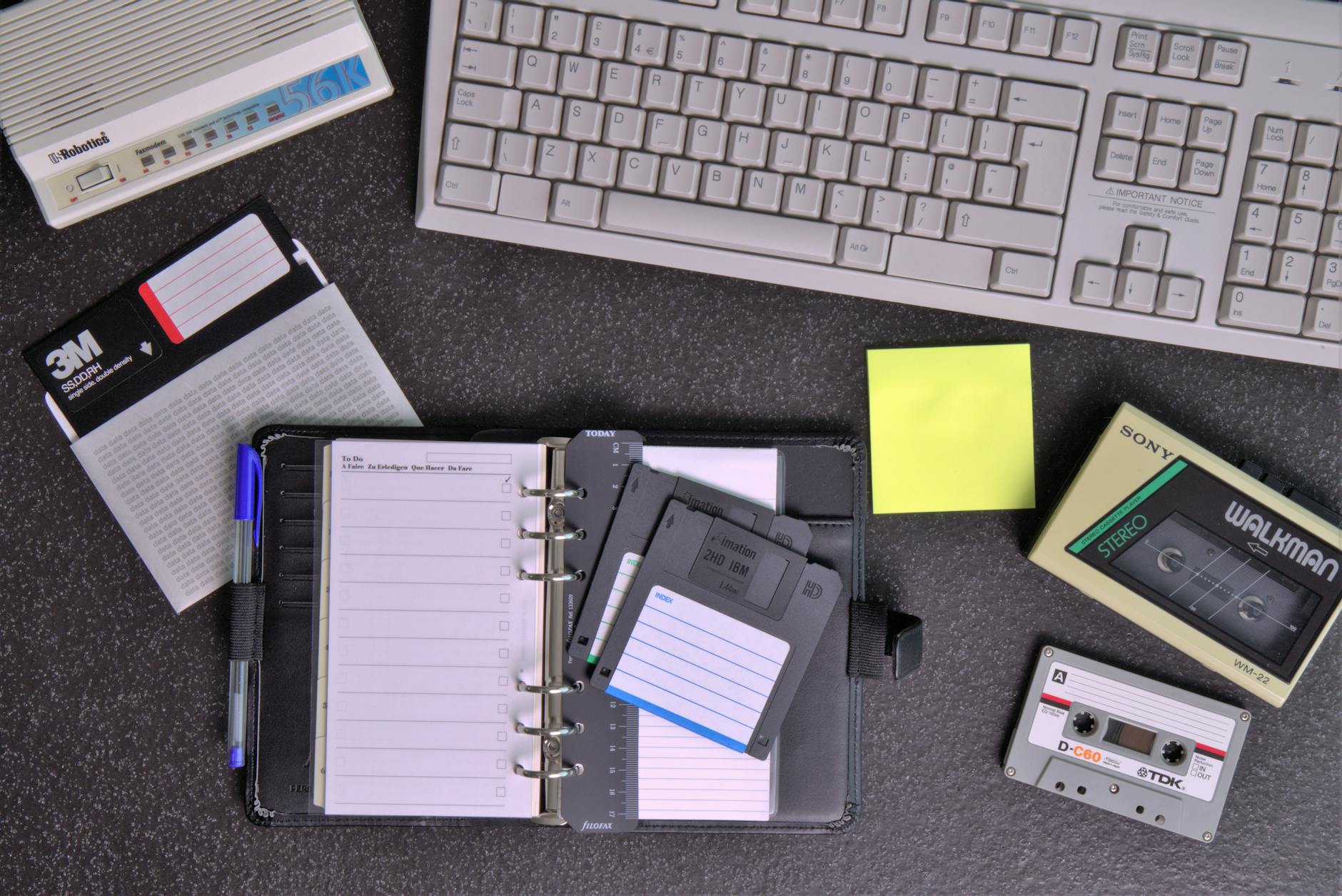
RadioShack was the place for hobbyists, students, and tinkerers from the 70s through the early 2000s. It was more than a store; it was a gateway to understanding technology.
Product Variety: From resistors and capacitors to early personal computers like the TRS-80, RadioShack stocked parts for countless projects. They also sold walkie-talkies, CB radios, and early cell phones.
Learning and Experimenting: RadioShack published detailed catalogs and kits — perfect for science fairs or budding engineers. Their staff were often passionate about electronics, helping customers troubleshoot.
Cultural Impact: For many kids, RadioShack sparked lifelong interest in STEM fields. It was also where families bought their first home phones or alarm systems.
Challenges: The rise of big-box electronics retailers and online shopping hurt RadioShack’s business, but its legacy lives on in maker communities.