
I don’t really plan my goals. I sort of just go with the flow for the most part. I do have a vague idea of a goal, and I keep that idea in mind, and I sort of just go from there.
Month: August 2025
-
The Irony of Bumble’s Mandatory Verification: A Loss of Choice
Bumble has always touted itself as a platform that puts women first, offering a space where they have the freedom to choose who they engage with. The app has been a proponent of giving users the autonomy to decide on their terms, whether it’s swiping right, initiating conversations, or deciding who gets access to their profiles. But recent news that Bumble is moving to a mandatory verification system raises questions about the platform’s commitment to choice and empowerment. It’s ironic that a service built on giving women the power to control their online dating experience is now taking away their ability to choose whether they want to verify their profiles or not.
For many, the optional verification system had a certain charm. It allowed users to decide whether or not to take the extra step in proving their authenticity. It wasn’t just about status or a badge—it was a personal decision. Some chose to verify their profiles to give potential matches peace of mind, while others opted out, feeling that their realness didn’t need to be validated by a third party. There was a sense of control that came with having the choice to verify—or not—and it gave users the freedom to define their own online presence.
The irony lies in the fact that Bumble’s original model was rooted in autonomy and choice, especially for women. The platform marketed itself as a space where women could take charge of their interactions. But now, with mandatory verification on the horizon, that choice is being stripped away. Users who once had the option to remain unverified and still form meaningful connections are now being forced into a decision they may not be comfortable with. This shift from optional to mandatory feels like a betrayal of Bumble’s original promise: the right to choose.
It’s also worth noting that the introduction of mandatory verification comes with a significant change in the dynamics of the platform. While some might argue that verification helps weed out fake profiles, it also creates a barrier to entry. Many real users, who for whatever reason chose not to verify, may feel alienated or even distrustful of the system now. Verification was never the norm on Bumble; it was a voluntary tool. But as it becomes mandatory, the very idea of what it means to be “real” online is challenged. People who didn’t verify before—whether because of privacy concerns or because it didn’t seem necessary—are now being told they must comply or risk being sidelined in an increasingly curated dating space.
In some ways, the push for mandatory verification on Bumble might be a response to rising concerns about fake profiles and online safety. But it overlooks a fundamental truth: verification doesn’t guarantee authenticity. People can still manipulate systems, steal identities, or bypass safeguards. A verified badge doesn’t make someone trustworthy; it just means they’ve submitted personal information to a platform, which could still be compromised. As such, the system isn’t a foolproof solution—it’s more of a bandaid, creating a false sense of security while ignoring the deeper issue of online privacy and trust.
Bumble’s decision to implement mandatory verification also raises another concern: the potential for further privacy erosion. If the platform is already asking for a form of identity verification, what’s next? Will they start requesting even more personal information in the name of “safety” or “security”? The boundaries of what’s acceptable are becoming blurred, and users are left wondering how much control they have over their personal data in the long run.
Ultimately, Bumble’s mandatory verification policy is a clear departure from its original promise of choice and autonomy. It’s a decision that doesn’t just affect users’ profiles; it affects the very nature of how we interact in the digital age. What happens when platforms that once championed freedom of choice start limiting that freedom for the sake of security or standardization? In this case, Bumble may have lost sight of its core mission to empower women to control their online dating experiences. By mandating verification, they’ve traded the illusion of safety for the reality of lost autonomy.
-
My plan
I would get my important items (phone, keys, wallet, laptop, maybe some portable gaming consoles), other important stuff, and get out.
-
Censorship vs. Creativity: How Government-Imposed ‘Bias Monitors’ Could Shape the Future of Writing
In a recent development that has sent shockwaves through the media industry, CBS News became embroiled in controversy over the imposition of a “bias monitor” following a lawsuit filed by former President Donald Trump. The federal government’s approval of this corporate merger between CBS’s parent company and Skydance, which included the creation of this position, signals a disturbing trend that could impact the future of writing in ways we might not yet fully understand. The idea of a “bias monitor” might sound distant from the everyday challenges writers face, but in truth, it threatens the very freedom upon which creative expression is built.
Writers have always faced challenges when it comes to producing work that can be deemed controversial or politically sensitive. From censorship battles in various forms of media to the quiet ways in which industries suppress certain narratives, the world of creative writing has often been shaped by forces beyond the page. The introduction of government or corporate “bias monitors” introduces a new level of oversight and regulation that could severely limit the freedom of writers to explore challenging or unpopular topics. This is not just a matter of editorial influence; it’s about who gets to decide what stories are worth telling and which voices deserve to be heard.
One of the most alarming aspects of this situation is the precedent it sets for future interventions in media outlets. If a corporation like CBS, under pressure from political entities, can be forced into setting up such a “monitor,” what’s to stop other organizations from following suit? Writers who depend on platforms such as news outlets, literary magazines, or even self-publishing avenues could find their voices increasingly constrained by the fear of government interference. This is not just a theoretical concern—it’s a real risk, especially in a time when political polarization is at an all-time high.
In fiction, the idea of censorship can feel even more insidious. Writers have the power to craft worlds that challenge the status quo, hold up mirrors to society, and question the values we hold dear. But in a world where government-imposed monitors are on the lookout for “bias,” the boundaries of what is considered acceptable may shrink significantly. No longer would it be enough to simply write a story; it could also be necessary to ensure that no political or social group is offended by the content, or worse, targeted for its message. The very act of writing could become an act of self-censorship as writers seek to avoid triggering the political gatekeepers that now permeate even the most creative spaces.
Even non-fiction writing could face similar challenges. Journalists and investigative writers, who are often tasked with holding power accountable, could find themselves stifled by the presence of a “bias monitor” whose purpose is not to ensure truth, but to protect certain narratives from being challenged. If these monitors are allowed to dictate what constitutes acceptable journalism, the integrity of reporting could be compromised, leaving only the most palatable versions of events to reach the public.
This situation also raises important questions about the future of independent media. As platforms like Medium and personal blogs continue to serve as the last bastions for free expression, they could easily become targets for the same kind of oversight and control. With the advent of corporate mergers and the growing influence of government in media, independent writers could find themselves at the mercy of larger, more powerful forces, with little recourse to protect their work. The shift from a free, open media to one where content is scrutinized for ideological purity is a dangerous one, and writers must stand vigilant against it.
In a world where writing is increasingly commercialized and subject to the pressures of big corporations and political power, the idea of censorship may seem inevitable. However, it’s important to remember that writers are also among the most powerful voices in society. Through storytelling, we shape perceptions, challenge the norms, and push back against forces that seek to control the narrative. It is crucial that writers, creators, and journalists alike continue to resist the temptation to self-censor, to push boundaries, and to protect the integrity of the craft. If we don’t, the future of writing could become a landscape defined by conformity rather than creativity.
-

Thoughtful Thursdays: Post 13 – Thoughtful Mornings: Designing a Wake-Up Ritual That Sets the Tone
What’s the first thing you do in the morning? Check your phone? Panic about your to-do list? Our mornings set the tone for our entire day. A few intentional minutes can shift everything.
Ideas for a thoughtful start:
- Light stretching before scrolling
- A glass of water and a few deep breaths
- A mantra or affirmation: “I move through today with clarity and calm.”
You don’t need a perfect routine. Just one mindful moment can change your morning—and your mindset.
-
Word that is used so many times.
The word “mid.” I feel that word is used a lot. And people usually use it to mean something is bad. However, in actuality, “mid” just means middle of the road; average; not good, not bad, just mid.
-
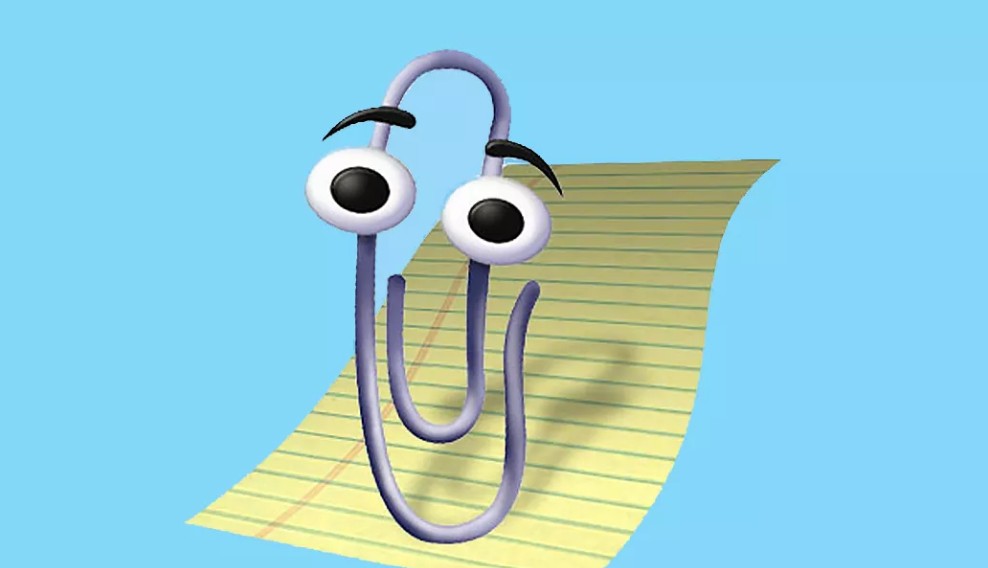
When Clippy Becomes a Symbol for the Internet We’ve Lost
In the late 1990s and early 2000s, Clippy was a punchline. The animated paperclip, officially known as Clippit, would pop up in Microsoft Office to offer tips that were often irrelevant, unnecessary, or unintentionally hilarious. He became a symbol of intrusive, overenthusiastic technology—technology that meant well but didn’t always deliver. We rolled our eyes, we groaned, and we laughed about him. But now, decades later, Clippy has taken on an entirely different role. In 2025, Louis Rossmann, a well-known electronics repair technician and right-to-repair activist, launched a campaign urging people to change their profile pictures to Clippy. At first glance, it might seem like a quirky, internet-savvy joke. In truth, it’s a form of protest.
Rossmann’s point is clear: technology, once designed to help users, is increasingly being built to control them. Clippy, for all his faults, had no ulterior motive. He didn’t mine your personal data, track your every move, or push you into buying a newer version of Office you didn’t need. His purpose was singular—help you write your letter, format your resume, or understand the software you were using. Today’s digital landscape is far from that innocence. The modern internet is full of systems designed not to help, but to manipulate, monetize, and surveil.
The shift from help-first technology to profit-first technology is what Rossmann calls “enshittification,” a process where services degrade over time in the pursuit of revenue, control, and exploitation. The earliest versions of many platforms are user-focused—simple, intuitive, even joyful. Then monetization strategies kick in, algorithms begin to dictate user behavior, and features are locked behind paywalls or removed entirely. What was once a tool becomes a trap.
And this isn’t just about the private sector. Governments around the world are increasingly stepping in with laws and regulations that, while often presented as protective measures, have the side effect—or perhaps the intended effect—of restricting freedoms online. The Kids Online Safety Act (KOSA) is one example. Framed as a way to shield children from harmful content, it requires platforms to exercise a “duty of care” to prevent a wide array of harms, from depression to bullying. On paper, it sounds noble. In practice, it’s dangerously vague. Who defines what “harmful” means? Civil liberties groups warn that KOSA could easily be used to censor important, even life-saving content, especially for marginalized groups like LGBTQ+ youth who rely on online spaces for support.
The SCREEN Act, another U.S. proposal, takes it a step further by requiring mandatory age verification for websites deemed harmful to minors. That means handing over government IDs or other sensitive data to access vast portions of the internet. Privacy advocates are rightfully concerned—this isn’t just about protecting kids, it’s about reshaping the internet into a monitored, identity-verified space. It’s a short leap from there to an internet where anonymity is impossible.
Across the Atlantic, the UK’s Online Safety Act has already gone into effect, bringing with it sweeping requirements for platforms to verify user ages and filter “harmful” content. Predictably, it has led to over-censorship, with platforms erring on the side of removing anything remotely controversial. News footage, political commentary, even educational resources have been swept up in the purge. Wikipedia fought the act in court, citing its privacy-focused, volunteer-driven model, but lost. The law is being phased in, and its full impact will be felt in the coming years.
Even YouTube, the world’s largest video platform, is rolling out AI-powered age verification, set to expand beyond test users starting August 13, 2025. The system uses machine learning to guess your age based on viewing habits, search history, and account longevity. If it thinks you’re underage, it restricts your access to content and disables personalized ads. Get misidentified? You can appeal—but only by handing over a government ID, a credit card, or a facial image. Once again, we are forced to trade privacy for participation.
And then there’s the Tea app controversy, a recent and sobering reminder of how fragile privacy really is. Marketed as a women-only dating advice platform, Tea promised safety and discretion. In July 2025, it suffered two massive leaks: first, 72,000 images—including selfies and government IDs—were exposed; then, just days later, over a million private messages were leaked. What was meant to be a sanctuary for vulnerable users became a goldmine for bad actors. Multiple lawsuits are underway, but for the people whose personal information is now out in the wild, no court victory can undo the damage.
When you step back and look at the big picture, the Clippy campaign isn’t just a nostalgic joke—it’s a pointed commentary on what we’ve lost. Clippy may have been clumsy, but he embodied a philosophy of technology that was transparent and singular in purpose: to assist the user. There was no hidden monetization scheme, no mass data harvesting, no psychological profiling. Compare that to today’s tech landscape, where help is often the bait and exploitation is the hook.
Rossmann’s protest asks us to consider: what kind of internet do we want? Do we want one where services are designed to empower, or one where every click is monetized and monitored? Do we want tools that are honest about their purpose, or tools that pretend to help while quietly extracting value from us?
The legislation and policies being rolled out right now are not isolated events—they are part of a trend toward a more restrictive, less private, and less user-centered internet. And unlike Clippy, these changes aren’t something we can simply click away from. They’re structural shifts that, once in place, will be incredibly difficult to reverse.
For creatives like me, this hits especially hard. The internet has been a place to share ideas, stories, and art without gatekeepers. It’s been a tool for connecting with audiences and communities across the world. But the more laws that demand age verification, the more platforms that demand personal data, and the more algorithms that decide what can be seen, the smaller that creative space becomes. It’s a slow suffocation of the freedom that made the internet exciting in the first place.
Changing a profile picture to Clippy might seem like a small act, maybe even a silly one. But symbols matter. They can rally people around a shared concern, spark conversations, and make abstract issues feel tangible. Clippy’s big, googly eyes and awkward smile remind us of a time when technology was still, in many ways, on our side. By putting him in our profiles, we’re not just being ironic—we’re making a statement.
We’re saying we miss when tech was built for us, not against us. We’re saying we refuse to quietly accept policies and practices that strip away our privacy and autonomy. And we’re saying that, even if the fight seems unwinnable, we won’t stop pushing back.
The internet doesn’t have to be perfect to be worth defending. It just has to be ours.
To check out Louis Rossmann’s video, you can find it down below.
-
What brings me peace?
A couple of things bring me peace. Music, gaming, YouTube, drawing, biking, writing. Those are some hobbies I really enjoy, and those hobbies bring me peace.
-
Musing Mondays #14: The Existential Weight of Loading Screens
You ever realize that loading screens are the modern version of waiting rooms? Just… digital purgatory. They’re spaces where nothing’s really happening, but you can’t go anywhere else either. You’re forced to just be—in limbo—while a system decides when you’re allowed to move on.
Sometimes it feels like life does that too. Like you’re stuck in your own personal loading screen—waiting on health to improve, jobs to call back, people to change. No progress bar. No music. Just vibes. And maybe some spinning wheel of doom.
And what do we usually do during loading screens? Grab our phones. Scroll. Mentally bail. Because being alone with our thoughts—even for a few seconds—can feel unbearable. But maybe those moments could mean something. Maybe waiting is underrated. Maybe the in-between is where we actually process.
-

Birthdays
Today is your birthday.
You would have been another year older today.
It’s been 6 years that you’ve been gone.
It’s hard to believe you’ve been gone.
It still hurts to this day.
The day you passed away
And your birthday,
Those are both days
That sadden me.
I can’t believe it’s been so long.
In four more years,
It will be 10 years you’ve been gone.
It doesn’t feel like it.
It feels like not too much time has passed,
It feels like only yesterday.
it feels like only yesterday, you went away.
It feels like only yesterday since you passed away.


