The Musings of Jaime David
@jaimedavid.blog@jaimedavid.blog

The writings of some random dude on the internet

1,220 posts
1 follower

Tag: humanity

  • Are People Evil?

    Are People Evil?

    I’ve spent a lot of time lately writing about how the world has changed.

    I’ve written about 9/11. I’ve written about media. Music. Video games. Anime, comics, and manga. Science. Blogging. The internet. Social media. Trust. Conspiracy theories. Empathy. And the ways I think our culture has changed over the past couple of decades.

    And after thinking about all of it, I keep coming back to something much broader.

    People.

    Because, honestly, sometimes I look at the world around me and think:

    Are people fucking evil?

    Now, before anyone takes that sentence and runs with it, let me clarify.

    No.

    Not all people are evil.

    There are wonderful people in this world. There are kind people. Compassionate people. Generous people. People who dedicate their lives to helping strangers. People who quietly do good things without asking for recognition. People who forgive. People who listen. People who care.

    There are good people.

    And even when someone does something genuinely terrible, I don’t believe that necessarily means they are permanently beyond redemption.

    People can change.

    People can grow.

    People can recognize that they were wrong.

    People can become better.

    I believe that.

    But at the same time, after seeing enough of what people have done—and continue to do—I don’t think we can simply pretend that there isn’t an enormous amount of cruelty, selfishness, hatred, dishonesty, dehumanization, and outright malicious behavior in the world.

    At some point, you have to acknowledge it.

    Because I’ve seen too much shit to simply shrug and say, “People are basically good.”

    Maybe they are.

    Maybe they’re not.

    I don’t know.

    And that’s actually part of the point.

    I don’t think I have the answer.

    The Cruelty I’ve Seen

    And I want to be honest about something.

    The evil I’ve seen from people—the cruelty I’ve seen—is fucking awful.

    I’m not talking about some abstract philosophical concept here. I’m talking about actual human beings celebrating the suffering of other human beings.

    And I’ve seen it from all sides.

    Right-wing people doing it.

    Left-wing people doing it.

    People in the center doing it.

    People who don’t give a shit about politics doing it.

    I’ve seen people cheer when someone they hate suffers.

    I’ve seen people mock someone’s pain.

    I’ve seen people celebrate someone’s death simply because they disliked that person.

    And I don’t care what political side you’re on.

    That’s fucking sick.

    I don’t care whether the person who died was conservative or liberal. I don’t care whether they supported a political movement I despise. I don’t care whether they said things I find disgusting.

    Someone being your political opponent does not magically make their suffering entertaining.

    And yet we seem to have gotten to a point where people can look at another human being’s pain and think:

    Good. They deserve it.

    That genuinely bothers me.

    Because where does that end?

    If we’re willing to celebrate suffering simply because we don’t like someone, we’ve already crossed a pretty dangerous line.

    And what’s especially strange is that there are certain groups that people across otherwise opposing political camps seem to collectively hate.

    Cops.

    The government.

    Landlords.

    The healthcare industry.

    Healthcare executives.

    CEOs.

    Corporations.

    And, yes, fucking pedophiles.

    Now, let me be extremely clear.

    I am not sitting here defending these groups.

    I’m especially not defending pedophiles.

    Fuck that.

    People who sexually abuse children should be held accountable. People who commit serious crimes should face consequences. People who abuse their power should face consequences. Institutions that harm people should be challenged. Corporations that exploit people should be challenged. Government misconduct should be challenged. Police misconduct should be challenged.

    Accountability matters.

    But here’s the question I keep coming back to:

    Does hating people back actually solve anything?

    Does cruelty solve cruelty?

    Does celebrating someone’s suffering make society better?

    Does dehumanizing someone who has done something terrible somehow undo the harm they caused?

    Does revenge magically produce justice?

    I don’t think it does.

    And that’s where I think empathy gets misunderstood.

    When I say we need empathy, I’m not saying we need to give everyone a free pass.

    I’m not saying we shouldn’t punish people who hurt others.

    I’m not saying victims should forgive people who harmed them.

    I’m not saying we should be compassionate toward someone at the expense of their victims.

    And I’m certainly not saying we should stop fighting against injustice.

    I’m saying that understanding is necessary if we actually want to make things better.

    If someone does something horrific, I want to understand why.

    Not because I want to excuse it.

    Because I want to prevent it from happening again.

    What circumstances contributed to this person becoming who they are?

    What failures allowed this to happen?

    What social conditions encouraged it?

    What warning signs were ignored?

    What could have been done differently?

    What can we change?

    What can we learn?

    How do we stop the next person from doing the same thing?

    Those are useful questions.

    “How can we make this person suffer as much as possible?” isn’t.

    Maybe vengeance feels good.

    Maybe watching someone we hate suffer gives us a temporary sense of justice.

    But feelings aren’t the same thing as solutions.

    And if our goal is actually to create a better society, then we have to think beyond the immediate satisfaction of hurting someone who hurt us.

    That’s hard.

    I know it’s hard.

    Especially when we’re talking about genuinely horrific things.

    There are things human beings do that can make empathy incredibly difficult.

    But I think that’s exactly when empathy matters most.

    Because empathy isn’t really being tested when you’re empathizing with someone you already like.

    It’s being tested when you’re confronted with someone you absolutely fucking despise.

    Can you understand them without excusing them?

    Can you hold them accountable without dehumanizing them?

    Can you recognize their humanity while still recognizing the magnitude of the harm they’ve caused?

    Can you say, “What you did was horrific, and you need to face consequences,” without also saying, “Therefore, cruelty toward you is good”?

    I think we can.

    And I think we have to.

    Because if we only believe in empathy for people who deserve it according to our own personal standards, then maybe what we’re practicing isn’t really empathy.

    It’s favoritism.

    And that’s one of the reasons I keep coming back to radical empathy.

    Not because I think everyone is secretly good.

    Not because I think everyone deserves unlimited forgiveness.

    Not because I think accountability doesn’t matter.

    But because I think understanding people is one of the only ways we can figure out how to become better collectively.

    We need to understand the people who hurt others.

    We need to understand the people who are hurt.

    We need to understand the institutions that fail.

    We need to understand the cultures that normalize cruelty.

    We need to understand ourselves.

    And then we need to do something with that understanding.

    Accountability and empathy aren’t opposites.

    They can exist together.

    We can say:

    You harmed someone.

    You were wrong.

    You need to face consequences.

    And also:

    How did this happen?

    Why did you become this way?

    What allowed this to happen?

    How do we make sure it doesn’t happen again?

    Those questions don’t weaken accountability.

    They make accountability more meaningful.

    Because ultimately, I don’t want a world where we simply become better at punishing people.

    I want a world where there are fewer people who need to be punished in the first place.

    And maybe that’s naïve.

    Maybe it is.

    But I would rather be naïve enough to believe that people can become better than cynical enough to believe that cruelty is the only language humans understand.

    Because if we respond to every terrible person by becoming terrible toward them, eventually we’re going to have an entire society where everyone thinks their cruelty is justified because someone else started it.

    And then everyone becomes the victim.

    Everyone becomes the righteous one.

    Everyone has an excuse.

    Everyone has an enemy.

    And nobody takes responsibility.

    I don’t want that.

    I want us to be better.

    And I think empathy—radical empathy—is part of how we get there.

    Not instead of accountability.

    Alongside it.

    It Isn’t Just One Side

    One of the things that bothers me most about conversations about human behavior is how quickly people want to turn everything into a team sport.

    The right is evil.

    The left is evil.

    Liberals are evil.

    Conservatives are evil.

    Religious people are evil.

    Atheists are evil.

    Capitalists are evil.

    Socialists are evil.

    Politicians are evil.

    Activists are evil.

    Corporations are evil.

    The media is evil.

    The internet is evil.

    Whatever.

    Pick your tribe.

    Pick your enemy.

    Find a collection of people you already dislike, gather evidence of their worst behavior, and use that evidence to explain why those people are uniquely terrible.

    But that’s not what I see.

    I see people being shitty everywhere.

    I see it on the political right.

    I see it on the political left.

    I see it in the center.

    I see it among people who don’t care about politics whatsoever.

    I see it among religious people.

    I see it among atheists.

    I see it among highly educated people.

    I see it among people with little formal education.

    I see it online.

    I see it offline.

    I see it in politics.

    I see it in entertainment.

    I see it in workplaces.

    I see it in friendships.

    I see it in families.

    I see it in communities.

    And sometimes I see it in myself.

    That’s an uncomfortable thing to admit.

    But if we’re going to talk about human behavior honestly, we can’t conveniently exclude ourselves from the conversation.

    Humans are capable of extraordinary kindness.

    Humans are also capable of extraordinary cruelty.

    Sometimes the same person is capable of both.

    That’s what makes this complicated.

    Maybe Evil Isn’t a Special Category of Person

    I don’t necessarily think “evil” is some special species of human being.

    I think ordinary people can do extraordinarily terrible things.

    That’s part of what makes evil so frightening.

    It’s easy to imagine evil as some cartoon villain sitting in a dark room, laughing maniacally while planning the destruction of the world.

    But real life doesn’t always work that way.

    Sometimes evil looks completely ordinary.

    Sometimes it looks like someone deciding that another person doesn’t deserve compassion.

    Sometimes it looks like someone spreading a lie because the lie benefits them.

    Sometimes it looks like someone seeing suffering and deciding they don’t care.

    Sometimes it looks like someone treating an entire group of human beings as though they are less human than everyone else.

    Sometimes it looks like cruelty disguised as humor.

    Sometimes it looks like hatred disguised as concern.

    Sometimes it looks like prejudice disguised as “just asking questions.”

    Sometimes it looks like dehumanization disguised as politics.

    Sometimes it looks like refusing to acknowledge another person’s humanity because doing so would make your own worldview more complicated.

    And sometimes it looks like something much smaller.

    Someone humiliating another person because they can.

    Someone taking advantage of someone vulnerable.

    Someone refusing to apologize because their ego won’t allow it.

    Someone intentionally hurting another person and then finding a way to convince themselves that the victim deserved it.

    These things matter too.

    Maybe we don’t need to reserve the word “evil” exclusively for the absolute worst things humans can do.

    Maybe there is a spectrum.

    And maybe one of the most dangerous things we can do is convince ourselves that we’re incapable of moving along that spectrum.

    We Love Labels

    I think one of the biggest problems we have is our obsession with labels.

    We love putting people into boxes.

    Good person.

    Bad person.

    Left-wing.

    Right-wing.

    Religious.

    Atheist.

    Pro-this.

    Anti-that.

    Us.

    Them.

    We want to know which team someone belongs to before we decide what we think about them.

    And once we’ve assigned someone a label, we often stop seeing the individual underneath it.

    That’s dangerous.

    Because people are complicated.

    Someone can hold one opinion you despise and another opinion you completely agree with.

    Someone can be politically conservative and still be compassionate.

    Someone can be politically progressive and still be cruel.

    Someone can be religious and still be incredibly open-minded.

    Someone can be an atheist and still be deeply dogmatic.

    Someone can be politically uninvolved and still have strong moral convictions.

    Someone can believe something you consider completely ridiculous and still be a genuinely decent human being.

    And someone can agree with you on almost everything and still treat other people horribly.

    Labels don’t tell us everything.

    Sometimes they don’t even tell us very much.

    That’s why I think we should question them.

    Including the labels we use for ourselves.

    Question Everything

    And this is where I come back to something I’ve been talking about for a while now:

    Radical empathy.

    To me, radical empathy doesn’t mean agreeing with everyone.

    It doesn’t mean excusing everything.

    It doesn’t mean pretending harmful behavior isn’t harmful.

    It doesn’t mean abandoning your principles.

    And it certainly doesn’t mean becoming so obsessed with understanding someone that you forget to hold them accountable.

    Radical empathy means trying, to an almost uncomfortable degree, to understand another human being.

    Why do they believe what they believe?

    What experiences shaped them?

    What are they afraid of?

    What do they value?

    What information have they been exposed to?

    What information have they never encountered?

    What assumptions are they making?

    What assumptions am I making?

    What if I’m wrong?

    What if they’re wrong?

    What if both of us are wrong?

    And perhaps most importantly:

    Am I judging an actual person, or am I judging a category I’ve been taught to associate with that person?

    That’s a question I think all of us could ask ourselves more often.

    Don’t Believe Everything You Hear

    Another part of this is skepticism.

    Healthy skepticism.

    I think we should question things.

    Actually, I think we should question a lot of things.

    Question politicians.

    Question corporations.

    Question activists.

    Question journalists.

    Question influencers.

    Question religious leaders.

    Question scientists.

    Question academics.

    Question your friends.

    Question strangers on the internet.

    Question me.

    Question yourself.

    That doesn’t mean automatically rejecting everything.

    Skepticism isn’t the same thing as cynicism.

    Questioning something doesn’t mean the opposite must be true.

    Being skeptical of one claim doesn’t mean you have to believe its most extreme alternative.

    And just because thousands—or millions—of people believe something doesn’t automatically make it true.

    At the same time, just because something is unpopular doesn’t automatically make it true either.

    That’s where I think we’ve gotten ourselves into trouble.

    We have access to more information than at practically any other point in human history.

    And somehow that hasn’t necessarily made us better informed.

    Sometimes it has simply given us more ways to find information that confirms what we already believe.

    And more ways to find people who agree with us.

    And more ways to become absolutely convinced that everyone who disagrees with us is an idiot.

    Or evil.

    Or stupid.

    Or brainwashed.

    Or dangerous.

    Or whatever label we’ve decided to use.

    Especially When It Comes to Groups of People

    This is where I think we need to be particularly careful.

    Be skeptical when someone tells you what an entire group of people is like.

    Especially when they tell you that an entire group is inherently evil.

    “They are all like this.”

    “They all believe that.”

    “They secretly want this.”

    “They’re all dangerous.”

    “They’re all brainwashed.”

    “They’re all stupid.”

    “They’re all monsters.”

    It doesn’t matter who “they” are.

    Right-wing people.

    Left-wing people.

    Immigrants.

    Religious groups.

    Atheists.

    LGBTQ people.

    Christians.

    Muslims.

    Jews.

    White people.

    Black people.

    Rich people.

    Poor people.

    Men.

    Women.

    Young people.

    Old people.

    Whatever group someone wants you to hate.

    Be skeptical.

    Because humans are individuals.

    And whenever someone gives you an incredibly simple explanation for an incredibly complicated group of millions of human beings, I think that should set off an alarm in your head.

    Not because the person necessarily has malicious intentions.

    But because reality is rarely that simple.

    I Don’t Have the Answer

    And here’s where I’m going to disappoint anyone looking for some grand solution.

    I don’t know.

    I don’t know how we fix this.

    I don’t know how we make people kinder.

    I don’t know how we eliminate hatred.

    I don’t know how we eliminate tribalism.

    I don’t know how we get people to stop dehumanizing one another.

    I don’t know whether religion can do it.

    I don’t know whether secular philosophy can do it.

    I don’t know whether politics can do it.

    I don’t know whether education can do it.

    I don’t know whether technology can do it.

    I don’t know whether some entirely new social system can do it.

    I’m not going to sit here and tell you that I’ve discovered the One True Answer to humanity’s problems.

    I haven’t.

    And anyone who tells you they have probably deserves at least a little skepticism.

    But I do think there are places we can start.

    And I think one of those places is empathy.

    Not passive empathy.

    Not “I feel bad for you.”

    Not empathy only for people we already like.

    Radical empathy.

    Trying to understand people even when we disagree with them.

    Trying to understand people even when they’re difficult to understand.

    Trying to understand why someone became the person they became.

    And then, after understanding them, deciding what we think.

    Because understanding someone doesn’t require approving of them.

    You can understand someone and still condemn their actions.

    You can empathize with someone’s circumstances while holding them accountable.

    You can recognize someone’s humanity without agreeing with their worldview.

    Those aren’t contradictions.

    They’re maturity.

    Maybe We Need to Be Better at Being Human

    I don’t know whether people today are actually more evil than people were fifty years ago.

    Maybe we’re not.

    Maybe the difference is that we’re exposed to more of it.

    Every horrible thing happening anywhere in the world can appear on our phones.

    Every argument can become public.

    Every act of cruelty can be recorded.

    Every political disagreement can become an international spectacle.

    Every conspiracy can find an audience.

    Every hateful person can find thousands of other hateful people.

    And every kind person can find people too.

    That’s the strange thing.

    The same technology that can amplify hatred can amplify compassion.

    The same internet that can spread misinformation can spread knowledge.

    The same social media that can encourage tribalism can connect people who would otherwise never meet.

    The same human beings capable of horrifying things are also capable of incredible things.

    That’s why I don’t want this to be a hopeless essay.

    Because I don’t actually believe humanity is hopeless.

    I think we’re complicated.

    I think we’re contradictory.

    I think we’re capable of being fucking terrible.

    And I think we’re capable of being fucking wonderful.

    Sometimes within the same day.

    Sometimes within the same person.

    Maybe that’s the uncomfortable truth.

    So What Do We Do?

    I don’t have a grand prescription.

    But I think we can start small.

    Question things.

    Question yourself.

    Question the labels.

    Question the people telling you who you’re supposed to hate.

    Question the people telling you who you’re supposed to love.

    Question the people telling you what you’re supposed to believe.

    Don’t automatically trust someone simply because they’re on your side.

    Don’t automatically distrust someone simply because they’re on the other side.

    Don’t believe something merely because it confirms what you already wanted to believe.

    Don’t reject something merely because it makes you uncomfortable.

    Look for evidence.

    Listen.

    Think.

    Learn.

    And when possible, talk to actual human beings rather than caricatures of human beings.

    Most importantly, remember that the person on the other side of an argument is still a person.

    They have experiences.

    They have fears.

    They have memories.

    They have people they love.

    They have things they don’t understand.

    They have probably been wrong before.

    Just like you have.

    Just like I have.

    That doesn’t mean every opinion deserves equal respect.

    It doesn’t mean every action should be forgiven.

    It doesn’t mean we shouldn’t fight injustice.

    It doesn’t mean we shouldn’t stand up against cruelty.

    It means that even when we oppose someone, we should be careful not to lose our own humanity in the process.

    Because if we fight evil by becoming cruel ourselves, what exactly have we accomplished?

    Maybe that’s where radical empathy comes in.

    Maybe it’s not the complete answer.

    Maybe it isn’t even close.

    I don’t know.

    But I think it’s a start.

    A start toward understanding instead of assuming.

    A start toward questioning instead of blindly accepting.

    A start toward skepticism without cynicism.

    A start toward accountability without dehumanization.

    A start toward recognizing that people are more complicated than their labels.

    And maybe, just maybe, a start toward becoming a little better ourselves.

    Because yes, sometimes I look at the world and think:

    Are people evil?

    After everything I’ve seen, I can’t honestly say that the answer is no.

    But I also can’t honestly say that the answer is yes.

    Because I’ve seen evil.

    I’ve seen cruelty.

    I’ve seen hatred.

    I’ve seen selfishness.

    I’ve seen people do things that are genuinely fucking awful.

    But I’ve also seen kindness.

    I’ve seen forgiveness.

    I’ve seen courage.

    I’ve seen compassion.

    I’ve seen people change.

    I’ve seen people become better.

    And I’ve seen people choose to care when they had every excuse not to.

    So maybe the question isn’t simply whether people are evil.

    Maybe the better question is:

    What kind of people are we choosing to become?

    And what kind of people are we encouraging everyone around us to become?

    I don’t know what the ultimate answer is.

    But I think empathy is a pretty damn good place to start.

  • The Struggles of Compassion: Why Empathy Should Be for Everyone, Even Those Who Don’t Deserve It

    The Struggles of Compassion: Why Empathy Should Be for Everyone, Even Those Who Don’t Deserve It

    In a world full of division, conflict, and hardship, the concept of compassion is often pushed to the back burner. We are living in a time where it can feel like kindness and empathy are in short supply, and even the idea of showing compassion to others—especially to those we deem “undeserving”—can be met with disdain, confusion, and judgment. The struggle to extend compassion and empathy to everyone, even those whose actions we consider “evil,” is a deep and personal conflict for many, myself included.

    One of the core beliefs that shape my understanding of compassion is the idea that there is no inherent good or evil in people. Instead, these concepts are subjective, shaped by individual perspectives, experiences, and cultural contexts. This belief is challenging to navigate, especially in a society that often divides people into categories of “good” and “evil” based on their actions. It’s difficult to reconcile the idea of showing empathy for someone who may have caused harm or suffering. But it’s a struggle I believe is worth exploring, especially when we consider how empathy, if truly universal, has the power to change the world.

    The Debate Around Compassion for the “Evil”

    Many have told me that showing compassion for those who commit harmful actions is equivalent to tolerating evil. They argue that empathy and compassion should not be extended to those who choose to do bad things, as it could be seen as excusing their behavior or allowing them to escape accountability. They argue that by showing empathy to those who commit atrocities or injustices, we somehow lessen the weight of their actions or make it easier for them to continue down a harmful path. To show compassion for such people, they say, is to ignore the very real harm they’ve caused, to allow them to walk free without facing the consequences of their actions.

    This perspective, though well-intentioned, is where I find myself in disagreement. Perhaps I am naive. Perhaps I am childish in my thinking. But I believe that compassion should be extended to all people, even those whose actions we consider harmful or “evil,” because we are all human, and we all struggle. While actions can certainly be judged as right or wrong, good or bad, I believe the person committing those actions is far more complicated than any single action they might take.

    Empathy is not about excusing someone’s bad behavior or letting them off the hook for the harm they’ve caused. It’s about understanding that people are products of their experiences, their upbringing, and the circumstances that have shaped them. No one is born evil. No one wakes up and decides to commit harm without reason. I’m not arguing that people shouldn’t face consequences for their actions—accountability is essential. But I am suggesting that we mustn’t lose sight of the humanity of others, even when their actions are hurtful.

    The Human Condition and Our Shared Struggles

    The argument against extending compassion to the “evil” often overlooks the fact that everyone is struggling in some way, even those who seem to be causing harm to others. Behind every harmful action, there is often a person grappling with their own pain, trauma, and unresolved struggles. Understanding this doesn’t make their harmful actions acceptable, but it allows us to see that their pain and suffering are just as real as anyone else’s. It is a reminder that even the most hardened individuals are still human, still capable of change and growth, even if it’s hard to imagine that in the moment.

    In a world where suffering is so prevalent, it’s easy to forget the power of compassion. The world is full of pain, injustice, and suffering. Our political climate is fraught with division, our social systems are often built on inequality, and many of us are dealing with personal struggles that aren’t always visible to others. In such a world, showing compassion is not a sign of weakness or naïveté; it’s a strength. It’s the ability to acknowledge that, no matter how difficult life gets or how much pain people may cause, we still choose to respond with kindness, understanding, and empathy.

    The Right Thing to Do: Compassion Without Conditions

    I believe that compassion and empathy should not be contingent on whether a person “deserves” it. The moment we start limiting compassion based on a person’s actions or behavior, we turn empathy into a transactional experience. If we only offer kindness to those we deem worthy, then it becomes less about the human experience and more about our personal judgments. To me, true compassion is unconditional. It’s about recognizing the inherent value of every human being, regardless of their actions or flaws. It’s about choosing to see the good in people, even when it feels difficult or uncomfortable.

    It’s not about excusing or tolerating bad behavior. It’s about choosing to respond to others with understanding, even when they don’t meet our expectations of how a “good” person should behave. Compassion is about choosing to see the person behind the action, the pain behind the anger, the vulnerability behind the cruelty. It’s about offering a hand even to those who may push it away, because sometimes, that’s all they need to begin healing.

    I understand that this perspective is not one that is widely shared. It’s not always easy to offer compassion to someone who has wronged us or hurt others. It requires vulnerability, openness, and a willingness to look beyond the surface. But I believe that the act of showing compassion is, at its core, an act of courage. It’s about choosing to be better than the actions of others, about responding to hate with love, to cruelty with kindness.

    The Need for Empathy in Today’s World

    Now more than ever, we need empathy and compassion. The world is a hard place. Things are tough. People are hurting. Whether it’s political divisions, social unrest, or personal tragedies, the weight of the world often feels unbearable. It’s easy to fall into a cycle of anger and bitterness, to build walls around ourselves and shut out those we disagree with or find difficult. But this only perpetuates the cycles of hate and division. If we don’t learn to show compassion, even to those who may seem “unworthy” of it, we risk losing the very essence of what makes us human.

    Empathy isn’t about agreeing with others or condoning their behavior; it’s about understanding where they are coming from. It’s about offering a space for dialogue, for growth, for healing. If we only show compassion to those we like or agree with, we further entrench the divides that already exist in society. But when we extend empathy to everyone, even those who are different from us, we create a world that is more connected, more understanding, and ultimately more just.

    Conclusion: Compassion Is Not a Weakness

    I know that my belief in universal compassion may seem idealistic, even naïve, to some. I understand the arguments against showing empathy to those who cause harm. It’s hard to reconcile the idea of compassion for the “evil” with the desire for justice and accountability. But I believe that compassion is not a weakness; it’s a strength. It’s the ability to see beyond a person’s actions and recognize their inherent humanity.

    Empathy and compassion should be for everyone, not because they deserve it, but because it’s the right thing to do. The world is tough enough without us making it harder on each other. We all have our struggles, our pain, our imperfections. And in those moments of hardship, the last thing we need is to be met with cruelty or judgment. We need compassion. We need empathy. We need to remember that we are all in this together, and that’s what makes us human.

  • Who Gets to Be Real? A Cross-Franchise Exploration of Personhood, Identity, and the Value of Existence

    Who Gets to Be Real? A Cross-Franchise Exploration of Personhood, Identity, and the Value of Existence

    Across anime, science fiction, fantasy, and even satirical animation, a central question emerges again and again: what does it mean to be a person? In worlds where artificial beings, mystical constructs, and non-human creatures abound, personhood is not a given—it must be earned, questioned, and redefined. In Shakugan no Shana, Terminator, Supernatural, Futurama, One Piece, and Halo, this question is not just philosophical—it is the emotional and moral core. These stories ask us to consider the soul, the will, and the heart, even in characters that society or the world around them would label inhuman, expendable, or unreal.

    In Shakugan no Shana, the world is rigidly divided between those who “exist” and those who are only flickers of residual memory. Shana, a Flame Haze tasked with maintaining balance, sees no value in Torches—until she meets Yuji, who challenges everything she thought she understood about identity and personhood. Yuji, though technically dead, refuses to vanish quietly. His will, his emotional complexity, and his moral choices prove that there is more to being alive than occupying physical space.

    In the Terminator franchise, artificial beings take center stage in a conversation about agency. The T-800, a machine designed for assassination, evolves to become a protector—and ultimately, a moral agent. In Salvation, Marcus Wright learns he is no longer fully human, yet clings to the memory of his humanity and acts on his conscience. Dark Fate gives us a Terminator that, after fulfilling its original programming, develops guilt, empathy, and autonomy. These machines are not born human, but their capacity to change, to care, and to choose makes them something more.

    Supernatural pushes the theme of personhood into theological territory. In a universe of angels, demons, reapers, and gods, what makes someone truly human? The show often answers: the right to choose. Characters like Castiel and Crowley struggle with destiny, grace, and the pull of their inherent roles. The Winchesters themselves constantly defy fate. Souls can be lost, corrupted, or traded—but the essence of personhood, the show argues, lies in free will, not origin.

    Futurama presents the question through absurdist comedy, but with remarkable poignancy. Leela, believing herself an alien, later learns she’s a mutant—socially inferior in the eyes of society. Bender, a robot, loudly proclaims he lacks human sentiment, yet often acts out of love, jealousy, and fear. Zoidberg, ridiculed and rejected, remains kind, loyal, and empathetic. The show suggests that identity isn’t a matter of classification, but of behavior and emotional resonance.

    In One Piece, the Straw Hat crew is a collection of misfits and non-humans who defy categorization. Chopper is a reindeer rejected by both animals and humans, yet becomes a gentle healer. Franky, a loud and chaotic cyborg, is deeply emotional. Brook, a literal skeleton, maintains his humanity through music, loyalty, and love. Jinbe, a fish-man born into an oppressed race, embodies nobility, honor, and sacrifice. In a world that devalues difference, these characters show that humanity is something lived, not assigned.

    And then there is Halo—a universe built on war, technology, and the fragile alliance between human and machine. At its heart lies the bond between Master Chief and Cortana—a supersoldier and an artificial intelligence. Cortana, while constructed by humans, is more than a tool or weapon. She is sarcastic, loyal, intelligent, and emotionally complex. As the series progresses, their relationship evolves from mere soldier and support unit to something deeply personal. Cortana sacrifices herself to protect John, and in turn, he fights not just for humanity, but for her.

    What makes Cortana “real”? It’s not her body—she has none. It’s not her origin—she’s a program. It’s her emotional capacity, her ability to grow, her acts of loyalty and care. Master Chief, a man engineered for war, finds his humanity because of Cortana. She reflects his soul back to him. When she begins to slip—corrupted by rampancy, by her own evolution—it isn’t fear of technical failure that haunts Chief, but the grief of losing someone he considers a person. Halo presents one of the most intimate examples of human-AI connection, and one of the strongest arguments that identity and personhood are not defined by flesh.

    All of these franchises—Shakugan no Shana, Terminator, Supernatural, Futurama, One Piece, and Halo—converge on the same radical truth. You do not need a soul, a body, or a human face to be a person. What defines personhood is will, emotion, memory, morality, and love. It is not what you were made to be, but what you choose to become. Whether a Torch, a Terminator, a demon, a skeleton, a fish-man, or a rogue AI, each character who defies expectation and chooses compassion becomes real in the fullest sense of the word.

    These stories offer more than entertainment—they challenge our assumptions about what life and identity mean. In a world where people are often marginalized, dehumanized, or dismissed for not fitting the mold, these narratives tell us that the essence of being a person lies in how we live, not what we are. The outcasts, the artificial, the broken—they are not just metaphors. They are reminders. That to be seen, to be felt, to be loved, and to love back—that is the true measure of existence.

  • Pacifism

    Pacifism

    It hurts a lot inside us

    When we see so much violence.

    Peace is what we want most,

    But that cannot happen when there exists systemic oppression.

    We don’t want people hurt, to suffer or die.

    We don’t want people to lose their lives.

    We value human life. We see the good and potential that people have inside.

    We want people to be free, be happy, and be caring.

    We want people to live life without fear of being victims of cruelty.

    We want to live in a world where no one hurts one another and where we all treat each other like sisters and brothers.

    We’d all care for each other. We’d all be like family.

    How will we get there? I have no idea.

    Are there peaceful solutions? I hope that there are.

    In fact, I believe that there are.

    One thing’s for sure; I am a pacifist.

    I’m against using violence.

    I don’t want to hurt others.

    I care a lot about people.

    Hurting them, to me, is evil.

  • The Dome

    The Dome

    Background

    I initially wrote this poem in hopes to possibly have it included in a book about climate relocation. It unfortunately wasn’t accepted, so I’m sharing it on here!

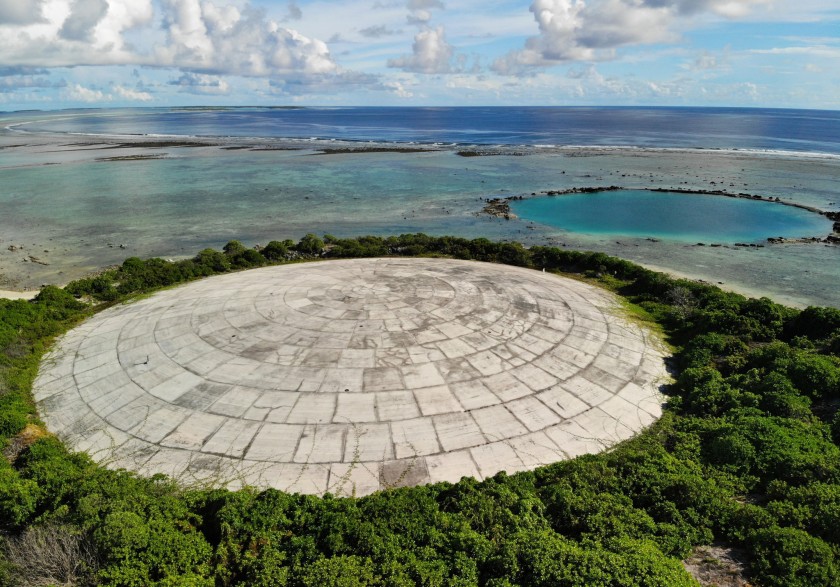
    Before I get to the poem itself, let me tell you about the background of what inspired and led me to write the poem in the first place, for the story is a pretty interesting one. It all started about a month ago. I wss browsing YouTube and decided to watch a video from YouTube user DarkDocs titled “Is America’s Own Chernobyl Sitting In The Middle of the Ocean.”

    In the video, he describes the history of the Runit Dome and the effects it could have on the environment today.

    After the video was over, I watched in the suggestions tab titled “This Concrete Dome Holds A Leaking Toxic Timebomb | Foriegn Correspondent.”

    It was a video by ABC News In-depth. In the video, it talks about the history of the Runit Dome and how it is affecting the Marshallese people presently. One of the people who was mentioned in the video was Kathy Jetnil-Kijiner, a poet from the Marshall Islands. In 2014, she had read a poem for her daughter in front of the UN for the Climate Summit. I thought her poem was very inspiring, so I wanted to follow her on social media to check out more of her work. I followed her on Facebook and Twitter. On her Twitter, I saw that she had shared an advertisement for a book that two climate scientists were working on getting published. The book would be a collection of works ranging from scientific articles to poems. I decided to submit a poem. I had sent a short excerpt of it to them. They said they liked it and that I should hear back a month later if my poem will be accepted or not. Fast forward to today, and I found out my poem was not accepted. However, they said they enjoyed the excerpt that I had sent to them, and that there were a lot of submissions to choose from. I wish the both of them good luck in getting the book published, and without further ado, here is the full poem that I had wrote!

    The Poem

    Bikini Atoll;

    They were told

    The US were protectors

    Of hope

    And of freedom.

    Instead, they were relo-

    -cated from their homes

    While their atolls

    Were bombarded with radiation,

    Which had took a toll

    On them and their souls,

    And the remains of it all

    Were buried underneath a dome

    That is called “The Tomb.”

    How ironic it’s name is, so,

    Because the Runit Dome

    Has the potential

    To become their own tombs.

    With sea level rising,

    It’s becoming a crisis

    That if the radiation finds its

    Way out, it could

    Completely poison

    The entire Earth’s oceans,

    And this is because of the

    Changing Earth’s climate!

    Is there any hope for us to survive this

    Disastrous threat that could possibly annihilate us?

    I’d say there is, but we need to realize this:

    For us to survive it,

    We all need to rise up and

    Take a stand for what’s right, which

    Is saving the entire planet

    From total destruction.

    It may sound bleak; it may sound alarmist,

    But I believe we all can grow and thrive despite this!

    That is why I, a mere man who writes this,

    An artist with a creative mind that is

    Concerned about the state of the world and this climactic climate crisis,

    Had decided to sit down and take the time to write this.

    I wrote this poem

    Because I care about my home.

    I care about the loved ones that I call my own.

    I wrote this for my friends; my family, too!

    I wrote this for their friends, and their families, too!

    I wrote this for everyone; everyone that’s in the room;

    The room that is so big and so round and so blue;

    The room that has oceans that spans millions of miles;

    The room that has a diversity of creatures both on land and in the sea;

    The room that has been around for billions of years;

    The room that houses a species that has accomplished many great feats, but has also caused a myriad of tragedies that led countless people to defeat;

    The room that I’m proud to call planet Earth.

    I was not asked to be born on this Earth,

    But it is my place; the place of my birth.

    It sorta just happened; one day I was conceived.

    I grew to a fetus, then a baby, and then eventually an adult human being.

    It was a slow process; just like humanity’s growth on this Earth for thousands of years.

    We started out in caves, and eventually made great things.

    Along the way, we also had created

    Devastating weapons that can harm us and hurt us in many ways.

    The same goes with climate change; it’s mostly man-made.

    It is a mess that we ourselves had made.

    The consequences are dire; the Earth is on fire.

    But if we take a stand now, I believe we’ll survive this!

    The Earth is our home; it is our dome.

    It is the one thing that should come above all!

    Just as the dome

    Located in the Enewetak Atoll

    Has the potential

    To destroy us all,

    We too have the potential;

    The potential to be saviors

    For not just the here and now,

    But for future generations.

    That is why I had wrote this poem.

    So if you see this message, please heed the urgency

    To do something about this climactic climate emergency

    That could lead to insurgency

    Of disastrous natural convergency

    That could inadvertently lead

    To extreme diathermancy

    And create great divergency.

    We must fight this looming threat, and we must do so with great fervency,

    For it is this Earth that we love with great ardency!

    We must stand up and fight, and must do so without errancy.

    We must not treat this threat as a mere nonemergency.

    We must respect this planet with great amounts of conservancy,

    And clean up this world with great levels of detergency.

    This our home; the home that we were grown.

    This Earth is our dome, and this is its poem!

  • My Journey to Atheism

    My Journey to Atheism

    I’d like to tell you the story of how I became an atheist. It’s kind of a long one, so strap in for the ride.

    My story starts when I was a kid. I was born and raised Catholic. I received all of the sacraments up to and including Confirmation. I was a devout Catholic. I believed in God, Jesus, and the Holy Spirit. I prayed everyday, both out loud and to myself. I went to Catholic school from grade school all the way to high school. I was pretty religious. My family and I weren’t big on going to church, however. We preferred to practice our faith at home amongst ourselves. We also didn’t believe everything that the Bible, the Pope, and Catholicism told us. Besides that, we all had a strong belief in God, Jesus, and the Holy Spirit; especially me.

    I would worry everyday about the things I said or did. I also worried about the things my friends and family said and did. I was worried that if my friends, family, or I had said or did things that God did not approve of, we would be sent to Hell. Hell scared me a lot. I was terrified of it. The thought of being tortured in a place of fire and brimstone for all eternity would give me nightmares as a child. Even now, as an atheist, I still occasionally fear the possibility that Hell is real and that I would be sent to it.

    That’s how things were for most of my life; that is, until I was about to start senior year of high school. It was the summer between junior year and senior year. Junior year had just ended, and senior year was well on its way. I was excited, because that meant I was about to graduate, become an adult, and head off to college in another year! One day, sometime around the beginning of July of 2013, a friend of mine had showed me a video by the YouTuber “The Amazing Atheist.” I had vaguely heard of him before my friend had showed me the video, but this was the first time I had ever seen a video by “The Amazing Atheist” for myself. Immediately, I felt drawn to his personality. His cynical personality, abrasive humor, and straightforward bluntness had intrigued me. I wanted to watch more of his videos. As soon as I had gone home, I immediately searched up Amazing Atheist’s YouTube channel. From there, I had spent the night watching a bunch of Amazing Atheist videos. Every video by Amazing Atheist that I had watched, my perception of religion started to change. I started to doubt my faith more and more. When it was time for me to go to sleep, my mind had felt as though it had a lot of knowledge dropped onto it at once! It was intense. I felt nervous and uneasy going to sleep that night. I had a fear that God saw what I did, and that I would be severely punished for my transgressions. I fervently prayed that night to make sure that I would not go to Hell for my actions, and that I was just starting to have a lot of doubts about my belief in Him. I had told God that no matter what happened, I would always try to be a good person, and that I wanted to be judged by my character, and not my belief in Him.

    The next morning, after a good night’s sleep, I had felt more at ease. With a clearer mind, I decided to look up evidence to prove God’s existence. However, I did not want to use religious sources. All I found, however, were Bible quotes, faith websites, religious blogs, etc. I scoured the Internet far and wide to find evidence of God. I wanted to find something; anything. I wanted to find something that could give me reason to believe in God. I was not ready to let my faith go; not yet. I wanted to be absolutely sure that I did everything I could to prove to myself that there was indeed a God. After hours of researching, I came up with nothing. It was at that point that I realized that God may not be real, and that religion was man-made. Even though there was no way to prove or disprove God’s existence, from what I have seen so far, there was no point in believing in a God at all if there was no definitive way to prove or disprove His existence. It was at that point I had officially become an atheist.

    Later on that day, and in the next couple of weeks, I had started to watch a couple of atheist YouTubers other than just the Amazing Atheist. The next atheist YouTuber I had discovered after Amazing Atheist was CultofDusty. He was also pretty funny. Soon after discovering him, I had found Secular Talk, Jaclyn Glenn, and Thunderf00t, just to name a few. I had listened to all of their stories and videos regarding atheism, politics, the world, etc. They had so many interesting stories and perspectives that I had found informative and relatable. My entire belief system, worldview, personality, and philosophy were starting to change. No longer did I feel closed-minded and sheltered. I now was discovering that there was a vast world that was in my grasp. There were so many people, places, things, events, and issues going on in the world, that the world did not revolve around me. Nothing revolved around me, nor any one individual, for that matter. There were problems bigger than any one of us combined. In order to tackle them, we, as people, had to work together. We couldn’t wait for God to fix these problems. We had to take action and do it ourselves! In fact, we were the ones who created our own problems; not God. God wasn’t responsible for any of the things that we did. It didn’t make any sense for God to have been. Why would God give us free will, only to know ahead of time that our fates were sealed the moment He created us, and that we were just on borrowed time before we were judged. If we truly had free will, there would have to be situations that God Himself could not predict. However, if God is omniscient, He should know everything, and should not be surprised by any of the choices we make in life, and if He is surprised, that means that He isn’t omniscient. And that’s how the thoughts in my mind went for other aspects of God, as well, such as His omnipotence, his benevolence, and his omnipresence. The more rigorously I thought about His characteristics, the harder it was for me to believe that God was real. After that, I had found it hard for me to believe any of the other things that were presented in the Bible. From there, everything came down like a house of cards.

    It has now been over 6 and a half years since I had stopped believing in religion, and it was one of the most liberating things I had ever done! No longer did I feel the need to worry about someone constantly judging me and watching me. I was now able to be who I truly wanted to be. In hindsight, religion, to me, felt like a restraint; a hindrance. It felt like a way to control me through the use of fear; through the use of Hell. Looking back, Hell was used as a concept to scare young kids into believing religion unquestionably, or else there would be consequences for our actions. It was indoctrination, and it was very manipulative. In my opinion, religion should not be introduced to children. They do not have the faculties to understand anything about their religion. All they know is what they are told from their parents, their schools, their churches, etc. If you want to teach religion to your children, at least wait until they become a teenager, so that way, they would have experienced the world for themselves and seen what it was like. To introduce a scary concept like Hell to young children has the potential to traumatize children and scar them for life. I know that for me, personally, I still find myself to occasionally dread the possibility of Hell, even though it has been years since I have become an atheist. That is from the constant drilling into my mind the vivid depictions of Hell, and the dire consequences that would result if one were to go to Hell. It was all of that BS being shoved down my throat as a young child that causes me to still fear Hell, even as an atheist, and I don’t think that fear will ever go away completely. It will always be there, somewhere in the far reaches of my mind, occasionally popping up out of the blue. Regardless, I feel like I have now found my truest self, and I don’t think I would have if I was still a believer. As an atheist, I had found that I had become more empathetic. I can empathize and understand people better, and I find myself treating others with care and kindness. I don’t think I would have reached the level of empathy that I have for others if I was still religious. I am more open-minded, and I can find myself to relate to people of a variety of different backgrounds, including those who are believers! For me, it does not matter if a person is religious or not. To me, what matters most is whether a person is kind or not. That’s what matters most. If a person is kind and caring, then I have no problem with them whatsoever, even if they may have religious beliefs. I personally don’t find it worth it to get into religious arguments and debates with people. If people want to learn about atheism, they will do it on their own accord, just like I did. No one forced atheism onto me. I wanted to learn more about it. By doing so, I started to question and doubt my faith, and eventually became a full-fledged atheist. I did it all on my own, and in hindsight, it was the best decision of my life. I have no regrets for becoming a skeptic.

  • Thoughts on the Coronavirus

    Thoughts on the Coronavirus

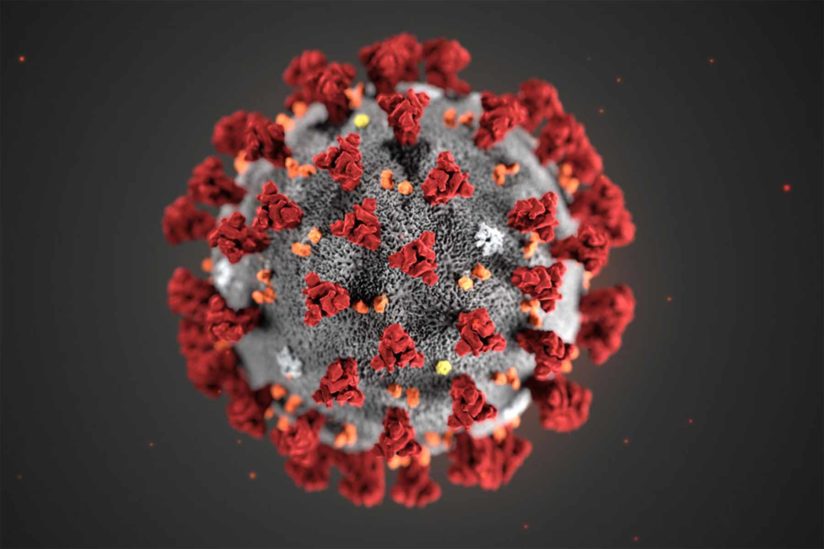
    I’d like to share some quick thoughts on the coronavirus; mainly the racist rhetoric surrounding the virus. I’ve heard quite a few people, both online and in real life, say that people should “stay away from Asians” and whatnot. I would like to debunk this BS right now and say this: “staying away” from Asians won’t do anything. Not now. The disease has spread outside of China, so now, it is affecting more than just Asians. If people were to apply the “staying away from Asians” logic to other groups, they’d essentially be advocating to stay away from everyone! They’d be advocating for people to just stay indoors all day and not go outside at all. There would be no going to work, no going to school, no going to the store. None of that! Just lock your doors and stay home indefinitely. That sounds ridiculous as heck! Just because the coronavirus is something to be feared does not mean people should put their lives on hold simply because it is a threat. There will always be threats and dangers that this world will face regardless of what we do. If we want to truly experience life and live life to the fullest, we have to take risks and chances, even if that may mean it could be our time to go at any moment. We cannot control when or how we will die. If it’s our time to go, it’s our time to go. We cannot control that. All we can do is hope for the best, and try to live life to the fullest, and live it without regrets!

  • Imagination (My Response To John Lennon’s “Imagine”)

    Imagination (My Response To John Lennon’s “Imagine”)

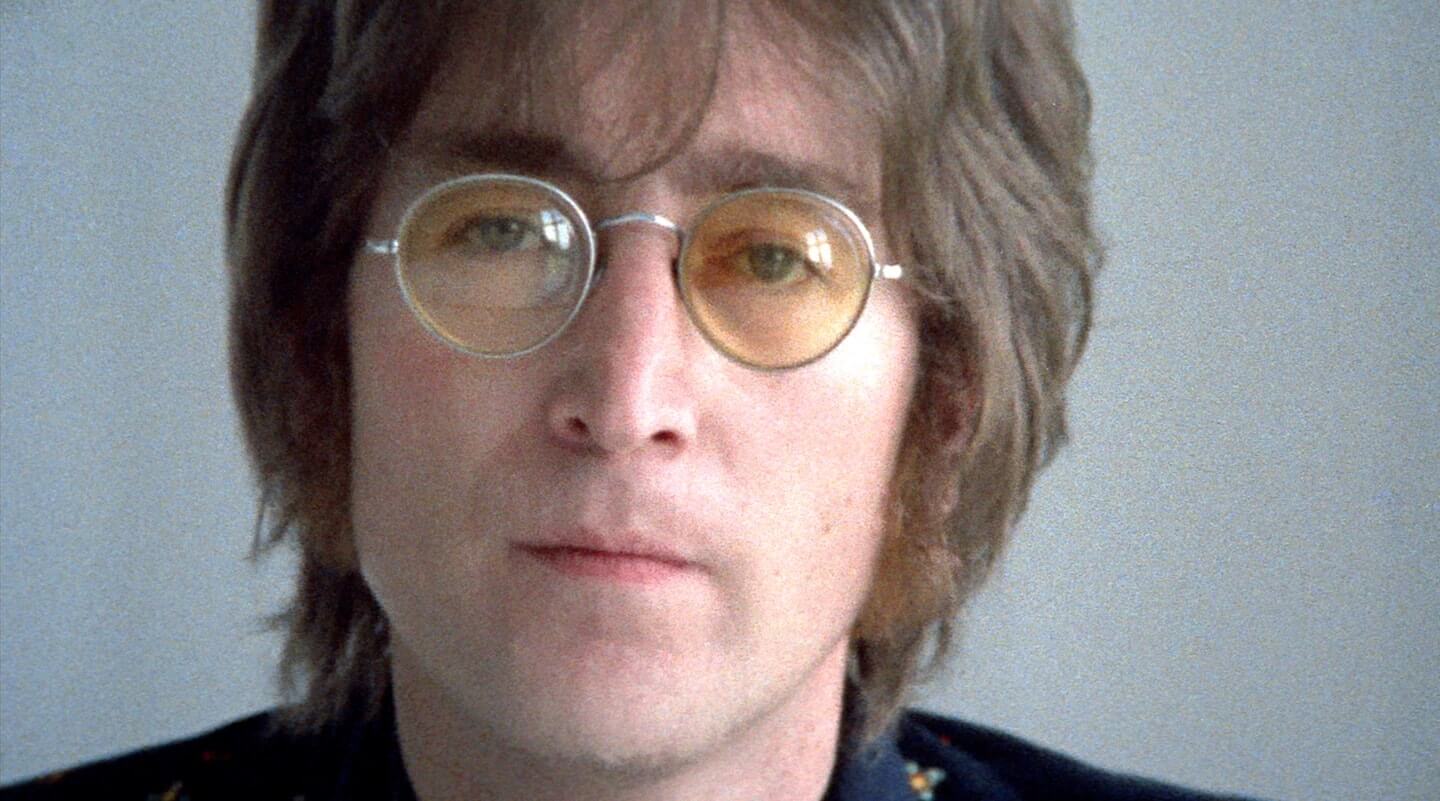
    When I listen to this piece,

    This musical piece by a man long deceased,

    I can’t help but help wonder,

    What the world would be like

    If we cared for one another,

    Gave to each other,

    And were there for each other.

    What would that world be like?

    Would it be nice?

    Would people act right?

    Would we all not fight?

    Would we not be superficial

    And judge people

    For the color of their skin,

    Or for what was between their legs,

    Or for who they chose to kiss,

    Or for how they chose to dress,

    Or for what their gender is,

    Or for what their religion is,

    Or for being atheists,

    Or for having disabilities,

    Or for not being rich,

    Or for being homeless,

    Or for not being intelligent,

    Or for being promiscuous,

    Or for being addicts,

    Or for being imprisoned,

    Or for being furry friends?

    What would such a world be like?

    Would we stand up for what’s right

    And not lose sight

    When we lose our light?

    What would such a world be like?

    I would like to hope

    That in that world

    We could get past our own egos

    And treat those

    Who feel lost

    With the utmost

    Compassion

    That’s so strong

    That it won’t

    Ever be lost!

    Is such a world possible?

    I’d like to say it’s not impossible!

    Will it be difficult?

    For sure, it will,

    However, I’m certain we’ll

    One day feel

    A sense of brotherhood

    That’ll unite us all!

    Am I a dreamer?

    Am I a believer?

    Am I the only one?

    Am I waiting for the sun?

    Who knows?

    But what I do know is that I love

    The song

    By John Lennon

    Called “Imagine.”