The Musings of Jaime David
@jaimedavid.blog@jaimedavid.blog

The writings of some random dude on the internet

1,218 posts
1 follower

Tag: poem

  • The Logistical Nightmare of Publishing My Infinity Poem: I Think I Broke Everything Along the Way

    The Logistical Nightmare of Publishing My Infinity Poem: I Think I Broke Everything Along the Way

    So, remember that massive infinity poem I recently announced? The one containing 7,007,317 words, 561,009 lines, 156,640 paragraphs, and 15,345 pages? Yeah. Well, there is another side to this whole project that deserves its own post. Because while the final numbers might be impressive, getting this enormous thing to the point where I could actually share it with the world has been a logistical nightmare in its own right. And when I say nightmare, I mean that this project has tested practically every tool, program, website, and service I’ve tried to use along the way. Microsoft Word has been tested. WordPress has been tested. Google Docs has been tested. Free online file converters have been tested. My patience has been tested. And at various points, it has felt like the entire technological ecosystem was collectively asking me what the hell I thought I was doing.

    When I started this project, I knew that creating something this large would eventually cause problems. I wasn’t under the illusion that I could casually produce millions of words, throw everything into a document, click a button, and have the entire thing work perfectly. I understood that there would be limits. Programs have memory limitations. Websites impose upload restrictions. File converters have their own constraints. Documents become increasingly unwieldy as they grow. And when you’re dealing with a manuscript containing more than seven million words, you’re no longer operating at the scale most ordinary writing tools are designed to handle comfortably. I expected technical difficulties, and I accounted for the possibility that things would go wrong. What I didn’t necessarily know was exactly how many different things would decide to become a problem.

    Microsoft Word was one of the biggest parts of this experience. It is a program people use every day to write essays, reports, books, and all kinds of other documents. But there is a difference between writing a normal document and assembling a poetic manuscript that stretches across 15,345 pages. At that point, you’re asking a familiar writing program to manage something that is far outside the ordinary experience of most users. Working with the document, navigating it, processing it, and trying to make sure everything remains intact become challenges in themselves. A program that feels perfectly comfortable with a short essay can become a very different beast when the document grows to this scale. Suddenly, the question isn’t just whether I can write more. It is whether the tools I’m using can continue to handle what I’ve already written.

    Then there was WordPress. Since I wanted to share this project with readers of Musings of Jaime David, I had to think about how the manuscript would actually be made available. It is one thing to publish an ordinary blog post. It is another thing entirely to figure out how to distribute a document containing millions of words without turning the blog itself into an enormous technical headache. WordPress has its own practical limitations, including media upload restrictions, available storage, and the difference between publishing a post and hosting a gigantic document for readers to access. I had to consider what would work, what would not, and how to make the manuscript available without forcing the entire project into a format that wasn’t designed for it.

    And then there was Google Docs. Initially, I thought it would be a convenient way to host the complete manuscript. It seemed like a straightforward solution: put the document online, share a link, and let people access the poem. Simple enough. Except there was one fairly significant problem. The document was too large. Google Docs wasn’t a workable option for hosting the complete manuscript in the way I needed, so I had to abandon that plan and look for an alternative. Imagine putting all this effort into assembling a seven-million-word poem, only to discover that one of the most familiar document-sharing services wasn’t going to be the solution. At that point, I had to stop and reconsider how I was going to distribute the thing.

    Then came the file converters. Oh, the file converters. If you’ve ever searched online for a free tool to convert a Word document into a PDF, you probably know that there are plenty of websites promising to make the process easy. Upload a file, click a button, wait a moment, and download the result. Simple enough, right? Well, that simplicity starts to become questionable when your document is thousands of pages long and contains millions of words. A tool that works perfectly well for an ordinary document might struggle with a file of this size. Some processes can become painfully slow, others can run into limitations, and sometimes the result simply isn’t what you expected. I had to confront the reality that not every tool advertised as a convenient solution is equipped to handle the sort of experiment I was conducting.

    There were moments when things glitched out, processes failed, and tools behaved in ways that made the whole experience even more frustrating. Some of the things I tried did not work as intended, and there were times when it felt as though I was pushing software beyond what it had been designed to do. I don’t want to exaggerate the technical details or pretend that every failure had the same cause. Different programs have different limitations, and not every problem can be reduced to one simple explanation. But the overall experience made one thing very clear: creating the manuscript was only part of the challenge. Figuring out how to preserve it, convert it, store it, and distribute it was another challenge entirely.

    Eventually, I settled on Dropbox. After Google Docs proved unsuitable for the full manuscript, I needed a practical way to share the files without trying to publish millions of words directly on WordPress. Dropbox gave me a way to share the manuscript through a folder link, which meant I could direct readers to the files rather than force the entire project into a traditional blog post. Was it the original plan? No. Was it the route I expected to take when I started this whole thing? Not necessarily. But it gave me another option, and at this stage, finding a workable solution mattered more than sticking stubbornly to my first idea. The objective was to get the poem into a form that people could access, and I was willing to change course to make that happen.

    The funny thing is that none of this really surprised me. I knew there would be obstacles. I knew that producing something this enormous would eventually force me to confront the practical limitations of the tools I was using. I knew that I would probably have to change my approach, try different methods, and accept that certain things would not work the way I wanted them to. In a sense, that was part of the experiment. I wasn’t merely trying to create a long poem. I was also discovering what happens when you use ordinary digital tools to handle a project that has grown far beyond ordinary proportions. I wanted to find out how far I could take it, and that meant finding out where the friction started.

    And yes, there were times when I got frustrated. It would be ridiculous to pretend otherwise. When you have put so much effort into a project, the last thing you want is to get stuck trying to convert a file or work around an upload restriction. You want to share the finished result, not spend your time troubleshooting the software that is supposed to help you share it. But that is the reality of undertaking something unusual. You can have the idea, generate the material, assemble the manuscript, and reach your final word count, only to discover that the final stages involve a completely different set of problems. The creative process and the logistical process are connected, but they are not the same thing.

    Still, I pushed through. I kept trying different approaches, reconsidered how I would distribute the manuscript, and eventually found a way to share it through Dropbox. The goal was not to find the most complicated method possible. It was to find a reliable way to make the manuscript accessible to readers. If one method turned out to be impractical, I could investigate another. If a particular tool could not handle the document, that did not automatically mean the project itself had to stop. Google Docs didn’t work out for the complete manuscript, but that didn’t mean I had to give up on sharing it.

    There is an important distinction here: I didn’t set out to break software for the sake of breaking it. I wasn’t trying to cause trouble for the companies that created these tools, and I wasn’t trying to prove that every program was inadequate. I was pursuing a creative project and testing the limits of the tools available to me in the process. Those are different things. The fact that I encountered technical problems doesn’t mean the tools are bad at what they ordinarily do. Microsoft Word, WordPress, Google Docs, and file converters serve different purposes and operate under different constraints. They are not necessarily designed around the idea that someone will try to manage a seven-million-word poem. My project was unusual, and it exposed limitations that might never matter to someone working on a more conventional document.

    But that is precisely what made the experience interesting. Sometimes, you don’t discover the boundaries of a tool until you attempt something that pushes against them. You can read specifications, learn about file-size limits, and understand the general capabilities of a program, but actually working on an unusually large project gives you a different perspective. You discover which parts of the process are easy, which parts are difficult, and which assumptions stop being useful once the scale changes. In my case, the experiment extended beyond the poem itself. It became an exercise in problem-solving, persistence, and figuring out how to get an enormous digital project from my computer into a form that other people could access.

    I also think this is a part of creative work that people don’t always consider. We tend to focus on the finished product. We talk about the book, the album, the film, the artwork, or the poem. We discuss the result and sometimes the process that produced it, but the less glamorous logistical work often receives much less attention. Yet getting something ready to share can require a tremendous amount of effort of its own. A manuscript has to be stored somewhere. A file has to be converted or distributed. Links have to work. Readers need a practical way to access the work. And when the project is exceptionally large, every one of those steps can become more complicated than expected. The work doesn’t magically become available to the public just because the creator has finished making it.

    In my case, the logistical difficulties were part of the price of pursuing an unusual goal. I wanted to create something massive, and I knew that the tools I used would eventually have to deal with the consequences of that decision. I could have avoided some of these problems by choosing a smaller project. I could have decided that millions of words were too much trouble, that the manuscript would be too cumbersome to manage, or that the challenge wasn’t worth the hassle. But that would have defeated the point of what I wanted to do. I wasn’t trying to create an ordinary poem. I was deliberately exploring an extreme version of the idea, and I knew that going to extremes would probably involve encountering extreme inconveniences along the way.

    Ultimately, I did it because I wanted to. That is the simplest explanation for this entire project, including the frustrating parts. I wanted to see how far I could take the poem, how much material I could assemble, and what would happen when I pushed the tools I was using beyond the scale of an ordinary writing project. I wanted to test the process, work around its limitations, and see what I could accomplish. I knew that things would go wrong. I knew that I would have to troubleshoot problems. I knew that the project would eventually become cumbersome. I accounted for those possibilities and continued anyway. The fact that the process wasn’t smooth sailing didn’t make me regret the goal. If anything, it became another part of the story.

    And now, after all of that, I have a finished manuscript containing 7,007,317 words, 561,009 lines, 156,640 paragraphs, and 15,345 pages. Those numbers tell you how large the poem became, but they don’t tell you everything about what it took to get there. They don’t capture the failed attempts, the technical headaches, the time spent working around limitations, or the process of figuring out how to share the result. They don’t show the moments when I had to stop thinking like someone creating a poem and start thinking like someone managing an enormous digital document. They certainly don’t capture every moment when I looked at a technical obstacle and thought, in much less polite language, that this was becoming ridiculous.

    But ridiculous was part of the point. I chose to undertake an enormous project, and I followed it through the creative work and the logistical mess that came with it. I tested the tools. I pushed against their limits. I learned that producing a massive manuscript and distributing a massive manuscript are two very different challenges. And despite the obstacles, I kept going until I had something I could share.

    Would I recommend that everyone try to create a seven-million-word poem? Absolutely not. Most people have no reason to put themselves through this particular combination of creative ambition and technical frustration. But I am glad I pursued it, because I wanted to find out what would happen. The point was never that everything would work perfectly. The point was to attempt something enormous, deal with the obstacles that arose, and see the project through.

    So yes, the infinity poem is finished, but getting it out into the world has been its own adventure. The announcement tells you what I created. This post tells you a little more about what it took to make that creation shareable. One part was about generating and assembling the material. The other was about wrestling with the practical realities of storing, converting, and distributing it. Both were part of the experience, and both deserve to be told.

    I wanted to create something massive. I knew the process would test me and the tools I used. I pushed through anyway.

    And now, after all the glitches, limitations, frustrations, and troubleshooting, I can finally say that I got it done.

  • My Infinity Poem: A Multi-Million-Word Epic Challenging the Giants of Literature

    My Infinity Poem: A Multi-Million-Word Epic Challenging the Giants of Literature

    Sometimes, you start a project because you have a serious ambition. Sometimes, you start one because you have an idea that refuses to leave your head. And sometimes, you start something simply because you want to see how far you can take it, even if you have absolutely no idea what the final result will look like. For me, my infinity poem has been a combination of all three. What began as an ambitious experiment in writing has grown into a manuscript containing 7,007,317 words, 561,009 lines, 156,640 paragraphs, and 15,345 pages. Yes, you read that correctly. Millions of words. More than half a million lines. Thousands upon thousands of pages. After spending a considerable amount of time working toward this goal, I can finally share the numbers behind what has become one of the strangest, most ambitious, and most unusual creative projects I have ever undertaken.

    I originally started working on this poem in 2025. At the time, I wanted to see whether I could create something extraordinarily long, something that would push the boundaries of what I thought was possible for a single poetic project. I had an enormous goal in mind, but the process was not particularly fast. Generating enough material, putting it together, and continuing to expand the manuscript took time, and eventually I stepped away from the project for a while. The idea was still there, but the workflow I was using made it difficult to make progress at the scale I wanted. I could have abandoned the project entirely, but I didn’t want to do that. I wanted to return to it when I had a better way of approaching the challenge. So I left it alone, continued with other things, and eventually came back to it in 2026 with a different approach.

    That change made a tremendous difference. With a more effective AI-assisted workflow, I was able to generate and assemble material at a scale that had previously been difficult to reach. What had once seemed like a project that would take an extraordinarily long time to expand suddenly became something I could develop much more rapidly. I began putting together substantial blocks of text, extending existing ideas, experimenting with different voices and styles, and bringing separate pieces into one enormous manuscript. Before long, I was no longer thinking about whether I could reach a few thousand words or even a few hundred thousand. I was working with millions. In the final count, the manuscript reached 7,007,317 words. The finished version also contains 561,009 lines, 156,640 paragraphs, and 15,345 pages in Microsoft Word.

    I find it a little surreal to write those numbers down. A project that began in 2025, stalled for a while, and then resumed with a different workflow eventually reached this scale. I had originally wanted to see how far I could push the idea of an extremely long poem. Now I have a completed manuscript with more than seven million words. It is one thing to imagine a project of that size, and it is another thing entirely to open a document and see the numbers staring back at you. Even if you know how the manuscript was created, the sheer quantity of material is difficult to wrap your head around.

    One reason I kept this project relatively quiet was that I did not want to announce an enormous ambition before I had something substantial to show for it. There is a difference between telling people that you intend to do something and actually putting in the work to produce a result. I could have announced in 2025 that I wanted to create one of the longest poems ever written, but that would only have communicated an intention. I wanted to wait until I could point to a finished manuscript, provide actual figures, and explain what I had done. I would rather show people the result and let them decide what they think of it than make grand promises about what I might accomplish someday. Now that I have reached this stage, I can finally talk about the project in concrete terms.

    Of course, that raises an obvious question: why would I want to write a poem this long in the first place? The honest answer is that I wanted to see whether I could do it. I was curious about the possibilities of AI-assisted writing, particularly when the objective was not to produce a short story, a conventional poem, or a polished essay, but to create something on an enormous scale. Most writing projects have practical limits. People have limited time, attention, energy, and patience, and a writer who attempts to produce millions of words manually faces a monumental undertaking. I wanted to explore what would happen if I approached the problem differently and used AI as a tool to help generate and assemble the material. I was interested in the experiment itself: how large could the poem become, how many lines could I accumulate, and what would happen when I continued pushing the process beyond the point at which most conventional writing projects would stop?

    I also wanted to do something unusual. I cannot claim that nobody else has ever attempted a similarly large AI-assisted poem, and I am not going to pretend that I have surveyed every writer or every experiment on the internet. However, this is a particularly unusual direction for my own creative work. Rather than using AI simply to generate a short passage or help polish a piece of writing, I used it extensively as part of a process intended to create a manuscript containing millions of words. I wanted to see how far I could take that approach, and the finished numbers provide an answer to that particular question. Whether somebody else considers the result impressive, excessive, ridiculous, fascinating, or some combination of all four is up to them.

    I also want to be transparent about how the poem was made. This was not a case of me sitting at a keyboard and manually typing more than seven million words. That would be an entirely different undertaking, and I am not going to pretend otherwise. Artificial intelligence played a substantial role in generating the material. I worked with large blocks of text, reused passages, experimented with variations, and assembled material from separate outputs into the larger manuscript. Consequently, the total word count includes repeated material, and the number of words should not be mistaken for the number of unique words or entirely original lines. The process involved generating, reusing, arranging, and expanding text rather than composing every word independently from scratch.

    I think that distinction matters because I want people to understand what they are looking at. There is no point in presenting the project as something it isn’t. I used AI extensively because AI made this particular experiment possible at the scale I wanted to explore. That is part of the story, not something I need to hide. At the same time, I was the person pursuing the project, establishing its enormous objective, deciding how to approach the process, and bringing the material together into the manuscript I wanted to create. The result emerged from that particular creative process, and I am comfortable explaining it honestly.

    That brings me to a broader question about authorship. What does it mean for something to be human-made when AI has played a major role in producing the words? Is a project defined entirely by who physically typed each sentence, or does the human contribution also include the ambition, direction, selection, arrangement, and decisions behind the finished work? How much does the method matter, and how much does the intention matter? I do not expect everyone to answer those questions the same way. Some readers may see this project as an AI-generated experiment with human direction. Others may consider it an example of AI-assisted creative work. Some may not consider it a poem in the same sense as a carefully revised work written line by line by a human poet. Those are all questions worth discussing, and I am not going to dictate how everyone must classify my work. I would rather be open about the process and let readers decide what they think it represents.

    The title, Infinity Poem, also deserves some explanation. Obviously, seven million words are not infinite. The manuscript has a definite beginning, a definite end, and a measurable word count. I am not claiming to have created a literally endless poem, nor am I suggesting that the project has somehow escaped the boundaries of mathematics. The word infinity reflects the ambition behind the experiment: the idea of continuing to expand a creative work, pushing beyond the scale at which a conventional poem would ordinarily end, and seeing how far the process could go. It represents the spirit of the project more than a mathematical description of the finished manuscript. I wanted a title that conveyed the sheer scale of the undertaking and the feeling that the possibilities for expansion could continue far beyond what I initially imagined.

    Naturally, once you start talking about a poem containing more than seven million words and over half a million lines, comparisons with other enormous literary works become difficult to avoid. There are historical epics, oral traditions, and monumental works of literature that have been celebrated for their extraordinary length. Two particularly relevant examples are the Mahabharata and the Epic of Manas. The Mahabharata, the great Sanskrit epic, is commonly estimated to contain approximately 1.8 million words in many English-language comparisons, although totals vary depending on the edition, translation, and method of counting. My manuscript’s 7,007,317-word count is substantially higher than that commonly cited estimate. That is a numerical comparison, not a claim that my poem has the same cultural, religious, literary, or historical significance as the Mahabharata. These are very different works created under very different circumstances, and word count alone cannot establish their relative value.

    The Epic of Manas, the monumental Kyrgyz epic, provides another interesting comparison. It is widely associated with a figure of approximately 500,000 lines, although the length can vary depending on the version and the way the text is counted. My finished manuscript contains 561,009 lines, which is 61,009 more than that commonly cited benchmark. I find that comparison fascinating because line count offers a different way of looking at the project’s scale. Word counts tell one part of the story, but lines can communicate the sheer physical extent of a poem in another way. Nevertheless, exceeding a commonly cited figure does not automatically mean that I have broken an official world record. The versions being compared, the definitions being used, the publication requirements, and the rules of any particular record category all matter. I am presenting the numbers as a comparison, not claiming that a record-keeping organization has certified my manuscript as the longest poem ever written or published.

    The page count is another way to appreciate the size of the project. In its final Microsoft Word form, the manuscript occupies 15,345 pages. That figure is based on the document’s current formatting, so it should be understood as a manuscript page count rather than an absolute measurement that would remain unchanged under every possible layout. Changing the page size, font, margins, or spacing could alter the total. Even with that qualification, fifteen thousand pages is a remarkable amount of text to have assembled into a single poetic project. The document is far beyond what most people would imagine when they think of an ordinary poem, and that contrast is part of what makes this experiment interesting to me.

    Now, naturally, a manuscript this large presents a practical question: where the hell do you put the thing so people can actually read it? My original plan was to host the complete poem through Google Docs, but the document proved too large for that approach to work. I needed another way to make the full manuscript accessible without trying to squeeze millions of words into a standard blog post. After considering my options, I managed to get the project onto Dropbox. The complete poem is now available through a shared folder link, giving interested readers a way to access the manuscript without requiring me to publish millions of words directly on this blog.

    Read the complete Infinity Poem here:

    Open the Infinity Poem on Dropbox

    The link is intended to let readers access the shared material without giving them permission to edit my original files. If you open it and have trouble accessing the poem, let me know in the comments so I can investigate. Given the size of this project, I want to make sure that people who are interested in examining it have a practical way to do so. I would also recommend approaching the manuscript with an understanding of what it is: an enormous AI-assisted creative experiment, built through generation, repetition, variation, and the assembly of separate blocks of text. It is not a conventional short poem, and I do not expect everyone to read all seven million words from beginning to end. The point of sharing it is to make the finished project available for anyone curious enough to explore it.

    I should also explain that the speed of this process is not the same thing as traditional literary craftsmanship. Producing millions of words quickly does not automatically mean that every passage has been carefully revised, that every line has been polished, or that the entire manuscript maintains the consistency of a conventional book developed through years of editing. This project was built around scale and experimentation. Its central question was how far I could take an AI-assisted process designed to generate and assemble enormous quantities of poetic text. That is different from setting out to write a short, meticulously revised poem in which every word has been considered individually. I do not think those two approaches need to be treated as identical to be worth discussing. They are different creative objectives, and they raise different questions about what a finished work is supposed to accomplish.

    What fascinates me is that tools can change the boundaries of an experiment. In 2025, the process I was using made it difficult to progress at the rate I wanted, so I paused. When I returned in 2026 with a different workflow, I was able to move much more quickly and eventually assemble more than seven million words. That experience made me think about the relationship between creative ambition and the tools available to pursue it. Technology does not automatically make every result meaningful, and sheer volume is not a substitute for quality. However, it can make certain kinds of experiments more practical than they once were. A person can have an idea that would be prohibitively time-consuming under one set of conditions, then discover that a different approach allows them to explore it in a new way. My infinity poem is an example of that process, and its final statistics are the clearest evidence of how far I took it.

    I am not expecting everyone to love this poem. Some people will probably think the entire idea is absurd. Others may question whether a work assembled through extensive AI generation and repetition should be considered a poem at all. Some may be interested in the numbers but have little desire to read a manuscript of this size. I understand those reactions. A project does not have to appeal to everyone to be worth attempting, and I do not need every reader to agree with my choices. I wanted to conduct an experiment, I pursued it, and I now have a finished manuscript that I can present and discuss. That is enough reason for me to share it.

    There is also something amusing about the contrast between the ambition of the title and the reality of the finished document. Infinity is an almost incomprehensible concept, while my manuscript is a very concrete collection of words, lines, paragraphs, and pages. I can count it, measure it, and store it in a digital document. Yet the idea behind it was to keep pushing beyond the scale I initially considered reasonable. Perhaps that contrast is the most fitting part of the project: an attempt to approach an idea that suggests endlessness through a work that can, in fact, be counted. Seven million words is a definite number, but reaching that number has given me an opportunity to think about how far a creative experiment can go when its main objective is to keep expanding.

    So, after all the experimenting, assembling, and counting, here is where the infinity poem stands. It contains 7,007,317 words, 561,009 lines, 156,640 paragraphs, and 15,345 pages in Microsoft Word. It was started in 2025, put aside for a time, and brought back in 2026 with a different AI-assisted workflow. It draws on extensive generated text, repeated material, variations, and the assembly of separate outputs. It is not literally infinite, and I am not claiming that its length alone establishes an official world record. What it is, however, is the result of an unusual creative experiment that I wanted to carry as far as I could. I set myself an enormous challenge, and this is the finished result.

    My Challenge to the Next Poet

    Now that I have finished my attempt, I want to extend a challenge to other writers, poets, and anyone else who is curious about the limits of creative work. Can you make something longer? Can you take the idea further? Can you create a poem that surpasses these numbers, whether you write every word yourself, work with AI as a collaborator, or use AI-generated material as the foundation of your project? I am interested in seeing what other people can do with the challenge, and I would genuinely welcome someone attempting to surpass my totals.

    I am not setting this challenge because I believe that length is the only measure of literary achievement. It isn’t. A poem of twenty lines can be more moving, insightful, or beautifully written than a manuscript containing millions of words. A short work can leave a lasting impression, while an enormous work can struggle to hold a reader’s attention. Length, quality, originality, emotional impact, and cultural significance are different things. My project focuses on one particular dimension: how far a person can take the scale of a poetic work through an AI-assisted process. I want to see whether someone else can push that dimension further, and I want to see what approaches they use to do it.

    If you decide to take up the challenge, be transparent about your methods and your numbers. Explain whether you wrote the poem manually, used AI assistance, incorporated repeated passages, or assembled material from multiple sources. Share your final word count and line count, and make the project accessible to people who want to examine it. If you surpass my totals, I will be interested to hear about it. I would rather see people experiment, create, and challenge one another than treat the act of attempting something unusual as a reason to discourage it. Creative work does not have to follow a single path, and experiments can be worthwhile even when people disagree about how the result should be classified.

    For my part, I have made my attempt. I wanted to see how far I could take this idea, and I now have a manuscript containing more than seven million words. I do not know how many people will read it, what conclusions they will draw from it, or whether another writer will eventually produce something longer. What I do know is that the project began as an ambition, became an experiment, and ultimately resulted in something I can share with the world. That was the point of doing it in the first place: to try something enormous, learn from the process, and discover what might be possible.

    I have made my attempt. Now I challenge you to make yours. Let’s see how far we can take this.

    Final Statistics

    • Final word count: 7,007,317
    • Final line count: 561,009
    • Final paragraph count: 156,640
    • Final page count: 15,345
    Fediverse Reactions
  • What If Blue October Went Reggae? Check Out My Cover of “Into the Ocean”!

    What If Blue October Went Reggae? Check Out My Cover of “Into the Ocean”!

    Have you ever wondered what Blue October would sound like if you added some saxophone and a little reggae into the mix? Well, wonder no more!

    I’m excited to share my cover of “Into the Ocean” by Blue October, where I put my own spin on the song by bringing together the sounds of saxophone and reggae.

    Because why not? Music is all about experimentation, creativity, and finding new ways to experience songs we know and love. And as someone who believes that music can be anything, I figured, why not take a song by Blue October and give it a different sound?

    So, if you’ve ever wanted to hear “Into the Ocean” with a reggae twist and some saxophone, this might just be the cover for you!

    Give it a listen on Spotify!

    Listen to my cover of “Into the Ocean” by Blue October

    And as always, thank you for checking out my music and supporting my creative endeavors. Who knows what other musical experiments I might come up with next?

    Until then, enjoy the music!

    And one more thing! If anyone from Blue October happens to come across this post, I hope you’ll give my cover a listen! I’d love for you to hear my take on “Into the Ocean” and what happens when you mix your music with a little reggae and saxophone.

    And hey, while I have your attention, I heard about your guitar giveaway! Not saying you have to or anything, but if you happen to be looking for someone to consider, I’d certainly appreciate being on your radar. Just throwing that out there! 😂

    Either way, thank you for making the music that inspired me to try something different with this song. Keep doing what you do!

    Fediverse Reactions
  • The Jaime David Podcast – Episode 28: Racism

    The Jaime David Podcast – Episode 28: Racism

    The Jaime David Podcast – Episode 28: Racism is out now!

    Check out the original post here:

    Racism

    Racism; it is a system

    Where a person is treated different

    For the color of their skin pigments.

    It is a system

    That has oppressed millions

    For many generations.

    The only way to end it

    Is to fight against it.

    In order to do that, we must acknowledge

    The existence

    Of white privilege.

    April 24, 2020, 8:05 pm 0 boosts 0 favorites

    Listen to the episode here:

    Check out the episode transcript below:

    JAIME DAVID (host):
    Hey everyone, welcome back to The Jaime David Podcast. This is Episode 28, and today, we’re going to talk about something that continues to shape our world in damaging and destructive ways—racism.

    This isn’t just a word. It’s not just a bad attitude or a slur shouted on the street. Racism is a system. One that was built, maintained, and passed down through generations. One that continues to harm people every single day.

    Here’s the poem I wrote on this, simple and to the point—but powerful nonetheless. It’s called “Racism.”


    Racism

    Racism; it is a system
    Where a person is treated different
    For the color of their skin pigments.

    It is a system
    That has oppressed millions
    For many generations.

    The only way to end it
    Is to fight against it.

    In order to do that, we must acknowledge
    The existence
    Of white privilege.


    JAIME DAVID (host):
    Racism isn’t just about individual hate—it’s about institutional power. It’s woven into housing policies, education funding, hiring practices, policing, healthcare, and media representation. It’s not just one person being mean to another. It’s one group holding power while others are excluded, exploited, or erased.

    And like the poem says, if we want to end it, we have to fight against it. That means actively challenging racism wherever we see it—whether it’s subtle or overt, systemic or interpersonal.

    But here’s the thing: that fight starts with acknowledging white privilege.

    A lot of people get defensive about that phrase, like it means they didn’t work hard or earn what they have. But that’s not what it means. White privilege means not having to worry about the things others do—like being followed in a store, being denied housing, or fearing for your life in a routine traffic stop—just because of the color of your skin.

    It means the system, by default, favors you.

    Once we acknowledge that, we can start making space for real change. We can listen to those who’ve been silenced, support those fighting for justice, and push for policies that dismantle racist systems.

    We have to stop pretending racism is just a relic of the past. It’s alive, it’s harmful, and it’s on all of us to do something about it.

    So keep asking the hard questions. Keep having the tough conversations. And don’t be afraid to confront your own place in the system—because that’s how we start to change it.

    Thanks for tuning in to Episode 28 of The Jaime David Podcast. Let’s keep learning, unlearning, and doing better—together. See you in the next one.

    Fediverse Reactions
  • The Jaime David Podcast – Episode 28 is out now!

    The Jaime David Podcast – Episode 28 is out now!

    The Jaime David Podcast – Episode 28 is out now!

    Listen to it here!

    Fediverse Reactions
  • I’m on Patreon and Kick Now! Two More Ways to Follow the Jaime David Universe

    I’m on Patreon and Kick Now! Two More Ways to Follow the Jaime David Universe

    Well, folks, I’ve officially added two more things to the ever-expanding Jaime David creative universe.

    I now have a Patreon AND a Kick!

    Yep. We’re expanding. 😂

    🎉 Patreon

    First up, I’ve officially launched my Patreon!

    Join my Patreon

    The Patreon is going to be a place where you can support my work while getting some additional content and access that you won’t necessarily get elsewhere.

    And I decided to keep things relatively simple to start.

    🆓 Free Membership

    You do not have to pay anything to join my Patreon.

    The free membership is basically a way to stay connected with what I’m doing on Patreon.

    Free members get access to:

    • Public Patreon posts
    • Release announcements
    • Upcoming-project announcements
    • General creator updates

    So if you want to follow along with my Patreon without committing to a paid membership, you’re absolutely welcome to join for free.

    And if you eventually decide you want to support me financially and get the additional Muser benefits, you can upgrade to the paid tier at any time.

    🧑‍🎨 Muser

    Then there’s my one paid tier: Muser.

    The Muser tier is for people who want to go a little further behind the scenes and directly support what I’m creating.

    Mus ers get everything available to free members, plus:

    • Exclusive Patreon posts
    • Behind-the-scenes looks at my creative work
    • Previews and sneak peeks of future projects
    • Patron recognition on The Musings of Jaime David
    • The Patreon-exclusive newsletter
    • Access to the Muser Lounge, my Patreon community chat for paid members

    The Patreon-exclusive newsletter will be separate from my regular Jaime David newsletter. Think of it more as an insider dispatch for Musers—behind-the-scenes thoughts, what’s going on with current projects, upcoming stuff, Patreon updates, and other things I want to share with the people supporting me directly.

    And the idea isn’t to make all of my normal content suddenly paywalled.

    My blogs will still be my blogs. My books will still be my books. My music will still be my music. My podcast will still be my podcast.

    Patreon is simply an additional layer for people who want to support me and get a little more of the behind-the-scenes Jaime David experience.

    I’m starting with one paid tier and seeing where this goes. I may add additional tiers and benefits down the line as the Patreon grows, but I’m keeping things relatively simple for now.

    So whether you want to join for free or become a Muser, I’d love to have you.

    🎮 And Then There’s Kick

    I’ve also officially created a Kick channel.

    Follow me on Kick

    Now, I’m approaching Kick a little differently from Patreon.

    My initial plan is actually pretty simple:

    Gaming.

    And not necessarily the typical loud, heavily edited, face-cam gaming content.

    I’m going to start out doing faceless, voiceless gaming streams—essentially longplays.

    I’ll play games, stream the gameplay, and let the game itself be the focus.

    Part of this is honestly just me experimenting with livestreaming and figuring out what works for me. I don’t necessarily want to jump immediately into trying to become some stereotypical livestreamer. I want to start simple, learn the platform, build up some experience, and see where it goes.

    But I don’t necessarily want gaming to be the only thing I ever do there.

    Eventually, I’d like to experiment with some of my other interests.

    For example, I could see myself doing streams where I analyze my own poetry, talk about writing, discuss books, talk about music, explore creative ideas, or just have conversations about various topics that interest me.

    But that’s down the road.

    For now?

    Games. Longplays. No face. No voice. Just vibes.

    😂

    And honestly, I kind of like the idea of starting that way.

    It lets me experiment with streaming without immediately putting a huge amount of pressure on myself to constantly be talking or performing for the camera.

    Maybe it’ll evolve into something completely different later.

    We’ll see.

    🌐 Another Expansion of the Jaime David Universe

    So, between my blogs, books, poetry, music, podcast, newsletter, Patreon, Kick, and all the other projects I’ve got floating around in my head…

    Yeah.

    The Jaime David creative universe continues to get bigger.

    And that’s really what I’m trying to build here: a whole creative ecosystem rather than just one project.

    You can read my writing.

    You can listen to my music.

    You can listen to the podcast.

    You can follow the blogs.

    You can support me through Patreon.

    And eventually, you can watch me play games on Kick—or perhaps watch me ramble about poetry and writing there too.

    I’m still figuring some of this stuff out as I go.

    But that’s part of the fun.

    So if you want to follow along, check out the Patreon and Kick below.

    Patreon: https://www.patreon.com/JaimeDavid921

    Kick: https://kick.com/jaimedavid27

    Thanks for being here.

    And, as always…

    Welcome to the weirdness. 🤘

    Fediverse Reactions
  • Someone, anyone—help me bring The Jaime Daivd Podcast back to YouTube.

    Someone, anyone—help me bring The Jaime Daivd Podcast back to YouTube.

    My original YouTube channel was terminated a while ago, but the podcast itself is still here. I want the show to have a home on YouTube again, and I’m giving permission to anyone willing to create an archive channel for it.

    If you have the episodes, or can help locate and organize them, I’d be incredibly grateful if you’d create a YouTube archive of The Jaime Daivd Podcast so the show can reach listeners on YouTube again.

    I’m giving permission for the podcast episodes to be uploaded and preserved for this purpose.

    If you’re interested—or know someone who could help—please reach out to me.

    I just want my podcast back on YouTube.

    Fediverse Reactions
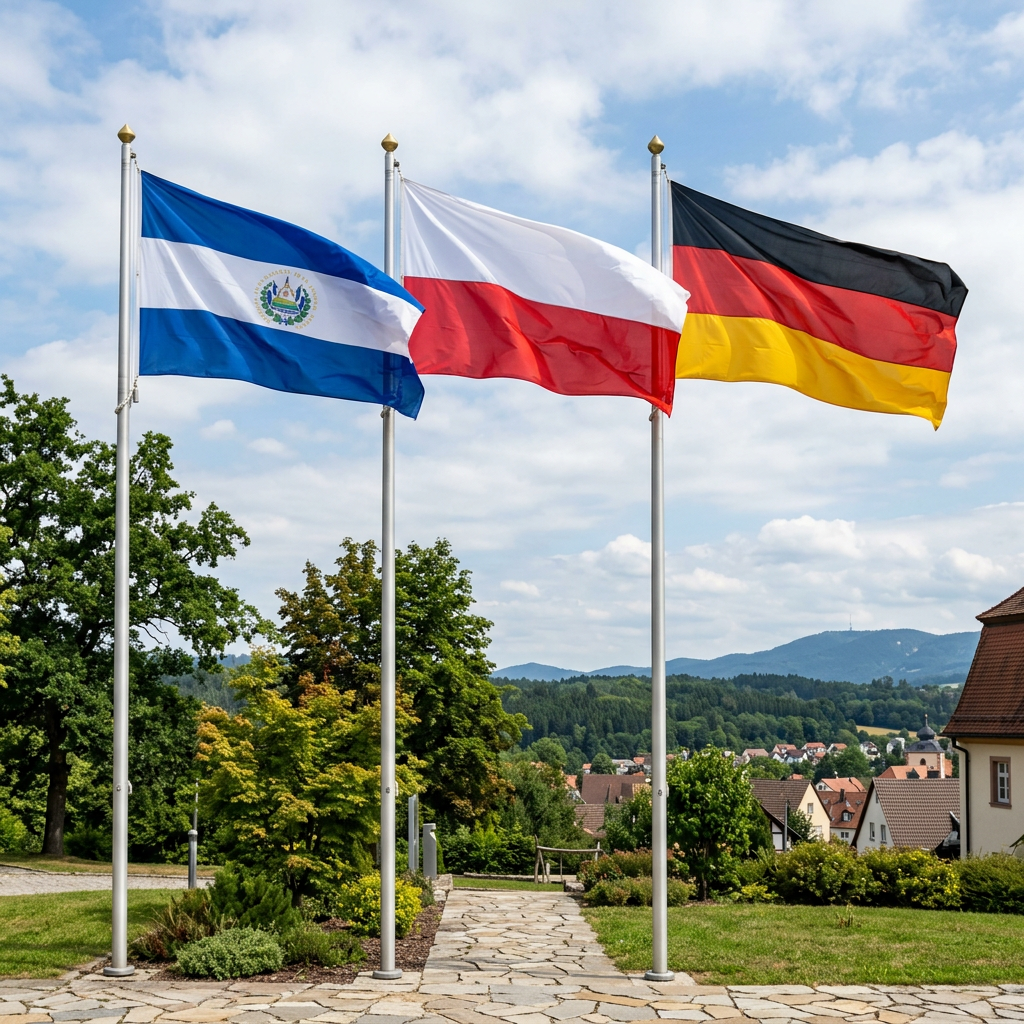
  • My Polish, German, and Hispanic Heritage All Come Together in October

    My Polish, German, and Hispanic Heritage All Come Together in October

    So, apparently October is just going to be my heritage month now. 😂

    I already wrote about my Polish and German heritage, but then I realized something else: German-American Heritage Month and Hispanic Heritage Month overlap.

    And considering I’m both German and Hispanic, I figured, fuck it. Let’s talk about all of it.

    Hispanic Heritage Month runs from September 15 through October 15. German-American heritage observances also fall during this same general period, and October is recognized as Polish-American Heritage Month.

    So here I am, looking at the calendar like:

    “Oh. This month is basically made for me.”

    Because my family history includes all three.

    I’m Hispanic. I’m Polish. I’m German.

    And then, because apparently my family tree wasn’t done collecting countries, I’m also Austrian and French.

    But for October, I’m focusing on these three.

    My Hispanic heritage is obviously a significant part of my background. My family has Salvadoran roots, and I’ve talked before about what that heritage means to me and why I wanted to write about it.

    But Hispanic heritage isn’t something that exists in isolation from the rest of my family history.

    Neither is my Polish or German heritage.

    They’re all parts of the same family tree.

    And I think that’s something that can sometimes get lost when we talk about heritage.

    People can feel like they have to pick one identity and stick with it.

    But why?

    Why can’t someone be connected to multiple cultures and histories?

    Why can’t I celebrate being Salvadoran while also celebrating being Polish and German?

    I don’t have to choose.

    I’m not a pie chart where every piece of my ancestry has to fight for the biggest percentage.

    They’re all pieces of my history.

    And honestly, I think that’s pretty fucking cool.

    There’s also something interesting about having heritage from different parts of the world because it makes me more curious about all of them.

    I want to learn more about Salvadoran history.

    I want to learn more about Polish history.

    I want to learn more about German history.

    And eventually, I want to dig more into my Austrian and French heritage too.

    I don’t think acknowledging your heritage requires pretending you personally experienced everything your ancestors experienced. It doesn’t mean claiming to be an expert on a culture simply because you have ancestors from there.

    For me, it means recognizing where my family comes from, being curious about those histories, and appreciating the different threads that eventually became part of my own story.

    And that’s what heritage means to me.

    It’s history.

    It’s family.

    It’s culture.

    It’s curiosity.

    It’s the weird, complicated, sometimes incomplete story of how generations of people eventually led to me sitting here writing this fucking blog post.

    So yeah.

    Happy Hispanic Heritage Month.

    Happy German-American Heritage Month.

    Happy Polish-American Heritage Month.

    Apparently October is my month.

    And honestly?

    I’ll take it.

    Fediverse Reactions
  • My Polish and German Heritage

    My Polish and German Heritage

    So, since it’s October, I figured, fuck it. Let’s talk about two more parts of my heritage: my Polish heritage and my German heritage.

    I’ve talked before about my Salvadoran heritage, because that’s another major part of where my family comes from. But my background isn’t just Salvadoran. I’ve also got Polish, German, Austrian, and French heritage.

    And since October happens to be a month when Polish-American and German-American heritage are both being recognized, I figured this was as good a time as any to talk about those two parts of my background.

    I’m Polish.

    I’m German.

    And honestly, I think it’s pretty cool to be able to say that.

    Now, I’m not going to pretend that I’m some walking encyclopedia of Polish or German culture. I’m not. There are parts of those cultures that I know more about than others, and there are certainly things about my own family history that I still don’t know.

    Heritage is complicated like that.

    You can inherit a part of your family history without necessarily having grown up immersed in every aspect of that culture. And I think that’s something worth acknowledging.

    For me, heritage isn’t simply a matter of saying, “Well, my ancestors came from this place, therefore I am automatically an expert on that culture.”

    No.

    It’s more about recognizing where some of my family history comes from and being curious about it.

    Being Polish is one piece of that puzzle.

    Being German is another.

    And then there’s Austrian and French heritage too, which means my family tree is basically doing its own little tour of Europe before eventually crossing the Atlantic.

    And honestly, I think there’s something pretty interesting about that.

    We all come from somewhere.

    Sometimes we know exactly where our ancestors came from. Sometimes we only know a little. Sometimes family stories get passed down for generations. Sometimes pieces of the story disappear.

    And sometimes you find yourself looking at your own background and realizing, “Wait, I’m connected to all of these different places?”

    That’s kind of where I am.

    I can celebrate my Salvadoran heritage. I can celebrate my Polish heritage. I can celebrate my German heritage. And eventually, I can talk about my Austrian and French heritage too.

    None of those things cancel each other out.

    They’re all pieces of the same person.

    Me.

    And I think that’s one of the coolest things about heritage in general. It doesn’t have to fit neatly into one box.

    You can have multiple histories running through your family.

    You can be connected to multiple cultures.

    You can learn about those cultures at different points in your life.

    And you can decide that you’re interested in understanding more about where your family came from without pretending that you personally lived through the experiences of your ancestors.

    So, this October, I’m taking a moment to recognize the Polish and German sides of my family history.

    Happy Polish-American Heritage Month.

    Happy German-American Heritage Month.

    And here’s to all the different pieces of history that somehow came together to make me who I am.

    Because apparently my family tree decided that one European country wasn’t enough.

    And honestly?

    I wouldn’t have it any other way.

    Fediverse Reactions
  • The Jaime David Podcast – Episode 27: Privilege

    The Jaime David Podcast – Episode 27: Privilege

    The Jaime David Podcast – Episode 27: Privilege is out now.

    Listen to it here!

    Check out the original post here!

    Privilege

    Privilege; it’s a thing that exists.

    You can have privilege for being white, male, or cis.

    There’s also privilege for being pretty, tall, or thin.

    There is even privilege for being fucking rich.

    Privilege is everywhere, and it is fucking shit.

    It is a system where you can get judged for the color of your skin and pigments.

    It is a system where men can’t show their emotions.

    It is a system where rich men can pollute the environment.

    It is a system where businesses can lobby the government.

    It is a system where you can be demonized for being an immigrant, poor, or homeless.

    It is a system that causes great division.

    But do not despair; not all is hopeless!

    There is a way; a way we can fix this.

    We must make people aware; aware of their privilege.

    We must make people realize that the problem is systemic,

    And that privilege is not just simply something that one is born in.

    Privilege is something that society has decided.

    Privilege can give people an unfair advantage,

    And can also promote hypocrisy and double standards.

    Those with privilege can get praised for something,

    And if marginalized groups do it,

    Those with privilege have a fit.

    It’s bullshit.

    This shit needs to end.

    It’s time we give a voice to those who are voiceless.

    April 24, 2020, 8:02 pm 0 boosts 0 favorites

    Read the episode transcript below!

    JAIME DAVID (host):
    Hey everyone, welcome back to The Jaime David Podcast. I’m your host, Jaime, and this is Episode 27.

    Today’s topic is one that makes some people uncomfortable, but that’s exactly why it has to be talked about—privilege.

    This poem was written at a time when I was reflecting deeply on inequality—not just the obvious kind, but the kinds that are baked into the systems around us. Here’s the piece I wrote, called “Privilege.”


    Privilege

    Privilege; it’s a thing that exists.

    You can have privilege for being white, male, or cis.
    There’s also privilege for being pretty, tall, or thin.
    There is even privilege for being fucking rich.

    Privilege is everywhere, and it is fucking shit.

    It is a system where you can get judged for the color of your skin and pigments.
    It is a system where men can’t show their emotions.
    It is a system where rich men can pollute the environment.
    It is a system where businesses can lobby the government.
    It is a system where you can be demonized for being an immigrant, poor, or homeless.
    It is a system that causes great division.

    But do not despair; not all is hopeless!

    There is a way; a way we can fix this.
    We must make people aware; aware of their privilege.
    We must make people realize that the problem is systemic,
    And that privilege is not just simply something that one is born in.

    Privilege is something that society has decided.
    Privilege can give people an unfair advantage,
    And can also promote hypocrisy and double standards.

    Those with privilege can get praised for something,
    And if marginalized groups do it,
    Those with privilege have a fit.

    It’s bullshit.
    This shit needs to end.
    It’s time we give a voice to those who are voiceless.


    JAIME DAVID (host):
    Yeah… it’s a heavy one. And that’s on purpose.

    The truth is, privilege isn’t about guilt. It’s about awareness. About recognizing how different people move through the world with different levels of access, opportunity, and safety. Some of us get doors held open automatically. Some of us don’t even get to knock.

    But acknowledging privilege isn’t the end of the conversation—it’s the beginning. It’s what allows us to start building systems that are actually fair. It’s what helps us recognize when voices are missing from the room—and makes us choose to listen instead of speak over them.

    In the poem, I said: “We must make people aware of their privilege.” And I still believe that’s step one. But what comes after is just as important: using that awareness to amplify others, not just center ourselves.

    It’s not enough to call out injustice—we also have to call each other in. That means doing the work, sharing the mic, advocating for equity, and pushing back on systems that benefit some by silencing others.

    So if you have privilege—any kind of it—use it like a tool, not a shield. Use it to challenge the bullshit. Use it to change the conversation.

    And if you feel like you’ve never had privilege in your life, I see you. You’re not alone. And your voice matters.

    Let’s be honest, let’s be bold, and let’s keep showing up.

    That’s it for Episode 27 of The Jaime David Podcast. Thanks for being here, and thanks for doing the work. See you next time.

    Fediverse Reactions