Episode 24 of The Jaime David Podcast is out now!
Listen on Spotify:

The writings of some random dude on the internet

Episode 24 of The Jaime David Podcast is out now!
Listen on Spotify:
The Jaime David Podcast – Episode 22: One Year Later is out now.
Listen to it on Spotify:
Check out the original post here:
Read the episode transcript below:
Jaime David Podcast — Episode 22
Title: One Year Later
Hey everyone, this is Jaime David. Today’s episode is very personal. It’s called One Year Later, about my late uncle, who passed away in 2019. I wrote this poem just a few days after the anniversary of his passing, back in April 2020—right when COVID-19 was already changing the world.
Losing him was one of the hardest things I’ve ever experienced. And going through that loss right as the pandemic hit made everything feel even heavier. But writing this poem helped me hold onto hope when so much felt uncertain.
Here’s the poem:
One Year Later
It’s been a year since you’ve been gone.
You’re gone from our lives, but not our hearts.
I’ve known you all my life, and I still can’t believe you’re gone.
I miss you a lot. I wish you were here.
I’ve got so much to tell you. I’ve got so much to say.
All I can really do is live life day by day
And take chances in life to see where things will congregate.
I don’t know where I’ll be in a couple of years from now,
But one thing I do know is that I won’t ever back down.
I won’t let fear and insecurity
Prevent me from being me,
Seeing all I can see,
And being the best person that I can be!
You always taught me to not give up,
To not give in,
And to never quit.
You taught me to pursue my goals and dreams no matter how hard they may be.
You taught me to overcome obstacles and challenges no matter how difficult they may seem.
You had so much potential and so much life left to live.
I wanted to see you be happy and succeed.
You were taken from this world too soon.
I wish you could see the person that I’ve become!
Reading these words again reminds me of something very important — even when life feels hard or unfair, we can find strength by holding onto hope and moving forward, day by day. The poem is a promise to myself to keep going, to live fully, and to grow into the person my uncle believed I could be.
My uncle had a simple but powerful phrase he would say when things got tough: “Don’t be a quitter.” That advice wasn’t just about never giving up for the sake of it. It was about refusing to let fear or hardship stop you from being who you’re meant to be. It’s about resilience—finding the courage to keep trying, to learn from failure, and to keep pushing toward your dreams even when the road is rough.
I want everyone listening to remember this too. When life knocks you down, when you feel lost or overwhelmed, don’t give up. Don’t be a quitter. Hold onto hope, lean on the people who care about you, and keep taking small steps forward.
You might not know exactly where you’ll end up, but as long as you don’t quit, there’s always a chance for something better ahead.
Thank you for spending this time with me. Stay strong, be kind to yourself, and remember: your story is still unfolding. Keep writing it with courage and hope. I’ll catch you in the next episode.
Okay.
Screw it.
We have officially reached the point where I might as well write the post.
If you have followed my writing for any amount of time, you may have seen me mention a certain name.
Jamie David.
Notice the spelling.
Jamie.
J-A-M-I-E.
Not Jaime.
J-A-I-M-E.
That one letter has become surprisingly important in my life.
Because Jamie David is not me.
She is a completely different person.
She is an author.
She is an artist.
She is a former teacher.
She lived in Hawaii.
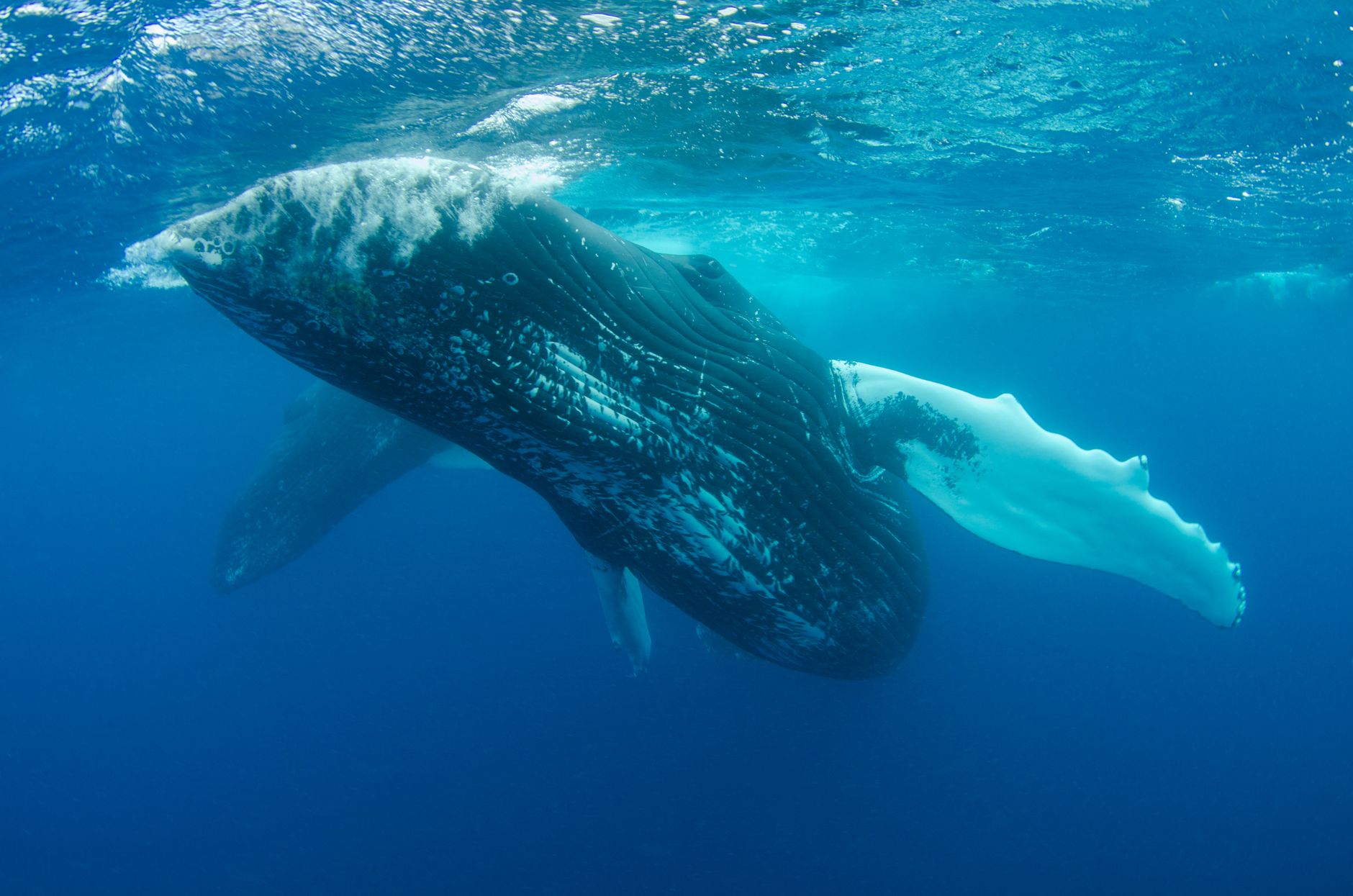
She wrote a children’s adventure novel about a singing whale.
And, for reasons that I still find both hilarious and increasingly irritating, a bunch of spammers and random internet people keep apparently deciding that I am her.
Yes.
Me.
The guy who writes under the name Jaime David.
Apparently, one letter is sometimes the difference between knowing who you’re talking to and sending a wildly enthusiastic promotional email to the wrong author.
So today, instead of simply saying, “Hey, I’m not Jamie David,” I thought:
Why not actually find out who Jamie David is?
Because here’s the thing.
I have spent a fair amount of time talking about the confusion.
I have joked about it.
I have complained about it.
I have written posts explaining it.
I have told scammers that they have the wrong person.
But somewhere underneath all of that is an actual human being who has her own story, her own career, her own creative work, and her own reason for writing the book that keeps getting me mistaken for her.
And honestly?
Her story is pretty interesting.
Let’s get this out of the way immediately.
I am Jaime David.
J-A-I-M-E.
I write Wonderment Within Weirdness.
I write My Powerful Poems.
I write Some Small Short Stories.
I run The Musings of Jaime David.
I make music.
I make podcasts.
I write essays.
I create a ridiculous number of things.
I am not the author of Johann Sebastian Humpbach.
I did not write a children’s adventure about a singing whale.
I have never claimed that I did.
I have no connection to that book.
And I am not Jamie David.
Jamie David is spelled J-A-M-I-E.
She is the author of Johann Sebastian Humpbach, a book first published in 2009 by Chai Yo Maui Press. The book is 167 pages and follows a world-famous singing whale named Johann Sebastian Humpbach who disappears during his annual migration from Alaska to Hawaii.
So if you came here because you are looking for the author of Johann Sebastian Humpbach:
You have the wrong Jaime.
Or, technically, the wrong Jamie.
And that distinction is the entire reason this post exists.
The public information I can find about her paints a picture that is actually pretty fascinating.
Jamie David is described as a writer, artist, and former teacher living on the island of Maui.
She was born and raised in small-town Pennsylvania.
After college, she moved west and eventually settled in San Francisco during what the author biography describes as an exciting period in the city’s history.
Then, in 1986, she and her husband, Ralph, moved to Hawaii.
That is already quite a life.
Pennsylvania.
California.
Hawaii.
Teacher.
Artist.
Writer.
And eventually author of a children’s adventure story set around the Hawaiian islands.
There is a pretty obvious geographic thread running through that story.
Hawaii isn’t merely a backdrop in her writing.
It appears to have been a major part of her life.
And that makes Johann Sebastian Humpbach make a lot more sense.
This wasn’t somebody sitting in some random office trying to manufacture an exotic setting.
She actually lived there.
She knew the environment she was writing about.
She had spent decades in Hawaii.
And eventually, she turned that experience into a children’s story.
This might be my favorite part of the whole story.
According to the author’s biography, during her years as a teacher, her middle-school English students frequently complained:
Why can’t we read something fun?
That complaint eventually became the spark for Johann Sebastian Humpbach.
She wanted to create a story that would be entertaining for students while also being informative.
She wanted something set in Hawaii.
And when she couldn’t find the kind of book she was looking for, she decided to write one herself.
That is actually something I can relate to.
Not the whale part.
Not the middle-school classroom part.
Definitely not the Hawaii part.
But the fundamental idea?
Absolutely.
You look around.
You don’t find the thing you want.
So eventually you think:
Fine.
I’ll make it myself.
That is basically how a lot of creative projects begin.
You have a problem.
You have an idea.
You have an itch that something isn’t quite right.
And eventually you stop waiting for someone else to solve it.
You create the thing.
That’s how books happen.
That’s how songs happen.
That’s how blogs happen.
That’s how podcasts happen.
That’s how weird little creative projects happen.
And apparently that’s how a singing whale ended up becoming a children’s novel.
And what a title.
Johann Sebastian Humpbach.
I have to admit, the first time I saw that title, I immediately thought:
What the hell is this?
It is one of those titles that you cannot really ignore.
Johann Sebastian Humpbach sounds simultaneously like a famous classical composer, a German philosopher, and a whale.
And, as it turns out, he is the whale.
The world’s most popular singing whale, apparently.
Johann disappears during his annual migration from Alaska to Hawaii.
Meanwhile, twelve-year-old twins Keoni and Leilani receive a birthday surprise from their Auntie Pua and Uncle Kalani.
During a snorkeling trip, the twins discover a clue connected to Johann’s disappearance.
And suddenly, they are pulled into an adventure involving a missing whale, mysterious circumstances, family, and villains.
The book is essentially a middle-grade Hawaiian adventure story.
And honestly?
It sounds like a lot of fun.
The protagonists are twelve-year-old twins named Keoni and Leilani.
That is an important detail because the story isn’t simply about a whale.
It’s about kids getting caught up in an adventure.
They find a clue.
They get involved.
They become part of the search.
And, according to the book description, they have to contend with Dr. Vile and his henchmen, who apparently want to silence the twins and prevent them from succeeding.
It has all the classic ingredients of a children’s adventure.
A mysterious disappearance.
A pair of young protagonists.
A beautiful setting.
A strange mystery.
Villains.
Danger.
Family.
And a giant singing whale.
It is a very different kind of book from anything I write.
Which makes the mistaken identity even funnier.
Imagine being a spammer who thinks they have found the author of a cheerful children’s Hawaiian whale adventure and instead emailing the guy who writes science-fiction weirdness and political essays.
That’s not even the same ocean.
There is another interesting detail that shows up in descriptions and reviews of the book.
One description of the book’s reception notes that it was written with middle-school students in mind and that the story includes a strong environmental message.
That makes sense.
If you’re writing a story about whales, Hawaii, migration, and the ocean, environmental themes are practically sitting there waiting for you.
And it seems like the educational side of Jamie’s background mattered.
She wasn’t simply trying to entertain.
She wanted to make something that could be enjoyable while also teaching something.
That’s a philosophy I respect.
Because children’s literature can do both.
It can be fun.
It can be ridiculous.
It can have singing whales.
And it can still leave a kid thinking about the world around them.
This is another part of her story that I find important.
Her author biography identifies her as a former teacher.
And the book itself appears to have grown directly out of that experience.
Her students wanted something fun to read.
She couldn’t find exactly what she wanted.
So she created it.
That means the book wasn’t simply an abstract creative exercise.
It had a purpose.
She had an audience in mind.
She knew the age group.
She knew what students were asking for.
And she used that knowledge to build a story.
There is something very practical about that.
Sometimes creativity begins with a question:
What do people actually want?
In her case, the answer was apparently:
Something fun.
And so she wrote something fun.
And this is where the story gets even more interesting.
Jamie wasn’t only a teacher and writer.
Her author biography describes her as an artist as well.
That means her creative identity extends beyond the book.
She wasn’t simply somebody who happened to write one children’s novel.
She had an artistic life.
And perhaps that explains some of the visual and imaginative qualities of the project.
A book like Johann Sebastian Humpbach isn’t only about words.
It’s about creating a world.
Hawaii.
The ocean.
Whales.
Twins.
Family.
Villains.
Adventure.
Mystery.
All of that requires imagination.
And artists tend to think in worlds.
That’s something I understand.
I spend a lot of time doing the same thing, even though my medium is different.
One of the stranger things I discovered while researching her was that Jamie David apparently created a companion coloring book connected to Johann Sebastian Humpbach. A printing-industry article from 2017 specifically describes the book as a Hawaii-based early-reader novel and notes that she created a companion coloring book.
And I love that.
Because it shows that she wasn’t thinking about the story as just one object.
She created something that could extend beyond the book itself.
A story becomes a coloring book.
A character becomes an image.
A world becomes something children can interact with.
That’s a pretty cool way to think about storytelling.
And again, I find myself thinking about my own creative work.
I don’t necessarily want everything I create to exist in isolation either.
A poem can become a song.
A podcast episode can become a transcript.
A blog post can inspire another post.
A book can become part of a series.
An idea can mutate into something else.
Creative work doesn’t always have to remain in the form in which it was born.
Sometimes it evolves.
One of the things I found while researching her was a printing-industry article mentioning that Jamie David would set up a table at her town’s weekly street fair during the summer to sell Johann Sebastian Humpbach.
That detail makes her feel much more real to me.
Because it is easy to look at an author online and imagine some abstract person who simply exists as a name attached to a book.
But this was apparently someone physically going out into her community with copies of her book.
A table.
A street fair.
Copies of the book.
Talking to people.
Selling it.
Connecting with readers.
That’s what independent publishing looked like long before the current creator economy became a buzzword.
And honestly, I respect the hell out of that.
Because getting a book into the world is one thing.
Getting people to actually pick it up is another.
Johann Sebastian Humpbach was published in 2009 by Chai Yo Maui Press. The book has a 2009 publication date and carries ISBN 9780615318400.
That’s worth remembering.
That was a very different internet.
Social media looked different.
Amazon looked different.
Self-publishing looked different.
Blogs looked different.
Digital marketing looked different.
The entire online publishing ecosystem was different.
And yet, she still managed to put a book into the world.
That’s something I can appreciate.
Because regardless of what genre you write, there is a certain courage involved in publishing.
You are taking something that existed inside your head and saying:
Here.
Other people can read this now.
That’s terrifying.
And exhilarating.
And sometimes both at the same time.
Now we get to my favorite part.
The stupid part.
The ridiculous part.
The part that caused this entire post to exist.
Spammers keep confusing me with her.
Not once.
Not twice.
Enough times that I have written about it publicly.
The first major incident I remember involved an email that was very obviously meant for the author of Johann Sebastian Humpbach.
It was an absurdly enthusiastic promotional pitch.
The person writing it apparently believed they were talking to the author of the singing-whale adventure.
Except they weren’t.
They were talking to me.
I was sitting there reading an email about Johann Sebastian Humpbach thinking:
Who the hell are you talking to?
Because I didn’t write that book.
I don’t have a singing whale.
I don’t have twins named Keoni and Leilani.
I don’t have a Hawaiian children’s adventure series.
I have absolutely no idea why you are talking to me about this.
And then I realized:
Oh.
You think I’m her.
Jamie.
Jaime.
One letter.
That’s it.
One letter.
And apparently that is enough to confuse automated systems, spammers, scrapers, databases, and people who apparently don’t read very carefully.
I have J-A-I-M-E.
She has J-A-M-I-E.
That’s the difference.
And yet, online, a single letter can disappear remarkably easily.
Someone searches for a name.
Someone copies an email address.
Someone scrapes an author database.
Someone generates a marketing message.
Someone looks at search results.
Someone sees “Jamie David.”
Someone sees “Jaime David.”
And apparently the brain goes:
Close enough.
No.
Not close enough.
This is important.
I don’t blame Jamie David for any of this.
At all.
She didn’t send the spam emails.
She didn’t tell anybody to confuse us.
She didn’t create my identity.
She didn’t create the internet.
She didn’t invent automated scraping.
She didn’t invent lazy marketing.
She didn’t invent scammers.
And she certainly didn’t ask to share a nearly identical name with me.
She’s just another person who happens to have a name that looks extremely similar to mine.
That’s it.
If anything, I feel a strange sense of solidarity with her.
Because I have to wonder whether she has ever been confused with me.
Maybe she has.
Maybe someone has contacted her about one of my books.
Maybe someone has asked her about The Musings of Jaime David.
Maybe someone has assumed she writes science fiction.
Maybe somebody has looked at the name and never bothered to check the spelling.
I have no idea.
But it would be completely unsurprising.
It’s an internet problem.
It’s an attribution problem.
It’s a metadata problem.
It’s an algorithm problem.
It’s a “people don’t read carefully” problem.
And it is especially a problem when authors are involved.
Because authorship matters.
If you attribute the wrong book to the wrong person, you are not just making a funny mistake.
You are attaching somebody else’s work to someone else’s identity.
Imagine someone searching for me and seeing Johann Sebastian Humpbach listed under my name.
Or someone searching for Jamie and finding Wonderment Within Weirdness.
That’s not just confusing.
It’s inaccurate.
And eventually, inaccuracies become part of the digital record.
Search engines index things.
Databases copy things.
Websites scrape things.
People repeat things.
And suddenly, a mistake that started with one lazy email can appear in five different places.
Then twenty.
Then fifty.
Then somebody else assumes those fifty places must all be correct because they’re saying the same thing.
That’s how misinformation spreads.
Not necessarily through some grand conspiracy.
Sometimes through repetition.
I know it is funny.
I know I have joked about it.
I know that “No, I’m not the singing-whale author” is a pretty ridiculous sentence to have to say.
But I also think there is value in being precise.
So let’s do this one more time.
Jamie David wrote Johann Sebastian Humpbach.
Jaime David wrote Wonderment Within Weirdness.
Jamie David is associated with Hawaii, children’s fiction, teaching, and art.
Jaime David is associated with The Musings of Jaime David, books, music, podcasting, essays, and a completely different creative universe.
Different people.
Different spelling.
Different books.
Different lives.
One extremely annoying letter.
Now that I have actually researched Jamie David instead of simply knowing her as “the person scammers confuse me with,” I have to admit something.
Johann Sebastian Humpbach actually sounds fun.
A singing whale?
Missing during migration?
Two twelve-year-old twins?
Hawaii?
A mysterious clue?
Villains?
Adventure?
Come on.
That’s a pretty solid children’s adventure premise.
And the fact that the book grew out of her experience as a teacher makes it even more interesting.
She saw a gap.
Her students wanted something fun.
She couldn’t find the right thing.
So she wrote it.
That’s creativity.
And I can respect that even if it is completely different from what I do.
When this whole thing first started, I mostly thought it was funny.
Then it became annoying.
Then it became something I felt I needed to clarify.
But after actually digging into Jamie David’s story, I think I’ve landed somewhere else.
It’s kind of fascinating.
Because I keep finding people who share some variation of my name.
And every single one of them has a completely different story.
One Jaime David became a major Dominican political figure.
Another Jaime M. David built a career in fashion and lifestyle communications.
Another Jaime David became a BERNINA educator and textile artist.
And Jamie David wrote about a singing whale and two adventurous Hawaiian twins.
And then there is me.
The sci-fi-writing, poetry-writing, blogging, podcasting, music-making, independent-creative-project-making Jaime David.
That’s a pretty weird collection of people.
And I love it.
Maybe that’s the bigger lesson here.
We spend a lot of time thinking about names as though they are unique identifiers.
But they’re not.
They are shared.
They’re inherited.
They’re sometimes changed.
They’re sometimes chosen.
And they’re constantly reused.
What makes a person unique isn’t the name.
It’s what they do with it.
Jamie David took her name and wrote a children’s adventure.
She taught.
She created art.
She lived in Hawaii.
She made a book for young readers.
She created a companion coloring book.
She apparently brought her book into her community and sold it at street fairs.
She built a creative life around her interests.
I took my name and built something else.
A blog.
Books.
A podcast.
Music.
Essays.
Poetry.
Whatever else I decide to make.
And neither of us needs to be the “real” Jaime or Jamie David.
We are both real.
Our work is real.
Our identities are real.
Our stories are separate.
If you ever happen to stumble across this:
Hi.
I’m the other one.
The one with the A-I instead of the A-M-I.
The one who keeps getting your spam.
The one who apparently has had to explain to the internet that he did not write about a singing whale.
I have never met you.
I don’t know you personally.
But after researching your story, I can say this:
I think what you did is pretty cool.
You saw something your students wanted.
You couldn’t find it.
So you wrote it.
You turned your experience as a teacher into a children’s adventure.
You created a Hawaiian setting.
You made a singing whale the center of the story.
You created a companion coloring book.
You took the book into the real world.
You built something.
And ultimately, that’s what I respect.
Because that’s what I’m doing too.
Just differently.
Please.
For the love of God.
Look at the spelling.
That’s all I’m asking.
If the email says Jaime, maybe don’t assume you’re talking to Jamie.
If the website says one thing, check the website.
If the book you’re talking about doesn’t appear anywhere in the person’s bibliography, maybe reconsider before sending the pitch.
And if you’re using some automated system that has decided Jamie and Jaime are interchangeable?
Fix your damn database.
I promise you, the world will survive.
And maybe I’ll stop receiving emails about a whale I didn’t write about.
Although, admittedly, there is something hilarious about the fact that this has become such a recurring theme in my life that I am now writing an entire essay about the woman who wrote Johann Sebastian Humpbach.
Only on the internet.
So let’s leave this as the definitive version.
Jamie David — spelled J-A-M-I-E — is the author of Johann Sebastian Humpbach, a 2009 children’s adventure novel about a missing singing whale, two Hawaiian twins, and an oceanic mystery. She is described as a writer, artist, and former teacher who lives on Maui and has a background rooted in Pennsylvania, California, Hawaii, education, and art.
Jaime David — spelled J-A-I-M-E — is me.
I write different books.
I make different music.
I run a different blog.
I make a different podcast.
I have a different life.
And I am not responsible for Johann Sebastian Humpbach’s disappearance.
If Johann is missing, please contact Jamie.
Not Jaime.
Please.
I have enough going on.
But seriously, I’m glad I finally wrote this.
Because for a while, Jamie David was just “that other author whose name keeps getting attached to my email inbox.”
Now I know a little more about her.
And what I found was not some mysterious internet identity.
It was a person who became a teacher, an artist, and an author; who saw something her students wanted and decided to create it; who turned Hawaii into the setting for an adventure; and who put a singing whale named Johann Sebastian Humpbach into the world.
That’s actually a pretty damn good story.
It just isn’t mine.
And that’s okay.
Because the whole point of having a name isn’t to be the only person who has it.
It’s to live a life that gives the name meaning.
Jamie David has hers.
I have mine.
And somewhere between Pennsylvania, San Francisco, Hawaii, New York, the internet, a missing whale, a bunch of scammers, and one annoyingly important letter, our stories accidentally collided.
Honestly?
I’m kind of glad they did.
Because otherwise, I never would have discovered Johann Sebastian Humpbach.
And apparently, I never would have had the opportunity to write a blog post explaining why I am not the person who wrote it.
Life is weird.
The internet is weird.
Names are weird.
And apparently, whales are weird too.

Apparently, I am not the only Jaime David on the internet.
At this point, I am starting to think I should stop being surprised.
First, I came across Jaime David Fernández Mirabal, the Dominican physician, psychiatrist, agronomist, politician, former vice president of the Dominican Republic, and member of the Mirabal family.
Then I found Jaime M. David, a woman who has built an entire professional career around fashion, lifestyle communications, public relations, branding, media, and creative strategy.
And yes, that last part matters.
Because apparently, there is another Jaime David out there who has built a very different kind of creative identity.
Her name is Jaime M. David.
And she has a website.
In fact, she has jaimedavid.com.
Yes.
That is her website.
And considering that I am Jaime David, that I write under the name Jaime David, that I have built The Musings of Jaime David around that name, that I have The Jaime David Podcast, that I release music as Jaime David, and that I have increasingly turned “Jaime David” into my own creative identity, I find this absolutely fascinating.
Not because I think I have some exclusive claim to the name.
I don’t.
Obviously.
But because there is something genuinely interesting about discovering another person who has taken the same two names and turned them into a recognizable public identity.
And unlike Jaime David Fernández Mirabal, this Jaime M. David isn’t a politician or historical figure.
She is a fashion and lifestyle communications professional.
And honestly?
That makes the coincidence even more fun.
Because while we share a name, we occupy completely different corners of the creative universe.
According to her website, Jaime M. David is a fashion and lifestyle communications consultant with more than fifteen years of experience in the industry.
Her work centers around communications strategy, brand positioning, public relations, media relations, editorial placements, founder profiles, events, partnerships, and social-media activations.
In other words, she helps brands figure out how to tell their stories.
And that is a pretty damn interesting career.
Because communications is not simply about sending press releases into the universe and hoping somebody notices.
It is about storytelling.
It is about figuring out what a brand is trying to say.
It is about figuring out how people will perceive it.
It is about finding the right audience.
It is about creating conversations.
It is about making something stand out.
And, perhaps most importantly, it is about understanding that presentation matters.
That is where I find the biggest connection between her work and mine.
We are not doing the same thing.
Not remotely.
But we are both dealing with the same basic question:
How do you take an idea and put it into the world in a way that people actually notice?
This is where the comparison gets interesting.
Jaime M. David works with brands.
I am gradually building one.
Not necessarily a commercial brand in the traditional sense.
But a creative identity.
The name Jaime David is attached to my writing.
It is attached to my blog.
It is attached to my books.
It is attached to my podcast.
It is attached to my music.
It is attached to my essays.
It is attached to all of these strange little projects I keep creating.
And over time, those things start accumulating.
One post becomes ten.
Ten becomes a hundred.
A podcast episode becomes a season.
A song becomes an album.
An idea becomes a book.
A book becomes a series.
And suddenly, you look around and realize that you have created something bigger than the individual pieces.
You have created a body of work.
That is what I think is so interesting about having a public creative identity.
At first, “Jaime David” is simply a name.
Then it becomes a byline.
Then it becomes a podcast title.
Then it becomes an album credit.
Then it becomes the name at the top of a website.
Then somebody searches for it.
Then somebody else recognizes it.
And eventually, the name itself starts carrying associations.
That is branding.
Even if you never intended to become a brand.
I think there is something I can learn from someone whose actual profession is communications.
Her website describes her approach as combining senior agency and in-house experience with creative collaboration and entrepreneurial energy. She works as an extension of a brand’s internal team, developing communications strategies involving public relations, strategic partnerships, brand positioning, and digital and social-media activations.
That is basically an entire career built around something I have been learning through trial and error.
How do you get people to care about something you made?
That is a surprisingly difficult question.
You can make something.
You can publish something.
You can spend hours editing something.
You can write something you genuinely believe is good.
You can make something that means the world to you.
And then you put it online.
And…
Nothing.
Maybe a couple people see it.
Maybe nobody comments.
Maybe nobody shares it.
Maybe the algorithm decides that your carefully crafted piece of work is not worthy of being shown to anybody.
Maybe someone you know personally doesn’t care.
Maybe someone even tells you that they don’t like it.
And then you have to decide whether you are going to keep creating anyway.
That is the part of creative work that nobody can really do for you.
Promotion can help.
Strategy can help.
Communication can help.
Branding can help.
But eventually, you have to make the thing.
One of the things that caught my attention when looking through her site is the range of brands and projects associated with her work.
Her site lists work involving companies and organizations in fashion, hospitality, lifestyle, publishing, books, and consumer brands.
That range is something I find especially interesting.
Because it is not just one kind of product.
Hotels.
Fashion.
Coffee.
Books.
Authors.
Lifestyle brands.
Clothing.
Publishing.
Different industries.
Different audiences.
Different messages.
Yet communications remains the common thread.
And that reminds me of something about my own creative interests.
I have never really been good at staying inside one category.
I can write about politics.
Then I can write about grief.
Then I can write about music.
Then I can write about some bizarre internet discovery.
Then I can write a poem.
Then I can turn the poem into a song.
Then I can make a podcast episode.
Then I can write about the podcast episode.
Then I can write about writing about the podcast episode.
At some point, you just have to accept that this is who you are.
You are a person with a lot of interests.
And that is okay.
But let’s get back to the actual reason I found this interesting.
The name.
Jaime M. David.
Jaime David.
It is not exactly the same presentation.
She uses the middle initial.
I generally don’t.
But the core name is identical.
And her website is literally jaimedavid.com.
That is the kind of thing that makes you stop for a second.
Because when I started using Jaime David publicly, I wasn’t thinking about search-engine optimization or brand collisions or domain-name ownership.
I was thinking about identity.
I wanted a name that felt like me.
I wanted a name that could hold my writing.
I wanted a name that could eventually encompass all the different things I create.
And then you discover that somebody else already has a very established presence using the same name.
That’s life.
Names are not usernames.
They are not domain names.
They are not automatically trademarks.
They are words.
And words get reused.
People share them.
People inherit them.
People choose them.
People build lives around them.
There is a tendency on the internet to think that everything needs to be unique.
Your username has to be unique.
Your handle has to be unique.
Your domain has to be unique.
Your brand has to be unique.
Your logo has to be unique.
Your content has to be unique.
Everything has to be differentiated.
And obviously, there are practical reasons for that.
You don’t want people confusing you with somebody else.
But there is another side to it.
Sometimes two people can have the same name and still be completely different people.
And that is actually a pretty powerful reminder that identity is more than a label.
Jaime M. David has spent more than fifteen years working in fashion and lifestyle communications.
I have spent my time writing, podcasting, making music, publishing books, and building my own little corner of the internet.
We are both Jaime David.
But nobody is going to confuse our actual lives if they look beyond the name.
She has her professional world.
I have mine.
Her work has its own history.
Mine has its own history.
Her website tells one story.
My blog tells another.
And both can exist.
Think about how strange it is.
Somewhere out there is another woman with my name.
She has a website.
I have websites.
She has a professional career.
I have a creative career that I am still building.
She works in communications.
I communicate constantly through writing, audio, music, and whatever other medium catches my attention.
She helps brands tell their stories.
I tell my own.
And that last part might actually be the biggest difference.
She helps other organizations figure out how to communicate who they are.
I have spent years trying to figure out how to communicate who I am.
That is a very different job.
And maybe a much messier one.
Because when you are working with a brand, there are objectives.
There are audiences.
There are campaigns.
There are deliverables.
There are deadlines.
There are strategies.
When you are trying to build a personal creative identity, the boundaries are much less clear.
What exactly is the brand?
Is it the blog?
Is it the podcast?
Is it the music?
Is it the books?
Is it the personality behind them?
Is it all of them?
I think the answer is probably yes.
Before the internet, sharing a name with someone else was relatively straightforward.
You might have two people named Jaime David in the same city.
People who knew them would distinguish them based on context.
“Oh, Jaime David from work.”
“Oh, Jaime David who lives on the next block.”
“Oh, Jaime David from school.”
But now?
Google gets involved.
Search engines get involved.
Social media gets involved.
Domains get involved.
Suddenly, your name becomes searchable.
And your digital footprint becomes part of what that name means.
This is one reason I have spent so much time building my online presence.
I want “Jaime David” to lead somewhere.
I want it to lead to my writing.
I want it to lead to my music.
I want it to lead to my podcast.
I want it to lead to my books.
I want it to lead to the things I have actually created.
And apparently, so does another Jaime David.
Which is fine.
Honestly, it makes the whole thing more interesting.
I have never wanted my online presence to feel like some sterile corporate brand.
That isn’t me.
I am not trying to pretend I am some perfectly polished media company.
I am a person.
A person who writes.
A person who makes music.
A person who has opinions.
A person who gets excited about weird things.
A person who sometimes gets angry.
A person who sometimes gets sentimental.
A person who experiments.
A person who occasionally makes something that completely fails.
A person who keeps going anyway.
That is part of what I want Jaime David to represent.
Not perfection.
Creation.
Not a corporate identity.
A human identity.
Not a carefully manufactured persona.
A collection of things I actually care about.
And perhaps ironically, that is still a form of branding.
It is just personal branding rather than corporate branding.
I think that might be the best way to describe what I am doing.
“Jaime David” is becoming a container.
Inside it are all these different things.
The Musings of Jaime David.
The Jaime David Podcast.
My books.
My music.
My essays.
My poetry.
My experiments.
My thoughts.
My observations.
My frustrations.
My humor.
My weirdness.
My attempts to understand the world.
And there is room for more.
That is what I like about using a name instead of creating a separate identity for every project.
Everything can belong somewhere.
I don’t need to create a new person every time I try something new.
I can just be Jaime David.
Today, writer.
Tomorrow, musician.
Next week, podcaster.
Some other day, whatever the hell I decide to make.
The name stays.
The medium changes.
Not in the literal sense.
I don’t know her personally.
I am not claiming some special relationship.
I am not claiming that we have similar careers.
We don’t.
But I think there is a conceptual connection.
She has spent her career helping people and brands communicate their identities.
I am spending my time trying to communicate mine.
That is a meaningful difference.
But it is also a meaningful similarity.
At the end of the day, both of us understand that simply existing is not necessarily the same thing as communicating who you are.
You have to make choices.
You have to tell stories.
You have to decide what you want people to see.
You have to decide what you want to make.
You have to decide what matters enough to put into the world.
And then you have to actually put it there.
If anything, I find the existence of Jaime M. David reassuring.
Because it proves something.
A person can build a legitimate professional identity around the name Jaime David.
The world doesn’t collapse.
The internet doesn’t explode.
Two people can coexist.
Her work does not diminish mine.
My work does not diminish hers.
There is enough room for both.
And there is enough room for every other Jaime David out there too.
That is something I think we could all stand to remember.
Especially online.
We are constantly told that we are competing for attention.
Competing for followers.
Competing for search rankings.
Competing for views.
Competing for clicks.
Competing for relevance.
And yes, there is some truth to that.
Attention is limited.
But another person’s existence does not automatically erase yours.
Someone else being successful does not make your work worthless.
Someone else having the same name does not make your identity meaningless.
Someone else creating something does not mean you should stop creating.
That is ultimately what I take from discovering Jaime M. David.
I could look at the fact that someone else has a professional website using my name and think, “Well, shit.”
Or I could laugh.
And write a blog post about it.
Obviously, I chose the second option.
Because that’s what I do.
I find something interesting.
I think about it.
I write about it.
Sometimes the result is serious.
Sometimes it is ridiculous.
Sometimes it is both.
And maybe that’s the entire point of having a creative identity.
You do not wait for the world to give you permission to become what you want to become.
You start making things.
Then you keep making things.
Eventually, the things begin to form a pattern.
The pattern becomes a body of work.
The body of work becomes an identity.
And eventually, people start associating the name with the work.
That is the part I am interested in.
Not whether I am the only Jaime David.
I am not.
I don’t need to be.
There is Jaime David Fernández Mirabal, whose name is connected to Dominican history, medicine, politics, environmental work, sports, and the extraordinary legacy of the Mirabal family.
There is Jaime M. David, whose name is connected to fashion, lifestyle communications, public relations, branding, media, and creative strategy.
And then there is me.
Jaime David.
Writer.
Blogger.
Podcaster.
Musician.
Author.
Person who apparently cannot stop finding new things to write about.
Three people.
Three stories.
Three completely different lives.
One name.
And honestly, I think that is pretty damn cool.
Because a name is not a destiny.
It is not a résumé.
It is not a personality.
It is not a guarantee of success.
It is simply the thing people use to refer to you.
The rest is up to you.
I don’t know Jaime M. David.
I have never met her.
I don’t know what it is like to work in fashion communications.
I don’t know what her day-to-day professional life looks like.
I don’t know what projects she is working on today.
But I found her website, and I found the coincidence too amusing not to write about.
Because here is another person who has taken the same name I use and built something completely different with it.
She has spent years working with fashion and lifestyle brands.
She has worked in public relations and communications.
She has helped businesses and founders tell their stories.
She has built a professional identity around making other people’s brands more visible.
And she has done it all while using a name that happens to be almost exactly the same as mine.
That’s pretty damn cool.
And if nothing else, she gives me another reminder of something I think about constantly:
Create.
Don’t wait until everything is perfect.
Don’t wait until you have every answer.
Don’t wait until you know exactly what the finished product is supposed to look like.
Start with what you have.
Learn.
Experiment.
Make mistakes.
Try again.
Then make something else.
Because eventually, those individual things start adding up.
A campaign becomes a career.
A project becomes a portfolio.
A skill becomes a profession.
An idea becomes a brand.
And a name becomes associated with everything you built underneath it.
That’s the part that matters.
Not that there is another Jaime David.
There are plenty.
What matters is what each of us does with the name.
This Jaime David built a world around communications, fashion, lifestyle, branding, and public relations.
Another Jaime David built a career around medicine and public service.
Another Jaime David built a creative career around textiles, sewing, and education.
And I am building mine around words, music, stories, ideas, and whatever strange creative project comes next.
Same name.
Different lives.
Different mediums.
Different stories.
And honestly?
I wouldn’t have it any other way.
Because the more Jaime Davids I find, the more I appreciate being my own.
Not because I am the only one.
But because I am not.
There are other people carrying these same two words.
They are doing their own things.
They are creating their own histories.
They are making their own marks.
And so am I.
So, to Jaime M. David:
Keep building.
Keep communicating.
Keep helping people and brands tell their stories.
And somewhere in New York, another Jaime David will keep writing, recording, creating, experimenting, and occasionally searching the internet to discover yet another person who shares his name.
Apparently, this is my life now.
And honestly?
I’m kind of enjoying it.
Because maybe the strangest thing about sharing a name with other people is that it forces you to remember something incredibly simple:
You don’t own the name.
You own what you do with it.
And I’m still figuring out what I want to do with mine.
There are some names that you hear so often that they almost stop sounding like names.
John. Michael. David. James. Robert. Maria. Jennifer. There are certain combinations of names that seem to exist everywhere, attached to millions of different people, each living completely different lives.
And then there are names that feel a little more unusual.
Jaime David is one of those names for me.
It is the name I write under. It is the name attached to my blog, The Musings of Jaime David. It is the name attached to my podcast. It is the name I use for my music. It is the name I have increasingly come to associate with my creative identity.
So imagine my amusement when I discovered that there is another fairly prominent person named Jaime David.
Not just another Jaime.
Not just another David.
Jaime David Fernández Mirabal.
And no, before anyone asks, this is not some secret family connection that I somehow uncovered. I am not suggesting that I am related to him. I am not suggesting that I chose my name because of him. I am not suggesting that there is some grand conspiracy connecting my life and his.
Honestly, I just think the whole thing is fascinating.
Because when you share a name with someone else, particularly a relatively distinctive combination like Jaime David, it inevitably makes you think about what a name actually means.
A name is supposed to identify us.
But it does not define us.
And sometimes, discovering someone else with the same name is a reminder of just how much life can be packed into the space behind two words.
Jaime David Fernández Mirabal is a Dominican physician, psychiatrist, agronomist, and politician. Born on October 15, 1956, in Ojo de Agua, Salcedo, in what is now the province of Hermanas Mirabal, he went on to have a remarkably varied career. He studied agriculture, then medicine, later specializing in mental health in Spain. He eventually entered politics and became a senator, vice president of the Dominican Republic, minister of the environment, and later minister of sports.
That is already quite a résumé.
Agronomist.
Doctor.
Mental-health professional.
Politician.
Vice president.
Environment minister.
Sports minister.
It is one of those biographies where you start reading and eventually think, “Okay, this person has done a lot.”
And then there is the family history.
Fernández Mirabal is the son of Bélgica Adela “Dedé” Mirabal Reyes and Jaime Fernández Camilo. His mother was the surviving sister of Patria, Minerva, and María Teresa Mirabal, the three women whose resistance to the dictatorship of Rafael Trujillo eventually made the Mirabal name internationally recognized.
That means his surname is not merely a surname.
It carries history.
It carries memory.
It carries tragedy.
It carries resistance.
And it carries an enormous amount of Dominican history.
That is where this becomes much more interesting to me than simply discovering another person who happens to share my name.
Because the name “Jaime David” belongs to two entirely different stories.
There is his story.
And there is mine.
I think there is something strangely beautiful about that.
There is a Jaime David who was born in the Dominican Republic in 1956 and eventually became Vice President of the Dominican Republic.
And there is a Jaime David writing a blog in the twenty-first century, making music, producing a podcast, writing essays, publishing books, experimenting with different forms of creativity, and generally trying to make sense of the world through words and art.
Same first and middle name.
Completely different lives.
Completely different circumstances.
Completely different generations.
Completely different countries.
Completely different paths.
And yet, the same two words.
That is the funny thing about names.
We sometimes talk about them as though they are inherently connected to destiny.
As though a name somehow tells us who somebody is.
But it doesn’t.
A name is something we carry.
What we do with it is another matter entirely.
Jaime David Fernández Mirabal did not become a vice president because his name was Jaime David.
He became a vice president because of the life he lived, the education he pursued, the political organization he joined, the work he did, and the circumstances of his country.
And I do not become a writer, musician, podcaster, or whatever else I eventually become simply because I call myself Jaime David.
I have to actually do the work.
The name can be on the cover.
The name can be in the byline.
The name can be attached to the song.
But the work has to come from somewhere.
That distinction matters to me.
For me, “Jaime David” has gradually become more than just a name.
It has become a creative identity.
When I write, I am Jaime David.
When I publish something on The Musings of Jaime David, I am Jaime David.
When I put out music, I am Jaime David.
When I release an episode of The Jaime David Podcast, I am Jaime David.
There is something freeing about that.
Not because I am pretending to be someone else.
Quite the opposite.
A pen name can sometimes allow you to become more yourself.
It can give the creative side of your identity its own space.
It can become the name under which all the weirdness, curiosity, experimentation, opinions, frustrations, songs, poems, stories, essays, and random thoughts can coexist.
And that is exactly what I have done with Jaime David.
I have taken these two words and built things around them.
A blog.
A podcast.
Books.
Music.
Essays.
Poetry.
Ideas.
Projects.
Whatever comes next.
That is why discovering Jaime David Fernández Mirabal caught my attention more than it probably would have if I had simply encountered another person with a common name.
Because when you have built part of your public identity around a name, seeing someone else carry that exact name can make you stop and think.
Who gets to own a name?
Obviously, nobody does.
There can be thousands of people named David.
There can be thousands of people named Jaime.
There can even be more people named Jaime David.
None of us owns those words.
What makes a name distinctive is the person attached to it.
One of the things I found particularly interesting about Fernández Mirabal’s biography is how much it resists being reduced to one profession.
He studied agronomy before studying medicine.
He became a doctor.
He specialized in mental health.
He worked in rural communities.
He became involved in development projects.
He entered politics.
He served as a senator.
He became vice president.
He later worked in environmental government.
He eventually became involved in sports administration and served as minister of sports.
That is a lot of different chapters in one person’s life.
And there is another detail that stood out to me.
According to the Instituto Tecnológico de Santo Domingo, Fernández Mirabal’s work included community mental-health efforts and development projects involving education, water, infrastructure, youth programs, agriculture, and economic opportunities for women.
That is interesting because it demonstrates something I think we sometimes forget.
People are rarely just one thing.
Someone can be a scientist and an artist.
A doctor and a politician.
A writer and a musician.
A podcaster and a blogger.
A person can have multiple interests that do not neatly fit into one category.
I relate to that idea.
I have never been particularly interested in restricting myself to one creative box.
Why should I?
If I want to write an essay one day, write a poem the next day, make a song after that, record a podcast, work on a book, experiment with another musical genre, or write something completely ridiculous because I thought of it at two in the morning, why shouldn’t I?
Creativity does not necessarily respect organizational charts.
Neither does life.
And Fernández Mirabal’s career is an interesting reminder of that.
Of course, we cannot talk about Jaime David Fernández Mirabal without talking about the surname.
The Mirabal family occupies an important place in Dominican history because of Patria, Minerva, and María Teresa Mirabal, who opposed the Trujillo dictatorship and were murdered on November 25, 1960.
Their deaths eventually became part of an international legacy. November 25 is now observed internationally as the International Day for the Elimination of Violence Against Women.
Fernández Mirabal grew up in the aftermath of that history.
His mother, Dedé Mirabal, survived her sisters and took responsibility for raising their children. She later established the Mirabal Sisters Foundation and helped preserve their memory.
That is an extraordinary family history to inherit.
Imagine growing up knowing that your aunts had become symbols of resistance.
Imagine knowing that your family’s story was no longer merely a family story.
It was history.
And yet, what I find particularly interesting is that Fernández Mirabal’s own life was not simply a repetition of his aunts’ lives.
He developed his own identity.
He became a doctor.
He became involved in community development.
He entered politics.
He served his country in different capacities.
He helped preserve the legacy of the Mirabal family while simultaneously creating a life that was his own.
That distinction is important.
We inherit things.
But we also decide what to do with what we inherit.
I think that is ultimately why I wanted to write about this.
Not because I am fascinated by a coincidence for the sake of a coincidence.
But because names and identity are genuinely fascinating.
I chose Jaime David as the name under which I would create.
And somewhere else in the world, another person has spent decades living under those same words.
He has filled those words with his own history.
I have filled them with mine.
And neither story invalidates the other.
That is actually kind of beautiful.
There is no competition between us.
There does not need to be a question of which Jaime David is the “real” Jaime David.
He is Jaime David Fernández Mirabal.
I am Jaime David.
He has his story.
I have mine.
And if someone searches for “Jaime David,” they may encounter either one of us, depending on where they look.
That is the internet age for you.
Names that once belonged primarily to physical communities now exist in a giant global database of human existence.
Your name can show up thousands of miles away from where you live.
Someone with your name can be a politician in another country.
Someone with your name can be an artist.
Someone else can be a teacher.
Another can be an athlete.
Another can be a criminal.
Another can be a saint.
Another can be completely unknown.
The name does not determine any of that.
People do.
There is something else I find oddly reassuring about this.
I do not need to be the only Jaime David.
In fact, I think I would rather not be.
Because being the only person with a name would mean that the name itself carries all the weight.
But when other people share your name, you are reminded that the identity is something you construct.
There can be another Jaime David.
There can be ten.
There can be a hundred.
There can be a thousand.
None of them can live my life.
None of them can write my thoughts.
None of them can make my music exactly the way I make it.
None of them can tell my stories.
None of them can build The Musings of Jaime David.
None of them can make my particular collection of weird ideas.
And I cannot live theirs.
That is the great paradox of names.
They are shared, but identity is not.
This also connects directly to why I continue to blog.
There is a temptation to think that everything worth saying has already been said.
Why write another personal essay?
Why write another blog post?
Why publish another opinion?
Why make another song?
Why create another podcast?
Why put another person’s thoughts onto an internet that is already overflowing with thoughts?
Because nobody else is going to say them in exactly the way you say them.
That does not necessarily mean your thoughts are objectively more important.
It does not mean every post is going to change someone’s life.
It does not mean everyone needs to read it.
It simply means that your perspective exists only once.
And that is enough reason to document it.
I think the existence of another Jaime David actually reinforces that idea for me.
Two people can share a name and still have completely different lives.
Two people can use the same words and mean completely different things.
Two people can look at the same world and walk away with completely different stories.
That is precisely why personal writing matters.
There was a time when a person in the Dominican Republic and a person in New York could share a name without ever knowing about each other.
Maybe someone would mention it someday.
Maybe they would never find out.
Today, a simple search can reveal the coincidence almost instantly.
And suddenly, there is this strange digital collision between two lives.
A Dominican political figure from another generation appears next to an American writer and musician using the same name.
That is weird.
But it is also kind of wonderful.
The internet has created a giant archive of human identities.
Some people use that archive to build brands.
Some use it to build careers.
Some use it to document their lives.
Some use it to shout into the void.
Some of us do all four.
And somewhere in that enormous digital universe, the name Jaime David now means more than one thing.
It means more than one person.
More than one history.
More than one story.
I also want to be clear about something.
I am not writing this to borrow the legacy of Jaime David Fernández Mirabal.
His history belongs to him and to his family.
The history of the Mirabal sisters belongs to the Dominican Republic and to the millions of people who have found meaning in their story.
I am simply fascinated by the coincidence.
If anything, discovering him makes me more conscious of the fact that the name I use already exists in other people’s histories.
That is a good thing to remember.
When you choose a public name, you are not creating language from scratch.
You are taking words that already existed and giving them your own meaning.
I did not invent “Jaime.”
I did not invent “David.”
I simply brought those two names together and started building something around them.
And now I know that someone else did the same thing decades before I did.
Only he built a completely different life around them.
Perhaps that is the real lesson I take from all of this.
Names are passed down.
Names are shared.
Names are reinvented.
Names acquire meanings because people live beneath them.
A name can begin as something your parents give you.
Later, it can become something you choose.
Eventually, it can become something other people associate with your work.
That is the stage I feel like I am entering with Jaime David.
The name is no longer just a label.
It is becoming attached to a body of work.
The blog.
The books.
The podcast.
The music.
The essays.
The experiments.
The failures.
The successes.
The strange little ideas.
The serious ones.
The political ones.
The personal ones.
The ridiculous ones.
All of it.
And maybe someday, years from now, someone will encounter the name Jaime David and think of something completely different.
Maybe they will find one of my songs.
Maybe they will find an essay.
Maybe they will stumble onto an old podcast episode.
Maybe they will find The Musings of Jaime David.
Maybe they will find something I have not even created yet.
And somewhere in that same search, they might encounter Jaime David Fernández Mirabal.
A former vice president of the Dominican Republic.
A physician.
An agronomist.
A psychiatrist.
A politician.
A member of the Mirabal family.
Two Jaime Davids.
Two stories.
One name.
Because why not?
That is honestly part of the answer.
Not every blog post needs to be born from some grand strategic plan.
Sometimes you discover something interesting and think, “Huh. That’s weird.”
Then you keep thinking about it.
Then you realize there is actually something underneath the weirdness.
For me, that something is identity.
It is creativity.
It is legacy.
It is the strange relationship we have with our names.
And it is the realization that no matter how unique we think our identity is, there is always somebody somewhere whose story intersects with ours in an unexpected way.
In this case, the intersection happens to be two words.
Jaime David.
I do not know what Jaime David Fernández Mirabal would think if he knew that, decades after he began his public life, another Jaime David would be writing about him from New York simply because they happen to share a name.
Maybe he would find it funny.
Maybe he would think it was completely unremarkable.
Maybe he would wonder why anyone cared.
And honestly, I think that would be perfectly reasonable.
But I care because names are weird.
Identity is weird.
The internet is weird.
Life is weird.
And weirdness is exactly the sort of thing I tend to find worth writing about.
So yes.
There is another Jaime David.
His full name is Jaime David Fernández Mirabal.
He was born in the Dominican Republic in 1956.
He became a physician, psychiatrist, agronomist, senator, vice president, environment minister, and sports minister.
He comes from one of the most historically significant families in modern Dominican history.
And I am a completely different Jaime David, living a completely different life, writing completely different things, making completely different music, and building a completely different creative legacy.
But for a few minutes, our stories intersect.
Not because we are related.
Not because we share the same career.
Not because one inspired the other.
Simply because two people, separated by decades and an entire country, ended up carrying the same name.
And maybe that is enough.
Because ultimately, a name is only the beginning.
What we do with it is the story.
And I am still writing mine.

Episode 22 of The Jaime David Podcast is out now.
Check it out on Spotify:

It’s been seven years,
Seven years that you been gone.
I cannot believe,
Can’t believe that you’ve been gone.
Was like yesterday
You were there.
Now today,
you’re not here.
Tomorrow’s your birthday,
What would have been your birthday.
Another year you’d get older,
Another year you’d be bolder.
Where’d the time go?
It feels like long ago
That you were still here.
Doesn’t feel that long ago.
I wish you were here still.
If only there was more time.

Episode 18 of The Jaime David Podcast is out now!
Read the original post here:
Listen to the episode on Spotify:
See the episode transcript below:
Intro:
Hey everyone, this is Jaime David, and welcome back to The Jaime David Podcast. Today we’re diving into one of my longer, more personal works — a poem called “The Dome.” This poem holds a special place for me because it was the very first poem I ever submitted to a contest. Even though it wasn’t accepted, the whole experience, and the story behind it, really meant a lot. So, I want to share that background with you before we jump into the poem and then have a deeper discussion about it.
Background Discussion:
So, about a month before I wrote this poem, I was just casually browsing YouTube when I came across a video by a channel called DarkDocs. The video was titled “Is America’s Own Chernobyl Sitting In The Middle of the Ocean.” It really opened my eyes to a hidden environmental disaster — the Runit Dome in the Marshall Islands. This dome is essentially a concrete vault that holds radioactive waste from nuclear tests done decades ago. The problem is, with sea levels rising due to climate change, this dome is leaking or at risk of leaking radiation into the ocean, threatening not only the Marshallese people but potentially the entire world’s oceans.
Then, I saw another related video in the suggestions by ABC News, which covered the ongoing impact of this dome on the Marshallese community. One of the people they featured was Kathy Jetnil-Kijiner, a poet from the Marshall Islands who read a moving poem at the UN Climate Summit back in 2014. Her work inspired me a lot, so I followed her social media and found out about a book project she was involved in — a collection of scientific articles and poems about climate relocation and climate crisis. That’s when I decided to submit my own poem for the contest.
Fast forward to today, the poem wasn’t accepted for the book, but the editors told me they appreciated my excerpt and had a huge number of submissions. Even though I didn’t make it into the book, I’m sharing the full poem here because the message is so important — about climate change, about human impact, about responsibility — and I hope it resonates with you as much as it does with me.
Poem Section (casual lead-in):
Now, the poem itself is one of my longer pieces. It’s raw, emotional, and full of urgency, and I think it captures the complex mix of hope, despair, and responsibility we all feel when we think about climate change and environmental disaster. Let’s dive in.
Bikini Atoll;
They were told
The US were protectors
Of hope
And of freedom.
Instead, they were relo-
-cated from their homes
While their atolls
Were bombarded with radiation,
Which had took a toll
On them and their souls,
And the remains of it all
Were buried underneath a dome
That is called “The Tomb.”
How ironic it’s name is, so,
Because the Runit Dome
Has the potential
To become their own tombs.
With sea level rising,
It’s becoming a crisis
That if the radiation finds its
Way out, it could
Completely poison
The entire Earth’s oceans,
And this is because of the
Changing Earth’s climate!
Is there any hope for us to survive this
Disastrous threat that could possibly annihilate us?
I’d say there is, but we need to realize this:
For us to survive it,
We all need to rise up and
Take a stand for what’s right, which
Is saving the entire planet
From total destruction.
It may sound bleak; it may sound alarmist,
But I believe we all can grow and thrive despite this!
That is why I, a mere man who writes this,
An artist with a creative mind that is
Concerned about the state of the world and this climactic climate crisis,
Had decided to sit down and take the time to write this.
I wrote this poem
Because I care about my home.
I care about the loved ones that I call my own.
I wrote this for my friends; my family, too!
I wrote this for their friends, and their families, too!
I wrote this for everyone; everyone that’s in the room;
The room that is so big and so round and so blue;
The room that has oceans that spans millions of miles;
The room that has a diversity of creatures both on land and in the sea;
The room that has been around for billions of years;
The room that houses a species that has accomplished many great feats, but has also caused a myriad of tragedies that led countless people to defeat;
The room that I’m proud to call planet Earth.
I was not asked to be born on this Earth,
But it is my place; the place of my birth.
It sorta just happened; one day I was conceived.
I grew to a fetus, then a baby, and then eventually an adult human being.
It was a slow process; just like humanity’s growth on this Earth for thousands of years.
We started out in caves, and eventually made great things.
Along the way, we also had created
Devastating weapons that can harm us and hurt us in many ways.
The same goes with climate change; it’s mostly man-made.
It is a mess that we ourselves had made.
The consequences are dire; the Earth is on fire.
But if we take a stand now, I believe we’ll survive this!
The Earth is our home; it is our dome.
It is the one thing that should come above all!
Just as the dome
Located in the Enewetak Atoll
Has the potential
To destroy us all,
We too have the potential;
The potential to be saviors
For not just the here and now,
But for future generations.
That is why I had wrote this poem.
So if you see this message, please heed the urgency
To do something about this climactic climate emergency
That could lead to insurgency
Of disastrous natural convergency
That could inadvertently lead
To extreme diathermancy
And create great divergency.
We must fight this looming threat, and we must do so with great fervency,
For it is this Earth that we love with great ardency!
We must stand up and fight, and must do so without errancy.
We must not treat this threat as a mere nonemergency.
We must respect this planet with great amounts of conservancy,
And clean up this world with great levels of detergency.
This our home; the home that we were grown.
This Earth is our dome, and this is its poem!
Post-Poem Analysis & Reflection:
Alright, so what can we unpack here? The poem starts with Bikini Atoll, which was the site of devastating U.S. nuclear tests. The people there were forcibly relocated with promises of protection and freedom, only to suffer radiation exposure and loss of their homeland — a literal human tragedy buried under what’s called the “Tomb” or the Runit Dome.
That dome, as the poem highlights, is now a ticking time bomb because climate change is raising sea levels and threatening to release radiation into the oceans. This isn’t just a local problem — it’s a global crisis. The oceans are the lifeblood of our planet, and poisoning them could lead to catastrophic consequences for ecosystems and humanity alike.
But the poem doesn’t just stop at describing the disaster. It’s a call to action — a plea for us all to rise up, to take responsibility, and to fight for the Earth, our only home. It reminds us that while the situation may sound bleak, there is hope if we come together and act with urgency and care.
I also love how the poem personalizes this — not just as a distant environmental issue, but as something that touches families, communities, all of us. The Earth isn’t just a place; it’s our home, a dome that shelters us all. And like the Runit Dome, what we do to it can either save us or destroy us.
This poem was my way of processing the climate crisis and expressing my deep concern — and I think that’s something we all need to do. Reflect on what’s happening, and then ask ourselves: What can we do? How can I be part of the solution?
So, thanks for joining me for this episode. If this poem speaks to you, I encourage you to learn more about climate change, share your thoughts, and get involved however you can. Until next time, I’m Jaime David, and this was The Jaime David Podcast. Stay aware, stay active, and take care of our home.

Episode 18 of The Jaime David Podcast is out now!
Check it out on Spotify: