I’m still on vacation, but the podcast keeps going! You can find the latest episodes on Spreaker and wherever you listen to podcasts.
I’ll share the individual episode post when I’m back!

The writings of some random dude on the internet
I’m still on vacation, but the podcast keeps going! You can find the latest episodes on Spreaker and wherever you listen to podcasts.
I’ll share the individual episode post when I’m back!
I’m currently on vacation, so I won’t be sharing the individual episode link just yet. You can listen to the podcast wherever you find it, including Spreaker.
I’ll be back soon and will share the individual episode post then!

Fall is here.
The weather is getting cooler, the holidays are getting closer, and eventually we’re all going to look up and realize that somehow the year is almost over.
So I figured this would be a good time to do something a little different.
Instead of telling you about somebody else’s products, affiliate programs, or holiday deals, let’s talk about my own shit.
Because if you’ve been following me for a while, you probably already know that I do a lot.
I write books.
I make music.
I make a podcast.
I run blogs.
I write on Medium and Substack.
I sell merch.
I make videos.
I create all kinds of weird things on the internet.
And I’ve been gradually building all of this into one giant creative ecosystem.
So if you’re new here—or if you’ve been following me for a while and somehow haven’t seen all of it—here’s a pretty comprehensive look at what I’m currently doing and where you can find me.
And yes, if you find something you like, you can actually support my work directly by buying something, listening to something, reading something, or simply following along.
Let’s get into it.
Let’s start with the most obvious place: my books.
I’m an independent author, and I’ve published several books under the name Jaime David.
My books include poetry, short stories, and my debut novel.
You can browse my books and other published work through my Lulu author page.
If you’re looking for something to read this fall, maybe one of my books will catch your attention.
And if you happen to buy one?
Well…
Thank you.
Independent publishing isn’t exactly the easiest road in the world, so every reader genuinely matters.
Maybe you aren’t a physical-book person.
That’s completely fair.
I love physical books, but I also understand that sometimes you’d rather put on some headphones and let somebody read to you while you’re commuting, cleaning, working, or just staring blankly into space.
I’ve also been working on bringing some of my books into audiobook form.
You can check out My Powerful Poems on Audible.
And you can also find Some Small Short Stories on Audible.
So if you’d rather listen than read, I’ve got you covered there too.
Yes.
I have merch.
Because apparently at some point I decided that putting my name and various pieces of my creative branding on physical products was a reasonable thing to do.
And honestly?
I’m pretty damn happy with it.
You can browse my Jaime David merch store and see what I’ve got available.
If you want something connected to my work that you can actually wear or display, that’s the place to look.
And because it’s my store, buying something there directly supports the broader creative ecosystem I’m building.
I’m not just a writer.
I’m also a musician.
I’ve been making music in a variety of ways, experimenting with different sounds, genres, instruments, and approaches.
My music is available on Spotify.
So if you want to hear what happens when the guy who writes poetry and weird essays decides to start making music too…
There you go.
And yes, there is a lot more music planned.
And because apparently writing books and making music wasn’t enough, I also have a podcast.
The Jaime David Podcast is where I get to combine creative writing, poetry, reflection, analysis, and whatever else I feel like talking about.
You can listen to it on Spreaker.
The podcast is another part of my larger creative project, and I’ve got plenty more planned for it.
Not everybody wants to buy a book.
Not everybody wants merch.
Not everybody listens to podcasts.
That’s fine.
If you simply want to throw a little support my way, I also have a Ko-fi page.
Think of it as the internet equivalent of saying:
“Hey, I like what you’re doing. Here’s a little something to help keep you going.”
No obligation, obviously.
But if you ever feel like tossing a tip my way, that’s where you can do it.
And then there’s the place where a huge amount of all of this started.
The Musings of Jaime David.
That’s my main blog, where I publish all kinds of writing.
Essays.
Commentary.
Personal writing.
Reviews.
Creative pieces.
Thoughts about whatever happens to be occupying my brain that day.
You can find the main blog at The Musings of Jaime David.
The blog is also part of how I support my broader creative work. I’ve built monetization into my online ecosystem in various ways, both directly and indirectly.
So even simply reading, sharing, and returning to the blog helps.
And then there’s the part where things get slightly ridiculous.
Because I don’t have just one blog.
I have a lot of them.
Different blogs serve different purposes and audiences, and I’ve been building them into their own little corners of the internet.
My politics and current-events blog is THE INTERFAITH INTREPID.
This is where I write about politics, society, current events, and related topics.
My mental-health-focused blog is Let’s Be Different Together.
For music-related writing, there’s Jaime David Music.
For gaming, check out Jaime David Gaming.
And for science-related writing, there’s Jaime David Science.
For my writing about—you guessed it—anime, comics, and manga, there’s Anime, Comics, and Manga.
And then there’s Oddities in Media, which is where I get to explore some of the stranger stuff found throughout media and pop culture.
And yes, these blogs are also monetized in various ways, whether directly or indirectly.
That’s intentional.
I’m not building all these sites simply to have a collection of URLs sitting around.
They’re part of a larger creative and publishing ecosystem.
I also publish on Medium.
Medium gives me another place to publish longer-form writing and reach people who might not otherwise stumble across my main blog.
I’m continuing to build my audience there, so if you’re a Medium reader, feel free to follow along.
I’m also building an audience on Substack.
And, separately, I’ve been building my own newsletter through my main website.
You can learn more about my newsletter if you’d like to subscribe.
The newsletter is another way for me to reach people directly rather than relying entirely on social-media algorithms to decide who sees my work.
I’ve also been expanding where I publish video.
My BitChute channel is monetized, as is my Dailymotion account.
I’m also on Rumble and Locals, where I’m currently working on building my audience.
Different platforms serve different purposes, and I’m experimenting with all of them to figure out what works.
If you’re sitting there thinking:
“Jesus Christ, how many places are you on?”
The answer is:
Yes.
I have a dedicated page on my main blog where you can find my social-media accounts and other online platforms.
So instead of trying to remember every single account I’ve mentioned here, you can just bookmark that page.
It’s basically the central directory for my internet existence.
Since I’ve been talking about ways to support my work, I should mention the other side of the equation.
I also participate in affiliate marketing programs.
That means some companies compensate me when people click my links and complete qualifying purchases or actions.
I don’t want to turn this post into another giant wall of advertisements, though.
I’ve already made posts specifically for that.
If you want to see some of the companies and products I’m affiliated with, I’ve got a dedicated affiliate marketing page.
And, as always:
You don’t need to buy anything.
If something looks useful to you, great.
If not, keep scrolling.
I think this is worth explaining.
At first glance, somebody could look at all these websites and platforms and think:
“Dude, why the hell do you have so many things going on?”
Fair question.
The answer is that I’m trying to build something sustainable around my creative work.
Writing books takes time.
Writing blog posts takes time.
Making music takes time.
Recording podcasts takes time.
Running websites takes time.
Creating videos takes time.
Maintaining all of this takes time.
So I’ve been experimenting with different ways to monetize my work.
Some of that is direct.
Some is indirect.
Some comes through advertising.
Some comes through affiliate marketing.
Some comes through books and merch.
Some comes through platform monetization.
And some of it is simply about building an audience that might eventually support the next thing I create.
I’m not expecting every single project to become a massive business.
I’m building.
I’m experimenting.
I’m learning.
And I’m seeing where it goes.
So if you’ve been following me for a while, consider this your little fall tour of my online universe.
Want to read?
Books. Blogs. Medium. Substack. Newsletter.
Want to listen?
Audiobooks. Music. Podcast.
Want something physical?
Merch.
Want to support me directly?
Ko-fi.
Want to watch?
BitChute. Dailymotion. Rumble.
Want to follow along?
Social media.
Want to explore some of the affiliate products I’ve found?
There’s a page for that too.
There’s a ridiculous amount of stuff here.
And honestly, that’s kind of the point.
I’m not trying to be only one thing.
I’m a writer.
An author.
A musician.
A podcaster.
A blogger.
A creator.
And I’m building all of those things together.
As we get closer to the holidays, there are plenty of ways you can support independent creators.
You can buy something.
You can read something.
You can listen to something.
You can subscribe.
You can follow.
You can share a post.
You can tell somebody else about the work.
Or you can simply stick around.
Not every form of support has to involve spending money.
Honestly, sometimes sharing something I’ve made with another person is just as valuable.
So if you’ve been looking for a way to support my work, there’s no single correct answer.
Pick whatever makes sense for you.
I’ve spent years building this weird little collection of creative projects.
Some started as experiments.
Some became much bigger than I expected.
Some are still growing.
Some are brand new.
And I’m sure I’ll create even more things in the future.
That’s the fun part.
I don’t know exactly where all of this is going.
But I know I’m going to keep making shit.
I’ll keep writing.
I’ll keep making music.
I’ll keep recording podcasts.
I’ll keep publishing.
I’ll keep experimenting.
And I’ll keep building.
So if you’re curious about what the hell I’ve been up to, now you know where to look.
Buy a book.
Listen to the music.
Check out the podcast.
Wear some merch.
Read a blog.
Subscribe to the newsletter.
Follow me somewhere.
Or just browse around and see what you find.
You can explore my entire online ecosystem and decide for yourself what interests you.
And if you find something you like?
Welcome to the weird little corner of the internet I’ve been building.
Happy fall.
And, as always…
Thanks for being here.

The Jaime David Podcast – Episode 26 is out now!
Listen to it here!
The Jaime David Podcast: Episode 25 – Consent is out now!
Check out the original post here:
Listen to the episode on Spotify:
Read the episode transcript below:
JAIME DAVID (host):
Hey everyone, welcome back to The Jaime David Podcast. I’m your host, Jaime David, and today’s topic is something that should be straightforward, obvious even—but still gets misunderstood, dismissed, and at times, outright ignored.
We’re talking about consent.
This episode is short, simple, but powerful—just like the poem I wrote in 2020 that we’re going to talk about. The message is direct, and intentionally so. Because too often, consent is treated like a grey area when it isn’t. Let’s get into the poem first.
Consent
No means no. What’s so hard to get?
That is the basis of consent.
If someone says “no,” respect their wishes.
Do not force something that they do not permit.
If you are unsure, don’t hesitate to ask.
If they’re unconscious, do not be an ass.
If they’re unaware, try anything you should not dare.
Consent is a simple concept to grasp.
We learn it as children when we’re taught how to share.
JAIME DAVID (host):
It really is that simple.
No means no. And honestly, that should be the end of the conversation. But too many people treat consent like a negotiation, or like something that can be bypassed or excused.
And I want to pause here and really say something important: if someone is too afraid, too uncomfortable, or unable to say no—then it’s not yes. Consent isn’t silence. Consent isn’t compliance. Consent is clear, enthusiastic, and freely given.
I wrote this poem at a time when the world was grappling with the MeToo movement and countless stories of people—especially women, nonbinary folks, and children—sharing the pain of having their autonomy violated.
But this poem is not just about pain. It’s a reminder. A lesson. A call to do better.
It’s a reminder that we are all responsible for creating a culture of respect. A culture where boundaries are honored, and people feel safe being themselves.
And here’s something I believe to my core: if we can teach toddlers not to take toys from each other without asking, then adults have zero excuse when it comes to understanding consent.
So take this message seriously. Talk about it. Share it. Live it. And if you mess up—learn, apologize, and do better next time.
Consent is not complicated. It’s about dignity, respect, and basic human decency.
Thanks for joining me for this important conversation. Stay aware, stay compassionate, and as always, keep fighting for a better world. I’ll see you next time on The Jaime David Podcast.
The Jaime David Podcast – Episode 25 is out now!
Check it out on Spotify!

The Jaime David Podcast – Episode 24: Climate Relocation is out now.
Listen to the episode on Spotify:
Read the original poem:
Check out the episode transcript below:
JAIME DAVID (host):
Hey everyone, welcome back to The Jaime David Podcast. I’m your host, Jaime David, and today we’re diving into something that’s becoming more and more real with each passing year—climate relocation.
Now, if you’ve never heard that phrase before, let’s break it down: climate relocation refers to the reality that, as sea levels rise and extreme weather intensifies, entire communities—millions of people—will be forced to move. Not by choice, but by necessity. And it’s already happening.
This poem is from a post I wrote in April 2020. It was an emotional reflection on the threat of climate displacement—and the deep love and hope I still have for this world.
Let’s jump into the poem first.
Climate Relocation
Climate relocation has the potential to affect millions.
As sea levels rise and temperatures climb,
It’s only a matter of time before we will all but lose this fight.
But don’t give up hope. We can clean up this world like soap
Cleanses all wounds. We can all stop acting like fools
And treat this planet with care, for it’s the only one that’s there
Where we all live on and rely upon.
It is our home, so let’s fight until the break of dawn.
We don’t want to lose our homes, not here and not ever.
You wouldn’t want your house to be destroyed in a flood.
Think about all of us and the planet that we love.
Would you want to be forced to leave the Earth behind,
While the humans, plants, and animals that remained were all left to die?
If the answer is no, then you must know
Our time to act is now. We must not take a bow.
We shouldn’t give up or else our time will be up.
We must save this world. We must not go and furl
Up the sails for our voyage
To go and save the Earth.
This is our journey,
And for sure as heck, we won’t quit!
We will fight until the very end
To try and save the environment.
Our time to fight is now. Let’s go and show the world how.
JAIME DAVID (host):
That poem still hits hard today.
Climate relocation isn’t just some far-off, sci-fi idea. It’s already impacting families in coastal towns, island nations, and regions plagued by drought, wildfires, and rising tides. For so many, it’s not just about saving polar bears or ice caps—it’s about keeping their homes, their memories, their lives.
But in the middle of that urgency, I didn’t want to write a poem that only focused on despair. I wanted it to end with determination. Because that’s what we need right now.
We need collective courage. We need people who are willing to say: “This is our journey. And for sure as heck, we won’t quit.”
We need people who believe it’s still possible to turn this around.
And let’s be honest—this isn’t just about fighting pollution or switching to clean energy. It’s about fighting for each other. Fighting for the people who live on the frontlines of environmental disaster. Fighting for future generations who deserve a livable planet.
So wherever you are, whatever your skillset, your voice matters. Your choices matter. Whether it’s voting, volunteering, organizing, educating, or just spreading the word—you can be a part of the solution.
Because like the poem says—this is our home. And there’s no backup planet. No alternate Earth.
So we stand up. We speak out. And we keep moving forward.
Thanks for listening to today’s episode. Stay strong, stay aware, and above all—stay committed. I’ll catch you next time on The Jaime David Podcast.
Episode 24 of The Jaime David Podcast is out now!
Listen on Spotify:
Episode 23 of The Jaime David Podcast is out now!
Listen on Spotify:
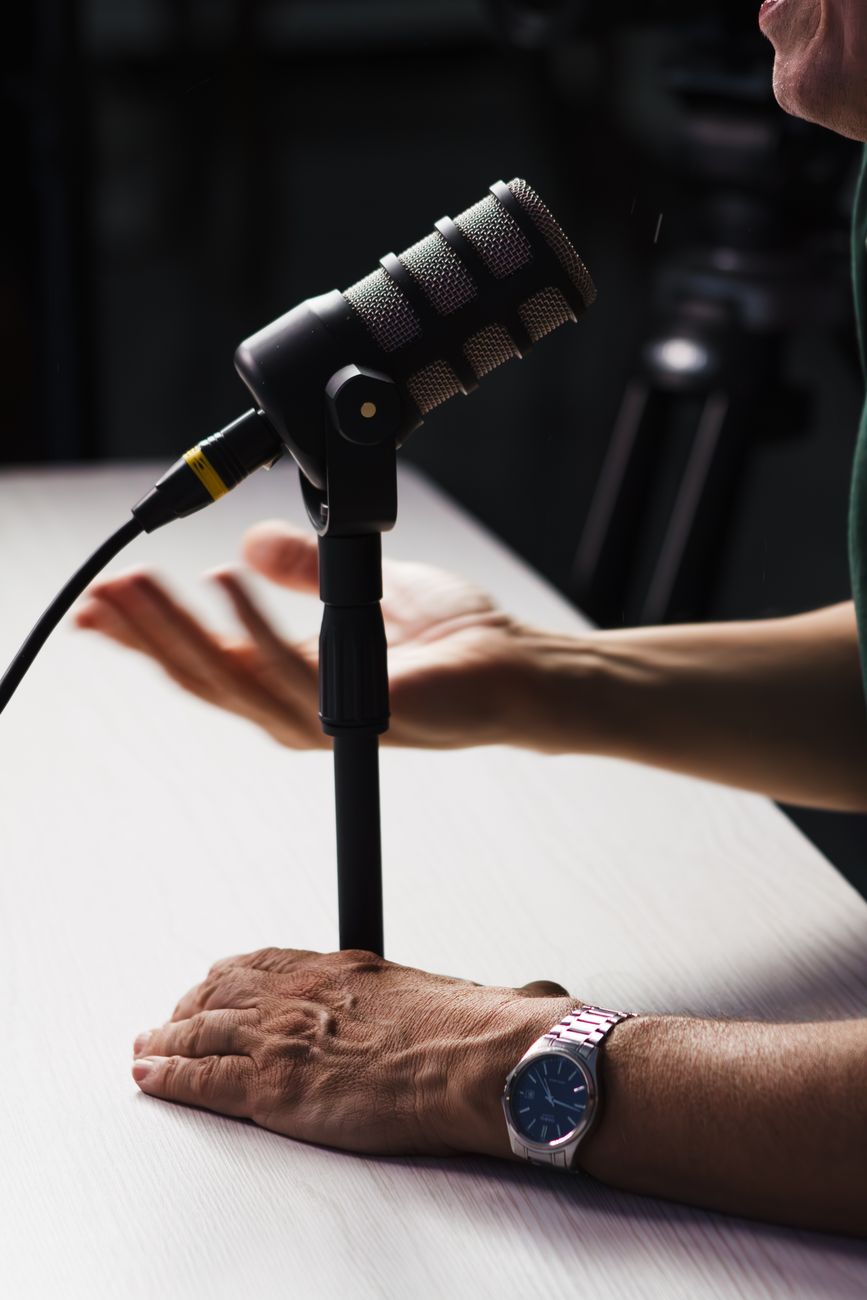
The Jaime David Podcast – Episode 22: One Year Later is out now.
Listen to it on Spotify:
Check out the original post here:
Read the episode transcript below:
Jaime David Podcast — Episode 22
Title: One Year Later
Hey everyone, this is Jaime David. Today’s episode is very personal. It’s called One Year Later, about my late uncle, who passed away in 2019. I wrote this poem just a few days after the anniversary of his passing, back in April 2020—right when COVID-19 was already changing the world.
Losing him was one of the hardest things I’ve ever experienced. And going through that loss right as the pandemic hit made everything feel even heavier. But writing this poem helped me hold onto hope when so much felt uncertain.
Here’s the poem:
One Year Later
It’s been a year since you’ve been gone.
You’re gone from our lives, but not our hearts.
I’ve known you all my life, and I still can’t believe you’re gone.
I miss you a lot. I wish you were here.
I’ve got so much to tell you. I’ve got so much to say.
All I can really do is live life day by day
And take chances in life to see where things will congregate.
I don’t know where I’ll be in a couple of years from now,
But one thing I do know is that I won’t ever back down.
I won’t let fear and insecurity
Prevent me from being me,
Seeing all I can see,
And being the best person that I can be!
You always taught me to not give up,
To not give in,
And to never quit.
You taught me to pursue my goals and dreams no matter how hard they may be.
You taught me to overcome obstacles and challenges no matter how difficult they may seem.
You had so much potential and so much life left to live.
I wanted to see you be happy and succeed.
You were taken from this world too soon.
I wish you could see the person that I’ve become!
Reading these words again reminds me of something very important — even when life feels hard or unfair, we can find strength by holding onto hope and moving forward, day by day. The poem is a promise to myself to keep going, to live fully, and to grow into the person my uncle believed I could be.
My uncle had a simple but powerful phrase he would say when things got tough: “Don’t be a quitter.” That advice wasn’t just about never giving up for the sake of it. It was about refusing to let fear or hardship stop you from being who you’re meant to be. It’s about resilience—finding the courage to keep trying, to learn from failure, and to keep pushing toward your dreams even when the road is rough.
I want everyone listening to remember this too. When life knocks you down, when you feel lost or overwhelmed, don’t give up. Don’t be a quitter. Hold onto hope, lean on the people who care about you, and keep taking small steps forward.
You might not know exactly where you’ll end up, but as long as you don’t quit, there’s always a chance for something better ahead.
Thank you for spending this time with me. Stay strong, be kind to yourself, and remember: your story is still unfolding. Keep writing it with courage and hope. I’ll catch you in the next episode.

