The Musings of Jaime David
@jaimedavid.blog@jaimedavid.blog

The writings of some random dude on the internet

1,220 posts
1 follower

Tag: Writing

  • Seven Years

    Seven Years

    It’s been seven years,

    Seven years that you been gone.

    I cannot believe,

    Can’t believe that you’ve been gone.

    Was like yesterday

    You were there.

    Now today,

    you’re not here.

    Tomorrow’s your birthday,

    What would have been your birthday.

    Another year you’d get older,

    Another year you’d be bolder.

    Where’d the time go?

    It feels like long ago

    That you were still here.

    Doesn’t feel that long ago.

    I wish you were here still.

    If only there was more time.

  • The Jaime David Podcast – Episode 18: The Dome

    The Jaime David Podcast – Episode 18: The Dome

    Episode 18 of The Jaime David Podcast is out now!

    Read the original post here:

    Listen to the episode on Spotify:

    See the episode transcript below:

    Intro:

    Hey everyone, this is Jaime David, and welcome back to The Jaime David Podcast. Today we’re diving into one of my longer, more personal works — a poem called “The Dome.” This poem holds a special place for me because it was the very first poem I ever submitted to a contest. Even though it wasn’t accepted, the whole experience, and the story behind it, really meant a lot. So, I want to share that background with you before we jump into the poem and then have a deeper discussion about it.

    Background Discussion:

    So, about a month before I wrote this poem, I was just casually browsing YouTube when I came across a video by a channel called DarkDocs. The video was titled “Is America’s Own Chernobyl Sitting In The Middle of the Ocean.” It really opened my eyes to a hidden environmental disaster — the Runit Dome in the Marshall Islands. This dome is essentially a concrete vault that holds radioactive waste from nuclear tests done decades ago. The problem is, with sea levels rising due to climate change, this dome is leaking or at risk of leaking radiation into the ocean, threatening not only the Marshallese people but potentially the entire world’s oceans.

    Then, I saw another related video in the suggestions by ABC News, which covered the ongoing impact of this dome on the Marshallese community. One of the people they featured was Kathy Jetnil-Kijiner, a poet from the Marshall Islands who read a moving poem at the UN Climate Summit back in 2014. Her work inspired me a lot, so I followed her social media and found out about a book project she was involved in — a collection of scientific articles and poems about climate relocation and climate crisis. That’s when I decided to submit my own poem for the contest.

    Fast forward to today, the poem wasn’t accepted for the book, but the editors told me they appreciated my excerpt and had a huge number of submissions. Even though I didn’t make it into the book, I’m sharing the full poem here because the message is so important — about climate change, about human impact, about responsibility — and I hope it resonates with you as much as it does with me.

    Poem Section (casual lead-in):

    Now, the poem itself is one of my longer pieces. It’s raw, emotional, and full of urgency, and I think it captures the complex mix of hope, despair, and responsibility we all feel when we think about climate change and environmental disaster. Let’s dive in.

    Bikini Atoll;

    They were told

    The US were protectors

    Of hope

    And of freedom.

    Instead, they were relo-

    -cated from their homes

    While their atolls

    Were bombarded with radiation,

    Which had took a toll

    On them and their souls,

    And the remains of it all

    Were buried underneath a dome

    That is called “The Tomb.”

    How ironic it’s name is, so,

    Because the Runit Dome

    Has the potential

    To become their own tombs.

    With sea level rising,

    It’s becoming a crisis

    That if the radiation finds its

    Way out, it could

    Completely poison

    The entire Earth’s oceans,

    And this is because of the

    Changing Earth’s climate!

    Is there any hope for us to survive this

    Disastrous threat that could possibly annihilate us?

    I’d say there is, but we need to realize this:

    For us to survive it,

    We all need to rise up and

    Take a stand for what’s right, which

    Is saving the entire planet

    From total destruction.

    It may sound bleak; it may sound alarmist,

    But I believe we all can grow and thrive despite this!

    That is why I, a mere man who writes this,

    An artist with a creative mind that is

    Concerned about the state of the world and this climactic climate crisis,

    Had decided to sit down and take the time to write this.

    I wrote this poem

    Because I care about my home.

    I care about the loved ones that I call my own.

    I wrote this for my friends; my family, too!

    I wrote this for their friends, and their families, too!

    I wrote this for everyone; everyone that’s in the room;

    The room that is so big and so round and so blue;

    The room that has oceans that spans millions of miles;

    The room that has a diversity of creatures both on land and in the sea;

    The room that has been around for billions of years;

    The room that houses a species that has accomplished many great feats, but has also caused a myriad of tragedies that led countless people to defeat;

    The room that I’m proud to call planet Earth.

    I was not asked to be born on this Earth,

    But it is my place; the place of my birth.

    It sorta just happened; one day I was conceived.

    I grew to a fetus, then a baby, and then eventually an adult human being.

    It was a slow process; just like humanity’s growth on this Earth for thousands of years.

    We started out in caves, and eventually made great things.

    Along the way, we also had created

    Devastating weapons that can harm us and hurt us in many ways.

    The same goes with climate change; it’s mostly man-made.

    It is a mess that we ourselves had made.

    The consequences are dire; the Earth is on fire.

    But if we take a stand now, I believe we’ll survive this!

    The Earth is our home; it is our dome.

    It is the one thing that should come above all!

    Just as the dome

    Located in the Enewetak Atoll

    Has the potential

    To destroy us all,

    We too have the potential;

    The potential to be saviors

    For not just the here and now,

    But for future generations.

    That is why I had wrote this poem.

    So if you see this message, please heed the urgency

    To do something about this climactic climate emergency

    That could lead to insurgency

    Of disastrous natural convergency

    That could inadvertently lead

    To extreme diathermancy

    And create great divergency.

    We must fight this looming threat, and we must do so with great fervency,

    For it is this Earth that we love with great ardency!

    We must stand up and fight, and must do so without errancy.

    We must not treat this threat as a mere nonemergency.

    We must respect this planet with great amounts of conservancy,

    And clean up this world with great levels of detergency.

    This our home; the home that we were grown.

    This Earth is our dome, and this is its poem!

    Post-Poem Analysis & Reflection:

    Alright, so what can we unpack here? The poem starts with Bikini Atoll, which was the site of devastating U.S. nuclear tests. The people there were forcibly relocated with promises of protection and freedom, only to suffer radiation exposure and loss of their homeland — a literal human tragedy buried under what’s called the “Tomb” or the Runit Dome.

    That dome, as the poem highlights, is now a ticking time bomb because climate change is raising sea levels and threatening to release radiation into the oceans. This isn’t just a local problem — it’s a global crisis. The oceans are the lifeblood of our planet, and poisoning them could lead to catastrophic consequences for ecosystems and humanity alike.

    But the poem doesn’t just stop at describing the disaster. It’s a call to action — a plea for us all to rise up, to take responsibility, and to fight for the Earth, our only home. It reminds us that while the situation may sound bleak, there is hope if we come together and act with urgency and care.

    I also love how the poem personalizes this — not just as a distant environmental issue, but as something that touches families, communities, all of us. The Earth isn’t just a place; it’s our home, a dome that shelters us all. And like the Runit Dome, what we do to it can either save us or destroy us.

    This poem was my way of processing the climate crisis and expressing my deep concern — and I think that’s something we all need to do. Reflect on what’s happening, and then ask ourselves: What can we do? How can I be part of the solution?

    So, thanks for joining me for this episode. If this poem speaks to you, I encourage you to learn more about climate change, share your thoughts, and get involved however you can. Until next time, I’m Jaime David, and this was The Jaime David Podcast. Stay aware, stay active, and take care of our home.

  • The Jaime David Podcast- Episode 18 is out now!

    The Jaime David Podcast- Episode 18 is out now!

    Episode 18 of The Jaime David Podcast is out now!

    Check it out on Spotify:

  • The Jaime David Podcast – Episode 17: Subway Sunsets

    The Jaime David Podcast – Episode 17: Subway Sunsets

    Episode 17: “Subway Sunsets is out now.

    Original Poem:

    Listen on Spotify:

    Transcript:

    Intro:

    Hey everyone — welcome back to The Jaime David Podcast. I’m your host, Jaime David, and this is Episode Seventeen.

    Today, we’re looking at one of my shorter poems — but don’t let the length fool you. Sometimes a few lines are all it takes to set a whole mood. This one’s called “Subway Sunsets,” and it’s all about those quiet, still moments we sometimes catch in the middle of chaos.

    Pre-Poem Discussion:

    I remember writing this one after a long day, sitting on the subway, kind of lost in my own head. You know that moment when the train breaks above ground, and sunlight just hits differently? That in-between state — the commute, the twilight, the city buzzing but also somehow pausing just for you?

    That’s what I tried to capture.

    I think a lot of people associate the subway with stress, crowds, delays. But sometimes — not always, but sometimes — there’s beauty in that underground rhythm. Or, in this case, right above it.

    Let me go ahead and bring in the poem now — again, it’s short, but it’s more about the feeling it leaves behind.

    It’s the end of the day.

    You’re on the subway.

    It’s still twilight.

    It’s not yet night.

    Through the clear glass pane,

    The setting sun is shining on your face.

    Post-Poem Analysis & Reflection:

    So that’s “Subway Sunsets.”

    What I love about this piece is that it’s kind of a snapshot — like a Polaroid for the soul. It doesn’t try to over-explain or get too deep. It just says: here’s a moment. Here’s light hitting your face while the train rocks forward. That’s it. But that’s enough.

    The phrase “It’s not yet night” really lingers for me. That liminal space — when the day’s ending but the night hasn’t fully taken over — can feel so reflective. You’re physically transitioning from one place to another, but emotionally, you might be stuck somewhere in between.

    And then the last line — “The setting sun is shining on your face.” It’s simple. But in a way, it feels like a blessing. Like the universe saying: hey, before it gets dark, here’s a little warmth.

    That’s what I wanted this poem to feel like. A pause. A breath. A reminder that even in transit — literally and figuratively — we can find beauty.

    There’s also something quietly hopeful about it. The day might be done, but the light still touches you. You’re still present. Still here. And the moment still matters.

    Anyway — thanks again for riding this one out with me. If you’ve ever had a small moment like that, where everything briefly slows down even in a busy space — I’d love to hear about it.

    I’ll catch you next time on The Jaime David Podcast. Take care, and don’t forget to look for the light, even when you’re just riding home.

    Fediverse Reactions
  • The Jaime David Podcast – Episode 17 is out

    The Jaime David Podcast – Episode 17 is out

    Episode 17 of The Jaime David Podcast is out now.

  • The Jaime David Podcast – Episode 16: Bridges And Walls

    The Jaime David Podcast – Episode 16: Bridges And Walls

    Episode 16 of The Jaime David Podcast is out now.

    Check it out on Spotify:

    Read the original poem here:

    Here is the script for the episode:

    Intro:

    Welcome back to The Jaime David Podcast. I am your host, Jaime David. This is Episode Sixteen, and today we are diving into another one of my older poems, part of the ongoing journey of revisiting and reflecting on my past works.

    This poem is called “Bridges and Walls” — and just by the title, you might already get a sense that it is about connection, division, and the ways we build or break barriers in our lives and in our societies.

    Before I get into the poem, let me just set the stage a bit.

    This piece was written during a time when I was thinking a lot about unity versus separation — not just in a political sense, but in a deeply human one. How we treat each other. Who we let in, and who we keep out. The structures we build between us, and whether they isolate or connect.

    Alright. Let us go ahead and get into the poem.


    Poem:

    If you raise up a bridge, you build a wall.
    If you tear down a wall, you create a bridge.
    Why should we exclude some instead of include all?
    Why should we divide ourselves and act cold like the fridge?
    It is time we stop looking at each other like we’re not “the others”
    And start realizing that we should start to love one another.
    We’re all humans.
    We are one family.
    We’ve lived on this planet for many generations.
    Sure, our ancestors may have caused much division;
    Division that exists to this very day.
    However, there is one vision; one vision I envision,
    And that vision is an end to all division.
    I believe it’s possible. It’s very feasible.
    The first step to make it achievable is to simply care for other people.
    That’s all you need to do to start bringing a positive impact to the world.


    Post-Poem Discussion and Analysis:

    So let us talk about that.

    One of the lines that really stands out to me now is the opening paradox: “If you raise up a bridge, you build a wall. If you tear down a wall, you create a bridge.” It plays on the idea that intent and outcome are not always what we expect. Sometimes, what we think is a connection is actually a boundary. And vice versa — breaking something down can lead to new pathways.

    Another piece of this poem that hits home for me is the line, “We’re all humans. We are one family.” It sounds simple, almost cliché, but in a world where identity is often weaponized and differences are emphasized, that line becomes radical. It reminds me of how easy it is to forget the basic truth that we all share this planet, and none of us is truly “the other.”

    There is a tension in this poem between acknowledging historical divisions and envisioning a better future. “Sure, our ancestors may have caused much division,” I wrote. And that still feels true. But what matters is the choice we have now — to carry forward those divisions, or to be part of the healing process.

    This poem might sound idealistic — “I believe it’s possible,” I said. But I still stand by that. Change does not always require grand gestures. The first step is simply to care for other people. Empathy, listening, reaching across — that is how walls become bridges.

    So, yeah. That is “Bridges and Walls.” Let me know what you think, and if you are someone who is trying to break down a wall in your own life — emotional, relational, cultural — I hope this poem gives you a little push to keep going.

    Thanks again for listening to The Jaime David Podcast. I will see you in the next episode.

    Fediverse Reactions
  • My Books Featured on Dusty Smith’s livestream!!!

    My Books Featured on Dusty Smith’s livestream!!!

    Title says it all.

    Fediverse Reactions
  • The Struggle of Consistency: When You Have Too Much to Say and Sometimes Need a Break

    The Struggle of Consistency: When You Have Too Much to Say and Sometimes Need a Break

    One of the biggest misconceptions people have about blogging is that inconsistency always comes from a lack of ideas. People imagine the writer sitting in front of a blank screen, staring at an empty document, desperately trying to think of something, anything, to write about. Sometimes that does happen. Writer’s block is real. But for me, that is rarely the problem. If anything, I have the opposite issue. I often have too many ideas, too many topics, too many directions I could take. Instead of wondering what to write about, I find myself wondering which of the dozens of possible topics deserves my attention first.

    When you run multiple blogs, that challenge becomes even more noticeable.

    I have my main blog, The Musings of Jaime David, but I also have several other blogs focused on different subjects. There is my politics and news blog, The Interfaith Intrepid. There is my mental health blog, Let’s Be Different Together. There is my music blog. There is my science blog. There is my gaming blog. There are platforms like Medium. There are social media accounts. There are podcasts. There are countless places where ideas can potentially become content.

    At first glance, that sounds like an incredible advantage. More outlets mean more opportunities to create. More opportunities mean more chances to reach people. More chances to reach people mean more opportunities to build communities and conversations.

    And all of that is true.

    The problem is that every new platform and every new blog also creates another place where content could be posted.

    A political news story breaks. Should I write about it on The Interfaith Intrepid?

    I have a thought about creativity. Should that go on The Musings of Jaime David?

    I discover an interesting scientific topic. Does that belong on the science blog?

    I have thoughts about a game I recently played. Should that become a gaming article?

    I find a song that inspires me. Is that something for the music blog?

    Then there are the ideas that overlap multiple categories. Some posts could fit in two or three places simultaneously. Some topics touch on politics, psychology, science, and culture all at once. Deciding where something belongs can become its own task before the writing process even begins.

    People often assume that having many ideas makes consistency easier. In some ways it does. But in other ways it creates a different kind of challenge.

    Imagine standing in front of a restaurant menu that contains three options. Making a decision is relatively simple.

    Now imagine standing in front of a menu containing five hundred options.

    Suddenly choosing becomes harder.

    That is sometimes what blogging feels like.

    There are days when I have ten potential articles in my head before breakfast. There are days when I could easily draft multiple posts on entirely different subjects. There are days when my notes are overflowing with future ideas.

    Yet paradoxically, those can be the days when nothing gets published.

    Not because there is nothing to say.

    Because there is too much to say.

    Every potential article competes with every other potential article for attention.

    Should I write about the thing that is timely?

    Should I write about the thing I am passionate about?

    Should I write about the thing that people are most likely to read?

    Should I write about the thing that has been sitting in my drafts for six months?

    Should I write about the thing that is personally meaningful even if nobody else cares?

    Sometimes all those questions create enough friction that I end up writing nothing at all.

    Another reality that many readers do not see is that blogging is not just writing.

    People see a finished article and naturally focus on the words.

    What they do not always see is everything surrounding those words.

    Research takes time.

    Fact-checking takes time.

    Editing takes time.

    Formatting takes time.

    Creating images takes time.

    Finding tags takes time.

    Sharing posts takes time.

    Responding to comments takes time.

    Maintaining multiple platforms takes time.

    Managing social media takes time.

    Even deciding what to write can take time.

    A thousand-word article might only take an hour to draft. But everything surrounding it can easily double or triple that investment.

    When you multiply that across multiple blogs, multiple audiences, and multiple platforms, the workload grows quickly.

    And sometimes life exists outside blogging.

    That might sound obvious, but creators often feel pressure to act as though content creation is their entire existence.

    People have jobs.

    People have families.

    People have responsibilities.

    People have appointments.

    People have stress.

    People have days when they are tired.

    People have days when they simply do not feel like writing.

    That last one is important.

    Not every break needs a dramatic explanation.

    Sometimes you are exhausted.

    Sometimes your brain is tired.

    Sometimes your creativity needs space.

    Sometimes you want to spend a day doing literally anything except writing.

    And that is okay.

    The internet has created a culture where consistency is often treated like a sacred commandment.

    Post every day.

    Upload every day.

    Stay active every day.

    Engage every day.

    Never disappear.

    Never slow down.

    Never stop.

    Algorithms reward consistency, so there is some practical truth behind that advice. But human beings are not algorithms.

    Human beings get tired.

    Human beings need rest.

    Human beings need room to breathe.

    I think many creators struggle with guilt whenever they take breaks.

    I know I sometimes do.

    You look at your blogs.

    You look at your drafts.

    You look at your ideas.

    You know there are things you could be writing.

    You know there are articles that could be published.

    You know there are readers waiting.

    And yet part of you simply wants to step away for a little while.

    The guilt starts whispering.

    “You should be writing.”

    “You are falling behind.”

    “You are wasting time.”

    “Other creators are posting.”

    “You are losing momentum.”

    Maybe sometimes those concerns are legitimate.

    But sometimes the healthiest thing you can do is ignore them.

    Because burnout helps nobody.

    A burned-out writer is not more productive.

    A burned-out writer is not more creative.

    A burned-out writer is not producing their best work.

    A burned-out writer is simply exhausted.

    One thing I have learned over time is that breaks are not necessarily the enemy of creativity.

    In many cases, they are part of creativity.

    Some of my best ideas have arrived when I was not actively trying to write.

    They arrived while walking.

    They arrived while listening to music.

    They arrived while watching a movie.

    They arrived while scrolling through random conversations online.

    They arrived while doing absolutely nothing related to blogging.

    Creativity often needs input.

    If all you ever do is produce, eventually the well starts running dry.

    Sometimes you need to refill it.

    That means reading.

    That means learning.

    That means experiencing life.

    That means stepping away from the keyboard.

    Ironically, taking a break from writing can sometimes make you a better writer.

    Another challenge with running multiple blogs is that every blog represents a different version of your interests.

    I am not just one thing.

    Most people are not.

    Human beings are complicated.

    We contain countless interests, passions, curiosities, frustrations, and obsessions.

    Some days I am interested in politics.

    Some days I am interested in science.

    Some days I am interested in music.

    Some days I am interested in philosophy.

    Some days I am interested in gaming.

    Some days I want to write about personal experiences.

    Some days I want to write about society.

    Trying to balance all those interests can be difficult.

    If I spend too much time on one blog, another blog sits dormant.

    If I focus heavily on one subject, another subject gets neglected.

    There are only so many hours in a day.

    No matter how many ideas exist, time remains limited.

    I think readers sometimes assume creators have a master plan behind everything.

    The reality is often much messier.

    Sometimes content schedules are carefully planned.

    Sometimes they are not.

    Sometimes a post comes together because inspiration struck at exactly the right moment.

    Sometimes a post exists because it was sitting unfinished in drafts for months.

    Sometimes a post exists because I finally decided to stop overthinking and hit publish.

    The truth is that blogging is often less organized than people imagine.

    And honestly, that is part of the beauty of it.

    Blogs are living things.

    They evolve.

    They change.

    They grow alongside the people creating them.

    My blogs today are not identical to what they were years ago.

    My interests have changed.

    My perspectives have changed.

    My writing style has changed.

    My goals have changed.

    And that evolution will probably continue.

    That is another reason I try not to obsess over perfect consistency.

    Consistency matters.

    I am not denying that.

    Showing up matters.

    Building trust with readers matters.

    Maintaining momentum matters.

    But there is a difference between consistency and rigidity.

    Consistency means continuing the journey.

    Rigidity means refusing to adapt.

    I would rather occasionally take a break than force myself to produce content I do not care about.

    I would rather publish something meaningful than publish something merely because a schedule demands it.

    I would rather maintain my enthusiasm for writing than turn blogging into a chore.

    Because the moment writing becomes nothing but obligation, something important gets lost.

    The passion starts fading.

    The excitement starts fading.

    The curiosity starts fading.

    And those things are often what attracted readers in the first place.

    At the end of the day, all of my blogs exist because I have things I want to talk about.

    They exist because I enjoy sharing ideas.

    They exist because I enjoy exploring different topics.

    They exist because I enjoy connecting with people.

    That remains true whether I publish three articles in a week or take a brief break from posting.

    The ideas are still there.

    The passion is still there.

    The curiosity is still there.

    Sometimes the ideas come faster than I can write them.

    Sometimes there are so many possibilities that choosing becomes difficult.

    Sometimes life gets busy.

    Sometimes energy runs low.

    Sometimes I need a break.

    And honestly, I think that is perfectly normal.

    The pressure to constantly create can make us forget that creators are people first and content producers second.

    Blogs are important to me.

    Writing is important to me.

    The communities surrounding my work are important to me.

    But none of those things change the fact that I am still a human being.

    A human being with limited time.

    A human being with limited energy.

    A human being with countless interests competing for attention.

    A human being who occasionally needs to step away from the keyboard.

    The funny thing is that every time I take one of those breaks, the same thing eventually happens.

    Ideas start piling up again.

    A headline catches my attention.

    A thought appears in my mind.

    A conversation sparks inspiration.

    A topic starts demanding to be explored.

    Before long, I am back at the keyboard with more things to write than I can possibly keep up with.

    Not because I forced myself.

    Not because I followed some productivity formula.

    Not because an algorithm demanded it.

    But because the desire to create eventually returned on its own.

    That is why I am learning to be more accepting of those periods when writing slows down.

    They do not mean the creativity is gone.

    They do not mean the blogs are dead.

    They do not mean I have run out of things to say.

    In many cases, they simply mean I am taking the time necessary to recharge before the next wave of ideas arrives.

    And if there is one thing I have learned from running multiple blogs and maintaining a main blog for years, it is this: sometimes having too much to say can be just as overwhelming as having nothing to say at all. The challenge is not always finding ideas. Sometimes the challenge is choosing between them, giving yourself permission to rest, and trusting that the words will still be there when you come back.

    Fediverse Reactions
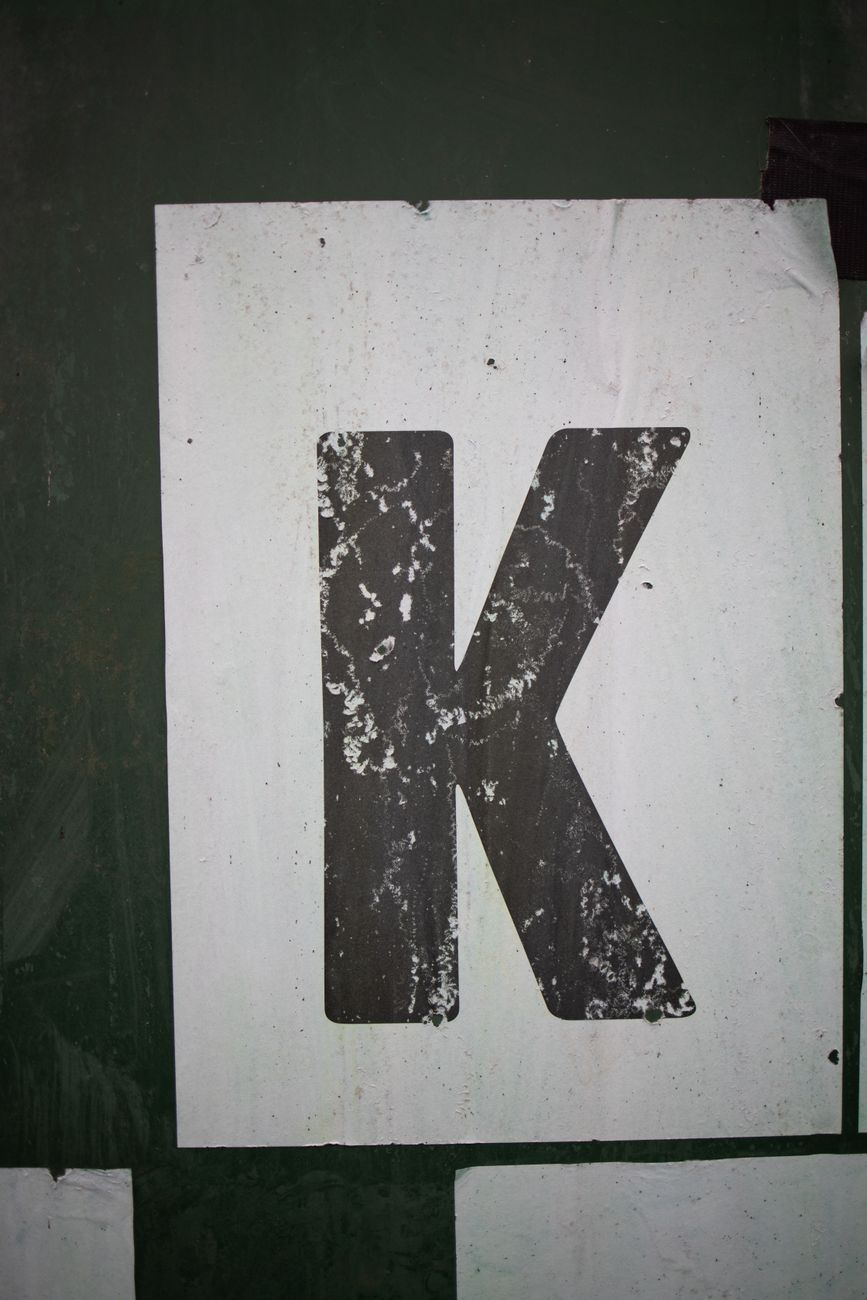
  • The Absolute Rage Induced by “K.”

    The Absolute Rage Induced by “K.”

    Daily writing prompt
    What’s a word or phrase that annoys you?

    There are many phrases in this world that annoy me. Corporate buzzwords. Fake positivity. Passive aggressive nonsense. People saying “we should totally hang out sometime” when both of you know that is never happening. But there is one response, one microscopic combination of letters, one digital communication war crime that rises above the rest. One phrase so unbelievably lazy, dismissive, cold, and irritating that every time I see it, a tiny part of my soul flatlines.

    “K.”

    Just that. K.

    Not “okay.” Not “ok.” Not “alright.” Not even the slightly chaotic but acceptable “kk.” Just a lonely little “k” sitting there like a digital middle finger.

    And I know some people are gonna say, “well maybe they’re busy.” No. I do not care. Because typing “okay” takes maybe half a second longer than typing “k.” You already opened the message. You already looked at it. You already responded. So what exactly was saved here? What incredible amount of time efficiency was gained? Did NASA recruit you mid conversation? Were you suddenly called into a hostage negotiation? Did your phone battery have 0.0001% left and you sacrificed the other letters for survival?

    Because otherwise, what are we doing here?

    Especially when I send an actual thoughtful response. That is where “k” becomes truly infuriating. I could send somebody an entire paragraph. A detailed response. An actual conversation. Maybe I am explaining something important, talking about an idea, telling a story, venting about something, or even just trying to have a normal human interaction. And after all that effort, after all those words, after all that thought, the response I get back is:

    “K.”

    Are you kidding me?

    That is not a response. That is the conversational equivalent of someone shutting a door in your face halfway through a sentence. It feels like I just threw a fully cooked meal onto a plate for someone and they stared at it for two seconds before saying, “aight.” Not even enough respect to capitalize the K sometimes either. Just a lowercase “k” sitting there in all its emotionally vacant glory.

    And the worst part is how weirdly aggressive it feels.

    Because let’s be honest here. “K” does not read as neutral. Nobody on Earth reads “k” and thinks, “wow, what a warm and enthusiastic response.” No. “K” feels annoyed. It feels irritated. It feels passive aggressive even when maybe it is not intended that way. It feels like someone responding while rolling their eyes so hard they can see their own brain.

    Imagine talking to someone in real life like that. Imagine you are telling somebody a story face to face and when you finish, they just stare at you blankly and go, “k.” You would immediately assume they hated you. You would think they were angry. Or bored. Or trying to end the conversation as fast as possible.

    That is because human communication is not just about words. It is about effort. Energy. Tone. Engagement. And “k” has the energy of somebody throwing a single stale cracker onto the table and calling it dinner.

    Now look, I understand not every message needs a five paragraph response. I am not asking for people to write essays every single time. Sometimes short responses are fine. Sometimes there is not much to say. That is normal. But there is a gigantic difference between a simple response and a completely dead one.

    “Okay” feels normal.

    “Gotcha” feels normal.

    “Sounds good” feels normal.

    Even “lol” at least acknowledges humanity still exists.

    But “k” feels like the emotional equivalent of being left on read while technically not being left on read.

    And yes, there are layers to this too. Because context matters. A “k” from your boss somehow feels terrifying. A “k” from a friend feels dismissive. A “k” from someone you are arguing with feels like they are trying to start World War III. A “k” from someone you like romantically? Oh congratulations, now you are going to spend the next three hours wondering if they hate you.

    The single letter “k” has somehow evolved into one of the most emotionally loaded responses in digital communication history.

    And honestly, I think part of why it annoys me so much is because it represents this larger problem with modern communication in general. People have become so weirdly disconnected from conversations. Everything is rushed. Everything is shortened. Everything is compressed into the smallest possible amount of effort. We are communicating faster than ever before while somehow saying less than ever before.

    Conversations now sometimes feel like people are trying to speedrun human interaction.

    And again, I am not demanding constant deep emotional speeches. I am not asking every text conversation to become a philosophical debate about existence itself. But there is something deeply irritating about the absolute bare minimum effort possible becoming normalized.

    Especially when the other person is clearly trying.

    That is the key thing here. Effort should at least somewhat match effort. If somebody sends you an actual message, responding with “k” feels like conversational malpractice. It feels like somebody handing you a handwritten letter and you responding by throwing a sticky note at their forehead.

    And I know somebody reading this right now is thinking, “wow this dude is really angry about one letter.”

    Yes. Yes I am.

    Because somehow that one letter manages to radiate annoyance in ways entire paragraphs cannot.

    Honestly, sometimes “k” feels worse than no response at all. At least being left on read has ambiguity. Maybe they got distracted. Maybe they forgot. Maybe life happened. But “k” confirms they saw your message and actively decided this single consonant was all you were worth in return.

    It is honestly impressive in a horrible way.

    And do not even get me started on the variations of it either. Because there are subclasses of “k” energy.

    Lowercase “k” is cold and dismissive.

    Uppercase “K” feels actively hostile.

    “K…” feels like somebody preparing for murder.

    And then there is “Mk.” Which somehow feels like an exhausted parent trying not to lose their sanity entirely.

    Digital communication has become its own weird language where punctuation and capitalization can completely change emotional meaning. A period at the end of a sentence suddenly feels aggressive. Multiple exclamation points can feel fake. No punctuation can feel detached. And “k” became the king of all emotionally cursed responses.

    What fascinates me too is how universal this annoyance seems to be. So many people hate “k.” Entire memes exist about this. Entire online discussions exist about this. People immediately understand the emotional vibe of it without explanation. Humanity collectively agreed that this one letter carries the energy of disappointment, annoyance, boredom, or emotional shutdown.

    That is honestly kind of incredible.

    Language evolved over thousands of years and somehow we arrived at this.

    One letter.

    Pure irritation.

    And maybe some people genuinely do not mean anything by it. Maybe for some people it really is just shorthand. Maybe they truly are neutral when they send it. But communication is not just about intention. It is also about perception. And if millions of people collectively interpret “k” as irritated or dismissive, maybe there is a reason for that.

    Maybe because it feels incomplete.

    Maybe because it lacks warmth.

    Maybe because it feels like somebody trying to end a conversation instead of participate in one.

    Or maybe because it just looks ugly sitting there on the screen like some emotionally abandoned letter fragment.

    Honestly, even “👍” sometimes feels more human than “k.”

    At least the thumbs up has shape. Presence. Energy. “K” just looks like somebody gave up halfway through typing.

    And there is also a weird imbalance that happens when one person clearly cares more about the conversation than the other. You can feel it instantly. One person is engaged. The other is responding with the verbal equivalent of elevator music. “K” becomes the ultimate symbol of that imbalance. It tells you immediately who is carrying the interaction.

    Nobody wants to feel like they are talking at somebody instead of with somebody.

    That is what “k” does.

    It transforms conversations into brick walls.

    And listen, maybe this sounds dramatic. Maybe it is dramatic. But honestly? Human interaction matters. The little things matter. Tone matters. Effort matters. People can absolutely feel when someone is emotionally checked out of a conversation. Sometimes tiny things communicate massive feelings.

    That stupid little letter somehow communicates exhaustion, irritation, boredom, indifference, and passive aggression all at once.

    Which honestly is almost impressive linguistically.

    Like congratulations, “k.” You somehow became the most efficient delivery system for negative conversational energy imaginable.

    And the thing is, I do not even think people realize how often tiny responses shape interactions. A slightly warmer response can completely change the feeling of a conversation. A little enthusiasm can make somebody feel heard. Even basic acknowledgment can matter more than people realize.

    But “k” feels like anti warmth.

    Anti conversation.

    Anti human connection.

    It is the response equivalent of fluorescent office lighting.

    Cold. Harsh. Soulless.

    And maybe part of my hatred for it comes from how common it has become. Because once you notice it, you start seeing it everywhere. Texts. DMs. Comments. Group chats. Everywhere you go, there is always somebody lurking with their tiny little “k” loaded and ready to destroy the vibe instantly.

    It can kill momentum in seconds.

    You could be having a genuinely fun conversation and suddenly:

    “K.”

    Boom. Atmosphere dead. Conversation buried. Social energy annihilated.

    It is honestly almost comedic how powerful it is.

    One letter should not have this much destructive capability.

    And yes, before anybody says it, I know there are bigger problems in the world. Obviously. But sometimes daily annoyances are what stick with you the most because they happen constantly. Tiny frustrations repeated over and over become their own special category of rage.

    And “k” is absolutely one of them.

    Because at its core, I think what annoys me is not even the letter itself. It is what it represents. Minimal effort. Disengagement. Emotional laziness. The feeling of somebody barely participating while technically still responding.

    It feels like the modern internet distilled into a single character.

    Shortened attention spans.

    Compressed communication.

    Reduced effort.

    Everything becoming smaller, faster, emptier.

    And honestly? I hate that.

    I miss when conversations actually felt alive sometimes. When people bounced ideas off each other. When interactions had energy. When communication did not constantly feel like people trying to escape the conversation as quickly as possible.

    Maybe that makes me old fashioned. I do not know.

    But I do know this.

    If I send somebody an actual thoughtful message and all I get back is “k,” I immediately lose interest in continuing the conversation. Because why am I putting energy into something the other person clearly does not care about?

    Conversation is a two way street.

    Not one person dragging the other through digital quicksand.

    So yes, WordPress daily prompt, my answer is absolutely “k.”

    I cannot stand it.

    That one tiny letter somehow became one of the most irritating phrases in modern communication.

    And every single time I see it pop up on my screen, I swear I can physically feel my soul leave my body for half a second.

    Fediverse Reactions