
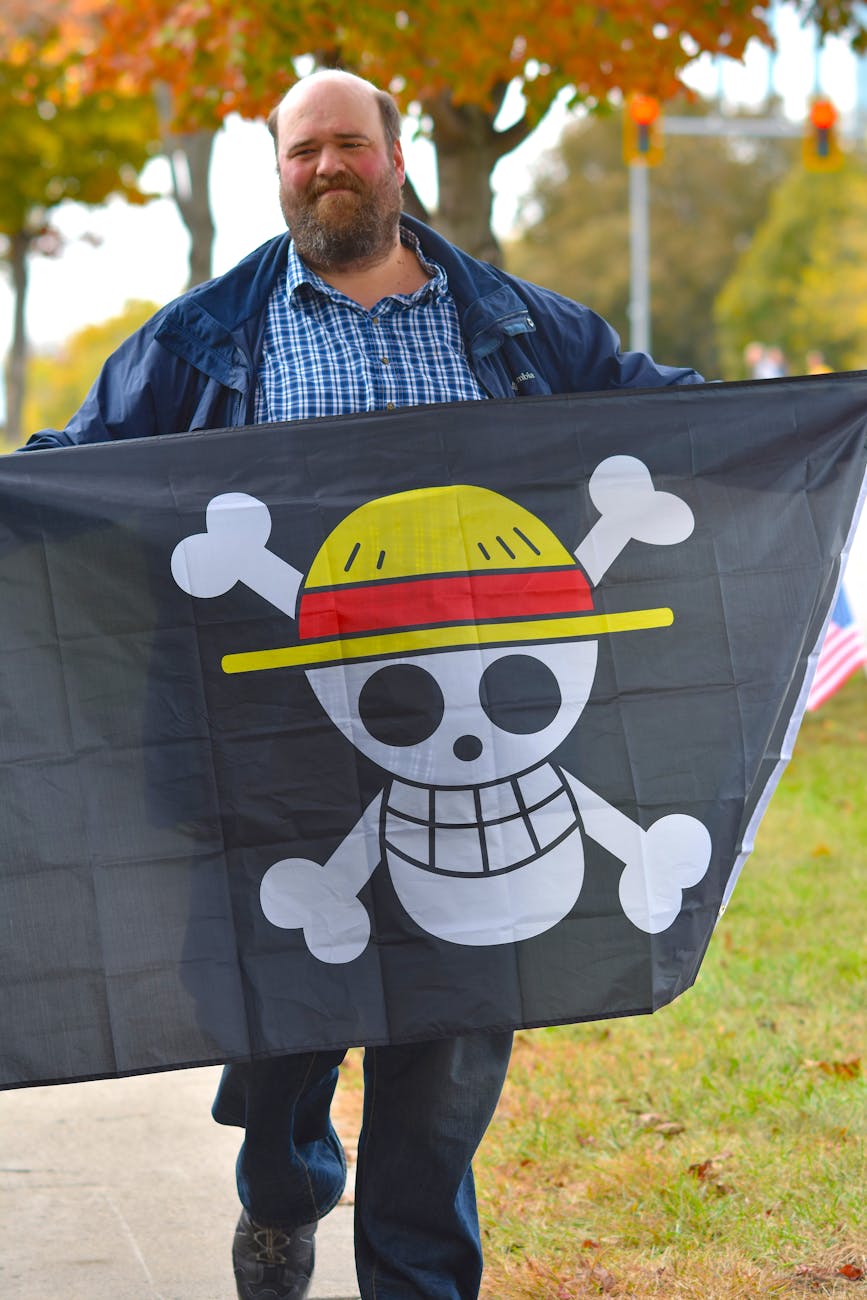
Across decades of storytelling, One Piece has remained one of the most powerful and enduring narratives in anime and manga, not only because of its sprawling world, epic battles, and imaginative characters, but because of its profound exploration of friendship and the human heart. Beneath the layers of humor, adventure, and chaos, there is a deep emotional core that binds the series together. This emotional core is built on a single, unshakable truth: friendship is the force that drives the entire story, and it is a force that transcends labels, languages, boundaries, and backgrounds. At the center of this force stands Monkey D. Luffy, a young pirate whose simple dreams mask an extraordinary ability to break down walls—not only the physical ones he punches through, but the emotional and metaphorical barriers that people build around their hearts. Through his intentional simplicity, his unwavering loyalty, and his fearless compassion, Luffy becomes the kind of friend anyone would aspire to have, and more importantly, the kind of friend we aspire to be.
One of the defining elements of One Piece is that Oda doesn’t write friendship as a convenient narrative mechanic or a shallow theme meant to be repeated. Instead, friendship in One Piece is something that is lived, breathed, and fought for. It is something that takes different shapes depending on who is experiencing it, but it ultimately connects everyone through a shared sense of purpose, loyalty, and emotional truth. The world of One Piece is filled with trauma, oppression, discrimination, and suffering, but these dark forces never fully extinguish the light of connection that the Straw Hat crew brings with them. That light stands opposed to the labeling, categorizing, and divisive tendencies of the world. In the Grand Line, people are labeled by their race, their value, their allegiance, or the price on their head. But with Luffy, those labels mean nothing. He doesn’t see fishmen, giants, cyborgs, nobodies, monsters, or criminals. He sees people. He sees potential friends.
This is what makes Luffy such an unusual and endearing protagonist. His intelligence is often played off as comedic, yet he possesses the deepest emotional wisdom in the story: he understands that labels serve only to isolate and diminish; friendship serves to unite and uplift. From his earliest moments as a young pirate, we see him defy the conventions of what a pirate, a captain, or even a hero should be. He doesn’t recruit based on strength or skill. He never asks whether someone is useful. He simply asks whether someone is hurting, whether someone dreams, and whether someone needs a hand. This is most evident in how the Straw Hat crew comes together. Every member of his crew was someone living behind emotional walls—walls built to hide pain, fear, rejection, or shame. And every time, Luffy showed up, punched a hole straight through those walls, and reached inside with a hand full of warmth and sincerity.
One of the most iconic examples of this emotional demolition comes from Nami’s devastating moment in Arlong Park. Nami’s life had been defined by manipulation and exploitation. She bore her pain silently, believing herself unworthy of true friendship because her childhood trauma taught her that trust only leads to loss. When she finally collapses under the weight of her suffering, begging for help despite her deep shame, Luffy does not lecture her, question her motives, or analyze her past. He simply places his treasured straw hat—his dream itself—on her head and tells her he will handle it. When Luffy walks toward Arlong Park, tearing through physical barriers with every punch, he is also tearing apart the psychological prison Nami lived in. He is destroying the walls built around her heart so she can breathe again. And when he defeats Arlong, it symbolizes more than a victory in battle. It symbolizes the liberation of a friend who had been locked in suffering for years.
Another powerful moment comes from Robin’s story at Enies Lobby. Robin’s entire existence had been defined by the world’s labels: demon, monster, criminal, weapon. She accepted these titles because she believed that was all she was allowed to be. She lived in isolation and fear, believing she had no right to live, no right to dream, and no right to belong. Luffy’s fight to save her isn’t just about rescuing a crew member. It’s about demolishing the cruel labels the world forced upon her. When she finally cries out, “I want to live!”, she is breaking through her own emotional barriers, but she only has the courage to do so because Luffy and the others smashed the walls from the outside. Luffy literally orders his crew to burn down the flag symbolizing Robin’s oppression, proving that he doesn’t care about the world’s judgments, labels, or systems. He cares about the person behind them.
The theme of friendship running deeper than labels extends beyond the core crew. Luffy’s entire journey is marked by encounters with people who believed themselves unworthy of companionship or who were rejected by the world for reasons beyond their control. Sabo believed he had lost everything, only to rediscover the power of brotherhood. Law walked a path of revenge and trauma until Luffy gave him room to breathe and dream again. Jinbe, labeled as an enemy and a criminal by the world, found acceptance and brotherhood through Luffy’s straightforward trust. Even characters like Bon Clay, whose identity is fluid and who exists outside conventional definitions, are embraced by Luffy without question or hesitation. Luffy does not care about gender, appearance, species, origin, or stigma. He only cares about the heart.
This is what makes Luffy such a transformative force in the story. His ability to break down emotional and metaphorical walls is rooted in his refusal to treat people as anything other than equals. While many shonen protagonists fight for justice or peace, Luffy fights for freedom—the freedom to live, to dream, to choose, to be seen. And he does this not through sophisticated arguments or philosophical monologues, but through action, presence, and sincerity. He enters people’s lives like a storm of authenticity, shattering the false narratives they have internalized about themselves. He makes them believe they are worthy of love, loyalty, and a place in the world.
Friendship in One Piece is not passive. It is active, fierce, demanding, and transformative. It requires sacrifice, vulnerability, and courage. It pulls characters out of despair and guides them toward redemption. Through Luffy’s eyes, friendship is not an obligation or a token of convenience; it is a sacred bond. His repeated acts of risking his life for his friends are not born from a hero complex or a need for validation, but from an instinctive understanding that connection is the strongest force in the world. He will walk into hell if it means someone he cares about will find a way back to the light.
One of the most underrated aspects of One Piece is how it shows friendship as something that evolves. Luffy does not demand emotional transformation from his friends; he creates a space where transformation becomes possible. He doesn’t pressure Zoro to reveal his inner thoughts or force Sanji to talk about his past. Instead, he allows them to grow at their own pace, while providing unwavering support in the background. This kind of emotional patience is rare in protagonists. It illustrates that true friendship does not control or dictate. It nurtures and uplifts.
Luffy’s friendships also transcend the binary distinctions that dominate society. He doesn’t seek out friends because they fit neatly into categories. In fact, the mismatched nature of the Straw Hat crew—pirate hunter, thief, liar, cyborg, skeleton musician, reindeer doctor, archaeologist labeled a demon—shows that labels are meaningless in the face of genuine connection. The crew is a testament to what happens when people choose each other not based on status or similarity, but based on authenticity and mutual respect. This theme becomes even more powerful when considering the various races and species across the world: fishmen who are discriminated against, giants treated as weapons, minks forced into hiding. Luffy’s refusal to see anyone as less-than allows the story to illustrate a profound truth: labels are often constructed to divide, but friendship exists to unify.
In many ways, Luffy becomes a mirror for others. Through him, characters are forced to confront not only their potential but their fears, insecurities, and hidden wounds. His optimism challenges cynicism. His trust challenges doubt. His emotional honesty challenges denial. And his relentless pursuit of freedom challenges every system of oppression he encounters. Luffy’s journey is more than a pirate adventure. It is a revolution of the heart.
Another layer to the theme of deep friendship in One Piece is the way it embraces emotional vulnerability. Luffy is not a traditional stoic hero. He laughs loudly, cries openly, gets scared, gets angry, and expresses love without shame. His emotions are not weaknesses—they are strengths that inspire the people around him. His willingness to feel deeply encourages his friends to do the same. This emotional openness dismantles the toxic narratives in many heroic stories that equate strength with emotional suppression. Instead, One Piece teaches that true strength comes from emotional courage, the bravery to care deeply even when the world punishes you for it.
Throughout the series, emotional walls represent fear, shame, and conditioning. When Luffy breaks these walls—sometimes with his fists, sometimes with his heart—he is liberating people from the prisons built around them. Every island, every arc, every new ally serves as a testament to the idea that emotional freedom is just as vital as physical freedom. Luffy fights dragons, tyrants, government organizations, and world-shaking enemies, yet his greatest victories are the ones where he gives someone back their sense of self-worth and belonging.
And this is why Luffy is a friend to aspire to. He represents the best qualities of companionship: loyalty without condition, acceptance without judgment, courage without hesitation, and love without limitations. He embodies the ideal of being someone who believes in others so strongly that they begin to believe in themselves. He never abandons his friends, never belittles their dreams, never questions their value. Instead, he amplifies their strengths and shields their vulnerabilities. Being Luffy’s friend means being seen, understood, and valued for who you are, not who the world says you must be.
It is this combination of emotional bravery, unshakable loyalty, and boundless compassion that makes One Piece resonate so deeply with audiences across the world. It teaches that friendship is not a label you give someone. It is a bond forged through shared struggles, dreams, and moments of raw humanity. It teaches that labels have the power to divide, but friendship has the power to rebuild what is broken. And it teaches that sometimes, the greatest heroes are not the strongest or smartest, but the ones who show up, who care deeply, and who refuse to let anyone face their burdens alone.
In the end, One Piece is not merely a story about pirates searching for treasure. It is a story about people searching for acceptance, meaning, and connection in a world that often tries to strip those things away. It is a story where friendship becomes a form of rebellion, a force stronger than oppression, and a beacon that guides people through the darkest seas. Luffy’s journey reminds us that while the world may attempt to define us through labels, the bonds we create through genuine friendship have the power to redefine everything.
And that may be the deepest treasure One Piece has to offer: a reminder that walls—no matter how powerful or deeply rooted—can always be broken, especially when someone reaches for you with a heart that refuses to let go.


Leave a Reply